In This Program
The Concert
Friday, July 17, 2026, at 7:30pm
Nicolas Ellis conducting
Richard Wagner
Forest Murmurs from Act II of Siegfried (1871)
Ralph Vaughan Williams
The Lark Ascending (1914/21)
Geneva Lewis violin
Franz Waxman
(Ed. Jascha Heifetz)
Carmen Fantasy (1946)
Geneva Lewis violin
Intermission
Felix Mendelssohn
Selections from A Midsummer Night’s Dream, Opus 61 (1826/43)
Overture
Notturno
Wedding March
Piotr Ilyich Tchaikovsky
Romeo and Juliet, Fantasy-Overture (1880)
Program Notes
At a Glance
In between, violinist Geneva Lewis contrasts Ralph Vaughan Williams’s tranquil The Lark Ascending with Franz Waxman’s fiery Carmen Fantasy.
Forest Murmurs from Act II of Siegfried
Richard Wagner
Born: May 22, 1813, in Leipzig
Died: February 13, 1883, in Venice
Work Composed: 1852–1871
SF Symphony Performances: First—March 1912. Henry Hadley conducted. Most recent—September 2005. Michael Tilson Thomas conducted.
Instrumentation: 2 flutes (2nd doubling piccolo), 2 oboes, 2 clarinets, 2 bassoons, 4 horns, 2 trumpets, 3 trombones, tuba, timpani, triangle, and strings
Duration: About 9 minutes
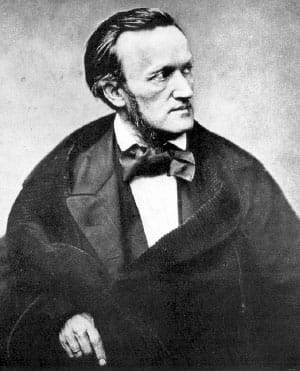
The gigantic operatic tetralogy known as Der Ring des Nibelungen (The Ring of the Nibelung) stands at the center of Richard Wagner’s output. He labored over it from 1848 until 1874, and in the end its four pieces together would run some 15 hours. The Ring was first presented as a cycle in August 1876, at the Bayreuth Festspielhaus, which the composer had constructed to meet the unusual performance demands of this work.
Although experiencing the entire Ring cycle in a staged production may be a rarefied adventure, the piece does contain numerous expanses that are easily excerpted for concert performance. In the Forest Murmurs from Act II of Siegfried, the titular hero lies in wait outside the lair of the dragon Fafner, whom he intends to kill in order to acquire the golden ring. A bird hovers overhead, chirping, apparently hoping to communicate something to Siegfried, who endeavors to make sense of the forest sounds. We hear first gently undulating writing suggesting the rustling of leaves, music derived from a leitmotif related to Siegfried’s parents, and then a succession of distinctly crafted bird-songs delicately distributed among oboe, flute, and clarinet. As the movement unrolls it grows into a full-bodied depiction of the forest, truly an idyllic descriptive tone poem within an often dark opera.
—James M. Keller
The Lark Ascending
Ralph Vaughan Williams
Born: October 12, 1872, in Down Ampney, Gloucestershire, England
Died: August 26, 1958, in London
Work Composed: 1914/21
SF Symphony Performances: First—July 1974. Arthur Fiedler conducted with Alex Horvath as soloist. Most recent—December 2015. Teddy Abrams conducted with Elena Urioste as soloist.
Instrumentation: Solo violin, 2 flutes, oboe, 2 clarinets, 2 bassoons, 2 horns, triangle, and strings
Duration: About 13 minutes
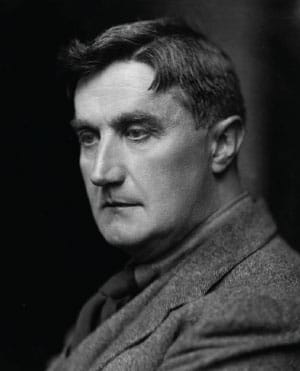
By the time Ralph Vaughan Williams began The Lark Ascending in 1914, he had written works as varied and individual as the ballad opera Hugh the Drover, the Walt Whitman settings Toward the Unknown Region and the magnificent A Sea Symphony, incidental music for The Wasps of Aristophanes, A London Symphony, the beautiful A. E. Housman song cycle On Wenlock Edge, the Five Mystical Songs on poems of George Herbert, and most significant of all, the Fantasia on a Theme by Thomas Tallis. When he set the score of The Lark Ascending aside, it was to join the Special Constabulary, then an ambulance unit of the Royal Army Medical Corps.
The title The Lark Ascending is George Meredith’s, and Vaughan Williams prefaces the score with lines from that poem:
He rises and begins to round,
He drops the silver chain of sound,
Of many links without a break,
In chirrup, whistle, slur and shake.
For singing till his heaven fills,
’Tis love of earth that he instils,
And ever winging up and up,
Our valley is his golden cup,
And he the wine which overflows
To lift us with him as he goes.
Till lost on his aerial rings
In light, and then the fancy sings.
The Lark Ascending is a work of haunting stillness. The orchestra is small. Clarinets, horns, and strings suggest some harmonies and, from their muted chord, the violin rises in unmeasured flight. It settles into lilting song. A more dance-like section ensues. The earlier music returns, and at the end, the violin, whose melismas are the lark’s song, spirals ever higher.
The Lark Ascending is a memento as well of the violinist Marie Hall’s playing, which Vaughan Williams first heard in 1908, when she was 24, and which touched him with its intelligence, serenity, and purity.
—Michael Steinberg
Carmen Fantasy
Franz Waxman
Born: December 24, 1906, in Königshütte, Germany
Died: February 24, 1967, in Los Angeles
Work Composed: 1946
SF Symphony Performances: First—September 2000. Michael Tilson Thomas conducted with Maxim Vengerov as soloist.
Most recent—February 2014. Lan Shui conducted with Alina Ming Kobialka as soloist.
Instrumentation: Solo violin, 2 flutes (2nd doubling piccolo), 2 oboes (2nd doubling English horn), 2 clarinets, 2 bassoons, 4 horns,
2 trumpets, 3 trombones, tuba, timpani, percussion (triangle, cymbals, tambourine, snare drum, and bass drum), harp, and strings
Duration: About 12 minutes
Georges Bizet (1838–75) is remembered chiefly as an opera composer—and, for that matter, chiefly as the composer of one opera, Carmen. Its success seemed far from assured when it was new. It was judged a failure at its premiere, on March 3, 1875, at the Opéra-Comique in Paris; but, even after the composer died three months later, the theater kept the production running for 45 performances that year and a further three in 1876. It was soon embraced internationally as a masterpiece. Arrangers began assembling its hit tunes into recital items for a variety of instruments. Within 50 years, pianists could probably choose from as many Carmen-derived transcriptions, fantasies, and concert paraphrases as there are keys on a piano. Violinists had multiple options, too, thanks to published Carmen fantasies and potpourris produced by such acclaimed violinists as Jenő Hubay (1877), Pablo de Sarasate (1882), and František (Franz) Drdla (1909), among many others.
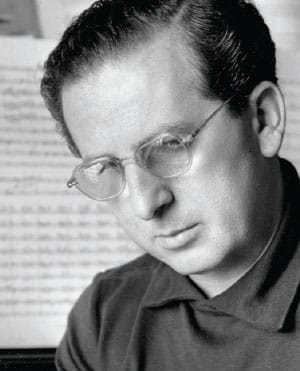
Franz Waxman’s Carmen Fantasy would join that list some decades later, but its creation story is less straightforward. A product of the conservatories of Dresden and Berlin, Waxman had grown friendly with the German composer Friedrich Holländer and orchestrated several Holländer tunes for the 1930 film The Blue Angel. Waxman fled the Nazis in 1933, arriving the following year in Los Angeles, where he created music for some 140 Hollywood films, including Sunset Boulevard (1950), which brought Waxman his first Academy Award.
Another was Jean Negulesco’s Humoresque, a 1946 melodrama in which John Garfield portrays a concert violinist who gets involved with a morally dubious patron, played by Joan Crawford. At one point, the patron drops in on him at a rehearsal where he is playing the Carmen Fantasy Waxman composed for the movie.
Jascha Heifetz, it seems, had been offered the soundtrack job but declined it due to an insufficient fee. He nonetheless liked what he heard and asked Waxman to expand the film version of the Carmen Fantasy—which, in his hands, became a concert classic.
—J.M.K.
Selections from A Midsummer Night’s Dream
Felix Mendelssohn
Born: February 3, 1809, in Hamburg
Died: November 4, 1847, in Leipzig
Work Composed: Overture—1826. Incidental music—1843.
SF Symphony Performances: First—January 1913. Henry Hadley conducted. Most recent—September 2022. Esa-Pekka Salonen conducted with the African-American Shakespeare Company.
Instrumentation: 2 flutes, 2 oboes, 2 clarinets, 2 bassoons, 2 horns, 3 trumpets, 3 trombones, tuba, timpani, percussion (triangle and cymbals), and strings
Duration: About 20 minutes
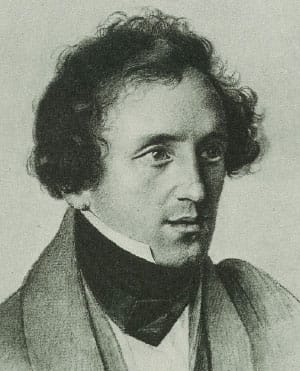
When Felix Mendelssohn composed his Overture to A Midsummer Night’s Dream, in August 1826, he was just midway between his 17th and his 18th birthdays. It’s not surprising that an adolescent would be enamored of William Shakespeare’s beloved play about love, magic, and how supernatural powers can bend the annoying rules of powerful adults—all played out in a Never-Never Land that Shakespeare denotes as Athens and a neighboring forest. That such an adolescent might express that enthusiasm by writing one of the most enduring masterpieces of the musical repertory is, however, not something that could have been anticipated.
Shakespeare’s comedy was first printed in 1600, but it was probably written several years earlier. Though the name of Shakespeare was known to German literary circles as early as 1682, his works found their first serious advocate there in Johann Elias Schlegel, whose 18th-century translations and critical writings served as the catalyst for what would become a German infatuation with Shakespeare. It seems that the Mendelssohn children learned their Shakespeare through the 1801 translation of Ludwig Tieck and August Wilhelm von Schlegel (a nephew of Elias), who viewed Shakespeare as a fellow Romantic. They also read the Bard selectively in the original English.
At the beginning of July 1826, Felix jotted a note to his sister Fanny: “I have grown accustomed to composing in our garden. . . . Today or tomorrow I am going to dream there A Midsummer Night’s Dream. It is, however, an enormous audacity.”
Mendelssohn did not imagine his overture as a prelude to any performance of Shakespeare’s play, at least not when he wrote it. It might be best viewed as a sort of parallel depiction of certain of the play’s aspects: the magical aura suggested by the opening woodwind chords, the violins’ lighter-than-air scurrying of the fairies’ dance, the intrusion of moments of doubt and melancholy, the tender nostalgia of the strings’ high-lying theme that closes the piece.
In 1843, he revisited the play to create incidental music for a full production, giving us such selections as the Notturno (with its gorgeous horn solo, following Act III) and famous Wedding March for the nupitals of Theseus and Hippolyta.
—J.M.K.
Romeo and Juliet, Fantasy-Overture
Piotr Ilyich Tchaikovsky
Born: May 7, 1840, in Kamsko-Votkinsk, Russia
Died: November 6, 1893, in Saint Petersburg, Russia
Work Composed: 1869 (rev. 1880)
SF Symphony Performances: First—January 12, 1913. Henry Hadley conducted. Most recent—July 2025. Stephanie Childress conducted.
Instrumentation: 2 flutes, piccolo, 2 oboes, English horn, 2 clarinets, 2 bassoons, 4 horns, 2 trumpets, 3 trombones, tuba, timpani, percussion (cymbals and bass drum), harp, and strings
Duration: About 21 minutes
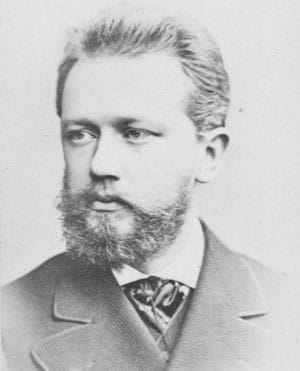
In the winter of 1868–69, Tchaikovsky was, for the only time in his life, attracted to a woman, Désirée Artôt, a Belgian soprano. Tchaikovsky’s intentions were serious, but Artôt suddenly brought their relationship to an end by marrying a baritone colleague of hers. When Tchaikovsky next saw her on the stage he wept all evening.
Tchaikovsky was ready to have the composer Mily Alexeievich Balakirev tell him to write a work based on Shakespeare’s Romeo and Juliet, which is indeed what Balakirev did, going so far as to tell Tchaikovsky how to do it, proposing a key scheme and even writing out four measures of music to show how he would begin such a piece. Balakirev was not always pleased with the way Tchaikovsky worked out “his” ideas. At first, only the broad love theme aroused his enthusiasm. It is “simply delightful,” he wrote. “There’s just one thing I’ll say against this theme, and that is that there’s little in it of inner, spiritual love, only a passionate physical languor.” Balakirev continued to comment, suggest, blame, and praise, and Tchaikovsky continued to compose—becoming more confident in his themes and more imaginative in his reading of the play.
He listened carefully at the premiere, which was an indifferent success. That summer he subjected his overture to drastic revisions, finding the present evocative beginning, devising a stronger close, articulating more vividly what came between. Ten years later he returned to Romeo and Juliet, and it was then that he found the superb coda. Again, he put strong ideas in place of weak, he integrated, he refined. And he produced a masterpiece.
—M.S.
About the Artists
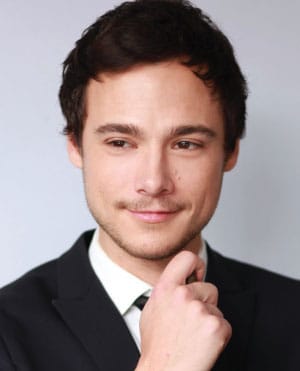
Nicolas Ellis
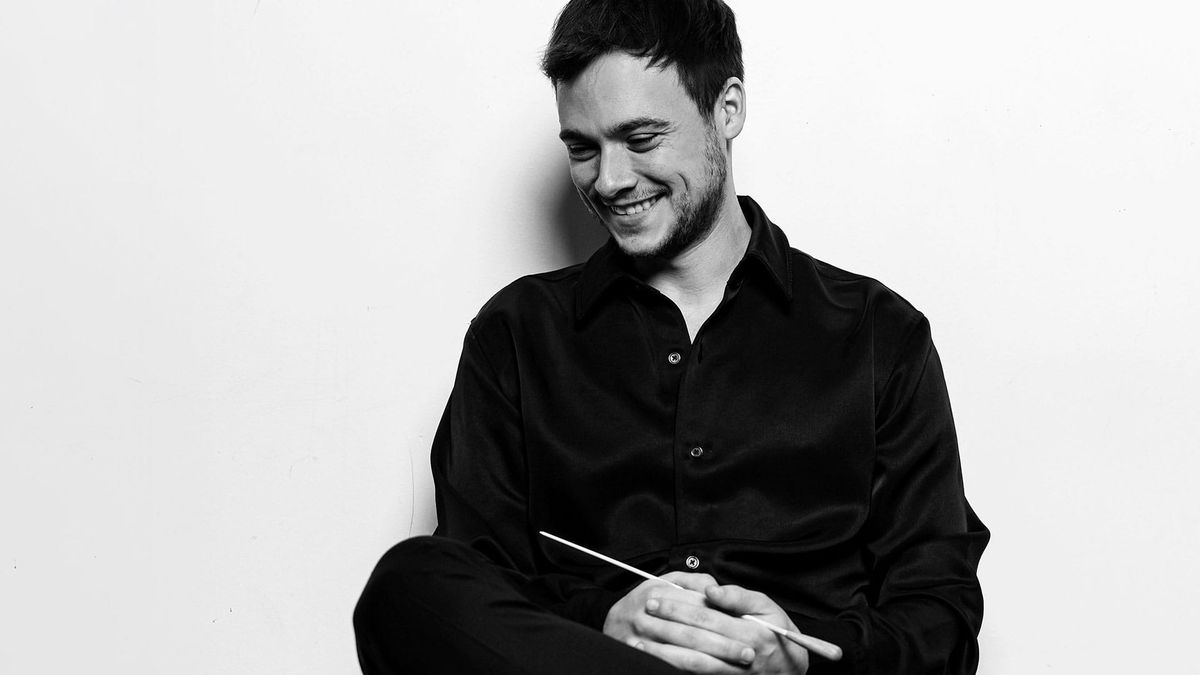
Nicolas Ellis is music director of Orchestre National de Bretagne, principal guest conductor of Les Violons du Roy, and artistic director of Orchestre de l’Agora, which he founded in Montreal in 2013.
This season, Ellis debuted with the Polish National Radio Symphony Orchestra, Norwegian Radio Orchestra, Swedish Chamber Orchestra, Hamburg Symphony, the Orchestra of Opéra National de Lorraine, Baltimore Symphony, and Seattle Symphony. He also returned for subscription concerts with the Vancouver Symphony and Sydney Symphony.
Highlights of previous seasons include performances with the Tampere Philharmonic, Luxembourg Philharmonic, San Diego Symphony, Orchestra of St. Luke’s, and Montreal’s Orchestre Métropolitain. In the opera field, he has appeared with Opéra de Montréal, Opéra de Québec, Graz Opera, and Opéra de Rennes. He makes his San Francisco Symphony debut with this program.
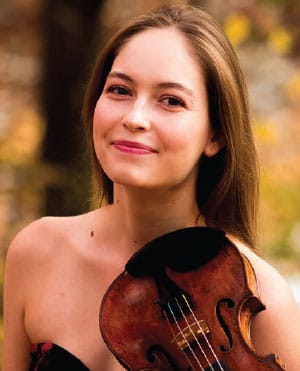
Geneva Lewis
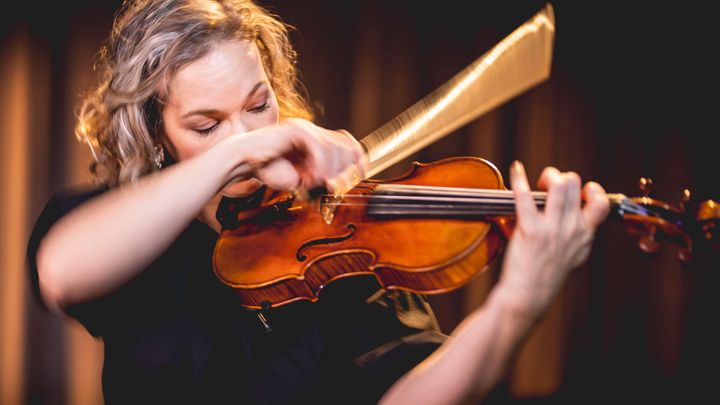
American and New Zealander Geneva Lewis was a BBC New Generation Artist and the recipient of a Borletti-Buitoni Trust Award and an Avery Fisher Career Grant. She was also the grand prize winner of the 2020 Concert Artists Guild Competition and the winner of the Kronberg Academy’s Prince of Hesse Prize.
In 2023, Lewis made her BBC Proms debut at the Royal Albert Hall with the BBC National Orchestra of Wales. She has also collaborated with the BBC Symphony, BBC Scottish Symphony, Orchestre National de Bordeaux Aquitaine, Auckland Philharmonia, Scottish Chamber Orchestra, Orquestra Filarmonica de Minas Gerais, Atlanta Symphony, Indianapolis Symphony, and Vancouver Symphony. This season included performances with Kremerata Baltica, Baltimore Symphony, San Diego Symphony, BBC National Orchestra of Wales, Utah Symphony, and Santa Rosa Symphony, among others. She makes her San Francisco Symphony debut with this performance.
Lewis received her artist diploma from New England Conservatory and went on to the Professional Studies Program at the Kronberg Academy. She currently performs on a composite violin by Giovanni Battista Guadagnini, ca. 1776, generously on loan from a charitable trust.