In This Program
The Concert
Sunday, February 1, 2026, at 7:30pm
Nicola Benedetti violin
Plínio Fernandes guitar
Hanzhi Wang accordion
Adrian Daurov cello
attrib. Maria Theresia von Paradis
(arr. J. Pochin & J. Morgan)
Sicilienne (1924)
Henri Wieniawski
(arr. Stephen Goss)
Polonaise de concert, Opus 4 (1852)
Manuel Ponce
(arr. Paul Campbell)
Estrellita (1912)
Niccolò Paganini
Cantabile in D major, Opus 17 (ca. 1823)
Caprice No. 1 in E major, Opus 1 (1802)
Caprice No. 24 in A minor, Opus 1 (1817)
Pablo de Sarasate
(arr. Stephen Goss)
Navarra, Opus 33 (1889)
Intermission
Traditional
(arr. Brìghde Chaimbeul)
A’ Choille Ghruamach (Air)
Skye Boat Song
Hacky Honey Reel
Vittorio Monti
Czardas (1904)
Ernest Bloch
(arr. Simon Parkin)
From Jewish Life: Prayer (1924)
Claude Debussy
(arr. Simon Parkin)
Beau soir (1878)
Pablo de Sarasate
(arr. Stephen Goss)
Carmen Fantasy, Opus 25 (1881)
Presenting Sponsor of the Great Performers Series

About the Program
The music you will hear tonight is intended as a thank you to you all: audiences I have known and been supported by for over 22 years; people of all ages from around the world who share with me a deep love of classical music and the violin; people whose children I have taught after concerts and whose curiosity of the arts I share. This selection of music combines warm and uplifting virtuosity with seductive romance, but we have also discovered an innocent sweetness in much of this repertoire—a sentiment quite hard to come by in this time.
The ensemble combination of violin, guitar, accordion, and cello came to me in the middle of the night. The standard violin and piano duo has a formality I knew wasn’t right, and this line-up of instruments delivers a communal, conversational, “café-appropriate” sound; a sound with the flexibility to work across genres, cultures, and performance environments. The guitar and accordion are beloved around the world, and in the masterful hands of Plínio Fernandes and Hanzhi Wang these intelligent, creative arrangements have breathed new life into virtuosic violin classics and seductive, lilting melodies. The cello—an instrument I secretly wished I had learned as a child—brings an indispensable resonance, a grounding and an irresistible soulfulness.
Although this formation of musicians, the combination of their instruments and the written arrangements were all brand new, things always have a way of coming back around. For me this is particularly true of my time at the Yehudi Menuhin School. As we began our first play-through for a small invited audience in order to test out this eclectic mix of pieces in front of a real—not just imagined—public, I realized just quite how much relevance this program has to that time in my life. I learned all the virtuosic pieces for the first time when in my early teens at the school, studying with professor Natasha Boyarsky. The first time I tackled a technique called “fingered octaves” (using alternating pairs of fingers for each successive double-stop) was in Wieniawski’s Polonaise de concert, learned aged 13.
The first time I attempted a tremolo (bowing very fast with very little bow to give a shivering, exciting effect), which we aptly called “as fast as possible till your muscle tires,” was in Navarra by Pablo de Sarasate (1844–1908), learned aged 12. And the first time I learned to trust muscle memory from hours of practice, accepting I had to play passages much faster than my brain could think, was in Sarasate’s Carmen Fantasy, learned aged 14. I acquired not only the fundamentals of technical playing, but also understood how to deepen the fire, passion, and sonority of playing and interpreting music. As young students, our minds were filled with elaborate tales of the composers we played. Take the wild and formidable Wieniawski (1835–80): a musical prodigy and polymath in the truest, deepest sense. Composer, virtuoso, showman and genius, his unruly, unpredictable nature, combined with his prestige and sophistication, conjured up colorful, wild images in my young mind. Then there was Sarasate’s noble, somewhat aloof demeanor: his blinding virtuosity, technical skill, and relentless touring schedule served as an inspiration for many an hour of practice. But as we continued to address these pieces this time around, each time we’d begin, I became increasingly comfortable with really playing within a group. I was struck by the innocent, romantic purity of the music: charm and delight and smiles and uplift and so, so many opportunities to enjoy ourselves.
As you listen to Sarasate’s Navarra, you will hear quick decisions leading to shifts in rubato, color, and phrase emphasis. As we practiced, you can imagine us smiling and laughing as we pushed our tempos to the limit—not to mention that closing tremolo until muscles ache—and gave our all, interpreting the Northern Spanish jota dance. But although a fun, fulfilling yet challenging time was had in tackling all those notes and basking in all that charm, it is the slow, luscious, emotional writing that has had my heart from my first days learning the violin.
I would love to believe the Sicilienne, written in the earthy key of E-flat major, was composed by the pianist and composer Maria Theresia von Paradis (1759–1824), blind from a young age and uniquely gifted. But this is sadly untrue. In fact Samuel Dushkin, a 20th-century violinist who thought a romantic “rediscovery” tale might bring extra attention and notoriety to this music, claimed to have unearthed the lost “Sicilienne by Paradis” for the world. In actuality, it is an adaptation by Dushkin—though quite a significant one—of the Larghetto from Carl Maria von Weber’s Violin Sonata, Opus 10, no.1 (1810). I’m sure the false attribution helped Dushkin with the initial popularity of his Sicilienne, but its continued beloved status has little if anything to do with that. It is the tenderness, sweetness, and sincerity of the piece that has us all still playing it, singing it, and being moved by it. This arrangement by Juliet Pochin and James Morgan, with its interwoven lines and mastery of register and texture, was a joy to learn.
Estrellita, written by Mexican composer Manuel Ponce in 1912—arranged by my good friend Paul Campbell—along with Beau soir, a mélodie penned by a 16-year-old Claude Debussy (1862–1918) and arranged here by Simon Parkin, all share a sentimentality, a romanticism, and a longing and nostalgia for times gone by. Ponce (1882–1948) speaks of the pain and anguish of someone asking their all-seeing guiding star above whether their love will ever be requited, and Paul Campbell’s string writing is sumptuous and full while retaining the song’s simplicity across all four instruments.
Beau soir advises us “to savour the gift of life while we are young and the evening fair.” Its subtlety is always difficult to interpret, but the challenge is even greater with four diverse instruments serving very different purposes. Of all the works on this program, this one probably saw us experiment with the most wildly different approaches.
I fell in love with Ernest Bloch (1880–1959) at the Menuhin School: in my secret desire to play the cello, through the abundance of cellists around, and with the amount of Bloch’s music that was being played. I remember hearing Prayer for the first time in a lunchtime concert and wondering why I’d never come across this sound before. The theme’s recapitulation is assigned by our masterful arranger Simon Parkin to its rightful place: the hands of our cellist who plays it with such freedom, yet integrity, after we have done our best to match the cello’s depth and sonority.
I could not pull together a collection of music intended as a gift for audiences without featuring Scotland—this comes in my collaboration with leading Scottish smallpipe player Brìghde Chaimbeul for the arrangements of A’ Choille Ghruamach (Air), Skye Boat Song, and Hacky Honey Reel. Although the choice of songs was guided by Brìghde, and we discussed our way through a whole list of options, the Skye Boat Song was my request. I played it on repeat when my baby girl was tiny, and it calmed her right down. Brìghde, luckily, liked the idea. This song is therefore dedicated to my daughter.
We hope you feel closer to music, closer to us and closer to each other by the end of tonight’s performance. Thank you so much, from the bottom of my heart, for being here and choosing to spend tonight with us.
—Nicola Benedetti
About the Artists
Nicola Benedetti
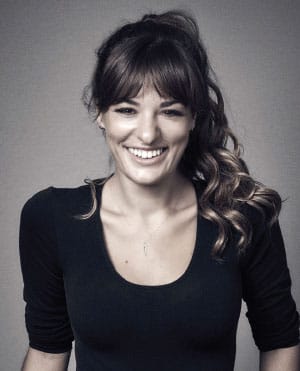
This season, Nicola Benedetti has embarked on her first solo tour in over a decade, combining virtuosic and seductive romantic works in arrangements with guitar, accordion, and cello. She also returns to the New York Philharmonic, London Philharmonic, Philharmonia Orchestra, Royal Scottish National Orchestra, Scottish Chamber Orchestra, and Berlin Radio Symphony. She made her San Francisco Symphony debut on New Year’s Eve of 2012.
Winner of the 2020 Grammy Award for Best Classical Instrumental Solo, as well as Best Female Artist at both 2012 and 2013 Classical BRIT Awards, Benedetti records exclusively for Decca. In 2021, BBC Music Magazine named her “Personality of the Year” for her online support of many young musicians during the pandemic.
In 2019, she established the Benedetti Foundation, which delivers transformative experiences through mass music events and unites those who believe music is integral to life’s education. In its first four years, the foundation has worked with close to 70,000 participants of all ages and levels, instrumentalists and non-instrumentalists alike, across 105 countries. Its free online educational video resources have had more than six million views.
Benedetti was appointed a CBE in 2019, awarded the Queen’s Medal for Music in 2017, and an MBE in 2013. In addition, she holds the positions of vice president of the National Children’s Orchestras; “big sister” for Sistema Scotland; and patron of the National Youth Orchestras of Scotland’s Junior Orchestra, Music in Secondary Schools Trust, and Junior Conservatoire at the Royal Conservatoire of Scotland. In 2022, Benedetti became the festival director of the Edinburgh International Festival, becoming both the first Scottish and first female director since its beginning in 1947.
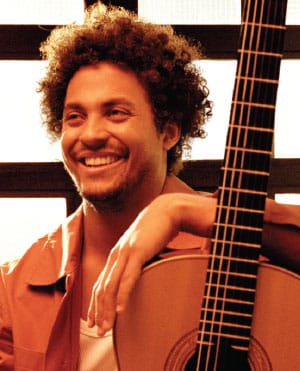
Plínio Fernandes
Born and raised in São Paulo, Brazil, Plínio Fernandes fuses classical guitar with Brazilian folk music. An exclusive Decca Gold recording artist, he released his debut album, Saudade, in 2022, which reached No. 1 on the Billboard Traditional Classical Albums Chart. His second album, Bacheando, released in September 2023, explores Bach’s influence on Brazilian music and contrasts with his recently released EP, Cinema.
Highlights of Fernandes’s 2025–26 season include this tour with Nicola Benedetti, debuts at National Sawdust, Smith Square London, Eindhoven Muziekgebouw, stART Festival, Kissinger Sommer Festival, as well as with the Bournemouth Symphony and Oxford Philharmonic. Other recent highlights include debuts at the BBC Proms, Lucerne Festival, Ravinia Festival, and Amsterdam Concertgebouw, as well as with the BBC Concert Orchestra, and a recital tour of the United Kingdom with Sheku Kanneh-Mason.
Fernandes appeared on Forbes’s “Brazil’s Under 30” list, was named a “rising star” by Classic FM, and recently received the Revelação Award at the 30th Annual Prêmio da Música Brasileira. A passionate advocate for music education, he was invited to join London Music Masters as an ambassador, and is involved with performing, teaching, and guiding young musicians in schools. He makes his debut at the San Francisco Symphony with this performance.

Hanzhi Wang
Hanzhi Wang was the first accordionist to win a place on the roster of Young Concert Artists, first to be named Musical America’s “New Artist of the Month,” and first to release a solo CD on Naxos. She holds the Ruth Laredo Prize and Mortimer Levitt Career Development Award for Women Artists of YCA.
Wang has given recitals at UC Santa Barbara’s Lively Arts, Stanford Live, Bravo! Vail, Krannert Center, and Candlelight Concert Society. She has also appeared as soloist with the Oregon Music Festival, Victoria Symphony, Sinfonia Gulf Coast, Iris Orchestra, Hawaii Symphony, Erie Philharmonic, and Reno Chamber Orchestra.
Wang earned her bachelor’s degree at the Beijing Central Conservatory of Music. She completed her master’s degree and soloist diploma at the Royal Danish Academy of Music with the renowned accordion professor Geir Draugsvoll. She makes her debut at the San Francisco Symphony with this performance.
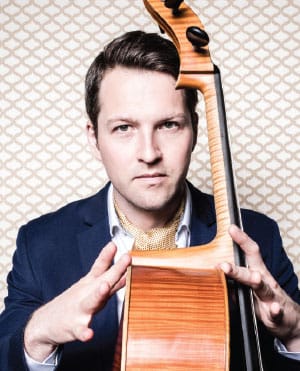
Adrian Daurov
Adrian Daurov solos this season with the Chamber Orchestra of New York at Carnegie Hall’s Zankel Hall, tours with Nicola Benedetti, and appears at the Chicago Chamber Music Society alongside the Euclid Quartet.
A native of Saint Petersburg, Russia, he made his debut at 15 with the Saint Petersburg State Symphony, and subsequently earned top prizes at Bulgaria’s First International Music Competition, the Netherlands’ Peter De Grote International Music Competition, and New York’s LISMA International Music Competition. He went on to study at the Juilliard School, and was appointed principal cello of the Chamber Orchestra of New York, a position he still holds.
Recent seasons have included performances with the Dayton Philharmonic, Berkshire Symphony, Altoona Symphony, Bozeman Symphony, Kalamazoo Symphony, Longwood Symphony, and Wyoming Symphony, among others. He makes his debut at the San Francisco Symphony with this performance.