In This Program
- The Concert
- At a Glance
- Program Notes
- Text and Translations
- About the Artists
- About San Francisco Symphony
The Concert
Thursday, February 5, 2026, at 7:30pm
Friday, February 6, 2026, at 7:30pm
Saturday, February 7, 2026, at 7:30pm
Harry Bicket conducting
Wolfgang Amadeus Mozart
Serenade No. 6 in D major, K.239, Serenata notturna (1776)
Marcia maestoso
Menuetto
Rondo: Allegretto–Adagio–Allegro
Alexander Barantschik violin
Dan Carlson violin
Yun Jie Liu viola
Scott Pingel bass
Symphony No. 34 in C major, K.338 (1780)
Allegro vivace
Andante di molto
Finale: Allegro vivace
Intermission
“Giunse alfin il momento ... Deh vieni, non tardar”
from Le nozze di Figaro, K.492 (1786)
“Temerari! Sortite ... Come scoglio” from Così fan tutte, K.588 (1789)
Golda Schultz soprano
“Don Ottavio, son morta ... Or sai chi l’onore” from Don Giovanni, K.527 (1787)
Golda Schultz soprano
Samuel White tenor
Symphony No. 38 in D major, K.504, Prague (1786)
Adagio–Allegro
Andante
Finale: Presto
The February 6 concert is presented in partnership with

These concerts are made possible by the Matthew Kelly Family Foundation.
These concerts are generously sponsored by the Athena T. Blackburn Endowed Fund for Russian Music.
Program Notes
At a Glance
Completing the program is the Prague Symphony No. 38, written for the Bohemian capital where Mozart enjoyed even greater popularity than he did throughout his life in Austria.
Serenade No. 6 in D major, K.239, Serenata notturna
Wolfgang Amadeus Mozart
Born: January 27, 1756, in Salzburg
Died: December 5, 1791, in Vienna
Work Composed: 1776
SF Symphony Performances: First—February 1955. Enrique Jordá conducted. Most recent—May 2022. Bernard Labadie conducted.
Instrumentation: solo string quartet, timpani, and strings
Duration: About 14 minutes
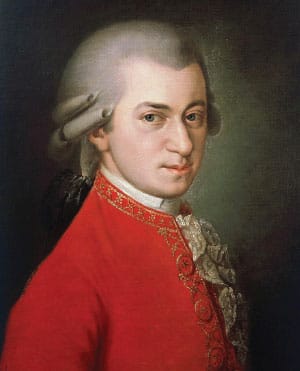
Among his more obvious gifts as a composer—craftsmanship, virtuosity, melodic ingenuity—Mozart excelled at making everything look easy. The Italians, who mastered the art of effortless elegance centuries ago, have a word for this quality: sprezzatura. Whatever you call it—coolness, swag, drip—it’s the antithesis of sweaty striving. Sprezzatura might as well be synonymous with Mozart, lord of the light touch, the transparent textures, the coloratura pure as birdsong.
Elegant but never uptight, Serenata notturna was originally intended as dinner music. As W.H. Auden wryly quipped in a poem about Mozart’s divertimentos, “while bottles were uncorked, / Milord chewed noisily, Milady talked.” Mozart understood the assignment, but he cared too much about his craft to crank out aural wallpaper. He always composed to amuse—himself, if no one else was listening.
In 1776, when he completed this serenade, he was 20 years old and already a seasoned pro, though still based in his native Salzburg. Starting at age seven, he had spent at least half his time concertizing throughout the continent: part curiosity, part virtuoso, and entirely under the control of his domineering stage dad, Leopold. When he returned home from tour, he joined his father as a court musician for the Prince-Archbishop. At 16 the younger Mozart was appointed court concertmaster, although he had already been doing the job without pay for three years.
He more than earned the modest salary he eventually received. Between 1773 and 1776, he composed a staggering number of masses, symphonies, serenades, concertos, and assorted chamber works, all of exceptional quality. His dream was to ditch sleepy Salzburg and become a full-time opera composer, but he lacked the funds to strike out on his own. In the meantime, he focused on making each composition, no matter how trivial, as perfect as possible. The preening aristocrats might not have noticed the quality of Serenata notturna over their chatter and clatter, but if he resented the commission you’d never know it. It’s nearly as exquisite as his most famous serenade, Eine kleine Nachtmusik, completed 11 years later.
The Music
A serenade originally referred to instrumental music performed outdoors, often in tribute to someone. During the 18th century the serenade was popular throughout Europe, but Mozart re-invented the genre and expanded its relevance. This serenade, in fact, was probably meant for a pre-Lenten celebration indoors, in chilly January.
Ingeniously scored for an orchestra of strings plus timpani and a solo group consisting of two violins, viola, and double bass, Serenata notturna (Leopold may have been responsible for the redundant title) is unusually short but long on charm. In the opening movement, a majestic march, a mock-heroic motif punctuates longer, more lyrical lines. In the first of many humorous moments, the timpani bumble into the string’s genteel exchanges like drunken uncles at a wedding. Next, a pastoral minuet pivots to a contrasting trio, as the rival violins unfurl melodies of interlocking loveliness. Finally, the saucy, scampering Rondo ratchets up the delirium with more comical contrasts, reinforced once again by those hell-raising timpani.
Symphony No. 34 in C major, K.338
Wolfgang Amadeus Mozart
Work Composed: 1780
SF Symphony Performances: First—March 1955. Enrique Jordá conducted. Most recent—September 2007. Michael Tilson Thomas conducted.
Instrumentation: 2 oboes, 2 bassoons, 2 horns, 2 trumpets, timpani, and strings
Duration: About 22 minutes
In late August 1780, when Mozart composed his Symphony No. 34, he was still an overworked court musician in Salzburg. Despite a major promotion from concertmaster to court organist, he was unhappier than ever and often at odds with his boss, Archbishop Colloredo, who wanted him to produce more sacred music. The archbishop would fire Mozart less than a year later, allowing him to escape his father’s direct control and finally begin the next stage of his life, as a freelance composer in Vienna.
The last symphony that Mozart composed in Salzburg, Symphony No. 34, appears to have received its premiere at court sometime in early September, although the precise date is unknown. Mozart brought the manuscript with him to Vienna and presented it on several occasions, including its first documented performance in April 1781, but the score remained unpublished until after his death.
The manuscript suggests that Mozart intended to include a minuet after the first movement but apparently changed his mind: he crossed out 14 measures on the back of the page where the opening Allegro vivace ends. A couple of torn-out pages suggest that Mozart may have continued writing in this vein only to abandon the effort. Instead, he cast the symphony in three movements, a practice that would not have seemed especially unusual at the time.
The Music
Austrian symphonic conventions of the early Classical period associated the key of C major with trumpets, fanfares, flourishes, and pomp aplenty. Often intended for momentous occasions, these compositions balance ceremony and celebration. Mozart would go on to write two more C-major symphonies in this general character, Nos. 36 and 41.
The opening Allegro vivace hits like a gulp of champagne on an empty stomach, all sparkles, bubbles, and bliss. Propelled by headlong rhythms and rolling-thunder timpani, it could serve as the soundtrack to a sexy French farce. Somewhat unusually, no clear melody or theme emerges for the first 35 or so march-like measures. Mozart substitutes a deliciously drawn-out vamp, a series of endless ascending arpeggios and repeated notes. The development section presents all new material instead of developing ideas from the introduction in the usual way.
The central movement, in F major, is scored for strings—marked sotto voce, the instrumental equivalent of a whisper—with divided violas and a single bassoon (which Mozart added in 1786) doubling the cello and bass. Elegant but mischievous, the Andante di molto sings in long, lustrous lines, like a chorus of soubrettes recruited from the comic operas. Balance, grace, and symmetry reign supreme as rising melodies give way to falling melodies, and vice versa.
The finale is another propulsive Allegro vivace in the home key, only this time the meter is a rollicking 6/8. The mood is zany and a little scattershot, in the spirit of opera buffa. It’s a reminder that we’re here to party, or at least to dance, if only in our minds.
Selections from
Le nozze di Figaro, K.492
Così fan tutte, K.588
Don Giovanni, K.527
Wolfgang Amadeus Mozart
Works Composed: Le nozze di Figaro: 1786;
Don Giovanni: 1787; Così fan tutte: 1789
SF Symphony Performances: “Deh vieni, non tardar” from Le nozze di Figaro: First—October 1923. Alfred Hertz conducted with Claire Dux as soloist. Most recent—July 1968. Arthur Fiedler conducted with Nancy Burns as soloist.
“Come scoglio” from Così fan tutte: First—December 1970. Seiji Ozawa conducted with Jane Marsh as soloist. Most recent—January 1973. Seiji Ozawa conducted with Leontyne Price as soloist.
“Don Ottavio, son morta…” from Don Giovanni: First San Francisco Symphony Performances
Instrumentation: Soprano (Susanna/Fiordiligi/Donna Anna),
tenor (Don Ottavio), 2 flutes, 2 oboes, 2 clarinets, 2 bassoons, 2 horns, 2 trumpets, timpani, and strings
Total Duration: About 20 minutes
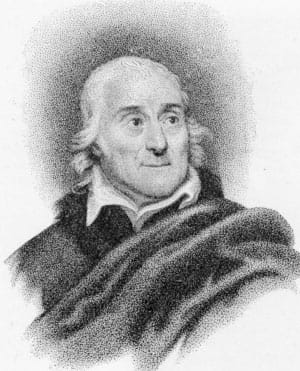
Mozart collaborated on three Italian-language operas with the Venetian poet and adventurer Lorenzo da Ponte (1749–1838), a former priest who ran afoul of the Vatican’s celibacy requirement. When their partnership began, Mozart was 30 years old, cash-strapped but confident that Le nozze di Figaro (The Marriage of Figaro), their new four-act opera buffa, would be a hit. Da Ponte based the libretto on a racy, anti-aristocratic French drama by Pierre-Augustin Beaumarchais, which was banned by the censors in the court of Emperor Joseph II until 1784, when Mozart first read it.
The unexpected success of Figaro in Prague inspired Mozart to visit that city and accept a commission for a second collaboration with da Ponte: Il dissoluto punito, o sia il Don Giovanni (The Punished Rake, or Don Juan), usually shortened to Don Giovanni. Da Ponte, who described his libretto as a dramma giocoso, or tragicomedy, was friends with the notorious libertine Giacomo Casanovo, the rumored real-life model for the fictional Don Giovanni.
Così fan tutte, the final joint project, finds composer and librettist at the peak of their powers. The title, though difficult to translate, means something like “All Women Are Like That.” Despite the unfair generalization, the work never stoops to mockery or misogyny, thanks to Mozart’s delicately nuanced score. With its copious commedia dell’arte tropes, da Ponte’s libretto is ludicrous even by the standards of opera buffa: two pairs of interchangeable lovers, a dash of cuckoldry, wacky disguises, hijinks galore. But behind the froth and frivolity is a sly self-awareness. A meta-opera, Cosí fan tutte spoofs the form while simultaneously fulfilling all the formal desiderata, much like a Shakespeare sonnet or a peak Simpsons episode.
The Music
In “Deh vieni, non tardar,” the maidservant Susanna—disguised as her Countess boss in an elaborate ruse to thwart the philandering Count—notices her fiancé, Figaro, hiding nearby. Unaware that she sees him watching, he assumes that her ardent bridal aria concerns the Count and burns with jealousy. Susanna teases him by adopting a snooty-rich-lady persona, complete with fancy little trills and other aristocratic affectations. As she inhales the night air, however, her impulse to make mischief gives way to something deeper, more sensuous and instinctive: listen to the way her voice deepens and throbs with the words foco (fire) and notte (night). Surprising even herself, her feelings for Figaro burn through all her playful artifice, leaving behind nothing but pure desire.
“Come scoglio,” from Così fan tutte, is sung by Fiordiligi, who remains righteous in her defense of monogamy against a pair of Albanian playboys who are actually her lover and her friend’s lover in disguise. According to established lore, Mozart was annoyed by Adriana Ferrarese del Bene, the soprano for whom the role was originally created, because she habitually dropped her chin and threw back her head at the lower and higher ends of her vocal range. By demanding a relentless series of extreme leaps in this aria, he was effectively making her bob her head up and down like a chicken. Even so, he doesn’t make Fiordiligi fully ridiculous. Sure, she’s a little grandiose, but she’s also passionate and persuasive, endowed with vast stores of what we now call main-character energy.
In the dramatic accompagnato recitativo “Don Ottavio, son morta ... Or sai chi l’onore,” from Don Giovanni, the virtuous Donna Anna tells her fiancé, Don Ottavio, about her attempted rape by Don Giovanni, who then killed her father. As she recounts these violent events, she relives the trauma, growing progressively more enraged until her horrified lover ditches his pacifist principles and agrees that vengeance is the only honorable response. As you might expect from an opera about the moral ruin of a sexual profligate, the score is dark, intense, and dramatic.
Symphony No. 38 in D major, K.504, Prague
Wolfgang Amadeus Mozart
Work Composed: 1786
SF Symphony Performances: First—December 1930. Basil Cameron conducted. Most recent—April 2022. Gustavo Dudamel conducted.
Instrumentation: 2 flutes, 2 oboes, 2 bassoons, 2 horns, 2 trumpets, timpani, and strings
Duration: About 27 minutes
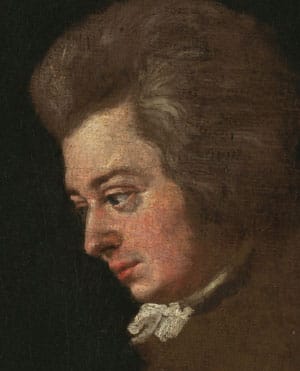
By 1786, life in Vienna had grown increasingly difficult for Mozart. His recent turn toward darker, deeper, more complicated music wasn’t winning him fans; his infant son had recently died; debts were piling up. But if the Viennese seemed to be souring on his work, the Bohemians couldn’t get enough of him. In January 1787 he traveled to Prague to attend one performance of Figaro and conduct another. His latest opera was a sensation there. As he boasted in a letter to his father, “Everyone was writing about it, talking about it, humming it, whistling it, and dancing it.”
At a different concert around the same time, Mozart led the premiere of his Symphony No. 38, which he’d finished a month earlier, in Vienna. Busy with other projects, he hadn’t written a symphony for three years, and he was eager to break new ground.
The Music
Although his father had advised him more than once to dumb things down, Mozart no longer cared about playing it safe. His style had grown more contrapuntal, chromatic, and structurally daring. The Prague is also much more difficult than Mozart’s earlier symphonies, at least from a performer’s perspective. All but the most technically gifted musicians struggled to follow the score, bristling with tricky syncopation and bravura passagework.
Cast in three movements, each in sonata form, the Prague, like Symphony No. 34, forgoes the conventional minuet. It is set in D major, traditionally the key of victory, majesty, and celebration, but the music often veers into D minor, which typically held gloomy or even demonic associations for Mozart and his contemporaries. It’s no accident that so many Requiems, including Mozart’s own unfinished one, are set in D minor.
Prague is one of only three Mozart symphonies that begin with a slow introduction. In this case, the Adagio voices a regal, deceptively simple statement in the home key before fluctuating to minor, a stylistic preview perhaps of Don Giovanni. As the tempo quickens to Allegro, the intricate counterpoint of the development section allows for new harmonic explorations before the closing D-major cadence. If all of Mozart’s repeat marks are observed, this is the longest symphony movement of the era—even longer than the monumental first movement of Beethoven’s Eroica, composed 17 years later.
The central Andante is set in G major. Here Mozart weaves together three connected but contrasting thematic ideas: a graceful, cantabile melody; a more tempestuous, dramatic part; and a charming colloquy between strings and woodwinds. Lyrical and serene, the slow movement feels like a refreshing break after all the preceding complexity, but it’s no less ambitious, thanks to its chromatic violins and unexpected harmonies.
The dazzling, sometimes dissonant Presto returns to the rich syncopation and major-minor volatility of the first movement. The delightful tune at the beginning quotes from a Figaro duet. At times, the winds (especially the flute) seem to dominate, and then Mozart switches up the texture, alternating between full orchestra and unadorned strings. After a bracing development section, Mozart teases us with a “false recapitulation,” offering an apparent reprise of the main theme and then returning with the development. By the time the real conclusion arrives, we embrace it as a long-lost friend.
—René Spencer Saller
Text and Translations
“Giunse alfin il momento ... Deh vieni, non tardar” from Le nozze di Figaro, K.492
Susanna
Giunse alfin il momento, che godrò senz’affanno
in braccio all’idol mio. Timide cure, uscite dal mio petto, a turbar non venite il mio diletto! Oh, come par che all’amoroso foco l’amenità del loco, la terra e il ciel risponda, come la notte i furti miei seconda!
Deh, vieni, non tardar, o gioia bella,
vieni ove amore per goder t’appella,
finché non splende in ciel notturna face,
finché l’aria è ancor bruna e il mondo tace.
Qui mormora il ruscel, qui scherza l’aura,
che col dolce sussurro il cor ristaura,
qui ridono i fioretti e l’erba è fresca,
ai piaceri d’amor qui tutto adesca.
Vieni, ben mio, tra queste piante ascose,
ti vo’ la fronte incoronar di rose.
—
Susanna
At last comes the moment, when I can freely rejoice
in my lover’s arms. Timid worries, leave my heart, and do not return to spoil my happiness. Oh how the beauty of this place,
the earth and the sky, seem to echo the fire of love!
How the night conspires with my secret desires!
Come, do not delay, oh bliss,
Come where love calls you to joy,
Before heaven’s torch shines bright in the sky,
While the air is still dark and the world quiet.
Here the stream murmurs, here the breeze plays;
Their sweet whispers refresh the heart.
Here flowers smile and the grass is cool,
Here everything invites love’s pleasures.
Come, my dearest, and amid these sheltered trees
I will crown your brow with roses.
“Temerari! Sortite ... Come scoglio” from Così fan tutte, K.588
Fiordiligi
Temerari! Sortite
Fuori di questo loco! E non profane
L’alito infausto degli infami detti
Nostro cor, nostro orecchio e nostri affetti!
Invan per voi, per gli altri invan si cerca
Le nostre alme sedur: L’intatta fede
Che per noi già si diede ai cari amanti,
Saprem loro serbar infino a morte,
A dispetto del mondo e della sorte.
Come scoglio immoto resta
Contro i venti e la tempesta,
Così ognor quest’alma è forte
Nella fede e nell’amor.
Con noi nacque quella face
Che ci piace, e ci consola,
E potrà la morte sola
Far che cangi affetto il cor.
Rispettate, anime ingrate,
Questo esempio di costanza;
E una barbara speranza
Non vi renda audaci ancor.
—
Fiordiligi
Bold intruders, leave this place!
Do not poison our hearts, ears, and affections
with your horrible words.
It’s useless for you or anyone
to try to tempt our souls.
The faithful promise
we have sworn to our dear lovers,
we will keep until death,
no matter what the world or fate may do.
Like a fortress stands firm
against wind and storms,
this heart remains strong
in faith and in love.
In our hearts we built a flame
that warms and comforts us;
Only death itself
could change our devotion.
Respect this model of faithfulness
you ungrateful souls;
Don’t let false hope
make you bold again.
“Don Ottavio, son morta... Or sai chi l’onore” from Don Giovanni, K.527
Donna Anna
Don Ottavio, son morta!
Don Ottavio
Cosa è stato?
Donna Anna
Per pietà.. soccorretemi!
Don Ottavio
Mio bene, fate coraggio!
Donna Anna
Oh dei! Quegli è il carnefice
del padre mio!
Don Ottavio
Che dite?
Donna Anna
Non dubitate più. Gli ultimi accenti
che l’empio proferì, tutta la voce
richiamar nel cor mio di quell’indegno
che nel mio appartamento...
Don Ottavio
O ciel! Possibile
che sotto il sacro manto d’amicizia...
ma come fu? Narratemi
lo strano avvenimento:
Donna Anna
Era già alquanto
avanzata la notte,
quando nelle mie stanze, ove soletta
mi trovai per sventura, entrar io vidi,
in un mantello avvolto,
un uom che al primo istante
avea preso per voi.
Ma riconobbi poi
che un inganno era il mio.
Don Ottavio
con affanno
Stelle! Seguite!
Donna Anna
Tacito a me s’appressa
e mi vuole abbracciar; sciogliermi cerco,
ei più mi stringe; io grido;
non viene alcun: con una mano cerca
d’impedire la voce,
e coll’altra m’afferra
stretta così, che già mi credo vinta.
Don Ottavio
Perfido!.. alfin?
Donna Anna
Alfine il duol, l’orrore
dell’infame attentato
accrebbe sì la lena mia, che a forza
di svincolarmi, torcermi e piegarmi,
da lui mi sciolsi!
Don Ottavio
Ohimè! Respiro!
Donna Anna
Allora
rinforzo i stridi miei, chiamo soccorso;
fugge il fellon; arditamente il seguo
fin nella strada per fermarlo, e sono
assalitrice ed assalita: il padre
v’accorre, vuol conoscerlo e l’indegno
che del povero vecchio era più forte,
compiè il misfatto suo col dargli morte!
Or sai chi l’onore
Rapire a me volse,
Chi fu il traditore
Che il padre mi tolse.
Vendetta ti chiedo,
La chiede il tuo cor.
Rammenta la piaga
Del misero seno,
Rimira di sangue
Coperto il terreno.
Se l’ira in te langue
D’un giusto furor.
—
Donna Anna
Don Ottavio, I’m dying!
Don Ottavio
What has happened?
Donna Anna
Please, help me.
Don Ottavio
My love, be strong.
Donna Anna
Oh God!
That man murdered my father!
Don Ottavio
What are you saying?
Donna Anna
There is no doubt. The parting words
of that wicked man, the sound of his voice,
brought back the memory
of him entering my room…
Don Ottavio
Oh heaven! Is it possible
that beneath the mask of friendship…?
But how?
Tell me what happened.
Donna Anna
It was late at night.
As misfortune would have it,
I was alone in my room.
I saw a man enter,
wrapped in a cloak.
At first glance
I thought it was you.
But then I realized
I was mistaken.
Don Ottavio
Good lord—
go on!
Donna Anna
Silently he came toward me and tried to embrace me.
I struggled to break free and he held me more tightly.
I shouted, but no one came.
With one hand,
he stifled my cries.
With the other, he pressed me
so close to him, I thought it was hopeless.
Don Ottavio
Horrible man! And then?
Donna Anna
Finally, the pain and horror
of this terrible assault
gave me strength.
By twisting and struggling,
I forced myself free from him.
Don Ottavio
Oh God, I can breathe again.
Donna Anna
Then I screamed even louder and called for help.
The criminal fled. Boldly I followed him
into the street to stop him.
I was the assailer of my assailant.
My father ran out and demanded his identity.
The wicked man,
stronger than my poor old father,
completed his crime by killing him.
Now you know who tried
to dishonor me,
who the traitor was
who stole my father from me.
I ask you for vengeance,
your own heart demands it.
Remember the wound
in the dying man’s chest;
Look at the ground
soaked with blood.
Remember, and if anger still sleeps in you,
let justice awaken it.
About the Artists
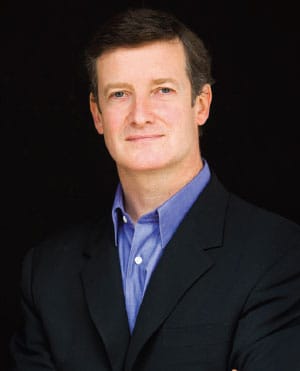
Harry Bicket
Harry Bicket studied at the Royal College of Music and the University of Oxford, where he was an organ scholar at Christ Church. He is an honorary member of the Royal Academy of Music and was awarded an OBE in the 2022 Queen’s Birthday Honours. In 2007 he was appointed artistic director of the English Concert, one of Europe’s finest period orchestras, and is also music director of Santa Fe Opera.
This season, Bicket makes his Zurich Opera debut, returns to the Chicago Symphony, and tours Europe and the United States with the English Concert, alongside their regular London series and Handel Messiah performances in Madrid and Barcelona. Bicket is a regular guest at the Metropolitan Opera and Lyric Opera of Chicago, and has also led multiple productions with Houston Grand Opera, Canadian Opera Company, Paris Opera, and Bavarian State Opera. In the United Kingdom, he made his Glyndebourne Festival debut in 1996 in Peter Sellars’s landmark production of Theodora, and has made numerous appearances with the English National Opera, Scottish Opera, Welsh National Opera, and Opera North. On the concert stage, he has appeared with the New York Philharmonic, Boston Symphony, Cleveland Orchestra, Cincinnati Symphony, Houston Symphony, Detroit Symphony, St. Paul Chamber Orchestra, Los Angeles Philharmonic, and Seattle Symphony. He made his San Francisco Symphony debut in March 2001.
Bicket is a prolific recording artist and has made numerous recordings with the English Concert. His discography also includes five recordings with the Orchestra of the Age of Enlightenment, including one with mezzo-soprano Lorraine Hunt Lieberson that was nominated for a Grammy Award.
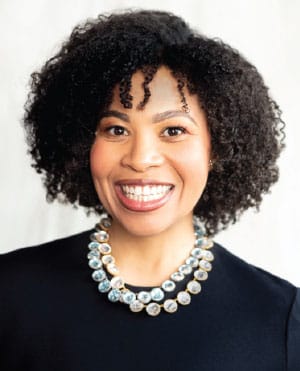
Golda Schultz
South African soprano Golda Schultz trained at the Juilliard School and with the Bavarian State Opera’s Opernstudio. Her early successes included appearances at the Salzburg Festival, Glyndebourne Festival, Metropolitan Opera, and Vienna State Opera. She has gone on to appear at the Paris Opera, Lyric Opera of Chicago, San Francisco Opera, and Dallas Opera, and has become a regular presence at the Met.
Schultz’s 2025–26 season includes Zurich Opera, her house debut at Teatro Real, and a return to Munich Festival Opera. In concert, the season brings a European tour with the Chamber Orchestra of Europe, culminating in a return to the BBC Proms; Mahler’s Symphony No. 8 with the Berlin Philharmonic; and Barber’s Knoxville: Summer of 1915 with the New York Philharmonic.
Recent highlights include appearances with the Royal Concertgebouw Orchestra, Leipzig Gewandhaus Orchestra, Boston Symphony, Los Angeles Philharmonic, and Philadelphia Orchestra. In 2020, she starred in BBC’s Last Night of the Proms with the BBC Symphony. She made her San Francisco Symphony debut in September 2022.
Schultz’s debut solo album, This Be Her Verse on Alpha Classics, explores the worlds and inspirations of female composers from the Romantic era to present day. Her second and most recent release, Mozart, You Drive Me Crazy!, examines the complexities of the female experience in the three Mozart/da Ponte operas and won the 2025 Opus Klassik Solo Vocal Recording of the Year Award.
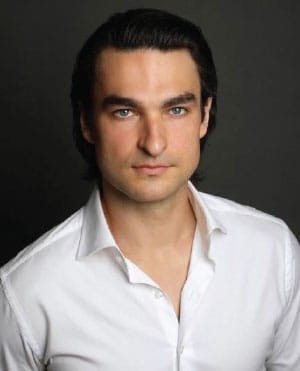
Samuel White
Samuel White recently served as an Adler Fellow with San Francisco Opera and was a participant in the Merola Opera Program, where he performed Bacchus in the final scene of Richard Strauss’s Ariadne auf Naxos at the Schwabacher Summer Concert, and the title role in an excerpt from Massenet’s Werther for the Grand Finale concert. He has debuted at Wexford Festival Opera and covered roles at Glimmerglass and Santa Fe Opera.
Originally from Columbia, South Carolina, White completed his studies at Florida State University, Ohio State University, and Manhattan School of Music. In addition to his training with Merola, he has joined the Aspen Music Festival and Lyric Opera Studio Weimar. He makes his San Francisco Symphony debut with this performance.