In This Program
The Concert
Friday, March 13, 2026, at 7:30pm
Sunday, March 15, 2026, at 2:00pm
Inside Music Talk with Benjamin Pesetsky, Associate Director of Editorial, San Francisco Symphony
with Morgan Balfour, soprano, and Allegra Chapman, piano, performing:
Brahms “Wiegenlied” (Lullaby), Opus 49, no.4
Dvořák “Kéž duch můj sám” (Leave Me Alone), Opus 82, no.1
On stage Friday at 6:30pm and Sunday at 1:00pm
Daniele Rustioni conducting
Antonín Dvořák
Cello Concerto in B minor, Opus 104 (1895)
Allegro
Adagio ma non troppo
Finale: Allegro moderato
Daniel Müller-Schott
Intermission
Johannes Brahms
Symphony No. 2 in D major, Opus 73 (1877)
Allegro non troppo
Adagio non troppo
Allegretto grazioso (quasi andantino)
Allegro con spirito
Daniel Müller-Schott’s and Daniele Rustioni’s appearances are generously supported by the Shenson Young Arist Debut Fund.
Inside Music Talks are supported in memory of Horacio Rodriguez.
Program Notes
At a Glance
Johannes Brahms composed his Symphony No. 2 in just a few months on a summer holiday. The piece’s sense of natural flow reflects the ease of its composition, but it has a bittersweet depth—reveling in bright sunshine but lingering in cool shadows.
These two composers knew each other well—Brahms helped launch Dvořák’s career with an 1877 recommendation letter, and even helped proofread his friend’s cello concerto two decades later.
Cello Concerto in B minor, Opus 104
Antonín Dvořák
Born: September 8, 1841, in Nelahozeves, Bohemia
Died: May 1, 1904, in Prague
Work Composed: 1894–95
SF Symphony Performances: First—January 1964. Josef Krips conducted with Leonard Rose as soloist. Most recent—October 2017. Krzysztof Urbański conducted with Joshua Roman as soloist.
Instrumentation: solo cello, 2 flutes (2nd doubling piccolo), 2 oboes, 2 clarinets, 2 bassoons, 3 horns, 2 trumpets, 3 trombones, tuba, timpani, triangle, and strings
Duration: About 40 minutes
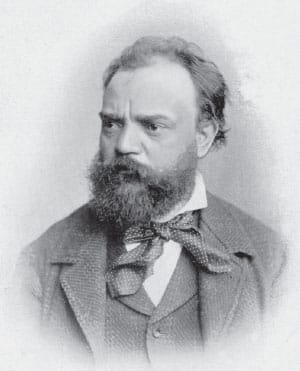
The soloist’s entrance in Antonín Dvořák’s cello concerto is as indelible as any in the repertoire. Tightly constructed yet expansive in feeling, the theme is self-assured—quickly crunching into five chords, then repeating itself higher, before continuing on into a virtuosic caprice. None of the ideas are new, having already been heard in orchestral guise through the three-and-a-half minute introduction. But the soloist adds an electric individuality that makes the same music sound entirely different.
Dvořák wrote the concerto from November 1894 to February 1895 in New York. It was his last, and least happy, academic year in the United States as director of the National Conservatory, a job for which he had been recruited in 1892 by the American philanthropist Jeannette Thurber. She hoped he would educate local musicians and spur a national style of classical music like he had in Bohemia. In the words of H.L. Mencken, he was hired to “introduce Americans to their own music.” And so he wrote his American Quartet and New World Symphony, loosely integrating elements of Black and Native American musical traditions. He enjoyed teaching in New York and spending a summer among Bohemian immigrants in Spillville, Iowa. But the Panic of 1893 (the worst economic crisis before the Great Depression) left the National Conservatory’s finances—and Dvořák’s expensive salary—in jeopardy. He returned to Bohemia for good in April 1895, penning a bitter goodbye in Harper’s Magazine, lamenting the lack of government support for music in America.
The enduring popularity of Dvořák’s American works far outstrips their success in inspiring a homegrown repertoire in the same vein. In contrast, his cello concerto clearly led to the flourishing of the cello repertoire in the 20th century: without him, it’s unlikely that Elgar and Shostakovich, for instance, would have written their own. In fact, in the late 19th century, there were still doubts about the cello’s suitability as a solo instrument. Despite a number of virtuosic players and earlier concertos by Haydn, Schumann, and Saint-Saëns, the cello was generally regarded as a bass and tenor instrument with an unreliable upper register.
So Dvořák was wonderfully surprised in 1894 when he heard Victor Herbert, a composer and principal cello of the Metropolitan Opera, play his own Cello Concerto No. 2 with the New York Philharmonic. In Herbert’s hands, the cello could sing and zing as brightly as the violin, and the brilliance of this now-obscure piece convinced Dvořák to complete a cello concerto himself. (He had drafted but never orchestrated an earlier Cello Concerto in A major in 1865.) When the elderly Brahms studied Dvořák’s concerto, he was amazed, saying, “If only I’d known, I’d have written one long ago,” while the Austrian critic Eduard Hanslick declared, “Dvořák has written a magnificent work which has brought to an end the stagnation of cello literature.”
Dvořák’s intended soloist was Hanuš Wihan, a Czech cellist whose technical advice he accepted, but whose request to add extra cadenzas he strongly rejected. Due to some scheduling confusion, the premiere went to the English cellist Leo Stern and the London Philharmonic, with Dvořák conducting, in March 1896. The score was published by Simrock in Berlin that same year.
The Music
The cello concerto was among Dvořák’s last major orchestral works, coming on the tail of the New World Symphony (he spent his last decade focusing on operas and relatively obscure tone poems, mostly based on folklore). Like the New World, the concerto inhabits a Romantic minor-key world, but it doesn’t directly reference any American ideas. The first movement contrasts the bold solo theme (first heard hesitantly in the clarinets) with a beautiful melody first heard in the horn. The cello and orchestra share all the same material, as if the soloist is continuously absorbing and adapting elements found in its environment.
The middle of the slow movement quotes one of Dvořák’s own songs, from 1888, called Kéž duch můj sám (Leave Me Alone), Opus 82, no.1. This was a favorite of his sister-in-law, Josefina Kaunitzová, with whom he had once been in love before marrying her younger sister, Anna, instead. While working on the concerto, he learned that Josefina was very ill, and so he was moved to pay tribute to her in the piece. (To paraphrase the song’s words: “Leave me alone with my dreams, do not disturb the rapture in my heart! ... Leave me alone! ... Do not ask about the magic that fills me, you cannot comprehend the bliss his love has made me feel ... Leave me alone with my burden of passionate torment, of blazing ecstasy.”)
The finale is quintessentially Czech in its wound-up, folksy energy—perhaps reflecting Dvořák’s excitement at returning home. But just a month after arriving back in Prague, Josefina died, and he decided to revise the third movement to encompass more elegiac references to her in an extended coda. The “Leave Me Alone” theme returns, and the soloist grows contemplative. Dvořák’s very personal conception of the movement made him adamant in rejecting the soloist’s suggested cadenzas. He explained to his publisher, who he worried would insist on revisions: “It has to remain the way I have felt it and thought it out…. The finale ends gradually in a diminuendo, like a slow exhalation—with reminiscences from the first and second movements—the solo fades away to pp [very soft], then there is a crescendo, and the last measures are taken up by the orchestra, ending stormily. That is my idea and I cannot abandon it.”
Symphony No. 2 in D major, Opus 73
Johannes Brahms
Born: May 7, 1833, in Hamburg
Died: April 3, 1897, in Vienna
Work Composed: 1877
SF Symphony Performances: First—February 1913. Henry Hadley conducted. Most recent—November 2023. Gustavo Dudamel conducted.
Instrumentation: 2 flutes, 2 oboes, 2 clarinets, 2 bassoons, 4 horns, 2 trumpets, 3 trombones, tuba, timpani, and strings
Duration: About 40 minutes
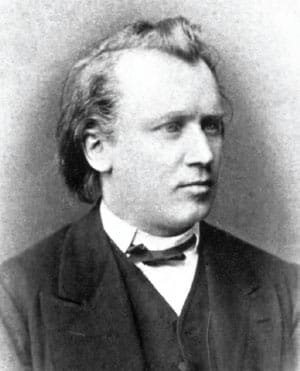
Johannes Brahms composed his Second Symphony during the summer and early fall of 1877, completing the work in just a few months. It was a swift and seemingly effortless process entirely different from that of his First Symphony, which he gestated for nearly 20 years and finally released well into his mid-career.
While the First is filled with struggle, fueled by Brahms’s desire to build on Beethoven’s legacy, the Second suggests an artist becoming more at ease with himself and less preoccupied with the past. Prior to Beethoven, the symphony as a genre didn’t necessarily come with expectations of great length or artistic ambition, but by the middle of the 19th century, simply writing “Symphonie Nr. 1” at the top of a page created a serious psychological barrier for Brahms. Overcoming it at last allowed for less encumbered work on the sequel.
Brahms’s Symphony No. 2 is often described as “pastoral,” and it was composed in the town of Pörtschach, lakeside in the Austrian Alps, as well as near Baden in the Black Forest. Unlike Beethoven’s Pastoral Symphony No. 6, however, Brahms’s work is not programmatic or pictorial—its pastoralism instead comes from its inherent feeling of organic growth and flow.
While Beethoven was often blunt and stormy, which Brahms tried to emulated in his Symphony No. 1, here he expressed something truer to his own nature—“I would have to confess that I am a very melancholy person,” he wrote, “and that dark wings are constantly rustling above me.” In letters to his publisher and friends, Brahms called his Second Symphony “intolerably melancholy,” “world-weary,” “solemn and mournful,” and “dirge-like.” This is not most people’s impression. So much so that many take his words humorously or ironically (elsewhere, Brahms alternatively described it as “cheerful and sweet”). But beneath its warm and affable surface, there is a dark undercurrent—a timpani roll here, a few measures of low brass there, but more often just a shadow of those “black wings.”
The symphony premiered on December 30, 1877, with Hans Richter conducting the Vienna Philharmonic at the Musikverein. Since 1862, Brahms had lived in Vienna (when not vacationing and composing in some outdoorsy location), having moved to the musical capital like many composers before him. The critics effused about the piece, with one reporting “the warmest possible reception [with] repeated curtain calls,” while Eduard Hanslick wrote, “the second symphony radiates like the sun, warming connoisseurs and amateurs; it belongs to all who long for good music.... totally comprehensible, there is nevertheless much to listen to and dwell on.” Brahms soon took the work on tour, conducting it in Germany and Holland.
The Music
The first movement, Allegro non troppo, begins with the lower strings and horns introducing the first theme, followed by the woodwinds. Throughout the symphony, Brahms returns to the rich middle voices—cellos, violas, horns, bassoons—often echoed or elaborated by a cooling breeze of upper woodwinds. The second theme recalls Brahms’s “Wiegenlied,” Opus 49, no.4—the famous lullaby. A closer look, however, reveals more of a gloss on the cradle song than a direct quote. The beat is displaced, the contour filled in stepwise, the harmony is more complex, and the continuation of the phrase differs, altogether giving it a sense of greater sophistication and knowingness. These elements mix and return throughout the movement, which finally crests and falls into a plucky coda before ending peacefully.
The second movement, Adagio non troppo, opens again with Brahms’s favored combination of instruments—this time the cellos feature most prominently with an expansive, twisting melody. It is the most inward looking movement, and the one that most closely matches Brahms’s mournful description.
The Allegretto grazioso lifts the mood, rambunctious at times, with just a few flickers of gloom. Here Brahms shifts his orchestration toward the oboe, other upper woodwinds, and violins.
The finale, Allegro con spirito, starts with the full strings playing quietly, sotto voce, in octaves before diverging into contrapuntal harmony. Soon the flute joins the strings, and then the entire orchestra enters joyfully. Brahms subtly reintigrates a few ideas from the earlier movements, and at last the brass kick in at full power, the symphony’s end affirmatively bright.
—Benjamin Pesetsky
San Francisco Symphony.
Learn more about Brahms and Dvořák in the March feature article.
About the Artists
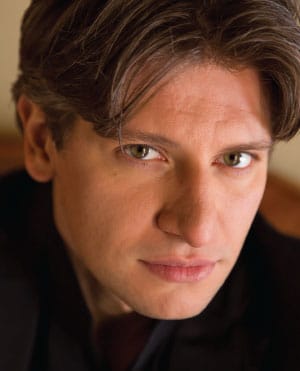
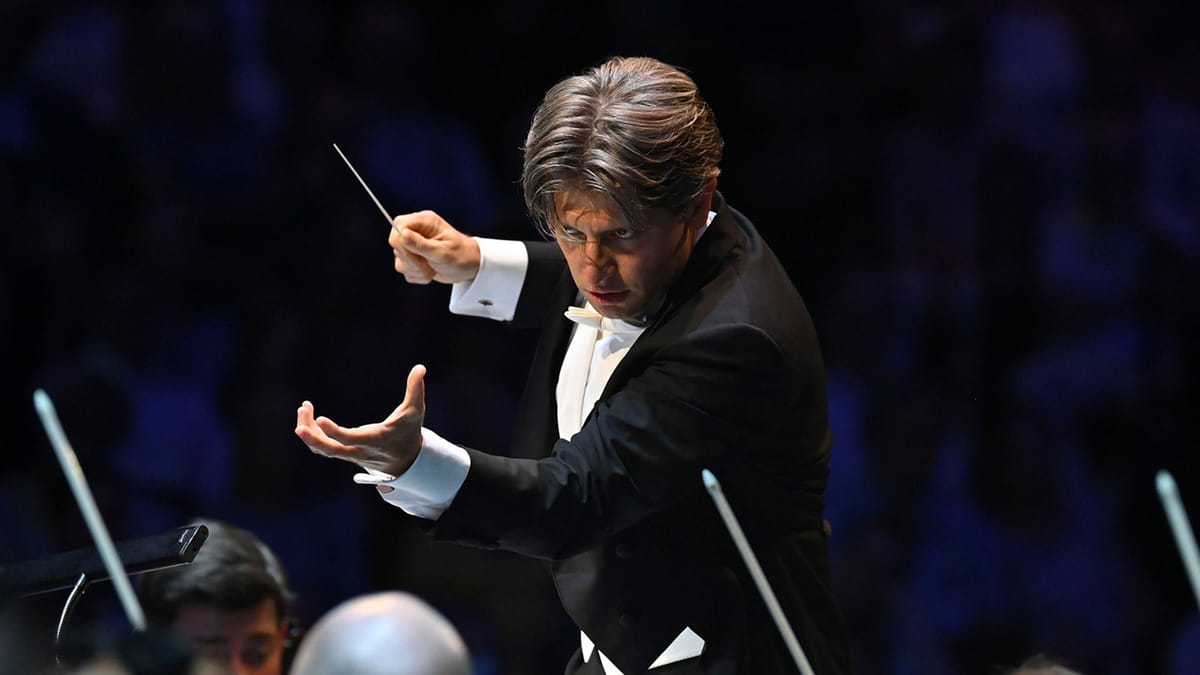
Daniele Rustioni
Daniele Rustioni is principal guest conductor of the Metropolitan Opera, principal guest conductor designate of the Tokyo Metropolitan Symphony, music director emeritus of Opéra National de Lyon, music director laureate of the Ulster Orchestra, and conductor emeritus of the Orchestra della Toscana in Florence.
Highlights this season include appearances with Orchestre National de France, the Cleveland Orchestra, Dallas Symphony, Seattle Symphony, Vienna State Opera, Bavarian State Opera, Pittsburgh Symphony, BBC Symphony, Festival d’Aix-en-Provence, and La Scala. In recent seasons, he has debuted with the London Philharmonic, London Symphony, Philharmonia Orchestra, City of Birmingham Symphony, Hallé Orchestra, New York Philharmonic, Metropolitan Opera Orchestra at Carnegie Hall, Philadelphia Orchestra, Cleveland Orchestra, and Los Angeles Philharmonic. He has led operas at most of the leading international opera houses, including the Royal Opera House, Covent Garden; Opèra National de Paris; Berlin State Opera; Zurich Opera; Dutch National Opera; and Teatro Real. He makes his San Francisco Symphony debut with this program.
Rustioni’s most recent recording was with mezzo-soprano Aigul Akhmetshina for her debut album on Decca. His discography includes a variety of repertoire for Deutsche Grammophon, Dynamic, Unitel, Opus Arte, and Opera Rara. His recordings of rediscovered Italian symphonic composers of the 20th century on Sony Classical received critical acclaim. In 2022, Naxos released his recording of Rimsky-Korsakov’s The Golden Cockerel at Opéra National de Lyon.
Rustioni was born in Milan and began his career in 1993 as a member of La Scala’s children’s chorus. He continued his studies at the Milan Conservatory, La Scala Academy, Sienna’s Accademia Musicale Chigiana, and London’s Royal Academy of Music.
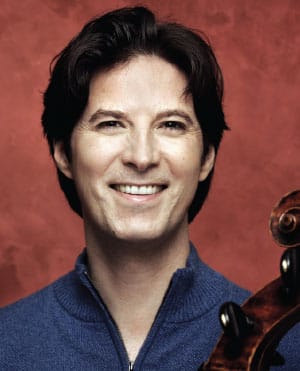
Daniel Müller-Schott
Highlights of Daniel Müller-Schott’s 2025–26 season include appearances with the London Symphony, National Symphony, Indianapolis Symphony, and Czech Philharmonic, as well as chamber music with Maxim Vengerov and friends at Carnegie Hall. He tours Asia, Australia, and New Zealand, playing with the WDR Symphony, Sydney Symphony, Adelaide Symphony, Tasmanian Symphony, and Aukland Philharmonic. The Vevey Spring Classic Festival, which he founded together with conductor Wilson Hermanto, will have its fifth season in 2026. Müller-Schott is a regular guest soloist with the New York Philharmonic, Boston Symphony, Cleveland Orchestra, Chicago Symphony, Philadelphia Orchestra, Los Angeles Philharmonic, London Philharmonic, Royal Philharmonic, Berlin Philharmonic, Bavarian State Orchestra, Munich Philharmonic, and Leipzig Gewandhaus Orchestra, among others. He made his San Francisco Symphony debut in July 2011, appeared with Anne-Sophie Mutter on the Great Performers Series in January 2020, and makes his SF Symphony Orchestral Series debut with this program.
Müller-Schott not only performs cello concertos from the Baroque to the modern era, but is also keen to discover unknown works and collaborate with the composers of our time. George Alexander Albrecht, André Previn, and Peter Ruzicka have all dedicated cello concertos to him. His discography has been honored with numerous international awards, with an upcoming recording of works by Boccherini, Geminiani, Vivaldi, and Bach on the Orfeo International label.
Müller-Schott received the Aida Stucki Prize from the Anne-Sophie Mutter Foundation and won first prize at the International Tchaikovsky Competition for Young Musicians in 1992. He plays the “Ex Shapiro” Matteo Goffriller cello, made in Venice in 1727.
Benjamin Pesetsky is Associate Director of Editorial and Inside Music Talks for the San Francisco Symphony. He has also written program notes for the St. Louis Symphony, Philadelphia Orchestra, and Melbourne Symphony. He holds degrees in composition and philosophy from Bard College Conservatory and Bard College.
Morgan Balfour is a member of the San Francisco Symphony Chorus and has been a soprano soloist with the Symphony in Bach’s Magnificat and Bernstein’s Chichester Psalms. She also sings regularly with American Bach and appears this season with I Cantori di Carmel, Cantata Collective, and SF Bach Choir. She studied at the Queensland Conservatorium and San Francisco Conservatory of Music.
Allegra Chapman is a member of Left Coast Chamber Ensemble and San Francisco Contemporary Music Players, a Contributing Writer for the SF Symphony, and was previously the pianist of the Delphi Trio and co-artistic and executive director of Bard Music West. As a vocal collaborator, she shared first prize in the Federation of the Art Song Fellowship Competition. She holds degrees from Bard College Conservatory and the Juilliard School.