In This Program
The Concert
Sunday, April 12, 2026, at 2:00pm
Musicians of the San Francisco Symphony
Steve Reich
Music for Pieces of Wood (1973)
Jacob Nissly · Stan Muncy · Marty Thenell · Ahmad Yousefi · Carlos Alvarez claves
Jean Françaix
Octet (1972)
Moderato–Allegrissimo
Scherzo
Andante-Adagio
Mouvement de Valse
Carey Bell clarinet
Joshua Elmore bassoon
Michael Stevens horn
Olivia Chen violin
Kingston Ho violin
Katie Kadarauch viola
Anne Richardson cello
Daniel G. Smith bass
Intermission
Various
(arr. Danish String Quartet)
Selections from Last Leaf (2017)
Shore (Fredrik Sjölin)
Polska from Dorotea (Traditional)
Stædelil (Traditional)
Naja’s Waltz (Fredrik Sjölin)
Shine You No More (Rune Tonsgaard Sørensen)
Chen Zhao violin
Polina Sedukh violin
Christina King viola
Davis You cello
Johannes Brahms
Piano Quartet No. 3 in C minor, Opus 60 (1875)
Allegro ma non troppo
Scherzo; Allegro
Andante
Finale. Allegro comodo
Jane Cho violin
Katie Kadarauch viola
Anne Richardson cello
Yuhsin Galaxy Su piano
Program Notes
Music for Pieces of Wood
Steve Reich
Born: October 3, 1936, in New York
Work Composed: 1973
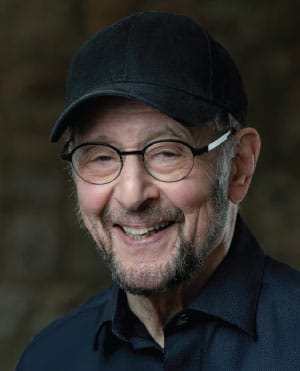
A certain cohort of musicians had more reason than most to be grateful for the advent of minimalism in modern American music. That’s the baby boomers, born after the end of the Second World War and entering their professional training starting in the mid 1960s and extending onwards through the 1970s.
That’s because this generation was taught mostly by musical elders who had the forbidding complexities of mid-century serialism in their DNA. Dealing with the repertory assigned by those teachers was an unnerving if not altogether exhausting ordeal. The music was impenetrable, based as it was on mathematical manipulations of pitch, rhythm, and volume. No amount of attempted analysis would bring meaningful coherence to what typically sounded like random chaos, and for many of us the only chance for survival was to program the stuff into our muscle memory and pray that we wouldn’t slip up and derail the whole thing. Rehearsals were stressful, tempers were frayed. The implication was that we couldn’t understand this oh-so advanced music. After all that, we played to sparse audiences who sat on their hands. It was awful.
But then came the minimalists—Steve Reich, Terry Riley, Philip Glass, John Adams—with their deliberate simplicities, their rhythmic patterning partly based on non-Western cultures, their delight in sheer sound. Rehearsals became a lot more fun. And the audiences, now much larger, actually enjoyed the performances. They even applauded.
Music for Pieces of Wood is a fine example of our newfound liberation. It’s rather like being back in elementary school, standing in a circle and going clackety-clack with our pairs of claves. To be sure, it’s more challenging than that: the rhythms are trickier and, obviously, one is expected to perform like a professional and not just some kid. Nevertheless, it celebrates that wide-eyed childhood delight in sound, the basic joy of sitting on the floor and making lots of happy noise.
Octet
Jean Françaix
Born: May 23, 1912, in Le Mans, France
Died: September 25, 1997, in Paris
Work Composed: 1972
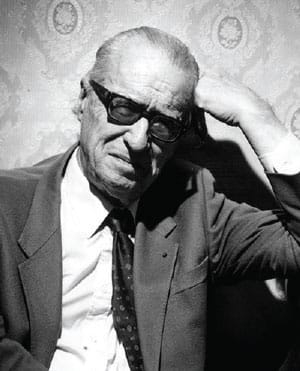
Musicians love to tell the story about high priestess of the harpsichord Wanda Landowska cornering Bach pianist Edwin Fischer and steamrolling him with a diatribe about the superiority of playing Bach on the harpsichord. When she stopped to take a breath, Fischer squeaked out: “But Wanda, I don’t like the harpsichord.”
In that timorous little protest we have the explanation why a sizeable cohort of 20th-century composers wrote themselves into posthumous near-oblivion. People didn’t like their stuff, all those tone rows and permutations and pitch-classes. Nor was it really meant to be liked, or disliked for that matter. Consider Milton Babbitt’s notorious 1958 article “Who Cares If You Listen?” (The title was the editor’s idea.) Babbitt’s thesis was that “advanced” modern music had become too complex to be understood by mainstream music lovers, who were advised to bootstrap themselves up to Babbitt’s privileged ivory tower, or else forget about the whole thing.
Jean Françaix had no truck with such cerebral snobbery. For him, music was meant to be enjoyed, pure and simple. Just as composers of an earlier era wrote with their audience’s approval in mind, Françaix practiced an elegant neoclassicism that was unlikely to displease anybody. And he stayed the course to the day he died.
Françaix wrote his delectable Octet in 1972 at the request of Willi Boskovsky, longtime concertmaster of the Vienna Philharmonic, who presided over the traditional New Year’s Concerts with their reams of Strauss and Léhar and Lanner and Stolz. It was a time when attending a concert of contemporary music was not for the faint of heart, but you’d never know that from this buttercream confection that can’t help but elicit a smile or three. Françaix cared very much if you listen.
The opening movement begins in sobriety but soon slides into borderline silliness à la Looney Tunes. The second-place Scherzo has itself a fine old time with pizzicatos and hurry-scurry figures in the strings, followed by a lovely Andante that places a winsome melody over sweet harmonies. Then, as if acknowledging all those Viennese waltzes of Boskovsky’s, the Mouvement de Valse finale practically floats off the stage in an insouciant cloud of toe-tappy waltz rhythms.
Selections from Last Leaf
Various
(arr. Danish String Quartet)
Work Composed: 2017
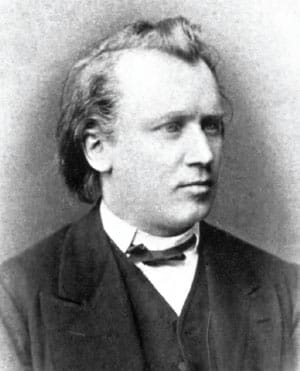
What was to become the Danish String Quartet’s well-loved 2017 album Last Leaf began with the 18th-century Nordic Christmas hymn “Now Found is the Fairest of Roses” by Hans Adolf Brorson, who set his text to a 16th-century chorale melody by Luther’s contemporary Joseph Klug. The tune’s sweet melancholy and Brorson’s metaphor of a “fair rose” growing amid the thistles inspired the members of the quartet to create an album of Nordic folk and liturgical music. Their title references the last leaf of parchment of the 14th-century Codex Runicus, where the oldest known secular Nordic song is preserved. To their collection of dances, laments, ballades, boat songs, and fiddle tunes, they added some compositions of their own that aim to enhance and serve the traditional musical material. Their settings make subtle use of the ancient church modes, employ a gentle and unobtrusive counterpoint, and weave a multihued sonic tapestry that includes evocations of that mainstay of Scandinavian folk music, the hardanger fiddle. In the album they add the occasional touch of harmonium, double bass, glockenspiel, and modern piano.
It would be a woeful disservice to describe Last Leaf as a mere compilation of harmonized Nordic folk tunes, for its cumulative whole transcends such a simplistic view of its parts. Last Leaf takes a deep dive into the business of being human, about experiencing grief and joy, mourning and celebration, loss and love, all expressed in purely musical terms, without words. “In these old melodies, we find beauty and depth, and we can’t help but sing them through the medium of our string quartet” write the members of the Danish String Quartet—Rune Tonsgaard Sørensen, Frederick Øland, Asbjørn Nørgaard, and Fredrik Schøyen Sjölin. They not only curated, wrote, and performed this magical album, but they also published their settings, providing a path for other performers to take their own journey through these ancient and modern pieces.
Piano Quartet No. 3 in C minor, Opus 60
Johannes Brahms
Born: May 7, 1833, in Hamburg
Died: April 3, 1897, in Vienna
Work Composed: 1875
The late 19th century was hardly a halcyon time for chamber music. The era’s overall gestalt ran more towards the descriptive, the theatrical, and the epic; music focused on the subtle pleasures of formal development and harmonic rhetoric was deemed stuffy and old-fashioned by influential commentarial nabobs. Thus we find minimal chamber music from big guns along the lines of Liszt, Wagner, Bruckner, Mahler, and Verdi.
But there were those who continued to write abstract music that relied on its inner logic and structure to make its point rather than resorting to extra-musical associations or programmatic underpinnings. Brahms, the acknowledged leader of the traditionalist faction, produced a rich body of chamber music that remains bedrock repertory to this day—duos and trios and quartets and quintets and sextets, all deeply soaked in formal integrity and imbued with scrupulous attention to instrumental balances.
Ever since the Viennese Classical period, piano quartets had been upstaged by their more popular brethren, piano trios and string quartets. Mozart’s two piano quartets got him publicly spanked for writing over his listeners’ heads, while Beethoven produced only a few in his teen years. Mendelssohn wrote three in quick succession early on but never revisited the genre as an adult. It was left to Robert Schumann to create a single superb specimen, his 1842 Piano Quartet in E-flat major, that was to provide the genre’s foundational model for years to come.
Schumann’s protégé Johannes Brahms produced three piano quartets, two of which date from his early career. The third, in C minor, is a product of Brahms’s full maturity, although he had been working on it off and on for over two decades. He began it during Robert Schumann’s final illness, an ordeal that left the young Brahms torn between intense despair for his dear friend and intense love for his dear friend’s wife, Clara. That has led to notions that the quartet might contain coded references to Clara, or that there’s a connection to Goethe’s young hero Werther, who commits suicide over his unrequited love for a married woman. In later life, Brahms even suggested a cover illustration that was clearly intended as Werther, so the notion isn’t all that far-fetched; one might even hear it described as the “Werther” quartet.
Literary or personal entanglements notwithstanding, the quartet is vintage large-scale Brahms, which means that it is constructed with impeccable structural and motivic integrity. As per his signature practice, Brahms presents his most important musical motive at the get-go, in this case a falling semitone that will inform the entire piece and generate any amount of further musical material. The stern primary theme is made out of that falling semitone; it’s complemented by figures in falling thirds—another idea that Brahms will use abundantly throughout. As we might expect, a less stormy and more lyrical second theme is cast in the usual major mode, but there’s a great deal that’s unpredictable about this movement, more than enough to make it excellent fodder for advanced students of musical analysis.
The second-place Scherzo combines skittishness with muscularity, a potent and even dangerous blend. Careful listening reveals that its main theme is made up of a rising semitone—the mirror of that all-pervasive falling motive. Unlike many Brahms scherzos, this movement lacks a Trio, often an opportunity for noble lyricism and expansive breadth. Instead, the third-place Andante takes up that role with a rhapsodic slow movement that ranks among Brahms’s most inspired and lyrically captivating. Cast in the key of E major—motion by thirds from the original key—it dwells in a world apart from the quartet’s pervading storm-tossed demeanor. Although the long-lined opening cello solo seems to channel the slow movement of the Schumann Piano Quartet, its motion by thirds marks it securely as Brahms, as does a closing theme made up of a falling semitone plus a descending third. In short, it’s absolutely gorgeous, but it’s also absolutely logical. A delicate and hesitant midpoint interlude provides a subtle contrast of mood.
The opening of the finale might remind listeners of Brahms’s First Violin Sonata, but the resemblance doesn’t last long. Fleeting allusions to the “fate” motive of Beethoven’s Fifth Symphony, chorale-like contrasting passages, and periods of idyllic dreaming combine to create a tapestry of shifting colors and effects. So although the quartet began with dramatically stern gestures, it reaches a culminating tranquility that’s interrupted, but not shattered, by a pair of emphatic closing major chords.
—Scott Foglesong
About the Artists
Jacob Nissly joined the San Francisco Symphony as Principal Percussion in 2013 and is also chair of the percussion department at the San Francisco Conservatory of Music. Previously, he was principal percussion of the Cleveland Orchestra and the Detroit Symphony. He earned a bachelor of music from Northwestern University and a master of music from the Juilliard School.
Stan Muncy joined the San Francisco Symphony percussion section in fall 2024 after serving as a frequent extra musician since 2010. He was previously a member of the Honolulu Symphony and Santa Rosa Symphony. An alumnus of the SF Symphony Youth Orchestra, he studied at California State University, East Bay; San Francisco Conservatory of Music; and the Colburn School.
Marty Thenell has been a guest percussionist with the San Francisco Symphony and Metropolitan Opera Orchestra, and serves as a lecturer in percussion at Stanford University. He is a graduate of San Francisco Conservatory of Music and the Juilliard School.
Ahmad Yousefi is finishing his master’s degree at the San Francisco Conservatory of Music, where his teachers include Jacob Nissly. He previously studied at San Jose State University and Chabot College.
Carlos Alvarez performs regularly throughout Northern California, including appearances with the San Francisco Symphony and Opera Parallèle. He has attended the Aspen Music Festival and graduated from the San Francisco Conservatory of Music, where he studied with Jacob Nissly and Ed Stephan.
Carey Bell joined the San Francisco Symphony as Principal Clarinet in 2007, holds the William R. & Gretchen B. Kimball Chair, and has frequently soloed with the Symphony. He was previously principal clarinet of the Syracuse Symphony, principal of the SF Opera Orchestra, and acting principal of the SF Ballet Orchestra. He graduated from the University of Michigan.
Joshua Elmore joined the San Francisco Symphony as Principal Bassoon in March 2025. He previously served as principal of the Fort Worth Symphony and has also performed with the Boston Symphony, New York Philharmonic, and Chineke! Orchestra. He is a graduate of the Juilliard School and also holds a professional studies certificate from the Colburn School.
Michael Stevens is Acting Associate Principal Horn of the San Francisco Symphony and served as Acting Principal last fall. He was previously principal horn of the Rochester Philharmonic and is a graduate of Northwestern University.
Kingston Ho joined the San Francisco Symphony’s second violin section in the 2025–26 season. He recently completed a master’s degree at the Colburn School of Music and earned a bachelor’s degree from Vanderbilt University.
Olivia Chen joined the San Francisco Symphony’s second violin section at the beginning of the 2023–24 season and holds the Eucalyptus Foundation Second Century Chair. She served as concertmaster of the Tanglewood Music Center Orchestra, and graduated from the Peabody Institute of the Johns Hopkins University.
Katie Kadarauch joined the San Francisco Symphony in 2007 as Assistant Principal Viola. A native of the Bay Area, she was principal viola of the SF Symphony Youth Orchestra and studied at New England Conservatory and the Colburn School. She plays on a Peter Rombouts viola ca. 1720, on loan from the SF Symphony.
Anne Richardson joined the San Francisco Symphony as Associate Principal Cello in 2024 and holds the Peter & Jacqueline Hoefer Chair. She was previously an academy fellow with the Bavarian Radio Symphony, and studied at the Juilliard School and University of Michigan.
Daniel G. Smith was appointed Associate Principal Bass of the San Francisco Symphony in 2017. He was previously a member of the San Diego Symphony and principal bass of the Santa Barbara Symphony. He is a graduate of Rice University’s Shepherd School of Music.
Chen Zhao joined the San Francisco Symphony second violin section in 2000 and was previously a member of the New World Symphony. He is also a professor of violin at the San Francisco Conservatory of Music and a violin coach for the SF Symphony Youth Orchestra. He is a graduate of the Curtis Institute of Music and SFCM.
Polina Sedukh joined the San Francisco Symphony in 2007. She is also principal second violin of the Sun Valley Music Festival and was previously a member of the Boston Symphony. She is a graduate of the Special Music School of the St. Petersburg Conservatory and Longy School of Music.
Christina King joined the San Francisco Symphony viola section in 1996. She was previously a member of the Tucson Symphony, principal viola in the Civic Orchestra of Chicago, and played with various orchestras in Mexico City. She studied at Barnard College, the Manhattan School of Music, and Northwestern University.
Davis You joined the San Francisco Symphony cello section at the beginning of the 2024–25 season. He recently received his bachelor of music from New England Conservatory, where he was frequently principal cello of the NEC Philharmonia. He was a member of Quartet Luminera, which won the silver medal at the Fischoff National Chamber Music Competition.
Jane (Hyeon Jin) Cho joined the San Francisco Symphony sec[1]ond violin section in the 2025–26 season. She was a finalist in the 2022 International Henryk Wieniawski Violin Competition and has performed as a substitute musician with the New York Philharmonic. She studied at the Royal College of Music in London and the Juilliard School.
Yuhsin Galaxy Su joined the San Francisco Symphony as Second Clarinet at the beginning of the 2024–25 season, and is also an accomplished pianist. She completed a master’s degree at the Colburn School and studied at the Curtis Institute of Music. She made her solo clarinet debut with the SF Symphony at this year’s Lunar New Year concert.