In This Program
- Welcome
- News & Notes
- Finnish at Heart: Conductor John Storgårds
- Three Questions For Pianist Jaeden Izik-Dzurko
- Community Connections
- Meet the SF Symphony Musicians
- Print Edition
 San Francisco Symphony
 San Francisco Symphony
 San Francisco Symphony
 San Francisco Symphony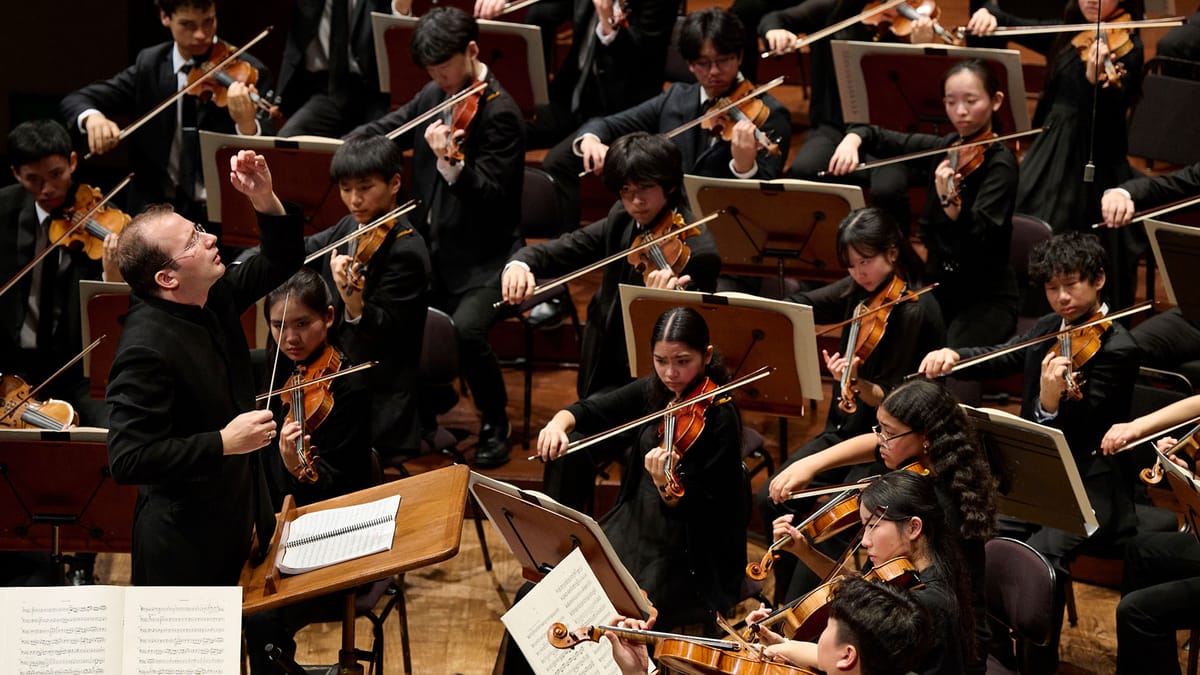
Welcome
Davies Symphony Hall is not only the home of the San Francisco Symphony, but also an important gathering place at the heart of our city. We value the opportunity to invite artists from the community to share in the joy of performing on our stage.
Our holiday concerts last month were enlivened by performances from Bay Area ensembles, including several children’s choirs. It was special to see these young musicians experience the excitement of performing alongside the San Francisco Symphony in front of thousands of people.
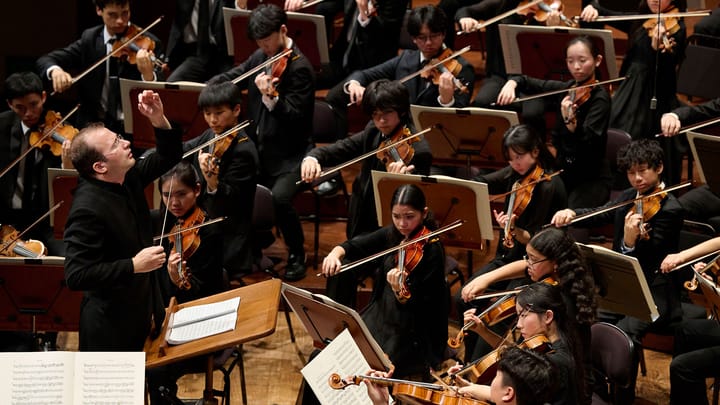
As we head into the new year, we look forward to the return of the Bay Area Youth Orchestra Festival, now in its 10th iteration. Hosted by the San Francisco Symphony Youth Orchestra, this vital daylong gathering and concert brings together some of the region’s most talented youth ensembles under our roof. Beyond the festival’s musical merits, it serves as an essential community outreach initiative, with proceeds benefiting charitable organizations that support youth programs in each orchestra’s community.
We look forward to sharing our stage with even more local artists and deepening our role as a cultural home for all San Francisco.
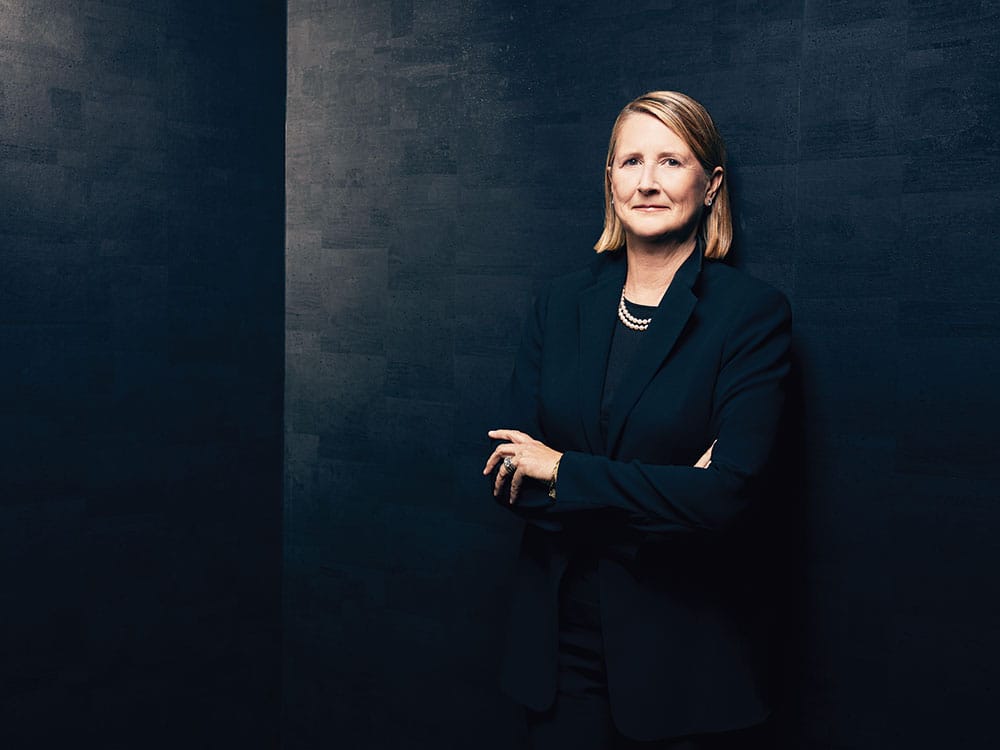
Priscilla B. Geeslin
Chair, San Francisco Symphony
News & Notes
Welcoming a New Principal Horn
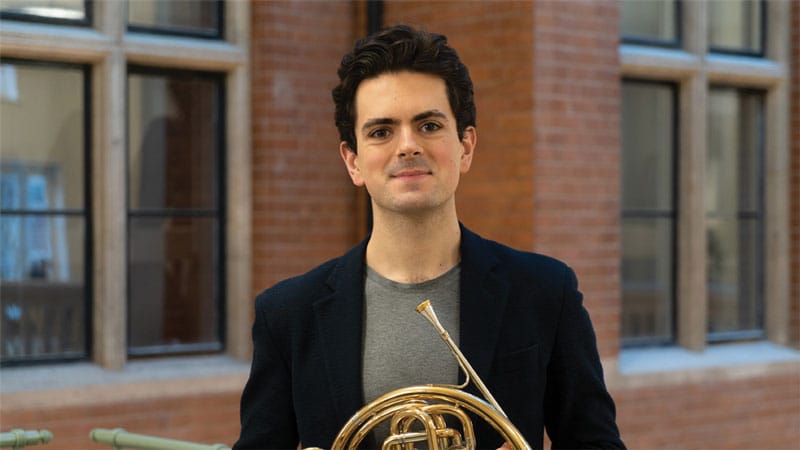
The San Francisco Symphony is pleased to welcome Diego Incertis Sánchez as its new Principal Horn, beginning this month. He succeeds former Principal Horn Robert Ward, who retired from the San Francisco Symphony in December 2023 following 43 years with the Orchestra.
“I’m incredibly excited to be joining the San Francisco Symphony and to make music with such a truly special group of colleagues,” said Incertis Sánchez. “San Francisco is such a vibrant and multicultural city, and I’m looking forward to performing for a community with such an appreciation for arts and music.”
Previously Incertis Sánchez held positions as principal horn of the London Symphony Orchestra and the Philharmonia Orchestra.
SF Symphony Grammy-Nominated
Esa-Pekka Salonen and the San Francisco Symphony have been nominated for a Grammy Award in the category of Best Orchestral Performance for the SFS Media recording of Stravinsky’s Symphony in Three Movements. Tautly concentrated, Stravinsky’s work reflects the rampant destruction in Europe and Asia during World War II.
The Symphony has won 17 Grammy awards, most recently for the Deutsche Grammophon-released live concert recording of Kaija Saariaho’s opera Adriana Mater. The Grammy Awards ceremony takes place on February 1.
Finnish at Heart
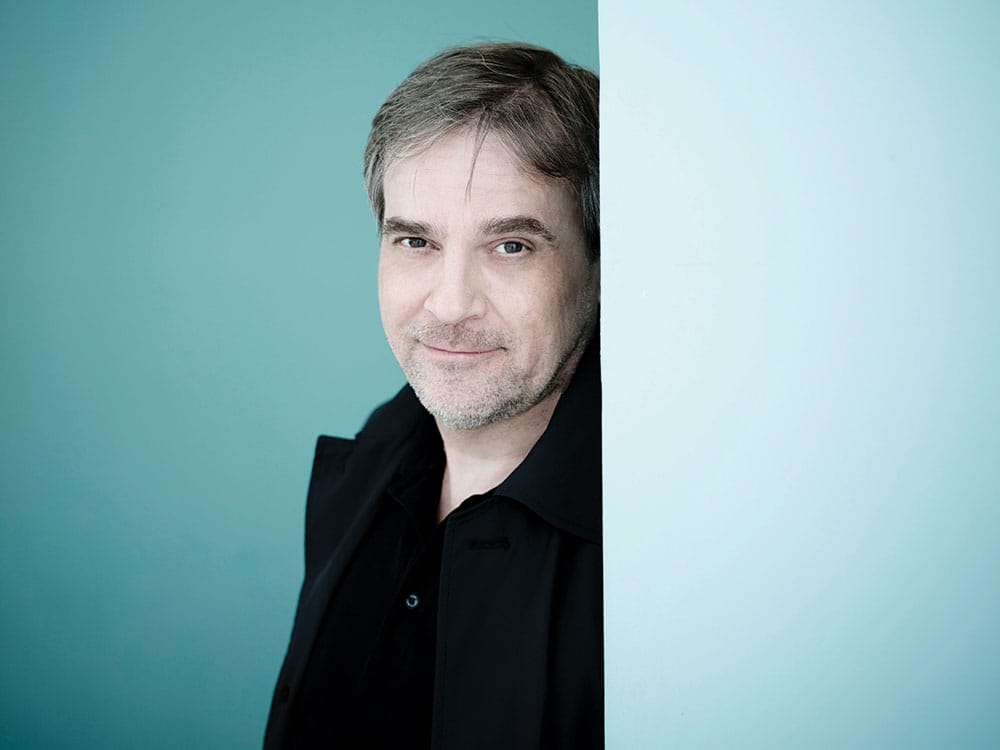
Conductor John Storgårds makes his debut with the San Francisco Symphony • By Steve Holt
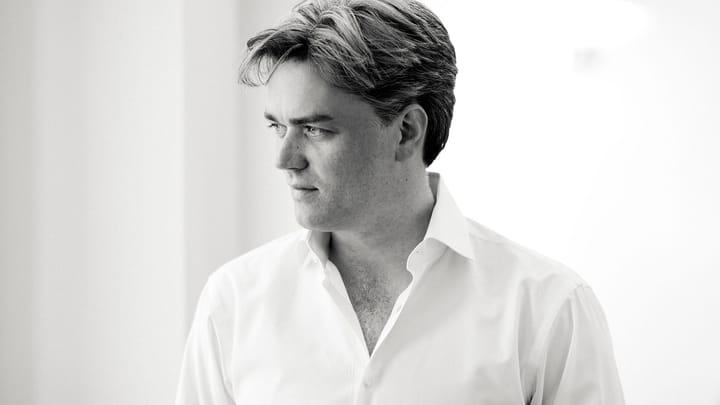
WHEN CONDUCTOR JOHN STORGÅRDS steps onto the podium in Davies Symphony Hall, he’ll be wearing more than concert attire: His Finnish pride will be showing. In addition to his post as chief conductor of the Turku Philharmonic in the south of Finland, Storgårds has, for three decades, led the Lapland Chamber Orchestra in the far north.
Born in Helsinki, he began his musical journey as a violinist, serving as concertmaster of the Swedish Radio Symphony under Esa-Pekka Salonen, and then studying conducting under legendary Finnish conductor and teacher Jorma Panula, as well as Estonian Eri Klas. In addition to his Finnish posts, he also serves as chief conductor of the BBC Philharmonic and maintains a separate career as an in-demand violinist.
Finland will definitely be in the spotlight in Storgårds’s San Francisco Symphony debut, as he leads the United States premiere of Outi Tarkiainen’s The Rapids of Life. Tarkiainen’s English horn concerto Milky Ways, a San Francisco Symphony commission, was a standout in its US premiere here with Russ de Luna as soloist in 2023.
Storgårds has a special relationship with Tarkiainen and her music. “The first time I saw Outi she was more or less a kid. She’s from Lapland and we’d invited her to play some of her own music on the piano. At the time, I thought ‘we will hear more from this person.’ And we certainly did!” It wasn’t long afterward that Tarkiainen began moving from her initial interest in jazz to a more classical approach. Storgårds helped commission one of her first orchestral pieces for the BBC Philharmonic, Midnight Sun Variations, and conducted its world premiere at the BBC Proms. “That was an international breakthrough for her,” he says. “So I feel proud of having been part of getting her music out there and getting her known. Every season, I have something by Outi in my repertoire.”
Several key events inspired Tarkiainen’s The Rapids of Life, including the birth of her third child. “She told me that had been a very strong, expressive experience,” Storgårds recalls. The work is also dedicated to the memory of Finnish composer Kaija Saariaho, who died in 2023 when Tarkiainen was working on this piece.
“They knew each other; Kaija was a very important inspiration for Outi. There are some quotations, for example, in the beginning of the piece, for a solo cellist, from Saariaho’s cello concerto. Because the two were close, there is also a sadness that comes out in this piece.”
Storgårds describes The Rapids of Life as having “a kind of slow energy or pulsation, but it builds up very dramatically into a clear climax point. The great thing about Outi is that she can surprise us. She doesn’t repeat herself, and I think that’s a very good sign for a young composer.”
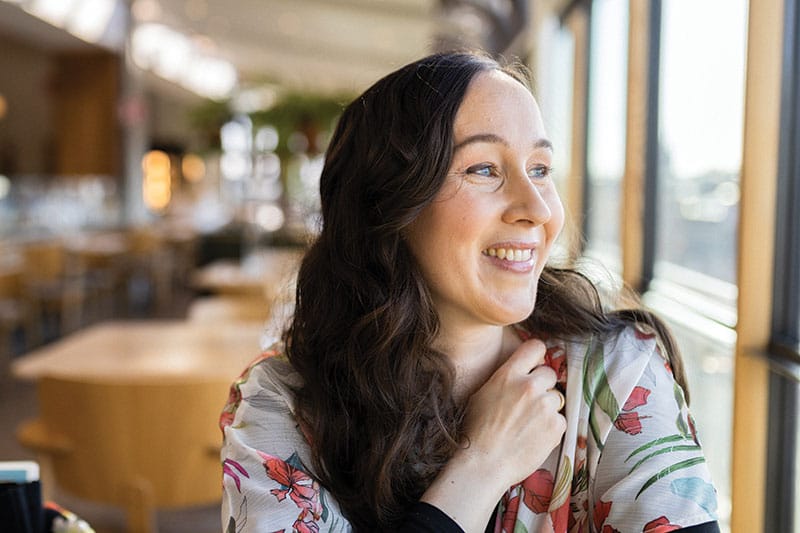
Rapids is a great contrast with Shostakovich’s Piano Concerto No. 1, also on the program. It features a small orchestra and two soloists, pianist Seong-Jin Cho and SF Symphony Principal Trumpet Mark Inouye (Irwin Charity Foundation Chair). The piece began life as a trumpet concerto before Shostakovich settled on the concept of a piano concerto with a prominent solo trumpet part.
“This concerto has a totally different kind of sparkling energy. There’s a lot going on in it, so even a first-time listener will find it very engaging,” Storgårds says. “There are very rapid transitions from one character or mood to another; some high-speed elements, as well as more atmospheric passages. And then he does these funny quotations of things; a folk song element, or a phrase from Beethoven, which will be recognizable even for someone who’s never heard the Shostakovich.”
Rounding out the concert is Beethoven’s Fifth Symphony, which Storgårds describes as “storytelling without words, with a lot of beauty, a lot of seriousness, but also extreme happiness.”
How does a conductor keep this chestnut sounding fresh, for both audience and performers?
“For me, with pieces like this, I feel that it’s very important to get back to the score in detail, especially going over my own markings from previous performances,” Storgårds says. “Of course, over my lifetime I’ve listened to all kinds of interpretations and recordings and performances of this piece, but I don’t want to be influenced by those; in a sense, I want to keep things between the score and myself.”
“You can approach it in many different ways, but you have to work, and you have to think a lot about how to do it,” he continues. “You know that all the orchestras you do it with, all the players have heard it all their lives, and they know it. It’s very important that everybody involved has the feeling that, okay, this is a great piece of music, and we are doing it now and here. It doesn’t need to have anything to do with the history of all the performances of this great symphony.”
Storgårds chuckles when asked what the secret is to getting those famous first four notes to explode out of nowhere in perfect unison.
“First of all, you have to have good nerves to stay very clear in front of the orchestra. There should be no doubt about what you’re doing, and your tempo, and how long you hold the last of those notes, and all these important elements in the beginning of it. The essential thing is to get in contact with every musician on stage and then to feel that, okay, are we ready? Yes, we are ready. Now we go!”
Storgårds is excited about his debut with the San Francisco Symphony. “I know it’s a great orchestra with a great history, with a reputation for a wider repertoire than many other orchestras, and that’s something that I very much look forward to, especially with the program we’re doing.”
This marks his first visit to San Francisco and he looks forward to taking in the Bay Area’s natural beauty. “When I have free time, I love to just walk around and get the atmosphere of a place. Being from Finland and living very close to nature, when I’m in a big city I always want to find parks and natural areas, so I very much hope to do that in San Francisco.”
John Storgårds photo by Marco Borggreve
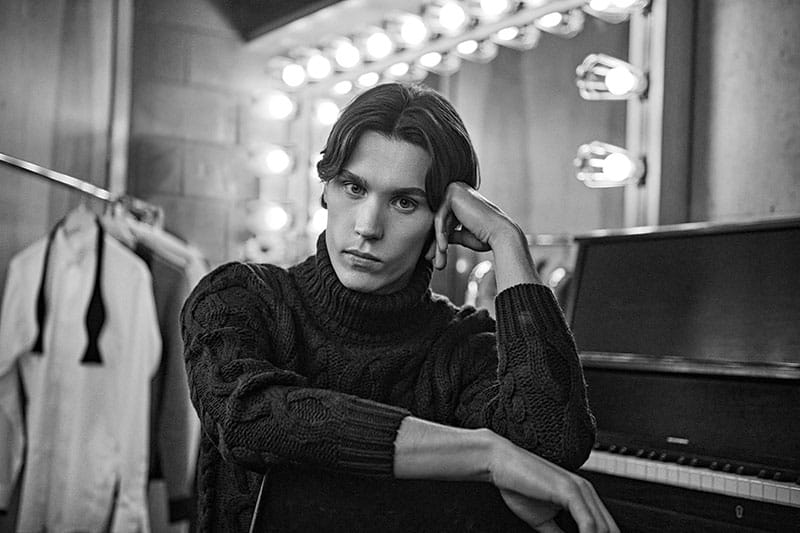
Three Questions For Pianist Jaeden Izik-Dzurko
What inspired you to pursue a career in classical music?
First and foremost, I was inspired by the joy I experience in sharing music with others. For me, the many challenging elements of a performing career, such as long, solitary practice days and a tiring traveling schedule, are made entirely worthwhile thanks to the remarkable privilege of performing for new audiences.
Undoubtedly, the support of my many wonderful mentors, especially Dr. Corey Hamm, has been instrumental to my career success, and I remain deeply indebted to all of them for their guidance and support.
What’s your routine like on concert days?
I don’t have any special rituals on performance days beyond nutritious meals, plenty of rest, and a thorough warm up!
What are some of your interests outside of music?
Until my mid-teens, I was as passionate about my athletic pursuits as I was about playing the piano, and for many years I was a competitive skier and swimmer. I still enjoy both sports, and I try to get out for a ski whenever I return to my hometown region. I was very fortunate to grow up in a beautiful, rural part of Canada, and I find it creatively enriching to spend some solitary time in nature whenever I can!

Community Connections
BAVC Media
Founded as the Bay Area Video Coalition in 1976 by a group of local activist filmmakers, community media nonprofit BAVC Media has served thousands of media makers locally and nationally. Their programs span artist development, preservation, production services, youth and adult training, and community media as the home of San Francisco’s public access station SF COMMONS.
BAVC Media has seen numerous celebrated artists and films pass through its programs. Recent success stories include Seeds (2025 Sundance Film Festival US Grand Jury Prize for Documentary) by Brittany Shyne and the award-winning Songs from the Hole—now streaming on Netflix—by Contessa Gayles, both part of the BAVC MediaMaker Fellowship.
Among the youth programs BAVC Media offers are Next Gen, a free afterschool program for San Francisco high schoolers, and Reel Stories, an Oakland-based program focused on girls and gender-expansive youth.
Through the SF COMMONS Playback Lab, San Francisco residents have access to free, do-it-yourself audiovisual preservation services, empowering the local community to digitize their home videos and personal stories held on VHS, Video8/Hi8, and digital video formats.
Learn more at bavc.org.
The San Francisco Symphony thrives on collaboration, and we’re proud to work with the most creative, innovative groups and individuals shaping the Bay Area today.
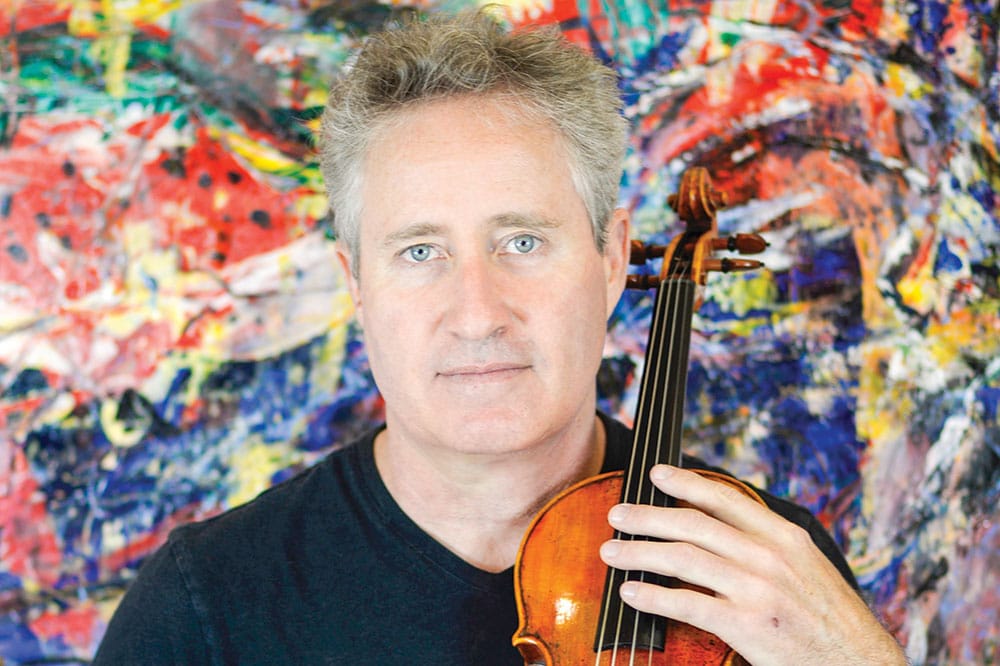
Meet the Musicians
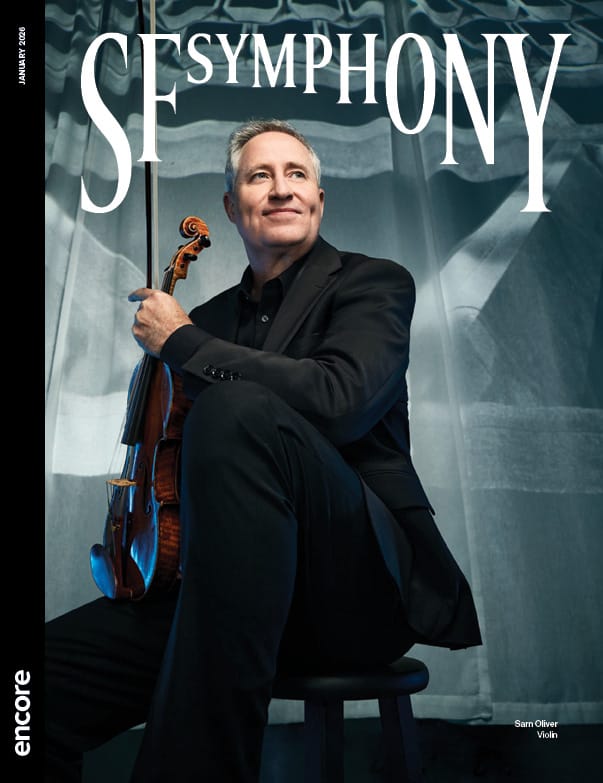
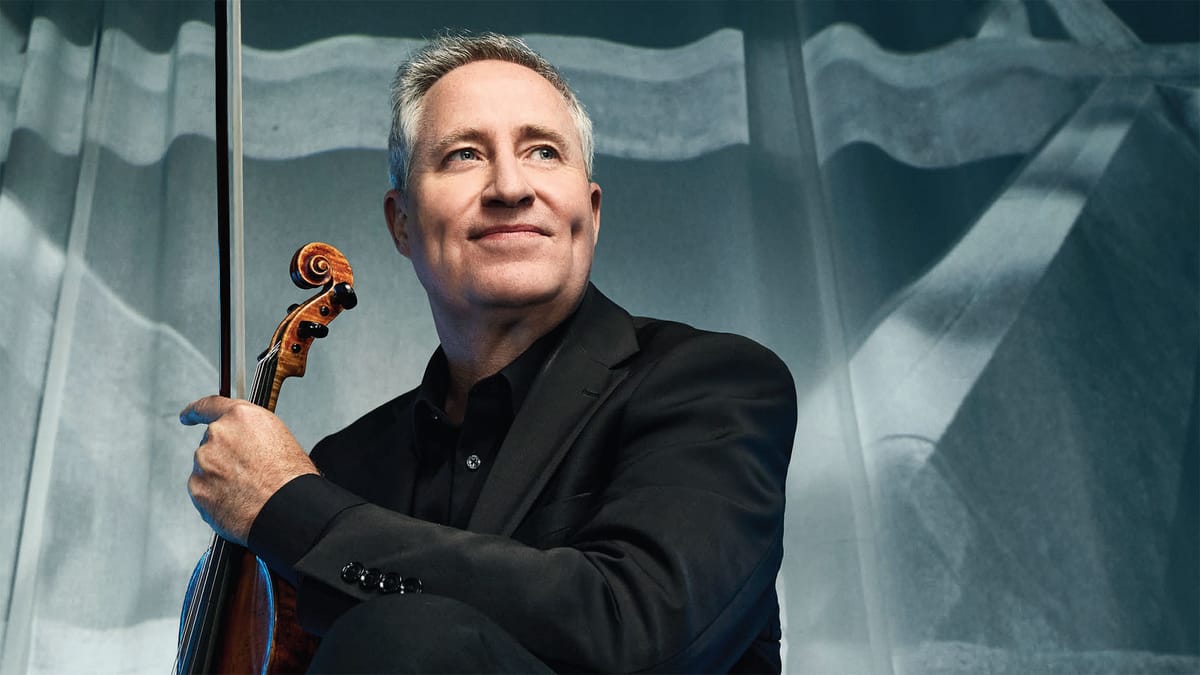
Sarn Oliver • First Violin
Sarn Oliver joined the San Francisco Symphony in 1995.
What was your first concert with the SF Symphony?
I was a substitute on a European tour with Herbert Blomstedt—I remember we went to Frankfurt. It was interesting being on tour with 100 people, most of whom I didn’t know.
How did you begin playing violin?
My dad was a composer, and my mom was a pianist. He had this idea that I should be Mozart—so I played violin and piano at first. I was born in Connecticut while my father was getting his master’s degree at Yale, and then we moved to Princeton, where he got his doctorate with the composer Milton Babbitt. Later we lived in North Carolina, Long Island, Dallas, and Upstate New York, while he taught at different universities.
What were your next steps in becoming a musician?
I started winning violin competitions in Dallas and playing with different orchestras. I finished high school by correspondence course and began college at Juilliard when I was 15, earning a bachelor’s and master’s degree there. I studied with Sally Thomas, Ivan Galamian, and Felix Galimir.
How did you come to San Francisco?
I played in a piano trio with Peter Wyrick, who had just won a job with the San Francisco Symphony [Wyrick joined the SF Symphony in 1986 and retired as Associate Principal Cello in 2023]. I had been in New York for so many years that I really wanted to get out of town, and thought maybe I’d also go to California. I was offered principal second violin of the Sacramento Symphony. After that orchestra folded, the SF Symphony offered me a one-year contract, which became my entry here. I was also previously concertmaster of the Santa Cruz Symphony.
Do you have a practice routine?
I really love to practice and try to spend five hours a day on it, even if I’m going to the Symphony and working. I’m weird in that way. I’m always learning different pieces and working on certain technical things. When I was 20, I thought I knew everything, but I’ve spent the next 40 years realizing I’m still learning.
What kind of violin do you play?
I love violins, and when I was a kid, I didn’t have one—I borrowed instruments. Juilliard loaned me a Strad, someone lent me a Guarneri del Gesù for a little while, so I didn’t own a violin until my late 20s. If I didn’t like how a violin sounded, I would adjust it, which got me interested in how violins work. When I was young and poor, I’d buy a violin in a pawn shop for $100 and try to make it sound better. Now I collect violins and even learned to make and repair them myself. I have maybe 35 violins, 80 bows, and I’m always buying and selling. It’s turned into a business helping colleagues who are looking for a good violin or bow.
So which of your 35 violins do you actually use at the Symphony?
Well, I don’t like my violins to feel lonely, so I often bring more than one and sometimes play two or three in a day. I have some fantastic modern instruments that have been made for me, and for a while I was collecting what we call “copyists,” the best forgeries in the world of a Strad or del Gesù.
What are your other creative pursuits?
I’m a composer of mostly chamber music, but have been branching out into bigger things [Oliver’s Cat Quartet will be performed in a June SF Symphony chamber music concert]. I’m also a painter, and have been doing very large paintings that I compose pieces to, so someone can see the painting in a gallery and also hear the piece. I have a recording studio and am a recording engineer, too. I also still love playing chamber music.
How do you find the time for all this?
No comment.
Print Edition