In This Program
The Concert
Thursday, April 9, 2026, at 7:30pm
Friday, April 10, 2026, at 7:30pm
Saturday, April 11, 2026, at 7:30pm
Inside Music Talk with Alicia Mastromonaco
On stage at 6:30pm before each performance
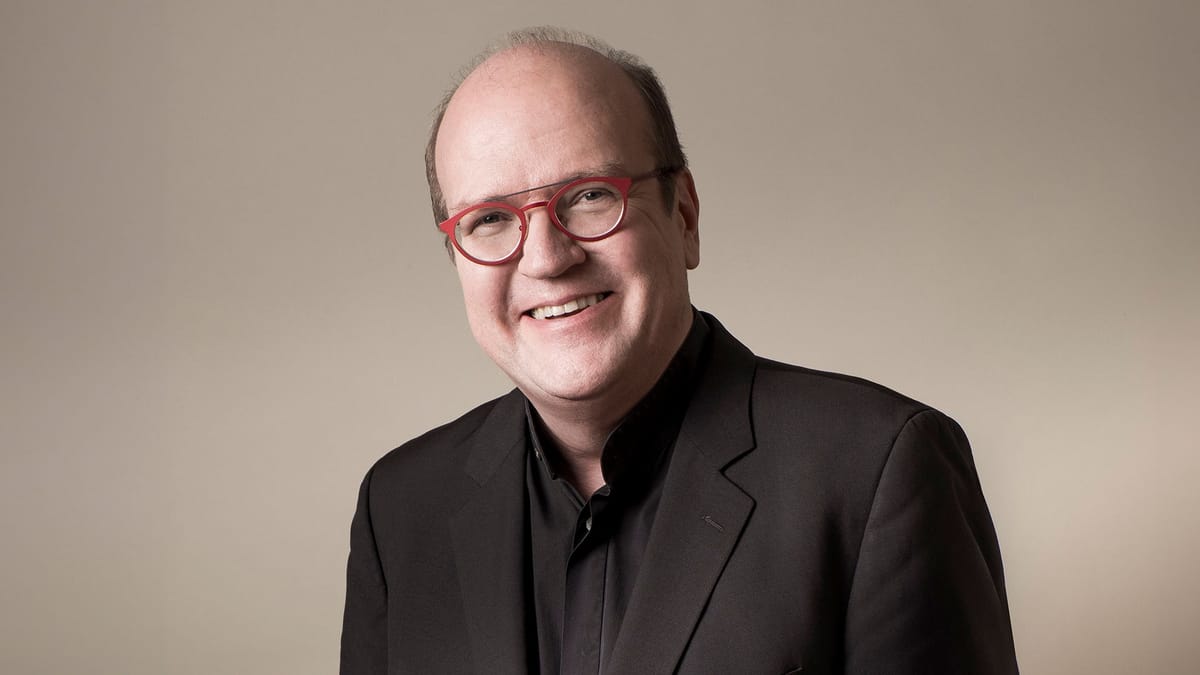
Bernard Labadie conducting
Johann Sebastian Bach
Easter Oratorio, BWV 249 (1738)
First San Francisco Symphony Performances
Joélle Harvey soprano (Mary of Clopas)
Hugh Cutting countertenor (Mary Magdalene)
Andrew Haji tenor (Peter)
Joshua Hopkins baritone (John)
San Francisco Symphony Chorus
Jenny Wong director
Intermission
Sinfonia to Cantata No. 29, Wir danken dir, Gott, BWV 29 (1731)
Magnificat in D major, BWV 243 (1735)
Joélle Harvey soprano
Hugh Cutting countertenor
Andrew Haji tenor
Joshua Hopkins baritone
San Francisco Symphony Chorus
Jenny Wong director
Lead support for the San Francisco Symphony Chorus this season is provided through a visionary gift from an anonymous donor.
Inside Music Talks are supported in memory of Horacio Rodriguez.
Program Notes
At a Glance
For the Sinfonia to Cantata No. 29, Bach adapted the prelude for his Third Violin Partita for organ and a small orchestra. Bach surely would have played the organ himself when the cantata premiered at the festive inauguration of the Leipzig town council.
Finally, Bach’s Magnificat is a setting of the passage in the Gospel of Luke in which Mary visits her cousin Elizabeth and marvels at the miracle of her pregnancy. Bach wrote this choral work in 1723, during his first year in Leipzig, specifically for Christmas, and revised it for other celebrations in the following decade.
Easter Oratorio, BWV 249
Johann Sebastian Bach
Born: March 21, 1685, in Eisenach, Germany
Died: July 28, 1750, in Leipzig
Work Composed: 1725–38
First SF Symphony Performances
Instrumentation: 4 vocal soloists (soprano, countertenor, tenor,
and baritone), chorus, 2 flutes, 2 recorders, 2 oboes (1st doubling oboe d’amore), bassoon, 3 trumpets, timpani, harpsichord, organ,
and strings
Duration: About 43 minutes
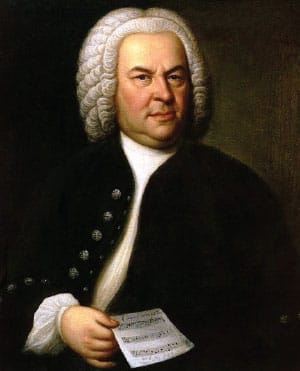
Johann Sebastian Bach’s music is well loved, but his music for large ensembles is not often performed by modern symphony orchestras, to say nothing of his large-scale liturgical music. Felix Mendelssohn is widely credited for reviving Bach’s music in Leipzig and across Europe in the early 19th century, after his music was somewhat lost to time. Interestingly, the music of J.S. Bach found its way to America far later than that of his contemporary George Frideric Handel, or indeed, even several of his children’s compositions. Bach’s son Johann Christian (the “English Bach”) had performances of his symphonies in Boston as early as 1771, and some of his other sons’ music was performed in the colonies in the 18th century. It is possible that J.S. Bach’s first appearance in the United States was a polonaise by “Sebastian Bach” included in an 1806 piano book, but the second appearance of his work in the United States may not have been until 1823 in Bethlehem, Pennsylvania, when the cantata Ein feste Burg is unser Gott, BWV 80, was copied by Moravian schoolmaster and musician John Christian Till. Thankfully, by the mid-19Cth century, Bach’s music became more widely available, and more often performed. Apropos of Bach’s slow incorporation into modern American orchestral concert culture, this week marks the first San Francisco Symphony performances of this oratorio.
The Easter Oratorio is part of Bach’s trilogy of oratorios celebrating three ecclesiastical feasts: Christmas, Easter, and Ascension. The addition of a passion for Good Friday would encompass each of the four major feast days of the ecclesiastical year. These feast days commemorate the four major stations of the story of Jesus Christ: his birth, his suffering and death, his resurrection, and his ascension to heaven. Bach wrote the Christmas and Ascension oratorios in 1734–35, but did not complete the Easter oratorio until 1737, or likely 1738, when it was first performed.
The Music
Bach was a prolific composer, but he was also not bashful about reworking and reusing his compositions for different purposes. The first version of the Easter Oratorio was not an oratorio at all, but rather a birthday cantata commissioned by the Saxe-Weissenfels court in 1725. This piece, known as the Shepherd Cantata with the title “Entfliehet, verschindet, entweichet, ihr Sorgen” (Flee, vanish, yield now, you sorrows), was presented as Tafelmusik (“table music” for banquets or festivities), written for the Duke Christian’s birthday, and performed on February 23, 1725. The original text was mythological, with the four shepherds serenading the Duke and wishing him a happy birthday. Easter in 1725 was a mere six weeks later, so Bach decided to use the same music and apply new, religious texts with the same metrical structure for the Easter service. Bach did have to compose new recitatives, but overall the structure remained the same. The texts in both versions of the work were likely provided by Christian Friedrich Henrici (better known by his pen name Picander), a librettist and frequent interlocutor of Bach’s. The same cantata was also reworked the following year, in 1726, this time for the birthday of Count Flemming, the governor of Leipzig. The new title was “Die Feier des Genius” (The Celebration of Genius), with new characters, and a reshaped libretto. After this performance, it appears that Bach did not revise the cantata until after 1735.
After the Christmas and Ascension Oratorios of 1734–35, Bach returned to the Easter Cantata and made important revisions to the work. Rather than being theatrical and operatic in scope, it becomes more of a devotional piece. Where the opening vocal movement had been a duet between Peter and John encouraging each other to “hasten and race” to Jesus’s empty grave, Bach revised “Kommt, fliehet und eilet,” into a chorus. Bach scholar Christoph Wolff argues that this “stripped [the movement] of its genuine theatrical flavor.” This likely reflects Bach’s desire to compose music that is devotional and exciting, while still adhering to his employers’ demands.
When Bach was hired cantor and municipal music director in Leipzig, one of the requirements of his employment was that “he should make compositions that were not theatrical.” This is to say that Bach’s job was the glorification of God, not entertainment for the masses. Bach wanted to make sure he pleased his employers, not least of all because he needed to maintain his salary and the benefit of sending his children to the St. Thomas School, an opportunity he never had as a child orphaned at 10 years old. In the margins of his Bible, Bach wrote: “devotional music,” signaling his intention to write music that would arouse spiritual feelings of devotion in the parishioners at St. Thomas and St. Nicholas churches where his music was played. Rather than evoking the drama and theatricality seen in many late Baroque oratorios, Bach’s Easter Oratorio is more contemplative and meditative.
Sinfonia to Cantata No. 29, Wir danken dir, Gott, BWV 29
Johann Sebastian Bach
Work Composed: 1731
SF Symphony Performances: First and only—March 1963.
Enrique Jordá conducted.
Instrumentation: 2 oboes, 3 trumpets, timpani, harpsichord, organ, and strings
Duration: About 4 minutes
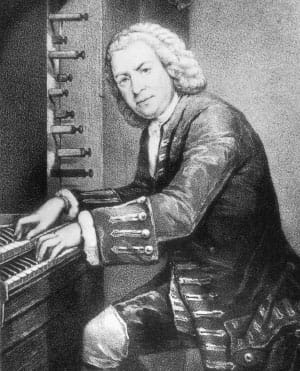
In addition to his role as the Thomaskantor at St. Thomas and St. Nicholas churches, Bach’s musical duties in Leipzig also extended into the municipal realm. He was expected to compose not only for religious functions but also governmental events and even weddings. As in the Easter Oratorio, Bach was not opposed to borrowing and reworking his pieces for various occasions, as he also did in the opening Sinfonia to the cantata Wir danken dir, Gott.
Listeners might recognize the melody from the prelude to Bach’s Violin Partita No. 3 in E major, BWV 1006, written in 1720. Bach reworked the violin perpetuum mobile movement into essentially an organ concerto that functions as the opening to this Cantata, first performed in 1731. The same sinfonia was also used for an earlier cantata, Herr Gott, Beherrscher aller Dinge, BWV 120a, a wedding piece that was performed in Leipzig most likely in 1729. Additionally, the first chorus, the namesake of the cantata, was also reworked as the “Gratias agimus tibi” chorus in the famous B-minor Mass, composed in 1733.
The Music
Wir danken dir, Gott, was composed for the Ratswechsel, or the changing of the Leipzig town council, in 1731. This annual event was an important opportunity for Bach to impress the politicians and other powerful figures. Over the course of his tenure as Thomaskantor in Leipzig, Bach had to compose for 27 town council inaugurations. In keeping with the pomp of the event, he takes full advantage of the trumpets and timpani, likely hoping to create and augment a sense of pride in the civic life of Leipzigers, and that they might notice the composer who helped create such a musical atmosphere.
Bach’s refashioning of the solo violin partita for organ shows how he was able to seamlessly rework previously composed music to sound completely new. And yet, what is idiomatic for the violin becomes virtuosic on a keyboard instrument. The partita is in E major, which allows the violinist to play the many repeated notes with the help of the open E string. The sinfonia is transposed a step down into the key of D, but regardless of the key, playing fast repeated notes on a keyboard instrument requires a player to strike the same key with a different finger over and over again. Additionally, there is little space for rubato in the organ part because the rest of the large ensemble is playing and has to generally remain in time to maintain musical continuity, whereas the violinist is able to slow down and speed up when necessary. This sinfonia exemplifies Bach’s versatility in his many varied works and his ability to refashion and revive music for different purposes.
Magnificat in D major, BWV 243
Johann Sebastian Bach
Work Composed: 1723 (rev. 1732–35)
SF Symphony Performances: First—December 1950. Pierre Monteux conducted with the San Francisco Municipal Chorus and College of Pacific Bach Choir. Verna Osborne, Velna Lou King, Marian Cornish, Carl Siegert, and Carl Palangi were soloists. Most recent—April 2023. Jane Glover conducted with the San Francisco Symphony Chorus. Cheryl Cain, Morgan Balfour, Leandra Ramm, Michael Jankosky, and Matthew Peterson were soloists.
Instrumentation: 4 vocal soloists (soprano, countertenor, tenor, and bass), chorus, 2 flutes, 2 oboes (doubling oboes d’amore), bassoon, 3 trumpets, timpani, organ, harpsichord, and strings
Duration: About 30 minutes
The Magnificat, or the Canticle of Mary, centers around Mary’s visit to her cousin, Elizabeth, when the two women were pregnant with Jesus and John the Baptist, respectively. The text for the Magnificat is drawn from the Gospel of Luke and celebrates the meeting of Jesus and John the Baptist when they were both still in their mothers’ wombs. Aside from the ordinary of the Mass, the Magnificat is the liturgical text most often set to music. Even though the Magnificat was regularly sung in German in the Lutheran church, it was set in Latin on high holidays (which includes Christmas) and the three Marian feasts (of which Visitation is one). The Feast of Visitation was added to the ecclesiastical calendar by Pope Urban IV in 1389 and became a regular part of the Lutheran liturgical calendar as well. Because they are both important feast days, Bach’s Latin setting of the Magnificat would have been suitable for both Christmas and Visitation. This is important because of the timing of the first hearing of the Magnificat.
Bach wrote two versions of his Magnificat, first in E-flat major in 1723, and then a revised version in D major in 1733. The Magnificat may have been the first large-scale orchestral work Bach composed after his appointment as Thomaskantor in April 1723. He likely composed it to be performed as part of the Feast of Visitation on July 2, 1723 (today this feast day is held on May 31, as the pinnacle of the month celebrating Mary). For various reasons, the piece was not played until Christmas Day, and it was not until a decade later that Bach revised the Magnificat into the version heard in this week’s concerts.
The Music
The 1723 E-flat major version of the Magnificat was supplemented with four Christmas interpolations, or laudes, small hymns that tell the Christmas story. They were traditionally sung by a separate choir from the swallow-nest gallery in the Thomaskirche. The 1733 version omitted the laudes so that it would be suitable for any of the major feast days throughout the year. Bach also made other changes, including replacing the recorders with transverse flutes, and giving the solo trumpet passage in the 10th part, “Suscepit Israel,” to two oboes playing in unison. Shifting the key down a half step to D major might seem like a minor change, but it has an outsize effect, making the piece much more vibrant. The strings are able to use their open strings, and the trumpets sit in a key better suited to the Baroque trumpets of the time.
The Magnificat is a compact work, lasting about half an hour. Each of the 12 parts is at most three minutes long, and the text setting for each part is only one sentence. Within this compact structure, however, Bach evokes wide-ranging emotions, from the majestic opening with its arpeggiating trumpets to the word painting of “omnes, omnes generationes,” with the five parts of the chorus singing independently from each other before finally moving into rhythmic unison. Bach seems to be evoking the sense that all generations will come together to call Mary blessed. The duet between the soprano soloist and oboe d’amore that precedes this chorus, “Quia respexit humilitatem,” is a tender, contemplative movement, the expression of the purity of Mary. The work concludes with the doxology, Gloria Patri, played by the entire retinue of musicians. Bach ends the work as he began, apropos to the text “sicut erat in principio” (as it was in the beginning). Each of the movements of the Magnificat encompasses a separate facet of the Canticle of Mary and shows the breadth of Bach’s musical versatility and expressivity.
—Alicia Mastromonaco
Bach: Easter Oratorio, BWV 249
Sinfonia
Adagio
Duet & Chorus
Peter, John, Chorus
Kommt, eilet und laufet, ihr flüchtigen Füsse,
Erreichet die Höhle, die Jesum bedeckt!
Lachen und Scherzen
Begleitet die Herzen,
Denn unser Heil ist auferweckt.
Recitative
Mary Magdalene
O kalter Männer Sinn!
Wo ist die Liebe hin,
Die ihr dem Heiland schuldig seid?
Mary of Clopas
Ein schwaches Weib muss euch beschämen!
Peter
Ach, ein betrübtes Grämen
John
Und banges Herzeleid
Peter, John
Hat mit gesalzen Tränen
Und wehmutsvollem Sehnen
Ihm eine Salbung zugedacht.
Both Marys
Die ihr, wie wir, umsonst gemacht.
Aria
Mary of Clopas
Seele, deine Spezereien
Sollen nicht mehr Myrrhen sein.
Denn allein
Mit Lorbeerkranze prangen,
Stillt dein ängstliches Verlangen.
Recitative
Peter
Hier ist die Gruft
John
Und hier der Stein,
Der solche zugedeckt.
Wo aber wird mein Heiland sein?
Mary Magdalene
Er ist vom Tode auferweckt!
Wir trafen einen Engel an,
Der hat uns solches kundgetan.
Peter
Hier seh ich mit Vergnügen
Das Schweisstuch abgewickelt liegen.
Aria
Peter
Sanfte soll mein Todeskummer,
Nur ein Schlummer,
Jesu, durch dein Schweisstuch sein.
Ja, das wird mich dort erfrischen
Und die Zähren meiner Pein
Von den Wangen tröstlich wischen.
Recitative
Both Marys
Indessen seufzen wir
Mit brennender Begier:
Ach, könnt es doch nur bald geschehen,
Den Heiland selbst zu sehen!
Aria
Mary Magdalene
Saget, saget mir geschwinde,
Saget, wo ich Jesum finde,
Welchen meine Seele liebt!
Komm doch, komm, umfasse mich;
Denn mein Herz ist ohne dich
Ganz verwaiset und betrübt.
Recitative
John
Wir sind erfreut,
Dass unser Jesus wieder lebt,
Und unser Herz,
So erst in Traurigkeit zerflossen und geschwebt,
Vergisst den Schmerz
Und sinnt auf Freudenlieder;
Denn unser Heiland lebet wieder.
Chorus
Preis und Dank
Bleibe, Herr, dein Lobgesang.
Höll und Teufel sind bezwungen,
Ihre Pforten sind zerstört.
Jauchzet, ihr erlösten Zungen,
Dass man es im Himmel hört.
Eröffnet, ihr Himmel, die prächtigen Bogen,
Der Löwe von Juda kommt siegend gezogen!
Sinfonia
Adagio
Duet & Chorus
Peter, John, Chorus
Come! Hurry! Run fleetingly feet
to reach the tomb that encloses Jesus!
Laughter and joy
accompany our hearts,
for our Savior is resurrected.
Recitative
Mary Magdalene
Ah, the cold hearts of men!
Where has the love gone
that you owe the Savior?
Mary of Clopas
Must a frail woman put you to shame?
Peter
Alas, with a sorrowful lament
John
and an anxious heartache
Peter, John
along with salty tears
and plaintive longing,
we had intended to anoint him.
Both Marys
Yet you, like us, did so in vain.
Aria
Mary of Clopas
Soul, your balm
shall no longer be myrrh.
For you it is only
being adorned with a laurel wreath
that will soothe your anxious longing.
Recitative
Peter
Here is the tomb
John
and here is the stone
that enclosed it.
Yet where might my Savior be?
Mary Magdalene
He has risen from the dead!
We encountered an angel
who made this known to us.
Peter
Now I am comforted seeing also
the cloth wrappings lain aside.
Aria
Peter
May my death’s grief be gentle, Jesus—
merely a slumber
because of your shroud.
It will surely refresh me then—
and comfortingly wipe from my cheeks
the tears of pain.
Recitative
Both Marys
Yet, we sigh
with burning desire,
oh, that this should happen soon:
to see the Savior himself!
Aria
Mary Magdalene
Tell me, tell me quickly—
say where I can find Jesus
whom my soul adores!
Come, yes, come embrace me—
for without you my heart is
wholly orphaned and bereft.
Recitative
John
We are pleased
that our Jesus lives again—
and our hearts,
which had dissolved and drifted in grief,
now forget the pain
and imagine songs of joy—
for our Savior lives again.
Chorus
May lauds and thanks
remain your hymn of praise, Lord.
Hell and Devil are defeated,
their gates are destroyed.
Rejoice, redeemed voices
that you may be heard in Heaven.
Open your magnificent arches, Heaven,
as the Lion of Judah emerges victorious!
Translation: Noam Cook
Bach: Magnificat in D major, BWV 243
Magnificat anima mea Dominum.
Et exultavit spiritus meus in Deo salutari meo.
Quia respexit humilitatem ancillae suae.
Ecce enim ex hoc beatam me dicent
omnes generationes.
Quia fecit mihi magna,
qui potens est, et sanctum nomen eius.
Et misericordia a progenie
in progenies, timentibus eum.
Fecit potentiam in brachio suo,
dispersit superbos mente cordis sui.
Deposuit potentes de sede
et exaltavit humiles.
Esurientes implevit bonis,
et divites dimisit inanes.
Suscepit Israel puerum suum,
recordatus misericordie suae.
Sicut locutus est ad patres nostros,
Abraham et semini eius in saecula.
Gloria Patri et Filio et Spiritui Sancto,
sicut erat in principio
et nunc et in saecula saeculorum,
Amen.
—Luke 1:46–55
My soul magnifies the Lord.
And my spirit rejoices in God my Savior.
For He has regarded the lowliness of His handmaiden.
Behold, from henceforth, all generations
shall call me blessed.
For the Mighty One has done
great things for me, and holy is His name.
His mercy is for those who fear Him
from generation to generation.
He has shown strength with His arm,
He has scattered the proud in the imagination of their hearts.
He has put down the mighty from their thrones
and exalted the lowly.
He has filled the hungry with good things,
and sent the rich away empty.
He has helped His servant Israel
in remembrance of His mercy.
As he spoke to our ancestors,
to Abraham and to His descendants forever.
Glory to the Father and to the Son and to the Holy Spirit,
as it was in the beginning,
is now, and will be for ever and ever,
Amen.
About the Artists
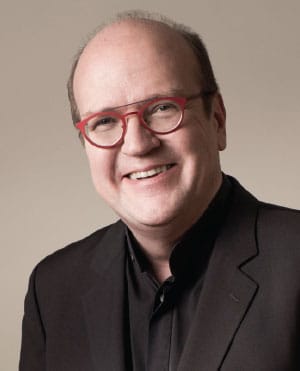
Bernard Labadie
Bernard Labadie is one of the preeminent conductors of Baroque and Classical repertoire, a reputation closely tied to his work with Les Violons du Roy—for which he served as music director from its inception until 2014—and La Chapelle de Québec. With these two ensembles, he has regularly toured North America and Europe including appearances at Carnegie Hall, Disney Hall, the Kennedy Center, Barbican, Concertgebouw, and Salzburg Festival. He is principal conductor of the Orchestra of St. Luke’s in New York and was previously artistic director of the Quebec Opera and Montreal Opera.
Recent highlights include the Chicago Symphony, Cleveland Orchestra, Handel and Haydn Society, National Arts Center Orchestra, and Montreal Symphony. He has also appeared with the Cleveland Orchestra, Minnesota Orchestra, St. Louis Symphony, Pittsburgh Symphony, Royal Concertgebouw Orchestra, Bavarian Radio Orchestra, Academy of Ancient Music, English Concert, Orchestra of the Age of Enlightenment, Metropolitan Opera, Canadian Opera Company, and Santa Fe Opera. He made his San Francisco Symphony debut in April 2005.
Labadie’s extensive discography includes many critically acclaimed recordings on Dorian, ATMA, and Virgin Classics labels, including Handel’s Apollo e Dafne and Mozart’s Requiem with Les Violons du Roy and La Chapelle de Québec—both of which received Canada’s Juno Award. In 2016, Labadie received the Samuel de Champlain Award in Paris, and has been named a Chevalier de l’Ordre National du Québec and an Officer of the Order of Canada.
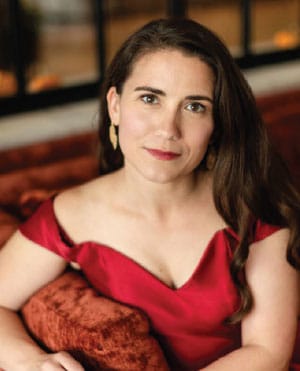
Joélle Harvey
This season, Joélle Harvey appears at the Metropolitan Opera, Bavarian State Opera, Washington National Opera, Santa Fe Opera, and sings with the Cleveland Orchestra, Philadelphia Orchestra, and Chamber Music of Lincoln Center. She also appears regularly with the New York Philharmonic, Chicago Symphony, Los Angeles Philharmonic, Handel and Haydn Society, and English Concert. Stage roles have brought her to the Royal Opera, Covent Garden; Glyndebourne Festival; Zurich Opera; Festival d’Aix-en-Provence; Utah Opera; and New York City Opera. She made her Carnegie Hall recital debut in 2019.
Harvey received second prize in Houston Grand Opera’s Eleanor McCollum Competition for Young Singers, first prize from the Gerda Lissner Foundation, and a Sara Tucker Grant from the Richard Tucker Foundation. She is a recipient of the Shoshana Foundation’s Richard F. Gold Career Grant, and was also presented with the John Alexander Memorial Award and the Sam Adams Award for Achievement in Acting from the University of Cincinnati College-Conservatory of Music. Harvey began her career at Glimmerglass and the Merola Opera Program and made her San Francisco Symphony debut in June 2009.
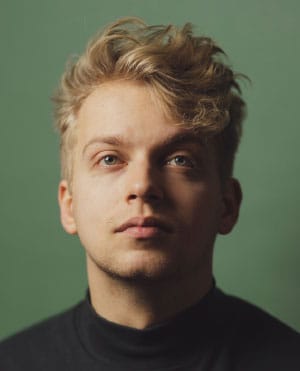
Hugh Cutting
Hugh Cutting was recently a BBC New Generation Artist and the first countertenor to win the Kathleen Ferrier Award. This season, he makes house debuts at English National Opera, Santa Fe Opera, and the Grange Festival. He also serves as a Wigmore Hall artist in residence, curating a wide-ranging recital series, and appears with the English Concert, Les Arts Florissants, the Dunedin Consort, and Arcangelo. In recent seasons, he has debuted at La Scala, Dallas Opera, Deutsche Oper Berlin, and Zurich Opera. In concert, he has debuted at Carnegie Hall with Bernard Labadie and the Orchestra of St. Luke’s, and performed with the Orchestra of the Age of Enlightenment, Les Violons du Roy, NDR Radio Orchestra, among other ensembles.
A passionate champion of new music, Cutting has premiered works by Alex Ho, Piers Connor Kennedy, Elena Langer, Anna Semple, and Tara Viscardi. His debut album, Refound, with pianist Audrey Hyland was released on Linn Records last year. A former choral scholar at St John’s College, Cambridge, Cutting went on to study at the Royal College of Music, where he was a member of the International Opera Studio and was awarded the Tagore Gold Medal. He makes his San Francisco Symphony debut with this program.
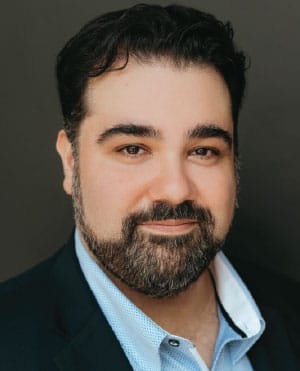
Andrew Haji
Andrew Haji debuts this season with the Boston Symphony and Boston Baroque, and returns to the Seattle Symphony, Cleveland Orchestra, Toronto Symphony, and Violons du Roy. Recent seasons have brought him to the Chicago Symphony, Cleveland Orchestra, Houston Symphony, Montreal Symphony, Handel and Haydn Society, English Concert, Dresden Philharmonic, Carnegie Hall, and the Salzburg Festival. He has appeared in numerous roles at the Canadian Opera Company, where he is an alumnus of the Ensemble Studio. He has also performed at Calgary Opera, Edmonton Opera, the Edinburgh International Festival, Vancouver Opera, and Pacific Opera Victoria. He makes his San Francisco Symphony debut with this program.
Haji has received awards from the Marilyn Horne Song Competition and Canadian Opera Company Ensemble, and was awarded the Grand Prix at the 50th International Vocal Competition in ’s-Hertogenbosch and the Oratorio Prize at the Montreal International Music Competition.
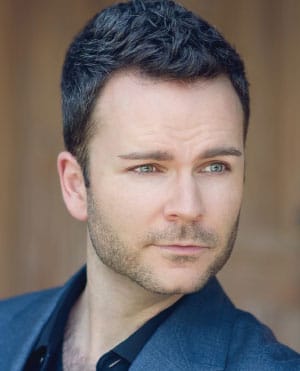
Joshua Hopkins
Joshua Hopkins is a Juno Award–winning and Grammy Award–nominated baritone. This season, he sings at the Metropolitan Opera, Semperoper Dresden, and will appear at San Francisco Opera this May and June as the title role in The Barber of Seville. He also appears with the Cincinnati Symphony, Kansas City Symphony, and Colorado Symphony, and brings Jake Heggie and Margaret Atwood’s Songs for Murdered Sisters to the Victoria Symphony and University of Michigan. This personal project, conceived by Hopkins in remembrance of his sister, brings awareness to ending intimate partner violence, and is available to watch on YouTube and as a digital album on Pentatone.
Hopkins performs regularly at the Met, Lyric Opera of Chicago, Houston Grand Opera, Canadian Opera Company, and the Santa Fe Opera. He was the winner of the Verbier Festival Academy’s 2008 Prix d’Honneur and the Borletti-Buitoni Trust Award in 2006. He was also a prizewinner at the 2006 ARD Musikwettbewerb in Munich and at the 2005 Operalia Competition, and has received prizes from the George London Foundation, Jacqueline Desmarais Foundation, and Canada Council for the Arts. He made his San Francisco Symphony debut in May 2009.
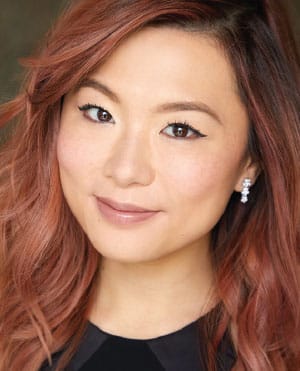
Jenny Wong
Jenny Wong is Chorus Director of the San Francisco Symphony, as well as the associate artistic director of the Los Angeles Master Chorale. Recent conducting engagements include the Los Angeles Philharmonic Green Umbrella Series, Los Angeles Opera Orchestra, the Industry, Long Beach Opera, Pasadena Symphony and Pops, Phoenix Chorale, and Gay Men’s Chorus of Los Angeles.
Under Wong’s baton, the Los Angeles Master Chorale’s performance of Frank Martin’s Mass was named by Alex Ross one of ten “Notable Performances and Recordings of 2022” in the New Yorker. In 2021 she was a national recipient of Opera America’s inaugural Opera Grants for Women Stage Directors and Conductors. She has conducted Peter Sellars’s staging of Orlando di Lasso’s Lagrime di San Pietro, Sweet Land by Du Yun and Raven Chacon, and Schoenberg’s Pierrot Lunaire and Kate Soper’s Voices from the Killing Jar with Long Beach Opera in collaboration with WildUp. She has prepared choruses for the Los Angeles Philharmonic, including for a recording of Mahler’s Symphony No. 8 that won a 2022 Grammy Award for Best Choral Performance.
A native of Hong Kong, Wong received her doctor of musical arts and master of music degrees from the University of Southern California and her undergraduate degree in voice performance from the University of Illinois, Urbana-Champaign. She won two consecutive world champion titles at the World Choir Games 2010 and the International Johannes Brahms Choral Competition 2011. She recently extended her contract with the SF Symphony through the 2028–29 season.
San Francisco Symphony Chorus
The San Francisco Symphony Chorus was established in 1973 at the request of Seiji Ozawa, then the Symphony’s Music Director. The Chorus, numbering 32 professional and more than 120 volunteer members, now performs more than 26 concerts each season. Louis Magor served as the Chorus’s director during its first decade. In 1982 Margaret Hillis assumed the ensemble’s leadership, and the following year Vance George was named Chorus Director, serving through 2005–06. Ragnar Bohlin concluded his tenure as Chorus Director in 2021, a post he had held since 2007. Jenny Wong was named Chorus Director in September 2023.
The Chorus can be heard on many acclaimed San Francisco Symphony recordings and has received Grammy Awards for Best Performance of a Choral Work (for Orff’s Carmina burana, Brahms’s German Requiem, and Mahler’s Symphony No. 8) and Best Classical Album (for a Stravinsky collection and for Mahler’s Symphony No. 3 and Symphony No. 8).
San Francisco Symphony Chorus
SOPRANOS
Elaine Abigail
Sylvia V. Baba
Alexis Wong Baird
Morgan Balfour*
Kayla Bojkovsky*
Katelan Bowden*
Arlene Boyd
Laura Canavan
Sara Chalk
Phoebe Chee*
Amy Foote*
Cara Gabrielson*
Susanna Gilbert
Julia Hall
Ashley Hecht
Jennifer Mitchell*
Ria Patel
Diana Pray*
Elizabeth L. Susskind
Sigrid Van Bladel
Zhangguanglu Wang
Lauren Wilbanks
ALTOS
Carolyn Alexander
Marina Davis*
Corty Fengler
Stacey L. Helley
Emily (Yixuan) Huang
Hilary Jenson
Katherine M. Lilly
Margaret (Peg) Lisi*
Brielle Marina Neilson*
Leandra Ramm*
Kathryn Schumacher
Meghan Spyker*
Kyle S. Tingzon*
Merilyn Telle Vaughn*
Heidi L. Waterman*
Hannah J. Wolf
TENORS
Dean Christman
Daniel J. Costa
Kevin Gibbs*
Michael Jankosky*
Alec Jeong
Rondy Michael Lazaro*
James Lee
Benjamin Liupaogo*
Joachim Luis*
Darita Seth*
Grant J. Steinweg
Tetsuya Taura
Troy Turriate*
John A. Vlahides
Jack Wilkins*
Jakob Zwiener
Basses
Robert Calvert
Adam Cole*
Noam Cook
Malcolm Gaines
Luis González*
Oliver W. Holt*
Joshua Hughes*
Tim Marson
Hugo Mendel
Clayton Moser*
Case Nafziger
Julian Nesbitt
Chung-Wai Soong*
Storm K. Staley
Connor Tench
David Varnum*
Nick Volkert*
Jenny Wong
Chorus Director
John Wilson
Rehearsal Accompanist
*Member of the American Guild of Musical Artists