In This Program
The Concert
Wednesday, April 15, 2026, at 7:30pm
Nathan Amaral violin
Sophiko Simsive piano
Wolfgang Amadeus Mozart
Violin Sonata in B-flat major, K.378 (ca. 1779)
Allegro moderato
Andantino sostenuto e cantabile
Rondeau: Allegro
Francisco Mignone
Valsa de esquina No. 2 (1938/47)
César Franck
Violin Sonata in A major (1886)
Allegretto ben moderato
Allegro
Recitativo–fantasia
Allegretto poco mosso
This concert is performed without intermission.
Program Notes
Violin Sonata in B-flat major, K.378
Wolfgang Amadeus Mozart
Born: January 27, 1756, in Salzburg
Died: December 5, 1791, in Vienna
Work Composed: ca. 1779
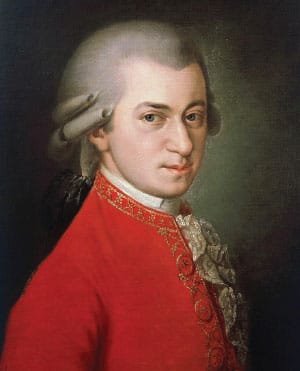
Wolfgang Amadeus Mozart was acknowledged as one of the finest pianists of his day, but he was also a very accomplished string player. He served as a court violinist in his native Salzburg, and continued to play the viola in chamber music after he settled in Vienna. He composed no fewer than 33 sonatas for piano and violin, the first ca. 1764, the last in 1788.
Uncertainty reigns over the dating of this gracious and classically poised Sonata in B-flat major, K.378, but most scholars feel it was a creation of his final years in Salzburg, written sometime between 1779 and his relocation to Vienna in 1781. A minority opinion assigns it to his first months in Vienna, but that seems problematic in light of a letter Mozart wrote to his father on July 4, 1781: “As regards new compositions for the Clavier, let me tell you that four sonatas are ready to be engraved: the sonatas in C and B-flat are among them, only the other two are new.” The works in question are surely what we would call violin sonatas; that Mozart refers to them as “compositions for the Clavier” is unremarkable, since such works were widely viewed at that time as pieces for keyboard with the violin part being somewhat secondary. Mozart’s letter implies that his father was already familiar with two of these works—the Violin Sonatas in C major, K.296, and the one played here—which means that they must have been composed while Mozart was still living at home in Salzburg.
In November 1781 the firm of Artaria & Company published a group of six violin sonatas, including this one, as Mozart’s Opus 2. This collection was Mozart’s first Viennese publication and it launched his long association with Artaria. The set bears a dedication to Josepha Barbara Auernhammer. She was the daughter of an economic councilor in Vienna, and shortly after Mozart’s arrival in Vienna she signed on as his piano pupil. She had a crush on Mozart and even fueled rumors that they were going to be engaged; but he did not share those sentiments in the slightest, and wrote to his father that, quite to the contrary, he actively disliked her, found her singularly unattractive, and considered her “the most aggravating female I know.” Still, he apparently esteemed her enough to dedicate to her these six sonatas, as well as (in 1785) his famous set of Variations on “Ah, vous dirai-je, Maman,” a rite of passage for generations of piano students. He also wrote his Sonata for Two Pianos in D major, K.448, expressly to play with her and unveiled that piece at a concert at her family’s home.
Once published, the Opus 2 Sonatas made their way around, and an anonymous “Report from Italy,” published in Carl Friedrich Cramer’s Magazin der Musik on July 9, 1784, reads: “Mozart’s sonatas with obbligato violin please me greatly. They are very difficult to play. Admittedly the melodies are not at all new, but the accompaniment of the violin is masterly.” The characterization of Mozart’s instrumental music as inordinately difficult, even insurmountably so, was not unusual at that time, with complaints being particularly vociferous in Italy—ironically, since it was always vaunted as the native soil of great string playing.
Valsa de esquina No. 2
Francisco Mignone
Born: September 3, 1897, in São Paulo, Brazil
Died: February 2, 1986, in Rio de Janeiro
Work Composed: 1938/47
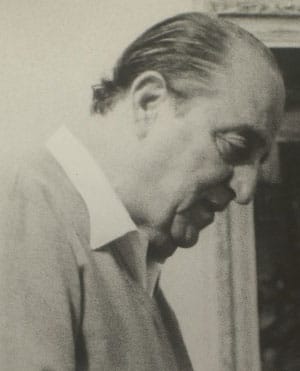
Three years after graduating from the São Paulo Conservatory in 1917, Francisco Mignone left for further study at the Milan Conservatory. By the time he returned to his alma mater in 1929, as a professor of harmony and piano, his first two operas had already made it to the stage, in both cases at the Teatro Municipal in Rio de Janeiro. He moved to Rio in 1933 to become conducting teacher at what is now the Instituto Nacional de Música. That city remained his base for the rest of his life, during which he served as music director for some of Brazil’s most important music organizations, including the Teatro Municipal, the radio division of the National Ministry of Education and Culture, and the Radio Globo network. Early in his career, his works displayed a firm grounding in a late-Romantic idiom, but by the end of the 1920s he dedicated himself increasingly to musical nationalism. For the next three decades, nearly all of his music drew on indigenous, folk, and popular traditions of Brazil; this gave rise to such of his works as his four Fantasias brasileiras for piano and orchestra (from 1921 through 1936), his orchestral tone poem Babaloxá (1936), and his ballet Maracatu de chico rei (1933). This was Mignone’s response to the aesthetic promoted by the Brazilian writer and musicologist Mário de Andrade, the fountainhead of musical nationalism in Brazil; he is credited with opening a path for a group of composers that, apart from Mignone, included Camargo Guarnieri and Radamés Gnattali. By 1960, Mignone moved on to grapple with musical materials in the modernist toolkit—atonality, serialism, tone clusters, etc.—but his works from that time have failed to stake a place in the repertoire in the way his nationalist compositions have.
In the 1930s and ’40s, during his nationalistic period, Mignone met with particular success for his songs and piano works. The latter included two piano collections consisting of 12 pieces each: Valsas de esquina (Street Corner Waltzes, 1938–43) and Valsas choros (1946–55). These collections were written as a salute to the popular waltzes that were improvised by strolling serenaders in turn-of-the-century Brazil, and to the ensuing piano pieces in that style by Ernesto Nazareth. Mignone explained of this collection:
The Valsas de esquina were written because on one occasion, in a discussion (as usual) with Mário de Andrade, the man who helped me the most in this area, we noticed that of all the Brazilian music, the one that had suffered the least American influence was the Waltz; it remained genuinely Brazilian, despite its origins being from Chopin, or Italian, Spanish, as you wish.... I remembered those waltzes from my time as a street serenader, and I managed to get a large number of them in São Paulo. I started to write, but these Valsas de esquina, which seem to have been written in one go, some took months until I managed to elaborate and simplify them, without making them seem empty. It was very difficult.
The Valsa de esquina No. 2 was one of five that he wrote for the set in 1938. We hear in a transcription for violin and piano the composer made in 1947. It opens mournfully (the music is marked Lento e mavioso—slowly and tenderly), works up to a few measures of descending notes marked com entusiasmo e brilhantismo (with enthusiasm and brilliance), moves on to a contrasting, slightly quicker B section, and then returns to conclude with the A section, somewhat rethought.
Violin Sonata in A major
César Franck
Born: December 10, 1822, in Liège
Died: November 8, 1890, in Paris
Work Composed: 1886
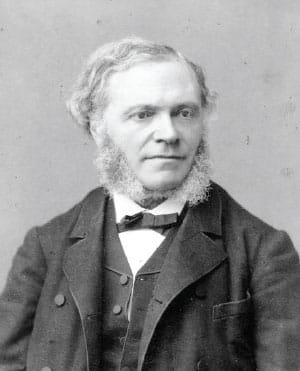
Though he is regarded as one of the central figures of 19th-century French music, César-Auguste-Jean-Guillaume-Hubert Franck was actually Walloon by birth. He was born in Liège, in a French-language region of what would later become Belgium. In any case, it is unquestionable that the violin sonata performed here is the work of a French composer, since Franck was granted French citizenship in 1871. After spending most of his career as a church organist, he was appointed in 1872 as professor of organ at the Paris Conservatory. Word circulated that Franck’s organ seminars were quite the place to be—not so much to master organ-playing as to study the art of composition. His students (who included Vincent d’Indy, Ernest Chausson, Henri Duparc, Guy Ropartz, Gabriel Pierné, and Louis Vierne) hungrily imbibed his pronouncements on advanced chromatic harmony and melodic transformation.
The preponderance of Franck’s major works were created in his final decade, 1880–90. His violin sonata, his only work in that genre (though he had thought of writing one back in 1861), was created midway through those miraculous years, which had begun with the composition of his piano quintet (1879) and included such enduring masterworks as his Prélude, choral et fugue for piano (1884), Symphonic Variations (1885), D-minor symphony (1886-88), string quartet (1889), and Trois chorales for organ (1890). In his signature fashion, the sonata’s themes wend their way throughout the piece, evolving through ingenious transformations to take on always new characters. In fact, D’Indy, Franck’s most ardent acolyte, described this sonata as “the first and the purest model of the cyclical treatment of themes in the form of an instrumental sonata.” Most of the work’s thematic material displays some connection to the violin’s first three notes (D, F-sharp, D) or, in a larger sense, to the dominant ninth chord that the violin continues to trace in the rest of its opening phrase. The first movement is overwhelmingly lyrical, and even its climaxes retain a sense of elegant nobility. Any true sense of agitation is held off until the second movement; and, contrary to the method of the first movement, a suave counter-episode breaks the ongoing rush of the movement as a whole, which is re-entered via some stentorian piano chords that remind one of a recitative.
But Franck has a more extended recitative up his sleeve, at the beginning of the third movement. Here the performers seem almost to improvise, recalling themes (or, shall we say, “thematic transformations”) that have already been heard in the sonata. After many starts and stops a phrase takes hold and Franck spins it into a more extended lyrical section. In the warmhearted fourth movement we find evidence of Franck’s firm technical prowess. As an early reviewer described it, “the finale, which is treated almost throughout in canonic texture at the octave, reveals beneath its outward shell of academicism an ease, a grace, and a charm seldom equaled by anyone.”
The violin sonata’s first champion was its dedicatee, the Belgian violinist Eugène Ysaÿe, a good friend of Franck’s. Ysaÿe was married on September 28, 1886, and Franck regretted that he was unable to make the trip to attend the festivities, which were near the Luxembourg border. Instead, he sent the manuscript of this sonata, which was presented as a gift at the wedding banquet. Ysaÿe sightread it with the pianist Léontine Bordes-Pène, who was at the banquet, and the two were somewhat baffled by its more curious aspects—particularly the unusual structure of the first movement. But they persevered, and they grew to champion this piece on its way to becoming an irreplaceable classic.
—James M. Keller
About the Artists
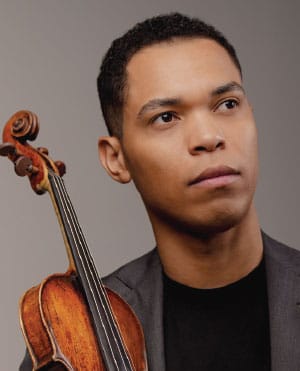
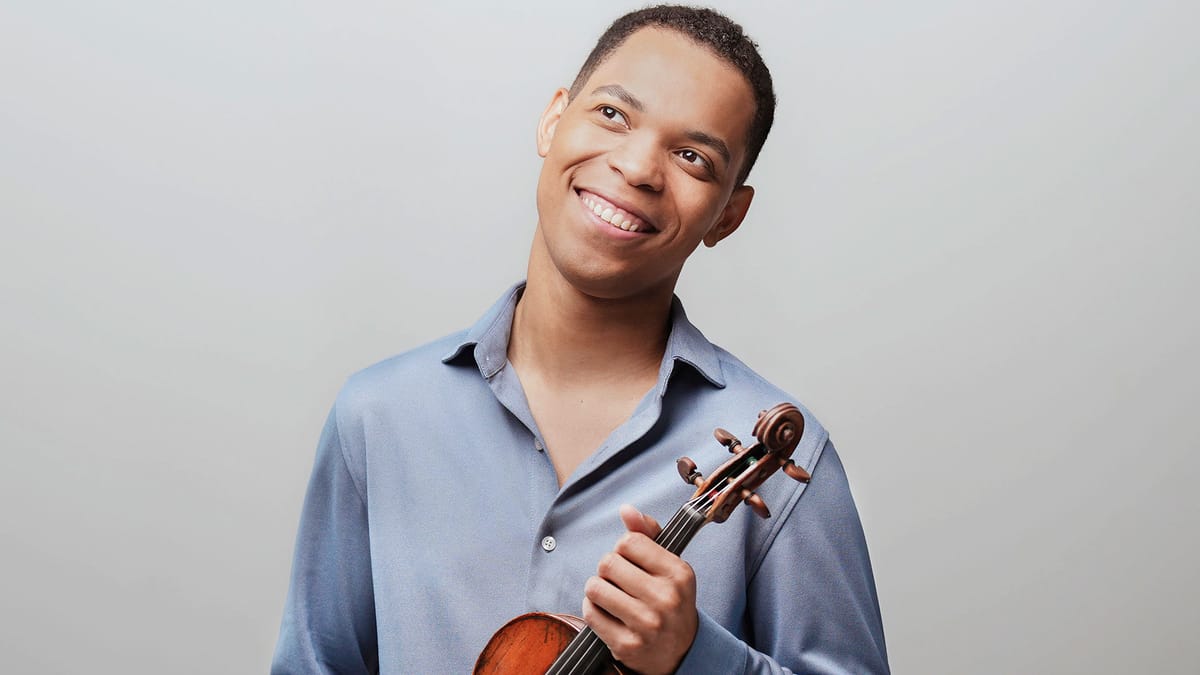
Nathan Amaral
Brazilian violinist Nathan Amaral was the first-prize winner of the 27th Sphinx Competition and was a 2024 Classic FM “Rising Star.” He has performed as a soloist and chamber musician at Royal Albert Hall, Wigmore Hall, Queen Elizabeth Hall, Konzerthaus Dortmund, Lucerne Festival, Mozarteum Grosser Saal, and Berlin Philharmonie, and with ensembles such as the Philadelphia Orchestra, Boston Symphony Orchestra, Chineke!, Philharmonia Orchestra, Jenaer Philharmonic, Brazilian Symphony, and Royal College of Music Symphony at the Aldeburgh Festival. He has also been invited to perform with the Krzyzowa Music Festival, Yellow Barn, Open Chamber Music (IMS Prussia Cove), and Kaleidoscope Collective.
Highlights this season include his debut at the Amsterdam Concertgebouw, a return to Wigmore Hall, and a recital at the Schubert Club, as well as his debut at Bendigo Music Festival in Australia. He makes his debut at the San Francisco Symphony with this Shenson Spotlight Recital.
In 2021, Amaral founded his own festival, the Week of Musical Integration (Festival SIM), to support and teach young musicians from difficult backgrounds in Brazil. With the belief that music should be accessible to everyone regardless of background, alongside his performing career, his personal mission is to establish an institution for underprivileged music students and people of color in his hometown. He is a Thomastik-Infeld Artist and Coregami Ambassador.
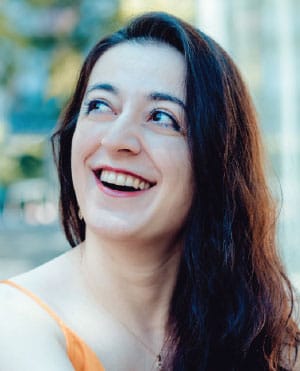
Sophiko Simsive
Sophiko Simsive has performed at Carnegie Hall, the Berlin Philharmonie, and Amsterdam Concertgebouw with ensembles including the Residentie Orkest, Yale Philharmonia, Noord Nederlands Orkest, Jeugdorkest Nederland, and Manhattan School of Music Philharmonia. A passionate chamber musician, she is the pianist of the Claremont Trio, and has collaborated with artists including Gilbert Kalish and the Calidore String Quartet. Her festival appearances include Yellow Barn, Music Academy of the West, and the Verbier Festival.
A native of the country of Georgia, Simsive earned a doctor of musical arts from the Manhattan School of Music and now serves as a senior coaching assistant at Yale University. She makes her debut at the San Francisco Symphony with this Shenson Spotlight Recital.
Four Questions for Nathan Amaral
Tell us a little about what you’re playing for your Spotlight Series recital.
I selected this program precisely for its contrasts and the dialogue it creates between different musical worlds. I lived in Salzburg during my studies, and, as Mozart’s birthplace, the city deepened my connection to his music in a very personal way. Opening with one of his sonatas and then moving directly into a Brazilian work such as Mignone’s Valsa de esquina reveals the breadth of flexibility and imagination with which two distinct cultures can converse, each expressing its own emotional and aesthetic landscape. Ending with Franck brings the journey to a point that feels almost suspended between these worlds, suggesting a space where their influences intersect and resonate with one another.
What inspired you to pursue a career in classical music?
My path began when a social project offering music education opened in my community, and I joined simply because it was the opportunity available to me at that time. Over the years, however, regular contact with the instrument, the discipline of practice, and the experience of playing with others revealed to me how deeply I connect to music and how naturally it became the language through which I express myself. So my decision to pursue a career in classical music did not come from an early idol or a single defining moment, but from the gradual realization that this unexpected opportunity had quietly grown into a vocation.
What’s your routine like on concert days?
I try to create as much physical and mental space as possible around the performance. I keep the day relatively calm, avoid heavy commitments, and structure my time so that by the moment I arrive at the hall, my focus is already narrowing toward the stage.
What are some of your interests outside of music and how do they influence your creativity and artistic expression?
I recently started ice skating, which has unexpectedly become an important part of my artistic life. The sense of glide, balance, and control on the ice feels very close to what I search for in my sound: a line that is both stable and free. Learning a completely new physical skill also reminds me what it means to be a beginner again, which keeps me humble, curious, and more empathetic toward audiences and students. The combination of movement, rhythm, and risk in skating feeds back into my playing, encouraging me to take more expressive chances on stage while still maintaining precision.