In This Program
The Concert
Sunday, March 8, 2026, at 2:00pm
Radu Paponiu conducting
Wattis Foundation Music Director
Jean Sibelius
Finlandia, Opus 26 (1899)
Jennifer Higdon
blue cathedral (2000)
Intermission
Gustav Mahler
Symphony No. 4 in G major (1892)
Bedächtig (Deliberately)
In gemächlicher Bewegung. Ohne Hast (In easy motion; without haste)
Ruhevoll (Serene)
Sehr behaglich (Very leisurely)
Hannah Cho soprano
Program Notes
Finlandia, Opus 26
Jean Sibelius
Born: December 8, 1865, in Hämeenlinna (Tavastehus), Finland
Died: September 20, 1957, in Järvenpää, Finland
Work Composed: 1899
Instrumentation: 2 flutes, 2 oboes, 2 clarinets, 2 bassoons, 4 horns, 3 trumpets, 3 trombones, tuba, timpani, percussion (triangle, cymbals, and bass drum), and strings
Duration: About 8 minutes
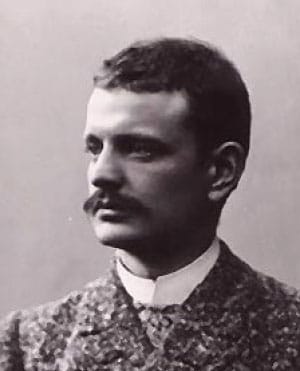
Surely Finnish composer Jean Sibelius could not have imagined that a piece written in support of Finnish reporters’ pension funds would eventually become not only his most famous work but would also become a national musical symbol for his compatriots, an anthem for their struggle against Russian occupation. Even today, this symphonic tone poem represents Finnish patriotism at the turn of the 20th century, even if listeners aren’t aware of the history behind the piece.
The Grand Duchy of Finland was under Russian control from 1808 until 1917. Finland maintained a modicum of autonomy until Tsar Nicholas II’s February Manifesto of 1899, which instituted the attempted “Russification” of Finland. The manifesto subjected Finnish reporters and their papers to Russian censorship, made the Russian Orthodox church the official church of state, and made the Finnish Army follow Russian rules of military service, among other repressive policies. The Finnish people reacted strongly against these infringements, which led to a resurgence of interest in Finnish language and culture, and a growing urgency among the denizens to rid themselves of the Russian imperial presence.
Finlandia began its musical life as the finale in a set of incidental music for a set of staged tableaus depicting Finland’s history. These were some of the most political years of Sibelius’s compositional output, during which time he wrote several patriotic protest pieces against the Russian regime. The premiere took place in 1899 as part of a benefit concert for Finnish journalists. Sibelius’s work was originally titled Press Celebration Music. The final movement, Finland Awakes, was an immediate hit.
Retitled Finlandia, the work is a series of short musical vignettes that culminates in its famous hymn. The work begins with an ominous growl the brass, bassoons, basses, and timpani, the sound of a struggle against tyranny. From the brassy introduction, the woodwinds introduce a chorale that is slowly taken over by the strings. The nervous energy builds until it hurls into a chittering allegro. The strings propel forward as if they are a boat about to capsize. Suddenly, the entire orchestra shifts into major and embarks upon a triumphal march. Finally, the beloved hymn emerges. Finnish listeners loved the melody so much that they started to set the tune to words. Sibelius was perplexed by this, saying, “It is not intended to be sung … it is written for orchestra. But if the world wants to sing it, it can’t be helped.” Indeed, the melody became so beloved that it is now affectionately known as “the unofficial national anthem of Finland.”
blue cathedral
Jennifer Higdon
Born: December 31, 1962, in Brooklyn
Work Composed: 2000
Instrumentation: 2 flutes (2nd doubling piccolo), oboe, English horn 2 clarinets, 2 bassoons, 4 horns, 3 trumpets, 3 trombones, tuba, timpani, percussion (small triangle, large triangle, bell tree, large tam-tam, tam-tam, bass drum, crotales, chimes, glockenspiel, vibraphone, and marimba), harp, piano (doubling celesta), and strings
Duration: About 11 minutes
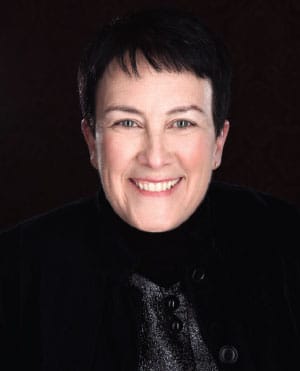
Jennifer Higdon is one of the most well-known and often-performed living American composers. She has won numerous awards for her compositions, including three Grammy awards, the Guggenheim Foundation Award, and the Pulitzer Prize for Music in 2010 for her violin concerto. Blue cathedral was commissioned to commemorate the Curtis Institute of Music’s 75th anniversary.
The musical language of blue cathedral builds on the “American pastoral” style that Aaron Copland made famous, evoking wide open spaces and vast, beautiful landscapes. In blue cathedral, the landscape that Higdon depicts is a “journey through a glass cathedral in the sky.” Higdon writes, “I wanted to create the sensation of contemplation and quiet peace at the beginning, moving towards the feeling of celebration and ecstatic expansion of the soul, all the while singing along with that heavenly music.”
The piece is written not only in commemoration of Curtis’s anniversary but also a musical memorial for her late brother, Andrew Blue. Higdon is a flute player, and her brother was a clarinetist, so she interweaves the two instruments in dialogue with each other, the older sibling (Jennifer Higdon) beginning the solo. The two instruments overlap toward the cathedral in the sky until the flute eventually drops out and the clarinet continues its journey upward, traveling through the “immense ceiling which would open to the sky,” all the while “singing a heavenly music.” Higdon wanted to represent the “expression of the individual and the group … our inner travels and the places our souls carry us, the lessons we learn, and the growth we experience.” The piece is a celebration, a loving eulogy and reminder that the passing of a soul from this world to the next can be seen as an ascension and expansion into all that is around us. The piece creates a sensation of ethereal transcendence yet is grounded in somehow familiar and uplifting musical gestures envelop the listener.
Since its premiere in 2000, Higdon notes that blue cathedral has received more than 850 performances. It was composed almost exactly 100 years after the premieres of the other two pieces on this program, and while it sounds of the 21st century, all three works on this program use tonality in innovative modes of expression. In some ways, each of the three pieces deal with themes of love and transcendence. Sibelius writes of love for one’s country and the desire to overcome the Russian regime in Finlandia, Higdon writes on her love for her sibling and transcending through the doorway of life in blue cathedral, and Mahler’s Fourth Symphony is a journey from beginning to end, just like Higdon’s, that all leads to a finale centering around all the beauty and peace that the child-like narrator hopes to find in heaven.
Symphony No. 4 in G major
Gustav Mahler
Born: July 7, 1860, in Kaliště, Bohemia
Died: May 18, 1911, in Vienna
Work Composed: 1892
Instrumentation: solo soprano (4th movement only), 4 flutes (3rd and 4th doubling piccolo), 3 oboes (3rd doubling English horn), 3 clarinets (2nd doubling E-flat clarinet and 3rd doubling bass clarinet), 3 bassoons (3rd doubling contrabassoon), 4 horns, 3 trumpets, timpani, percussion (bass drum, cymbals, orchestra bells, sleigh bells, suspended cymbals, tam-tam, and triangle), harp, and strings
Duration: About 55 minutes
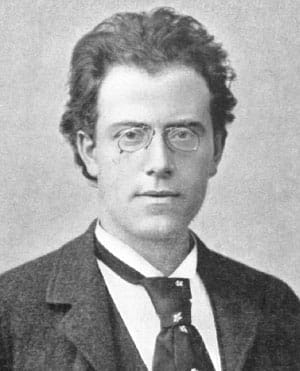
Gustav Mahler’s Fourth Symphony is a vast departure from the enormity of the first three. He writes for a smaller orchestra and omits trombones and tuba entirely, the only one of his symphonies to do so. It is also Mahler’s shortest symphony at just under an hour long. But don’t let this appearance of simplicity fool you; Mahler plays with the form more than he adheres to it. He also creates an incredible swath of timbres and variety through the instrumentation available to him. Additionally, he builds toward the finale in each of the movements, building on the innovation of Beethoven’s Fifth Symphony.
There is a sense of childishness in this symphony, or perhaps more specifically, the world Mahler creates in this work is as if seen through the eyes of a child. The final movement is a setting of “Das himmlische Leben” (the heavenly life), in which a child narrator celebrates all that is good in heaven, all the wonderful foods, the peaceful, patient, innocent life far removed from earthly wants and needs.
It may be surprising that the first three movements were composed during the same year Sibelius composed Finlandia. Mahler was only five years older than Sibelius, but the musical worlds from which they evolved were quite different. Mahler wrote this symphony backwards, starting with the fourth movement, which he composed eight years before the rest of the symphony. The finale started its life as a lied (art song) set to a text from Des Knaben Wunderhorn, a group of German folk songs and poems edited and published in 1806–08 by the song collectors Achim von Arnim and Clemens Brentano. Mahler, like many in the 19th-century German-speaking world, was enamored by these poems and set several Wunderhorn poems to music over the course of his life. He was influenced not only by the poetry itself, but also the way these folk songs and poetry enthralled the population.
The Music
The symphony opens unexpectedly, with sleighbells ushering along two flutes playing in accentuated open fifths, which elide unexpectedly into an almost sticky-sweet melody from the violins. It sounds almost like a simple country bumpkin tune, except Mahler subverts this apparent naïveté by accenting the melody in unexpected places and bringing in countermelodies and accompaniments in novel ways. The first movement is marked by multiple themes running throughout, many of which are cropped short or interrupted by other melodies swooping in and changing the direction. What starts as a beautiful (or as audiences thought in its early days, saccharine) melody in the violins is tossed and turned about, then shifted into other melodies throughout the movement. It is Mahler’s way of adhering to elements of the classical symphony while putting his own stamp on the genre at the turn of the 20th century.
Mahler refused to give his symphonies explicit programs, arguing that his audiences would invariably misunderstand or misinterpret whatever program he might choose to include in his works. However, he did admit that he was inspired by a powerful portrait by the Swiss symbolist painter Arnold Böcklin, Self-Portrait with Death Playing the Fiddle. Mahler aptly named the second movement scherzo Freund Hein spielt auf (Death strikes up) and calls for the concertmaster to play a second violin pitched a whole step higher than normal. Writing for a different tuning of the open strings, called scordatura, creates a nasal, bright, almost acerbic tone from the violin. The extra tension, particularly on top E string (tuned to F-sharp), is perfect for the scratchy, grotesque solo. Mahler instructs the soloist to play like a country fiddle, and to play “very aggressively,” to portray the character of impending Death.
Although the Adagietto of Mahler’s Fifth Symphony is perhaps the most famous slow movement in the composer’s symphonies, Mahler was most fond of the Adagio in his Fourth. It is 20 minutes of beautiful variations which unfold over the course of the movement, in which the orchestra ascends to heaven.
And then the arrival at the finale, Das himmlische Leben. Everything in the symphony was leading to this. It seems so naïve and simple; the harp and low strings lilt along below an innocent-sounding clarinet melody. When the soprano enters she is instructed to sing “with a childlike, serene expression; absolutely without parody.” Mahler pays close attention to the text and creates poignant word painting. Even if the listener doesn’t understand the German words, the emotions of the music are clear.
Mahler was insistent that listeners understood that each movement in the symphony was moving toward the finale. The benefit of composing from end to beginning was that he could incorporate and evolve themes over the course of the work, with the finale sending the listener into the warm embrace of a heavenly harp, padding slowly into the lowest register of the instrument. The symphony does not end with a bang, but gently, softly, a rare endeavor for any symphony. It ends sublimely, with room for reflection, likely just what Mahler was hoping for in a work that he considered his most perfect symphony.
—Alicia Mastromonaco
Mahler Symphony No. 4
Das himmlische Leben
Wir geniessen die himmlischen Freuden,
D’rum thun wir das Irdische meiden.
Kein weltlich’ Getümmel
Hört man nicht im Himmel!
Lebt Alles in sanftester Ruh’!
Wir führen ein englisches Leben!
Sind dennoch ganz lustig daneben!
Wir tanzen und springen,
Wir hüpfen und singen!
Sanct Peter im Himmel sieht zu!
Johannes das Lämmlein auslasset,
Der Metzger Herodes drauf passet!
Wir führen ein geduldig’s,
Unschuldig’s, geduldig’s,
Ein liebliches Lämmlein zu Tod!
Sanct Lucas den Ochsen thät schlachten
Ohn’ einig’s Bedenken und Achten,
Der Wein kost kein Heller
Im himmlischen Keller,
Die Englein, die backen das Brot.
Gut’ Kräuter von allerhand Arten,
Die wachsen im himmlischen Garten!
Gut’ Spargel, Fisolen
Und was wir nur wollen!
Ganze Schüsseln voll sind uns bereit!
Gut’ Äpfel, gut’ Birn’ and gut’ Trauben!
Die Gärtner, die Alles erlauben!
Willst Rehbock, willst Hasen,
Auf offener Strassen sie laufen herbei.
Sollt ein Fasttag etwa kommen
Alle Fische gleich mit Freuden angeschwommen!
Dort läuft schon Sanct Peter
Mit Netz and mit Köder
Zum himmlischen Weiher hinein.
Sanct Martha die Köchin muss sein.
Kein Musik ist ja nicht auf Erden,
Die uns’rer verglichen kann werden.
Elftausend Jungfrauen
Zu tanzen sich trauen!
Sanct Ursula selbst dazu lacht!
Cäcilia mit ihren Verwandten
Sind treffliche Hofmusikanten!
Die englischen Stimmen
Ermuntern die Sinnen!
Dass Alles für Freuden erwacht.
—Das Knaben Wunderhorn
The Heavenly Life
We delight in the heavenly joys,
and keep clear of the things of the earth.
There’s no worldly racket
to be heard in heaven.
Everything here lives in the gentlest peace!
We live an angelic life!
And a happy one, too!
We dance and leap,
we jump and sing.
Saint Peter in heaven looks on.
John lets the young lamb out,
the butcher Herod lies in wait.
We lead a patient,
innocent, patient,
dear little lamb to its death!
Saint Luke slaughters the ox
without a thought or concern.
The wine costs nothing
in the heavenly cellar.
The angels bake the bread.
Good greens of all kinds
grow in the heavenly garden!
Good asparagus, string beans,
and anything we want!
Whole bowls await us!
Good apples, good pears, and good grapes!
The gardeners allow everything!
If you want deer or rabbit,
they run free in the streets.
Should a day of fasting come along,
all the fish come swimming happily!
There goes Saint Peter running
with net and bait
to the heavenly pond.
Saint Martha will be the cook.
No music on earth
can compare with ours.
Eleven thousand maidens
step out to dance!
Even Saint Ursula laughs at the sight!
Cecilia and her family
are first-rate court musicians!
The heavenly voices
gladden our senses,
and everything wakes to joy.
Translation: Larry Rothe
About the Artists
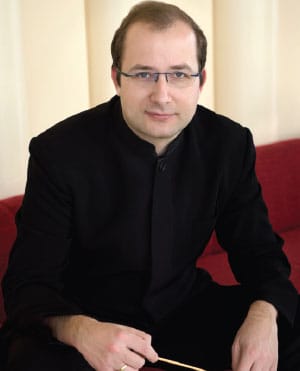
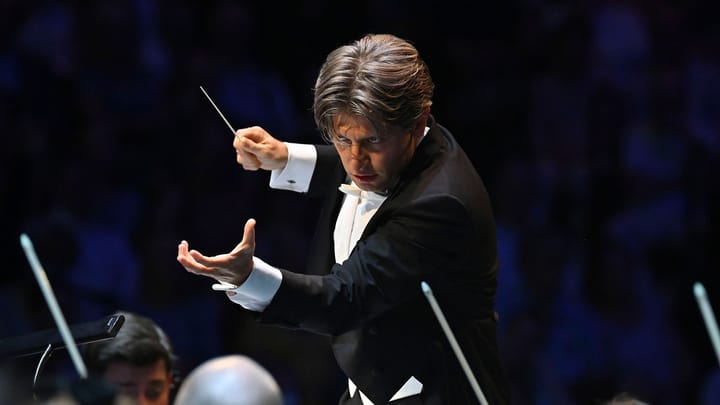
Radu Paponiu
Radu Paponiu was appointed Wattis Foundation Music Director of the San Francisco Symphony Youth Orchestra in fall 2024, and recently extended his contract through the 2028–29 season. He was previously associate conductor of the Naples (Florida) Philharmonic and music director of the Naples Philharmonic Youth Orchestra. He has also served as music director of the Southwest Florida Symphony, assistant conductor of the Naples Philharmonic, and as a member of the conducting faculty of the Juilliard Pre-College.
As a guest conductor, Paponiu has appeared with the Romanian National Radio Symphony, Teatro Comunale di Bologna Orchestra, Transylvania State Philharmonic, Banatul Philharmonic, Louisiana Philharmonic, Rockford Symphony, Colorado Music Festival Orchestra, North Carolina Symphony, California Young Artists Symphony, and National Repertory Orchestra. He has collaborated with soloists such as Evgeny Kissin, Yefim Bronfman, Emanuel Ax, Gil Shaham, Midori, Vladimir Feltsman, Robert Levin, Charles Yang, Nancy Zhou, Stella Chen, and the Ébène Quartet.
Born in Romania, Paponiu began his musical studies on the violin at age seven, came to the United States at the invitation of the Perlman Music Program, and later completed two degrees in violin performance at the Colburn School. He went on to earn a master's degree in orchestral conducting at New England Conservatory, where he studied with Hugh Wolff.
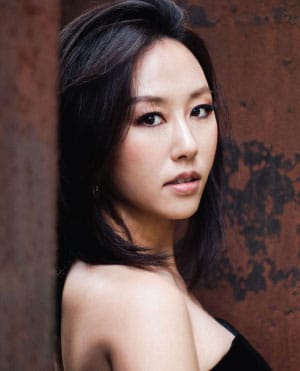
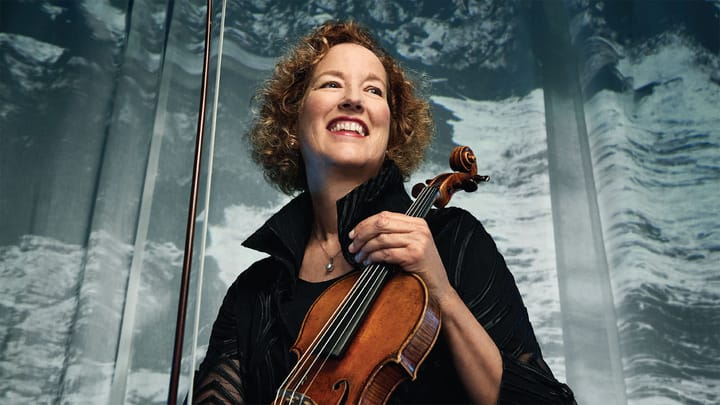
Hannah Cho
Hannah Cho has appeared with Pocket Opera, Opera Naples, Korea National Opera, Daejon Opera, and Livermore Valley Opera. She was a 2024 participant in the Merola Opera Program, and has won first prizes at the Beijing International Opera Competition, Korea National Opera Competition, Daejeon Opera Competition, Seil Korean Art Song Competition, and the German Lieder Association Competition. She has been recognized at the James Toland Vocal Arts Competition and KBS Competition, and received grants from the Gerda Lissner Foundation, Goldsmith Foundation, and the Michael Sisca Opera Award.
This season, Cho debuted as Cio-Cio San in Madama Butterfly at Pocket Opera and makes her debut at the San Francisco Symphony with this performance. She sang the role of Josephine Young in Huang Ruo’s An American Soldier, the recording of which was Grammy Award–nominated for Best Opera Recording.
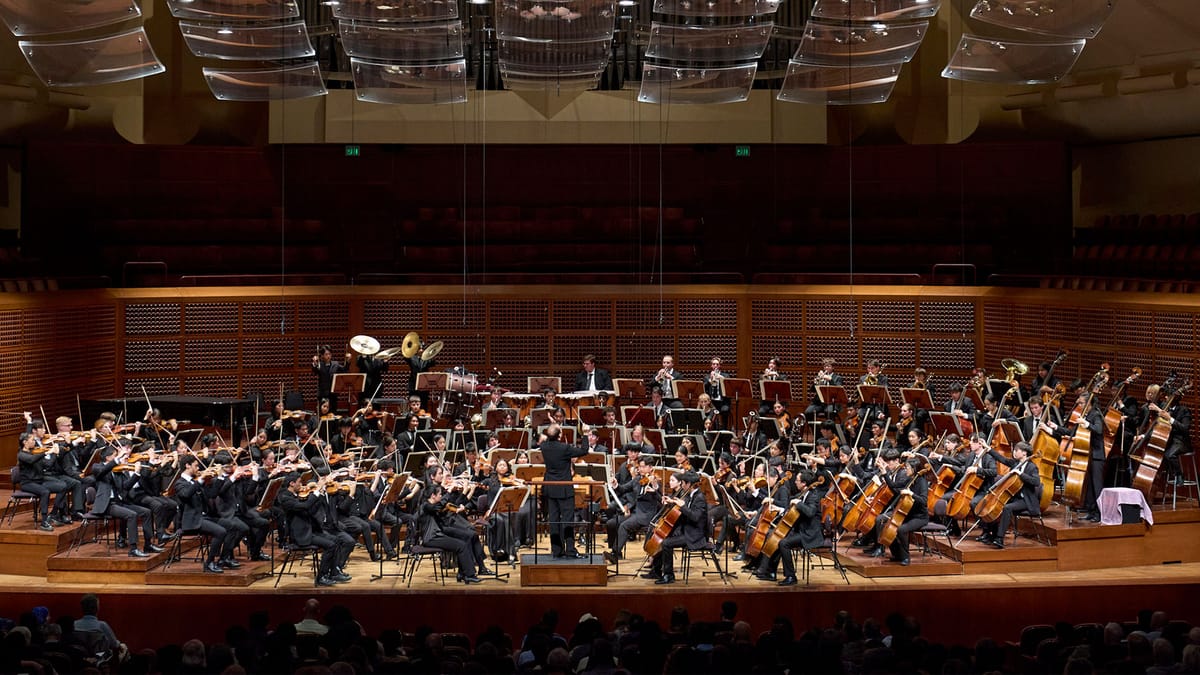
San Francisco Symphony Youth Orchestra
The San Francisco Symphony Youth Orchestra is recognized internationally as one of the finest youth orchestras in the world. Founded by the San Francisco Symphony in 1981, the SFSYO’s musicians are chosen from more than 200 applicants in annual auditions. The SFSYO’s purpose is to provide an orchestral experience of preprofessional caliber, tuition-free, to talented young musicians. The more than 100 musicians, ranging in age from 12 to 21, represent communities from throughout the Bay Area. The SFSYO rehearses and performs at Davies Symphony Hall under the direction of Radu Paponiu, who joined the San Francisco Symphony as Wattis Foundation Music Director of the San Francisco Symphony Youth Orchestra in the 2024–25 season. Jahja Ling served as the SFSYO’s first Music Director, followed by David Milnes, Leif Bjaland, Alasdair Neale, Edwin Outwater, Benjamin Shwartz, Donato Cabrera, Christian Reif, and Daniel Stewart.
As part of the SFSYO’s innovative training program, musi-cians from the San Francisco Symphony coach the young play-ers each Saturday afternoon in sectional rehearsals, followed by full orchestra rehearsals with Radu Paponiu. Youth Orchestra members regularly meet and work with world-renowned artists: Esa-Pekka Salonen, Michael Tilson Thomas, Herbert Blomstedt, Kurt Masur, John Adams, Yo-Yo Ma, Valery Gergiev, Isaac Stern, Yehudi Menuhin, Wynton Marsalis, Midori, Joshua Bell, Mstislav Rostropovich, Simon Rattle, and many others have worked with the Youth Orchestra. Of equal importance, Youth Orchestra members are able to speak with these prominent musicians about their professional and personal experiences, and about music. The ensemble has toured Europe and Asia, given sold-out concerts in such legendary halls as Berlin’s Philharmonie, Vienna’s Musikverein, Saint Petersburg’s Mariinsky Theater, and Amsterdam’s Concertgebouw, and won first prize in Vienna’s International Youth and Music Festival.
San Francisco Symphony Youth Orchestra
First Violins
Euisun Hong, Co-Concertmaster
Lawrence V. Metcalf Chair
Andrew Zhang, Co-Concertmaster
Lawrence V. Metcalf Chair
Ethan Chang
Christina Hong
Hyesun Hong
Maximilian Huang
Kayla Hwang
Constance Kuan
Sydney Li-Jenkins
Aaron Ma
Magdalena Masur
Henry Miller
Carolyn Ren
Yujin Shin
Jenna Son
Henry Stroud
Kate Vo
Lucas Wang
Lucy Wang
Second Violins
Asher Cupp, Co-Principal
Lisa Saito, Co-Principal
Léopoldine Bréard
Maggie Cai
Janet Chan
Dylan Chua
Udo Funke
Brandon Gao
Evelyn Holmes
Katherine Jang
Sarah Kumayama
William Liang
Veronica Qiu
Serena She
Oliver Spivey
Braden Wang
Yihe Wang
Junnosuke Yanagisawa
Katherine Yoo
Riona Zhu
Violas
Bryan Im, Co-Principal
Yufei Shen, Co-Principal
Rebekah Sung, Co-Principal
Harper Berry
Colin Breshears
Jamie Cheung
Timothy Cheung
Olivia Haddick
Jaydon Li
Haoching Liu
Olivia Park
Galen Russell
Rohan Sangani
Laurelin Stroh
Nicole Targosz
Cellos
Melissa Lam, Co-Principal
Ethan Lee, Co-Principal
Claire Topper, Co-Principal
Ya-Ching Chan
Timothy Huang
Anthony Jung
Donghu Kim
Blanche Li
Lukas Masur
Yoonsa Park
Cara Wang
Bass
Allison Prakalapakorn, Principal
Alec Blair
Haku Homma
Hani Khayatei Houssaini
Yoav Konig
Rouyan Lechner
Rudie Sheehy
Raiden Tan
Eric Zhang
Flutes
Esther Kim
Cadence Liu
Emilie Yoo
Wanruo Zhang
Oboes
Gabriel Chodos
Jesse Spain
Liam Ta
Asher Wong
Clarinets
Ryan Beiter
Subin Kim
Hanting Liu
Adam Thyr
Bassoons
Matthew Chan
Adam Erlebacher
Stuthi Jaladanki
Aya Watanabe
Horns
Daniel Cooper
Elinor Cooper
Owen Ellis
Violet MacAvoy
Owen Sheridan
Trumpets
Marcus Chu
Julian Moran
Brady Phan
Ivan Sokolenko
Trombones
Harvy Chang
Ethan Moran
Lenel Elison Gomintong,
Bass Trombone
Tuba
Cameron Strahs
Percussion & Timpani
Garrett Guo
Jeffrey Lee
Derick Shu
Alexander Xie
Aeneas Yu
Harps
Jessica Cheung
Camille Chu
Keyboard
Dylan Hall
Radu Paponiu,
Wattis Foundation Music Director
Coaching Faculty
David Chernyavsky, Violin
In Sun Jang, Violin
Chen Zhao, Violin
Adam Smyla, Viola
Jill Brindel, Cello
David Goldblatt, Cello
Stephen Tramontozzi, Bass
Catherine Payne, Flute
Russ de Luna, Oboe
Brooks Fisher, Oboe
Matthew Griffith, Clarinet
Jerome Simas, Clarinet
Justin Cummings, Bassoon
Jack Bryant, Horn
Jeff Biancalana, Trumpet
Jonathan Seiberlich, Trombone & Tuba
Jacob Nissly, Percussion & Timpani
Marty Thenell, Percussion & Timpani
Katherine Siochi, Harp
Marc Shapiro, Keyboard
Youth Orchestra Administration
Daniel Hallett, Director, Youth Orchestra Program
Katie Lee, Youth Orchestra Administrative Apprentice
Hung-Yu Lin, Youth Orchestra Administrative Apprentice
Lily Wang, Youth Orchestra Library Apprentice