In This Program
The Concert
Sunday, February 8, 2026, at 7:30pm
Yefim Bronfman piano
Robert Schumann
Arabesque in C major, Opus 18 (1839)
Johannes Brahms
Piano Sonata No. 3 in F minor, Opus 5 (1853)
Allegro maestoso
Andante espressivo
Scherzo: Allegro energico
Intermezzo: (Rückblick) Andante molto
Finale: Allegro moderato ma rubato
Intermission
Claude Debussy
Images, Book Two (1907)
Cloches à travers les feuilles (Bells heard through the leaves)
Et la lune descend sur la temple qui fût (And the moon sets over the temple that was)
Poissons d’or (Goldfish)
Ludwig van Beethoven
Piano Sonata No. 23 in F minor, Opus 57, Appassionata (1853)
Allegro assai
Andante con moto–
Allegro ma non troppo–Presto
Presenting Sponsor of the Great Performers Series

Program Notes
Arabesque in C major, Opus 18
Robert Schumann
Born: June 8, 1810, in Zwickau, Saxony
Died: July 29, 1856, Endenich, near Bonn
Work Composed: 1839
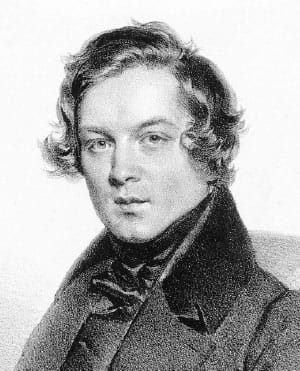
As of the winter of 1838–39, Robert Schumann didn’t have much to show for himself. Now in his late 20s, his plans to light up the world as a pianist had fizzled, done in by a lack of performing talent plus a self-
inflicted hand injury. Robert’s erstwhile piano teacher Friedrich Wieck, dismayed by his brilliant daughter Clara’s determination to marry his unimpressive former student, began resorting to borderline guerilla warfare to thwart the young couple’s hopes. Frustrated, Robert left Leipzig to try his fortunes in Vienna, where he hoped to relocate his budding New Journal for Music (Neue Zeitschrift für Musik) and possibly achieve a whiff of financial respectability. “You’ll regret ever having come here,” said publisher Tobias Haslinger. He was right. Unable to navigate Vienna’s toxic combination of censorship and intransigent bureaucracy, Robert was back in Leipzig by April 1839.
But he was not empty-handed. He had composed a bouquet of fine keyboard works during his Vienna sojourn, among them the exquisite Arabesque in C major, Opus 18, written with Clara’s sterling pianism in mind. While it’s true that Schumann dismissed the Arabesque as a lightweight trifle written for money rather than artistic satisfaction, it nevertheless marks an important milestone in his compositional career, as it imparts a newfound graciousness to his writing while resisting the popular salon style of the day.
Cast in a five-part rondo form, the Arabesque consists of three iterations of a reprise interleaved with two contrasting episodes, the whole capped off by an unexpectedly dreamy coda that might remind listeners of the song cycles yet to come. The reprise itself is in a basic three-part form, characterized by rippling pianistic figurations that ornament, without hiding, a gently bouncing melody. The first episode is a songlike affair, characterized by long silky phrases in flowing rhythm, while the second suggests a march, with its sturdy theme and dotted rhythms.
For those who are curious about how things worked out: once Clara came of age she and Robert were married—amid a typhoon of resistance from Wieck—and soon became the “first couple” of European music, she as one of the finest pianists of the age and he as, well, Robert Schumann.
Piano Sonata No. 3 in F minor, Opus 5
Johannes Brahms
Born: May 7, 1833, in Hamburg
Died: April 3, 1897, in Vienna
Work Composed: 1853
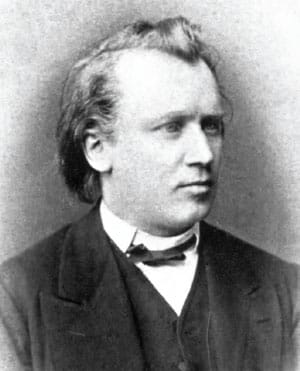
A sloppy, poorly-dressed man who slouched around Vienna while dripping cigar ashes from his bushy, unkempt beard. Lifelong bachelor, lion of Vienna’s musical establishment, and a bonafide grump who once left a party offering an apology to anyone he had managed not to offend.
But that’s Brahms later in life. In his salad days he was winsome and clean-shaven, so fit that he chose to hike up the Rhine Valley on his way to Düsseldorf for his career-making meeting with Robert and Clara Schumann in September, 1853. He was a downright spectacular pianist, one of those who could turn a piano into an orchestra as he unleashed torrents of octaves and thick chords with apparent nonchalance. He had already composed three sonatas for solo piano— the only ones he would ever write—that were equally broad-shouldered and vigorous.
The Schumanns found him dazzling. “Fated to give us the ideal expression of the times,” gushed Robert, describing his new protégé as “a young blood at whose cradle graces and heroes mounted guard.” Before too long Brahms met Hector Berlioz, who described him as “this diffident, audacious young man who has taken it into his head to make a new music.” Another early friend, the magisterial violinist-composer Joseph Joachim, recalled that “never in the course of my artist’s life have I been more completely overwhelmed.” On the other hand, a first encounter with Franz Liszt went poorly when Brahms nodded off while Liszt was playing his own Sonata in B minor.
No early Brahms work better exemplifies that breathtaking promise than the F-minor piano sonata. In this expansive five-movement work we hear the voice of the master symphonist to come, as yet unrealized but nevertheless unmistakable. The sonata opens with a frank display of physical power, via a theme that vaults over multiple piano registers, much like the thunderbolts that open Beethoven’s Hammerklavier sonata. Brawny to be sure, but this is no mere muscle fest; the movement is elegantly constructed from a few materials, most of which can be traced back to the opening statement. (That practice was to become a Brahms trademark, in that often the first thing you hear is the seed from which the rest springs.)
If the first movement prefigures the taut organization of the Third Symphony and its ilk, the second-place Andante espressivo anticipates the exquisite intermezzos of Brahms’s later years, its falling-in-thirds opening paragraphs balanced by an intervening Poco più lento (A little more slowly) that sets up a tender dialog between the two hands. Although the movement starts out as a classic three-part form, Brahms adds an extended coda that is for all intents and purposes an altogether new fourth section, lyrical at first and then building to a majestic outburst; the movement ends with a sense of heroic nobility.
Brahms, tongue firmly in cheek, would one day describe the second piano concerto’s tumultuous second movement as “a little wisp of a scherzo.” He might have applied that quip to this sonata’s scherzo, which is likewise neither remotely little nor wispy. Like the scherzos in Brahms’s later works, it’s a three-part affair in which the turbulent outer sections flank a sustained, noble trio section, during which we hear some bass figures that sound remarkably like the famous four-note motif in Beethoven’s Fifth Symphony.
The F-minor sonata dispenses with tradition by being laid out in five movements rather than the usual four. The “extra” movement is the fourth-place Intermezzo, a relatively free-form affair that takes the four-note Beethoven motif on an extraordinary journey. The finale that follows is a magnificently constructed rondo that bypasses the form’s inherent tedium, almost inevitable as multiple instances of the core reprise pile up. Only a few composers have been able to fashion rondos that avoid predictability, and they’ve been our most celebrated: Haydn, Mozart, Beethoven. But even at the tender age of 20, Brahms proves he’s equal to the challenge with this expansive, highly varied, and remarkably unpredictable rondo that ends with a grandiose statement of its theme, now in a sturdy, optimistic major mode to bring the giant sonata to an appropriately brilliant close.
Images, Book Two
Claude Debussy
Born: August 22, 1862, in Saint-Germain-en-Laye, France
Died: March 25, 1918, in Paris
Work Composed: 1907
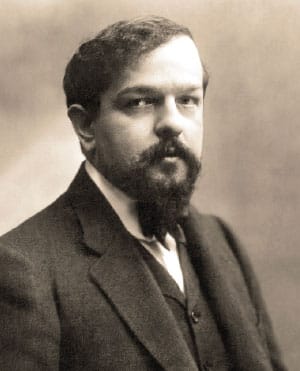
No word raised Debussy’s hackles more than “impressionism,” and with good reason. The term was coined in the 1870s to describe specific techniques in painting and had little, if any, direct application to music. Semantics aside, Debussy detested such superficial labels slapped on his work by sloppy commentators, who typically used “impressionist” as a code for “wispy and washy.” Debussy’s catalog encompasses a wide range of styles and moods: neoclassical precision rubs shoulders with antiquarian fantasy, abstract formal logic with free-form improvisation, cutting-edge modernism with pristine tradition. He was a very great composer indeed, and to file him away with a convenient soundbite is an injustice to the magnitude of his achievement.
That said, no Debussy work invokes visual associations more than the six Images for solo piano, of which the second set of three is less performed but no less remarkable. The first of those, “Bells heard through the leaves,” makes a compelling claim for the fusion of visual and sonic: how can bells be “heard” through leaves? One of Debussy’s gamelan-inspired works, the piece employs highly sophisticated technique that manifests as untroubled simplicity, mirroring Debussy’s observations about the Javanese people: “Their academy is the eternal rhythm of the sea, the wind in the leaves, thousands of tiny sounds which they listen to attentively without ever consulting arbitrary treatises.”
Debussy’s fascination with ancient Greece is on display in “And the moon sets over the temple that was.” Elusive, enigmatic, and ambiguous, it fragments its materials and keeps its surprisingly dissonant harmonies unsettled. Likely to puzzle listeners on first acquaintance, it’s a treasure chest of allusion, suggestion, and association that, upon further exploration, may well become altogether fascinating.
The set concludes with “Goldfish,” but let’s steer clear of cute little fishes in a bowl, given the original impetus of a Japanese lacquer panel featuring two gold-painted fish. A frankly virtuoso showpiece, its quicksilver shifts and bouncy elasticity are as feline as they are piscine.
Piano Sonata No. 23 in F minor, Opus 57, Appassionata
Ludwig van Beethoven
Baptized: December 17, 1770, in Bonn
Died: March 26, 1827, in Vienna
Work Composed: 1804–06
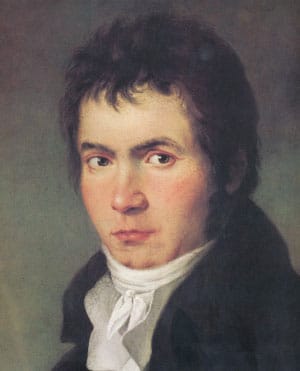
It opens with a wily feint. A downright tuneless melody, really just a stop-and-go unrolling of a triad, pauses on a half-cadence. Silence. Then it all happens again, but this time shifted upwards by a semitone, the shortest distance there is. Another silence. It drops back down and repeats the original phrase’s half cadence. It could be an aimless sketch, a doodle, a half-aware improvisation.
Except that it’s nothing of the sort. Beethoven is neither doodling nor improvising. He is planting the seed of a great tree that will grow from that disarmingly inconsequential shift of a semitone. He confirms his intentions by stating the semitone motion, now flipped upside down and in the bass, three times. It’s almost as though he’s telling us: “Yes, it’s just a little nothing, a trifle, a soupçon of piffle. Now you just hear what I’m going to do with it!”
Much as in the Fifth Symphony with its signature four-note opening gambit, Beethoven builds the Appassionata almost exclusively from materials mined from its opening idea. The first movement eschews easy-listening contrasting themes in order to focus on this one motive, spinning everything out of its implications, rethinking it, revisiting it, reviewing it. Just as an expression of technical skill alone it is flabbergasting; as a listening experience it is unforgettable in its unflagging drive, perfectly sustained drama, and soaring flights to the outermost boundaries of the piano’s capabilities.
Beethoven takes a gentler approach for his Andante con moto middle movement, a set of variations on—here it is again—a deliberately nondescript theme. In fact, the melodic contour is so limited that one wonders how Beethoven will extract any worthwhile variations from the thing. But of course he does.
The volcanic Allegro ma non troppo erupts suddenly, blasting past the usual decorous break between movements. Thrilling, virtuosic, and propulsive, the finale also provides a breathtaking demonstration of rondo form. No chance of ennui arising here; from the first geyser-like phrase of the rondo theme to the steeple- chase of the concluding Presto, surely this stands among the most dazzling concluding movements in all keyboard literature.
—Scott Foglesong
About the Artist
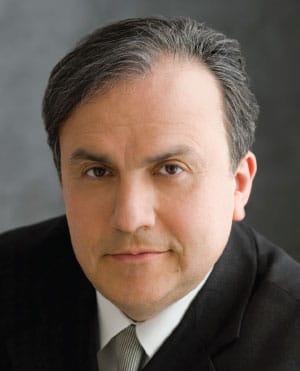
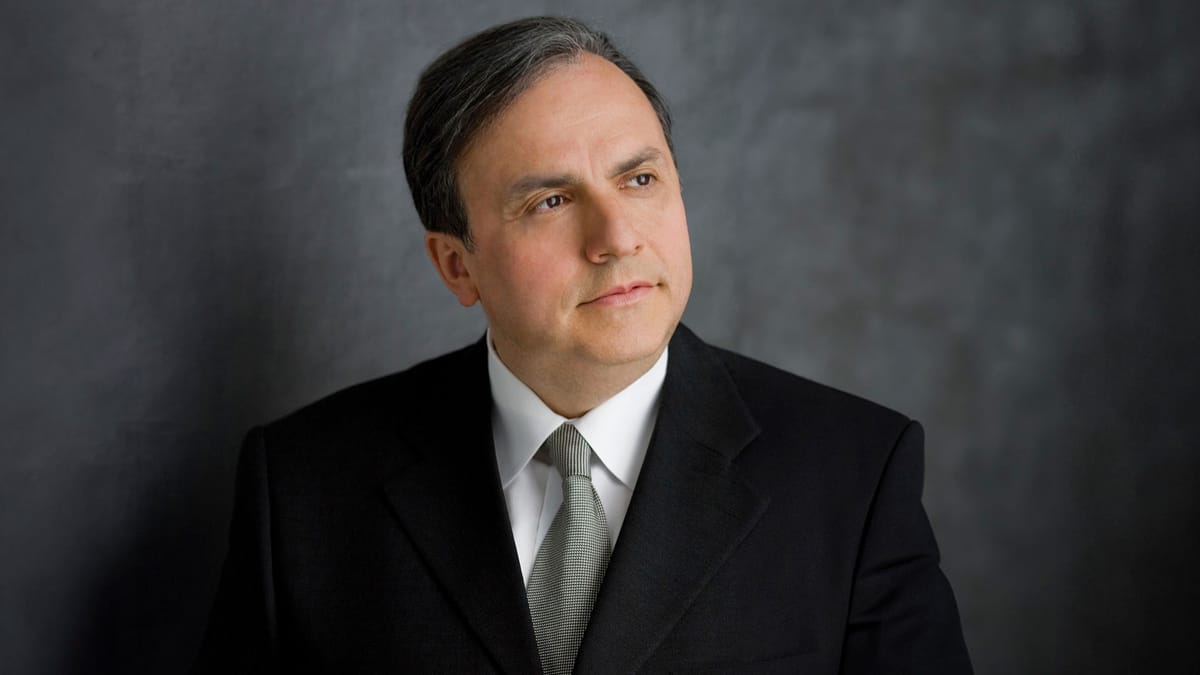
Yefim Bronfman
Internationally recognized as one of today’s most acclaimed and admired pianists, Yefim Bronfman stands among a handful of artists regularly sought by festivals, orchestras, conductors, and recital series.
Following summer festival appearances in Vail, Tanglewood, and Aspen, Bronfman’s 2025–26 season began with an extensive tour of China, Japan, and South Korea. In Europe, Bronfman can be heard this season with orchestras in London, Kristiansand, Paris, Berlin, Amsterdam, Dresden, and on tour with the Israel Philharmonic. A special trio project with Anne-Sophie Mutter and Pablo Ferrández continued with performances in Switzerland, Spain, Germany, and France last fall. With orchestras in North America, he returns to New York Philharmonic, Rochester Philharmonic, Cleveland Orchestra (in Miami), Pittsburgh Symphony, Kansas City Symphony, and Montreal Symphony. In recital, Bronfman can be heard in Prague, Milan, Los Angeles, San Diego, Orange County, Charlottesville, and Toronto.
Bronfman has been nominated for six Grammy Awards, winning in 1997 with Esa-Pekka Salonen and the Los Angeles Philharmonic for their recording of the three Bartók piano concertos. His prolific catalog includes works for two pianos by Rachmaninoff and Brahms with Emanuel Ax, the complete Prokofiev concertos with the Israel Philharmonic, and the soundtrack to Disney’s Fantasia 2000.
Born in Tashkent in the Soviet Union, Yefim Bronfman immigrated to Israel with his family in 1973, where he studied with pianist Arie Vardi, head of the Rubin Academy of Music at Tel Aviv University. In the United States, he studied at the Juilliard School, Marlboro School of Music, and Curtis Institute of Music, with Rudolf Firkusny, Leon Fleisher, and Rudolf Serkin. A recipient of the Avery Fisher Prize, in 2010 Bronfman was further honored as the recipient of the Jean Gimbel Lane prize in piano performance from Northwestern University and in 2015 with an honorary doctorate from the Manhattan School of Music. He made his San Francisco Symphony debut in January 1981.