In This Program
The Concert
Monday, June 1, 2026, at 7:30pm
Inside Music Talk with James M. Keller
On stage at 6:30pm
James Gaffigan conducting
Wolfgang Amadeus Mozart
Symphony No. 41 in C major, K.551, Jupiter (1788)
Allegro vivace
Andante cantabile
Menuetto: Allegretto
Molto allegro
Edward Elgar
Cello Concerto in E minor, Opus 85 (1919)
Adagio–Moderato
Allegro moderato
Adagio
Allegro, ma non troppo
Yo-Yo Ma
This program is performed without intermission.
Inside Music talks are supported in memory of Horacio Rodriguez.
Program Notes
Symphony No. 41 in C major, K.551, Jupiter
Wolfgang Amadeus Mozart
Born: January 27, 1756, in Salzburg
Died: December 5, 1791, in Vienna
Work Composed: 1788
SF Symphony Performances: First—February 1913. Henry Hadley conducted. Most recent—July 2024. Edwin Outwater conducted at Stern Grove.
Instrumentation: flute, 2 oboes, 2 bassoons, 2 horns, 2 trumpets, timpani, and strings
Duration: About 30 minutes
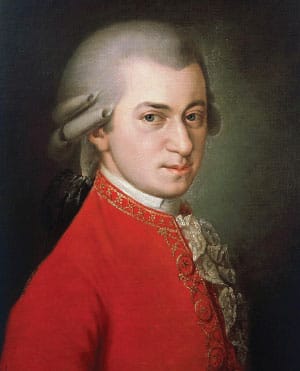
Wolfgang Amadeus Mozart’s late symphonies are among the first symphonies fully in the sense we know today. His 40 or so earlier efforts include some gems, but were mostly written for social occasions that likely included chitchat during the music, or as lead-ins for arias and concertos, which were the star genres up to that time. For most of the 18th century, symphonies were decorative and disposable. It’s no wonder Mozart’s catalogue is speckled with lost, dubious, and misattributed ones.
Yet in about nine weeks over the summer of 1788, Mozart wrote three symphonies that embraced an idiosyncratic vision. These pieces—No. 39 in E-flat major, No. 40 in G minor, and No. 41 in C major, Jupiter—paved the way for late Haydn and early Beethoven, and by the turn of the 19th century, an encyclopedia could define a symphony as: “every perfection that can render instrumental music interesting and sublime: invention, science, knowledge of instruments, majesty, fire, grace, and pathos by turns, with new modulations, and new harmonies.” Such a conception would have been completely alien to a musician just 30 years earlier.
Mozart’s popular success had crested in the mid-1780s, and by 1788 he found himself at a personal and professional low (a slide that contributes to the exaggerated idea that he eventually died unappreciated and in poverty). His domineering father, Leopold, had died the previous year, an infant daughter died that June, and he had gradually fallen out of touch with his once-beloved sister, Nannerl. Meanwhile, war with the Ottoman Empire depressed the Austrian economy and put a damper on concert life and music publishing. Mozart’s income dropped almost 75 percent from the previous year, and he moved to a cheaper apartment and took on debt.
Looking to revive his fortunes, Mozart probably intended his last three symphonies for a concert series in Vienna, which doesn’t seem to have taken place, or perhaps for a trip to London, which definitely didn’t happen. It was long thought they weren’t performed at all during his life, but circumstantial evidence now points to several performances in the years before his unexpected death in 1791. Just two years later, an anonymous German critic, reporting on musical fashions, wrote:
Mozart appears to be enjoying much more prestige and approval among the public since his death than was allotted him during his lifetime. Now he is called incomparably great.… Mozart’s talent appears to me to be an original spirit, one which in any case is still searching for compositions which are bizarre, striking and paradoxical, melodically as well as harmonically, and avoids natural flow so as not to become common.
The writer might have been reacting specifically to the late symphonies. But he also hedges, doubting if Mozart was truly “a great man for his own time and for posterity,” and arguing that if only he had lived longer, he would have embraced a new simplicity and “acquired all the aforesaid attributes of greatness.” Whether or not we agree, it’s worth being reminded that when we talk about “late” Mozart, we’re talking about someone in his early 30s.
The Music
Nobody knows for sure how Mozart’s final symphony came to be known as Jupiter. The nickname seems to have been popularized in England, perhaps by the impresario Johann Peter Salomon. By 1823 it appeared formally in print on Muzio Clementi’s chamber arrangement of the symphony, decorated with an engraving of the Roman god. The name is in no way authentic to Mozart, but everyone seems to agree it is fitting.
The first movement, Allegro vivace, begins with confidence and grandeur. A second theme is lifted from an amorous Mozart aria, “Un bacio di mano” (A kiss on her hand), bringing in an element of comic opera and offering an approachable contrast to the overall sense of loftiness.
The slow movement, Andante cantabile (slow and singing), extends the operatic sensibility—Mozart brings forward a whole host of characters, broadening his expressive stage compared to the mostly internal worlds of the previous two symphonies. The Menuetto is a light affair, a brief return to full classical elegance.
Before this symphony was widely known as Jupiter, German speakers usually called it “the one with the fugal ending.” Mozart piles ideas into surefooted counterpoint where multiple voices chase each other around. Perhaps we can hear it as Mozart emerging from a gloomy period and rejoining the bustle of society. He completed the work and entered it in his catalogue on August 10—he did not know it would be his last symphony.
—Benjamin Pesetsky
A previous version of this note appeared in the program book of the Melbourne Symphony.
Cello Concerto in E minor, Opus 85
Edward Elgar
Born: June 2, 1857, in Broadheath, outside Worcester, England
Died: February 23, 1934, in Worcester
Work Composed: 1919
SF Symphony Performances: First—April 1970. Jean Martinon conducted with Robert Sayre as soloist. Most recent—May 2024. Gemma New conducted with Pablo Ferrández as soloist.
Instrumentation: solo cello, 2 flutes (2nd doubling piccolo), 2 oboes, 2 clarinets, 2 bassoons, 4 horns, 2 trumpets, 3 trombones, tuba, timpani, and strings
Duration: About 30 minutes
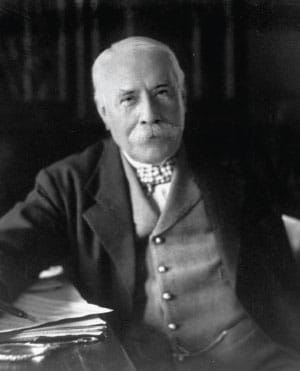
Edward Elgar’s most well-known works—the Enigma Variations, Land of Hope and Glory, Pomp and Circumstance Marches—accompany ceremonial and celebratory moments in the United Kingdom and around the world. Knighted in 1904 and named Master of the King’s Music in 1924, he is one of a handful of composers whose music came to define British national identity during their lifetimes.
Elgar was born in 1857 to a musical family. His father—a performing church musician, piano tuner, and music seller—was Elgar’s first teacher. These studies were the only musical tutelage Elgar would receive besides a brief spate of lessons in London (though he hoped to attend Leipzig University, his family could not afford to send him).
The education was comprehensive enough to push him into the business of performing as a teenager, though his lack of academic pedigree as well as his working-class Roman Catholic upbringing would remain sources of self-consciousness throughout his life. Elgar took on many local posts, teaching and bandleading in his native Worcester and playing as an orchestral musician in nearby Birmingham before moving to London after his 1889 marriage to Caroline Alice Roberts, a novelist and daughter of a prominent military figure.
Alice, a fierce champion of her husband’s work, encouraged him to focus solely on composition in their new setting. Though formative for Elgar, their time in London was brief, and by 1891 they were back in Worcestershire once more. He returned to teaching, though he continued composing, penning works like his Serenade for Strings. Nevertheless, he declared himself “very sick at heart over music” by 1898 and regarded the prospect of supporting himself solely through composition with increasing disbelief.
Elgar’s fortunes would change in just a year’s time—his Enigma Variations, completed in 1899, was received rapturously. Now in his 40s, Elgar found national acclaim—the king and queen attended a 1904 performance of his oratorio The Dream of Gerontius and the knighthood soon followed. He also entered the most productive vein of his creative life, completing two symphonies, a violin concerto for Fritz Kreisler, and his Introduction and Allegro for strings before his output slowed once more during the war.
Following the First World War, a retreat to the countryside of Sussex produced a flurry of works from 1918–19, but Elgar would compose only sporadically after Alice died in 1920, leaving an opera and Third Symphony unfinished.
Elgar’s Cello Concerto, one of the four works to emerge from his time in Sussex, is a staple of the cellist’s canon but was poorly received at its 1919 premiere—his music, writes Will Padfield, “had begun to fall out of fashion” during “the era of the ‘Stiff Upper Lip.’”
That a concerto should ascend to a place of distinction in the repertoire nearly 50 years after its premiere and decades after the death of its author is highly unusual. But such was the power of Jacqueline du Pré’s 1962 debut with it. Her iconic 1965 recording of the piece for EMI with John Barbirolli (on which she played the “Davidoff” Stradivarius cello now played by Yo-Yo Ma) further catapulted the piece to prominence. Today, the deeply elegiac work, which blends an unabashed Romanticism with a distinctly British harmonic sensibility, is remembered as one of Elgar’s most important achievements.
The Music
The first movement opens with a call to attention in the solo cello (a formal device repeated in both the second movement and finale). Broad, heart-rending chords and a moment of fantasy set the stage before the movement’s opening theme, a wistful and winding melody which the violas and orchestral cellos quickly hand off to the soloist.
The cello’s roving lyricism dominates the rest of the movement: its first exploration of the material leads the orchestra toward a thunderous tutti statement. As the energy ebbs, the bassoons and clarinets introduce a second thematic area, marked by a dancelike dotted figure. The soloist takes up the motif, first transforming it into a heartfelt melody in the parallel major. But grief begins to color the music once more, as the increasingly inconsolable cello gives way to another anguished refrain of the initial melody from the orchestra.
A last, ghostly statement of the theme winds down to a place of stillness from which the second movement’s opening interrogatives emerge attacca (without pause). They hint at the energetic nature of the music to come but are interrupted each time with slow and deliberate pizzicatos which recall the first movement’s opening chords. After a brief cadenza, one more question is asked by the soloist before the movement gets off to the races.
In the cheerful moto perpetuo, the cello bubbles over sparely orchestrated accompaniment, sometimes engaging in brief call-and-response with the flutes, oboes, and strings. A second theme is initially sturdy in character and interrupts the bustle, but becomes more sighing and gentler when set against the resuming motor. Eventually, only the running 16th notes remain, receding toward nothingness before ending the movement with a wink.
That moment of cheek precedes an achingly genuine Adagio. Its opening bars carry the tenderness of a lullaby—the primary melody, too, is intensely soft-spoken. Its sighing intervals swell toward a poignancy that is decidedly less inward, but they always retreat into a private melancholy which concludes the slow movement.
After a decidedly martial call to arms, the soloist explores the finale’s main materials with operatic bravado in a prelude marked quasi recitative. After a blistering flourish, the theme snaps back into time, at first bounding and upright as it’s passed between soloist and ensemble.
The same material takes on many affects each time it reappears across the movement’s rondo form—sometimes furious, and sometimes pronounced with a menacing lumber as when the soloist, as if amplified, is doubled by the cello section and double basses. In between these iterations, a secondary theme appears and recurs, its anxiety often dissipating in flashes of virtuosity from the solo cello as harmonies flicker and shift.
The movement’s final diversion from its main theme is an extended lyric interlude, replete with opportunities for both soloist and ensemble to cry out toward the heavens in full voice. Elgar concludes the elegy by revisiting two moments as if recalling memories from a deathbed—the third movement’s intimate warmth and the probing cries which open the concerto—before the finale’s theme returns to close the movement.
—Lev Mamuya
About the Artists
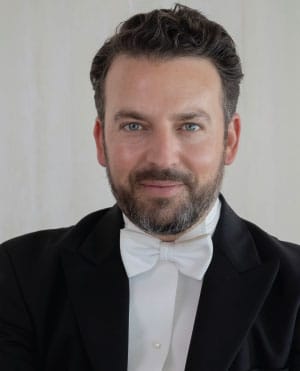
James Gaffigan
James Gaffigan serves as music director of Komische Oper Berlin, where he begins his third season in 2025–26. Guest engagements this season include returns to the Los Angeles Philharmonic, National Symphony, Chicago Symphony, Music Academy, and Houston Grand Opera. In Europe, he makes return engagements with the NDR Elbphilharmonie, Les Arts Valencia Opera, and the Verbier Festival.
Gaffigan regularly works with the New York Philharmonic, Cleveland Orchestra, Philadelphia Orchestra, Detroit Symphony, and Metropolitan Opera, among many others. In Europe, he has appeared with the London Symphony, Royal Concertgebouw Orchestra, Vienna Symphony, Munich Philharmonic, Bavarian Radio Orchestra, Norwegian Opera and Ballet, Deutsches Symphonie-Orchester Berlin, Staatskapelle Berlin, and Czech Philharmonic.
Gaffigan’s previous titles include music director of the Palau de les Arts Reina Sofía in Valencia, Spain; principal guest conductor of both the Netherlands Radio Philharmonic Orchestra and the Trondheim Symphony Orchestra and Opera; chief conductor of the Lucerne Symphony; and assistant conductor of the Cleveland Orchestra. He made his San Francisco Symphony debut in December 2006 and served as Associate Conductor from 2006 to 2009. He returns to the SF Symphony later this month for Beethoven’s Ninth Symphony (June 18, 20, 21).
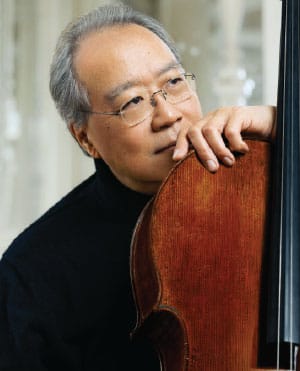
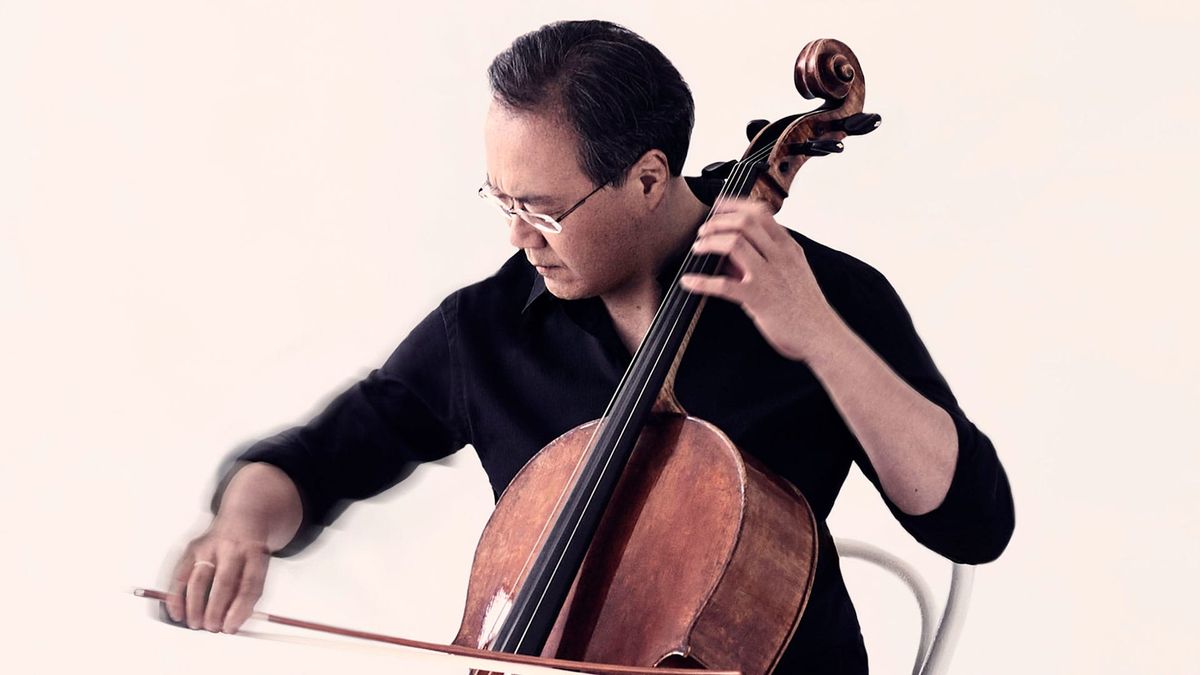
Yo-Yo Ma
Yo-Yo Ma’s multifaceted career is testament to his belief in culture’s power to generate trust and understanding. Whether performing new or familiar works for cello, bringing communities together to explore culture’s role in society, or engaging unexpected musical forms, Ma strives to foster connections that stimulate the imagination and reinforce our humanity.
Most recently, Ma began Our Common Nature, a cultural journey to celebrate the ways that nature can reunite us in pursuit of a shared future. It follows the Bach Project, a 36-community, six-continent tour of J.S. Bach’s cello suites paired with local cultural programming. Both endeavors reflect Ma’s lifelong commitment to stretching the boundaries of genre and tradition to understand how music helps us to imagine and build a stronger society.
Ma is an advocate for a future guided by humanity, trust, and understanding. Among his many roles, he is a United Nations Messenger of Peace, the first artist ever appointed to the World Economic Forum’s board of trustees, a member of the board of Nia Tero, the US-based nonprofit working in solidarity with Indigenous peoples and movements worldwide, and the founder of the global music collective Silkroad.
Ma was born in 1955 to Chinese parents living in Paris. He began to study the cello with his father at age four and three years later moved with his family to New York City, where he continued his cello studies at the Juilliard School before pursuing a liberal arts education at Harvard.
Ma has recorded more than 120 albums and is the winner of 20 Grammy Awards. He has also received the Avery Fisher Prize, National Medal of the Arts, Presidential Medal of Freedom, Kennedy Center Honors, Polar Music Prize, and Birgit Nilsson Prize. He has performed for nine American presidents, most recently on the occasion of President Biden’s inauguration.
Ma and his wife have two children. He plays four cellos: two modern instruments made by Moes & Moes, a 1733 Montagnana from Venice, and the 1712 “Davidoff” Stradivarius. He made his San Francisco Symphony debut in March 1970.
James M. Keller served as the San Francisco Symphony’s Program Annotator from 2000 until his retirement at the end of last season, and continues as a Contributing Writer to the program book. He is the author of Chamber Music: A Listener’s Guide (Oxford University Press).