In This Program
The Concert
Sunday, June 28, 2026, at 2:00pm
Musicians of the San Francisco Symphony
Gareth Farr
Taheke (2002)
Blair Francis Paponiu flute
Katherine Siochi harp
Sarn Oliver
CAT (Contemporary Artful Sonorities)
String Quartet (2024)
Jesslyn Thomas soprano
Sarn Oliver violin
Mariko Smiley violin
Leonid Plashinov-Johnson viola
Davis You cello
Intermission
Joan Tower
Petroushskates (1980)
Melissa Kleinbart violin
Amos Yang cello
Catherine Payne flute
Yuhsin Galaxy Su clarinet
John Wilson piano
Gabriel Fauré
Piano Trio in D minor, Opus 120 (1923)
Allegro, ma non troppo
Andantino
Allegro vivo
Florin Parvulescu violin
Amos Yang cello
Samantha Cho piano
Program Notes
Taheke
Gareth Farr
Born: February 29, 1968, in New Zealand
Work Composed: 2002
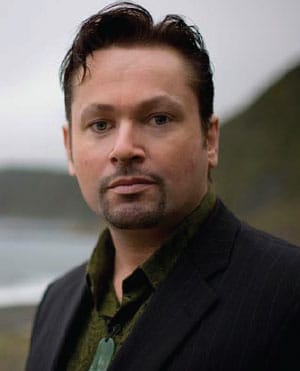
“I would, perhaps, be criticized for being too entertaining by some composers, but I don’t know what’s wrong with that because that is why I write music—I’m an entertainer,” says Gareth Farr. “That’s a dirty word in the classical department, but I don’t care. I’ve even got it on my business card—composer/entertainer—because, hey, let’s face it, that’s what I do.”
Farr is onto something there. He’s expressing a mindset that was once part and parcel of a composer’s makeup: the job was to engage and, well, entertain audiences. Failure to do that could result in no sales, no concert attendance, and no income. Mozart was absolutely thrilled when audiences started clapping for a particular passage they liked. But that changed in the early 19th century, as composers were expected to focus on higher things than mere entertainment. Perhaps the cult of the artist that began with Beethoven had something to do with that. For a while, it was almost a badge of dishonor for a composer’s music to be liked by the general public.
But Farr is getting back to that basic idea that to be a composer is to write music that people will enjoy. That doesn’t mean that he panders to his listeners: his music is richly textured and expertly constructed. But more than anything else, it’s engaging and effective. He’s a wonderful composer.
Take his 2002 Taheke for flute and harp. The title is the Māori word for waterfall, and that’s precisely what’s going on in this magical evocation of the natural world. Farr’s own program note tells us all about it:
The three movements of this work each represent a different New Zealand waterfall. The first is the Huka Falls near Taupo. The placid Waikato River is gradually channeled into an increasingly narrow chute, finally erupting into a waterfall of unbelievable power and fury; then, as quickly as it has built up, the water subsides back into a calmly flowing river. In contrast to the famed reputation of the Huka Falls, the waterfall of the second movement is known only to my family, on our land in the Marlborough Sounds. It is utterly secluded in the bush, only accessible on foot through thick undergrowth. The waterfall is cool, dark and mysterious. The finale represents the sprightly elegance and grandeur of the Whangarei Falls in Northland, a beautiful cascade of sparkling rivulets.
CAT (Contemporary Artful Sonorities) String Quartet
Sarn Oliver
Born: October 1, 1964, in New Haven, Connecticut
Work Composed: 2024
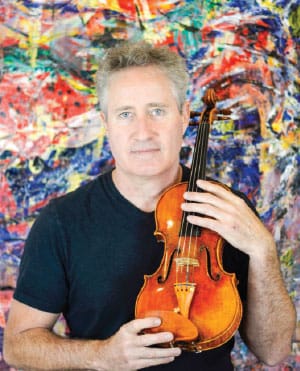
We see them night after night, matinée after matinée, sitting there in their dark clothes, beautifully focused and elegant in their motions, a large group of people with the ingrained discipline to work together towards a common goal. They are the musicians of a great symphony orchestra. But who are they, really? What keeps them occupied when they’re not doing their collective thing on stage?
Consider Sarn Oliver, a member of the San Francisco Symphony’s first violins, a composer, painter, luthier, and recording engineer. His long experience as a chamber musician contributes significantly to his CAT Quartet, a work for the usual string players plus a soprano soloist. Oliver tells us about it:
The piece grew out of an ongoing, very personal interaction between our household, our neighbors, and our cats. In our home, we have a recording studio and a teaching space, and our cats—Leo, Clio, and Sunny—used to compete for attention by wandering into sessions, “performing” for students, and generally making themselves part of the musical environment.
Our neighbors—wonderful people and musicians themselves—eventually got a cat, Sylvio, who quickly joined the scene and began spending time in my studio as well (where I also make violins and bows, and do some painting). With four cats moving between these shared creative spaces, their interactions became a kind of living theater, and that sparked the idea for a string quartet.
I began by thinking of the piece in terms of the relationships between the cats. The first movement is a duet representing the two orange tabbies, Sunny (our older cat) and Leo (the younger). The second movement expands into a trio with Clio, Leo’s sister, capturing the dynamic among the three. The third movement brings in Sylvio, our neighbors’ gray cat, forming a quartet and reflecting the broader social interplay among all four.
Shortly before finishing the piece, however, our neighbors adopted another cat, Rosie—an orange female, which is relatively rare. That led me to add a fourth movement. For this, I turned to cat-themed poetry by Emily Dickinson, Edward Lear, and T.S. Eliot. I assembled and adapted excerpts from these texts into a single, extended movement for string quartet with soprano, with the voice weaving together fragments of poetry that reflect different aspects of feline character.
So the piece ultimately became a four-movement work shaped by these evolving relationships—playful, character-driven, and rooted in a very real shared environment between people, animals, and music-making.
Petroushskates
Joan Tower
Born: September 6, 1938, in New Rochelle, New York
Work Composed: 1980
Around the middle of the 20th century, a cohort of oh-so-solemn pundits proclaimed that traditional tonal music was obsolete and that only so-called “serialist” music was of any real value. Happily for all of us, by the 1960s, voices of dissent were being heard, such as English composer Benjamin Britten, who tartly observed that “it is insulting to address anyone in a language they don’t understand.” By the 1990s those voices had become a choir; consider the blazing screed “How Talented Composers Become Useless” by musicologist and critic Richard Taruskin.
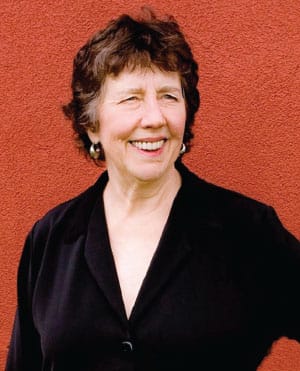
Many composers had already seen the handwriting on the wall and started jumping off the serialist bandwagon in droves. The list of recovered serialists is long. Having freed themselves from academia’s conformist strictures, they cultivated their individual voices, and in so doing began winning back those audiences that the serialists had alienated. Among those we find the inimitable Joan Tower, conjurer of sonic landscapes that blend strikingly rich color with imaginative harmonies, all of it powered by her own inner convictions and all of it blissfully free from cant or agendas. She gets played. She gets commissioned. People like her music. Nowadays she enjoys an enviable status as an American musical icon, what with popular works such as Made in America and Fanfare for the Uncommon Woman.
Petroushskates is one of Tower’s happiest inspirations, a blend of the opening scene of Stravinsky’s Petrushka—all that delicious hubbub—and music inspired by the sheer beauty she observed when watching ice skaters during a winter Olympics. Toothsome, winsome, and energetic, this “carnival on ice” (Tower’s words) has been hailed as one of the most significant short chamber works of modern times.
Piano Trio in D minor, Opus 120
Gabriel Fauré
Born: May 12, 1845, in Pamiers, France
Died: November 4, 1924, in Paris
Work Composed: 1922–23
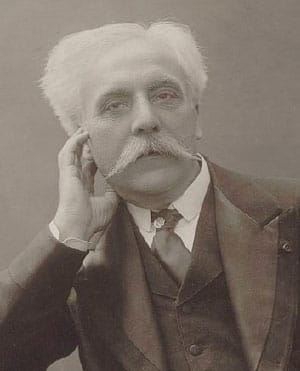
In June of 1922, the French government threw a spectacular party for the elderly Gabriel Fauré. Held at the Grand Amphithéâtre of the Sorbonne in Paris and attended by bigwigs on the order of President Alexandre Millerand, the glittering celebration sported a lavish musical tribute from several of Fauré’s most distinguished students, warranted a special issue of La Revue Musicale, and included the awarding of the Grand-Croix of the Légion d’honneur. Fauré was retiring from the Paris Conservatory, and the French musical establishment pulled out all the stops to lionize one of their own.
And yet that same establishment had wanted absolutely nothing to do with him for the bulk of his career. When in 1892 Saint-Saëns suggested Fauré as a professor of composition at the Paris Conservatory, director Ambroise Thomas was fit to be tied. “Fauré? Never!” he fulminated. “If he’s appointed, I resign.” That didn’t last long. Thomas died in 1896 and the eminent music theorist and composer Théodore Dubois took over. Even then, Fauré might have remained shut out if it weren’t for composition professor Jules Massenet who, thwarted in his campaign for the head job, resigned in a fit of pique. So Fauré got the professorship—and eventually the directorship—from which perch he exercised a thoroughly positive influence over the future of French music.
What was it about this charming social butterfly with a melancholic stripe that ruffled so many bourgeois feathers? It was his perceived heresy regarding the established rules laid down in exhaustive (and exhausting) detail by such reactionary pedagogues as Théodore Dubois. Fauré was a radical, but of the softly persuasive type, and those satiny surfaces of his typically cover compositional practices that gave people like Dubois fits.
Even today, Fauré’s musical language can perplex while it charms. He blended the ancient church modes with classical major and minor, threaded Gregorian plainchant melodies into his tapestries, substituted fragrant new chords for traditional ones, retooled the standard musical forms, and often preferred a flowing stream of musical events over traditional musical dialectic à la Beethoven. Those tendencies became progressively stronger as he aged, thus rendering the works of his golden years all the more beguiling and elusive.
The late D-minor piano trio provides a splendid case in point, and an utterly gorgeous thing it is, too. The first movement presents a magically modified D minor, all aglow with unexpected notes and darting shifts away from the key’s home base. It’s followed by a secondary theme in major mode, certainly normal enough, but the lovely melody flits freely about to unrelated key centers, as fascinating to adventuresome listeners as it is disconcerting to more conservative types. The movement maintains its even flow with hardly any change of emotional affect, but the emotional temperature of the second-place Andantino is as far more mutable, even rising at times to peaks of (carefully controlled) passion.
The Allegro vivo finale is a sharply etched affair that calls on considerable virtuosity from its players, with a special challenge to the pianist’s fingers, requiring as it does nonstop quicksilver reflexes without a hint of tension or effort. The movement even ends in fortissimo—quite an unusual state of affairs for this most prudent and elegant of composers.
—Scott Foglesong
About the Artists
Blair Francis Paponiu joined the San Francisco Symphony as Associate Principal Flute at the beginning of the 2023–24 season and holds the Catherine & Russell Clark Chair. She was previously assistant principal and second flute with the Naples Philharmonic in Florida and performed with the New York Philharmonic for two seasons. She studied at the Manhattan School of Music, University of Texas at Austin, and University of South Carolina.
Katherine Siochi joined the San Francisco Symphony as Principal Harp beginning in the 2023–24 season. She was previously principal harp of the Minnesota Orchestra, Kansas City Symphony, and Sarasota Orchestra, and has appeared as a guest with the Chicago Symphony and New York Philharmonic. She was the gold medalist of the 2016 USA International Harp Competition and earned bachelor’s and master’s degrees from the Juilliard School.
Jesslyn Thomas is a member of the San Francisco Opera Chorus and has been a featured soloist in Le nozze di Figaro, Manon Lescaut, and It’s a Wonderful Life. She studied at the University of Southern Maine and the University of Cincinnati College-Conservatory of Music. She makes her solo debut at the San Francisco Symphony with this performance.
Sarn Oliver joined the San Francisco Symphony first violin section in 1995 and was previously concertmaster of the Santa Cruz Symphony and principal second violin of the Sacramento Symphony. As a composer, his works have been performed in the United States, Russia, Japan, and South Korea. He earned bachelor’s and master’s degrees at the Juilliard School.
Mariko Smiley joined the San Francisco Symphony in 1982 and for many years was a member of the Aurora String Quartet. She began violin studies with her father, David Smiley, who was a violist with the SF Symphony, and later studied at the Juilliard School.
Leonid Plashinov-Johnson joined the San Francisco Symphony viola section in 2022. Previously a member of the St. Louis Symphony, he is a laureate of multiple competitions, most recently the Primrose International Viola Competition, and has participated in the Yellow Barn, Ravinia, and AIMS festivals. Born in Russia, he graduated from New England Conservatory, where he won the concerto competition.
Davis You joined the San Francisco Symphony cello section at the beginning of the 2024–25 season. He recently received his bachelor of music from New England Conservatory, where he was frequently principal cello of the NEC Philharmonia. He was a member of Quartet Luminera, which won the silver medal at the Fischoff National Chamber Music Competition.
Melissa Kleinbart joined the San Francisco Symphony in 1998 and holds the Katharine Hanrahan Chair. She was previously associate concertmaster with the San Francisco Opera Orchestra and assistant concertmaster with the Vancouver Symphony. She has made solo appearances with the Philadelphia Orchestra, Vancouver Symphony, and New York Symphonic Ensemble, and is a graduate of the Juilliard School.
Amos Yang joined the San Francisco Symphony in 2007 as Assistant Principal Cello and holds the Karel & Lida Urbanek Chair. He was previously a member of the Seattle Symphony and a member of the Maia String Quartet. Born and raised in San Francisco, he was a member of the SF Symphony Youth Orchestra and San Francisco Boys Choir, and is a graduate of the Juilliard School.
Catherine Payne joined the San Francisco Symphony as piccolo player in 1996. She previously performed with the Boston Symphony as acting second flute and served as principal flute of the Pro Arte Chamber Orchestra of Boston and associate principal flute and piccolo player with the Portland Symphony. She graduated from New England Conservatory and Tufts University.
Yuhsin Galaxy Su joined the San Francisco Symphony as Second Clarinet at the beginning of the 2024–25 season, and is also an accomplished pianist. She completed a master’s degree at the Colburn School and studied at the Curtis Institute of Music. She made her solo clarinet debut with the SF Symphony at this year’s Lunar New Year Concert.
John Wilson is regularly engaged as a pianist with the San Francisco Symphony and serves as principal keyboard for the Marin Symphony, San Diego Symphony, and Oakland Symphony. In recent seasons he has appeared at Carnegie Hall, at the San Francisco Conservatory of Music, and on the SF Symphony’s SoundBox and Chamber Music series.
Florin Parvulescu joined the San Francisco Symphony first violins in 1998 and was previously a member of the St. Louis Symphony and Baltimore Symphony. He is a winner of the Marbury Competition at Peabody Conservatory and the Yale Gordon Concerto Competition.
Samantha Cho is a professor of piano pedagogy at the San Francisco Conservatory of Music and previously served as an associate professor of music at Cabrillo College. She has performed on the San Francisco Symphony’s Lunar New Year Concert as well as on Live from WFMT and the Dame Myra Hess Memorial Concert in Chicago.