In This Program
- The Concert
- At a Glance
- Program Notes
- Berlioz: Les Nuits d’été
- About the Artists
- About San Francisco Symphony
The Concert
Friday, June 5, 2026, at 7:30pm
Saturday, June 6, 2026, at 7:30pm
Elim Chan conducting
Richard Wagner
Prelude and Liebestod from Tristan und Isolde (1859)
Hector Berlioz
Les Nuits d’été, Opus 7 (1841)
Villanelle
Le Spectre de la rose
Sur les lagunes: Lamento
Absence
Au cimetière: Clair de lune
L’Île inconnue
Sasha Cooke mezzo-soprano
Intermission
Claude Debussy
La Mer (1905)
De l’Aube à midi sur la mer (From Dawn to Noon on the Sea)
Jeux de vagues (Play of the Waves)
Dialogue du vent et de la mer (Dialogue of the Wind and the Sea)
Lead support for this concert series is provided by a generous donor and

Program Notes
At a Glance
Consider the subtle connections throughout the program—Berlioz and Wagner both dwell on love, while Wagner and Debussy revolutionized harmony in ways that would change music forever.
Prelude and Liebestod from Tristan und Isolde
Richard Wagner
Born: May 22, 1813, in Leipzig
Died: February 13, 1883, in Venice
Work Composed: 1857–59
SF Symphony Performances: First—January 1912. Henry Hadley conducted. Most recent—May 2019. Marek Janowski conducted.
Instrumentation: 3 flutes (3rd doubling piccolo), 2 oboes, English horn, 2 clarinets, bass clarinet, 3 bassoons, 4 horns, 3 trumpets, 3 trombones, tuba, timpani, harp, and strings
Duration: About 18 minutes
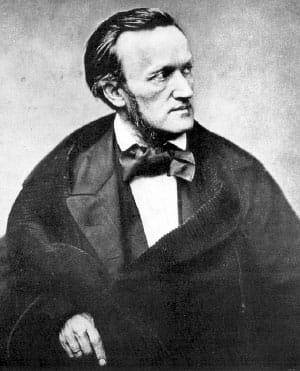
Like the myth of Orpheus and Eurydice, the medieval Celtic story of Tristan and Isolde and their forbidden love is one of the archetypal narratives of Western culture. Richard Wagner transformed this source material into a vehicle to explore the links between sex, love, and death in his epochal opera. He characteristically infused the romance with philosophical reflections on the meaning of desire and the suffering that underlies all existence.
In Wagner’s treatment, the minimalist plot centers around the doomed love between knight Tristan and Isolde, an Irish princess whom Tristan had taken captive to present as a bride for his uncle, King Marke. To exact revenge, Isolde invites Tristan to drink a potion she believes to be poison—and of which she then partakes as part of an implicit suicide pact. But her confidante has replaced this with a love potion. Their mutual desire, already dormant within, is only awakened by the shared potion. Throughout the opera, desire and death are inextricably linked.
Wagner had to evolve a radically new musical language capable of expressing the torment of their impossible desire. In the process, he pushed the conventional harmonic language of Western music to its limits, with consequences that have been felt ever since.
The Music
This groundbreaking, radical musical language is immediately evident in the Prelude, a concentrated distillation of the opera’s central tensions. It evokes the plight of lovers ensnared by desire in a world where their longing can never be fulfilled. The opening measures present the opera in microcosm: the rising, then falling, question mark of desire (solo cello) provokes a mysterious harmony in the woodwinds, followed by another searching ascent in half-steps. The ambiguity of these gestures heightens our own yearning for resolution—but Wagner withholds it.
The sequence is repeated three times before a sweeping melody unfolds in the cellos. Wagner sustains an extraordinary level of tension by avoiding traditional cadences. Silences magnify the sense of unresolved longing as the music surges and billows relentlessly in a long-range crescendo toward a shattering climax. Yet even this feels unresolved. The Prelude retreats into its opening music, as if reversing direction, and fades into near-inaudibility.
Though Wagner completed Tristan und Isolde in 1859—taking a very long “break” from his work on the still-to-be-completed Ring cycle—he had to wait until 1865 before an actual performance of the complete opera was possible. In the interim, he prepared a concert excerpt in which the Prelude segues directly into the music that Isolde sings in the opera’s final minutes (performed here in a standard arrangement without the vocal part). She has arrived too late to heal the dying Tristan, who had been mortally wounded when the two were caught together by King Marke’s men.
Isolde’s final aria has become known as her Liebestod (Love-Death). In fact, Wagner applied that term to the Prelude, calling Isolde’s farewell music a “transfiguration.” In her “transfigured” state, Isolde attains a glimpse of ultimate enlightenment, in something closer to a Buddhist sense: she describes a kind of ecstatic, heavenly hallucination, imagining a transcendent reunion with Tristan in a “vast wave of the world’s breath.”
Here, Wagner recapitulates the final section of the love duet between Tristan and Isolde before they are caught in the second act. But he rephrases it into serene patterns of deliriously lush, swelling waves that crest in an oceanic climax—the very climax that was interrupted at the height of their duet and postponed until this moment. As it subsides, the motif of desire from the beginning of the Prelude at last resolves onto a pure, luminous harmony that Richard Strauss once described as “the most beautifully orchestrated B-major chord in the whole history of music.”
Les Nuits d’été
Hector Berlioz
Born: December 11, 1803, in La Côte-Saint-André, France
Died: March 8, 1869, in Paris
Work Composed: 1840–41 (orch. 1843–56)
SF Symphony Performances: First—March 1968. Josef Krips conducted with Regine Crespin as soloist. Most recent—June 2010. Michael Tilson Thomas conducted with Sasha Cooke as soloist.
Instrumentation: solo voice, 2 flutes, oboe, 2 clarinets, 2 bassoons, 3 horns, harp, and strings
Duration: About 30 minutes
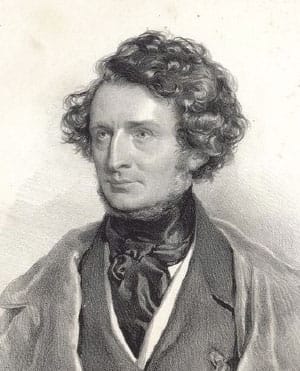
Hector Berlioz was both a prolific writer and a self-aware artist. Yet he avoided discussing Les Nuits d’été (The Nights of Summer) in his correspondence—even during the period of its creation. That silence is striking in a composer otherwise inclined to frame his works in autobiographical or literary terms, and it sets this cycle apart within his output. It becomes even more notable when you consider how deeply his imagination was shaped by literature, and by his own impulse to interpret and explain his music in words.
Les Nuits d’été sets poems by Théophile Gautier, a central figure in French literary culture, whose collection La Comédie de la Mort provided the source for the six texts (and later inspired such composers as Bizet and Fauré). Berlioz’s choice of The Nights of Summer for his title, some surmise, may have been intended as an allusion to his beloved Shakespeare’s A Midsummer Night’s Dream. The musicologist Annegret Fauser has intriguingly proposed that the nocturnal title suggests “some sort of fantastical night-piece in the tradition of E.T.A. Hoffmann, or even another Faustian dream.”
Berlioz initially set the poems for voice and piano, then returned to them years later to orchestrate them. Although the work is now recognized as one of his most refined achievements, it remained relatively neglected during his lifetime. That neglect may well be tied to the composer’s own reticence—but also to the work’s somewhat complicated genesis and presentation. The deterioration of Berlioz’s relationship with the Irish actress Harriet Smithson—the inspiration behind his earlier breakthrough Symphonie fantastique—may form part of the work’s emotional background, perhaps contributing to his reluctance to define or promote it.
Rather than present a fixed narrative, Les Nuits d’été moves in a more private, ambiguous terrain of feeling. It resists the kind of programmatic framing Berlioz so often embraced elsewhere. The six songs trace an emotional progression from the innocent joy of love through desolation to an ironic vision of a utopian “unknown island” where love might endure. Two outwardly optimistic songs thus frame a journey inward into a terrain of longing and loss.
While the implied speaker of the poems is male, Berlioz originally conceived the cycle in its piano-voice format as left open “for mezzo-soprano or tenor.” In orchestrating the songs, he envisioned a wider range of singers, both male and female, and transposed two of them accordingly. In practice, however, the cycle is usually performed by a single singer—most often a soprano or mezzo-soprano, and more rarely a male voice.
One of the work’s distinguishing features is the reduction of orchestral forces compared with Berlioz’s larger works. Instead of dramatic weight or spectacle, Les Nuits d’été depends on a chamber-like clarity of color and nuance. Within that more intimate scale, his sensitivity to timbre becomes especially apparent: instrumental detail doesn’t call attention to itself so much as it shades and inflects the vocal line.
The Music
“Villanelle” opens with imagery of spring and renewal, its folklike melody subtly varied with each stanza through shifting orchestral detail. In “Le Spectre de la rose,” Berlioz creates a veiled, exquisite sound world balancing sensual awakening with innocence; the harp—used here alone in the cycle—adds a distinctive color.
At the center, “Sur les lagunes: Lamento” brings the most intense expression of grief. Its opening gesture evokes both water and the boatman’s sorrow, and—alone among the six songs—it is set in minor, ending on an unresolved chord that leaves its anguish unassuaged. This atmosphere deepens in “Absence,” where Berlioz intensifies the sense of longing, and in “Au cimetière: Clair de lune,” where eerie string harmonics underscore the uncanny landscape of memory and loss.
“L’Île inconnue” returns to the sea imagery of “Sur les lagunes,” extending an “invitation to the voyage” colored by irony. After the inward turn of the central songs, its buoyant tone raises questions about the promise it proclaims. The cycle closes without resolution: the imagined shore remains beyond the horizon, just beyond reach.
La Mer
Claude Debussy
Born: August 22, 1862, in Saint-Germain-en-Laye, France
Died: March 25, 1918, in Paris
Work Composed: 1903–05
SF Symphony Performances: First—January 1914. Henry Hadley conducted. Most recent—October 2024. Esa-Pekka Salonen conducted.
Instrumentation: 2 flutes, piccolo, 2 oboes, English horn, 2 clarinets, 3 bassoons, contrabassoon, 4 horns, 3 trumpets, 2 cornets, 3 trombones, tuba, timpani, percussion (bass drum, cymbals, glockenspiel, tam-tam, and triangle), harp, and strings
Duration: About 23 minutes
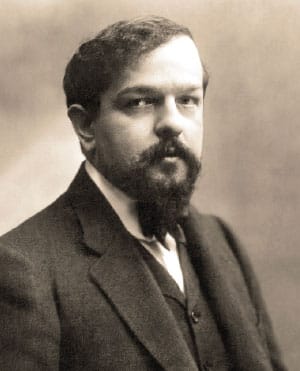
Like painters, many composers have responded to the challenge of attempting to render impressions of nature, particularly of the sea, using the tools of their art. The impulse behind Claude Debussy’s orchestral masterwork La Mer, which he composed between 1903–05, was not so much a particular vista seen in nature that he wanted to depict as the memories awakened by thoughts of the sea. While the composer once stated that he was “destined for a sailor’s life” and had taken up a musical career only “by chance,” he grew impatient with those who insisted on a literalist approach to this score—as if his goal were merely to encode aspects of the sea in sounds, singling out its “picturesque” qualities.
Debussy decorated the walls of his studio with Japanese prints, including Katsushika Hokusai’s 19th-century woodblock print The Great Wave off Kanagawa—already a visual icon by that time. He even chose a section from this image to illustrate the first edition of La Mer. Hokusai’s stylized depiction of the sea’s immensity, along with his animated use of detail, finds its counterpart in Debussy’s intricately nuanced method of painting with a large orchestra.
La Mer holds a unique position in Debussy’s oeuvre. As the early biographer Louis Laloy observed, this music conveys “an impressionism of the emotions, translated into harmonies unique to the world.” Debussy’s “three symphonic sketches,” as La Mer is subtitled, do not conform to any conventional symphonic design. Nor can they be explained away as mere “programmatic” depictions of seascapes. They exist in a mysterious zone between musical abstraction and illustration. La Mer’s score exerts much of its effect through the power of suggestion.
The Music
The first part or “sketch,” titled “From Dawn to Noon on the Sea,” offers a marvelous example of how Debussy exploits register, timbre, and gradations in volume to evoke the primordial spectacle of the day coming into being across the vastness of the sea. This majestic music abounds with kaleidoscopic sonorities to convey a sense of awe-inspiring, untiring flux. The movement culminates inevitably in the climactic arrival of high noon.
The middle sketch, “Play of the Waves,” uses a flickering waltz-like meter and delicate orchestral arabesques to lighten the mood; much of this music hints at a dreamscape. In the final sketch, “Dialogue of the Wind and the Sea,” the sea’s elemental power again comes to the fore. Debussy creates textures that surge and swell with almost violent ferocity. A siren-like melody drifts in and out of focus—a kind of musical hallucination—as the full orchestra gathers, recalling climactic material from the first sketch and building toward an exhilarating final surge.
—Thomas May
Berlioz: Les Nuits d’été
Villanelle
Quand viendra la saison nouvelle,
Quand auront disparu les froids.
Tous les deux nous irons, ma belle,
Pour cueillir le muguet aux bois;
Sous nos pieds égrenant les perles
Que l’on voit au matin trembler,
Nous irons écouter les merles siffler.
Le printemps est venu, ma belle,
C’est le mois des amants béni,
Et l’oiseau, satinant son aile,
Dit des vers au rebord du nid.
Ô, viens, donc, sur ce banc de mousse
Pour parler de nos beaux amours,
Et dis-moi de ta voix si douce: “Toujours.”
Loin, bien loin, égarant nos courses,
Faisant fuir le lapin caché
Et le daim au miroir des sources
Admirant son grand bois penché;
Puis chez nous, tout heureux, tout aisés,
En panier s’enlaçant nos doigts,
Revenons, rapportant des fraises des bois.
Le Spectre de la rose
Soulève ta paupière close
Qu’effleure un songe virginal;
Je suis le spectre d’une rose
Que tu portais hier au bal.
Tu me pris encore emperlée
Des pleurs d’argent de l’arrosoir,
Et parmi la fête étoilée
Tu me promenas tout le soir.
Ô toi, qui de ma mort fus cause,
Sans que tu puisses le chasser,
Toutes les nuits mon spectre rose
À ton chevet viendra danser.
Mais ne crains rien, je ne réclame
Ni messe ni De Profundis;
Ce léger parfum est mon âme,
Et j’arrive du Paradis.
Mon destin fut digne d’envie,
Et pour avoir un sort si beau
Plus d’un aurait donné sa vie,
Car sur ton sein j’ai mon tombeau,
Et sur l’albâtre où je repose
Un poète avec un baiser
Écrivit: “Ci-gît une rose
Que tous les rois vont jalouser.”
Sur les lagunes: Lamento
Ma belle amie est morte:
Je pleurerai toujours;
Sous la tombe elle emporte
Mon âme et mes amours.
Dans le ciel, sans m’attendre,
Elle s’en retourna;
L’ange qui l’emmena
Ne voulut pas me prendre.
Que mon sort est amer!
Ah! Sans amour s’en aller sur la mer!
La blanche créature
Est couchée au cercueil.
Comme dans la nature
Tout me paraît en deuil!
La colombe oubliée
Pleure et songe à l’absent,
Mon âme pleure et sent
Qu’elle est dépareillée.
Que mon sort est amer!
Ah! Sans amour s’en aller sur la mer!
Sur moi la nuit immense
S’étend comme un linceul.
Je chante ma romance
Que le ciel entend seul.
Ah! comme elle était belle
Et comme je l’aimais!
Je n’aimerai jamais
Une femme autant qu’elle.
Que mon sort est amer!
Ah! Sans amour s’en aller sur la mer! Ah!
Absence
Reviens, reviens ma bien-aimée!
Comme une fleur loin du soleil,
La fleur de ma vie est fermée
Loin de ton sourire vermeil.
Entre nos coeurs quelle distance!
Tant d’espace entre nos baisers!
Ô sort amer! Ô dure absence!
Ô grands désirs inapaisés!
Reviens, reviens ma bien-aimée!
Comme une fleur loin du soleil,
La fleur de ma vie est fermée
Loin de ton sourire vermeil.
D’ici là-bas, que de campagnes,
Que de villes et de hameaux,
Que de vallons et de montagnes,
À lasser le pied des chevaux!
Reviens, reviens ma bien-aimée!
Comme une fleur loin du soleil,
La fleur de ma vie est fermée
Loin de ton sourire vermeil.
Au cimetière: Clair de lune
Connaissez-vous la blanche tombe
Où flotte avec un son plaintif
L’ombre d’un if?
Sur l’if, une pâle colombe,
Triste et seul, au soleil couchant,
Chante son chant:
Un air maladivement tendre,
À la fois charmant et fatal,
Qui vous fait mal,
Et qu’on voudrait toujours entendre,
Un air, comme en soupire aux cieux
L’ange amoureux.
On dirait que l’âme éveillée
Pleure sous terre à l’unisson
De la chanson,
Et du malheur d’être oubliée
Se plaint dans un roucoulement
Bien doucement.
Sur les ailes de la musique
On sent lentement revenir
Un souvenir:
Une ombre, une forme angélique
Passe dans un rayon tremblant,
En voile blanc.
Les belles de nuit, demi-closes,
Jettent leur parfum faible et doux
Autour de vous,
Et le fantôme aux molles poses
Murmure en vous tendant les bras:
“Tu reviendras!”
Ô! Jamais plus, près de la tombe,
Je n’irai quand descend le soir
Au manteau noir,
Écouter la pâle colombe
Chanter sur la pointe de l’if
Son chant plaintif!
L’Île inconnue
Dites, la jeune belle!
Où voulez-vous aller?
La voile enfle son aile,
La brise va souffler!
L’aviron est d’ivoire,
Le pavillon de moire,
Le gouvernail d’or fin;
J’ai pour lest une orange,
Pour voile une aile d’ange,
Pour mousse un séraphin.
Dites, la jeune belle!
Où voulez-vous aller?
La voile enfle son aile,
La brise va souffler!
Est-ce dans la Baltique,
Dans la mer Pacifique,
Dans l’île de Java?
Ou bien est-ce en Norvège,
Cueillir la fleur de neige,
Ou la fleur d’Angsoka?
Dites, dites, la jeune belle,
Dites, où voulez-vous aller?
Menez-moi, dit la belle,
À la rive fidèle
Où l’on aime toujours.
Cette rive, ma chère,
On ne la connaît guère
Au pays des amours.
Où voulez-vous aller?
La brise va souffler.
—Théophile Gautier
Villanelle
When the new season arrives,
When the cold weather flees,
The two of us will go, love,
To gather lilies-of-the-valley in the woods.
Our feet will scatter pearls of dew
That gleam in the morning,
And we will listen to the blackbirds sing.
Spring is here, love,
It is the month for lovers,
And birds, preening their wings,
Sing verses from their nests.
Oh come, sit on this mossy bank
And talk of our beautiful love,
And tell me in your soft voice: “Forever!”
Wandering far, far from our way,
Surprising the rabbit from its hiding,
And the deer, admiring its
Antlers reflected in the stream,
Happy and content, then,
Our fingers entwined,
We will return home with baskets of wild strawberries.
The Specter of the Rose
Open your eyes,
Aglow with a maiden’s dreams.
I am the specter of a rose
You wore last night at the ball.
You took me, still damp
From the gardener’s watering,
And throughout the starry gathering
You carried me all evening.
Oh, you, cause of my death,
You have no means of escape:
Every night my ghost
Will dance at your bed.
But do not be afraid.
I ask for no mass or De Profundis.
This delicate perfume is my soul,
And I come from paradise.
I was meant to be envied,
And for a fate so beautiful
Many would give their lives.
For my grave is on your breast,
And on the alabaster where I rest
A poet has written, with a kiss:
“Here lies a rose
That kings will envy.”
On the Lagoons: Lament
My beautiful love is dead—
I will cry forever.
To the tomb she takes
My soul, and all my love.
She returned to heaven
And did not wait for me—
The angel that took her
Would not take me.
How bitter is my fate,
Oh, to go to sea without love!
Her white body
Lies in the grave.
And all nature
Seems to mourn!
The dove, forsaken,
Mourns and laments its absent mate.
My soul mourns and feels
As though it is broken.
How bitter is my fate,
Oh, to go to sea without love!
Over me, the immense night
Is spread like a shroud.
I sing my song,
Heard only by the sky.
Oh, how beautiful she was
And how I loved her!
I will never love another woman
As I love her.
How bitter is my fate,
Oh, to go to sea without love!
Absence
Return, return, my love!
Like a flower deprived of sun,
My life’s flower closes
Away from your smile.
Between our hearts, what distance!
What space between our kisses!
Oh, bitter fate! Oh, cruel absence!
Oh, great desires unsatisfied!
Return, return, my love!
Like a flower deprived of sun,
My life’s flower closes
Away from your smile.
From here to there, what plains,
So many villages and towns,
So many valleys and mountains—
Enough to weary the horses!
Return, return, my love!
Like a flower deprived of sun,
My life’s flower closes
Away from your smile.
In the Cemetery: Moonlight
Do you know the white grave,
Which a yew tree’s shadow
Touches with a sigh?
On that yew a pale dove
Sings its song
At sundown, sad and alone:
A sad and tender song
At once charming and deadly.
You find it unpleasant
But would listen forever—
A song such as sung by an amorous angel
In heaven.
One might think the awakened soul
Wept beneath the earth
Along with the song,
And, miserable because forgotten,
Complains in a
Soft murmur.
Along with the music
You feel a memory
Return slowly—
A shadow, the form of an angel,
Passes you in a trembling light
Shrouded in white.
Flowers of the night, half-open,
Release their sweet perfume
Around you,
And the phantom
Whispers as it opens its arms,
“You will return!”
Oh never again will I approach
That tomb, when the mantle
Of evening descends,
To listen to the pale dove
From up in the yew tree
Sing its sad song!
The Unknown Isle
Tell me, beautiful young girl,
Where do you want to go?
The sails unfold,
The breeze is rising.
The oar is of ivory,
The flag of silk,
The rudder of fine gold;
For ballast I have an orange,
For sail, an angel’s wing,
For ship’s boy, a seraph.
Tell me, beautiful young girl,
Where do you want to go?
The sails unfold,
The breeze is rising.
To the Baltic,
Or the Pacific,
Or the island of Java?
Or would it be to Norway,
To fetch the snow flower?
Or the flowers of Angsoka?
Tell me, beautiful young girl,
Where do you want to go?
Take me, says the beautiful young girl,
To the faithful shore,
Where love lasts forever.
That shore, my dear,
Is hardly known
In the land of love.
Where do you want to go?
The breeze is rising.
About the Artists
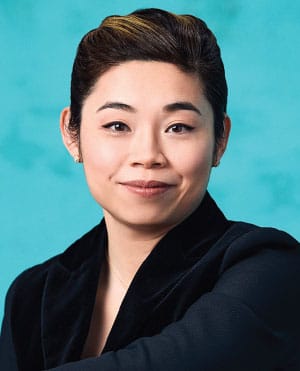
Elim Chan
Elim Chan is Music Director Designate of the San Francisco Symphony; she begins her tenure as Music Director in September 2027. She made her San Francisco Symphony debut in January 2023 and returns in October for Adams’s Doctor Atomic Symphony and Mendelssohn’s Violin Concerto.
Chan served as Principal Conductor of the Antwerp Symphony Orchestra between 2019–24 and Principal Guest Conductor of the Royal Scottish National Orchestra between 2018–23. She was recently appointed artistic partner with the Vienna Symphony for the 2026–28 seasons, following her designation as a portrait artist at the Musikverein in the 2022–23 season. Having conducted the First Night of the Proms with the BBC Symphony Orchestra in 2024, she returned to the series last year to conduct Last Night of the Proms.
Highlights in the 2025–26 season include return engagements with the Royal Concertgebouw Orchestra, New York Philharmonic, Los Angeles Philharmonic, Cleveland Orchestra, London Symphony, Toronto Symphony, ORF Radio-Symphonieorchester, Staatskapelle Dresden, Luxembourg Philharmonic, and Orchestre de Paris. She makes her subscription debut with the Philadelphia Orchestra and debuts with the Munich Philharmonic, Zurich Opera Orchestra, Bamberg Symphony, and Orchestre Symphonique de Montréal. Last summer she appeared with the Boston Symphony, Los Angeles Philharmonic, and Cleveland Orchestra, and debuted with Staatskapelle Berlin at Musikfest Berlin. In previous seasons, she appeared with the Chicago Symphony, Pittsburgh Symphony, Philharmonia Orchestra, Hong Kong Philharmonic, Vienna Symphony, and Deutsches Symphonie-Orchester Berlin.
Born in Hong Kong, Chan studied at Smith College and the University of Michigan. In 2014, she became the first woman to win the Donatella Flick Conducting Competition and went on to spend the 2015–16 season as assistant conductor at the London Symphony, where she worked closely with Valery Gergiev. In the following season, Chan joined the Dudamel Fellowship Program of the Los Angeles Philharmonic. She was also encouraged by Bernard Haitink, whose masterclasses she attended in Lucerne in 2015.
Learn more about Elim Chan at sfsymphony.org/elimchan.
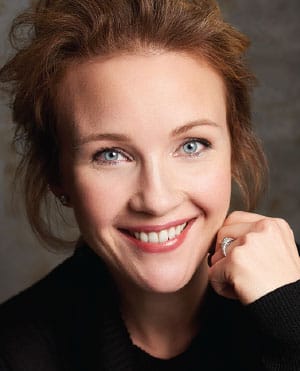
Sasha Cooke
Two-time Grammy Award–winning mezzo-soprano Sasha Cooke has sung at the Metropolitan Opera, San Francisco Opera, English National Opera, Seattle Opera, Opéra National de Bordeaux, and Gran Teatre del Liceu, among others, and with more than 80 symphony orchestras worldwide. This season, she appears with Houston Grand Opera, Seattle Opera, the Chicago Symphony at the Ravinia Festival, Philadelphia Orchestra, Baltimore Symphony, Detroit Symphony, Boston Symphony Chamber Players, Vienna Symphony, Yomiuri Nippon Symphony, and Sydney Symphony.
Cooke made her San Francisco Symphony debut in June 2009 and became a Shenson Young Artist in January 2010. She toured Europe with Michael Tilson Thomas and the Symphony, premiered MTT’s Meditations on Rilke (captured on a Grammy-winning SFS Media release), and recorded two of MTT’s songs on Grace: The Music of Michael Tilson Thomas. Last season, she sang at MTT’s 80th Birthday Concert as well as Mahler’s Symphony No. 2 with Esa-Pekka Salonen. Earlier this season, she appeared in Mozart’s Requiem with Manfred Honeck.
Cooke is a graduate of Rice University and the Juilliard School. She also attended the Music Academy of the West, Aspen Music Festival, Ravinia Festival’s Steans Music Institute, Wolf Trap Foundation, Marlboro Music Festival, and the Met’s Lindemann Young Artist Development Program.