In This Program
- The Concert
- At a Glance
- Program Notes
- Johannes Brahms: “Wie lieblich sind deine Wohnungen”
- Ludwig van Beethoven: Symphony No. 9 An die Freude (Ode to Joy)
- About the Artists
- About San Francisco Symphony
The Concert
Thursday, June 18, 2026, at 7:30pm
Saturday, June 20, 2026, at 7:30pm
Sunday, June 21, 2026, at 2:00pm
Inside Music Talk with Scott Foglesong, San Francisco Conservatory of Music
On stage one hour before each performance
James Gaffigan conducting
This week’s performances are dedicated in memory of Michael Tilson Thomas.
We celebrate his extraordinary half-century relationship with the San Francisco Symphony and the
defining role he played in shaping the Orchestra and raising its prominence around the world.
Johannes Brahms
“Wie lieblich sind deine Wohnungen”
from A German Requiem, Opus 45 (1868)
San Francisco Symphony Chorus
Jenny Wong director
Charles Ives
The Unanswered Question (1906)
Michael Tilson Thomas
Agnegram (1998)
Intermission
Ludwig van Beethoven
Symphony No. 9 in D minor, Opus 125 (1824)
Allegro ma non troppo, un poco maestoso
Molto vivace
Adagio molto e cantabile–Andante moderato
Finale: “Ode to Joy”
Jessica Faselt soprano
Kelley O’Connor mezzo-soprano
Thomas Cooley tenor
Peixin Chen bass
San Francisco Symphony Chorus
Jenny Wong director
These concerts, a part of the Barbro and Bernard Osher Masterworks Series, are made possible by a generous gift from Barbro and Bernard Osher.
Support for the San Francisco Symphony Chorus is provided through the San Francisco Symphony Chorus Endowment Fund, generously established by Peter G. Neumann.
These concerts are generously sponsored by Athena T. Blackburn.
Inside Music Talks are supported in memory of Horacio Rodriguez.
Program Notes
At a Glance
On the second half, Ludwig van Beethoven’s Ninth Symphony is a journey of transformation that explores themes of struggle and salvation, community and compassion, culminating in the “Ode to Joy.”
“Wie lieblich sind deine Wohnungen” from
A German Requiem, Opus 45
Johannes Brahms
Born: May 7, 1833, in Hamburg
Died: April 3, 1897, in Vienna
Work Composed: 1857–68
SF Symphony Performances: First—March 1931. Hans Leschke conducted with the San Francisco Municipal Chorus.
Most recent—February 2015. Herbert Blomstedt conducted with the San Francisco Symphony Chorus.
Instrumentation: chorus, 2 flutes, 2 oboes, 2 clarinets, 2 bassoons, 2 horns, organ, and strings
Duration: About 4 minutes
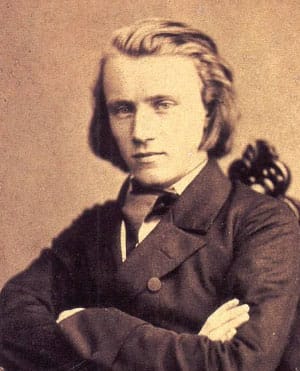
Almost certainly, Robert Schumann’s death in July 1856 and that of Brahms’s mother in February 1865 played a part in calling A German Requiem into being, but the composer was reticent about such things, and we cannot be sure. He wrote the last notes of the work in May 1868, but its musical beginnings go back as far as 1854. That was the year of Schumann’s mental collapse and attempted suicide, and of Brahms’s move to Düsseldorf to be near Clara Schumann and to help her and her children.
To Clara, he wrote that it was meant to be “a sort of German requiem.” Only an exceptionally heavy schedule of concert appearances kept him from completing the score as swiftly as he had begun it. The partial premiere in Vienna in December 1867 went badly, but a performance in Bremen the following year became a great success and marked a turning point in his career. Now, at 35, he was acknowledged a master.
Brahms himself put the Requiem text together. He knew his Bible well. As Michael Musgrave has written, Brahms was not a conventional believer, but “he was deeply absorbed in the ideas from which formal religious thought is derived. The center of this interest was the Lutheran Bible, of which he possessed two copies.” One of these, Musgrave says, “is marked extensively and confirms the intimate knowledge which enabled him to select texts which ideally suited his purpose.”
The title gave Brahms some unease. “German” refers simply to the language, but he told Karl Rheinthaler, director of music at the Bremen Cathedral, that he would gladly have dispensed with that adjective and called his work “A Human Requiem.”
In the chorus “Wie lieblich sind deine Wohnungen” (How lovely is your dwelling place), the orchestra is reduced to an almost chamber-musical scale. Near the end, Brahms produces a lovely choral texture by making octave couplings of sopranos with tenors and of altos with basses.
—Michael Steinberg
The Unanswered Question
Charles Ives
Born: October 20, 1874, in Danbury, Connecticut
Died: May 19, 1954, in New York
Work Composed: 1906 (rev. 1941)
SF Symphony Performances: First—May 1960. Enrique Jordá conducted. Most recent—January 2025. David Robertson conducted.
Instrumentation: 4 flutes, trumpet, and strings
Duration: About 6 minutes
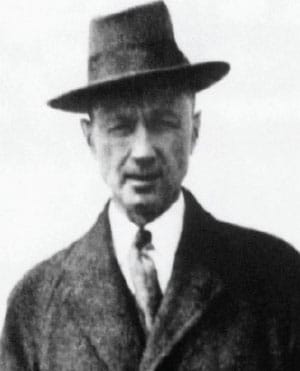
Charles Ives went to college at Yale where he managed to graduate in 1898 after holding on with a D-plus grade-point average. Following graduation, he sensibly took a position with an insurance firm. He proved exceptionally adept in that field, and in 1906 he began planning the creation of his own company, the eventual Ives & Myrick, in New York City. In 1905 he had entered into a courtship with Harmony Twitchell, “the most beautiful girl in Hartford,” whom he would marry in 1908. At about this time he also let loose a succession of wildly adventurous compositions, the most enduring of which is The Unanswered Question.
Throughout his career, Ives wrote memos to himself to capture thoughts on his music, his intended projects, his experiences, and a plethora of other topics. Here’s what Ives jotted down at some point about The Unanswered Question:
Around this time, running from say 1906. . . up to about 1912–14 or so, things like. . . The Unanswered Question, etc. were made. Some of them were played—or better tried out—usually ending in a fight or hiss. . . . I must say that many of those things were started as kinds [of] studies, or rather trying out sounds, beats, etc., usually by what is called politely “improvisations on the keyboard”—what classmates in the flat called “resident disturbances.”
In a list of works that he included with the memos, Ives identified the piece as The Unanswered Question, A Cosmic Landscape, and he noted that he had written it “some time before June, 1908.” However, Ives’s sketch for the piece bears an address that was only valid through 1906; this, along with other biographical data, helps date the genesis of the piece more precisely to July 1906.
In its first incarnation, The Unanswered Question took the form of a one-page sketch. Nonetheless, its essential character was already well in place: three distinct sonic levels, each with its own unvarying instrumentation and melodic style, overlapping in a way that is both loosely controlled and fraught with programmatic implications. In the mid-1930s, Ives took up his early sketch and fashioned it into completed form, in which guise it was published (without authorization) in the October 1941 edition of the Boletín Latino-Americano de Música, under the title La Pregunta Incontestada. In 1953 it was finally released in a more broadly available format by Southern Music Publishing Co. In any case, it’s surprising to think that this work occupies only five far-from-dense pages of full orchestral score.
The Music
In an extensive prose foreword to his published score, Ives described:
The strings play ppp [extremely quiet] throughout with no change in tempo. They are to represent “The Silences of the Druids—Who Know, See, and Hear Nothing.” The trumpet intones “The Perennial Question of Existence,” and states it in the same tone of voice each time. But the hunt for “The Invisible Answer” undertaken by the flutes and other human beings, becomes gradually more active, faster and louder through an animando to a con fuoco. . . . “The Fighting Answers,” as the time goes on, and after a “secret conference,” seem to realize a futility, and begin to mock “The Question”—the strife is over for the moment. After they disappear, “The Question” is asked for the last time, and “The Silences” are heard beyond in “Undisturbed Solitude.”
—James M. Keller
Agnegram
Michael Tilson Thomas
Born: December 21, 1944, in Los Angeles
Died: April 22, 2026, in San Francisco
Work Composed: 1998 (rev. 2016/24)
San Francisco Symphony Performances: First—May 1998 (world premiere). Michael Tilson Thomas conducted. Most recent—March 2019. Michael Tilson Thomas conducted on a US tour.
Instrumentation: 2 flutes, piccolo, 2 oboes, English horn, 2 clarinets, E-flat clarinet, bass clarinet, 2 bassoons, contrabassoon, 4 horns, 3 trumpets, 3 trombones, tuba, timpani, percussion (chimes, bass drum, glockenspiel, suspended cymbal, xylophone, crotales, snare drum, whip, wood blocks, triangle, crash cymbals, ratchet, lion’s roar, vibraphone, police whistle, tambourine, finger cymbals, siren, guiro, medium gong, tom-toms, and cowbell), harp, piano, and strings
Duration: About 6 minutes
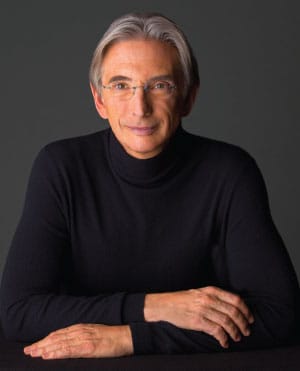
Michael Tilson Thomas was acclaimed internationally as a triple-threat—as a conductor, of course, but also as an impressive pianist and a composer of imagination and eloquence. In the 1994 book Viva Voce, a collection of conversations with the critic Edward Seckerson, he described himself as “a fledgling composer,” but things developed quickly after that. He had already written a few works that gave him confidence, including his Street Song (1988) for brass instruments and From the Diary of Anne Frank (1989–90), a large-scale piece for narrator and orchestra, both of which continue to receive regular performances. “What these … experiences did,” he explained, “was to cause me to take my writing seriously, to care about it, and to care about wanting to have people hear what was going on inside my head.”
Balancing the creative impulse of a composer with the demands of a music director proved challenging but not insurmountable. He took pains to carve out blocks of time for composition, and his work list grew steadily through nearly four decades. His publisher lists 24 compositions in print today, and San Francisco Symphony audiences have heard 21 of them, some on multiple occasions. In 2020, SFS Media released an album of his works—live concert recordings of From the Diary of Anne Frank and the orchestral song cycle Meditations on Rilke—that won the 2021 Grammy Award for Best Classical Compendium. Among the major recording projects marking his 80th birthday, in 2024, was Grace: The Music of Michael Tilson Thomas, a four-disc box set on Pentatone.
MTT’s short orchestral movement Agnegram was introduced here in 1998 and dedicated as a 90th-birthday tribute to longtime SF Symphony Board member Agnes Albert, who was instrumental to the creation of the SF Symphony Youth Orchestra. The title of this birthday card involves a bit of affectionate wordplay with her name, which is then carried over as “music-play” in the composition itself. Each letter of her name is encoded as an equivalent musical pitch to yield what he calls “a basic scale,” which gives rise to themes (and their transpositions) that spell out her name; in short, there is more to this piece than immediately meets the ear.
“The piece itself is a march for large orchestra,” wrote MTT when the SF Symphony premiered Agnegram in 1998. “The first part of the march is in 6/8 and is almost a mini-concerto for orchestra, giving brief sound-bite opportunities for the different sections of settling into a jazzy and hyper-rangy tune. The middle section of the march, or trio, is in 2/4 [after which] the jazzy 6/8 tune reappears, now in canon, and the piece progresses to a jubilant and noisy ending.”
Agnegram continued to evolve. Prior to including it on the SF Symphony’s 2016 Asia tour, MTT decided to “customize” the piece while still respecting its essence as an homage. He wrote at the time:
This piece is still in the form of a march. But now the middle section, a kind of John Philip Sousa-like trio, explores a musical joke that I had planned, but not finished in time, for the premiere performance. The trio recalls many famous tunes that amused Agnes. There are surreal references to Schumann, Tchaikovsky, Verdi, and Irish lullabies, but they appear only to the degree that the notes that they have in common with her name will allow.
I think she would have enjoyed discovering them and chuckling over them.
—J.M.K.
Symphony No. 9 in D minor, Opus 125
Ludwig van Beethoven
Baptized: December 17, 1770, in Bonn
Died: March 26, 1827, in Vienna
Work Composed: 1822–24
SF Symphony Performances: First—April 1924. Alfred Hertz conducted with Claire Dux, Merle Alcock, Mario Chamlee, and Clarence Whitehill as soloists.
Most recent—October 2023. Michael Tilson Thomas conducted with the San Francisco Symphony Chorus and Angel Blue, Tamara Mumford, Ben Bliss, and Dashon Burton as soloists.
Instrumentation: 2 flutes, piccolo, 2 oboes, 2 clarinets, 2 bassoons, contrabassoon, 4 horns, 2 trumpets, 3 trombones, timpani, percussion (bass drum, cymbals, and triangle), and strings
The Finale (“Ode to Joy”) adds 4 soloists (soprano, mezzo-soprano, tenor, and bass) and chorus
Duration: About 65 minutes
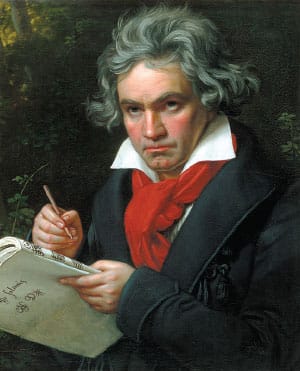
Beethoven’s Ninth Symphony feels like a unifying force across the globe, a cultural common good, even in our hyperpolarized times. The fourth-movement choral setting of a Friedrich Schiller poem—the ultra-hummable “Ode to Joy”—has been recycled countless times. It’s the official anthem of the European Union. It pops up in movie soundtracks and television commercials. Huge crowds belt it out before sporting events. Beethoven’s immortal earworm marks occasions, endings, and beginnings around the world.
But the price of ubiquity is steep. Monuments get buried beneath layers of grime. Something that means so many different things—Enlightenment values, international diplomacy, pasteurized cheese product—might even start to seem meaningless after two centuries.
For Beethoven, who mulled over parts of this music for decades, the meaning of the Ninth Symphony was urgent, immediate, vital. He wanted his music to enact a journey of transformation, exploring themes of struggle and salvation, community and compassion. Although he wasn’t a churchgoer, he found spiritual sustenance in his art. In a letter from 1821, a few years before he completed the Ninth Symphony, he explained to Archbishop Rudolph, his pupil and patron, what composing meant to him: “There is nothing higher than to approach the Godhead more nearly than other mortals and by means of that contact to spread the rays of the Godhead through the human race.”
Beethoven first read Friedrich Schiller’s poem as a teenager in Bonn and set a few of its lines to mark the accession of Emperor Leopold II in 1790. Three years later, Bartholomäus Fischenich, a law professor in Bonn, wrote to Charlotte Schiller, the poet’s wife, describing Beethoven as “a young man of this place whose musical talents are universally praised,” and noting he planned “to compose Schiller’s ‘Freude’ verse by verse.” Some evidence suggests that Beethoven may have composed a setting of the ode as early as 1798, although the score was lost, if it ever existed. Schiller’s ‘Freude’ seems to have been on Beethoven’s mind, but he moved it to a backburner, where it simmered in his subconscious for more than 20 years.
In the decades after his first exposure to Schiller, Beethoven had seen his cherished Enlightenment ideals trampled by Napoleon and other repressive forces. The conservative Austrian statesman Klemens von Metternich, appointed by Emperor Francis I, cracked down on all forms of expression, political and artistic, that promoted liberal democracy or otherwise diminished the Habsburgs’ domestic and global power. At a time when ordinary Austrians could be arrested for saying the word “freedom” or gathering in groups of more than a few unrelated people, resurrecting Schiller’s humanist anthem was a subversive act.
After some tense negotiation with local patrons, performers, and financiers, the first performance took place on May 7, 1824, at the Kärntnertor Theater in Vienna. There were only two full rehearsals before the premiere, and at least one singer walked out in a snit because the score was, in his opinion, “impossible.” The symphony was commissioned by an organization in London and Beethoven had threatened to hold the premiere in Berlin, but he agreed to Vienna after extracting certain concessions. He successfully lobbied for extra musicians to augment the standard orchestra, thereby balancing out the 90-voice chorus. He also insisted on conducting the performance, never mind that he was by that point profoundly deaf. The musicians, who had all been discreetly instructed to follow the concertmaster, did their best to ignore the wildly gesticulating man at the podium. In the words of one witness, the composer “threw himself back and forth like a madman. At one moment he stretched to his full height, at the next he crouched down to the floor. He flailed about with his hands and feet as though he wanted to play all the instruments and sing all the chorus parts.”
Beethoven was so intently focused on the music in his head that he failed to notice when the music in the hall stopped. The mezzo-soprano soloist, Caroline Unger, made him turn around and see what he could no longer hear: all those cheering faces, clapping hands, waving handkerchiefs.
The Music
Marked Allegro ma non troppo, un poco maestoso (cheerful but not excessively and slightly majestic), the first movement begins with a stark open fifth and dissonant tremolos. Out of this void emerges the first faint sign of the “Freude” theme, inverted here as three descending notes. Just as the universe arose from nothingness, the theme seems to arise, in fits and starts, from a yawning abyss. Set in 2/4 meter, the opening Allegro develops in complex and unexpected ways. Two keys are dramatically juxtaposed: D minor (the home key, or tonic) and B-flat major. Throughout we get brief flashes of D major, foreshadowing the euphoric finale.
The second movement, a scherzo with fugal and sonata-form elements, is also in the home key, at least nominally. Marked Molto vivace, it combines an anarchic opening (check out that hell-raising timpani) and a pastoral central interlude, where the key changes to D major and triple meter shifts to duple. The first notes of the “Freude” theme return, but they’re tricked out in a different rhythm: another subliminal glimpse of future pleasures.
Structurally, the ravishing slow movement is a loose adaptation of a theme-and-variations form. Beethoven marked it Adagio molto e cantabile (very slow and singing), and the indication reminds us why the chorus has been waiting there patiently all this time, waiting to let loose with the part we’ll be humming as we leave the hall, and possibly for weeks afterward. But Beethoven was the master of deferred gratification. Never mind those brief rebukes from the brass: in this paradise of hushed strings and gentle winds, melodies linger, suspended in bliss.
The choice of key—B-flat major—signals a break from the tonal tumult, the minor-key chaos of the preceding movements. “Melody must always be given priority above all else,” Beethoven explained in a letter. His sketchbooks suggest that he worked intensively on the Adagio in 1823, hashing out the first theme in several stages; his secondary theme, in 3/4 time, came to him more or less intact. Even when you know what’s coming, the first moments of the finale are a visceral jolt. Richard Wagner called it a “terror fanfare,” Beethoven biographer Jan Swafford called it a “brassy burst of fury,” and no matter what you call it, you will flinch when it smacks you at full volume. It’s supposed to hurt a little: a bracing slap to wake you up for the Big Reveal, when the theme bursts loose in a torrent of delirious variations. Never has the transition from minor to major felt more satisfying, more essential. For listeners the ecstasy only mounts, but for singers the finale is downright scary, a brutal tessitura that demands impossibly high notes to be held for an impossibly long time.
“All art constantly aspires towards the condition of music,” the critic Walter Pater famously observed, and the saying resonates because it feels true. So why do we expect music to do more when it already gives us everything? We want it to tell us a story about ourselves, but music tells its own stories, in its own language. If it’s not the Godhead, it’s close enough.
—René Spencer Saller
The Michael Tilson Thomas Legacy Fund
The Michael Tilson Thomas Legacy Fund honors MTT’s extraordinary half-century relationship with the San Francisco Symphony, including his 25 years as Music Director, during which he played a defining role in shaping the Orchestra’s artistic identity and raising its prominence around the world.
Central to MTT’s legacy is the Orchestra itself. He was profoundly committed to its musicians, nurturing their talent and instilling a shared standard of musical excellence. As a permanent endowment, this fund will support the Orchestra, ensuring that the artistry and strength he fostered continue to define the ensemble for generations to come.
In recognition of Michael Tilson Thomas’s extraordinary impact on the San Francisco Symphony and the broader musical world, the Symphony’s Board of Governors has made a founding commitment to establish a permanent endowed fund in his honor that will strengthen the future of the orchestra he shaped so profoundly.
To learn more about supporting the Michael Tilson Thomas Legacy Fund, please visit sfsymphony.org/donate or contact legacygiving@sfsymphony.org.
Johannes Brahms: “Wie lieblich sind deine Wohnungen”
Wie lieblich sind deine Wohnungen, Herr Zebaoth!
Meine Seele verlanget und sehnet sich nach den Vorhöfen des Herrn; mein Leib und Seele freuen sich in dem lebendigen Gott...
Wohl denen, die in deinem Hause wohnen,
die loben dich immerdar.
(Psalm 84:1–2, 4)
How lovely is Your dwelling place, Lord of hosts!
My soul longs and yearns for the courtyards of the Lord; my body and spirit rejoice
to the living God…
Blessed are they who dwell in your house;
they praise You forever.
Translation: Noam Cook
Ludwig van Beethoven: Symphony No. 9
An die Freude (Ode to Joy)
O Freunde, nicht diese Töne!
Sondern lasst uns angenehmere anstimmen;
Und freudenvollere.
—Ludwig van Beethoven
Freude, schöner Götterfunken,
Tochter aus Elysium,
Wir betreten feuertrunken,
Himmlische, dein Heiligtum.
Deine Zauber binden wieder,
Was die Mode streng geteilt,
Alle Menschen werden Brüder,
Wo dein sanfter Flügel weilt.
Wem der grosse Wurf gelungen,
Eines Freundes Freund zu sein,
Wer ein holdes Weib errungen,
Mische seinen Jubel ein!
Ja—wer auch nur eine Seele
Sein nennt auf dem Erdenrund!
Und wer’s nie gekonnt, der stehl
Weinend sich aus diesem Bund.
Freude trinken alle Wesen
An den Brüsten der Natur,
Alle Guten, alle Bösen
Folgen ihrer Rosenspur.
Küsse gab sie uns und Reben,
Einen Freund, geprüft im Tod,
Wollust ward dem Wurm gegeben,
Und der Cherub steht vor Gott.
Froh wie seine Sonnen fliegen
Durch des Himmels prächt’gen Plan,
Laufet, Brüder, eure Bahn,
Freudig wie ein Held zum Siegen.
Seid umschlungen, Millionen!
Diesen Kuss der ganzen Welt!
Brüder—überm Sternenzelt
Muss ein lieber Vater wohnen.
Ihr stürzt nieder, Millionen?
Ahnest du den Schöpfer, Welt?
Such ihn überm Sternenzelt!
Über Sternen muss er wohnen.
—Friedrich Schiller
Friends! Not these sounds!
Let us, instead, give voice to more pleasant
and joyful ones.
Joy—beautiful Divine Spark,
Daughter of Elysium—
we enter your sanctuary
in a fiery daze, Heavenly One!
Your magic unites again
what trends have torn asunder—
for all people are kindred
where your gentle wing abides.
Whoever has achieved the feat
of being a friend to a friend,
whom fortune has given a beloved,
let them join this jubilation!
Yes—even one who in all the world
calls only a single soul theirs!
Yet, let those who fail in this
depart in tears from our fellowship!
All beings drink joy
from nature’s breast—
all that are good and all that are evil
tread along her rose-lined path.
Kisses and the grape has she given us,
a proven friend unto death—
just as the worm seeks primal pleasure
so the cherub seeks to stand before God.
Just as suns take their course
through the heavens’ glorious expanse,
joyfully follow your path, kindred,
like a hero heading to victory.
Multitudes: be embraced!
This kiss is for all the world!
Kindred: beyond the canopy of stars
must dwell a loving father.
Do you kneel down, multitudes?
World, do you sense the creator?
Seek him beyond the starry canopy!
Beyond the stars he must dwell.
Translation: Noam Cook
About the Artists
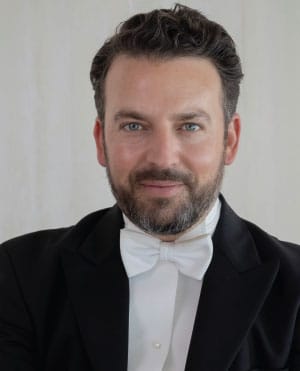
James Gaffigan
James Gaffigan serves as music director of Komische Oper Berlin, where he began his third season in 2025–26, and he was recently named music director of Houston Grand Opera beginning in 2027. Guest engagements this season include returns to the Los Angeles Philharmonic, National Symphony, Chicago Symphony, NDR Elbphilharmonie, Les Arts Valencia Opera, and Verbier Festival.
Gaffigan regularly works with the New York Philharmonic, Cleveland Orchestra, Philadelphia Orchestra, Detroit Symphony, and Metropolitan Opera, among many others. In Europe, he has appeared with the London Symphony, Royal Concertgebouw Orchestra, Vienna Symphony, Munich Philharmonic, Bavarian Radio Orchestra, Norwegian Opera and Ballet, Deutsches Symphonie-Orchester Berlin, Staatskapelle Berlin, and Czech Philharmonic.
Gaffigan’s previous titles include music director of the Palau de les Arts Reina Sofía in Valencia, Spain; principal guest conductor of both the Netherlands Radio Philharmonic Orchestra and the Trondheim Symphony Orchestra and Opera; chief conductor of the Lucerne Symphony; and assistant conductor of the Cleveland Orchestra. He made his San Francisco Symphony debut in December 2006 and served as Associate Conductor from 2006 to 2009.
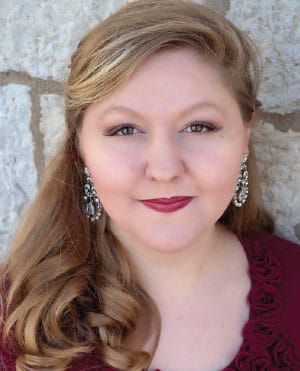
Jessica Faselt
Jessica Faselt’s 2025–26 season includes a house debut with the Paris Opera as Helmwige in Die Walküre and a role debut as Sieglinde in the same work with the Los Angeles Philharmonic. She also joins the Atlanta Opera in a cover assignment for the title role in Turandot and returns to the role of Sieglinde in concert performances with Taiwan’s National Symphony Orchestra. Last season she debuted with Santa Fe Opera in Die Walküre, singing the role of Helmwige and covering Sieglinde, and returned to the Metropolitan Opera as the Voice of a Falcon in Strauss’s Die Frau ohne Schatten. She makes her San Francisco Symphony debut with these performances.
Faselt was a winner of the 2018 Metropolitan Opera National Council Auditions. Upon performing with the Metropolitan Opera Orchestra in the Grand Finals Concert, Faselt was presented with the Birgit Nilsson Award of the American-Scandinavian Foundation. She went on to become a member of the Metropolitan Opera’s Lindemann Young Artist Development Program from 2018–21, and made her debut with the company in 2018 as a Novice in Puccini’s Suor Angelica. She is the recipient of the 2021 Hildegard Behrens Foundation Award, the 2020 George London Foundation Award, and a Sarah Tucker Study Grant, among other awards.
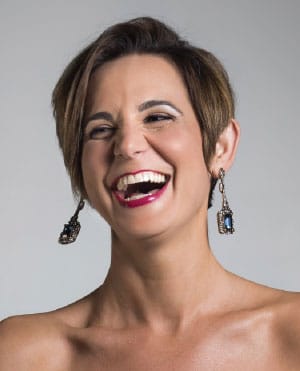
Kelley O’Connor
Kelley O’Connor returned this season to the Aspen Music Festival for a world premiere by Christopher Theofanidis, opened the Grand Rapids Symphony season with Beethoven’s Ninth Symphony, and joined the New World Symphony and Fort Worth Symphony for Peter Lieberson’s Neruda Songs. She also appeared with the Colorado Symphony and Winston-Salem Symphony for Handel’s Messiah, sang Mahler’s Second Symphony with the Indianapolis Symphony, and returned to the Atlanta Symphony for Bernstein’s Jeremiah Symphony.
A champion of modern composers, O’Connor premiered an extended version of Thomas Adès’s America (A Prophecy) in her debut with the Leipzig Gewandhaus Orchestra under Andris Nelsons, and debuted with the Atlanta Symphony in Osvaldo Golijov’s Ainadamar, resulting in a Grammy Award–winning Deutsche Grammophon recording. O’Connor’s recording catalogue includes Mahler’s Third Symphony with the Dallas Symphony Orchestra, Lieberson’s Neruda Songs and Michael Kurth’s Everything Lasts Forever with the Atlanta Symphony, Adams’s The Gospel According to the Other Mary with the Los Angeles Philharmonic, and Beethoven’s Ninth Symphony with the Cleveland Orchestra. Her newest recording, Songs of Orpheus, includes a series of song cycles by Edvard Grieg, Claude Debussy, George Crumb, and Robert Spano. She made her San Francisco Symphony debut in April 2008.
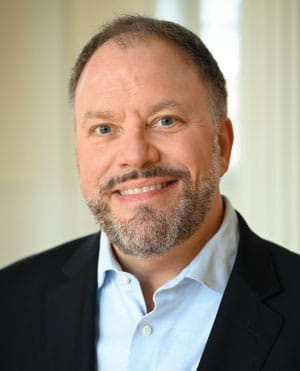
Thomas Cooley
Thomas Cooley has performed with the New York Philharmonic, Minnesota Orchestra, St. Paul Chamber Orchestra, Leipzig Gewandhaus Orchestra, Bavarian Radio Symphony, National Symphony, Atlanta Symphony, St. Louis Symphony, Orchestra of St. Luke’s, Singapore Symphony, and Osaka Philharmonic. He is a leading interpreter of music by Handel and J.S. Bach, and has appeared as the Evangelist in passions with the Leipzig Thomanerchor, Windsbacher Knabenchor, Dresdner Kreuzchor, Philharmonia Baroque Orchestra, Handel and Haydn Society, Tafelmusik, Boston Baroque, and MusicAeterna.
Cooley was a principal artist with the Staatstheater am Gärtnerplatz in Munich from 2002–06 and has portrayed more than 35 operatic roles with the Bavarian State Opera, Cincinnati Opera, Mark Morris Dance Group, and Göttingen International Händelfestspiele. His discography spans more than 20 recordings on labels including Deutsche Grammophon, Carus, Sony, and Avie Records, which will release his upcoming recording of St. Matthew Passion with Nicholas McGegan, a frequent collaborator, in 2026.
Cooley is a visiting associate professor of music in voice and historical performance at the Indiana University Jacobs School of Music. He made his San Francisco Symphony debut in February 2010.
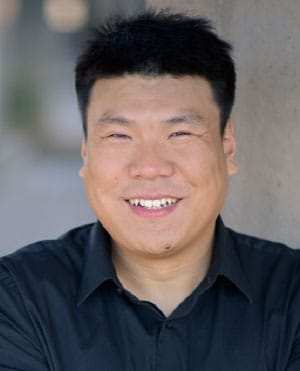
Peixin Chen
Peixin Chen appeared this season at San Francisco Opera in the world premiere of The Monkey King and as Sparafucile in Rigoletto. A frequent guest at the Metropolitan Opera, he recently returned to the company as Timur in Turandot. Chen made his debut at the Salzburg Festival last summer, playing the General in a new Peter Sellars production of The Gambler. Other recent highlights include a debut at the Festival d’Aix en Provence in Aufstieg und Fall der Stadt Mahagonny conducted by Esa-Pekka Salonen, a Lyric Opera of Chicago debut in Don Carlos, and a debut with the Los Angeles Philharmonic in a fully staged presentation of Das Rheingold with Gustavo Dudamel.
Chen has appeared in numerous productions with Los Angeles Opera including Don Giovanni and Rigoletto; at Washington National Opera in Turandot, La bohème, and L’elisir d’amore; and has given performances of Das Rheingold at Seattle Opera and Dallas Opera. Appearances at the Met include performances in La bohème, Don Giovanni, Turandot, and Die Zauberflöte. A graduate of Houston Grand Opera Studio, Chen has appeared in multiple productions at Houston Grand Opera. He makes his San Francisco Symphony debut with these performances.
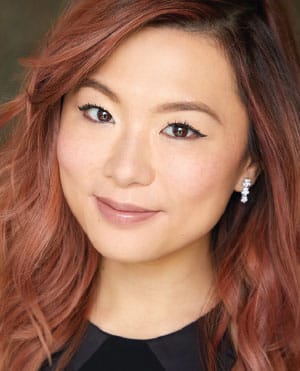
Jenny Wong
Jenny Wong is Chorus Director of the San Francisco Symphony and associate artistic director of the Los Angeles Master Chorale. Her conducting engagements have included the Los Angeles Philharmonic Green Umbrella Series, Los Angeles Opera Orchestra, Long Beach Opera, Phoenix Chorale, and Gay Men’s Chorus of Los Angeles. In 2021, Wong was one of nine national recipients of Opera America’s inaugural Opera Grants for Women Stage Directors and Conductors.
As Chorus Director, Wong worked with Esa-Pekka Salonen and Michael Tilson Thomas, as well as numerous guest conductors. She has also prepared choruses for the Los Angeles Philharmonic and Chicago Symphony, working with conductors Gustavo Dudamel, Susanna Mälkki, Jonathan Cohen, and Osmo Vänskä, among many others. Wong led the SF Symphony Chorus for the Deutsche Grammophon recording of Kaija Saariaho’s Adriana Mater, which won the 2025 Grammy Award for Best Opera Recording, and helped prepare the Los Angeles Master Chorale for the Los Angeles Philharmonic’s recording of Mahler’s Symphony No. 8, which won the 2022 Grammy Award for Best Choral Performance. Together with Grant Gershon and the Los Angeles Master Chorale, Wong was also awarded the 2022 American Prize in Choral Performance.
Wong received her doctor of musical arts and master of music from the University of Southern California and an undergraduate degree in voice from the University of Illinois, Urbana-Champaign. She recently extended her contract as SF Symphony Chorus Director through the 2028–29 season.
About the SF Symphony Chorus
The San Francisco Symphony Chorus was established in 1973 at the request of Seiji Ozawa, then the Symphony’s Music Director. The Chorus, numbering 32 professional and more than 120 volunteer members, now performs more than 26 concerts each season. Louis Magor served as the Chorus’s director during its first decade. In 1982 Margaret Hillis assumed the ensemble’s leadership, and the following year Vance George was named Chorus Director, serving through 2005–06. Ragnar Bohlin concluded his tenure as Chorus Director in 2021, a post he had held since 2007. Jenny Wong was named Chorus Director in September 2023.
The Chorus can be heard on many acclaimed San Francisco Symphony recordings and has received Grammy Awards for Best Performance of a Choral Work (for Orff’s Carmina burana, Brahms’s A German Requiem, and Mahler’s Symphony No. 8), Best Classical Album (for a Stravinsky collection and for Mahler’s Symphony No. 3 and Symphony No. 8), and most recently Best Opera Recording (for Saariaho’s Adriana Mater).
Lead support for the San Francisco Symphony Chorus this season was provided by Peter G. Neumann.
To learn more about supporting the San Francisco Symphony Chorus Fund, please contact Jay Auslander, Director of Legacy Giving, at 415.503.5404 or jauslander@sfsymphony.org.
Scott Foglesong is a Contributing Writer and Inside Music Speaker for the San Francisco Symphony and chair of music theory and musicianship at the San Francisco Conservatory of Music. He also writes program notes for the California Symphony, Oregon Symphony, and Grand Teton Music Festival, among other organizations. As a pianist, he studied at the Peabody Conservatory and SFCM.
San Francisco Symphony Chorus
SOPRANOS
Adeliz Araiza
Morgan Balfour*
Katelan Bowden*
Arlene Boyd
Laura Canavan
Sarita Nyasha Cannon
Rebecca Capriulo
Sara Chalk
Tonia D’Amelio*
Katrina Finder
Cara Gabrielson*
Susanna Gilbert
Elizabeth Heckmann
Betsy Johnsmiller
Jocelyn Queen Lambert
Kyounghee Lee
Veronica Mak*
Jennifer Mitchell*
Ria Patel
Diana Pray*
Bethany R. Procopio
Kelly Ryer
Rebecca Shipan
Daphne Touchais*
Sigrid Van Bladel
Zhangguanglu Wang
Leilani Zhang
ALTOS
Carolyn Alexander
Melissa Butcher
Marina Davis*
Corty Fengler
Amy L. Hespenheide
Kelsey M. Ishimatsu Jacobson
Gretchen Klein
Madi Lippmann
Margaret (Peg) Lisi*
Brielle Marina Neilson*
Kimberly J. Orbik
Tiffany Ou-Ponticelli
Leandra Ramm*
Linda J. Randall
Jeanne Schoch
Kathryn Schumacher
Sandy Sellin
Meghan Spyker*
Hilary W. Stevenson
Kyle S. Tingzon*
Makiko Ueda
Merilyn Telle Vaughn*
Heidi L. Waterman*
TENORS
Paul Angelo
Justin Chandler Baptista
Alexander P. Bonner
Todd Bradley
Scott Dickerman
Thomas L. Ellison
Sam Faustine*
Patrick Fu
Ron Gallman
Kevin Gibbs*
Alec Jeong
James Lee
Monty M. Maisano
John Mansfield*
Mark Mueller*
Jack O’Reilly
David Kurtenbach Rivera*
Tim Silva*
Tetsuya Taura
Troy Turriate*
John A. Vlahides
Jack Wilkins*
Jakob Zwiener
BASSES
Matthew Ahn
Simon Barrad*
Ryan Bradford*
Phil Buonadonna
Robert Calvert
Sean Casey
Adam Cole*
Noam Cook
James Radcliffe Cowing III
Tony DeLousia*
Malcolm Gaines
Rick Galbreath
Richard M. Glendening
Vasco Hexel
Luis González*
Rob Lloyd Huber
Bradley A. Irving
Roderick Lowe
Tim Marson
Richard Mix*
Bradley C. Parese
Chung-Wai Soong*
Storm K. Staley
David Varnum*
Julia Vetter
Elliot Yates
Jenny Wong,
Chorus Director
Keisuke Nakagoshi,
Rehearsal Accompanist
John Wilson,
Rehearsal Accompanist
*Member of the American Guild of Musical Artists