In This Program
- The Concert
- Program Notes
- George Frideric Handel: Messiah
- About the Artists
- About San Francisco Symphony
The Concert
Friday, December 4, 2026, at 7:30pm
Saturday, December 5, 2026, at 7:30pm
Ruben Valenzuela conducting
Inside Music Talk with Benjamin Pesetsky
On stage at 6:30pm before each performance
George Frideric Handel
Messiah, A Sacred Oratorio (1741)
Part One
Intermission
Part Two
Part Three
Lauren Snouffer soprano
Reginald Mobley countertenor
Zachary Wilder tenor
Enrico Lagasca bass-baritone
San Francisco Symphony Chorus
Jenny Wong chorus director
Support for the San Francisco Symphony Chorus is provided through the San Francisco Symphony Chorus Endowment Fund, generously established by Peter G. Neumann.
The December 5 concert is sponsored by Moira Conzelman.
Inside Music Talks are supported in memory of Horacio Rodriguez.
Program Notes
Messiah, A Sacred Oratorio
George Frideric Handel
Born: February 23, 1685, in Halle, Margraviate of Brandenburg
Died: April 14, 1759, in London
Composed: 1741
SF Symphony Performances: First—December 1925. Alfred Hertz conducted with the San Francisco Municipal Chorus and Lorna Lachmund, Paul Althouse, Belle Montgomery, and Arthur Middleton as soloists. Most recent—December 2025. Jane Glover conducted with the San Francisco Symphony Chorus and Susanna Phillips, Jennifer Johnson Cano, Josh Lovell, and Will Liverman as soloists.
Instrumentation: 4 vocal soloists, chorus, 2 oboes, bassoon, 2 trumpets, timpani, harpsichord, organ, and strings
Duration: About 150 minutes (including intermission)
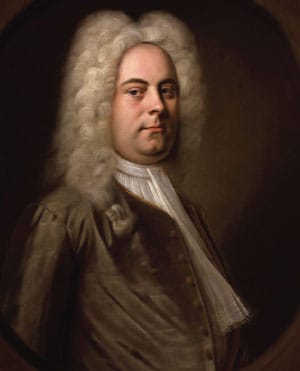
George Frideric Handel’s Messiah is a work that hardly requires any introduction—or so it would seem. If you possess even a passing familiarity with the world of classical music (or even if you do not), then you have likely not just heard of Messiah, but actually heard it. Perhaps you have attended one of the many performances of the work that take place every December or participated in a community singalong. At the very least, the ubiquitous “Hallelujah” chorus that concludes Part Two has surely rung in your ears at least once, even if only via a recording.
Indeed, few other compositions within the Western canon can compete with Messiah’s popularity. It has been that way for a long time. Innumerable different versions of Messiah have cropped up since the work’s premiere in Dublin in April 1742, a Messiah for every season and every occasion. There was Der Messias, the German-language reworking of Messiah compiled by Wolfgang Amadeus Mozart in 1789, adding a bevy of new wind instruments and even a few new notes. During the 19th century, it became fashionable to perform Messiah with massive orchestras and even more massive choirs. The Handel Festival of 1857, held at the Crystal Palace in London, reportedly featured more than 2,000 singers. This tradition continued well into the 20th century, which saw its own new versions. Adherents of historically-informed performance offered scaled-down renditions that claimed to come closer to what the work sounded like in Handel’s time. Others sought to bring Messiah into conversation with modern technologies. For instance, a 1982 release called The Electronic Messiah featured the Elmer Iseler Singers performing select movements accompanied by an array of synthesizers. “The instrumental aspects of this recording are not sterile,” promise the liner notes, “but offer a warm and sparkling series of textures which fit well with the human voice.” That may sound like a sales pitch, but it all works better than you might expect; as a few minutes spent perusing YouTube or Spotify will demonstrate, Messiah has proven itself adaptable time and time again.
From our 21st-century perspective, the endurance of Messiah—more or less unbroken from its creation to the present day—may just be the most interesting thing about it. This aspect of the work’s history demands, if not introduction, then at least explanation. How has Messiah proven itself to be so beloved by so many different people and in so many contexts? Why is it still so central to our culture today, as we round the bend towards its 300th anniversary?
One answer to these questions is genre. Messiah is an oratorio, a type of large-scale composition (typically scored for choir, soloists, and orchestra) that presents a dramatic narrative, usually one sacred in origin. Messiah is no exception, telling the story of the birth, Passion, resurrection, and ascension of Jesus Christ. Compared to Handel’s other oratorios, however, Messiah is far more allegorical and far less plot-driven; the soloists, for instance, do not represent named characters. In their alternation of recitatives, arias, choruses, and instrumental pieces, oratorios bear many similarities to opera, another genre in which Handel excelled. Unlike opera, however, oratorios are not staged, which means that is much easier (and much more cost-effective) to present a performance of Messiah than it is to mount a production of an opera like Giulio Cesare. Furthermore, while they deal with sacred subjects, oratorios have historically been performed in concert halls rather than in churches. They are not intended to be performed as part of a liturgy. As a result, contemporary performances of Messiah face none of the potential awkwardness that can arise when attempting to transplant (for example) the Passion settings of J.S. Bach out of their original context as part of a Good Friday service.
Another explanation for Messiah’s enduring popularity is language. The work was composed by a German and shares much in common with other German-language works from the mid-18th century, from Bach’s Passions to oratorios by Georg Philipp Telemann, Carl Heinrich Graun, C.P.E. Bach, and others. But it was composed for an English-speaking audience, and it is heard nowhere more frequently than in the United Kingdom and the United States. For American audiences, Messiah may feel like “ours” in a way few other European masterpieces ever could. It certainly does not hurt that Handel peppered Messiah with moments of memorable text-setting; think of the tripartite repetition of the word “thanks” in “But thanks be to God” or the way in which Handel asks the chorus to spit out “Blessing, and honour, glory and pow’r” in the final chorus.
Yet these explanations can only take us so far. There are many wonderful 18th-century oratorios and a good number of them (22 by Handel, to be exact) are in English. None other has achieved anything close to Messiah’s fame and influence. What makes this oratorio different? Maybe it is the music. There are beautiful passages in Judas Maccabeus and Saul and all of Handel’s other English-language oratorios. None, though, is as jam-packed with transcendent moments as Messiah. Let us enumerate a few of them.
The Music
What may come to mind first are the big, impressive numbers in which Handel summons the combined powers of chorus and orchestra, often in service of intricate counterpoint. There is the “Hallelujah” chorus, of course, but also the magnificent fugue that closes the entire work (“Worthy is the Lamb”), the spikier, more angular fugue in Part Two (“And with His stripes we are healed”), and the fugue set over a perpetual motion bassline (“And He shall purify the sons of Levi”) in Part One. In these choruses, Handel uses polyphony (simultaneous independent lines) to construct a musical realization of the awe, wonder, and occasionally terror befitting the story he is telling.
Perhaps the brighter, peppier choruses are more to your taste: the opening chorus, “And the glory of the Lord,” “His yoke is easy” (which is definitely not easy for the singers), or “All we like sheep have gone astray” (which is peppy until it isn’t). Part of the appeal of Messiah is the irresistible sense of joy encountered in these numbers. But there are also quieter, gentler moments. There may not be a better three minutes in all of music than the instrumental Pifa (a “pastoral symphony”) that opens the scene in which Jesus’s birth is revealed to the shepherds. The ensuing recitative (“There were shepherds abiding in the fields”) is masterclass in musical word painting, full of breathless excitement. When Handel suggests that the following chorus (“Glory to God in the Highest”) represents the sound of angels singing, we believe him.
Then there are the arias. Oratorio is a genre that centers around choruses, but the arias of Messiah (along with the recitatives that sometimes precede them) serve as a reminder that Handel got his first big break as a composer of opera. Like any good opera composer should, he gives each soloist a chance to shine. The bass is given the spookiest music of the whole work, the recitative “For behold, darkness shall cover the earth” and the slithering aria “The people that walked in darkness” that follows, which together recount Isaiah’s prophecy of the virgin birth. The tenor opens the proceedings with the radiant “Comfort ye,” while the alto’s “He was despised and rejected by men of sorrows,” sung during the scene depicting Christ’s Passion, is one of the work’s most moving passages. But perhaps the essential aria of the entire work is know that my Redeemer liveth,” sung by the soprano in Part Three. Its earnest yet restrained expression of faith is tender, heartfelt, perfect. Is it any wonder that the statue of Handel that sits in Westminster Abbey depicts the composer working on this aria? Like most of the arias in Messiah, furthermore, “I know that my Redeemer liveth” eschews the repetitive da capo form (an extended A-B-A structure) typical of operatic arias while nonetheless enacting a rounded structure that feels complete. “The variety of ways in which Handel avoids the length but simulates the effect of the da capo aria,” write musicologist Thomas Forrest Kelley, “is brilliant.” Put another way, Handel knows when to leave us wanting more.
“For now is Christ risen from the dead,” sings the soprano near the end of “I know that my Redeemer liveth.” For those accustomed to attending performances of Messiah in December, this focus on Christ’s resurrection may seem odd. But though it is now known as a Christmas piece, Messiah in fact tells the story not only of Jesus’s birth, but also his Passion, resurrection, and ascension. On some level, it is profoundly strange that the work has come to be associated with Christmas. It would make much more sense if it were routinely performed in the springtime, during or after the Easter season. The first performance, lest we forget, was in April. To make Messiah into a work more properly fit for Christmas would require omitting all of Parts Two and Three, an obvious non-starter for contemporary audiences.
Yet concert-hall performances need not be bound by a liturgical calendar, especially since oratorios are not liturgical works. If audiences want Messiah for Christmas, then Messiah they shall have. And this may be the final piece of the puzzle when attempting to explain Messiah’s phenomenal popularity. In the United States, as across the pond, Christmas is more than just a day. It is a season, an industry, and a set of interconnected rituals. Messiah has become one of those rituals. For many people, it is as much a part of Christmas as decorating a tree or putting out cookies for Santa, attending a performance of The Nutcracker or watching It’s a Wonderful Life. Does that status quo make sense? Maybe not. But if we cannot fully explain Messiah’s place in our culture today, then we can at least marvel at how a work nearly three centuries old still means so much to so many.
—David H. Miller
George Frideric Handel: Messiah
Text taken from the Scriptures
by Charles Jennens (1700–73)
PART ONE
Sinfonia
Accompagnato (tenor)
Comfort ye, comfort ye, my people, saith your God:
Speak ye comfortably to Jerusalem, and cry unto her, that her warfare is accomplish’d, that her iniquity is pardoned.
The voice of Him that crieth in the wilderness: Prepare ye the way of the Lord, make straight in the desert a highway for our God. (Isaiah 40:1–3)
Aria (tenor)
Ev’ry valley shall be exalted, and ev’ry mountain and hill made low, the crooked straight and the rough places plain. (Isaiah 40:4)
Chorus
And the glory of the Lord shall be revealed. And all flesh shall see it together, for the mouth of the Lord hath spoken it. (Isaiah 40:5)
Accompagnato (baritone)
Thus saith the Lord of Hosts:
Yet once a little while, and I will shake the heav’ns and the earth, the sea, and the dry land, all nations I’ll shake; and the desire of all nations shall come.
The Lord, whom ye seek, shall suddenly come to His temple; even the messenger of the Covenant whom ye delight in, behold,
He shall come, saith the Lord of Hosts. (Haggai 2:6–7, Malachi 3:1)
Aria (countertenor)
But who may abide the day of His coming, and who shall stand when He appeareth? For He is like a refiner’s fire. (Malachi 3:2)
Chorus
And He shall purify the sons of Levi, that they may offer unto the Lord an offering in righteousness. (Malachi 3:3)
Recitative (countertenor)
Behold, a virgin shall conceive, and bear a son, and shall call His name Emmanuel, “God with us.” (Isaiah 7:14, Matthew 1:23)
Aria (countertenor) and Chorus
O thou that tellest good tidings to Zion get Thee up into the high mountain; O thou that tellest good tidings to Jerusalem lift up thy voice with strength, lift it up, be not afraid; say unto the cities of Judah: Behold your God!
Arise, shine, for thy light is come, and the glory of the Lord is risen upon thee. (Isaiah 40:9, 40:1)
Accompagnato (baritone)
For behold, darkness shall cover the earth, and gross darkness the people: but the Lord shall arise upon thee, and His glory shall be seen upon thee.
And the Gentiles shall come to thy light, and kings to the brightness of thy rising. (Isaiah 60:2–3)
Aria (baritone)
The people that walked in darkness have seen a great light. And they that dwell in the land of the shadow of death, upon them hath the light shined. (Isaiah 9:2)
Chorus
For unto us a Child is born, unto us a Son is given and the government shall be upon His shoulder, and His name shall be called: Wonderful Counsellor, The Mighty God, The Everlasting Father, The Prince of Peace! (Isaiah 9:6)
Pifa (orchestra)
Recitative (soprano)
There were shepherds abiding in the field,
keeping watch over their flock by night. (Luke 2:8)
Accompagnato (soprano)
And lo, the angel of the Lord came upon them,
and the glory of the Lord shone round about them,
and they were sore afraid. (Luke 2:9)
Recitative (soprano)
And the angel said unto them: Fear not; for behold, I bring you good tidings of great joy, which shall be to all people.
For unto you is born this day, in the city of David, a Saviour, which is Christ the Lord. (Luke 2:10–11)
Accompagnato (soprano)
And suddenly there was with the angel a multitude of the heav’nly host, praising God, and saying:
(Luke 2:13)
Chorus
“Glory to God in the highest, and peace on earth,
good will toward men.” (Luke 2:14)
Aria (soprano)
Rejoice greatly, O daughter of Zion! Shout, O daughter of Jerusalem! Behold, thy King com’th unto thee.
He is the righteous Saviour, and He shall speak peace unto the heathen. (Zechariah 9:9–10)
Recitative (countertenor)
Then shall the eyes of the blind be open’d, and the ears of the deaf unstopped; then shall the lame man leap as an hart, and the tongue of the dumb shall sing. (Isaiah 35:5–6)
Aria (countertenor and soprano)
He shall feed His flock like a shepherd: and He shall gather the lambs with His arm, and carry them in His bosom, and gently lead those that are with young.
Come unto Him, all ye that labour, come unto Him all ye that are heavy laden, and He will give you rest.
Take His yoke upon you, and learn of Him; for He is meek and lowly of heart: and ye shall find rest unto your souls.
(Isaiah 40:11, Matthew 11:28–9)
Chorus
His yoke is easy, and His burden is light. (Matthew 11:30)
Intermission
PART TWO
Chorus
Behold the Lamb of God, that taketh away the sin of the world.
(John 1:29)
Aria (countertenor)
He was despised and rejected of men; a man of sorrows, and acquainted with grief.
He gave His back to the smiters, and His cheeks to them that plucked off the hair: He hid not His face from shame and spitting. (Isaiah 53:3, John 1:6)
Chorus
Surely He hath borne our griefs and carried our sorrows;
He was wounded for our transgressions, He was bruised for our iniquities; the chastisement of our peace was upon Him.
(Isaiah 53:4–5)
Chorus
And with His stripes we are healed. (Isaiah 53:5)
Chorus
All we, like sheep, have gone astray,
we have turned ev’ry one to his own way;
and the Lord hath laid on Him the iniquity of us all. (Isaiah 53:6)
Accompagnato (tenor)
All they that see Him laugh Him to scorn;
they shoot out their lips, and shake their heads, saying:
(Psalm 22:7)
Chorus
He trusted in God that He would deliver Him;
let Him deliver Him, if He delight in Him. (Psalm 22:8)
Accompagnato (tenor)
Thy rebuke hath broken His heart; He is full of heaviness;
He looked for some to have pity on him, but there was no man, neither found He any to comfort Him. (Psalm 69:20)
Aria (tenor)
Behold, and see if there be any sorrow like unto His sorrow.
(Lamentations 1:12)
Accompagnato (soprano)
He was cut off out of the land of the living: for the transgression of Thy people was He stricken. (Isaiah 53:8)
Aria (soprano)
But Thou didst not leave His soul in hell; nor didst Thou suffer thy Holy One to see corruption. (Psalm 16:10)
Chorus
Lift up your heads, O ye gates; and be ye lift up, ye everlasting doors; and the King of Glory shall come in.
Who is this King of Glory?
The Lord of Hosts: He is the King of Glory.
(Psalm 24:7–10)
Recitative (tenor)
Unto which of the angels said He at any time: “Thou art My Son, this day have I begotten Thee?” (Hebrews 1:5)
Chorus
Let all the angels of God worship Him. (Hebrews 1:6)
Aria (baritone)
Why do the nations so furiously rage together, and why do the people imagine a vain thing?
The kings of the earth rise up, and the rulers take counsel together against the Lord and His anointed. (Psalm 2:1–2)
Chorus
Let us break their bonds asunder,
and cast away their yokes from us. (Psalm 2:3)
Recitative (tenor)
He that dwelleth in heaven shall laugh them to scorn,
the Lord shall have them in derision. (Psalm 2:4)
Aria (tenor)
Thou shalt break them with a rod of iron;
Thou shalt dash them in pieces like a potter’s vessel. (Psalm 2:9)
Chorus
Hallelujah, for the Lord God Omnipotent reigneth.
The Kingdom of this world is become the Kingdom of our Lord and of His Christ; and He shall reign forever and ever.
King of Kings, and Lord of Lords. Hallelujah!
(Revelation 19:6, 11:5, 19:16)
PART THREE
Aria (soprano)
I know that my Redeemer liveth,
and that He shall stand at the latter day upon the earth:
And tho’ worms destroy this body, yet in my flesh shall I see God. For now is Christ risen from the dead, the first fruits of them
that sleep. (Job 19, 25–26, I Corinthians 15:20)
Chorus
Since by man came death, by man came also the resurrection
of the dead. For as in Adam all die, even so in Christ shall all be made alive.
(I Corinthians 15:21–22)
Accompagnato (baritone)
Behold, I tell you a mystery: we shall not all sleep, but we shall all be chang’d, in a moment, in the twinkling of an eye, at the last trumpet. (I Corinthians 15:51–52)
Aria (baritone)
The trumpet shall sound and the dead shall be rais’d incorruptible, and we shall be chang’d. For this corruptible must put on incorruption and this mortal must put on immortality (I Corinthians 15:52–54)
Recitative (countertenor)
Then shall be brought to pass the saying that is written;
Death is swallow’d up in victory. (I Corinthians 15:52–54)
Duet (countertenor and tenor)
O Death, where is thy sting? O Grave, where is thy victory? The sting of death is sin and the strength of sin is the law. (I Corinthians 15:55–56)
Chorus
But thanks be to God, who giveth us the victory through our Lord Jesus Christ. (I Corinthians 15:57)
Chorus
Worthy is the Lamb that was slain, and hath redeemed us to God by His blood, to receive power, and riches, and wisdom, and strength, and honour, and glory, and blessing.
Blessing, and honour, glory, and pow’r be unto Him that sitteth upon the throne and unto the Lamb for ever and ever. (Revelation 5:9, 12–13)
Chorus
Amen.
About the Artists
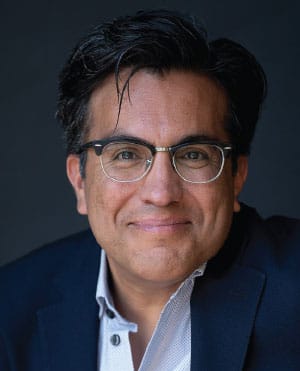
Ruben Valenzuela
Ruben Valenzuela is the founder and artistic director of Bach Collegium San Diego, one of the country’s leading ensembles for early music. As a conductor and keyboardist, he has led the ensemble in acclaimed performances of music from the Renaissance, early and high Baroque, Classical era, and 20th century. Under his leadership, BCSD has garnered national and international recognition for its virtuosic and stylistically informed performances of both iconic masterworks and lesser-known repertoire. Valenzuela and BCSD were honored with Early Music America’s 2023 Laurette Goldberg Award for outstanding achievement in early music engagement. In 2020, he received the Louis Botto Award for Innovative Action and Entrepreneurial Zeal from Chorus America.
With BCSD, Valenzuela has toured to Mexico City’s Festival Internacional del Órgano Barroco and Bolivia’s Festival Internacional de Música Renacentista y Barroca Misiones de Chiquitos. In 2024 he led BCSD in its European debut at Bachfest Leipzig in collaboration with the Pauliner Barockensemble, with additional performances in Arnstadt and Naumburg.
A sought-after guest director and keyboardist, Valenzuela has appeared with Bach Vespers at Holy Trinity, Bach at Emmanuel Church, Juilliard415, Washington Bach Consort, Seraphic Fire, Handel and Haydn Society, Philharmonia Baroque Orchestra & Chorale, Orchestra of St. Luke’s, and Yale Institute of Sacred Music, among others. These performances mark his San Francisco Symphony debut.
As a musicologist, Valenzuela has conducted research at Mexico City’s Archivo del Cabildo and the Centro Nacional de Investigación, Documentación e Información Musical. In 2016, he presented his work on Mexican religious iconography and basso continuo practices at the inaugural Historical Performance Institute at Indiana University’s Jacobs School of Music. Additional musical pursuits include a lifelong interest in Jamaican urban music from the 1950s and 1960s. He performs as a keyboardist with the Los Angeles–based bands the Trojanites and Western Standard Time Ska Orchestra, all of which are dedicated to the golden age of Jamaican music. Valenzuela holds a PhD in Musicology from Claremont Graduate University.

Lauren Snouffer
Soprano Lauren Snouffer debuts this season with Pittsburgh Opera in the title role of Orphée et Eurydice and returns to Houston Grand Opera as Magnolia Hawks in Show Boat. She reprises her portrayal of Bess McNeil in Missy Mazzoli’s Breaking the Waves for a debut at English National and in performances with the Netherlands Radio Philharmonic. Her concert appearances include Haydn’s Lord Nelson Mass with the St. Louis Symphony, Handel’s Messiah with the Minnesota Orchestra, and Haydn’s Die Jahreszeiten with Boston Baroque. Last season, Snouffer made her Metropolitan Opera debut as Sarah Kavalier in Mason Bates’s The Amazing Adventures of Kavalier and Clay and appeared as Stella Kowalski at Opera Theatre of Saint Louis’s production of André Previn’s A Streetcar Named Desire.
A Grammy Award-nominated artist, her recording catalogue includes Hasse’s Siroe and Handel’s Ottone with George Petrou for Decca, Gottschalk’s Requiem for the Living with Vladimir Lande on Novona Records, Grantham’s La cancíon desesperada conducted by Craig Hella Johnson on Harmonia Mundi, and Feldman’s Rothko Chapel with Steven Schick for ECM. Snouffer is an alumna of the Houston Grand Opera Studio and graduated from Rice University and the Juilliard School. She made her San Francisco Symphony debut in December 2016.
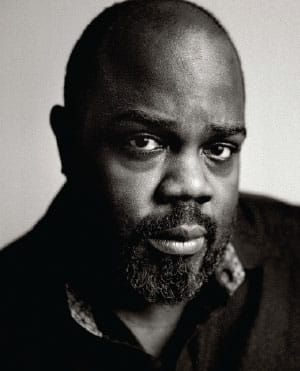
Reginald Mobley
Recent highlights for countertenor Reginald Mobley include debuts with Grant Park Music Festival and the Cleveland Orchestra. He has performed Messiah with the Houston Symphony, Pittsburgh Symphony, Academy of Ancient Music, Royal Liverpool Philharmonic, and on tour with Bach Collegium Japan. Additional performances have included J.S. Bach’s Passions and cantatas with Musica Angelica, Washington Bach Consort, Bach Collegium San Diego, Orchestra of St. Luke’s, Philharmonia Baroque Orchestra, and Dunedin Consort. He makes his San Francisco Symphony debut with these performances.
An advocate for diversity in music, Mobley became the first-ever programming consultant for the Handel and Haydn Society following several years of leading H+H in its community engagement concerts, Every Voice. He holds the position of visiting artist for diversity outreach with Apollo’s Fire and has served as artistic advisor at the Portland Baroque Orchestra. He is also leading a research project in the United Kingdom funded by the Arts & Humanities Research Council to uncover music by composers from diverse backgrounds, currently working on the music of Charles Ignatius Sancho. Mobley’s debut solo album Because released in June 2023 on Alpha Classics won both the Opus Klassik and the Edison Klassiek, while also garnering a Grammy Award nomination.
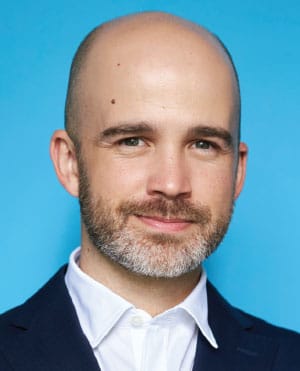
Zachary Wilder
American tenor Zachary Wilder collaborates regularly with renowned ensembles such as Pygmalion, L’Arpeggiata, Les Arts Florissants, Les Talens Lyriques, Le Concert d’Astrée, the Boston Early Music Festival, Bach Collegium Japan, the Monteverdi Choir and the English Baroque Soloists, the Handel and Haydn Society, the Nederlandse Bachvereniging, and the Nederlands Kamerkoor. He made his San Francisco Symphony debut in December 2016.
Recent highlights include Britten’s Serenade with Osmo Vänskä; a European tour with Pygmalion; Handel’s Alcina with Ensemble Artaserse in Paris, Montpellier, and Barcelona; revivals of La Calisto in Paris, Nantes, Angers, and Rennes; Mozart’s Requiem in Salzburg with Christina Pluhar; and Bach’s St. Matthew Passion (as the Evangelist) with Masato Suzuki and the Yomiuri Nippon Symphony Orchestra in Tokyo.
Wilder’s discography includes more than 40 recordings on labels such as Ricercar, CPO, Soli Deo Gloria, Harmonia Mundi, Glossa, Atma, La Música, and Aparté, under the direction of William Christie, John Eliot Gardiner, Masaaki Suzuki, Christophe Rousset, and Raphaël Pichon. His recital album Eternità d’amore was widely acclaimed and his first solo recording for Harmonia Mundi, Brooklyn Suite, was released in 2026.
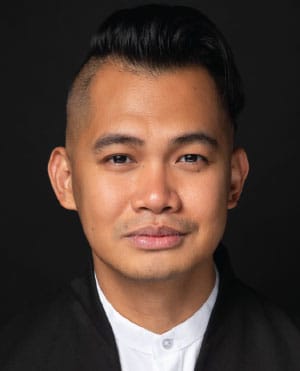
Enrico Lagasca
Filipino American bass-baritone Enrico Lagasca has built a career spanning over 100 oratorios, operatic roles, world premieres, and art song programs, captivating audiences across the United States and abroad. His voice can be heard on six Grammy-nominated recordings.
The 2026–27 season brings debuts with Colorado Bach Ensemble, Gotham Early Music Scene, Greenwich Symphony, Kollective366, Oregon Symphony, Philharmonia Baroque Orchestra, Seattle Symphony, and Symphony San Jose, alongside returns to Bachfest Leipzig, Chorus of Westerly, Concerts at St. Thomas, Harvard Choruses, and the Milwaukee Symphony. He makes his San Francisco Symphony debut with these performances. He also continues his work with longtime artistic collaborators, including Bach Collegium San Diego, the Choir of Trinity Wall Street, Conspirare, Santa Fe Desert Chorale, Seraphic Fire, Skylark, Spire, and Washington Bach Consort.
Lagasca’s recent solo engagements include appearances with the American Classical Orchestra, Ars Lyrica Houston, Baltimore Symphony, Boise Philharmonic, Experiential Orchestra, Musica Sacra New York, Nashville Symphony, NOVUS NY, Portland Baroque Orchestra, St. Louis Symphony, Tafelmusik, Toronto Symphony, University Musical Society, Voices of Ascension, and Winston-Salem Symphony, along with the 2026 Seattle Bach Festival and as resident soloist at the 2023 Carmel Bach Festival. Lagasca resides in New York City.
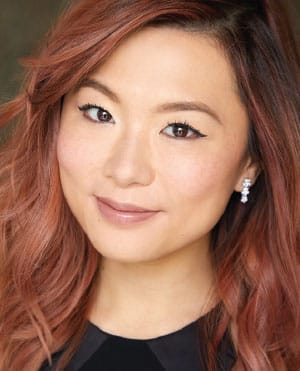
Jenny Wong
Jenny Wong is Chorus Director of the San Francisco Symphony and associate artistic director of the Los Angeles Master Chorale. Her conducting engagements have included the Los Angeles Philharmonic Green Umbrella Series, Los Angeles Opera Orchestra, Oregon Bach Festival, Long Beach Opera, Phoenix Chorale, and Gay Men’s Chorus of Los Angeles. In 2021, Wong was one of nine national recipients of Opera America’s inaugural Opera Grants for Women Stage Directors and Conductors.
As Chorus Director, Wong worked with Esa-Pekka Salonen and Michael Tilson Thomas, as well as numerous guest conductors. She has also prepared choruses for the Los Angeles Philharmonic and Chicago Symphony, working with conductors Gustavo Dudamel, Susanna Mälkki, Jonathan Cohen, and Osmo Vänskä, among many others. Wong led the SF Symphony Chorus for the Deutsche Grammophon recording of Kaija Saariaho’s Adriana Mater, which won the 2025 Grammy Award for Best Opera Recording, and helped prepare the Los Angeles Master Chorale for the Los Angeles Philharmonic’s recording of Mahler’s Symphony No. 8, which won the 2022 Grammy Award for Best Choral Performance. Together with Grant Gershon and the Los Angeles Master Chorale, Wong was also awarded the 2022 American Prize in Choral Performance.
Wong received her doctor of musical arts and master of music from the University of Southern California and an undergraduate degree in voice from the University of Illinois, Urbana-Champaign. She recently extended her contract as SF Symphony Chorus Director through the 2028–29 season.
San Francisco Symphony Chorus
The San Francisco Symphony Chorus was established in 1973 at the request of Seiji Ozawa, then the Symphony’s Music Director. The Chorus, numbering 32 professional and more than 120 volunteer members, now performs more than 26 concerts each season. Louis Magor served as the Chorus’s director during its first decade. In 1982 Margaret Hillis assumed the ensemble’s leadership, and the following year Vance George was named Chorus Director, serving through 2005–06. Ragnar Bohlin concluded his tenure as Chorus Director in 2021, a post he had held since 2007. Jenny Wong was named Chorus Director in September 2023.
The Chorus can be heard on many acclaimed San Francisco Symphony recordings and has received Grammy Awards for Best Performance of a Choral Work (for Orff’s Carmina burana, Brahms’s A German Requiem, and Mahler’s Symphony No. 8), Best Classical Album (for a Stravinsky collection and for Mahler’s Symphony No. 3 and Symphony No. 8), and most recently Best Opera Recording (for Saariaho’s Adriana Mater).
Lead support for the San Francisco Symphony Chorus
this season was provided by Peter G. Neumann.
To learn more about supporting the San Francisco Symphony Chorus Fund, please contact Jay Auslander, Director of Legacy Giving, at 415.503.5404 or jauslander@sfsymphony.org.
Benjamin Pesetsky is Associate Director of Editorial and Inside Music Talks for the San Francisco Symphony and has written program notes for the St. Louis Symphony, Philadelphia Orchestra, and Melbourne Symphony. He holds degrees in composition and philosophy from Bard College Conservatory and Bard College, and previously served on the staff of the Handel and Haydn Society in Boston, which gave the American premiere of Messiah
in 1818.
San Francisco Symphony Chorus
SOPRANOS
Alexis Wong Baird
Morgan Balfour*
Arlene Boyd
Olivia T. Brown
Cheryl Cain*
Sara Chalk
Phoebe Chee*
Tonia D’Amelio*
Camryn Finn*
Cara Gabrielson*
Kyounghee Lee
Ellen Leslie*
Jennifer Mitchell*
Elizabeth L. Susskind
Cristina Villalobos
Zhangguanglu Wang
Lauren Wilbanks
ALTOS
Carolyn Alexander
Marina Davis*
Amy L. Hespenheide
Emily (Yixuan) Huang
Kelsey M. Ishimatsu Jacobson
Hilary Jenson
Cathleen Josaitis
Gretchen Klein
Katherine M. Lilly
Margaret (Peg) Lisi*
Brielle Marina Neilson*
Kimberly J. Orbik
Leandra Ramm*
Celeste Riepe
Meghan Spyker*
Hilary W. Stevenson
Kyle S. Tingzon*
Makiko Ueda
Merilyn Telle Vaughn*
Heidi L. Waterman*
Michelle Zheng
TENORS
Paul Angelo
Seth Brenzel*
Thomas L. Ellison
Kevin Gibbs*
Kevin Gino*
Michael Jankosky*
Alec Jeong
James Lee
Benjamin Liupaogo*
Joachim Luis*
Emilio Peña*
Chester Pidduck*
Tim Silva*
Jack Wilkins*
Jakob Zwiener
BASSES
Simon Barrad*
Phil Buonadonna
Robert Calvert
Adam Cole*
James Radcliffe Cowing III
John Fulton*
Malcolm Gaines
Harlan Hays*
Vasco Hexel
Rob Lloyd Huber
Ifan Jenkin
Tim Marson
Hugo Mendel
Clayton Moser*
Julian Nesbitt
Bradley C. Parese
Chung-Wai Soong*
Storm K. Staley
David Varnum*
Julia Vetter
Nick Volkert*
Jenny Wong
Chorus Director
John Wilson
Marika Yasuda
Rehearsal Accompanists