In This Program
The Concert
Wednesday, June 3, 2026, at 7:30pm
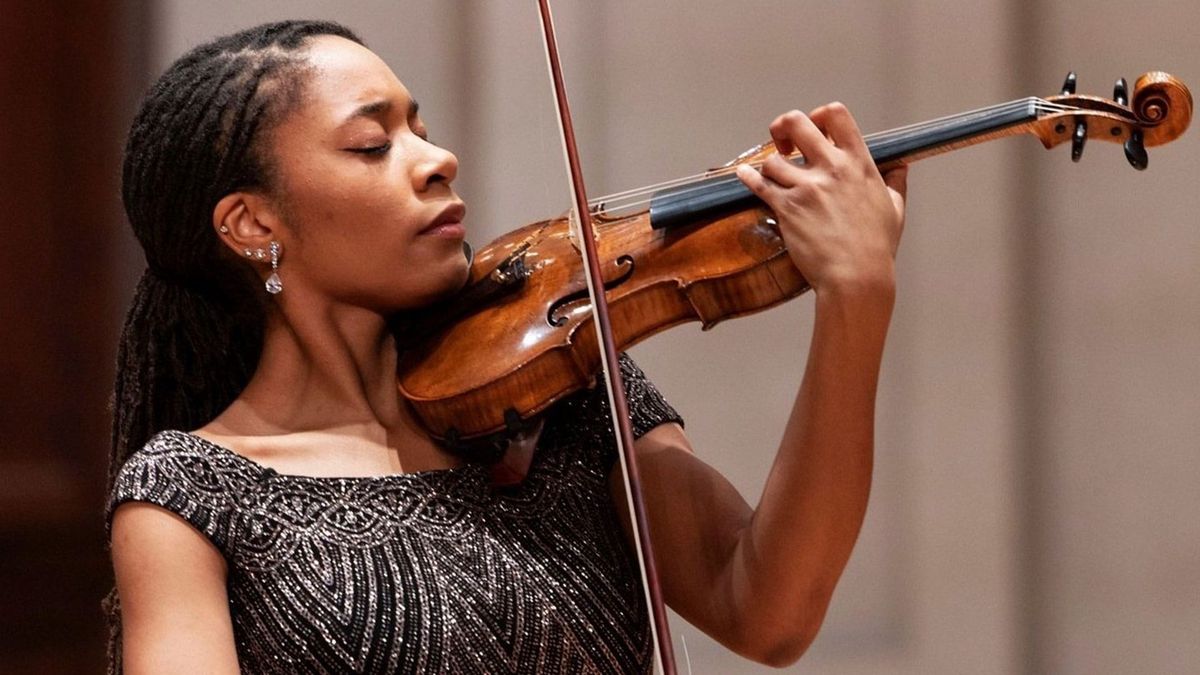
Njioma Grevious violin
Andrew Goodridge piano
Johann Sebastian Bach
Grave from Violin Sonata No. 2 in A minor, BWV 1003 (1720)
Electra Perivolaris
Within the drifting contours of the land… (2025)
Johannes Brahms
Scherzo in C minor, WoO 2, from F-A-E Sonata (1853)
Olivier Messiaen
Theme and Variations (1932)
Thème–Modéré
Variation–Modéré
Variation–Un peu moins modéré
Variation–Modéré, avec éclat
Variation–Vif et passionné
Variation–Très modéré
Clarence Cameron White
Levee Dance (1927)
Sergei Prokofiev
Violin Sonata No. 2 in D major, Opus 94a (1943)
Moderato
Scherzo (Presto)
Andante
Allegro con brio
This program is performed without intermission.
The Concert
Grave from Violin Sonata No. 2 in A minor, BWV 1003
Johann Sebastian Bach
Born: March 21, 1685, in Eisenach, Germany
Died: July 28, 1750, in Leipzig
Work Composed: 1720
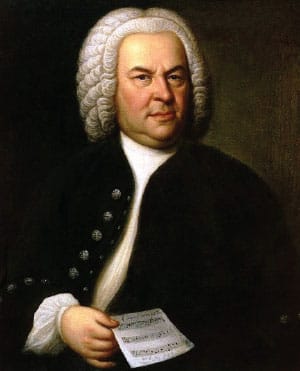
Johann Sebastian Bach was acclaimed as one of the supreme keyboard virtuosos of his time, but he was also a highly skilled violinist. His son Carl Philipp Emanuel, responding to a biographical query in 1774, recalled: “From his youth up to fairly old age he played the violin purely and with a penetrating tone and thus kept the orchestra in top form, much better than he could have from the harpsichord. He completely understood the possibilities of all stringed instruments. His solos for violin and cello without bass bear witness to this.”
His six works for unaccompanied violin stand at the summit of the instrument’s repertoire. He called three of the pieces sonatas, three “partias” (an antiquated German term that is today usually modernized to “partitas”). He inscribed the date 1720 on the score of the collection, at which time he was midway through his term as music director at the court of Anhalt in Cöthen, 70 miles southwest of Berlin. We don’t know for whom he composed these works, but whoever played them must have been a virtuoso of exorbitant abilities, capable of negotiating the formidable technical demands of multiple stops, which Bach employs lavishly to express rich polyphonic textures. To a large extent, this draws on the soloist’s mastery of the art of illusion. The violin is at heart a melody instrument, and although it has four strings and is therefore physically capable of sounding more than one note at once, it can do so only within rather strict limits. In Bach’s unaccompanied violin works the listener perceives a web of counterpoint that is sometimes only suggested or implied in the musical score. The sonatas are cast in a four-movement structure (slow-fast-slow-fast)—in the case of the A-minor Sonata, the sequence of Grave, Fuga, Andante, and Allegro.
Within the drifting contours of the land…
Electra Perivolaris
Born: 1996, in Scotland
Work Composed: 2025
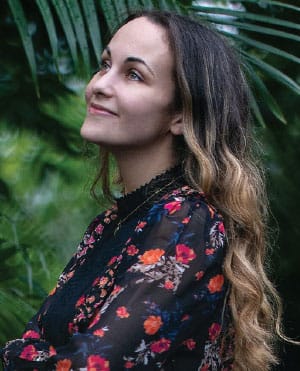
A graduate of the Royal Conservatoire of Scotland and the Royal Academy of Music in London, Electra Perivolaris is pursuing her doctorate at the University of Oxford. Her music draws inspiration from her mixed Scottish and Greek island heritages, focusing on the natural world as a fragile living organism and engaging with natural processes from her home on the Scottish Isle of Arran and from her family’s roots on the Greek Aegean island of Chios.
In an interview with the Scottish new-music incubator sound, she stated:
I write contemporary classical music, for instruments and voices, which takes inspiration from diverse folk and world musics, especially Scottish traditional music and Gaelic singing. My music often incorporates other elements, such as text, film and recorded sound to reflect on the natural world and our place within it.... I am inspired by landscape and nature (especially around my home in the West of Scotland), and most of my music depicts physical landscapes or more abstract emotional, inner landscapes. Over the past few years, I have drawn inspiration from ecology and changes in the natural world, often using music as a way of portraying both the connection that we can feel to particular spaces and places in nature, but also the impact that humans are having on the natural world.
She was a Royal Philharmonic Society Composer from 2022–23 and the inaugural Young Classical Artists Trust (YCAT) Composer Fellow from 2024–25. Within the drifting contours of the land... was the second work she composed as a YCAT fellow, and she and Njioma Grevious premiered it at London’s Wigmore Hall in April of last year.
Scherzo in C minor, from F-A-E Sonata for Violin and Piano, WoO 2
Johannes Brahms
Born: May 7, 1833, in Hamburg
Died: April 3, 1897, in Vienna
Work Composed: 1853
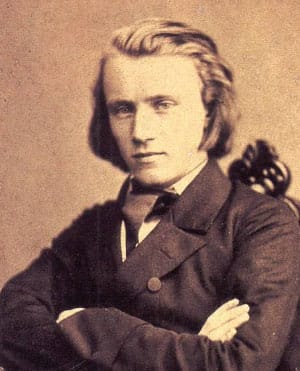
On September 30, 1853, the 20-year-old Johannes Brahms appeared unannounced on the Düsseldorf doorstep of Robert and Clara Schumann. They had been apprised of him by the violinist Joseph Joachim, who seems to have crossed paths with everyone in musical Germany. Brahms grew enamored of the couple and they of him. He was warmly accepted by their friends, including the composer Albert Dietrich, who became Brahms’s regular breakfast companion. That fall Schumann published an effusive article that acclaimed Brahms as a sort of musical Messiah, “destined to give ideal presentation to the highest expression of the time.” On the very day the article appeared, Joachim showed up to pay a surprise visit to the Schumanns and Brahms.
After Joachim left, Schumann proposed a genial idea: Brahms and Dietrich should join him in composing a collaborative violin sonata to present as a gift to Joachim when he returned to town. Dietrich would compose the opening movement, Schumann would write the second movement (an intermezzo) as well as the finale, and Brahms would supply the third movement (a scherzo). Each composer was to employ the melodic motif F-A-E, a musical encoding of Joachim’s personal motto, “Frei aber einsam” (Free but lonely).
The F-A-E Sonata is in A minor overall, but Brahms’s scherzo provides contrast by being set in C minor. This happened to be the key of Beethoven’s Fifth Symphony, a piece admired by the assembled company, and Brahms underscored the connection by using the famous “Fate Knocking at the Door” motif from that work as a principal motif. Even though Brahms was near the beginning of his composing career, this movement displays some of his distinctive fingerprints, with its driving, blustery energy, its richly packed piano part, and its spacious, confident melodies.
Theme and Variations
Olivier Messiaen
Born: December 10, 1908, in Avignon, France
Died: April 27, 1992, in Clichy, France
Work Composed: 1932
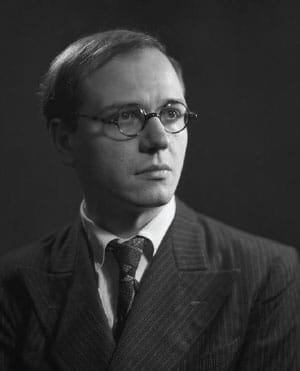
In 1931, the year after he graduated from the Paris Conservatory, Olivier Messiaen was named organist at the Église de la Trinité in the Ninth Arrondissement of Paris, where he would reign over the Cavaillé-Coll instrument in the loft for the rest of his life. He would become a composer of idiosyncratic bent, achieving works—often drenched in theological implications—that combine emotional depth with fascination for technical details (most astonishingly in the often-neglected area of rhythm), yet working in a modernist language that, notwithstanding its complexity, did not prove bewildering or off-putting to the general listener. But that development occurred after the composition of his Theme and Variations for violin and piano, one of his few chamber works. He wrote it in 1932 on the heels of his marriage to Claire Delbos, a violinist and fellow composer; the two of them premiered it in Paris that year.
Although the Theme and Variations is among his least characteristic works, it is nonetheless a fine piece and a welcome (if rarely programmed) item in the violinist’s repertoire. It would make an excellent “stumper” to challenge your music-loving friends who know everything: unless they are already familiar with this piece, they won’t guess its author. Messiaen’s later music usually unrolled in extended rhapsodies, and he was all but allergic to composing in classical forms. This work, however, adheres to traditional variation methodology. After the quiet statement of the theme, the piece moves through four variations of incrementally increasing vigor and passion, the marvelous fourth variation sounding surprisingly “machine-age” for so spiritually inclined a composer. Then arrives the fifth variation, suddenly relaxed and expansive, with the violin intoning the principal theme unaltered though an octave higher than it had been introduced—“heavenward,” the composer might have thought—now against rich, steadily recurring piano chords.
Levee Dance
Clarence Cameron White
Born: August 10, 1879/80, in Clarksville, Tennessee
Died: June 30, 1960, in New York
Work Composed: 1927
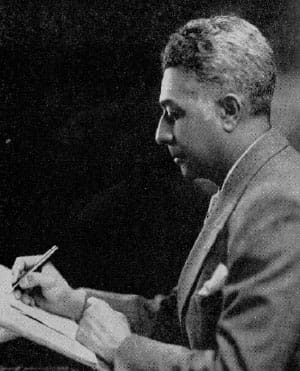
Clarence Cameron White did much of his growing up in Oberlin, Ohio, where his grandparents lived and both his parents had gone to college. When he was six, he heard Handel’s Messiah performed at Oberlin Conservatory, and his repeating passages of it after one hearing inspired his family to start him with music lessons. He recalled: “My grandfather pouted, ‘I’ll give him the violin. But if he ever plays at a dance, I’ll take it back.’” As a teenager he joined his mother in Washington, DC, and studied for a year at Howard University before transferring to Oberlin Conservatory. During his fourth year, he earned money by playing in a dance band, notwithstanding his grandfather’s prohibition. “In order to ease my conscience ... I refused to play first violin.”
He wrangled an invitation to play for President McKinley back in Washington, appeared as a violinist in a New York concert that also featured baritone Harry T. Burleigh and poet Paul Laurence Dunbar, and steadily built a concert career, returning to Oberlin during the summers to prepare repertoire. He went to London to study composition with the Black British composer Samuel Coleridge-Taylor. From 1922–24 he served as president of the National Association of Negro Musicians and in 1932 succeeded R. Nathaniel Dett as head of music at the Hampton Institute and director of the Hampton Singers. He published nearly 100 compositions, including Ouanga (an opera about Haitian life, premiered in 1949), the ballet A Night in Sans Souci (1929, also on a Haitian subject), and violin solos that were programmed by the likes of Fritz Kreisler, Albert Spalding, and Jascha Heifetz. Levee Dance is characteristic of his violin miniatures, drawing on sounds of African American popular and traditional music, even quoting the spiritual “Go Down, Moses” in its middle section.
Violin Sonata No. 2 in D major, Opus 94a
Sergei Prokofiev
Born: April 23, 1891, in Sontsovka, Ukraine
Died: March 5, 1953, in Moscow
Work Composed: 1942/43
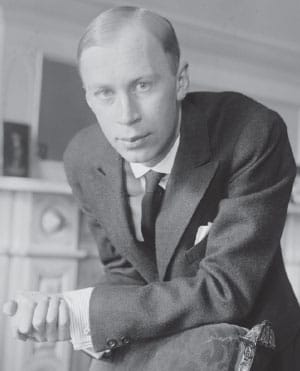
Sergei Prokofiev’s Second Violin Sonata is a re-working of his Sonata for Flute and Piano, which he had composed during World War II while displaced to Alma-Ata, 2,000 miles from Moscow and only 150 from the Chinese border. He was busy working with director Sergei Eisenstein on the film Ivan the Terrible, but on October 3, 1942, he wrote to his friend Nicolai Myaskovsky: “Film work is intriguing, provides a good source of income and doesn’t require creative over-exertion, and Alma-Ata is a pleasant city with plenty of money around. Besides films, I am writing a small dramatic cantata and have asked Moscow for a commission for a sonata for flute and piano. Not exactly timely, but pleasant.” His goal, he said, was to create a piece that would “sound in bright and transparent classical tones,” and he followed Classical-era forms throughout. The piece was premiered in late 1943, in Moscow, by the flutist Nicolai Kharkovsky and the pianist Sviatoslav Richter, who spoke of the piece with affection: “We later played it at concerts together, and it was always a great success.”
In March 1954, a year after Prokofiev’s death, the violinist David Oistrakh reported in a memorial essay: “When I first heard his Sonata for Flute, shortly after it was written, it occurred to me that it would sound very well on the violin.... I approached the composer with the suggestion that he write a violin version of it.... He asked me to make two or three versions of each passage in the score that required editing, numbering each one carefully. As I submitted the pages to him, he marked the version he considered suitable and made a few pencil corrections here and there. Thus in no time the violin version of the sonata was ready.”
—James M. Keller
Program Notes
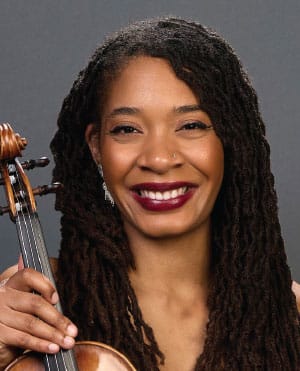
Njioma Grevious
Njioma Chinyere Grevious recently debuted with the Brussels Philharmonic at Amsterdam’s Concertgebouw, at Carnegie Hall with the Sphinx Virtuosi, and at Wigmore Hall. She has given recitals across the United States, including at the Seattle Chamber Music Society, Cal Performances, Strathmore Mansion, Mesa Arts Center, and Pepperdine’s Wengler Center for the Arts. As the Chicago Philharmonic’s inaugural artist in residence, she is a featured soloist over three years and mentors Chicago-area children. She has also appeared with the Boston Pops and Minnesota Orchestra.
Grevious is a winner of the 2024 Avery Fisher Career Grant and is a graduate of the Juilliard School, where she was awarded the John Erskine Prize for scholastic and artistic achievement. In 2023, she won the Robert F. Smith First Prize and audience choice award in the senior division of the Sphinx Competition as well as the grand prize of the Concert Artist Guild and Young Classical Artists Trust competitions.
As a founding member of the Abeo Quartet, Grevious was a fellow in the inaugural graduate string quartet program at the University of Delaware, and performed at Alice Tully Hall and the Kennedy Center. In 2024, she became a member of the Orpheus Chamber Orchestra.
Grevious began her violin studies at age four and became a scholarship recipient through Boston’s Project STEP string training program for Black and Latino youth. She is the recipient of an outstanding violin by Pietro Guarneri of Mantua, ca. 1679, on generous loan from the Stradivari Society. She makes her debut at the San Francisco Symphony with this recital.
Andrew Goodridge
Andrew Goodridge has performed with violinists James Buswell, Arturo Delmoni, Roman Totenberg, and Scott Yoo, as well as with members of the Orpheus Chamber Orchestra, Minnesota Orchestra, New York Philharmonic, and Boston Symphony. He has performed in master classes given by vocalists Elly Ameling and Sherrill Milnes and has performed continuo under conductors Michael Beattie and Craig Smith.
Goodridge has been on the faculty at the New England Conservatory Preparatory School since 2006 and has also taught at the University of Massachusetts Lowell, Cambridge Center for Adult Education, New England Conservatory School of Adult Education, and Project STEP. He makes his debut at the San Francisco Symphony with this recital.