In This Program
The Concert
Friday, April 17, 2026, at 7:30pm
Saturday, April 18, 2026, at 7:30pm
Sunday, April 19, 2026, at 2:00pm
Inside Music Talk with Laura Stanfield Prichard
On stage Friday and Saturday at 6:30pm, Sunday at 1:00pm
Simone Young conducting
Ella Macens
The Space Between Stars (2017)
First San Francisco Symphony Performances
Camille Saint-Saëns
Cello Concerto No. 1 in A minor, Opus 33 (1872)
Allegro non troppo–
Allegretto con moto–
Tempo primo
Gautier Capuçon
Intermission
Richard Wagner
Music from Der Ring des Nibelungen (1869–76)
From Das Rheingold
Prelude
Scene
Finale, Entry of the Gods into Valhalla
From Die Walküre
Ride of the Valkyries
Siegfried Idyll
From Götterdämmerung
Dawn and Siegfried’s Rhine Journey
Siegfried’s Death and Funeral Music
Epilogue
These concerts are presented in honor of the San Francisco Symphony Life Governors in gratitude for their incredible years of service.
Inside Music Talks are supported in memory of Horacio Rodriguez.
Program Notes
At a Glance
Opening the program is a serene orchestral piece, The Space Between Stars, by Ella Macens, an Australian composer whom Young has championed. Macens memorializes her grandfather as part of a meditation on the night sky.
Completing the first half, Gautier Capuçon plays Camille Saint-Saëns’s Cello Concerto No. 1—a flashy, impassioned work full of sonic surprises.
The Space Between Stars
Ella Macens
Born: January 5, 1991, in Sydney
Work Composed: 2017
First SF Symphony Performances
Instrumentation: 2 flutes (2nd doubling piccolo), oboe, English horn, 2 clarinets, bassoon, contrabassoon, 4 horns, 2 trumpets, 3 trombones, tuba, timpani, percussion (triangle, suspended cymbals, bass drum, tubular bells, and vibraphone), harp, and strings
Duration: About 12 minutes
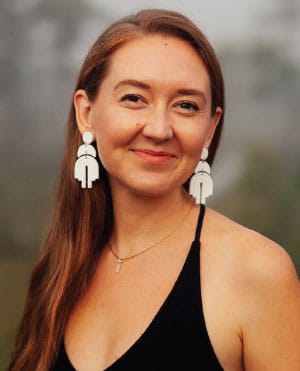
Ella Macens grew up in a vibrant Latvian Australian community, surrounded by Baltic folk and choral music. She draws on the lyricism of these styles, inflecting it with both the ethereality of “holy minimalist” composers like Pēteris Vasks and Arvo Pärt, as well as a plain-spoken accessibility drawn from the works of singer-songwriters Missy Higgins and Regina Spektor.
Since graduating from the Sydney Conservatorium of Music, where she now teaches, Macens has become one of Australia’s leading young composers, with commissions from the Sydney Symphony and Melbourne Symphony. She has held composer residencies with the Australian Haydn Ensemble, Sydney Youth Orchestra, Sydney Children’s Choir, Trinity Grammar School, International Grammar School, and Presbyterian Ladies’ College in Sydney.
The Music
Macens wrote The Space Between Stars for a workshop with the Tasmanian Symphony in conjunction with the Sydney Conservatorium’s inaugural National Women Composers’ Development Program. It was later selected by Simone Young for the Sydney Symphony’s first-ever People’s Choice Concert in 2022, and has also been recorded by the Sydney Symphony.
The piece was written in memory of Macens’s grandfather Artūrs and examines the human tendency to envision the departed among the heavens. Macens writes:
When I began composing this work, I imagined the listener laying in an open field, the Earth in total stillness. I imagined them gazing up at the night sky, watching as it glowed with millions of bright shining stars. I pondered the questions: What is the space between stars? Is this space empty? Is this space silent? Could this space be charged with the energy of those who are no longer with us?
The scene fills in gradually at first. From a quiet C-minor chord outlined in the strings, Macens begins to add color—tremolos across the strings and harp plucks which mimic faint lights of stars, and sustained harmonies that give way only under groaning glissandos (slides), which evoke the vast tracts of darkness between them. It is expansive in scope, unhurried but always roving.
After the harp finds a motoric figure, a melody blooms in the flutes. Trombones, cellos, violins, and trumpets—nearly every section of the orchestra then has its melodic moment in the light against lushly orchestrated harmonies. But it is the bassoons and then oboes that shine the longest, leading the orchestra through swells and recessions of nostalgic longing.
In a moment of stillness, the oboe hands the melodic line to the concertmaster—the solo violin spirals downward towards a valley from which the piece’s emotional peak builds. At the summit, harmonies—pentatonic and consonant—turn grief-stricken, yearning, and restless.
After a slow cascade downward, grave solos in the brass echo across a newfound quiet. The ensemble manages one final exhortation to the heavens before dissipating in a thunder of low frequencies (bass drum, timpani, and double basses)—perhaps the universe’s ceaseless and omnipresent vibration.
—Lev Mamuya
Cello Concerto No. 1 in A minor, Opus 33
Camille Saint-Saëns
Born: October 9, 1835, in Paris
Died: December 16, 1921, in Algiers
Work Composed: 1872
SF Symphony Performances: First—March 1917. Alfred Hertz conducted with Horace Britt as soloist. Most recent—May 2018. Stéphane Denève conducted with Gautier Capuçon as soloist.
Instrumentation: solo cello, 2 flutes, 2 oboes, 2 clarinets, 2 bassoons, 2 horns, 2 trumpets, timpani, and strings
Duration: About 20 minutes
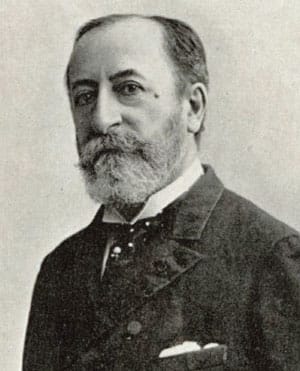
Camille Saint-Saëns was a pivotal figure in 19th-century French music. Writing in 1915, the British critic D.C. Parker remarked, “he is the most important link between the old world of Rossini … and the new one of the present decade … when Debussy, Erik Satie, and Ravel are famous names.”
Born in Paris in 1835, Saint-Saëns was raised by his mother and an aunt following the death of his father within two months of his birth. Introduced to the piano at two-and-a-half years old (in Saint-Saëns’s telling), he showed prodigious talent as a pianist and composer. He entered the Paris Conservatory at 14—his first symphony was complete by the age of 17.
But it was the renown he found as an organist which would define his early career. By 1858, he had become the organist of La Madeleine, the fashionable and musically important Parisian church, and Franz Liszt declared him the greatest living organist. Liszt’s support would later lead to the 1877 production of Saint-Saëns’s opera Samson and Delilah, which propelled him to a new level of fame.
But his period of peak visibility was marred by strife. An 1875 marriage (in spite, according to scholar Jessica Duchen, of his homosexuality) bore two children who died in infancy—Saint-Saëns would disappear from an 1881 vacation with his wife, whom he unfairly blamed for the deaths, effectively dissolving their marriage. After years marked by travel in Europe and North Africa, he was seen as a traditionalist by the turn of the 20th century. In a 1917 polemic, French music critic G. Jean-Aubry remarks sardonically, “Saint-Saëns … has lived so long at Cairo or in the Azores that he may well be unaware of what has taken place in France.” He passed away in 1921 in Algeria, a favorite retreat from which he worked on many of his most enduring works.
The Music
Saint-Saëns’s Cello Concerto No. 1 is a defining piece of the cello repertoire, full of virtuosity and drama. But despite the concerto’s popularity, its compact form is full of oddities—its single movement, though divided into sections reminiscent of the traditional concerto form, is built around themes that return periodically throughout each section.
The opening Allegro non troppo is quickly off to the races, with the cello articulating the concerto’s dominant theme: a descending triplet figure which recurs across the work, here voiced as a defiant declamation. The theme cools, taken over by the flutes as the cello sings a lyrical countermelody, before intensifying again.
The chromaticism of the opening music then turns to rhapsody in the solo cello’s grasp before Saint-Saëns introduces a second theme—a nostalgic, sentimental melody in duet with the orchestral strings. But the flutes bring back the initial idea just as quickly and swing the ensemble into a stormy development capped by a fit of virtuosity from the soloist.
Returning to the primary thematic material—this time with a roving aspect—the cello builds tension until a clangorous tutti. After a brief, yawning return to the second theme, the piece proceeds into its second main section.
The Allegretto is a Nutcracker-esque waltz in miniature. The theme, introduced in the winds, is soon answered by sighing figures from the violins. The solo cellist begins to slot descant figures around the margins before stating the melody itself. The winds take up the sighing figure as an interrogative, galvanizing the cello line toward a moment of fantasy, only for it to dissolve into trilling filigree as the winds adopt the waltz once more.
The section concludes with final statements of its theme—at its most heartfelt and lyrical—from the cello. But just as this music winds down completely, the flutes return with the concerto’s opening music like a cooling wind.
After tutti and solo restatements of the first section’s main idea (both in its original form and as a loping, syncopated melody), the orchestra launches into the material which defines the finale section: an upright and heraldic dotted figure undergirded by running 16th notes. As the cello jumps in with maniacal fervor, motives recur and disappear at breakneck pace. They continue to stud the accompaniment as Saint-Saëns introduces one last melody, full of expressive warmth in the rich depths of cello’s range.
The novel interlude is, however, brief as both the running 16th notes and the material from the opening Allegro non troppo quickly reassert themselves. Saint-Saëns compresses this defining material harmonically to a point of maximal tension, before the solo cello leads the orchestra in an exuberant closing theme.
—L.M.
Music from Der Ring des Nibelungen
Richard Wagner
(Ed. Simone Young)
Born: May 22, 1813, in Leipzig
Died: February 13, 1883, in Venice
Work Composed: 1869–76
SF Symphony Performances: First performance of music from the Ring Cycle—January 1912. Henry Hadley conducted “Wotan’s Farewell and Magic Fire Music” from Die Walküre. Most recent—November 2019. Simone Young conducted Act I of Die Walküre with Emily Magee, Stuart Skelton, and Ain Anger as soloists. (Michael Tilson Thomas conducted Siegfried Idyll in January 2020.)
Instrumentation: 3 flutes, piccolo, 3 oboes, English horn, 3 clarinets, bass clarinet, 3 bassoons, 4 horns, 4 Wagner tubas, 3 trumpets, bass trumpet, 4 trombones, tuba, timpani, percussion (triangle, cymbals, snare drum, tenor drum, glockenspiel), 4 harps, and strings
Duration: About 65 minutes
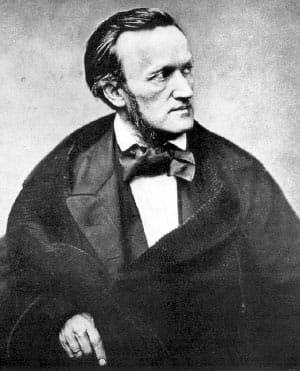
Richard Wagner possessed a singular gift for transforming mythological narratives into vehicles for his artistic and philosophical preoccupations. He pursued this on an unprecedentedly ambitious scale in his four-opera cycle about the struggle between love and power, Der Ring des Nibelungen (The Ring of the Nibelung).
Those preoccupations extended beyond music and drama to encompass philosophy and the role of art as an agent of social transformation. Wagner—who always wrote his own librettos along with the music—rendered the disparate mythic sources he drew from into a personalized mythology, weaving them together into a single, coherent dramatic and musical conception.
The emotional immediacy of the Ring’s characters and the urgency of their conflicts encourage audiences to read their own concerns into the work. Much of the cycle’s power derives from the multifaceted spell it casts, mirroring questions about human psychology, society, and the environment—or simply feeding our desire for a riveting tale.
The Ring originated in a period of revolution in the late 1840s, when Wagner, then music director at the Dresden Court Opera, became actively involved in political uprisings sweeping across Europe. When the revolutions failed, he fled into exile in Switzerland in 1849, channeling this frustrated political-social fervor into visions of artistic revolution.
In its early stages, Wagner planned a single grand opera centered on Siegfried, the fearless hero whose death forms the climax of the cycle. As the project expanded, the Valkyrie Brünnhilde became the moral center of the drama, assuming an increasingly central role, and so too did the chief god Wotan, her father, whose quest for power sets the larger action in motion. Wagner fused this disparate material into a dramatic design grounded in ancient Germanic and Scandinavian myth and refracted through his idiosyncratic imagination.
To ensure that Siegfried’s betrayal and death would have their full dramatic impact, Wagner realized that the events leading to this climactic moment needed to be dramatized rather than merely recounted. The project expanded into a cycle of four operas intended to unfold over the course of a week: Das Rheingold, conceived as a preliminary evening; Die Walküre, introducing Siegfried’s parents and Brünnhilde; Siegfried, recounting the hero’s youthful exploits; and Götterdämmerung, the culminating tragedy.
Wagner completed the librettos by 1853, though the music was not finished until 1874. Such a long gestation inevitably left its mark on the Ring’s philosophical outlook. What began with the revolutionary optimism of the late 1840s—Siegfried as a liberating hero whose sacrifice would sweep away a corrupt divine order—gradually gave way to cosmic pessimism, embodied in Wotan’s renunciation and the gods’ inexorable downfall.
The complete Ring unfolds over some 15 to 16 hours in performance. Yet Wagner embedded so much of the drama in the orchestra that extended passages of the cycle can stand on their own in the concert hall, and orchestral excerpts have been heard there since Wagner’s own time. Simone Young’s sequence runs from the Das Rheingold Prelude, where Wagner imagines the birth of time itself, to the blazing destruction of Valhalla and Brünnhilde’s sacrifice at the end of Götterdämmerung.
One unexpected choice comes along the way: the insertion of the Siegfried Idyll in place of music from the opera Siegfried itself. Wagner composed the Idyll in 1870 as an intimate birthday gift for his wife, Cosima. Though conceived as a self-contained concert work, it draws on themes he had written for the love duet between Siegfried and Brünnhilde in the opera’s third act.
The Music
The Prelude to Das Rheingold emerges from a low E-flat sustained in the double basses, a stasis from which Wagner gradually unfolds a musical genesis. Out of this primordial sonority, the orchestra traces a scene of primal innocence. Young continues with a large portion of the first scene, where the Rhinemaidens admire the gleaming Rhinegold they are meant to guard, but foolishly tell the intruding Nibelung (dwarf) Alberich that it can be forged into an all-powerful ring by renouncing love.
After Alberich seizes it for that purpose, the music grows turbulent and churning. From this turmoil emerges the hymn-like Valhalla motif in the horns and brass, the emblem of the fortress newly built for the gods. Wagner allows us to hear the motif of the Ring itself evolve into this new idea, revealing the hidden kinship between the power Alberich seizes and the basis of Wotan’s authority.
The suite then segues to the end of Das Rheingold, where the gods at last enter Valhalla across a rainbow bridge. Wagner stages the moment with magnificent pomp and ceremony. Yet the grandeur is deeply ironic, for the terrible cost of this triumph has already been revealed over the course of the drama.
The electrifying Ride of the Valkyries from Die Walküre bursts forth with frenzied energy. Fanfare-like brass figures and swirling orchestral textures accompany the warrior maidens as they sweep through the sky on their flying horses, gathering fallen heroes for Wotan’s fortress of Valhalla and sounding their battle cries. The scene forms the turbulent prelude to the opera’s final act, culminating in Wotan’s confrontation with and punishment of his daughter Brünnhilde.
Young then turns to the Siegfried Idyll, which draws on motifs Wagner introduces in the third act of Siegfried during the long love duet after Siegfried awakens Brünnhilde. Against a lullaby-like atmosphere, the strings introduce a warm melody in E major as part of a loosely sonata-like design. Alongside it appear fragments of a folk-like tune and the birdsong from the Forest Murmurs scene in Siegfried’s second act. A descending figure is associated with Brünnhilde’s enchanted sleep, surrounded by the protective ring of fire through which Siegfried has just passed. In this intimate setting, themes linked to heroic destiny and mythic conflict are transformed into a moment of repose.
The final selections turn to Götterdämmerung. Dawn sets the scene on the morning after the passionate union that concluded the previous opera, as Siegfried and Brünnhilde continue their love duet. Siegfried’s Rhine Journey launches the hero on what will prove to be his fateful final adventure. Though these passages serve a pragmatic function in the opera house, accompanying changes of scenery onstage, they unfold with the expressive depth of miniature tone poems, tracing the emergence of the two lovers into their newly realized identities.
As the Rhine Journey darkens, it leads directly into the climactic moment that first inspired Wagner’s conception of the Ring: Siegfried’s Funeral March from the third act. As the fallen hero is borne away in a procession, Wagner’s network of leitmotifs fashions a kind of heroic shield on which the story of Siegfried is inscribed: the tragic fate of his parents, the promise of the sword, the fearless vitality of the young hero, and the love he shared all too briefly with Brünnhilde. Wagner’s ingenious interweaving of these motifs allows the orchestra itself to relive the drama, forming a powerful symphonic narrative that memorializes the hero.
On an even grander scale, the same technique shapes the closing moments of Brünnhilde’s Immolation Scene and the conclusion of the Ring. Brünnhilde calls for Siegfried’s funeral pyre to be lit and bids a defiant farewell before riding sacrificially into the flames. The orchestra is given the final say as it gathers the cycle’s web of leitmotifs into a vast symphonic synthesis depicting the collapse of Valhalla and the old order. In the closing pages, the music clears the way for the radiant theme associated with the redeeming power of love.
—Thomas May
About the Artists
Simone Young
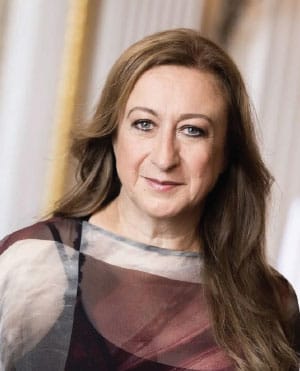
Simone Young has served as chief conductor of the Sydney Symphony since 2022, where her current projects include a concert cycle of Wagner’s Ring. In 2024, she made her Bayreuth Festival debut and has returned in 2025 to conduct complete Ring cycles. From 2005 to 2015, she was artistic director of the Hamburg State Opera and general music director of the Hamburg Philharmonic. Earlier positions included chief conductor of the Bergen Philharmonic and artistic director of Opera Australia.
Recent and upcoming engagements include György Kurtág’s Fin de partie at the Vienna State Opera, Lohengrin at the Berlin State Opera, and David McVicar’s new Ring production at La Scala. This season, she also conducts the NDR Elbphilharmonie, Orchestre de la Suisse Romande, WDR Symphony, Orchestre Philharmonique de Radio France, Berlin Radio Symphony, Los Angeles Philharmonic, and Montreal Symphony.
From the beginning of her career, Simone Young gained international recognition as a leading interpreter of Wagner and Strauss. She conducted full Ring cycles at the Vienna State Opera, Berlin State Opera, and Hamburg State Opera. Her engagements have taken her to the Paris Opera; Royal Opera House, Covent Garden; Metropolitan Opera; Berlin State Opera; Bavarian State Opera, and Semperoper Dresden.
In addition to her extensive operatic work, she has conducted the Vienna Philharmonic, Berlin Philharmonic, Staatskapelle Berlin, London Philharmonic, New York Philharmonic, Los Angeles Philharmonic, Dallas Symphony, Munich Philharmonic, Chicago Symphony, Orchestre de Paris, Orchestre National de France, and BBC Symphony, among many others. She is the recipient of honorary doctorates from the universities of Sydney and Melbourne, and is a member of the Order of Australia and Chevalier des Arts et des Lettres in France. In 2022, she was awarded honorary membership of the Vienna State Opera. She made her San Francisco Symphony debut in April 2019.
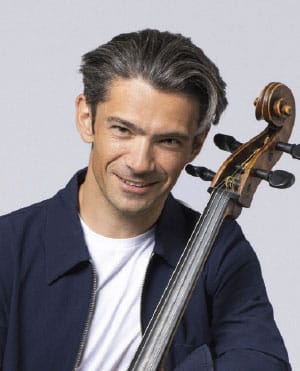
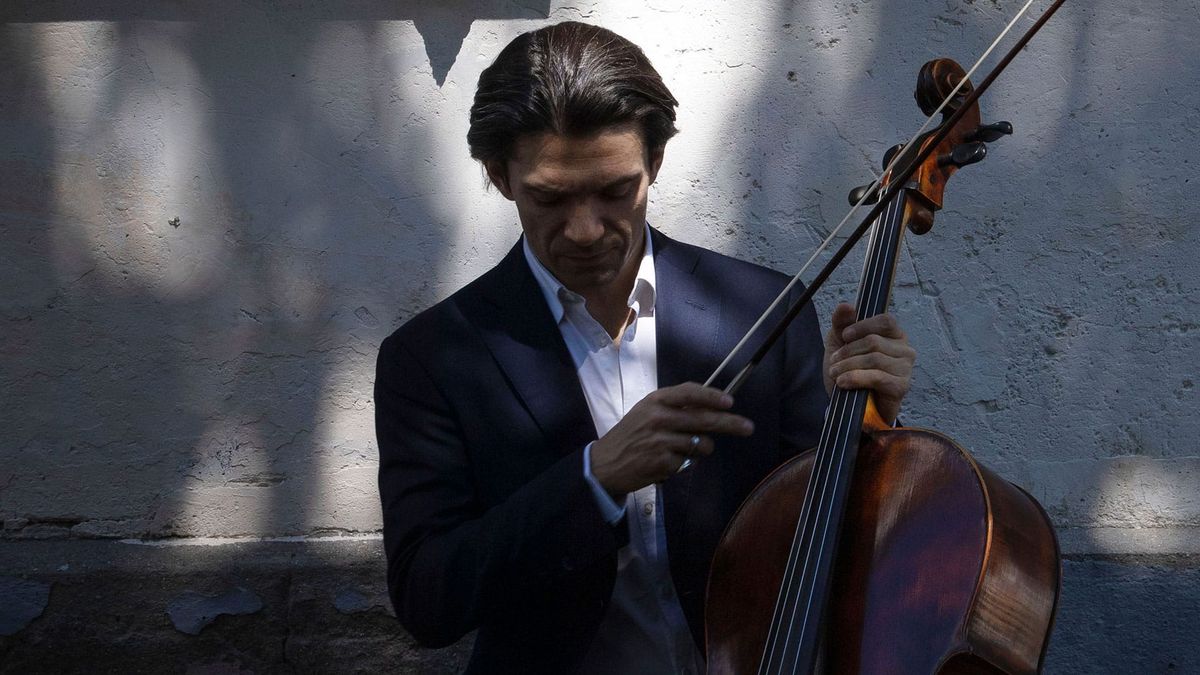
Gautier Capuçon
Gautier Capuçon is one of the foremost cello ambassadors in the 21st century. Performing worldwide with leading conductors and instrumentalists, he also created the Fondation Gautier Capuçon in 2022, dedicated to supporting outstanding young musicians.
Recent orchestral highlights include performances with the Vienna Philharmonic, Leipzig Gewandhaus Orchestra, Philadelphia Orchestra, and Hong Kong Philharmonic, as well as tours with the Filarmonica della Scala Milan, Frankfurt Radio Symphony, and Rotterdam Philharmonic.
This season, Capuçon tours with the Berlin Philharmonic and serves as artist in residence with the Sächsische Staatskapelle Dresden. Further orchestral engagements include appearances with the Frankfurt Radio Symphony, Orchestre de Paris, Tonhalle Orchestra Zurich, as well as concerts across Asia.
An exclusive recording artist for Erato (Warner Music), Capuçon has a rich discography that has earned numerous awards. His 2020 release Émotions reached gold status in France, topping the charts for over 30 weeks. His next album, Sensations (2022), became the first classical recording to reach No. 1 in France’s all-genre charts, followed by Destination Paris (2023). Last November, he released Gaïa with 16 new compositions commissioned by the San Francisco Symphony and premiered on the Great Performers Series. Capuçon made his San Francisco Symphony debut in November 2009 as a Shenson Young Artist.
Laura Stanfield Prichard has been a preconcert speaker for the San Francisco Symphony since 1997 and also lectures for San Francisco Opera. She holds advanced degrees in choral conducting, library science, musicology, and education. She is a member of the SF Symphony Chorus and a former assistant conductor of the ensemble.