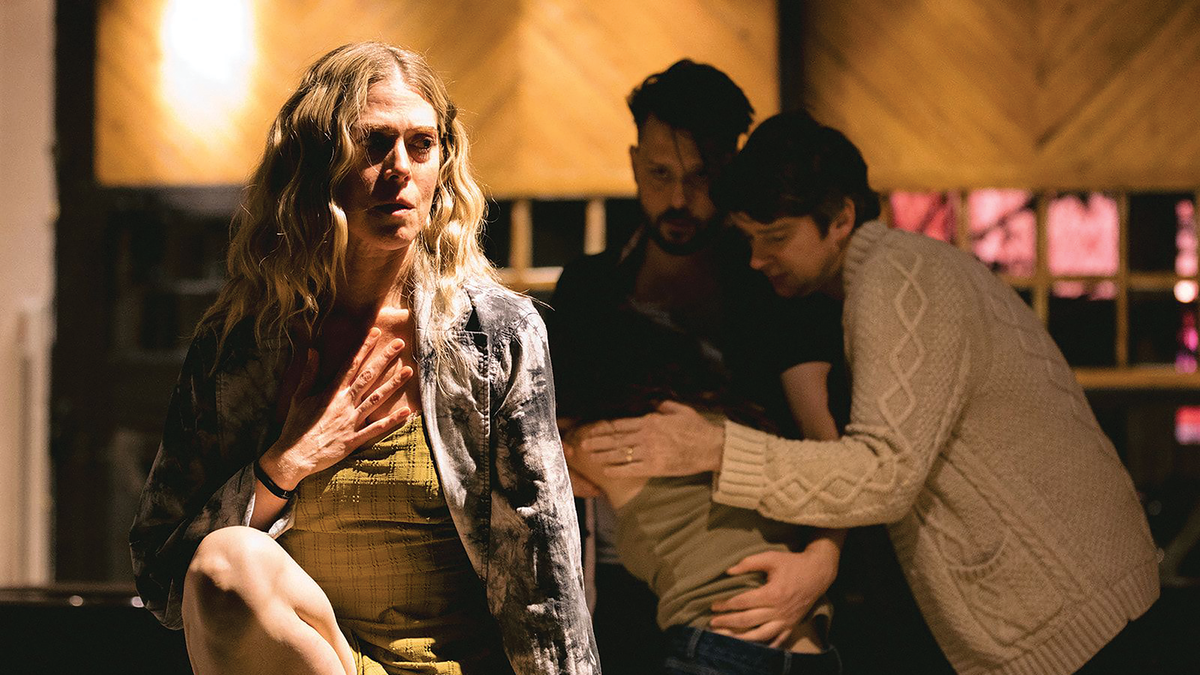
January 21–February 1, 2026 | Toni Rembe Theater
In This Program
- Show Program
- The Dangerous Side of Streetcar
- A.C.T.’s Annual Gala: Ignite the Night
- Tennessee Williams’ A Streetcar Named Desire, Onstage and Onscreen
- Beyond the Proscenium: San Francisco’s Site-Specific Theater
- The Streetcar Project Performed Everywhere
- Who's Who
- Print Edition
- More about A.C.T.
A.C.T’s House Rules of Play
Welcome to A.C.T., San Francisco. This is your theater.
All and any laughter is welcome. Laughter from many that can make a whole room shake. Laughter that is a beacon of any one person’s connection to the story told. And laughter that betrays nerves as a story builds tension. Please laugh and let others around you laugh. It is why we have come together.
We encourage all response. You, the audience, are part of the storytelling equation. Feel free to express yourself and let those around you express themselves. We are building a community with each performance.
Theater is alive and precious in that aliveness. The stories are honed and rehearsed and told with—not just to—you, the audience. If you miss a phrase or two, please know that the show will take care of you. It’ll come round again to catch you up and pull you forward. You can trust in the craft, so you can enjoy yourselves.
We ask that you turn off your mobile devices during the performance. This is out of respect for us all coming together to be part of a story told in this space and in living time.
Please share the fun. We ask that you save taking photos or video to before and after the performance and during intermission. We love seeing posts on social media: our programs held high among friends, floating before the set or curtain or lobby spaces. Tell folks about your experience. These shows have short runs and then are gone.
We encourage you to be present, mindful, and together in these spaces. Be kind to your neighbor and fellow theater lover. Help nurture and welcome new and young theater goers; for some this is their first time seeing a play. Give each other room, but also smile and say hello, as you pass on the way to your seats, or at intermission standing in a line, or as you walk out into your city.
Again, welcome to A.C.T. This is your theater.
From the Artistic Director
I saw The Streetcar Project’s production by chance in Spring of 2024. I learned about it at a birthday dinner for a friend and snagged a ticket for a performance in a warehouse two nights later. Four actors had, since deep in the pandemic, been first reading then performing Tennessee Williams’s play word for word. I remind you that this is a play with twelve characters. For three years this troupe had been exploring and owning this great play, popping up in storefronts, living rooms, churches, and for me a warehouse in Red Hook, Brooklyn.
I felt privileged to get in, as seating was limited, audience facing each other, soon engulfed by the performers. There were no props. There were but a few light cues, even fewer costume changes. Traffic noises sometimes interrupted. There was a musical score, yet dialogue without any drawl was foregrounded. The performances were drastically lived in, even when Mitch was sometimes also Eunice. The experience felt haunted, but the ghost of Marlon Brando was nowhere to be found. This was for me satisfyingly Williams’s harrowing play about the DuBois sisters’ struggle for survival. That night lives large in my memory.
Co-creator and director Nick Westrate, whom I knew as a wonderful actor, and I plotted in quick order about how to bring their stripped down aesthetic into a theater not unlike where the play originated in 1949. Excitement grew about featuring the Toni Rembe Theater as a found space for the actors—with years of this play in their bellies—but with pure adrenaline of opening the doors to your theater to play out Blanche’s story.
You get to be part of the action, part of the haunting, the invocation of the DuBois sisters, stripped down to the marrow of Williams’s language. Actors at times so close you can feel their fear and ambition. We return to these towering plays 75 years later because they make us who we are, and their characters’ struggles are unfinished.
Ready, set, go!
Pam MacKinnon
Artistic Director
From the Interim Executive Director
My name is David Schmitz and I’m new here, in fact I just started as Interim Executive Director about 12 weeks ago. If this is your first time at A.C.T., WELCOME. If you’ve been coming for many shows over several years, WELCOME. However this note finds you, welcome, and thank you for being here for the show.
A Streetcar Named Desire is a great example of the kind of work that A.C.T. is proud to bring to San Francisco. It’s a classic script by an iconic American writer, re-envisioned to highlight the words of this great playwright and the immense talents of these four outstanding actors. We’ve reshaped the theater layout to create a more intimate, in-the-round experience for our audience, literally bringing seating onto the Toni Rembe stage (see Pam’s note if you want to know more about why). We’re honored that The Streetcar Project felt that A.C.T. would make a good temporary home for their Streetcar.
Over the rest of this 2025/26 season, our stages will continue to be a space where ghosts are confronted, truths unearthed, and the future imagined—louder, stranger, and more alive than ever. Up next we’re thrilled to be presenting Paranormal Activity, which the LA Times recently raved about—in fact they asked the question “How can a stage play be so scary?” and said, “I assumed Paranormal Activity wasn’t for me. Boy, was I wrong.” Learn more at act-sf.org/paranormal and get your tickets for this show, running Feb 19 through March 15.
If this is your first time at A.C.T., I hope you’ll check out more of what we offer: behind-the-scenes benefits for our generous donors (act-sf.org/support), classes and training for all ages through our Conservatory programs (act-sf.org/training), space rentals for all sizes and needs (act-sf.org/rentals), our work in schools and community organizations across the Bay (act-sf.org/community), and more.
A.C.T. is YOUR theater. Thank you for choosing to be here with us, and enjoy the show!
David Schmitz
Interim Executive Director
American Conservatory Theater
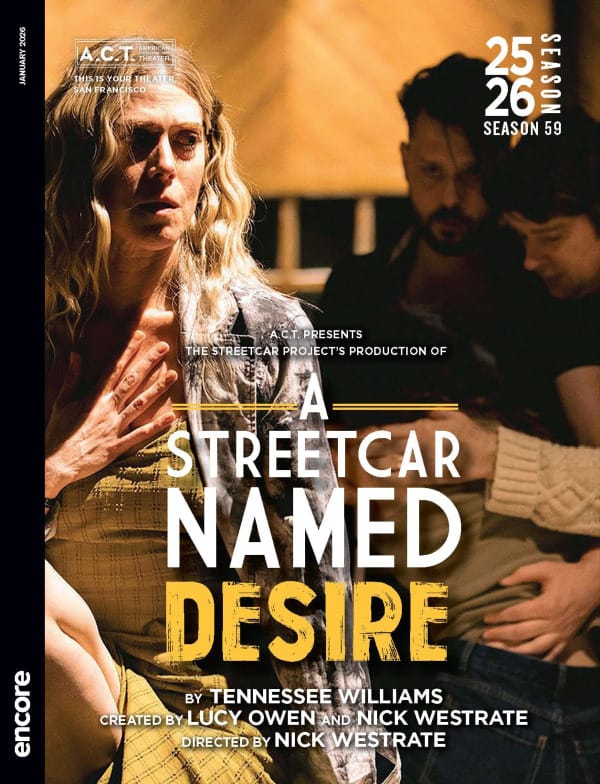
presentsThe Streetcar Project’s production of
A STREETCAR NAMED DESIRE
Tennessee Williams
Created by
Nick Westrate and Lucy Owen
Directed by
Nick Westrate
The Cast
Blanche
Lucy Owen
Stanley
Brad Koed
Mitch
James Russell
Stella
Heather Lind
Stage Management
Stage Manager
Rebecca J. Ennals
Assistant Stage Manager
Emma Walz
Assistant Director
Claire Siebers
A.C.T. Producing Team
Artistic Producing Director
Andy Chan Donald
Director of General Management & Operations
Louisa Liska
General Manager
Amy Dalba
Director of Production
Martin Barron
www.concordtheatricals.com
This production is made possible by
Associate Producers
Judy and David Anderson
Paul Angelo and Cindy Low
Helen and Roger Bohl
Steven and Karin Chase
Dr. and Mrs. Richard E. Geist
Allan Gold
Lawrence A. Kern
Additional Support Provided by



Official Hotel Partner

The Dangerous Side of Streetcar
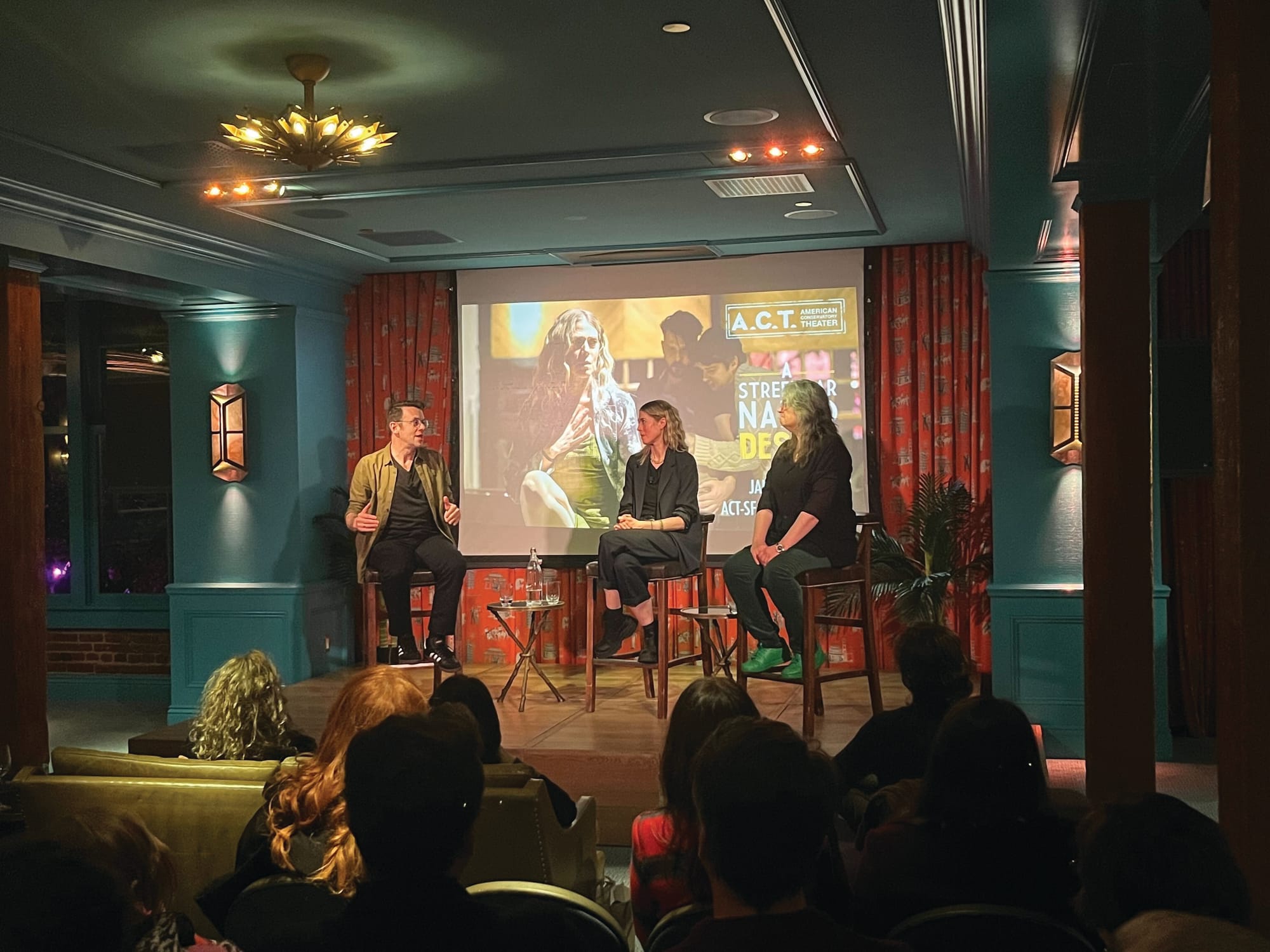
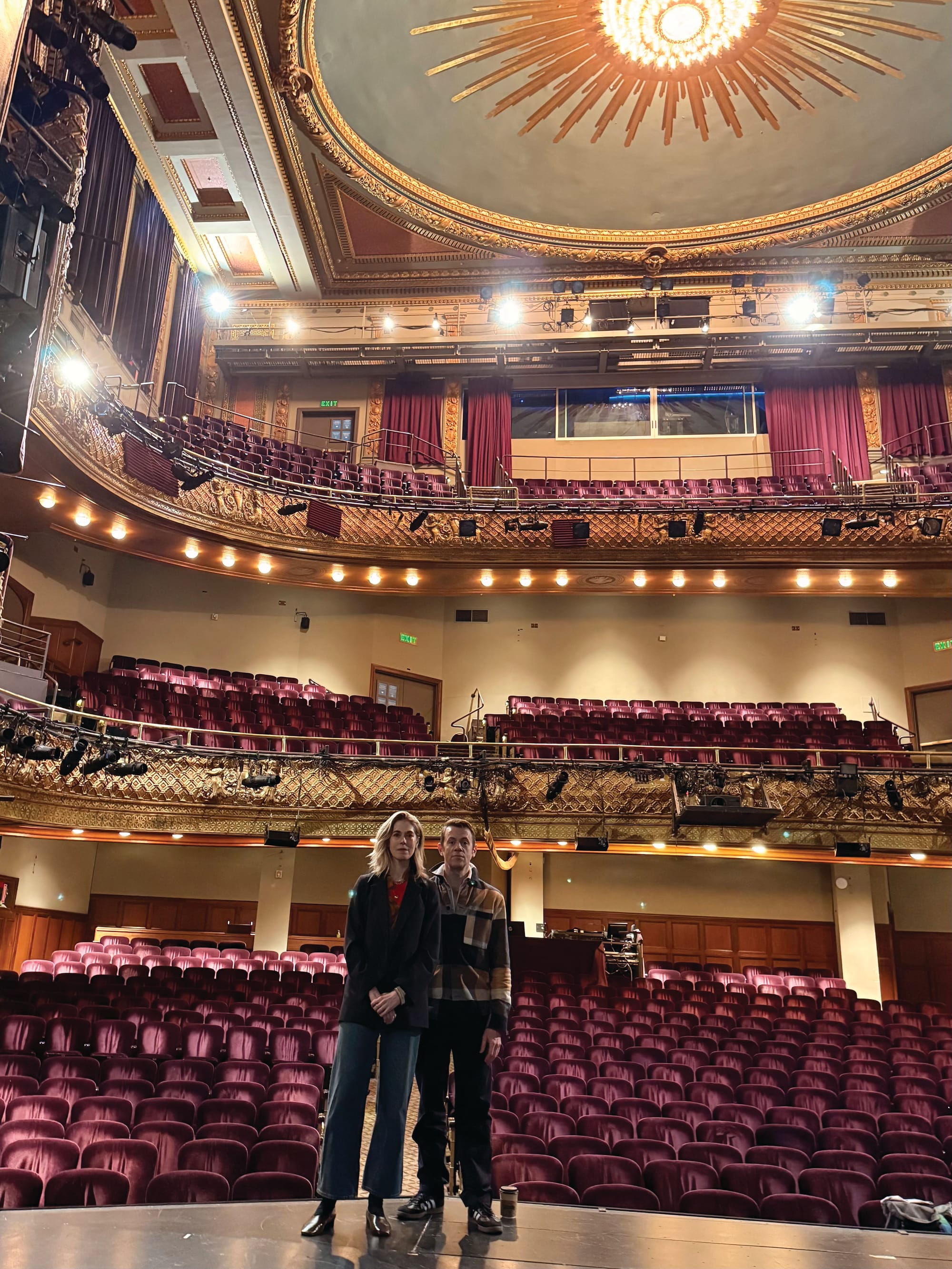
ABOVE: Nick Westrate, Lucy Owen, and Pam MacKinnon speak at The Battery SF. Photo by Xavier Dzielski.
Pam MacKinnon: I’d like to start this conversation with: Why. Let’s start with you, Lucy. The pressure inside you that became a conversation that maybe became an ethos in how to build this production.
Lucy Owen: The conversation that I was having with myself at the time, it started quiet and personal. And it was, you know, a quiet time in the world. It was the early days of the pandemic, and as a little gift to myself, I picked up my favorite play, and spent a little time with it, and with a character, Blanche, who I had always assumed someday I would get to.
At that time, I was approaching midlife suddenly, and my relationship to Blanche changed. My relationship to her became less about whether or not Blanche was desirable, but about Blanche’s desire, and how big it is. And that’s really interesting, because we don’t think, talk, or write a ton about women’s desire. We talk a lot about their desirability, but not about their big wants.
The other thing that I noticed was that there was a great pressure in me at the time, that seemed to match a great pressure I observed in Blanche—how dangerous it is to age for women. For Blanche, I think it is truly life and death. And it can feel like that to a lot of us. It was feeling like that to me at the time. Aging felt dangerous to me.
Pam: And is dangerous always a negative, or sometimes a positive?
Lucy: Sometimes it’s a positive.
Pam: Yeah.
Lucy: And that felt so exciting and sexy and risky. So, as an act of generosity to myself, I asked a few friends to come and read it with me. And then I asked one of my favorite artists, Nick, who is an actor I really admire and look up to. We’d collaborated as actors, and I knew that Nick would have an interesting perspective on my Blanche. Nick and I share some creative DNA. It exploded the play for me.
Pam: Nice.
Nick Westrate: Because Lucy came to me with it, with the authority that she had, I really did approach it realizing how much authority Blanche has—her agency in the play, how much she is actually the propeller of the action. When I think of my first encounter with the film, Vivian Leigh seems like someone who’s being acted upon, who is a victim of circumstance, a victim of other people. And when I looked at this play through this lens of Blanche’s agency, I realized, like, oh, this is a sex worker, who has just gotten thrown out of her hometown, gotten on a bus, and gone to her sister’s house with 65 cents in her pocket. This is her last port of call, and how she navigates her options, her narrative, the story she tells to survive.
So often we think of Blanche as this deluded person who thinks these things or imagines these things, versus someone who has an active life of the mind, but also who has a goal, which is survival. We kind of write her off. But when you really look at her story and what she’s just been through in the past few weeks, it’s so harrowing to think about the moment before she walks in that door. And I started thinking, what is that like? Who is that woman? And it reframed the play for me in a pretty profound way.
Pam: Nick, have you directed before?
Nick: I directed once before with my colleague, Dane Laffrey, who’s a set designer. We directed this production of Three Sisters that Lucy starred in, in a house in New Jersey. It also was very actor-generated. We rehearsed it over several years with the same company. And the audience was invited to sit in and around the house in the action of the Prozorov family.
Our collaboration was very fruitful, and we learned a lot from these years of working on this play. And so this is the second thing I’ve directed.
Pam: You said actor-generated. I’m curious what that means to you. I understand like Lucy said, the quiet voice inside you, picking up a play, a moment of generosity to yourself. What else are you thinking when you say actor-generated?
Nick: In the normal, conventional process of making a play, the actor is usually one of the last collaborators invited to the table. We have all of these decisions already made about production, design, everything before the actor comes in.
What’s interesting to me is…I went to school with a lot of musicians, and they don’t sit around waiting for someone to invite them to play Mozart. They just…play it. So I thought—well, what if we all knew the score of Streetcar and could just play it, whenever we wanted, like a garage band, because it brings us joy, and because it’s fun. I think because there’s such a scarcity mindset with actors, we sometimes see that as, like, cringe, right? Like, Oh, you’re making your own work. You weren’t invited to do it on Broadway, therefore it has less value.
But we’re trying to kind of deconstruct those things that have been put in our own minds as creatives, and say, What if we start with the actors? Because I think a performer, the person who runs the poetry through their body, actually is the expert on what that poetry means. And I think that actors should be more central in the creation of the theater in that way.
Pam: I love that. Okay, so you gather together some actors to hear it. Are some of those original or near-original actors still people that are involved in this production?
Lucy: Brad Koed was the first Stanley I asked. I knew him because I’d seen him in a play with Nick, and I thought he was fantastic in it. It was really that random. And he was really enthusiastic.
Very quickly, Mallory Portnoy and Will Rogers became our Stella and Mitch. They remained with us for two years, but Will couldn’t join us last year for our Los Angeles run, and the wonderful James Russell joined us as Mitch, and has been with us since. And Mallory wasn’t available for our time at A.C.T., so we now have the great Heather Lind as Stella.
Pam: There’s a reputation with this project of it being very site-specific—what does that mean for a company that has now done it in different spaces? How do you enter a space?
Nick: We have allowed form to dictate content in this process. With our first show that we did together, Three Sisters, we were always doing it in a house, but we were hyper-specific about what the house needed. With this one, I said to Lucy, we can’t have a list of mandatory things on this, or we’ll never do it. I said, We literally have to find a way to do this play on the 1 train, because that’s the only place someone will let us do it. You know?
So we started rehearsing scenes. And at the beginning, we started with a few props, but then it felt a bit like acting class. So then we just said, well, what if we use nothing? Like, what does it mean to do it with nothing? And what we found was that the play really supports it. For example, in scene 8, Stanley says to Blanche, “Sister Blanche, I got a present for you. It’s a ticket. A bus ticket on the Greyhound Tuesday.” So why I would need to get a piece of paper for that actor to put in their pocket? I don’t.
The imagination is the answer. We live in such a visual culture. We’re constantly looking at screens, we’re constantly seeing video all day long…but we are asking the audience to imagine. It really goes along with Blanche’s call to Mitch, you know, to believe certain things are true. You know, I say what ought to be true.
Lucy: As we took things away—we took away props, we took away set, we took away dialect—and what we discovered as we simplified and simplified and simplified was that this is a language play, like Shakespeare. And when we turned a few things down, the language got so loud and beautiful to us that we realized it was all we needed.
Pam: I got to see it, what, a year and a half ago, in a warehouse in Red Hook, Brooklyn, that was about to become a performance space. I was very struck by how lived in the performances were, and also that I was taken to a place. Taken to an emotional place very deeply and
very quickly.
Lucy: And I think we do ask something of our audiences: we ask them to listen really well. And we’re not asked to listen quite as much in our current culture, where, as Nick said, we’re looking at our phones so much, we’re so visual, but when we do listen, we get to engage our own imagination. It makes the play very personal for you, because you’re not going to see Blanche hold up a gold dress. You get to imagine that gold dress. It’s yours.
Nick: I have a good friend who saw the play. We were doing it in multiple locations in Los Angeles. And he saw the play in an airplane hangar, and then he was driving the next week to see it in a warehouse in Venice. And he told me that he was very worried. He was thinking, Well, I don’t know how they’re gonna do it in that other space. I mean, where are they gonna put Blanche’s trunks? And then as he was having this argument in his mind, he went, Wait, there were no trunks. I just imagined there were trunks.
Pam: Oh, that’s fantastic. I mean, I have a vivid memory of the
poker game.
Lucy: That takes place “in the next room.”
Pam: I felt at once in that room, as well as denied entry to that room.
Nick: In terms of the spaces, I like to think of the play a lot as a haunting. We want to take Tennessee’s beautiful ghosts into every space we can.
Pam: What excites you about doing this at the Toni Rembe Theater? This theater is similar to a space where A Streetcar Named Desire actually had its Broadway debut, but we’re treating it as a found space for four actors to haunt.
Lucy: Well, coming back to a word we started with: danger… As a company, we have never done this play in a theater. That is radical to me. It feels genuinely risky and dangerous and thrilling to be doing it in a theater for the first time, where we have amenities that we haven’t had before, but we also have challenges we haven’t had before. It’s the biggest space we’ve ever worked in. It’s the biggest audience we’ve ever performed for. The topography of that space is vast and more complicated than anything we’ve done so far.
Pam: I think by doing it in a theater, we call back to the ghosts of
previous productions.
Nick: Right—and it asks the question, what is this play to us? Not just what is this story? And we’re opening up and letting the audience see the entire space of the Toni Rembe, to not pretend it’s any other place than it is. Which is different than how we usually use a theater, right? We usually use a theater to make a representation of another place, to transport people, to build that fourth wall that people are used to. And what I hope we get to do in the Toni Rembe is subvert the entire space so that our imaginations can fill the entire room that we’re all in together, and let the audience be a part of the storytelling. It’s really interesting the way that we do the play: because the actors are in the audience, they’re around the audience, the audience becomes complicit.
Pam: The removal of boundaries.
Nick: “Audience” and “actor” are taken away, and there’s an intimacy and a danger for everyone.
Pam, I was so excited by your question, your challenge to me the first time we met of: asking what does it mean to use a theater as a found space? And I’m so excited by all the amazing technicians that we’re working with in the Rembe to place the audience onto the stage, to have the audience enter a different way, to have folks who come to that theater often experience it in a whole new way.
Lucy: That question, what if you treat a theater as a found space—we have returned to that again and again and again, and as we head into rehearsal shortly, I know we will continue to.
Thank you for it.
A.C.T.’s Annual Gala
Ignite the Night
Annual Season Gala “Ignite the Night” raises $624,000 to support A.C.T.’s diverse and far-reaching artistic, artist training, and education and community programs. Inspired by A.C.T.’s Broadway-bound hit, Hippest Trip—The Soul Train Musical,
this year’s gala featured Emcee Ryan Nicole Austin, a live auction for one-of-a-kind experiences, and a one-night-only, bring-the-house-down performance by Grammy® Award-nominated artist Quentin Earl Darrington—star of A.C.T.’s Hippest Trip.
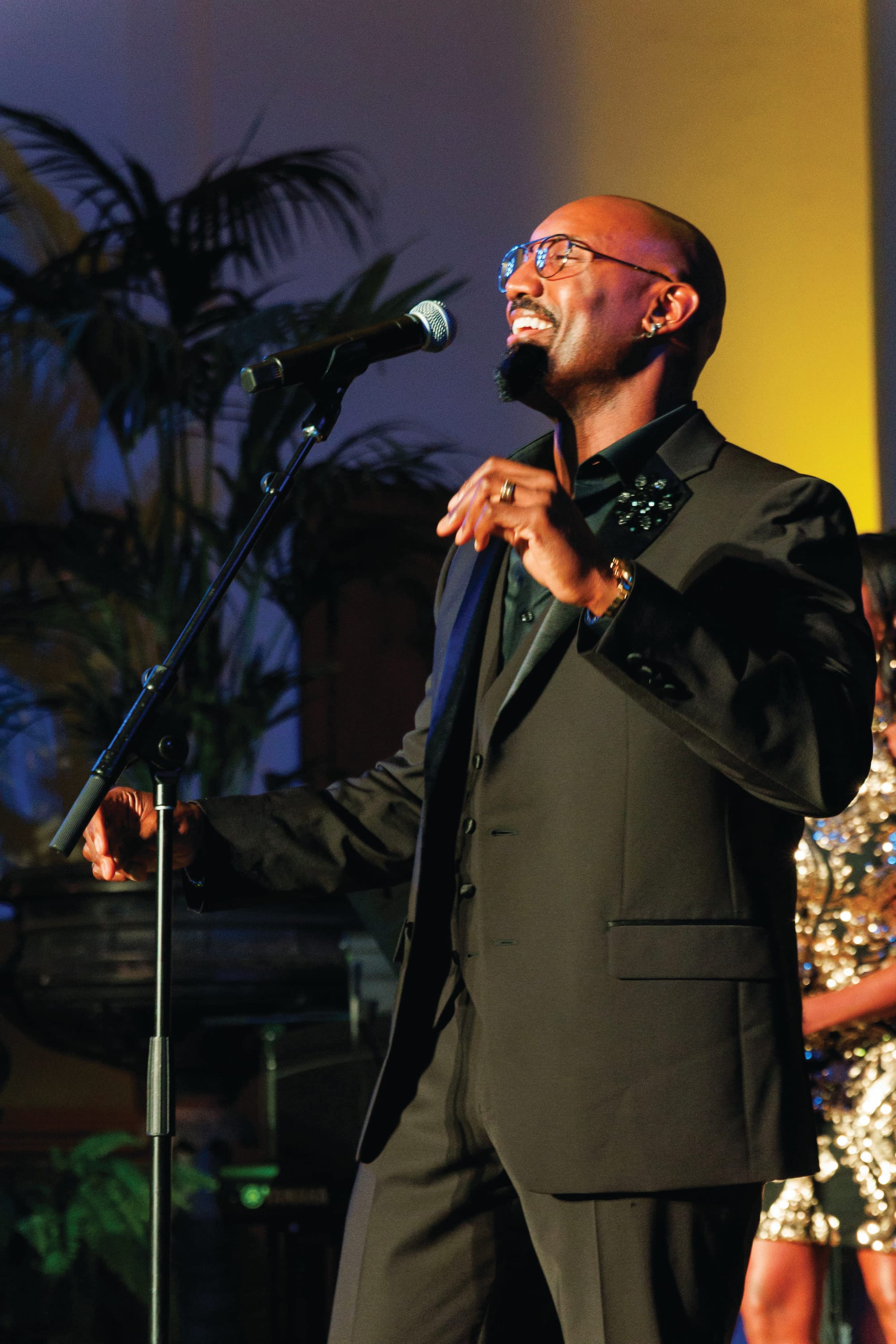
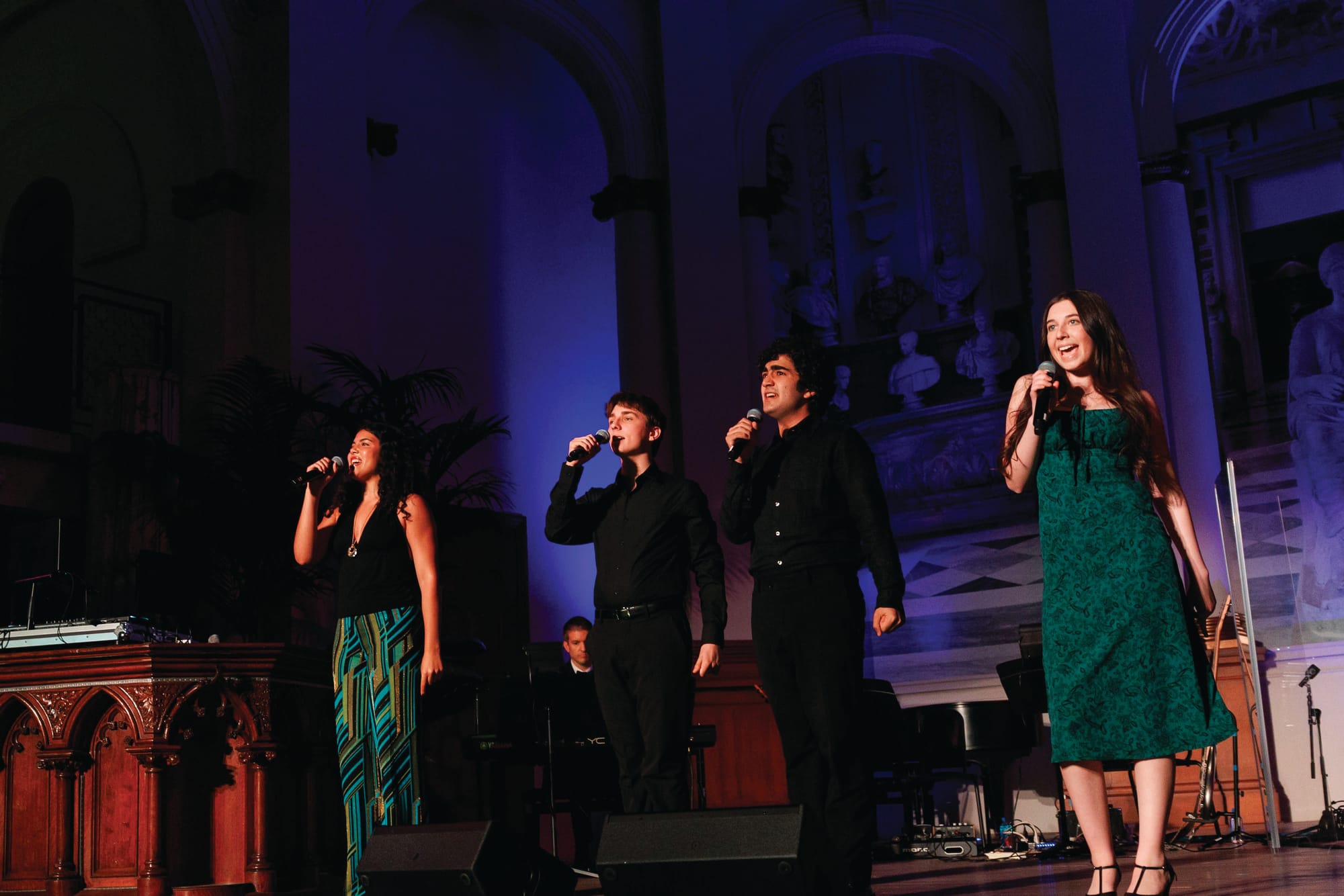
LEFT: Quentin Earl Darrington. RIGHT: Young Conservatory students give a welcome performance.
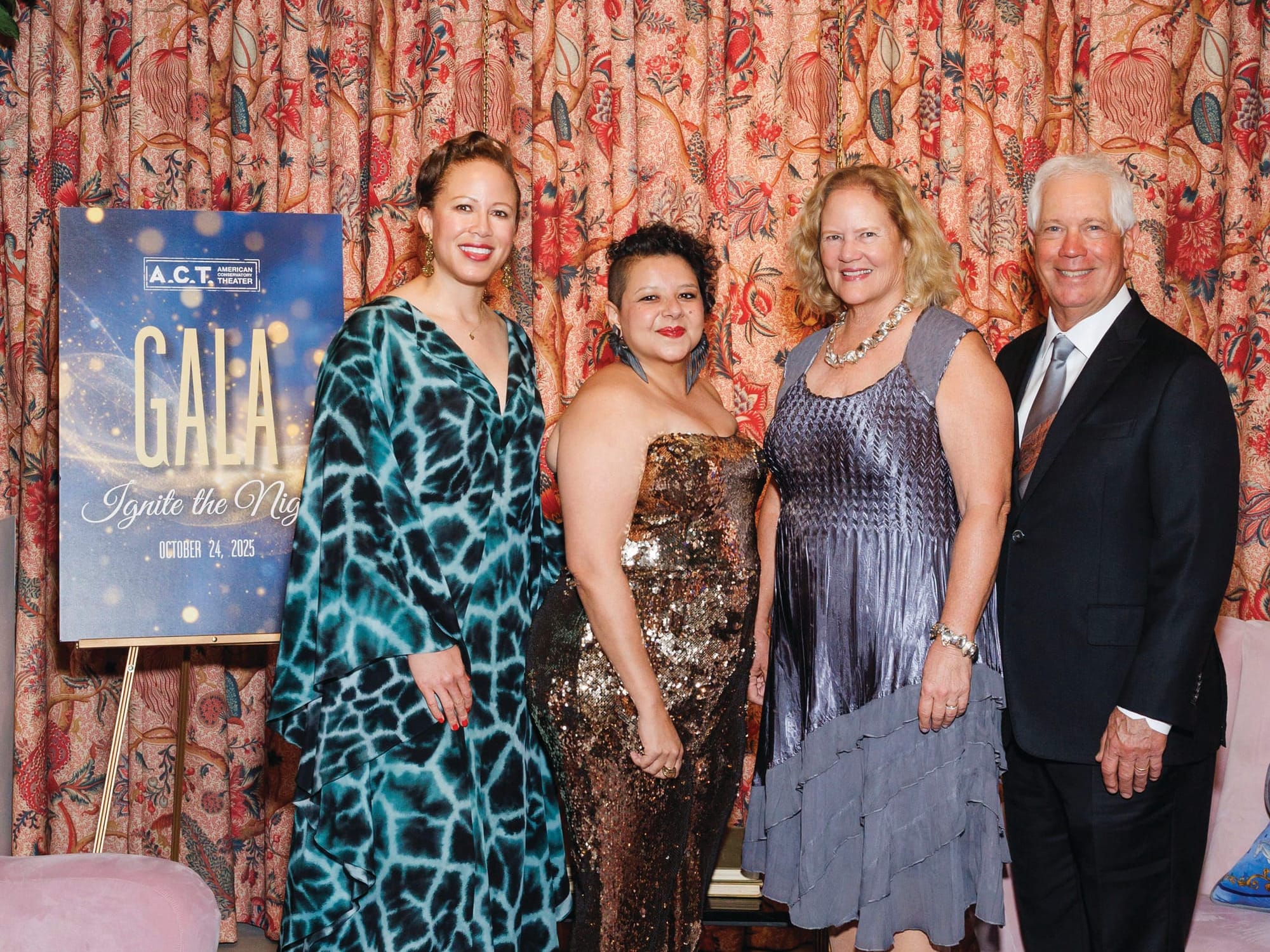
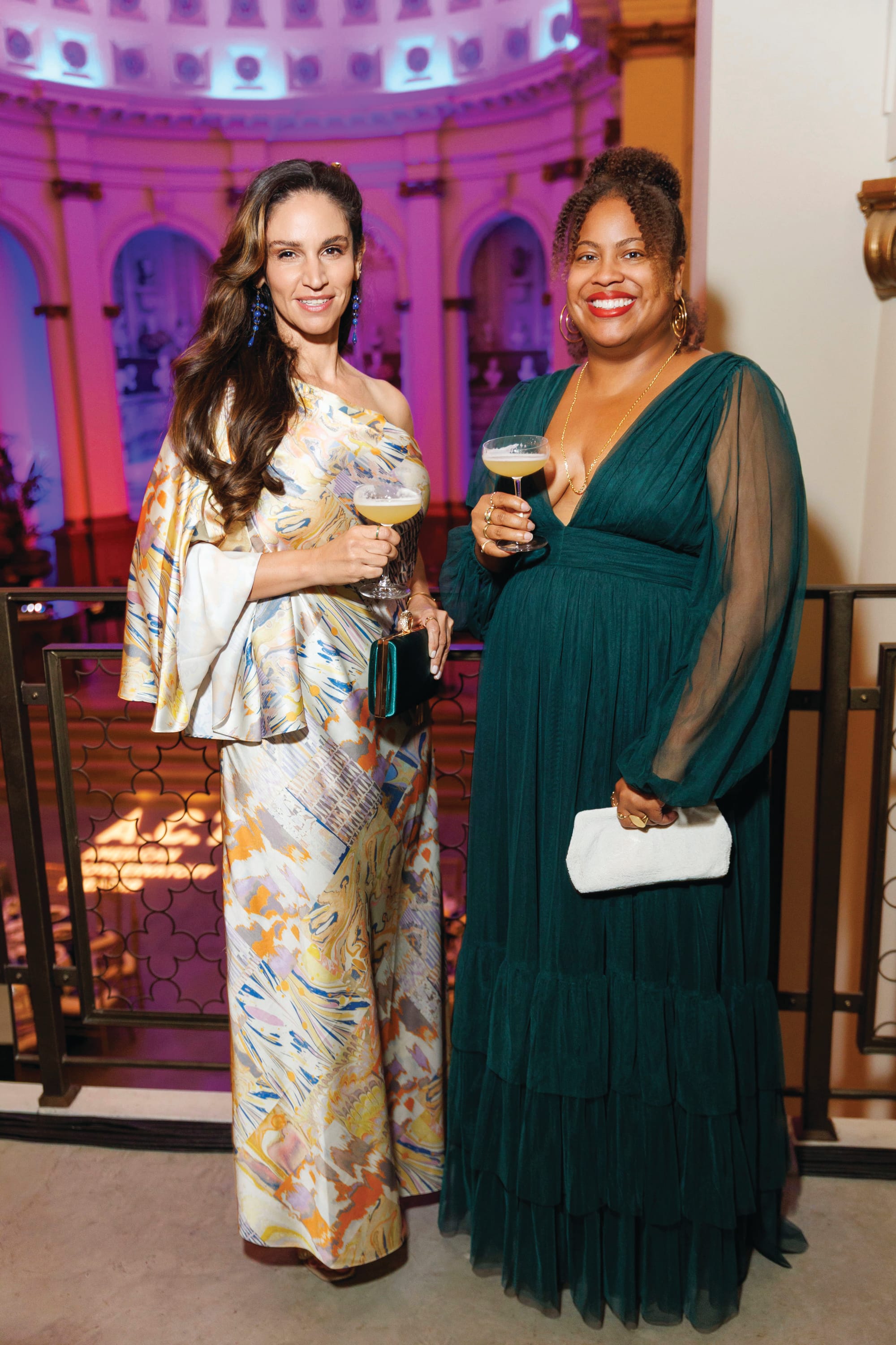
LEFT: Gala CoChairs Karesha McGee, Caroline Nassif, Ann & Rodman Marymor. RIGHT: Guests Meredith Herrera and Board Member Alexandra Simmons
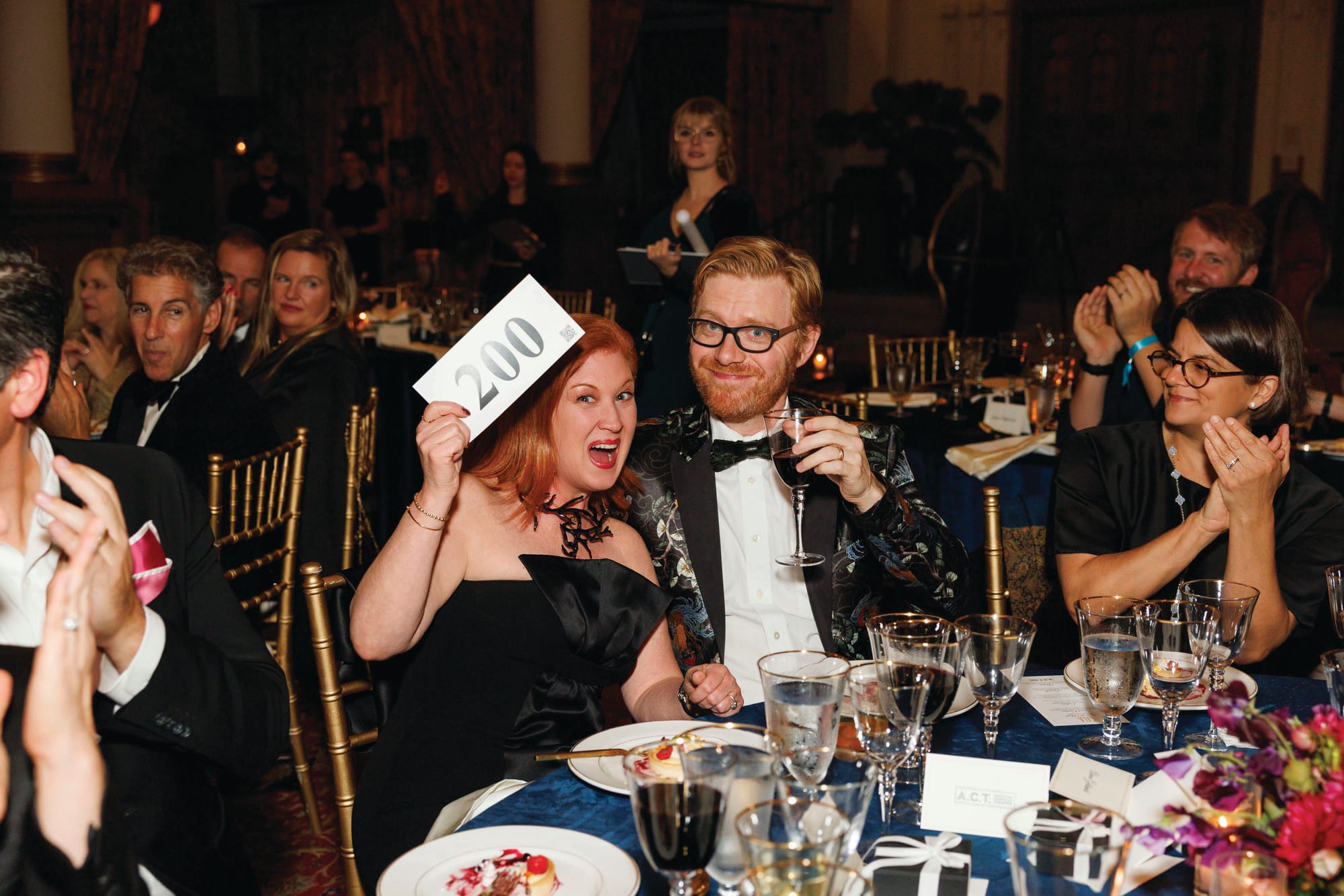
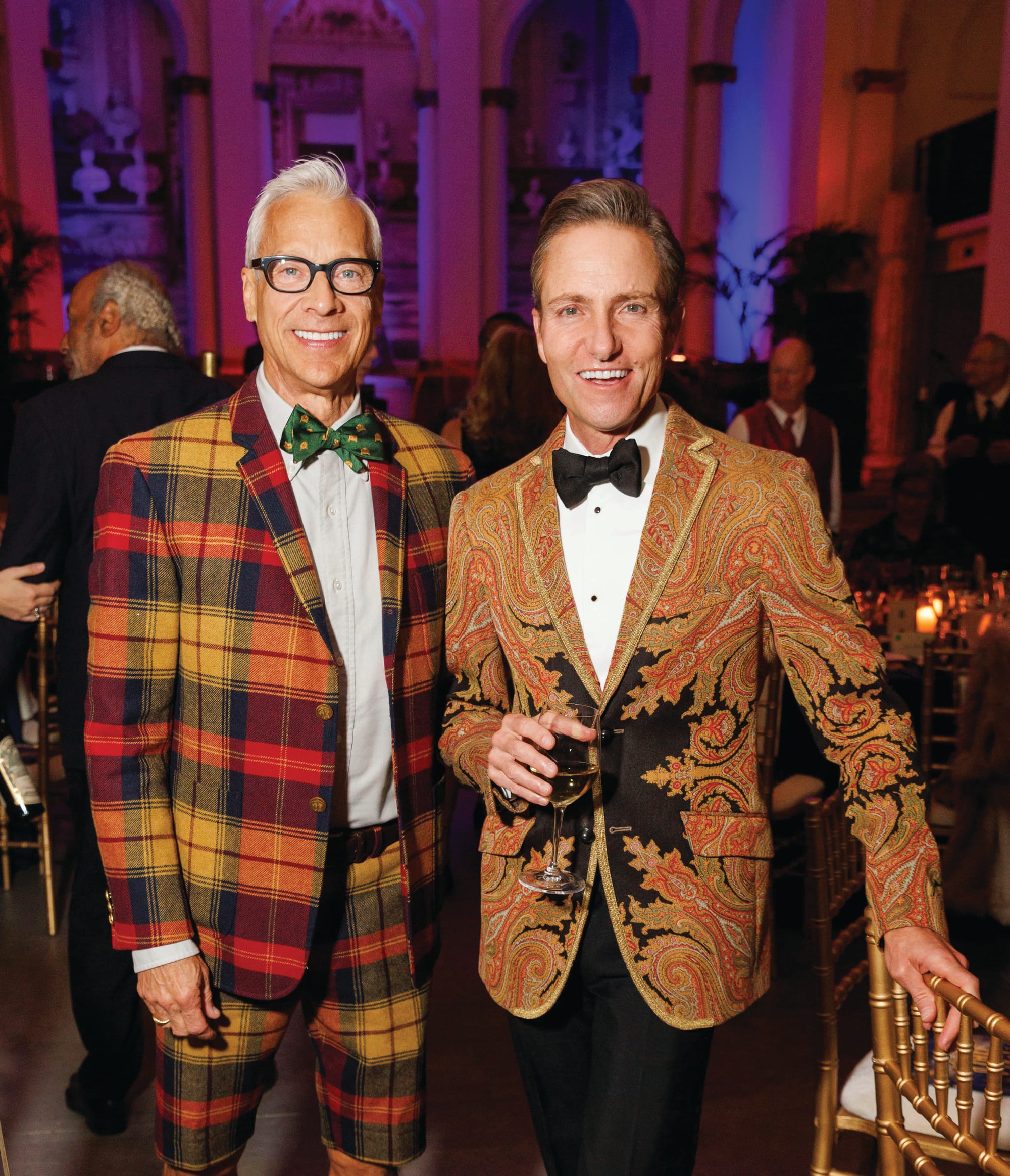
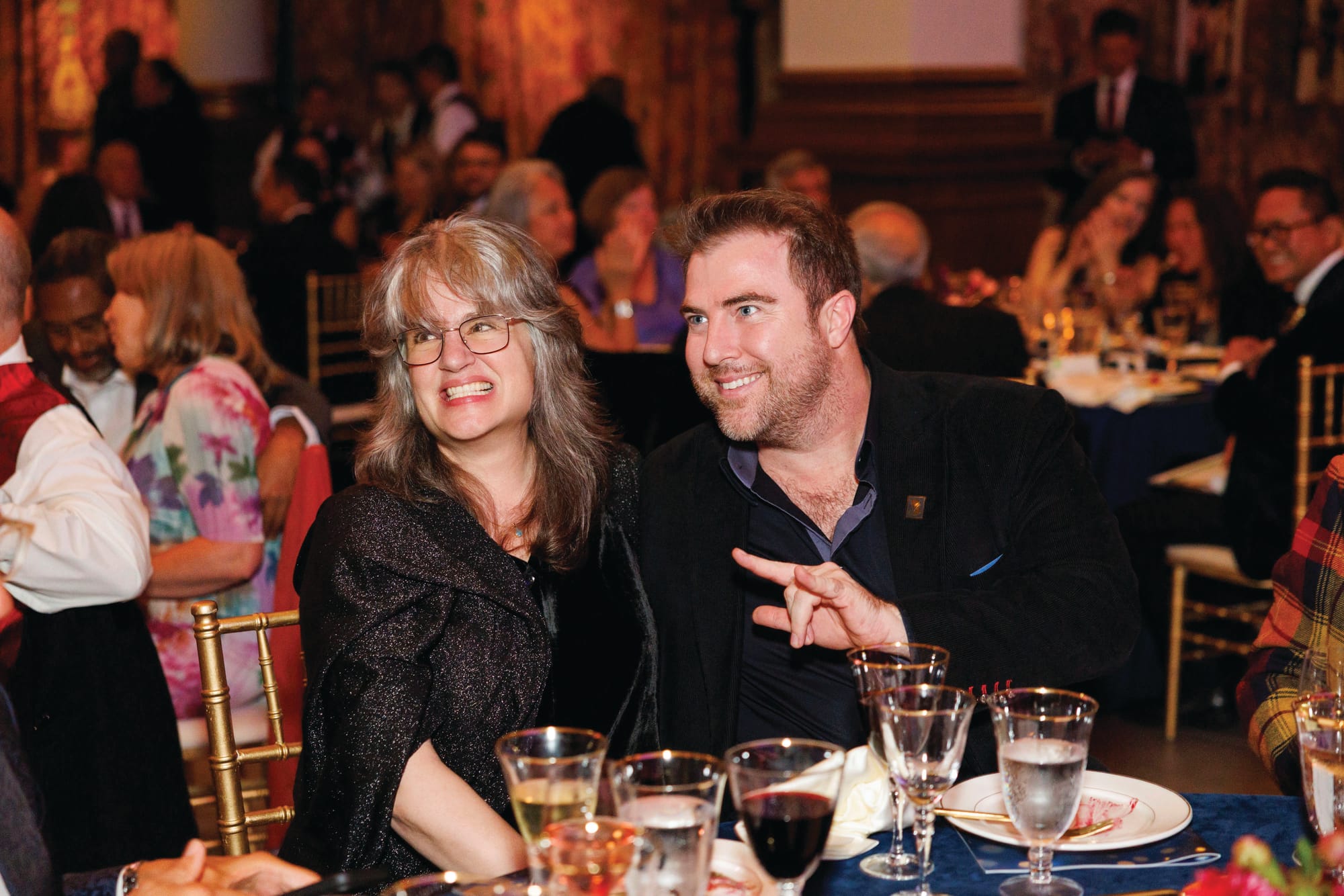
LEFT: Enthusiastic auction bids to support A.C.T.! CENTER: Kurt Wootton and Board member Ken Fulk. RIGHT: Artistic Director Pam MacKinnon and Matthew Kimball enjoying the festivities.
Tennessee Williams’ A Streetcar Named Desire, Onstage and Onscreen
By Ashley Lee
In late 1947, Tennessee Williams wrote an essay reflecting on his sudden catapult into fame from The Glass Menagerie, and whether luxury and success are conducive to an artist’s creativity.
“I no longer felt any pride in the play itself but began to dislike it, probably because I felt too lifeless inside ever to create another,” he wrote in the essay. Williams also disclosed that recovery from a fourth eye operation and a sabbatical in Mexico provided him a respite from his public self. And with that came the restored ability to work on a new play.
“It is only in his work that an artist can find reality and satisfaction, for the actual world is less intense than the world of his invention and consequently his life, without recourse to violent disorder, does not seem very substantial,” he continued. “The right condition for him is that in which his work is not only convenient but unavoidable.”
The piece he wrote was A Streetcar Named Desire, a profound exploration of family, trauma, and destruction that went on to win the Pulitzer Prize for Drama and become one of the best-known classics of American theater. (The New York Times published that essay four days before its Broadway premiere.) The pressure-cooker play—about Blanche DuBois, a former Southern belle who, after experiencing numerous struggles, moves in with her loyal younger sister Stella and brutish brother-in-law Stanley Kowalski—cemented Williams’ legacy as a major post-war American playwright.
“Williams, much more than any other American playwright, succeeded in finding a poetic diction for the stage,” said playwright Tony Kushner in 2011. “Streetcar has maybe the most beautiful passages of stage English written by an American. It’s just endlessly, endlessly glorious, heartbreaking, rich, and complex.”
Directed by Elia Kazan, the Broadway premiere opened with Jessica Tandy as Blanche, Kim Hunter as Stella, a then-unknown Marlon Brando as Stanley, and Karl Malden as Stanley’s friend Mitch. Tandy later won the Tony Award for Best Actress in a Play for her performance; Hunter, Brando, and Malden reprised their roles in the 1951 film adaptation, opposite Vivien Leigh as Blanche. The Warner Bros. movie, also helmed by Kazan, won four Academy Awards and made history as the first time a film won three out of four acting awards (Brando was nominated for Best Actor, but lost).
Since then, Streetcar has been repeatedly restaged all around the world, over the years starring Glenn Close, Jessica Lange, Alec Baldwin, John C. Reilly, Cate Blanchett, Rachel Weisz, and Paul Mescal. But it’s understandable for newer presentations of the classic to be overshadowed by A-list casting choices and echoes of the widely-seen film’s performances.
“[It] isn’t just a play,” wrote San Francisco Chronicle theater critic Lily Janiak of Streetcar in 2018. “It’s an icon, its scenes so codified in collective memory that we can see an uncaptioned photo from the play and immediately know its origin. It’s ripe for parody and, worse, for default interpretation, for productions that give audiences exactly what they’ve learned to expect.”
That The Streetcar Project’s production has earned acclaim for its bare-bones staging of the text makes sense, as Williams stripped himself of whatever lavishness and comfort he could in order to write it. Playing at the Toni Rembe Theater through Feb 1, Streetcar is presented with no props, no set, and just four performers—free of all the theatrical elements that can sometimes provide an ease to both actors and audiences, and possibly even distract from the harsh but human truths therefore left unexplored.
“Security is a kind of death, I think,” Williams declared in that essay. “What is good? The obsessive interest in human affairs, plus a certain amount of compassion and moral conviction, that first made the experience of living something that must be translated into pigment or music or bodily movement or poetry or prose or anything that’s dynamic and expressive—that’s what’s good for you if you’re at all serious in your aims.”
Beyond the Proscenium:
San Francisco’s Site-Specific Theater
By Director of Education & Community Programs Natalie Greene and
Education & Community Programs Producer Rebecca J. Ennals
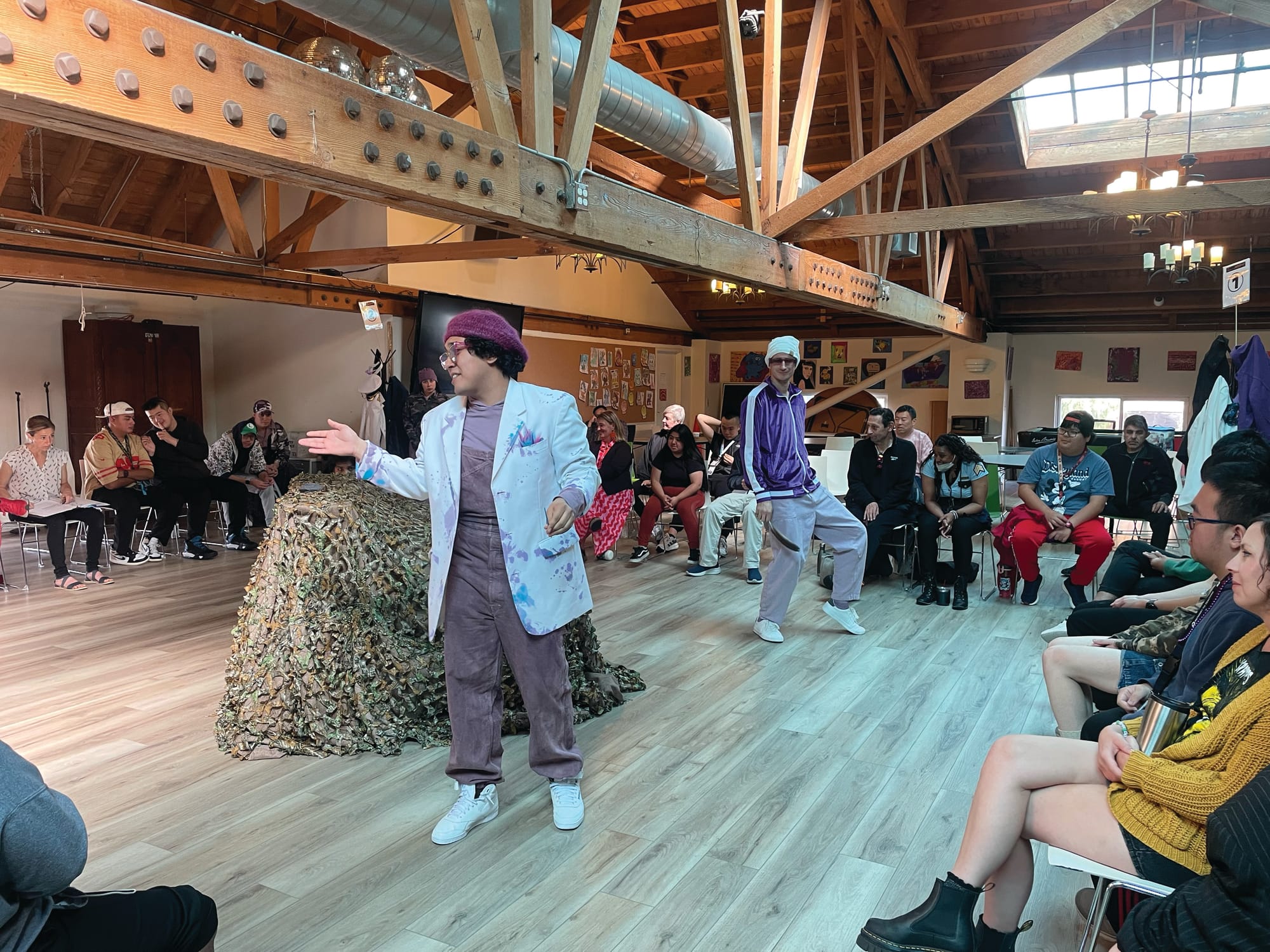
This production of A Streetcar Named Desire has been developed to be “site-specific,” meaning that the play is influenced by the performance venue in non-traditional ways. Site-specific theater is often performed outdoors and in unusual places, influenced by the space around it, rather than onstage in a traditional theater. This style of performance can help us understand older plays in new ways, influence the creation of devised pieces, and offer exciting alternatives to good old lights-up/lights-down theater engagement. It has traditionally been an affordable alternative for companies that may not have access to theater buildings, such as street theater and political theater companies, student groups, and those interested in accessibility and free public art.
The Bay Area has a long history of site-specific performance. Many companies have staged classic, contemporary, and devised works in site-specific ways, in some of the Bay’s most majestic and quotidian sites.
Antenna Theater, an award-winning, Sausalito-based experimental theater company, was founded in 1980 by Artistic Director Chris Hardman. Antenna integrates documentary theater (developing scripts from interviews with the public), audience participation, and new technologies. Thousands of tourists and visitors have experienced their work through the Alcatraz Cellhouse Audio Tour, originally created in 1987.
WE Players is a site-specific company with a focus on classical texts staged in unusual venues, such as Alcatraz, Golden Gate Park, and Fort Point. Founded in 2000, WE Players remains a vital force in the Bay Area theater scene, partnering effectively with the National Park Service and other civic institutions to combine theatrical experiences with an appreciation for beautiful and unique locations.
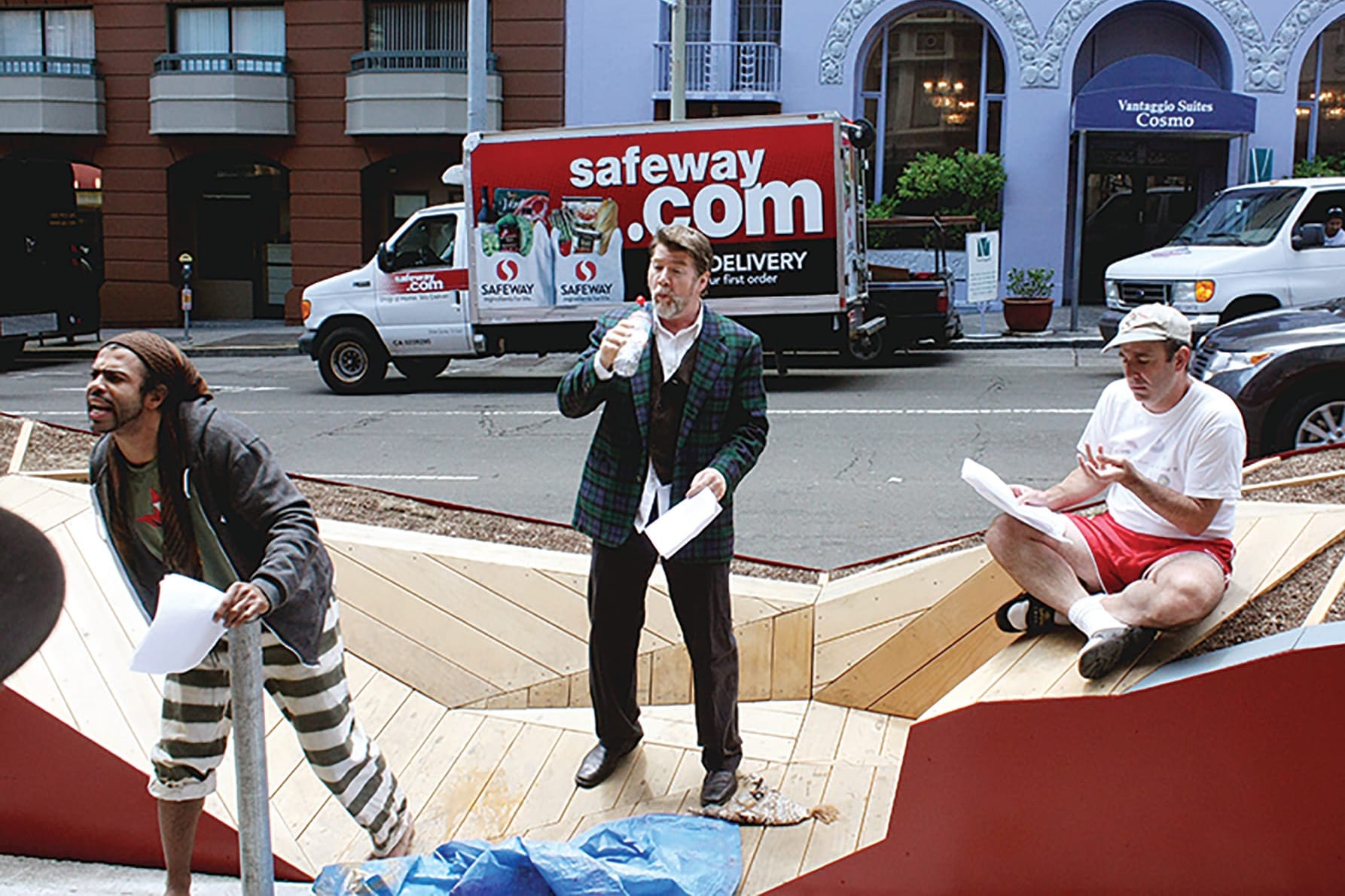
Although San Francisco Shakespeare Festival is best known for Free Shakespeare in the Park, which tours Bay Area parks with a traditional proscenium stage, it has also experimented with site-specific theater with the projects 30 Days of Free Shakespeare in the Parklet (in 2012) and 35 Famous Speeches in 35 Famous Places (in 2017), both celebrating major anniversaries of the company with free, pop-up, 10-minute performances. Audience members enjoyed site-specific performances of famous Shakespeare scenes all over San Francisco.

Mugwumpin, an award-winning devised-theater ensemble, was founded in 2004 with the aim of reinvigorating live performance as a communal event. In Mugwumpin’s 15 years of operation, the ensemble created 14 full productions and many smaller scale works that haunted galleries, museums, BART trains, bus stops, the Old Mint, the Battery, the roof of the San Francisco Chronicle Building, and elsewhere. They frequently activated theaters in non-traditional ways, including bringing the audience onstage and activating seating areas with video projections, moving set pieces, and other disorienting and magical elements.
Like Streetcar, in 2019 the touring production of The Jungle used a traditional theater space, the Curran Theatre next door to the Toni Rembe Theater, in a very non-traditional way. Audience members were fully immersed in the world of an Afghan restaurant in a refugee camp in France. Currently, the Tenderloin Museum is presenting The Compton’s Cafeteria Riot at the Larkin Street Cafe, an immersive piece of historical theater about the first transgender uprising in San Francisco. As in The Jungle, audience members eat with the actors and watch the action unfold in a restaurant setting.
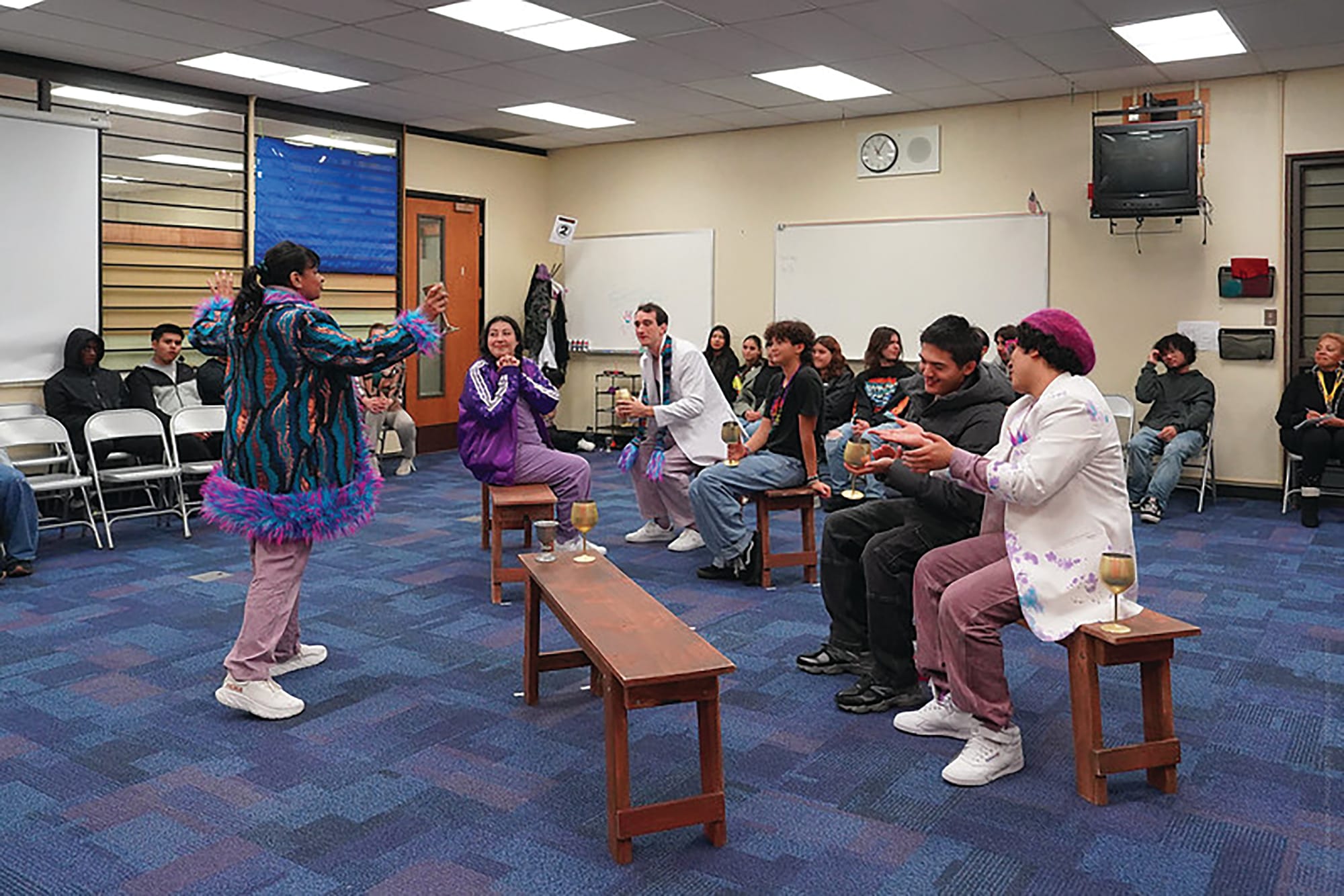
A.C.T.’s own A.C.T. OUT Tour has elements of site-specific performance—although the play is originally staged and developed in the round in our Rueff Theater, it then travels to many different locations, where staging is adapted to the room available—sometimes a capacious gymnasium or the stage in an auditorium, sometimes a humble classroom or meeting space. Actors learn to work with obstructions such as columns and doorways, and get creative with the environment they find themselves in. One example includes a moment in 2024’s Measure for Measure, in which Evan Held’s Pompey tells the audience to look out a window and notice a corrupt nobleman passing by. In the Rueff, he went to an actual window and pulled aside the curtain. A window wasn’t always available on tour, or it might be in a different position than in the original staging, but Held always creatively found a way to adapt. The A.C.T. OUT Tour is designed to fit compactly into a van and travel easily from space to space, adapting to whatever venue a school or community organization has available. In this way, schools and organizations without a theater building can enjoy the convenience of an onsite performance without leaving their campuses—and often discover new and imaginative ways to use their own spaces.
Site-specific theater has a rich history in San Francisco, and we’re delighted to continue that tradition with A Streetcar Named Desire. Be prepared to watch for events unfolding in unusual places in the theater—you may need to turn in your seat and interact with the folks around you to get the best view. We love our wonderful theater spaces at A.C.T., and we’re excited to continually re-imagine what audience engagement can look like if we use these spaces in new and creative ways.
The Streetcar Project Performed Everywhere
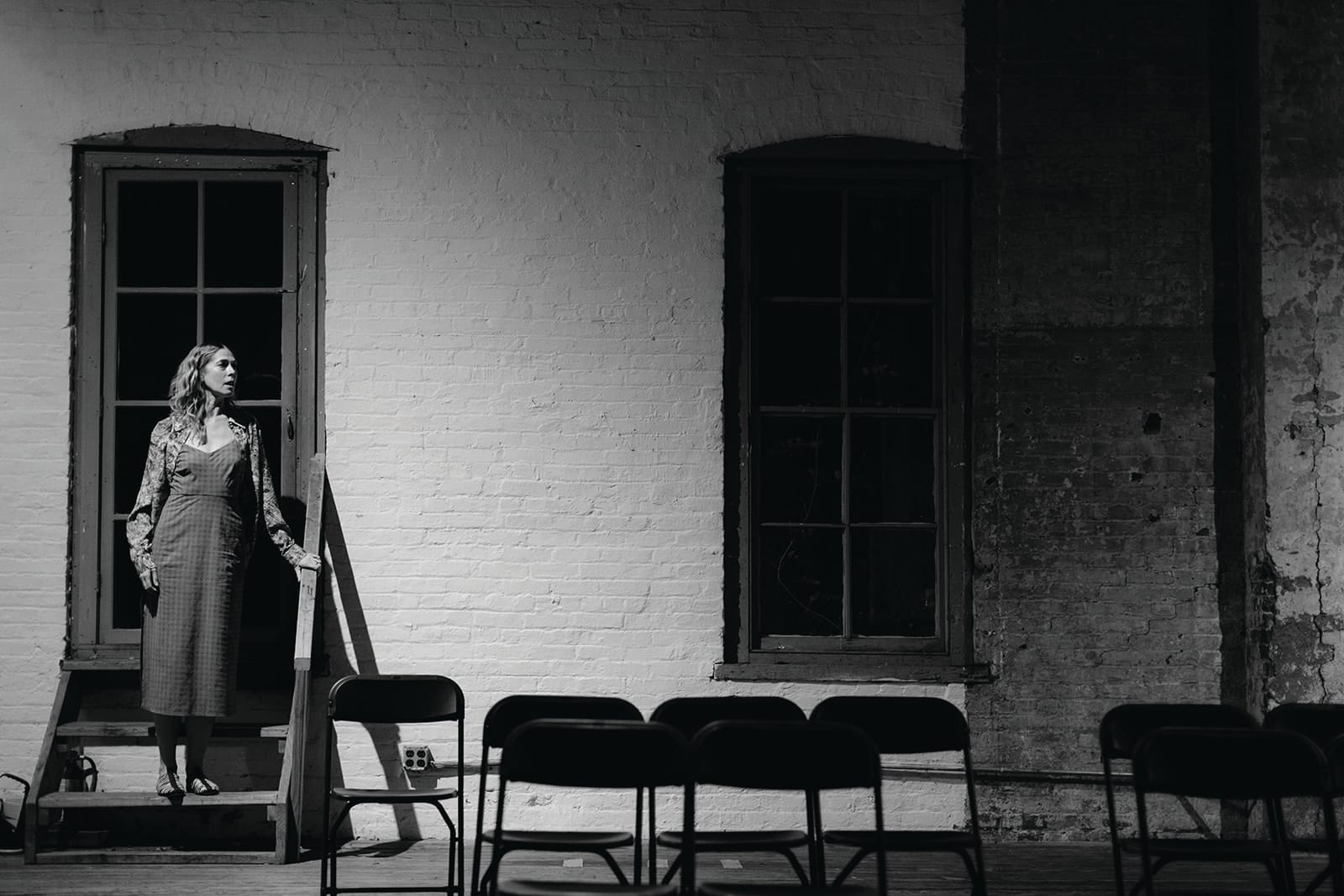
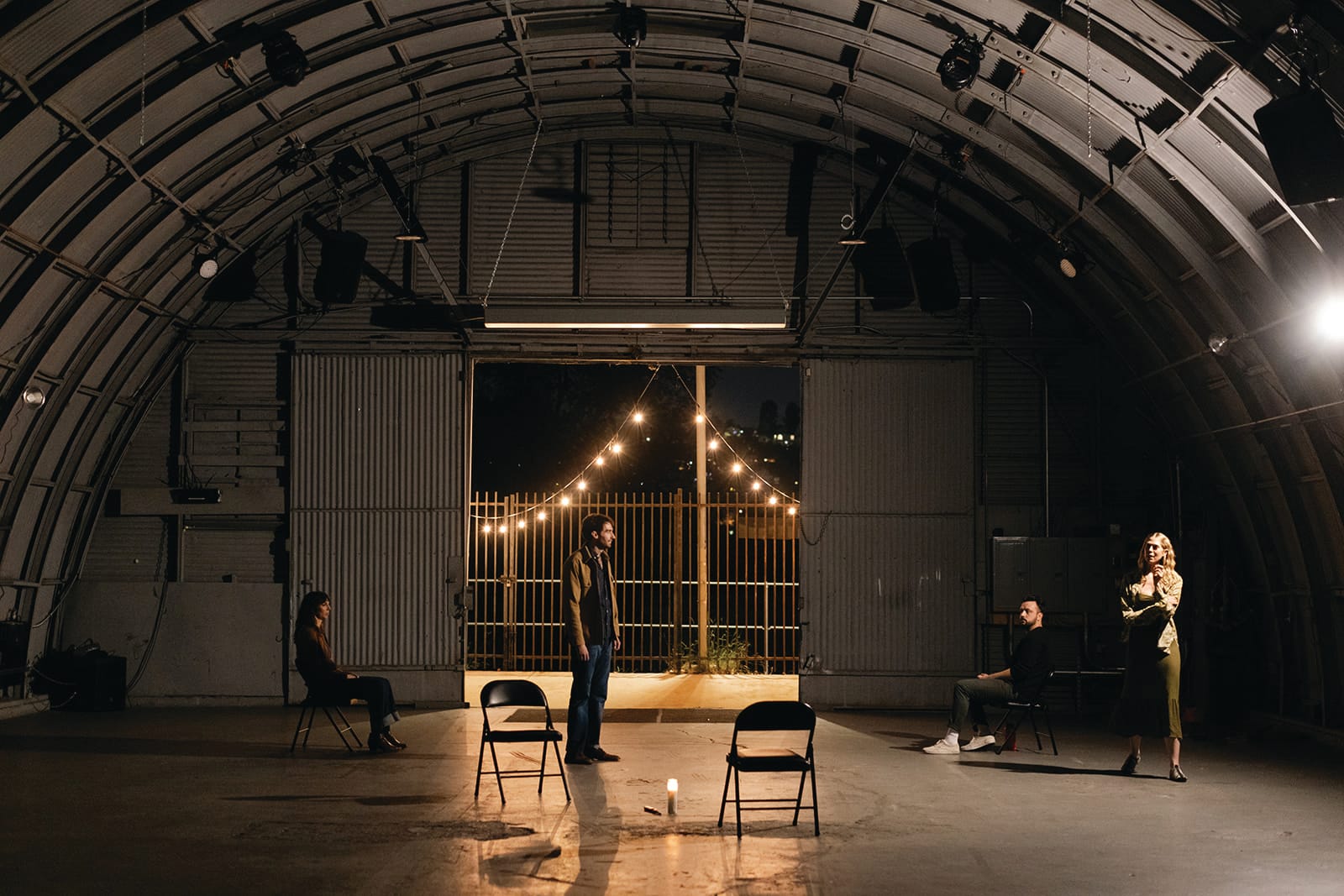
Here are some of the places The Streetcar Project has taken over
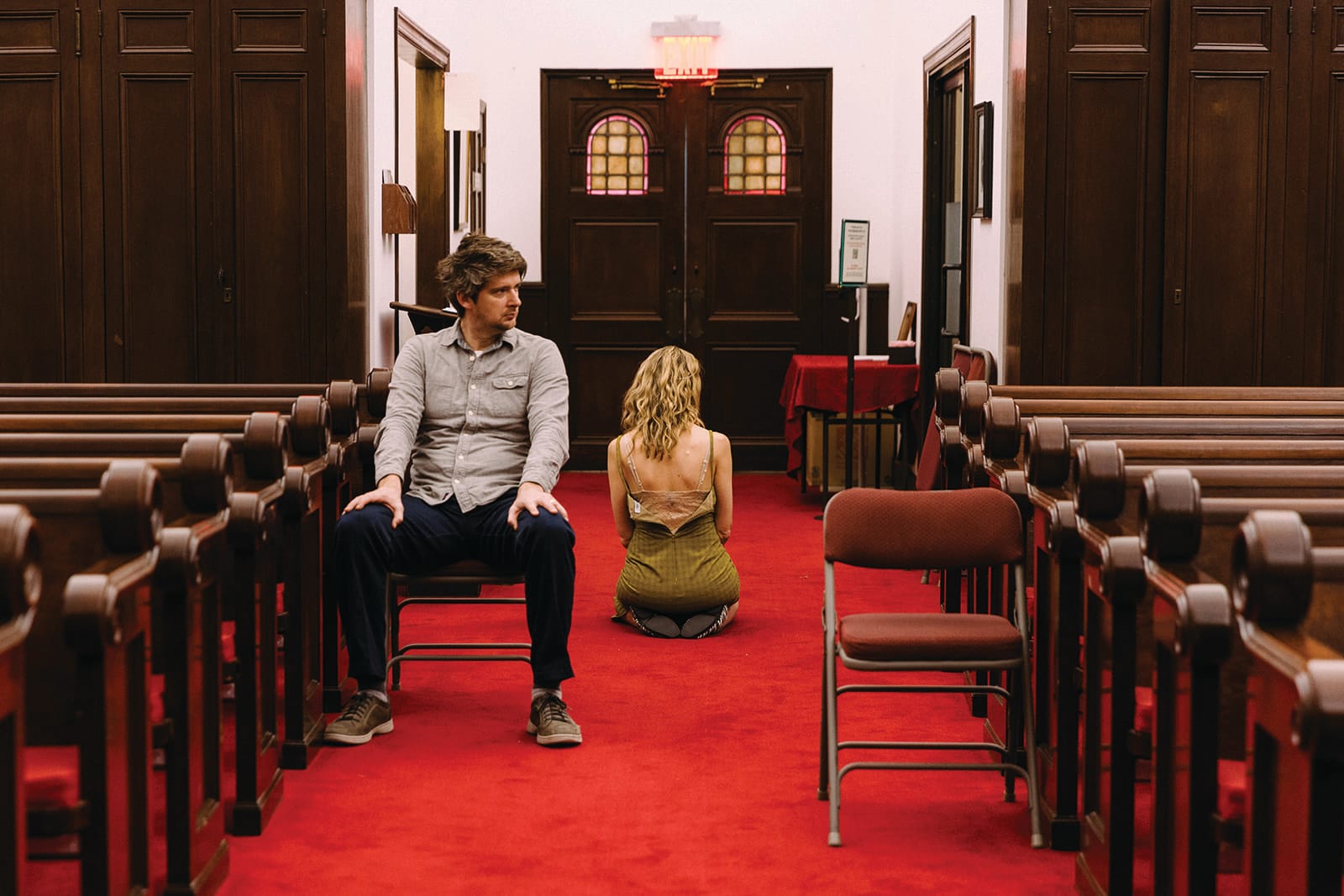
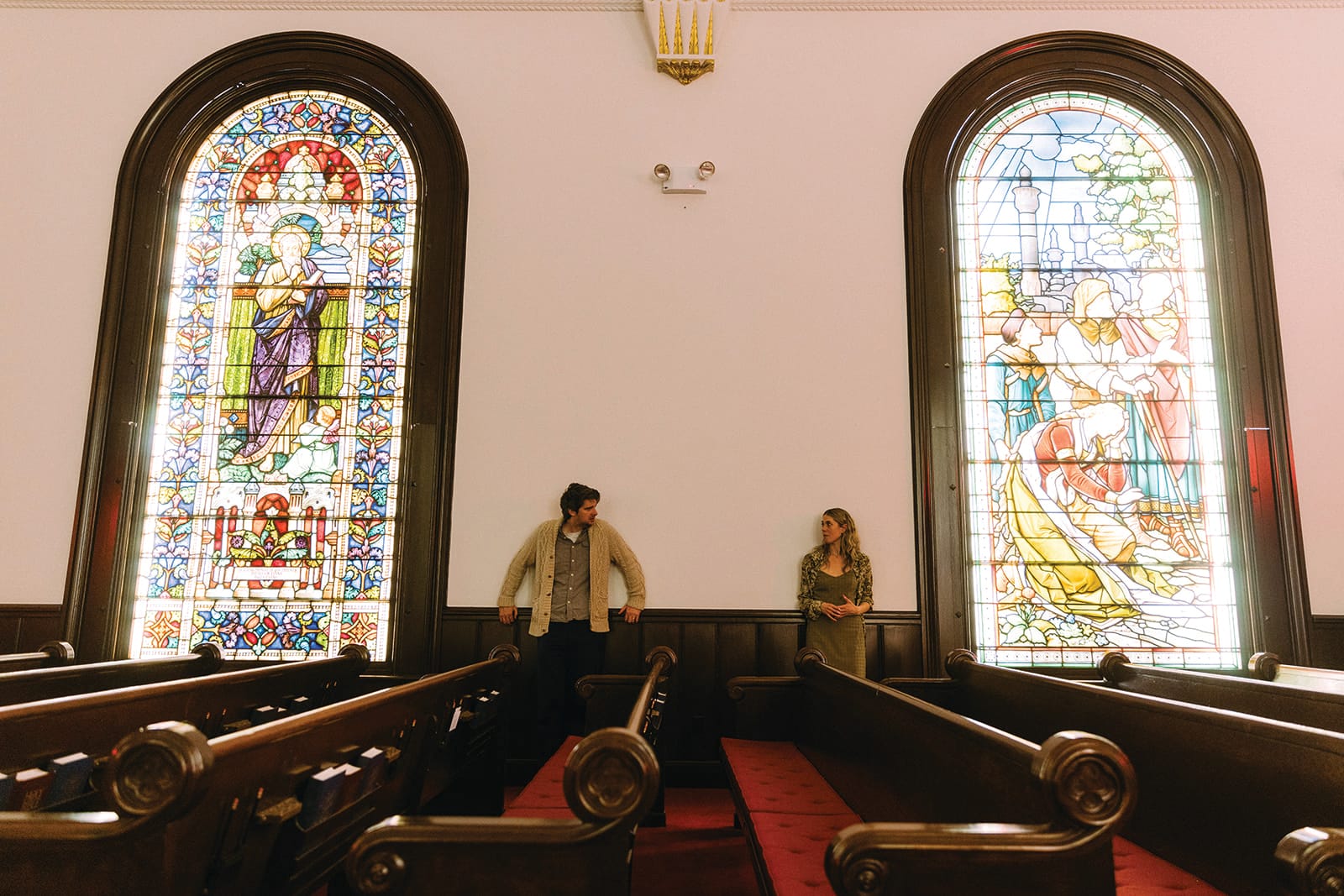
Will Rogers and Lucy Owen in Madison Avenue Baptist Church in midtown Manhattan. Photos by Walls Trimble.
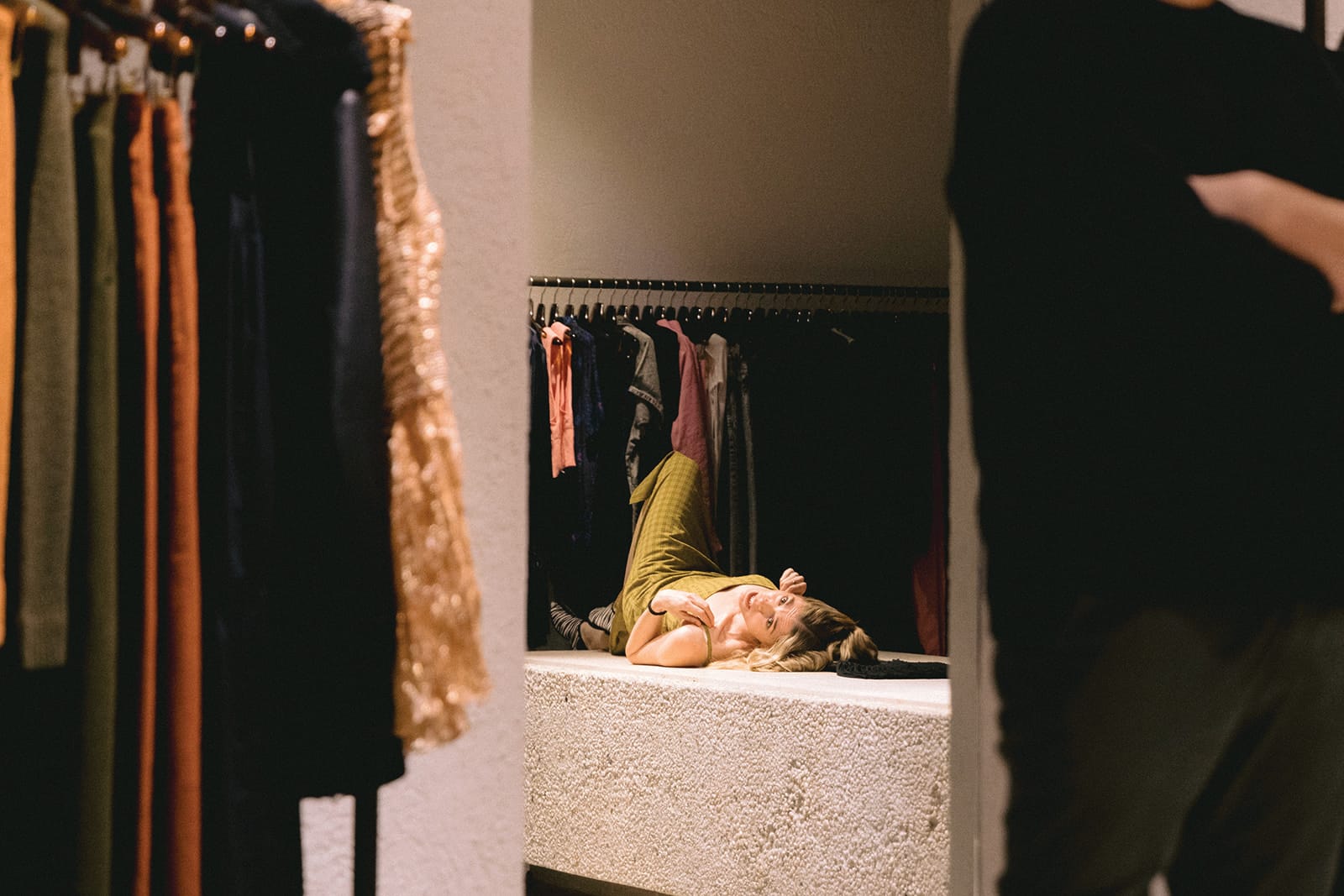
LEFT: Lucy Owen in The Rachel Comey Store in SoHo Manhattan. Photo by Walls Trimble. RIGHT: Lucy Owen and Nick Westrate in Toni Rembe Theater in San Francisco, CA. Photo by Samantha Lomax.
“We want to play Williams’ music everywhere, because our ghosts follow us everywhere: riding the bus, sitting in a movie theater, or shopping at our favorite boutique. When you least expect it, they grab you by the throat, and in a moment you relive the worst summer of your life.” —The Streetcar Project
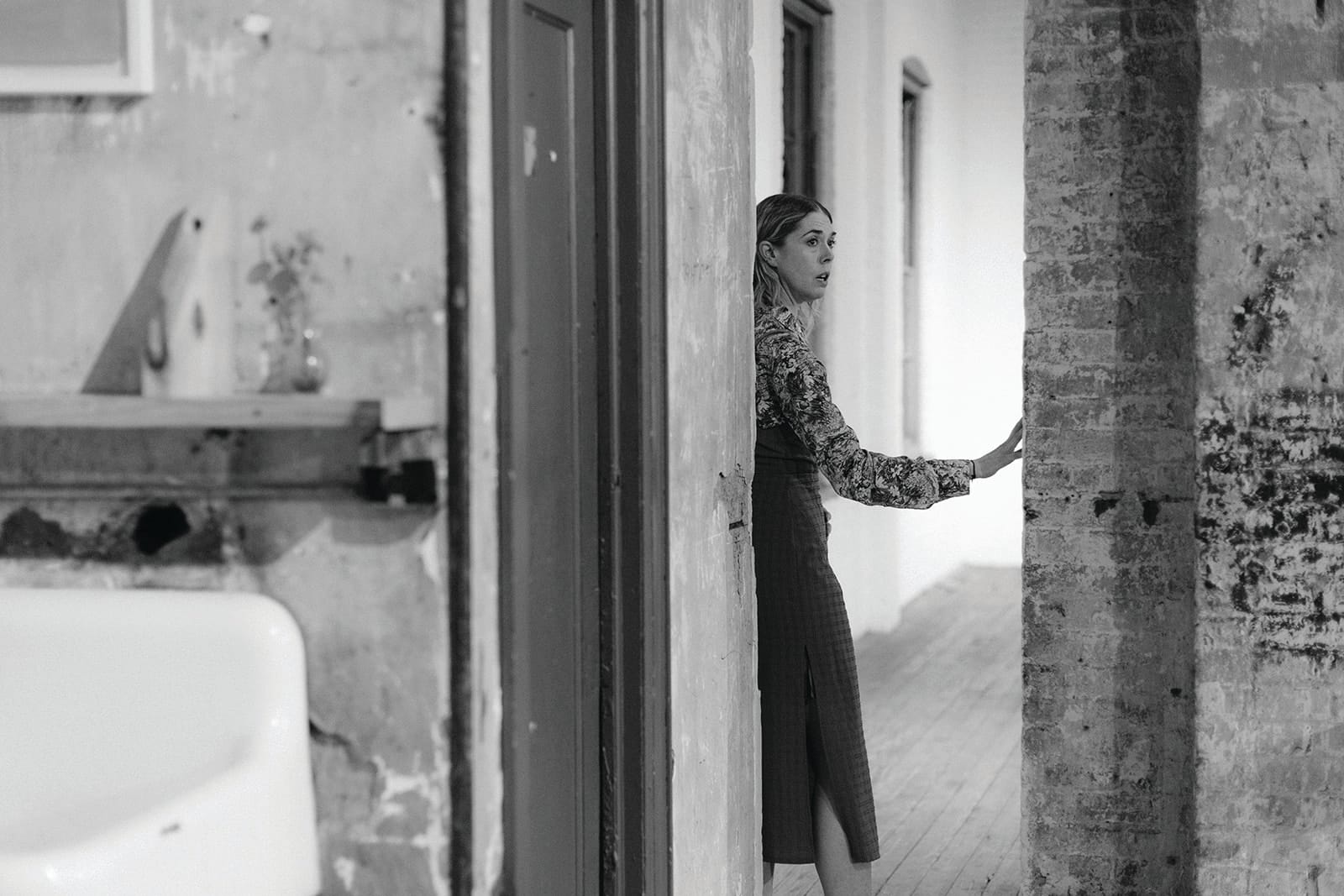
Lucy Owen in The Invisible Dog Arts Center in Brooklyn, NY. Photos by Walls Trimble.
Who's Who
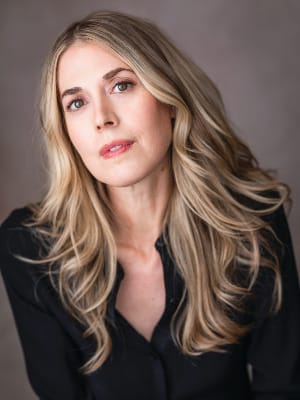
LUCY OWEN (Co-Creator, Blanche) is an actor and filmmaker based in Brooklyn. Recent television credits include Showtime’s The Loudest Voice where she recurred as Suzanne Scott, the current CEO of Fox News opposite Naomi Watts and Russell Crowe; and Sandy on Craig Zobel’s CBS All Access series, One Dollar. Film credits include Miss Sloane, opposite Jessica Chastain, directed by John Madden, Jonathan Demme’s Ricki and the Flash, Kelly and Cal, The Sounding, Higher Ground, The Mend, and most recently in Oday Rasheed’s If You See Something opposite Reed Birney and Brian Brightly’s The Wake. On stage Lucy has been seen in Cloud Nine at the Atlantic, and The Village Bike (opposite Greta Gerwig) at MCC. Lucy’s film, Fit Model, which she co-wrote and stars in premiered at the New York Film Festival and can currently be streamed on The Criterion Channel.
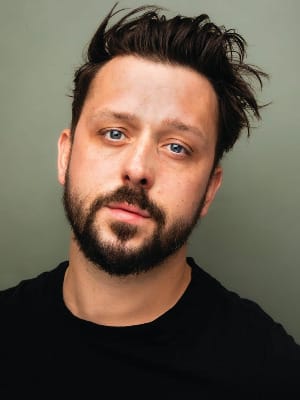
BRAD KOED (Stanley) is best known for his work as a series regular on PBS’s Mercy Street. Brad also appeared on Broadway opposite Phillip Seymour Hoffman in Mike Nichols’ production of Death of a Salesman and in the world premiere of Aaron Posner’s Stupid Fucking Bird, which earned him a Helen Hayes nomination for Best Actor. He played Mercutio at the Folger Theater, starred in Unnatural Acts at Classic Stage Company, and also recurred on TBS’s hit comedy Search Party. This performance is dedicated to the memory of Rodney Hudson.
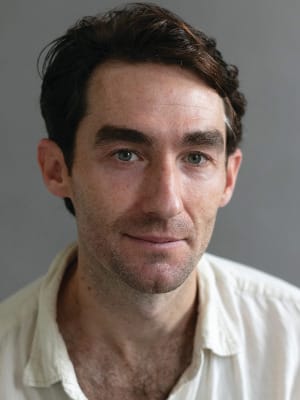
JAMES RUSSELL (Mitch) also played Mitch in Los Angeles ‘24, Tour: 25/26. Off Broadway: Philadelphia Here I Come, A Touch of the Poet, Lady Gregory, The Shadow of a Gunman, Neil Pepe’s Juno and the Paycock, The Plough and the Stars, The Dead, 1904, Shining City, Port Authority, Charlotte Moore’s Juno and the Paycock, and The Freedom of the City (Irish Rep). His other credits include Hamlet (Tim Carroll’s The Factory), Major Barbara (Shaw Project), Midsummer Night’s Dream, The Liar, Playboy of the Western World (Shakespeare Theatre of New Jersey). Internationally, he performed in The Flood (Lyric Theatre, Belfast), Cymbeline (Shakespeare’s Globe, London). In film, he appeared as Brahms Heelshire in The Boy (Lakeshore Ent, STX), Free/Lance (Pegalo), What’s Left Behind; on TV James plays ADA Polson in Law and Order: Organized Crime (NBC), Eddie Lyman in FBI (CBS), Unforgettable (A&E), Forever (ABC), Deception (NBC), Infamous (NBC), and Blue Bloods (CBS).
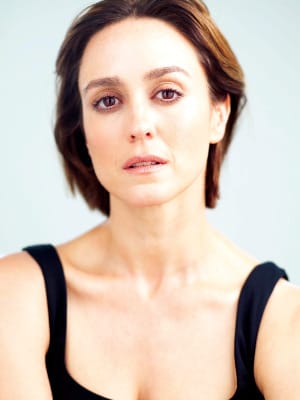
HEATHER LIND (Stella) won a Theater World Award for Best Broadway Debut for Merchant of Venice, in which she starred opposite Al Pacino. She originally played the role in The Public Theater’s Shakespeare in The Park, where she also starred as “Desdemona” in Othello. Other Broadway credits include The Nap. She starred as Eliza Doolittle in Pygmalion at The Williamstown Theater Festival and in Incognito at The Manhattan Theater Club. She won a SAG Award for Boardwalk Empire and starred in Turn: Washington’s Spies for AMC. She currently appears opposite Jon Hamm on Your Friends & Neighbors for Apple. She earned an MFA from NYU’s Graduate Acting Program.
TENNESSEE WILLIAMS (Playwright) (1911-1983) explored passion with daring honesty and forged a poetic theatre of raw psychological insight that shattered conventional proprieties and transformed the American stage. The autobiographical The Glass Menagerie brought what Mr. Williams called “the catastrophe of success,” a success capped by A Streetcar Named Desire, one of the most influential works of modern American literature. An extraordinary series of masterpieces followed, including Vieux Carre, Sweet Bird of Youth, The Rose Tattoo, Orpheus Descending and the classic Cat on a Hot Tin Roof.
NICK WESTRATE (Co-Creator, Director) As an actor: Broadway: Bernhardt/Hamlet, Casa Valentina, and A Moon for the Misbegotten. Recent: Ibsen’s The Wild Duck (TFANA/STC), Frankenstein (STC), and Prior Walter in Angels in America for Jánosz Száz at The Arena Stage. Off-Broadway he has starred in plays at theaters including The Public Theater, Barrow Street, and NYTW for directors such as David Cromer, Ivo Van Hove, and Daniel Fish. On television, best known for 3 seasons as Robert Townsend on AMC’s Turn: Washington’s Spies, Todd Haynes’ Mildred Pierce (HBO), Bruno Barreto’s The American Guest (HBO), and Manhunt (Apple). On film he stars in American Insurrection and in Jonathan Demme’s Ricki & the Flash opposite Meryl Streep. He has his own special Drama Desk Award for his versatility in performance, is an NYTW Usual Suspect, and a graduate of Juilliard. He is excited to continue producing, directing, and designing actor-driven theater with several projects in development.
CLAIRE SIEBERS (Associate Director) has appeared in numerous Off Broadway productions including Mary Gets Hers (Playwrights Realm/MCC), New Golden Age (Primary Stages), Georgia Mertching is Dead (Ensemble Studio Theatre), Events (The Hearth), Agnes (Lesser America), The Workshop (softFocus, dir. Knud Adams), LA Party (Under The Radar & Austin Fusebox), and Tribes (Actors Theater of Louisville). She served as the Associate Producer of Lesser America from 2014-2016, is a founding member of Veronica Writers’ Group, and a New Georges Affiliated Artist. She is a graduate of Yale University and earned a graduate degree in acting from the Juilliard School. clairesiebers.com
REBECCA J. ENNALS (Stage Manager) is delighted to wear multiple hats at A.C.T., where she has stage managed Poor Yella Rednecks (2023), A Christmas Carol (2023), and Co-Founders (2025), directed Measure for Measure (2024) and Julius Caesar (2025) for the A.C.T. OUT Tour, and produced multiple programs for the Education and Community Programs department. Other stage management work includes Much Ado About Nothing (SF Shakes) and As You Like It (CalShakes). She was a staff member at SF Shakes for 21 seasons, 10 as Artistic Director. Currently she is the stage management lecturer at UC Berkeley, proudly mentoring the next generation of theater makers. She holds a BA from Scripps College and an MFA from UC Davis. Her favorite creative collaborations will always be Henry (11) and Eddie (8).
EMMA WALZ (Assistant Stage Manager) has worked on the stage management team at A.C.T. for Co-Founders, A Whynot Christmas Carol, Poor Yella Rednecks, The Wizard of Oz, and 2023’s A Christmas Carol. Walz was the Assistant Stage Manager for The Reservoir and Cult of Love at Berkeley Repertory Theatre, and worked as a deckhand on The Ripple, The Wave That Carried Me Home, Clyde’s, Galileo, and The Thing About Jellyfish. Walz has stage managed several shows at Bay Area Children’s Theatre, including The Imaginaries, Llama Llama Red Pajama Live, Elephant and Piggie, and Frog and Toad. Before moving to the Bay Area, Walz worked in Arizona at All Puppet Players and The Phoenix Theatre Company. (she/her)
THE STREETCAR PROJECT (Producer) is an independent commercial theater producer dedicated to centering the actor as the most crucial member of the process. It is dedicated to long form rehearsal process, hiring working class actors and paying them a living wage. The Streetcar Project was created by Lucy Owen and Nick Westrate in 2023 with the generous help of Ryan Hill. The creation of the company and the piece would not be possibly without the generous work and support of Mallory Portnoy, Will Rogers, New York Theatre Workshop, Coffey St. Studio, Annie McCain-Engeman, Chelsea Altman and David Maltby, Kate Arrington, Rachel Comey, Anthony Edwards and Mare Winningham, Kathleen Chalfant, The Invisible Dog Art Space, Madison Avenue Baptist Church, Mark Russell, Concord Theatricals and Theresa Posorske, Rick Miramontez and DKC/O&M and Myna Joseph. Learn more about the project and their upcoming work at thestreetcarproject.com.
The Streetcar Project is proud to collaborate on the show’s design at A.C.T. with Mitchell Jakubka, Dan Holland, and Kiki Hood.
Natalie Greene, Intimacy
PRODUCTION ASSISTANTS
Rylee Cagle
Nick Reulbach
Eleanor Stalcup
Paige Weissenburger
Print Edition