March 12 – April 19, 2026 | Strand Theater
In This Program
- Show Program
- Making the Ship Sound for Sailing: An Interview With the Playwright
- girls play music
- What Does Music and Arts Education Mean to Me?
- Who's Who
- Print Edition
- More about A.C.T.
A.C.T’s House Rules of Play
Welcome to A.C.T., San Francisco. This is your theater.
All and any laughter is welcome. Laughter from many that can make a whole room shake. Laughter that is a beacon of any one person’s connection to the story told. And laughter that betrays nerves as a story builds tension. Please laugh and let others around you laugh. It is why we have come together.
We encourage all response. You, the audience, are part of the storytelling equation. Feel free to express yourself and let those around you express themselves. We are building a community with each performance.
Theater is alive and precious in that aliveness. The stories are honed and rehearsed and told with—not just to—you, the audience. If you miss a phrase or two, please know that the show will take care of you. It’ll come round again to catch you up and pull you forward. You can trust in the craft, so you can enjoy yourselves.
We ask that you turn off your mobile devices during the performance. This is out of respect for us all coming together to be part of a story told in this space and in living time.
Please share the fun. We ask that you save taking photos or video to before and after the performance and during intermission. We love seeing posts on social media: our programs held high among friends, floating before the set or curtain or lobby spaces. Tell folks about your experience. These shows have short runs and then are gone.
We encourage you to be present, mindful, and together in these spaces. Be kind to your neighbor and fellow theater lover. Help nurture and welcome new and young theater goers; for some this is their first time seeing a play. Give each other room, but also smile and say hello, as you pass on the way to your seats, or at intermission standing in a line, or as you walk out into your city.
Again, welcome to A.C.T. This is your theater.
From the Artistic Director
Dear theater lovers,
Welcome to the world premiere of ||: Girls :||: Chance :||: Music :|| by Eisa Davis!
In 2018, mere weeks into my tenure as A.C.T.’s artistic director, I approached Eisa to write a play that would be set in the Bay. I was a tremendous fan of her as a writer and performer and knew she had grown up here. We had crossed paths in New York as colleagues over years, mainly in workshop settings. She didn’t want to commit to anything she couldn’t deliver on but soon described how formative the Young Musicians Program was for her over eight summers. A play started to take hold.
“What does music mean to me?” became a central question to each character, and I hope it and the broader question of “What do the arts mean to us?” rings in all our ears as we attend this play and beyond.
I love how this play with music marries many of A.C.T.’s programs. It is a story that foregrounds art-making, performance—yes—but really the discipline, vulnerability, community, and pleasure that are all needed to make something. The story centers the precarity and strength within teenagers and the import of arts in education. A.C.T., through both its Young Conservatory with its evening and weekend acting classes and our Education & Community Programs department that partners Teaching Artists with middle school and high school students and educators throughout the city, takes theater seriously to activate creativity and give a platform to young people.
I remember several years ago, at an audience talk back after a performance of a culmination of a semester-long project with students at Downtown High School, that a student confidently proclaimed that she was a writer. She continued by saying that before this project she didn’t know that was at all a possibility, but she now knew she was a writer. I do not know where that young person is today, whether she is a writer by profession, or it is writing a part of her daily life somehow, or is it even an ongoing way of how she thinks of herself, as an observer, collector, an organizer of complex thought into understandable language, a maker of worlds? I don’t know, but I do hope that she remembers the feeling of that moment of easy assured identity and possibility.
I’m very proud of and grateful to be working on this brand-new play. I hold the characters close, feel badly and excited for them all in equal measure.
Thank you for coming out. Thank you for supporting A.C.T. Thank for helping bring to life something a new—a play that celebrates music, chance, and girls of color in the Bay.
Pam MacKinnon
Artistic Director
From the Interim Executive Director
We are so thrilled to have you join us for this gorgeous production of ||: Girls :||: Chance :||: Music :||! If this is your first time at A.C.T., WELCOME. If you’ve been coming for many shows over several years, WELCOME. However this note finds you, welcome, and thank you for being here for the show.
||: Girls :||: Chance :||: Music :|| is a world premiere in collaboration with Vineyard Theatre Company in New York—a fantastic cross-country partnership coming together to create a new play for the American theater. Playwright Eisa Davis is a singular writer-musician-actor whose keen ear for the language and inner lives of adolescent women created the Pulitzer finalist Bulrusher, as well as the 2024 Warriors concept album with Lin-Manuel Miranda. The cast is made up of five phenomenally talented actor/musicians. This play with music was one of artistic director Pam MacKinnon’s first commissions at A.C.T. back in 2018, so it’s fitting that this production is Pam’s last show that she’s directing as A.C.T.’s Artistic Director.
On that note, I would like to say a few words about Pam. As artistic director, she led A.C.T. through the pandemic, the creation of multiple works of digital and online theater, and into this brave new world of the 2020s. At A.C.T. she’s directed Edward Albee’s Seascape, Kate Attwell’s Testmatch and Big Data, Lydia R. Diamond’s Toni Stone, Christopher Chen’s The Headlands, María Irene Fornés’s Fefu and Her Friends, and more. She’s championed new voices and San Francisco artists, commissioned new works, and uplifted writers to bring joy and conversation to the Bay Area. We’ve been lucky to have her, and we look forward to seeing what she does next. Thank you, Pam!
There’s one more show left in the 2025/26 Season: Maggie O’Farrell’s Hamnet, in an acclaimed production from the Royal Shakespeare Company, running Apr 22–May 24 at the Toni Rembe Theater. And we are announcing our 2026/27 Season on March 17—visit our website to learn more. I hope you’ll consider joining us as a subscriber for our new season—subscribers get the best deal on ticket prices, gain access to great benefits, lock in their dates and seats for all six shows, and help keep the theater running.
If this is your first time at A.C.T., I hope you’ll check out more of what we offer: behind-the-scenes benefits for our generous donors (act-sf.org/support), classes and training for all ages through our Conservatory programs (act-sf.org/training), space rentals for all sizes and needs (act-sf.org/rentals), our work in schools and community organizations across the Bay (act-sf.org/community), and more.
David Schmitz
Interim Executive Director
American Conservatory Theater
In Co-Production with Vineyard Theatre
presents
||: GIRLS :||: CHANCE :||: MUSIC :||
Eisa Davis
Pam MacKinnon
The Cast
Clementine
Gianna DiGregorio Rivera
Fax
Hillary Fisher
Margot
Naomi Latta
Rile
Yeena Sung
Understudy
Fax/Rile
Sharon Shao
Stage Management
Stage Manager
Leslie M. Radin
Assistant Stage Manager
Megan McClintock
Creative Team
Scenic Designer
Nina Ball
Costume Designer
Mel Ng
Lighting Designer
Russell H. Champa
Sound Designer
Fan Zhang
Original Music Composition
Eisa Davis
Dramaturg
Joy Meads
Casting
Peter Dunn Casting and LeeAnn Dowd
Music Director
Jord Liu
A.C.T. Producing Team
Artistic Producing Director
Andy Chan Donald
Director of General Management & Operations
Louisa Liska
General Manager
Amy Dalba
Director of Production
Martin Barron
Setting
Time: A present
Place: Berkeley and Oakland, CA
This production is made possible by
Season Presenters
Kathleen Donohue and David Sze
Company Sponsors
Donald J. and Toni Ratner Miller
Executive Producers
Anonymous
John Garfinkle
Producers
Lilli I. Alberga and Laurence J. Bardoff
Michelle Shonk
Carolyn and Lee Snowberg
Associate Producers
Richard N. Hill and Nancy Lundeen
Benefactors
Gayle Brugler
David L. Jones and Joe D’Alessandro




LAURENTS/HATCHER FOUNDATION

Official Hotel Partner

Making the Ship Sound for Sailing
An Interview With Playwright Eisa Davis and Director Pam Mackinnon
Pam MacKinnon: Eisa, thank you for taking time out of your lunch break in order to have this conversation today.
Eisa Davis: Yes. I’m currently on break from a work session for Warriors, which is a new musical that I’m creating with Lin-Manuel Miranda, with Jenny Koons directing. The project is based on the cult film Warriors from 1979, which is about this gang of folks who are trying to get from a big conclave up in the Bronx all the way down to Coney Island. And we changed it so that they’re women. It’s just a blast. Working with Lin is, as you can imagine, just so fun. It’s just like eating a bunch of pop rocks every day. And working with Jenny, we’re getting a really nice organism of everyone who’s on the creative team. It’s just really thrilling.
Pam: And in two weeks we go into rehearsal for ||: Girls :||: Chance :||: Music :||.
Eisa: Yes, we’re going to be finishing Warriors with a presentation and then I will hop on a plane and come out to San Francisco to get started on our piece in rehearsal.
Pam: Can you talk a little bit about new play (or musical) workshops and how they are part of your writing process?
Eisa: I love it. The feeling of being in a lab where you’re just pouring one little solution into a beaker and swishing it around and then pouring that into a Bunsen burner. And then does it explode, or does it actually make a really cool new compound that you’ve never seen before that is exactly right for the project?
I love workshops and I love the feeling of play. And also, the commitment that everyone who does workshops tends to have, which is a real desire to make something new and make the ship sound for sailing.
And then, yeah, there are plays of mine that have never left workshop. They’ve just been workshopped and only that. So I’m thrilled that our piece is going into production after the workshops that it’s had from 2020 in Zoom during COVID, to a reading in 2023, and then workshops in 2025, workshops that really got the play into the shape it was going to be. And oh, how important and useful and crucial the workshops have been.
Pam: Yeah, absolutely. I mean, our most recent workshop in November, we worked with the actual actors who will do the production. Not only is the time in workshop fruitful and clarifying but so is the time in between. We’ve been getting emails in the intervening couple months from actors saying, “I’ve been thinking of this, and should I do that?” We’re all able to dream specifically about how we will go into rehearsals.
Now ||: Girls :||: Chance :||: Music :|| is not a musical, but it’s a play with music. At times during the workshop process, we asked our actors, who are all wonderful musicians, “Can you bring in something, a piece of music that is close to you?” It was this inspiring and at times an improvisational collective experience that now is embedded in your play and on the page.
Eisa: Yeah. Yeah. Every single actor who’s been able to work on this is part of the piece. Just because they’re not in the performance that everyone will get to see doesn’t mean that they aren’t part of the creative process. It’s so important to underscore that. Something else that I think has been really helpful in our workshops on this, Pam, has been the generational differences in actors.
Pam: Oh, yes, going back to Fall 2020 when we couldn’t gather in person, we had a virtual workshop that employed four teen actor musicians and four adult actors. Eight performers for four roles. We wanted the injection of authentic teen energy and personality, coupled with the craft and rigor that creating a new play requires.
I think you as a writer had moments of, “Oh, I have captured some teen-ness on the page, and I’m going to listen to build off what they’re giving me.” We were toggling back and forth between a teen who can play the cello and an adult who can lift that teen syntax into an active scene. That alone was a fascinating exploration. And all over early Zoom.
Eisa: So fascinating. It was so validating to hear from the teens that this play expressed their experience. And then it was also really great to hear from the folks who had more experience under their belt and had more years on the stage to be able to give us the dramaturgical information that we needed in order to take it to the next step.
And that’s what I’ve really loved so specifically about these workshops in making the play is that you and Joy Meads—A.C.T.’s Director of Dramaturgy and New Work—you are both so seasoned in workshops and in making plays, and were really able to let me and the piece take its own time to emerge and to reveal itself. And that was just such a treasure, to know that I wasn’t, and the piece wasn’t, being pushed into any shape or particular narrative—that it really came about because of the experience of hearing it.
Pam: Nice, nice. Speaking of narrative, how do you describe the story of this play?
Eisa: I usually just back out and don’t describe the story.
Pam: Which a lot of writers do. I remember when Edward Albee was asked, “What is The Play About the Baby about?” His response to Charlie Rose was, “It’s about 90 minutes.”
Eisa: A truer word was never spoken. Thank you, Edward Albee. I would say that this play is an examination of how music can shape your life.
Pam: I love that.
Eisa: And it’s an evocation and expression of the love that I have for music that was really fostered by my experience of being in the Young Musicians Program at UC Berkeley when I was a kid. So it’s a love letter to that conservatory-like experience that I had from…well, I started when I was 10, so from age 10 to 17, and it’s stayed with me and really made a huge stamp on me, not only as a musician, but as a person, on my aesthetic and on all that I do. I would say that the play is both something very personal, and it’s also about the phenomenon of what it is to be a teen training yourself to share music with the world.
Pam: That’s beautiful. Yes, when people ask me, I always say that this is a deeply personal story, not autobiographical, but a deeply personal story. And I feel that. I feel that it’s coming from a place just born of core identity, and it’s an exploration of teen identity. These characters are searching for who they might become, who they want to become.
They’re asking, how much agency do I have in my own formation? It’s a fraught and precarious world, but set in this conservatory setting, which demands attention and gives structure. There’s great tension between expectation and endless possibility.
Eisa: Yeah. Yeah. I think that there’s something pretty big in the exploration of the amount of discipline and the amount of freedom that you want or need as you develop as an artist and as a musician and as a person. I mean, there are so many different personality types that people can bring to music, and a huge part of the differences between the characters is that their approach to music just comes from what their constitution is and what their home culture is, and then what gifts that they just showed up with.
And I think that when you’re collaborating, when you’re making anything together, and when you’re in the very wavy limbo space of art, period, you’re always going to have this kind of friction or tension around, “Well, why doesn’t everyone do it my way?” or, “Wow, your way is so cool. I wish I could do that.” And those are a lot of the dynamics that are taking place in this piece.
Pam: There are some moments in your play that you call flash forwards. This isn’t a memory play. We are in the present, and then there are a number of flashes into the future. Can you describe what that is? How did that emerge for you as part of the structure of the story?
Eisa: I actually don’t know because I think it was a really unconscious inclusion that we’re moving forward. I think in hindsight, now that it’s there, the reason why I even was able to articulate that it was flash forward was from a question that you asked in one of our workshop rehearsals. You were just saying, “This is a memory play.” And I was like, “Oh, no, it’s a flash forward, because we’re really grounding our point of view in these teenagers and what it is that they’re experiencing in the present.”
When you think of a flash forward, it’s like being able to say, “I will have this happen to me.” As opposed to looking backward, which is trying to make a narrative from where you are. And I think looking forward, there’s just so much more surprise and so much more discovery. And that was the energy that I wanted to keep in the piece.
Adrienne Kennedy, who is 94 years old, was my first playwriting teacher, and is a friend and mentor to this day, writing emails and little notes here and there. The first play that I was in of hers professionally, where I got my Equity card, was her Signature season that she did with Jim Houghton, and we were actually at the Shiva Theater, at the Public. It was called June and Jean in Concert.
I think part of why my unconscious was drawn to this flash forward is because there’s a lot of mirroring of tactics that I do in my work that Adrienne also does in hers. And in a lot of ways, I feel that we have sort of influenced each other, if I can be so bold as to say that, where I wrote a play in her class that she was like, “Oh, this is a gold mine.” And we found so many connections between our lives, our family’s lives, both having connections to Cleveland, where she’s from and where I spent a lot of time with family.
Anyway, she does that in her play, June and Jean in Concert, where June, the character that I played, would flash forward and say, “And I will do X, Y, and Z. I will eat Nilla Wafers with my mother, or I will throw myself off of this balcony.” And in that case, it really added to this sense of foreboding, which is what [Adrienne] was getting at in the play. But I think that play was what allowed me to feel a sense of flash forward as something very much native to the way that I think.
Pam: You toggle back and forth between being a performer and a writer. How do you think those two things influence each other?
Eisa: I love work that is very embodied. You know how you walk past your bookshelf and you see a book that just sort of calls to you? For so long, I’ve had this Viewpoints book sitting on my shelf and I just pulled it off the other day and I looked at it and I was just like, “Oh, I’ve been doing this the whole time.” It’s the idea that when you’re making something, when you’re devising work, you’re thinking very much about what it is as a performative experience and not just about what it is as text on the page.
When I was in grad school, we had a class with the legendary director Arthur Penn, and he picked up a script and said, “This is not a play. This is just the text. This is just the road map.” And all the acting exercises that you learn through Stanislavski and Strasberg and so on are very much about relaxation and getting in touch with various parts of your body, and then allowing that to activate the text and the character.
One of the first exercises that I did in grad school was to start writing from the point of view of a part of your body that is making the most noise today. Is it your knee that’s hurting? Is your stomach growling? And then you just start writing as if that’s a character. So when you say toggling, it’s exactly that, that I’ve always felt that they’re two sides of the same coin for me. I’m thinking about what an actor is experiencing as they’re saying these words that I’m writing down on a piece of paper. And then as an actor, I’m always there trying to serve the whole piece. So I guess I think that they’re completely intertwined and it’s very much about the body being involved in a very intense way, both as a performer and as a writer.
Pam: Can you talk about a piece of art or performance that you’ve seen recently that has remained large in memory?
Eisa: Oh my gosh, so much. I got to see Hamnet recently, which is exquisite. It’s exquisite. Talk about the body in a film and in a filmmaker’s vision. And at MoMA recently, there was a Jack Whitten retrospective. Jack Whitten was this absolutely astonishing abstract painter, a Black man from the South, and he really came into his own in the midst of what we now call the height of the Civil Rights Movement and the Black Power Movement. And he was pressured to create in a very representational, figurative, literal way, to respond in a very direct, obvious way to what was happening.
And being from the South, I mean, he knew what was happening. It was very clear, the kind of repression and systematic torture that Black folks in particular were experiencing and continue to, but he really stuck it out with his abstract work. And again, with the body, I was so stunned by the way that he created a huge rake, like an iron rake that he would put over his shoulder and drag across a huge canvas with oil paint on the floor. And you got this sense that he felt that he needed to do something physical. And he came from manual laborers, his parents, that that was absolutely necessary to his artistic process.
And you can feel all of the pain and all of the resistance and rebellion that everyone was asking him to express in representational form. You can feel it all in the abstract work. It was one of the most emotionally overwhelming experiences I’ve ever had in a museum.
And then I also just read Arundhati Roy’s gorgeous memoir, Mother Mary Comes to Me. To see how a very painful mother-daughter relationship could become a gift, making Arundhati Roy into the activist and writer who has been a gift to all of us in telling us about the various struggles in India for the environment, for particular groups of Dalits…. I was stunned by how she was able to take in the rebellious spirit of her mother, which was so painful for her to experience as a child, to embody that and then to come to an absolutely beautiful reconciliation by the end of her mother’s life. So those are a few things.
Pam: Thank you for a little tour of influence. See you in a couple weeks, right?
Eisa: I’m so excited. Already, this play and the making of it has been such a thrill. And I’m going to say that word treasure again. It’s just been a treasure to work with you and everyone on this
Pam: Oh my goodness. Well, likewise.
Eisa: Can’t wait to come home.
Pam: Yeah, exactly.
Eisa: And make something in the Bay.
girls play music
By A.C.T. Director of Education & Community Programs Natalie Greene and
Associate Director of Community Engagement Viera Whye
This world premiere of ||: Girls :||: Chance :||: Music :|| is more than a production; it is a homecoming. For A.C.T.-commissioned playwright and Pulitzer Prize finalist Eisa Davis, the story of four gifted teenagers navigating a high-stakes summer music program is rooted in the “mother lode” of her own life: her upbringing in the East Bay and her formative years at the Young Musicians Program (YMP), which has now become the Young Musicians Choral Orchestra (YMCO).
A Legacy of Excellence
Since 1968, YMP/YMCO has been a place where talent meets opportunity. Dedicated to transforming the lives of Bay Area youth through the synergy of music, education, and personal growth, the program—under the leadership of celebrated educator Geechi Taylor—uplifts students from under-resourced communities through rigorous training and holistic support.
For Davis, her eight years in the Young Musicians Program provided a sanctuary of “joy and dedication to the wonder of music.” As she reflects:
“The training worked because it was couched in joy... because I could laugh and be with other students of color who loved studying and working hard. And because the program did not put a burden on us or on our parents—the program was free.”
Davis’s play moves away from the traditional classical music narrative of strict teachers and solo triumph, focusing instead on the “students’ feeling of togetherness” and the lack of competitiveness between them. “No matter what we ended up doing in life, we were there to serve the music,” she notes. “That was a profound principle to live out, one that today is even more rare.”
Beyond the Four Walls: “girls play music”
Alongside this production, A.C.T. is thrilled to launch girls play music, a series of free public concerts featuring emerging, young, and female-identified student musicians from YMCO. Supported by the Svane Family Foundation’s CULTURE FORWARD initiative, this series brings the themes of mentorship and improvisation directly onto the sidewalk outside of the Strand Theater.
In collaboration with the Market Street Arts Busk It! program, these young artists will perform on Market Street for an hour before each Friday night performance of ||: Girls :||: Chance :||: Music :||. By inviting YMCO musicians to busk, we are expanding the playing space into the wider Civic Center and Mid-Market community, enlivening the neighborhood and paying tribute to the wellspring of voices our region continues to produce.
Our Commitment: Arts Education as Transformation
At its heart, ||: Girls :||: Chance :||: Music :|| is a story about the transformative power of arts education—a theme that sits at the very center of A.C.T.’s Education & Community Programs. Our department is dedicated to inspiring growth through theater experiences that foster inclusion, participation, transformational learning, and rigorous fun.
By bringing YMCO’s young musicians to everyone on Market Street, we practice our belief that the arts should be accessible to all and that everyone deserves to feel they belong. As Eisa Davis observes, spending time with these young musicians as they discover their talent is an “ecstatic” experience. We invite you to arrive early or drop by on a Friday night, listen to the music on Market Street, and witness the next generation of artists as they serve the music and find their own voices.
What Does Music and Arts Education Mean to Me?
By Austin “Riff” Riffelmacher, Literary Manager and Casting Associate
||: Girls :||: Chance :||: Music :|| reflects upon that similar importance exposure to the arts can have on us when we are young. Several A.C.T. staff members were asked what music and arts education mean to them. Here’s what they had to say!
Xavier P. Dzielski, Director of Institutional Giving
"I was a competitive and performing Irish step dancer for 17 years (yes…just like Riverdance), and in that discipline the music is where it all starts. Everything an Irish dancer is trained to do is an interpretation of or response to that music: the tempo dictates the rhythm of your steps and the funnily-titled tunes like “The Roving Peddler” or “The Vanishing Lake” evoke the stories you are meant to tell with your movement and percussion. Asking what music means to me is like asking what sunlight means to me. It is life giving; it brings color and warmth to the day; it lights the way forward."
Eirin Combs, Donor Engagement Officer
"I feel so lucky to have had access to music education throughout many stages in my life. Having the opportunity to learn all sorts of instruments from a young age, and to learn from teachers who championed self-expression over “perfection,” opened up a whole new world that was exciting and an absolute comfort. I attribute the teachers I had, and still have as I currently take music classes (shoutout to the SF Community Music Center!), that has encouraged me to continue my music education throughout my adult life."
Bryan Pangilinan, Director of Individual Giving
"Arts education literally saved my life. At ten years old, I studied with Filipino composer Bayani Mendoza de Leon, learning to play instruments of the rondalla string ensemble and practicing folk dance traditions, setting me on a path to where I am today with A.C.T. At SF State, I found purpose through vocal studies with friends and mentors like Alissa Deeter, David Xiques, and Corey Head, while also touring with the LIKHA Pilipino Folk Ensemble. Now, as a musical theater composer and performer, I’ve found my voice in centering Filipino immigrant queer stories, and continue to carry my commitment to art and activism in my work and artistic practice."
Sierra Gonzalez, Arts Educator in Residence
"I grew up in the world of music and am a musician myself. It’s often said that music boosts intelligence and creativity, and I believe that’s true. Music became an outlet for me, especially in spaces where I didn’t always excel in traditional ways. The skills I gained through arts education helped me become a better artist and gave me a place to reflect and develop my own artistry and direction. As a theater teacher, I try to incorporate some form of music-making or lyricism into my
courses because of the power it has to engage, express, and connect."
Andrew Tebo, Producer of Rentals & Special Programming
"I grew up in a small town where access to artistic opportunities were limited. Arts education became a critical gateway to broader intellectual and creative engagement, providing both a means of self-expression and the development of confidence in my own voice. My drama and music instructor, Mr. Gleason, was instrumental in this process, fostering the personal and artistic growth that continues to inform who I am. I developed discipline, confidence, empathy, and an understanding of the power of storytelling. These experiences affirmed my belief that creative arts education is not a peripheral luxury, but an essential tool for self-understanding and meaningful human connection."
Jadyn Petterson-Rae, Executive Assistant
"When I think about my arts education, one name comes to mind: A.C.T.’s Young Conservatory. The programs and classes I took helped shape me not only as an artist, but as a person. From elementary school through high school, I was gifted with an incredible community and supportive instructors who gave me the tools to explore who I was and who I wanted to become. At a time when one’s sense of self can be easily influenced, A.C.T. provided a safe space for self-discovery where I could come into my own, learn how to face my fears, and trust myself."
Emmanuel Sabaiz-Birdsill, Inclusion Manager
"As my poetry professor scanned my poem, he looked up and asked, “You know, if this gets published, you can be labeled as a self-hater?” That term was foreign to me. I was submitting a poem about how, as a Mexican American, I could not relate to either my Mexican or my American side. It was much later in graduate school that I read about Said’s “The Other,” Anzaldua’s borderland theory, or Kafka’s isolation in The Metamorphosis that I understood I was not the only one who felt this way. It got published, and my life changed. I went from being alone to finding a community. I learned that the right people do care about my point of view and how I express it. Without the arts, I would not have a voice today."
Katie Speer, Conservatory Marketing Manager
"I grew up in a small town where the arts were mostly seen as a hobby, something added on to the “real” parts of life. For me, it was the opposite. At 14, my ballet teacher encouraged me to attend my first summer intensive at Virginia School of the Arts. For the first time, I was surrounded by people who were just as obsessed with dance as I was. I later trained with Texas Ballet Theater. Through these experiences, an arts-centered life felt possible. I’ve now spent my entire adult life in studios, tech booths, and international stages. Now, as the Conservatory Marketing Manager at A.C.T., I get to connect people of all ages to that feeling of belonging."
Who's Who

Gianna DiGregorio Rivera (Clementine) is a Bay Area–born actor and musician previously seen in A.C.T.’s Private Lives and A Whynot Christmas Carol. Other credits include American Mariachi (Alley Theatre), Romeo y Juliet (California Shakespeare Theater), Hurricane Diane, The Importance of Being Earnest (Aurora Theatre), and Arcadia (Shotgun Players). Gianna was in the original cast of Quixote Nuevo at Cal Shakes, which went on to tour at Hartford Stage, Huntington Theatre Company, and Alley Theatre. She is thrilled to bring her lifelong love of music to the Strand Theater with this inspiring group of artists.
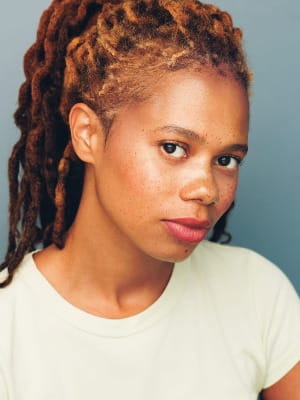
Hillary Fisher (Fax) made her Broadway debut in The Notebook. Off-Broadway credits include: Between The Lines (now streaming on Amazon Prime & BroadwayHD), Cyrano (The New Group) Regional credits include: Ariel in The Little Mermaid (Papermill), Pamela’s First Musical (Two River Theater), Cinderella (Arvada Center). She made her television debut on The Chica Show (Sprout). Hillary is also a director (Ars Nova, NYU) and model. She was trained at Pace University BFA and Laguardia High School. Follow for more: IG: @sochillary TikTok: @nochillary Thank you to my family and team for always knowing I would make it here.
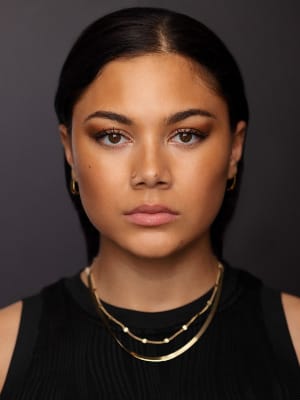
Naomi Latta (Margot) is making both her A.C.T. and professional debut this season. An NYC-based actor, Latta has performed at various venues, most recently 54 Below’s: Filipinos On Broadway. She extends her gratitude to her parents, her agent, and her friends for their unwavering support. @naomilatta (she/any)
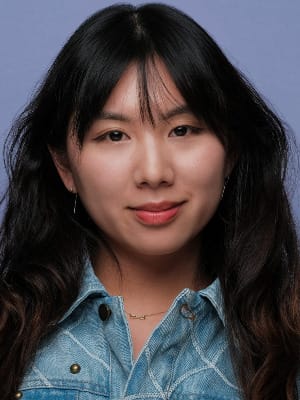
Yeena Sung (Rile) is a New York City–based actor, songwriter, and creative. Theater credits include Twelfth Night (Classical Theatre of Harlem), Hi-Fi, Wi-Fi, Sci-Fi (La MaMa Experimental Theatre Club), Where Women Go (HERE Arts Center), and the solo show Welcome to My Room (Edinburgh Festival Fringe). Film and television credits include Younger, Last Week Tonight with John Oliver, and the award-winning feature Happy Cleaners. Sung holds an MFA from Columbia University and a BFA from NYU Tisch School of the Arts. With gratitude to God, family, and community. yeenasung.com | @_yeenasung
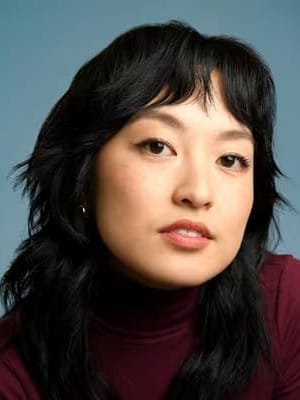
Sharon Shao (U/S Fax/Rile) is a bicoastal actor and teaching artist. Regional credits include The Far Country, The Good Book (u/s) (Berkeley Repertory Theatre), Winter’s Tale, and Good Person of Szechwan (California Shakespeare Theater). Local credits include Waitress, Chinglish, and The Paper Dreams of Harry Chin (San Francisco Playhouse), Cabaret, The Tempest, Hamlet (Oakland Theater Project), Man of God, Vinegar Tom (Shotgun Players), and the Panto in the Presidio Theatre. Shao co-produced an original show called “Sex, Camp, Rock ‘N Roll” at the 2024 Edinburgh Fringe Festival. They received their BA in Theatre Arts and Psychology from UC Santa Cruz.
Eisa Davis (Playwright and Composer) is an award-winning artist working across stage and screen. She was a finalist for the Pulitzer Prize for her play Bulrusher (Berkeley Repertory Theatre, 2023), and wrote and starred in the stage memoir Angela’s Mixtape. Other stageworks include The Essentialisn’t, The History of Light, Mushroom, Ramp, and the upcoming musicals Devil In A Blue Dress with Walter Mosley and Warriors with Lin-Manuel Miranda. She recently appeared in Relay, Ex-Husbands, Kindred, Mare of Easttown, and long ago, in the original Broadway cast of Passing Strange. Eisa is a proud East Bay native and lives in Brooklyn, NY.
Pam MacKinnon (Director) started with A.C.T. in the 2018/19 Season as the theater’s fourth artistic director. She is a Tony, Drama Desk, Joe A. Callaway, and two-time Obie Award-winning director, having directed upwards of 80 productions around the country, off Broadway, and on Broadway. Her Broadway credits include Amélie, A New Musical (featuring Phillipa Soo), Beau Willimon’s The Parisian Woman (with Uma Thurman), David Mamet’s China Doll (with Al Pacino), Wendy Wasserstein’s The Heidi Chronicles (with Elisabeth Moss), Edward Albee’s A Delicate Balance (with Glenn Close and John Lithgow), Edward Albee’s Who’s Afraid of Virginia Woolf? (Tony and Drama Desk Awards for Best Direction of a Play), and Bruce Norris’s Clybourne Park (Tony Award nomination and Obie Award for Best Direction of a Play). Her most recent credits include Nobody Loves You, world premieres of Craig Lucas’s A Whynot Christmas Carol and Kate Attwell’s Big Data (A.C.T.), Bruce Norris’s Downstate (Steppenwolf Theatre Company, London’s National Theatre, Playwrights Horizons ; Obie Award for Sustained Excellence in Direction, and The Joe A. Callaway Award for Direction), Lydia R. Diamond’s Toni Stone (Roundabout Theatre Company, A.C.T., and Arena Stage), Kate Attwell’s Testmatch (A.C.T.), Edward Albee’s Seascape (A.C.T.), Christopher Chen’s Communion and The Headlands (A.C.T.), and María Irene Fornés’s Fefu and Her Friends (A.C.T.). She has been recognized as among the 25 Most Influential San Franciscans of 2020 by San Francisco Magazine, along with Jennifer Bielstein. Pam is the most recent past president of SDC, the national union representing stage directors and choreographers. (she/her)
Nina Ball (Scenic Designer) is a scenic designer, visual artist, and teacher based in the San Francisco Bay Area. Previous A.C.T. credits include Top Girls, Men on Boats, Testmatch, The Birthday Party, and Chester Bailey. Her work has also been seen at the Oregon Shakespeare Festival, Seattle Repertory Theatre, St. Louis Repertory Theatre, People’s Light, Theatreworks, California Shakespeare Theater, Shotgun Players, and San Francisco Playhouse, among many others. Other regional credits include the west coast premiere of Natasha, Pierre and the Great Comet of 1812 at Shotgun Players (nominated for a SFBACC Award); Romeo and Juliet, How I Learned What I Learned (transferred to Seattle Rep), and Confederates (transferred to St. Louis Rep) at Oregon Shakespeare Festival, and more. Affiliations include: Company member, Shotgun Players; Artistic Associate, Marin Shakespeare Company; Scenic Design Faculty, Stanford University; United Scenic Artist Union 829. Ninaball.com
Mel Ng (Costume Designer) BA: University of Chicago. MFA: UC San Diego. Proud member of USA829. For more, visit my website: melissaavang.com
Russell H. Champa (Lighting Designer) previously at A.C.T.: Nobody Loves You, A Whynot Christmas Carol, Big Data, Fefu and Her Friends, Wakey Wakey, The Hard Problem, The Unfortunates. Recent projects include As You Like It (CalShakes), The Lifespan of a Fact (Aurora Theater), The Diving Bell and The Butterfly (The Dallas Opera), Wintertime and Becky Nurse of Salem (Berkeley Repertory Theatre), Everest (Lyric Opera of Kansas City), and Thresh|Hold (Pilobolus). Broadway credits include China Doll (Gerald Schoenfeld Theatre), In the Next Room, or the vibrator play (Lyceum Theatre/Lincoln Center Theater), and Julia Sweeney’s God Said “Ha!” (Lyceum Theatre). New York: Playwrights Horizons, Theater For A New Audience, The Public Theater, Second Stage Theater, Manhattan Theatre Club, and New York Stage and Film. Regional: Steppenwolf Theatre Company, The Wilma Theater, Trinity Repertory Company, The Mark Taper Forum, and The Kennedy Center. Thanks J and J! PEACE. russellchampa.com
Fan Zhang (Sound Designer) Recent NYC: Good Bones (Public), Jordans (Public), Trophy Boys (MCC), At the Wedding (Lincoln Center), The Far Country (Atlantic Theater), This Land Was Made (Vineyard Theatre), Snow in Midsummer (Classic Stage), Paris (Atlantic Theatre), Our Dear Dead Drug Lord (Second Stage), Pumpgirl (Irish Rep), Suicide Forest (Ma-Yi & A.R.T), and more. Regional: Berkeley Rep, Arena Stage, Shakespeare Theatre, Steppenwolf, Milwaukee Rep, Capital Rep, American Repertory, Long Wharf, Pittsburgh City Theatre, Portland Center Stage, Studio Theatre D.C. Yale Rep, Huntington and Old Globe. Local 829; TSDCA. Faculty at Purdue University. Education: MFA, Yale School of Drama. Awards: Drama Desk, Lucille Lortel, Henry Hewes, Audelco. fanzhangsound.com
Joy Meads (Dramaturg) a native of Oakland, is director of dramaturgy and new works at American Conservatory Theater. A.C.T. credits include Co-Founders, Big Data, Hippest Trip – The Soul Train Musical, Poor Yella Rednecks: Vietgone 2, The Headlands, Fefu and Her Friends, Communion, Testmatch, Wakey, Wakey, Sweat, Men on Boats, and Edward Albee’s Seascape. Prior to A.C.T., she was literary manager/artistic engagement strategist at Center Theatre Group. CTG credits include Archduke, Good Grief, Appropriate, Forever, Marjorie Prime (2015 Pulitzer Prize finalist), A Parallelogram, The Royale, and Sleep (also: Brooklyn Academy of Music and Yale Repertory Theatre). Previously, Meads was literary manager at Steppenwolf Theatre Company and associate artistic director at California Shakespeare Theater. Meads is a co-founder of The Kilroys. (she/her)
Peter Dunn Casting (Casting) is a former child actor turned NYC-based producer, writer, director, educator and casting professional. As a casting director his current work includes Hadestown (Broadway/National Tour), Moulin Rouge! (star casting), Blood/Love (Off-Bway) and the sold-out RENT In Concert series with symphony orchestras nationwide. He has also served as associate casting director on Drag: The Musical, Titanique, TINA, Freestyle Love Supreme, various productions at The Muny, and the National Tours and Broadway production of world phenomenon, HAMILTON. A multi-hyphenate artist, Peter is passionate about cultivating safe spaces, advocacy and letting children be children. Special thanks to A.C.T. for having me back. Endless gratitude to my mother. Lead with kindness. @yourboypetey
LeeAnn Dowd (Casting) is a Bay Area–based artist, producer, and creative facilitator. She has worked with A.C.T., Berkeley Repertory Theatre, Center REP, TheatreWorks Silicon Valley, Shotgun Players, Theatre Bay Area, Lower Bottom Playaz, and TheatreFIRST. She was previously the Artistic Producer at California Shakespeare Theater, where she is most proud to have supported projects that expand an understanding of “classical theater” to include epic stories of the global majority, including: black odyssey by Marcus Gardley, Quixote Nuevo by Octavio Solis, and House of Joy by Madhuri Shekar. LeeAnnDowd.com (she/her)
Jord Liu (Music Director) is proud to be working with A.C.T. for the first time. Jord is a multi-instrumentalist, composer, writer, and theater maker. Jord has worked on new work with Berkeley Repertory Theatre, SFBATCO, National Alliance of Musical Theatre, the Johnny Mercer Foundation and Goodspeed Writers Grove, Musical Theatre Factory, Prospect Musicals, National Asian American Theatre Company, Theo Ubique, and other theaters in the Bay Area, New York, and Chicago. By day, Jord builds prototypes of new interactive science exhibits at the Exploratorium in San Francisco. She would like to thank her friends and family. (she/her)
Vineyard Theatre (Co-Producer) (Sarah Stern, Artistic Director; Moogie Brooks, Managing Producer) is one of the country’s leading theatres for the development and production of new plays and musicals, dedicated to nurturing a community of daring theatremakers and to pushing the boundaries of what theatre can be and do. From our home in New York City’s Union Square, The Vineyard has launched more than 150 new works and has sent eleven shows to Broadway, including the Tony Award-winning musical Avenue Q, Paula Vogel’s Pulitzer Prize-winning How I Learned to Drive, and Tina Satter’s Is This A Room (now HBO’s Reality). The Vineyard’s work has been recognized with the industry’s highest honors, including special Drama Desk, Obie, and Lucille Lortel Awards for artistic excellence.
Leslie M. Radin (Stage Manager) is thrilled to return to A.C.T. after previously working on The Great Leap, A Thousand Splendid Suns, Napoli!, and five seasons of A Christmas Carol. She has stage managed at Aurora Theatre Company, Berkeley Repertory Theatre, California Shakespeare Theater, Center Repertory Company, Santa Cruz Shakespeare, the Hong Kong Arts Festival, and New Victory Theater. Favorite past productions include Angels in America, Aubergine, Bull in a China Shop, Fairview, House of Joy, The Great Leap, Sisters Matsumoto, Passing Strange, Lieutenant of Inishmore, and In the Next Room (or the vibrator play). She also teaches stage management at SFSU.
Megan McClintock (Assistant Stage Manager) Resident Stage Manager Megan McClintock’s favorite A.C.T. credits include Co-Founders, Big Data, A Whynot Christmas Carol, The Wizard of Oz, Wakey Wakey, A Walk on the Moon, Between Riverside and Crazy, A Little Night Music, and Indian Ink. Other Bay Area credits include productions at Berkeley Repertory Theatre, California Shakespeare Theater, The Curran, Aurora Theatre Company, and Marin Theatre Company. Regionally she has worked at St. Ann’s Warehouse, La Jolla Playhouse, Chicago Shakespeare Theater, McCarter Theatre Center, and Arena Stage. She has a BA in theater and history from Willamette University.
CREATIVE TEAM
Jaiyah-Shalon Gordon, Assistant Director
TJ Rubin, Music Copyist and Transcriber
Natalie Greene, Intimacy
Larissa Kelloway, Vocal Coach
Dani O’Dea, Fight Director
Shirazette Tinnin, Drum Consultant
Gianna DiGregorio Rivera, Fight Captain
PRODUCTION ASSISTANTS
Emma Walz, Stage Management
Morgan Bright, Script Supervisor
Rylee Cagle
Mikeila Montemayor
Nick Reulbach
Eleanor Stalcup
Paige Weissenburger
CREW
Finn Deuss, Head Carpenter
Elliott Orr, Head Sound
Tyler Mark, Head Electrician (load in)
Krys Swan, Light Board Programmer, Head Electrician (show run)
Jessa Dunlap, Wardrobe Supervisor
Lyre Alston, Wig, Hair, and Makeup Supervisor
Cal Scenic Fabrication, Scenic Construction
The Jazzschool Young Musicians Program, Berkeley CA
bass: Milo Kolesas-Stolzenberg
drums: Benjamin Gleason
tenor saxophone: Javier Guitierrez-Muench
guitar: Andres Navarro
Special thanks to Erik Jekabson and Rob Ewing
MUSIC CREDITS
“Una Voce Poco Fa”
by Gioachino Rossini
“Rêverie”
by Claude Debussy
“Se Tu M’ami”
by Giovanni Battista Pergolesi
“Fantaisie-Impromptu”
by Frédéric Chopin
“What Is This Thing Called Love?”
by Cole Porter
Print Edition