October 17 – 31, 2026 | McCaw Hall
In This Program
- Show Information
- Who’s Who
- Letters
- Features
- Additional Information
Welcome to Seattle Opera
Salome at-a-Glance
Long Story Short
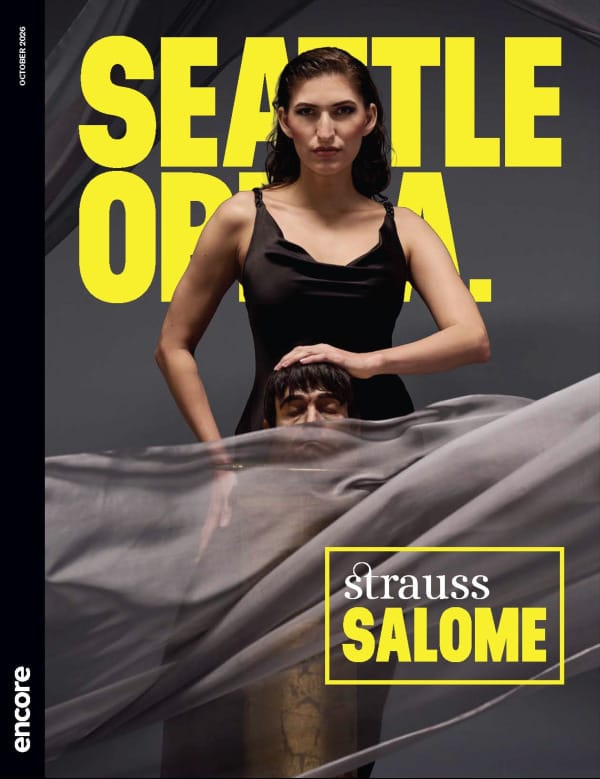
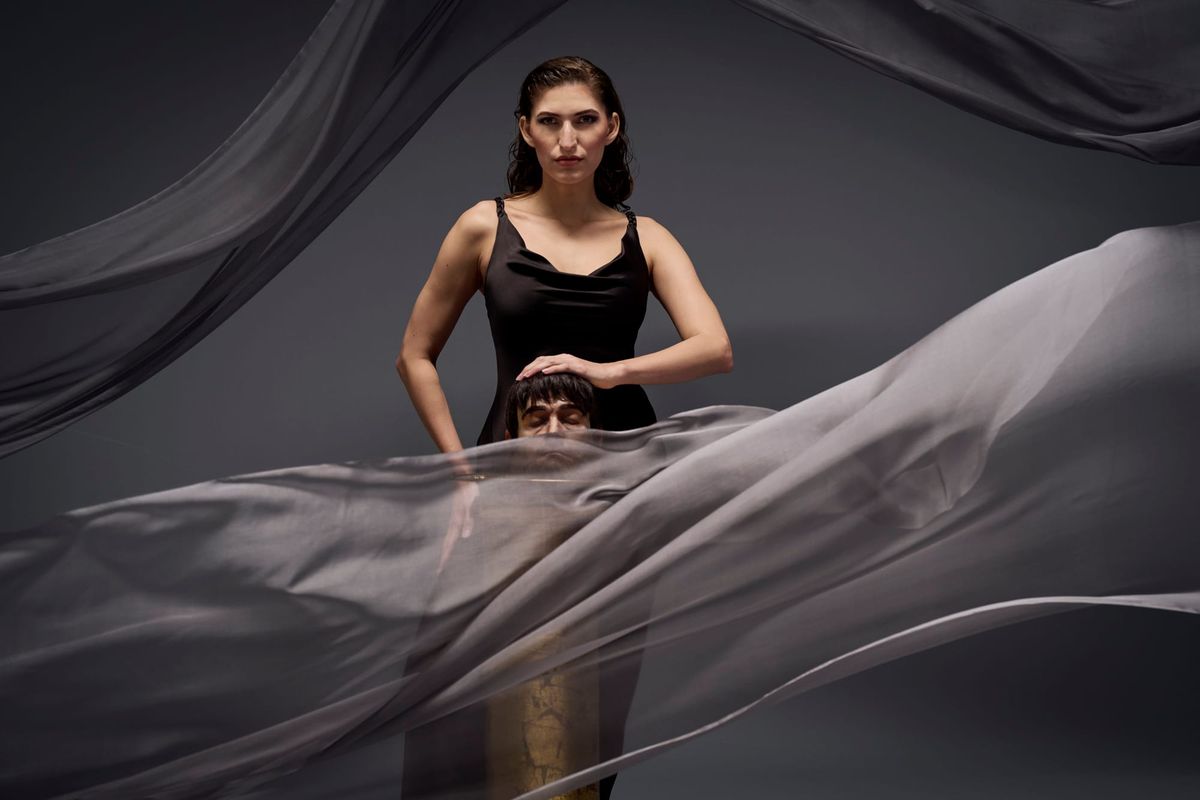
Salome, the princess of ancient Judea, grows infatuated with the prophet John the Baptist, who rejects her advances. At a palace celebration, Salome dances for her stepfather, Herod, and in return demands John’s head on a silver platter.
Who’s Who
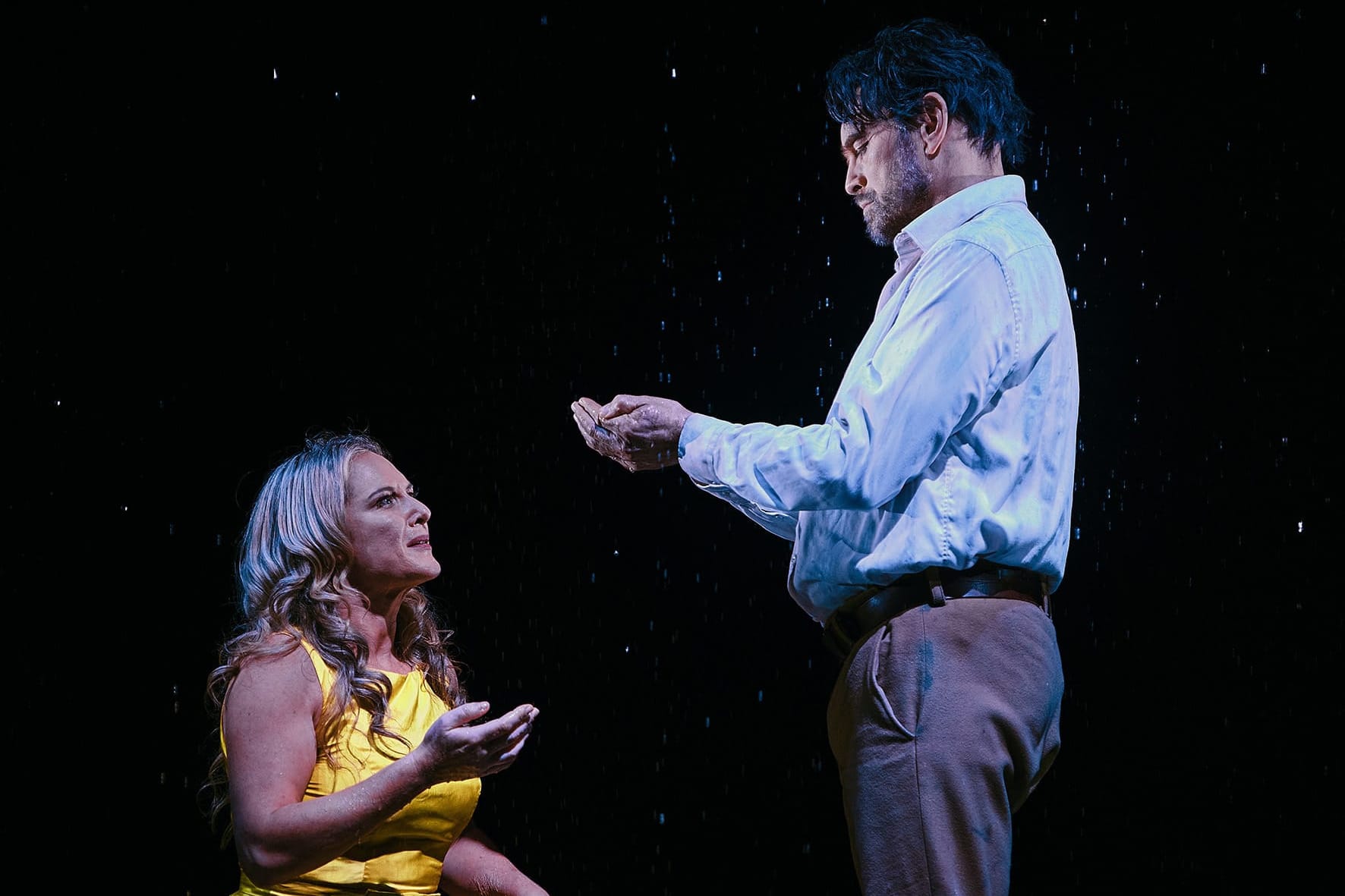
Salome: Princess of Judea
Herod: First-century ruler of Judea
Jochanaan: Holy man and prophet, also known as John the Baptist
Herodias: Salome’s mother, Herod’s wife and former sister-in-law
Where & When
The story, loosely inspired by a few lines in the Bible, takes place in Herod’s palace in ancient Judea during the time of Jesus. This version of the story was crafted by Oscar Wilde in the 1890s and set to music by Richard Strauss. The opera premiered in Dresden in 1905.
Cutting-Edge Stuff
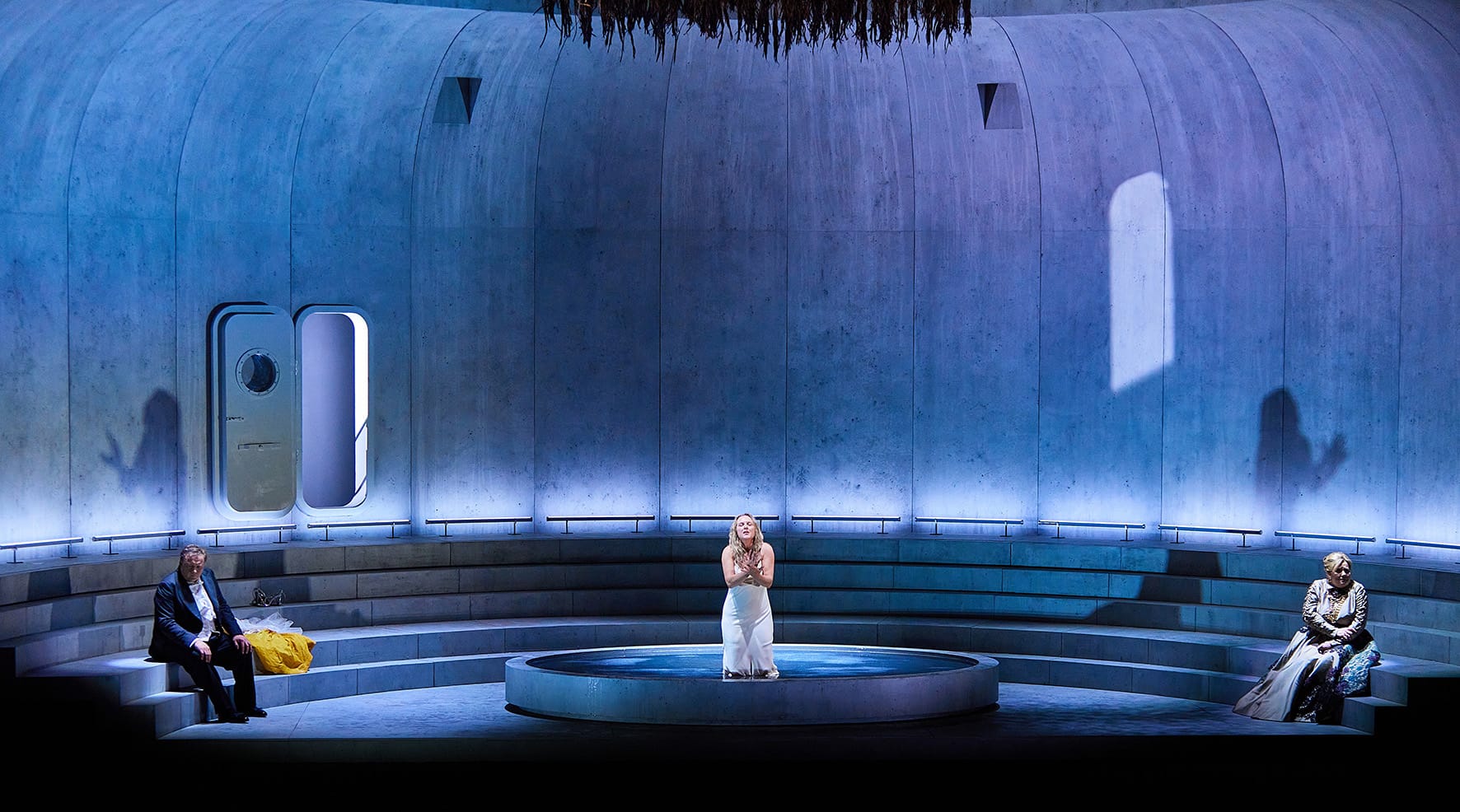
With the creation of Salome, Strauss did more than compose a new opera. His music pushed the boundaries of the art form with provocative, cutting-edge musical storytelling.
Unsettling Sounds
The heir apparent to Richard Wagner, Strauss was a master of leitmotifs: melodic or rhythmic themes used to identify characters, reveal personalities, or set the mood. The orchestra for Salome is massive, with more than 80 musicians and a hefty battery of percussion. Strauss uses that orchestra in unsettling ways, writing for cacophonous combinations of instruments and requiring the musicians play in extreme registers.
Production Sponsors
2026/27 Season Sponsor
4Culture
Production Sponsors
Seattle Opera Foundation
Lesley Chapin Wychoff
Seattle Opera gratefully acknowledges our generous sponsors and more than 5,000 Annual Fund donors who provide vital support for this production and for our work at McCaw Hall, the Opera Center, and throughout Washington State. Your passion for opera and generosity inspire great performances and artistic experiences for our community all season long.
Music by Richard Strauss
Libretto by Richard Strauss after a translation by Hedwig Lachmann of Oscar Wilde’s play
Premiere: Semperoper Dresden, 1905
Seattle Opera Premiere: 1970
In German with English captions
ACT I: 1 hour, 45 minutes
CONDUCTOR
Benjamin Manis †
STAGE DIRECTOR
Bruno Ravella †
ASSOCIATE DIRECTOR & ASSOCIATE CHOREOGRAPHER
Carmine De Amicis †
SCENERY AND COSTUME DESIGNER
Leslie Travers †
LIGHTING DESIGNER
Malcolm Rippeth †
ORIGINAL CHOREOGRAPHER
Liz Roche †
WIGS, HAIR, AND MAKEUP DESIGNER & MANAGER
Ashlee Naegle
ENGLISH CAPTIONS
Jonathan Dean
Cast
(in order of vocal appearance)
NARRABOTH
Joseph Tancredi †
PAGE OF HERODIAS
Hannah Ludwig †
FIRST SOLDIER/FIRST NAZARENE
Scott Conner †
Second Soldier/Fifth Jew
Nathan Stark
JOCHANAAN
Michael Kupfer-Radecky †
A CAPPADOCIAN/SECOND NAZARENE
Michael J. Hawk
SALOME
Brenda Rae
An Attendant
Alexa Jarvis †
HEROD
Chad Shelton †
HERODIAS
Jennifer Johnson Cano †
FIRST JEW
Robert Stahley †
SECOND JEW
Martin Bakari
THIRD JEW
John Marzano
FOURTH JEW
Zhengyi Bai †
ASSOCIATE CONDUCTOR
Kyle Naig
MUSIC PREPARATION
Laura Bleakley †
David McDade
Nick Passabet †
Jay Rozendaal
ORCHESTRA LIBRARIAN
Jay Rozendaal
DICTION COACH
Anja Brumeister †
ASSISTANT STAGE director
Nadja Simmons
PRODUCTION STAGE MANAGER
Jonathan Moore
ASSISTANT STAGE MANAGERS
Quinn Chase
Jamie Kranz
Production by Irish National Opera
† Seattle Opera mainstage debut
Opera presentation and production © Seattle Opera 2026.
Copying or capturing any elements of this performance by camera, audio, or video recording equipment, or by any other copying device, is prohibited.
The Story
Herod’s palace. Narraboth, captain of the guards, watches the princess Salome, who is with her stepfather Herod and her mother Herodias in the adjoining banquet hall. He can do nothing but speak of Salome’s beauty. This disturbs the court page, who anxiously tells Narraboth not to gaze at the princess so intently.
Jochanaan, the prophet, calls out from the cistern where he is imprisoned, prophesying the coming of the Messiah. Two soldiers on the terrace talk with a Cappadocian about the enigmatic prophet. Narraboth announces that the princess is approaching, and the page again warns him against watching her.
Salome leaves the banquet hall to get away from Herod’s lecherous stare. Jochanaan calls out, and Salome is intrigued. She questions the soldiers about the prophet. Narraboth tries to advise her to return to the banquet. Salome, however, is fascinated by the prophet’s voice and asks that the soldiers bring him out to her. When the soldiers refuse, Salome bribes Narraboth with promises of her attention. The captain yields and orders the soldiers to open the well where Jochanaan is kept.
The prophet comes out of the cistern; he denounces the wickedness of Herodias. Salome is fascinated by Jochanaan. After she tells him who she is, Jochanaan insults her, but the princess replies that his voice is like music. Salome asks what she should do, and he tells her to seek the Son of Man. Salome then tells Jochanaan how she admires his body. Salome asks to kiss his mouth, but he spurns her. Narraboth, in anguish, tries to stop Salome, but she continues to plead with Jochanaan, and Narraboth kills himself.
Salome, obsessed, continues begging Jochanaan to let her kiss his mouth. The prophet declares her accursed and goes down into his cistern.
Herod, followed by Herodias and their guests, comes out onto the terrace looking for Salome and slips in Narraboth’s blood. He sees the body and is unnerved.
Herod keeps making amorous overtures to Salome, infuriating Herodias. When Jochanaan calls out again, a noisy argument develops among the Jews in the courtyard. Jochanaan cries out about the Redeemer of Man, and two Nazarenes tell the curious Herod about Christ’s miracles.
Seeking a diversion, Herod asks Salome to dance for him, offering her anything if she will comply. Herodias advises Salome to refuse, and at first she does. But, receiving Herod’s oath that he will give her anything, she agrees despite her mother’s angry protests. When she has finished dancing, Salome asks Herod for her reward: Jochanaan’s head on a platter. This pleases Herodias, but Herod is shocked. He tries to argue Salome out of her request, but she refuses to yield. At last, Herod acquiesces. Salome waits by the cistern until the executioner hands Jochanaan’s head up to her.
Salome asks Jochanaan why his eyes are closed, why his tongue is silent. She again declares her passion for him. Finally, kissing his mouth, she asks if the bitterness upon his lips is the taste of love. Herod orders her killed.
Who’s Who
Artists
CARMINE DE AMICIS
Associate Director & Associate Choreographer (London, England)
Seattle Opera Debut
Stage Director, Suor Angelica/Gianni Schicchi (Teatro Nacional de São Carlos, Coliseu Porto Ageas); Revival Director, Salome (Teatro Massimo di Palermo); Associate Director & Choreographer, Tristan and Isolde (Teatro Carlo Felice); Assistant Director & Choreographer, Siegfried (China National Centre for the Performing Arts); Thaïs (Opéra Royal de Wallonie-Liège)
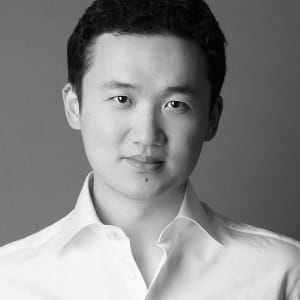
ZHENGYI BAI
Fourth Jew
Tenor (Shandong Province, China)
Seattle Opera Debut
Engagements: Monostatos, The Magic Flute (The Metropolitan Opera, LA Opera, Opera San Antonio); Mime, Das Rheingold (San Francisco Opera); Brighella, Ariadne auf Naxos (Lyric Opera of Chicago); Prince Nilsky, The Gambler (Salzburg Festival); Madwoman, Curlew River (Opéra national de Lorraine)
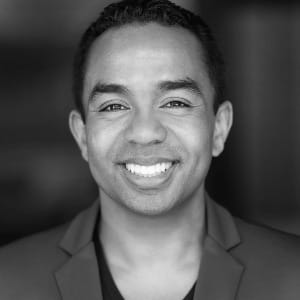
MARTIN BAKARI
Second Jew
Tenor (Yellow Springs, OH)
Seattle Opera Debut: Peter the Honeyman, Porgy and Bess (’18)
Previously at Seattle Opera: Second Shepherd, Daphne in Concert (’26); Greene Evans, Jubilee (’24); Mime, Das Rheingold (’23)
Engagements: Le petit vieillard/La rainette/La théière, L’enfant et les sortilèges (Barcelona Symphony Orchestra); Ernesto, Don Pasquale (Opéra de Baugé); Charlie Parker, Charlie Parker’s Yardbird (The Atlanta Opera, Arizona Opera, Pittsburgh Opera, Dayton Opera, New Orleans Opera, Indianapolis Opera); Soloist, Messiah (Carnegie Hall); Frederic, The Pirates of Penzance (Virginia Opera, Kentucky Opera); Goro, Madama Butterfly (The Dallas Opera, Opera Philadelphia, Utah Opera, Opera Colorado)
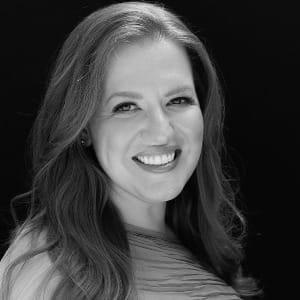
JENNIFER JOHNSON CANO
Herodias
Mezzo-soprano (St. Louis, MO)
Seattle Opera Debut
Engagements: Amneris, Aida (Arizona Opera); Mrs. Grose, The Turn of the Screw (Santa Fe Opera); Emilia, Otello (The Metropolitan Opera); Suzuki, Madama Butterfly (Royal Ballet and Opera)
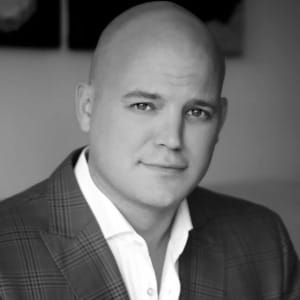
SCOTT CONNER
First Nazarene/First Soldier
Bass (Olathe, KS)
Seattle Opera Debut
Engagements: Colline, La bohème; Police Commissioner, Der Rosenkavalier; Aldeano #3, El último sueño de Frida y Diego; Zuniga, Carmen (The Metropolitan Opera); First Soldier, Salome (Lyric Opera of Chicago); Lord Sidney, Il viaggio a Reims (Opera Philadelphia)
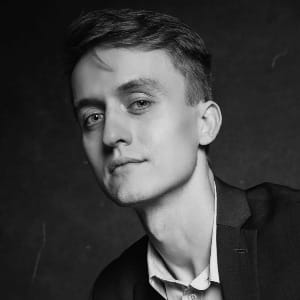
MICHAEL J. HAWK
A Cappadocian/ Second Nazarene
Baritone (Fredonia, NY)
Seattle Opera Debut: Fiorello, The Barber of Seville (’24)
2024/25 Seattle Opera Resident Artist
Previously at Seattle Opera: Fourth Shepherd, Daphne in Concert (’26); The Speaker, The Magic Flute (’25); Silvio, Pagliacci (’24)
Engagements: Mr. Fox, The Fantastic Mr. Fox (Opera Omaha); Per Hansa, Giants in the Earth (South Dakota Symphony); Papageno, The Magic Flute (Buffalo Philharmonic); Demetrius, A Midsummer Night’s Dream (Santa Fe Opera); Ophémon, The Anonymous Lover; Schaunard, La bohème (LA Opera)
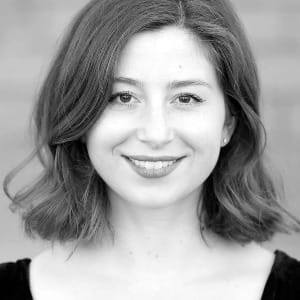
ALEXA JARVIS
An Attendant
Soprano (Seattle, WA)
Seattle Opera Debut
Engagements: Mrs. Charlton, Dead Man Walking; Page, Lohengrin (The Metropolitan Opera); Soloist, Vier letzte Lieder (New York Youth Symphony); Street Singer, MASS (Ravinia Festival); Soloist, Pride Pops with Thorgy Thor (Seattle Symphony)
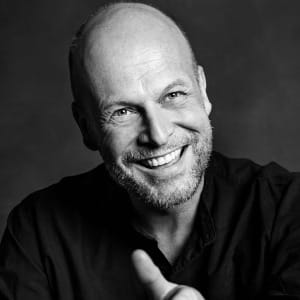
MICHAEL KUPFER-RADECKY
Jochanaan
Baritone (Wasserburg am Bodensee, Germany)
Seattle Opera Debut
Engagements: Gunther, Götterdämmerung; Cecco del Vecchio, Rienzi (Bayreuther Festspiele); The Dutchman, The Flying Dutchman (Spring Festival in Tokyo); Wotan, Der Ring des Nibelungen (Wuppertaler Bühnen und Sinfonieorchester); Achilles, Penthesilea (Deutsches Nationaltheater und Staatskapelle Weimar); Wozzeck, Wozzeck (Canadian Opera Company)
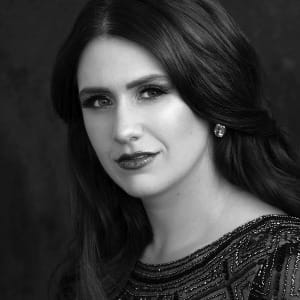
HANNAH LUDWIG
Page of Herodias
Mezzo-soprano (Sacramento, CA)
Seattle Opera Debut
Engagements: Rosina, The Barber of Seville (Teatro Nuovo); Soloist, Messiah (New York Philharmonic, National Symphony Orchestra); Isabella, L’italiana in Algeri (Eroica Berlin); Flosshilde, Das Rheingold (The Dallas Opera); Third Servant, Die Frau ohne Schatten (The Metropolitan Opera); Maddalena, Rigoletto (Utah Opera)
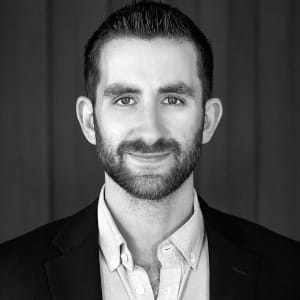
BENJAMIN MANIS
Conductor (Chicago, IL)
Seattle Opera Debut
Engagements: Of Mice and Men (Houston Grand Opera); Elgar’s Enigma (Savannah Philharmonic); The Barber of Seville (San Francisco Opera); Madama Butterfly (Utah Opera); The Ghosts of Versailles (Shepherd School Opera at Rice University)
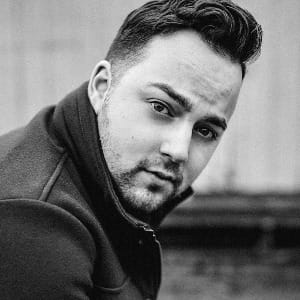
JOHN MARZANO
Third Jew
Tenor (Tacoma, WA)
Seattle Opera Debut: Giuseppe, La traviata (’17)
Previously at Seattle Opera: Soloist, Gay Apparel (’26); Spoletta, Tosca (’25); Beppe, Pagliacci (’24)
Engagements: The Witch, Hansel and Gretel; A Judge, Un ballo in maschera (Vashon Opera); Soloist, Pride Pops (Seattle Symphony); Soloist, Pride Concert (Cincinnati Symphony Orchestra); Andronico, Bajazet (Portland Opera); Camille de Rosillon, The Merry Widow (Tacoma Opera)
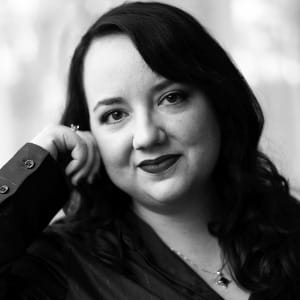
ASHLEE NAEGLE
Wig, Hair, and Makeup Manager & Designer (Las Vegas, NV)
Seattle Opera Debut: Hair and Makeup Intern, Giulio Cesare (’07)
Ashlee Naegle is the in-house Wigs, Hair, and Makeup Manager & Designer at Seattle Opera, where she created the position in 2017. She is known for her imaginative wig design and transformative artistry. Her work spans beloved classics such as The Pirates of Penzance, Tosca, The Magic Flute, La traviata, Das Rheingold, and Alcina, as well as world premieres, including Jubilee and A Thousand Splendid Suns. Her custom-built wigs and original designs for Fellow Travelers are currently touring opera companies across the country as part of Up Until Now Collective’s 10th Anniversary Tour. Her Das Rheingold design was featured on the cover of Opera America’s Winter 2024 issue, recognizing her contributions to the art of operatic design.
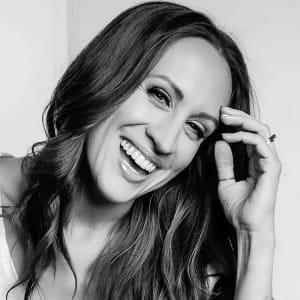
BRENDA RAE
Salome
Soprano (Appleton, WI)
Seattle Opera Debut: Semele, Semele (’15)
Engagements: Soprano Solo/Janet/Journalist, 200 Motels (Grand Théâtre de Genève); Aminta, Die schweigsame Frau (Staatsoper Unter den Linden); Marie, Daughter of the Regiment (Boston Lyric Opera); Petra, An enemy of the people (Teatro Real, Palau de les Arts Reina Sofía); Madame Cortese, Il viaggio a Reims (Opera Philadelphia); Lulu, Lulu (Oper Frankfurt)
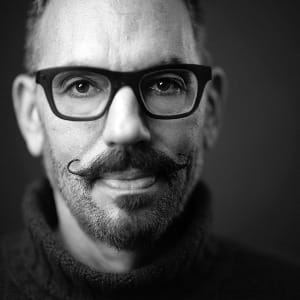
BRUNO RAVELLA
Stage Director (London, England)
Seattle Opera Debut
Engagements: Don Quichotte; Mireille (Opéra de Lausanne); The Barber of Seville (Grange Park Opera); Der Rosenkavalier (Houston Grand Opera, Garsington Opera); La traviata (Opera Theatre of St. Louis)

MALCOLM RIPPETH
Lighting Designer (Newcastle-upon-Tyne, England)
Seattle Opera Debut
Engagements: Die Walküre (Santa Fe Opera); The Wreckers (Glyndebourne); La Cenerentola (English National Opera); Peter Grimes (Welsh National Opera); Madama Butterfly (Royal Danish Opera); Parsifal (Semperoper Dresden)
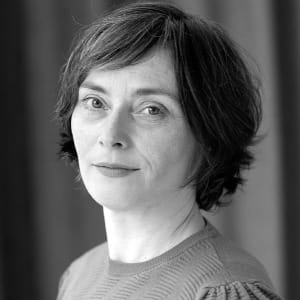
LIZ ROCHE
Original Choreographer (Dublin, Ireland)
Seattle Opera Debut
Engagements: Founding Artistic Director & Choreographer, Luail; Choreographer, Salome (Irish National Opera); Semiramide (Gran Teatro del Liceu); Yes and Yes (Solas Nua); Dēmos (The Abbey Theatre, Dublin Dance Fest, New Music Dublin 2021)
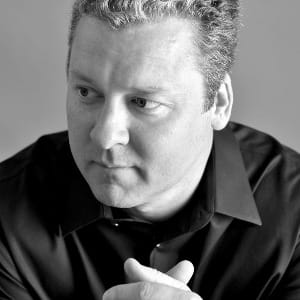
CHAD SHELTON
Herod
Tenor (Orange, TX)
Seattle Opera Debut
Engagements: Herod, Salome (The Metropolitan Opera, Staatsoper Stuttgart, Houston Grand Opera, Cincinnati Opera, Des Moines Metro Opera); Father Grenville, Dead Man Walking (San Francisco Opera, The Metropolitan Opera); Kronprinz, Silent Night; Aegisth, Elektra; Pollione, Norma (Houston Grand Opera)

ROBERT STAHLEY
First Jew
Tenor (Groveland, MA)
Seattle Opera Debut
Engagements: Bacchus, Ariadne auf Naxos (Opera Omaha); Soloist, Beethoven’s Symphony No. 9 (Utah Symphony); First Armored Man, The Magic Flute (The Metropolitan Opera); Canio, Pagliacci (Glimmerglass Festival); Erik, The Flying Dutchman (Utah Opera); Cavaradossi, Tosca (Opera Theatre of St. Louis)
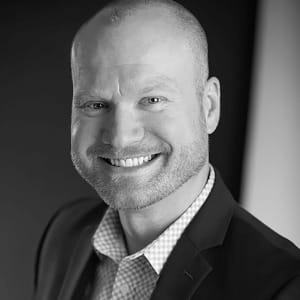
NATHAN STARK
Second Soldier/Fifth Jew
Bass-baritone (Hughson, CA)
Seattle Opera Debut: Sergeant of Police, The Pirates of Penzance (’25)
Engagements: Reverend Baines, Elmer Gantry (Opera Santa Barbara); Mustafà, L’Italiana in Algeri (Northern Lights Music Festival); Daland, The Flying Dutchman (Opera Orlando); Leporello, Don Giovanni (Charlotte Lyric Theatre); Soloist, Verdi’s Requiem (Cascade Symphony Orchestra); Soloist, Beethoven’s Symphony No. 9 (Everett Philharmonic Orchestra)
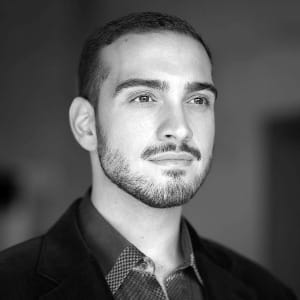
JOSEPH TANCREDI
Narraboth
Tenor (Bayville, NY)
Seattle Opera Debut
Engagements: Soloist, Mendelssohn’s Lobgesang (Prague Symphony Orchestra); Tamino, The Magic Flute; The Neapolitan, Station Paradiso; Cassio, Otello (Staatsoper Stuttgart)
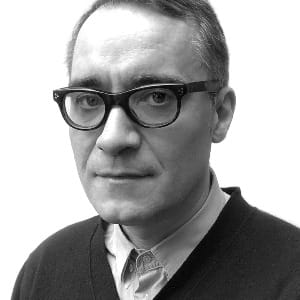
LESLIE TRAVERS
Scenery & Costume Designer (London, England)
Seattle Opera Debut
Engagements: Amadeus (Shanghai Dramatic Arts Centre); The Morning Star (Finnish National Opera); Edward II (Royal Shakespeare Company); Spirit (Cirque du Soleil); Francesca da Rimini, Manon Lescaut (Teatro alla Scala)
Orchestra
Violin I
Noah Geller, Concertmaster
Helen Kim, Assistant Concertmaster
Emerson Millar
Andy Liang
Jacqueline Audas
Jennifer Bai
Timothy Garland
Leonid Keylin
Ji Yeon Lee
Wayne Lee
Brendan Shea
Mikhail Shmidt
Yesol Im
Victoria Parker
Violin II
Cameron Daly, Principal
Aaron Li, Asst. Principal
Evan Anderson
Natasha Bazhanov
Kathleen Boyer
Brittany Breeden
Stephen Bryant
Xiao-po Fei
Gennady Filimonov
Artur Girsky
Seunghoon Lee
Andrew Yeung
Viola
Sayaka Kokubo, Principal
Katie Liu, Asst. Principal
Ursula Steele
Wesley Dyring
Daniel Stone
Kayleigh Miller
Camille Ripple
Susan Gulkis-Assadi
Cello
Efe Baltacıgil, Principal
Meeka Quan DiLorenzo, Asst. Principal
Nathan Chan
Eric Han
Katherine Audas
Vivian Gu
Sunnat Ibragimov
Nathan Cottrell
Double Bass
Jordan Anderson, Principal
Joseph Kaufman, Asst. Principal
Will Langlie Miletich
Jonathan Burnstein
Jennifer Godfrey
Travis Gore
Flute
Jeffrey Barker, Principal
Bridget Pei
Vaynu Kadiyali
Piccolo
Vaynu Kadiyali
Oboe
Mary Lynch VanderKolk, Principal
Winnie Lai
Stefan Farkas
English Horn
Stefan Farkas, Principal
Clarinet
Benjamin Lulich, Principal
Emil Khudyev
Laura DeLuca
Bass Clarinet
Eric Jacobs
Bassoon
Seth Krimsky, Principal
Paul Rafanelli
Caleb Hutchings
Contrabassoon
Caleb Hutchings
Horn
Jeffrey Fair, Principal
Jenna Breen
John Turman
Danielle Kuhlmann
Jonathan Karschney
Trumpet
David Gordon, Principal
Christopher Stingle
Michael Myers
Trombone
Ko-ichiro Yamamoto, Principal
Carson Keeble
Eden Garza
Tuba
John DiCesare, Principal
Timpani
Eric Schweikert, Principal
Percussion
Michael Werner, Principal
Jonathan Wisner
Rob Tucker
Gunnar Folsom
Mari Yoshinaga
Harp
Valerie Muzzolini, Principal
Celeste
Li-Tan Hsu, Principal
Personnel Manager
Constance Aguocha
Assistant Personnel Manager
Keith Higgins
Rotating members of the string section are listed alphabetically.
Supernumeraries
Richard Eidal
Kristian Kofoed
Monk (Daniel) Romer
Ryan Strong
Kevin Swantek
Patrick Tolden
Stephen Willey
Board of Directors
Chair
Maryanne Tagney
President
Jonathan Rosoff
Executive Vice Presidents
Stella Choi-Ray
Joshua Rodriguez
Secretary
Toby Bright
Treasurer
Ellen Evans
Chair Emeritus
John F. Nesholm
Immediate Past President
Lesley Chapin Wyckoff
Vice Presidents
Jason Bergevin
Brenda Bruns, M.D.
Alva Butcher
A. Richard Gemperle
Brian LaMacchia
Andrew Lewis
Aimee Mell
Wanda Nuxoll
Moya Vazquez
Directors
Willie C. Aikens
Evan Bennett
John Bozeat
Milkana Brace
Sue Buske
Ghaddra González Castillo
John Croswell
Lucas Fletcher
Robert Fries
Stephen Hilbert
Deborah Horne
Ron Hosogi
Gary Houlahan
Maritta Ko
Nate Lee
Louise Miller
Shana Moffatt
Steve Phelps
Katie Skayhan
Cynthia Sprenger
Michael Theisen, M.D.
Russell F. Tousley
Janell F. Turner
Raymond Tymas-Jones, Ph.D.
Joan S. Watjen
Stephen Whyte
Representatives to the Board
Rachel Curry
BRAVO!
Eric Jacobs, Paul Rafanelli
The Seattle Symphony and Opera Players’ Association
Korland Simmons
Seattle Opera Chorus
Patricia Pavia
Seattle Opera Guild
Bruce Warshaw
IATSE Local 15
Honorary Lifetime Board Members
Bruce R. McCaw
William Weyerhaeuser
Past Presidents Council
Brian Marks
John F. Nesholm
Steve Phelps
Maryanne Tagney
Russell F. Tousley
William Weyerhaeuser
Seattle Opera Foundation
Steve Phelps, President
Milkana Brace
James D. Cullen
Ellen Evans
Robyn Grad
Susanna Morgan
Anne M. Redman
Joshua Rodriguez
John Sullivan
Moya Vazquez
Advisory Board
Co- Chairs:
Kim Anderson
Diana Gale
Linda Allen
John A. Bates
Don Brown
Dr. Gregory Chan
Fernando Encinar
Leslie Giblett
Victoria Ivarsson
Rhona Kwiram
Donna Leon
Michael Mael
Lynn Manley
Esther Neiditsch
Rosemary Peterson
Duane Schuler
Matthew Segal
Stephen A. Sprenger
Barbara Stephanus
Jim Uhlir
Scott W. Wyatt
Letters
From the General & Artistic Director
Dear Seattle Opera Audience,
Welcome to McCaw Hall and the beginning of our 63rd season! As I enter my third year as General and Artistic Director (where does the time go?!), I am thrilled to continue the great Seattle Opera tradition of bringing world-class operatic performances to this stage and the entire region. I would like to give a shout-out to the Seattle Opera Guild as they celebrate their 70th anniversary and thank them for being the tireless supporters and advocates that they are.
We are very pleased to be presenting Richard Strauss’s masterpiece Salome after more than a twenty-year absence. This is an opera that many audience members in our opera-loving community have been asking for since I arrived in Seattle. I always say you don’t dare program this thrilling title unless you have a brilliant cast and a mesmerizing production. Fortunately, we have both! On top of that, we are delighted to have a first-rate orchestra as our artistic collaborators—the great Seattle Symphony Orchestra.
On a personal note, Salome was one of the very first operas I came to admire for its breathtaking orchestrations and hair-raising drama. It was a shocker when it premiered, and it still packs a punch. Gustav Mahler was this opera’s first champion. Audience members early on included such admiring luminaries as Igor Stravinsky, Alban Berg, Arnold Schoenberg, and Giacomo Puccini. I hope you are as thrilled as the members of that auspicious audience.
To thrill, inspire, and educate are the pillars of Seattle Opera’s mission. With artistry of this caliber, this production fits perfectly with our purpose. You can support our drive to deliver exceptional opera experiences throughout our community with a donation to our Annual Fund. Contributions in all amounts make what you’ll witness here tonight—and so much more—possible.
Thank you all for being here! And I look forward to seeing you at future performances this season.
Sincerely yours,
James Robinson
General and Artistic Director
From the President
I’m honored to welcome you back as we launch Seattle Opera’s 2026/27 season with this spectacular production of Salome. Strauss has long held an important place in our artistic history, and tonight’s performance continues that legacy with the ambition, intensity, and theatrical power that define this company at its best.
That legacy owes much to Speight Jenkins, Seattle Opera’s General Director for 31 years, from 1983 to 2014. Under his leadership, the company gave numerous performances of works by Strauss, commissioned its first opera, Amelia, and presented two new Ring cycles.
Following his passing last summer at age 89, we remember Speight as passionate, precise, and persistent—a leader whose vision helped us become one of the largest and most respected opera companies in the United States. In his honor, Seattle Opera dedicates the 2026/27 season to Speight Jenkins, with a special commemorative tribute planned for winter 2027.
Speight’s commitment and prodigious talents extended beyond the stage to arts education and community engagement. To bring audiences closer to the artform, he championed post-performance Q&As (of which he hosted nearly 1,000!), introduced supertitles to Seattleites, and connected with new audiences and partners through an abiding belief that opera belongs to everyone.
Those community connections continue with programs like the Seattle Opera Veterans Choir, Community Conversations, Opera Classes, Youth Opera Project, and Teen Vocal Studio. This season, the Youth Opera Project will present The Hobbit, a fully staged youth opera based on the literary works of J. R. R. Tolkien featuring 45 young artists age 7–18. Last season’s School Opera Tour performed at 30 elementary schools across the state, engaging thousands of students. Initiatives like these bring music and storytelling to life while nurturing a lifelong appreciation for the arts.
Seattle Opera also contributes meaningfully to our region’s economic vitality. This production of Salome, for example, engages more than 250 artists, musicians, technicians, craftspeople, and administrators across five performances—an investment in both world-class opera and the cultural economy of our city.
Strauss’s music has endured for generations, and with your support, Seattle Opera can do the same. As you consider your year-end giving, I invite you to contribute to Seattle Opera’s Calendar Year-End Campaign. If you have already made an annual gift, please consider a second gift in honor of someone special. Donations of every size sustain our work, from extraordinary mainstage performances to community programs that welcome people of all ages into the power of opera.
Now, hold on to your seat! You’re about to experience one of opera’s most electrifying and provocative masterpieces.
Sincerely,
Jonathan Rosoff
President, Seattle Opera Board of Directors
Taboo Obsession
By Jonathan Dean
“All excess, as well as all renunciation, brings its own punishment.”
—Oscar Wilde, The Picture of Dorian Gray
“You can eat the fruit of any tree in my garden…except THIS one.” “Why not? That one must be so much better…now I really, really want it!” A strange law of human behavior—and of parenting—is the inverse relationship between desire and availability. We want what we can’t have. To pique your kids’ interest in some activity or item, forbid it. In folk tales, fairy tales, myths, and legends the world over, prohibitions are only there to be broken: “Now, don’t you open this box, Pandora!” “The Beast has forbidden the west wing, Beauty.” “Don’t look back, you’ll turn into a pillar of salt,” or…
But beyond the world of traditional storytelling, taboos define the boundaries of a culture. Some, such as rules about appropriate language or dress, are conventional. Other social taboos encourage public health: “Wear a mask and stay six feet apart.” “Don’t eat that—it’s not kosher.” “No, those two must not marry, that’s incest.” * Degenerate and accursed, Salome—the play by Oscar Wilde and the opera by Richard Strauss—initiated twentieth-century art by transgressing every boundary in sight.
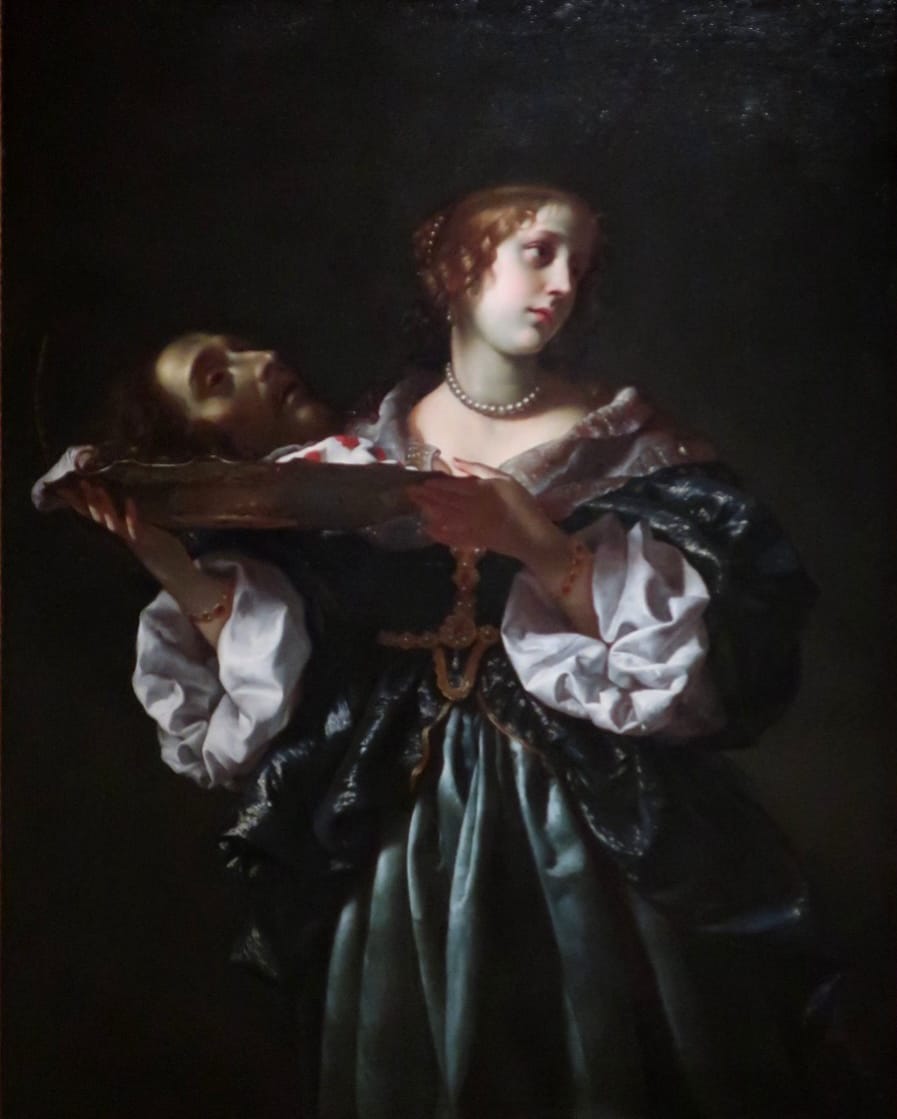
Oscar Wilde, self-appointed high priest and guru of the “Aesthetic” movement, or “Art for Art’s Sake,” loved provoking the public by stepping over the line. “I can resist everything except temptation,” goes a popular Oscar Wilde quote. All that mattered was provoking the public; what was on the other side was not the point. And in the early 1890s, when Wilde’s worldwide fame made him perhaps the most talked-about provocateur of a provoking age, the public responded with a mix of outrage and applause.
For instance, Wilde found a publisher for his 1891 novel, The Picture of Dorian Gray; but England’s biggest bookseller refused to carry the ‘filthy’ thing. (Sales promptly shot up.) The next year, Wilde began writing Salomé. The Lord Chamberlain, London’s theatrical censor, shut down the initial production (which would have been—as Wilde wrote it—in French, and starring France’s greatest actress, Sarah Bernhardt). Legally, the play was prohibited because it violated the injunction against representing Biblical characters on the English stage. But this cancellation was obviously the result of Wilde’s many enemies trying to silence him. In response, Wilde threatened to leave England. “I will not consent to call myself a citizen of a country that shows such narrowness in artistic judgment. I am not English. I am Irish…There is a great deal of hypocrisy in England.”

Wilde’s Salomé play was printed in France the next year. French writers, dramatists, and poets including Mallarmé, Loti, and Maeterlinck, wrote enthusiastic letters. But still there was no public performance. A cumbersome English translation, stripped of the original’s wit and lightness, was prepared by Wilde’s boyfriend Lord Alfred Douglas and printed in 1894, accompanied by the decadent drawings of Aubrey Beardsley. But Salomé the play never saw production—until after Wilde’s terrible fall from grace in 1895, when he was convicted of “Gross Indecency” and sentenced to two years’ hard labor. Salomé was finally given, in Paris in the original French, in February 1896.
Wilde died in 1900, a broken man, just as Salomé was starting to conquer the world. Translated into Dutch, German, Italian, Swedish, Czech, Russian, and even Yiddish, the play was performed everywhere (except England). In Berlin, Hedwig Lachmann’s German translation, directed by Max Reinhardt, played for over a year. When Richard Strauss encountered the show, he was struck by its musical possibilities and immediately set about making it into an opera. Radically, he chose not to hire a librettist, but instead set (his own abridgment of) Lachmann’s translation. His opera, which premiered in Dresden in December 1905, took the world by storm. Wilde’s good friend and literary executor Robbie Ross appreciated the way Strauss used Wilde’s text: “The words have not been transfigured into ordinary operatic nonsense to suit the score, or the susceptibilities of the English people.”
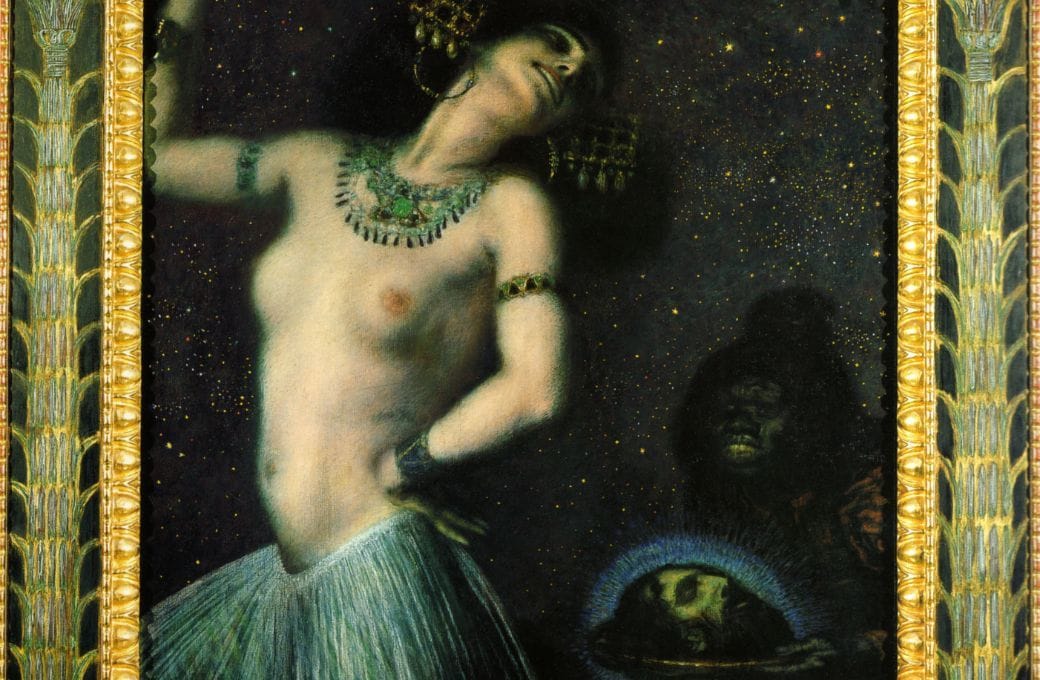
Although Strauss’s opera was the hottest thing since verismo, Salome continued to face censorship. In Catholic Vienna, Gustav Mahler couldn’t program Salome at the Staatsoper because Archbishop Piffl objected to its immorality. In Protestant New York, where Wilde’s play had been condemned as “Bloodily degenerate” and “Decadent stuff, not worthy of notice,” The Metropolitan Opera opened Salome for one night only, January 22, 1907. The title role was danced by Bianca Frohelich and sung by Olive Fremstad (whose research included a visit to the morgue, to figure out how much a severed head weighs). But the next day, according to Strauss, “The opera had to be taken out of the repertory at the instigation of a certain Mr. Morgan”…J.P., that is.
Strauss, who had a dry sense of humor, smirked at the censorship, as he had at Wilde’s characters: “I tried to compose the good Jokanaan…as a clown; a preacher…who feeds on grasshoppers seems infinitely comical to me. I…caricatured the five Jews and also poked fun at Father Herodes.” Yet his opera is hardly comic, despite that attitude and the brilliant wit of Oscar Wilde. What is the point of the opera? What’s the punchline of its joke?
“All men kill the thing they love,” wrote Oscar Wilde in “The Ballad of Reading Gaol.” In Salome, Wilde’s characters, so obsessed with transgressing boundaries, all wind up with nothing: the suicide of Narraboth is pointless, the lips Salome finally kisses are lifeless, and at the end Herod has only Salome’s mutilated corpse. As Septimus puts it in Tom Stoppard’s Arcadia, “When we have found all the mysteries and lost all the meaning, we will be alone, on an empty shore.” Maybe taboos are there for good reason.
Salome: Opera's Femme Fatale?
By Marcus R. Pyle, PhD
In opera, the femme fatale—“the fatal woman”—is a woman who ensnares men in her webs of lust, seduces them into impossible situations, exploits their perversions to bend them to her will, and throws characters’ lives into a tailspin. The femme fatale took center stage in turn-of-the-century opera, with popular characters such as Carmen, Dalila, Manon, Thaïs, and Tosca.
Often characters like Glenn Close’s Alex Forrest in Fatal Attraction or Marquise de Merteuil in Dangerous Liaisons come to mind when thinking about femmes fatales. What about Salome? Does she display the traits listed above? Is she a dangerous woman? Perhaps she’s only a naïve teenager with an overwhelming crush? Or is she a young person discovering her independence? Or is she a victim of a dysfunctional family and society? All can be true.

Salome captured the public’s imagination around the same time that anxieties about the women’s suffrage movements spread across the globe. Stereotypes emerged of the “New Woman” who embodied personal agency, educational pursuits, and sexual freedom, but who was vilified by patriarchal society as too masculine, too independent, and an irrational hysteric incapable of voting with a sound mind. For some the New Woman was a symbol of progressive societal ideals, for others a sign of society’s imminent collapse. Meanwhile, the discipline of psychology attempted to explain her pathology. French neurologist Jean-Martin Charcot started the study of hysteria (Greek for uterus or womb), physically characterizing it as a kind of “demonomania.” Sigmund Freud later theorized hysteria as a symptom of repressed memories of sexual abuse. Hysteric women were committed to insane asylums.
In the opera, Herod infuriates Salome with his constant gaze. She escapes his presence and is fascinated by Jochanaan’s voice. She spites her stepfather and allows the prophet out of a cistern where he is imprisoned. Her curiosity becomes an obsessive demand to kiss the holy man. Are these the actions of a hysteric teenager or are they the actions of a young woman discovering her own sexuality and the powers she wields? After Jochanaan denies her—cursing the teenager and her mother—Salome seeks revenge at the cost of offering herself up to Herod’s lecherous scrutiny.
Gender dynamics and sexual tension are center stage. And as the saying goes, sex and scandal sell. Salome had both. In addition to Salome’s striptease (the ten-minute choreographic sequence called the “Dance of the Seven Veils”); there’s the blasphemy of presenting Bible characters onstage; and the play’s scandalous author, Oscar Wilde, who’d famously gone to prison for “Gross Indecency.” Strauss’s premiere of Salome in 1905 was a sensation and a scandal. Ernst Decsey wrote of the Graz premiere in 1906 that “nothing more satanic and artistic has been seen on the German opera stage.”
This satanic craze grew into full blown “Salomania,” a term popularized by The New York Times in 1908. Women around the world used the “Dance of the Seven Veils” to display their choreographic genius and independence from societal norms. There were even “Salome schools” that sent Salomes into the nation’s vaudeville circuits. They used the avatar to stage subtle critiques of race and patriarchy. But there was also anxiety about Salome corrupting young women, destroying civilizations, and eroding morality. With the gyrating and bare-breasted stripteases, questions of progressivism were framed as a disease of morality.
Just as these dancers were ridiculed and deemed immoral, Salome was harshly judged for her actions. Herod is so disgusted when she kisses Jochanaan’s severed head, he demands her execution.
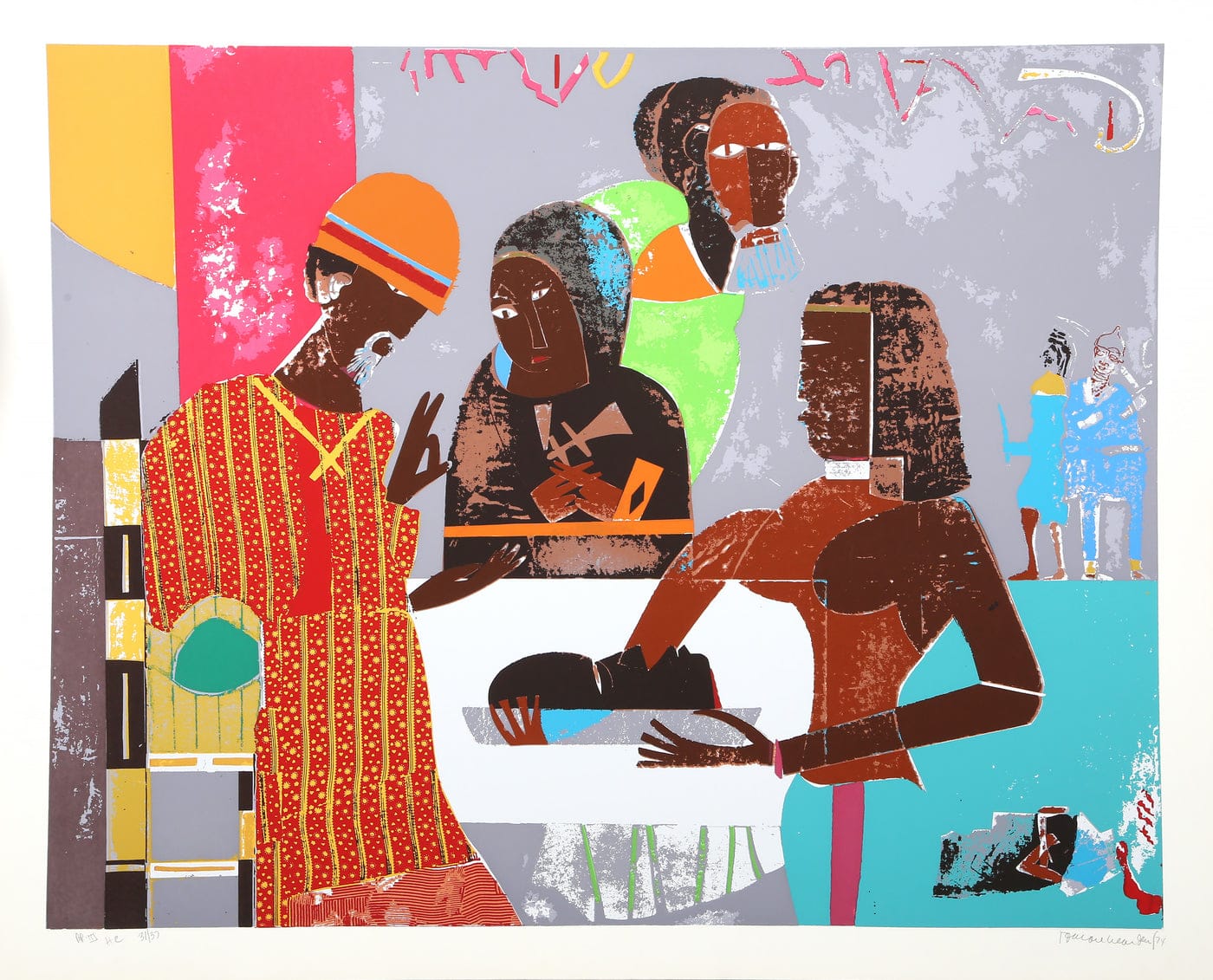
The strain between progress and immorality is woven into the music and plot of Salome. Femmes fatales have routinely been encoded as part of an asexual/hypersexual binary— taking forms in dualities like the virgin/whore, virtus/voluptas, and Eve/Virgin Mary. Wilde and Strauss both revel in these dichotomies and the slippages between them. Music associated with Jochanaan is introduced in the pure unadulterated key of C major; Salome is associated with the opposing C-sharp major (and minor). Tonally, they have almost nothing in common. As Salome moves throughout the opera, her musical language shifts to appeal to whomever she’s currently seducing. Salome is a chromatic creature whom Strauss renders as a sonic shapeshifter, one who is as comfortable in the world of dalliance as in the world of death. For Jochanaan, Strauss was less generous, writing that “You know, Jochanaan is an imbecile. I have no sympathy at all for that type of man. In the first place I would have liked him to be a bit grotesque.”
Salome retains its shock factor, but the moral weight and impressions of the femme fatale changes over time. In the wake of the #MeToo movement, the question of sexual predation and coercion loom large. This opera leaves us to consider agency and responsibility, and the music and text implicate us in the drama and make us complicit. It makes us think about who is the evildoer in the opera? Who is at fault for the violence of Salome’s world? In the original French, the closing words of the play create a pun “Tuez cette femme!” (Kill that woman!), but heard otherwise, it sounds like Tu es cette femme! (You are that woman!), compelling us to consider our role in violence done to women on and offstage.
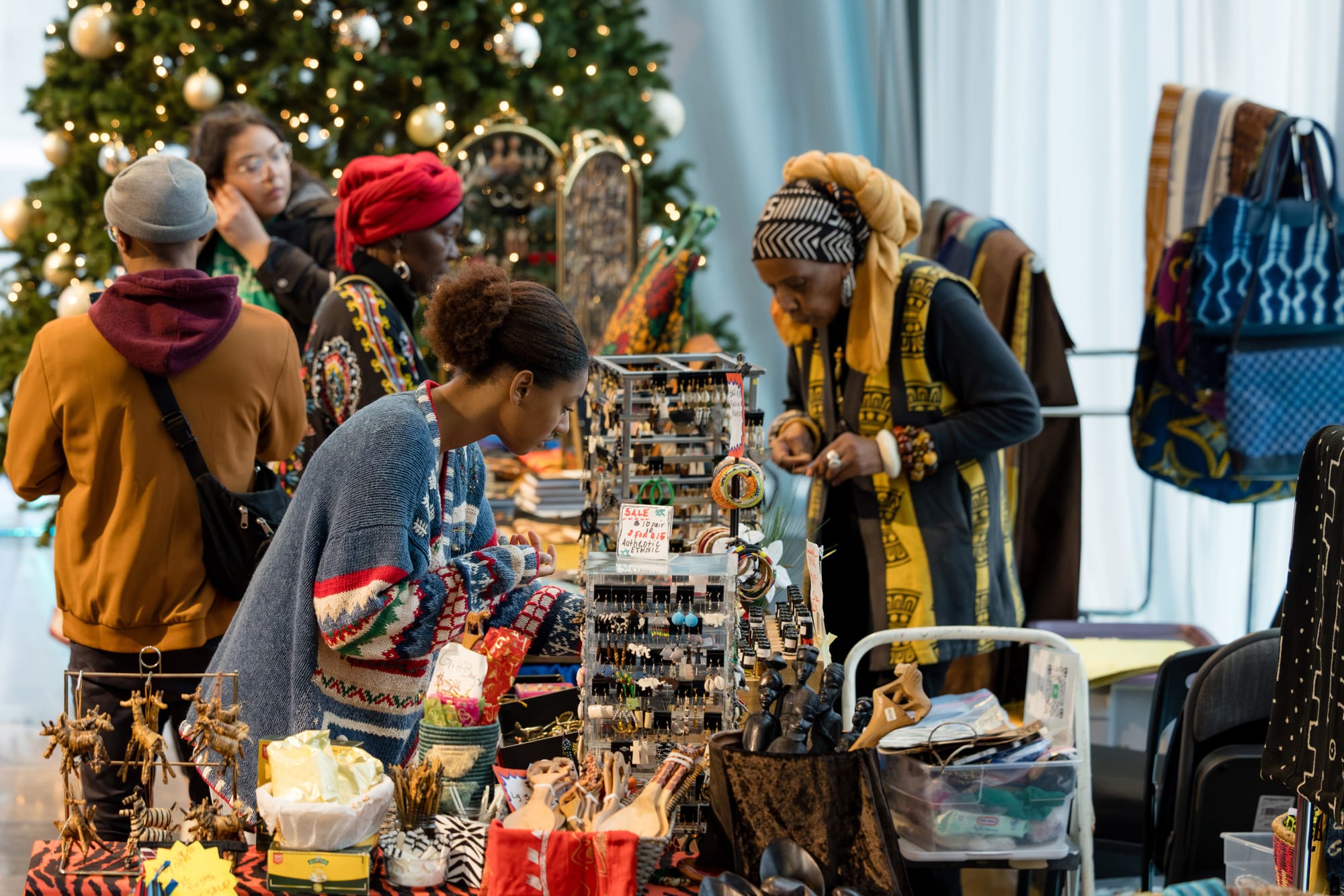
Annual Black Artists Market Returns
Seattle Opera will host its Black Artists Market at the Opera Center on Saturday, Dec. 5, from 11:00 AM to 5:00 PM. The market will feature an array of crafts, gifts, and treats made by more than two dozen local Black artists, artisans, and Black-owned small businesses.
“This is our fourth year hosting the market, and it’s become an annual holiday tradition for shoppers, artisans, and business owners,” said Co-Director of Programs and Partnerships Lokela Alexander Minami.
For Avenue South’s owner, Nyema Clark, the market is an opportunity to introduce her line of natural culinary and body products to new customers. “Typically, small producers of color have a hard time reaching customers outside their communities,” she said. “The Black Artists Market is extremely important, because it’s an opportunity to introduce our products to new customers. Being at the market impacts my business a great deal.”
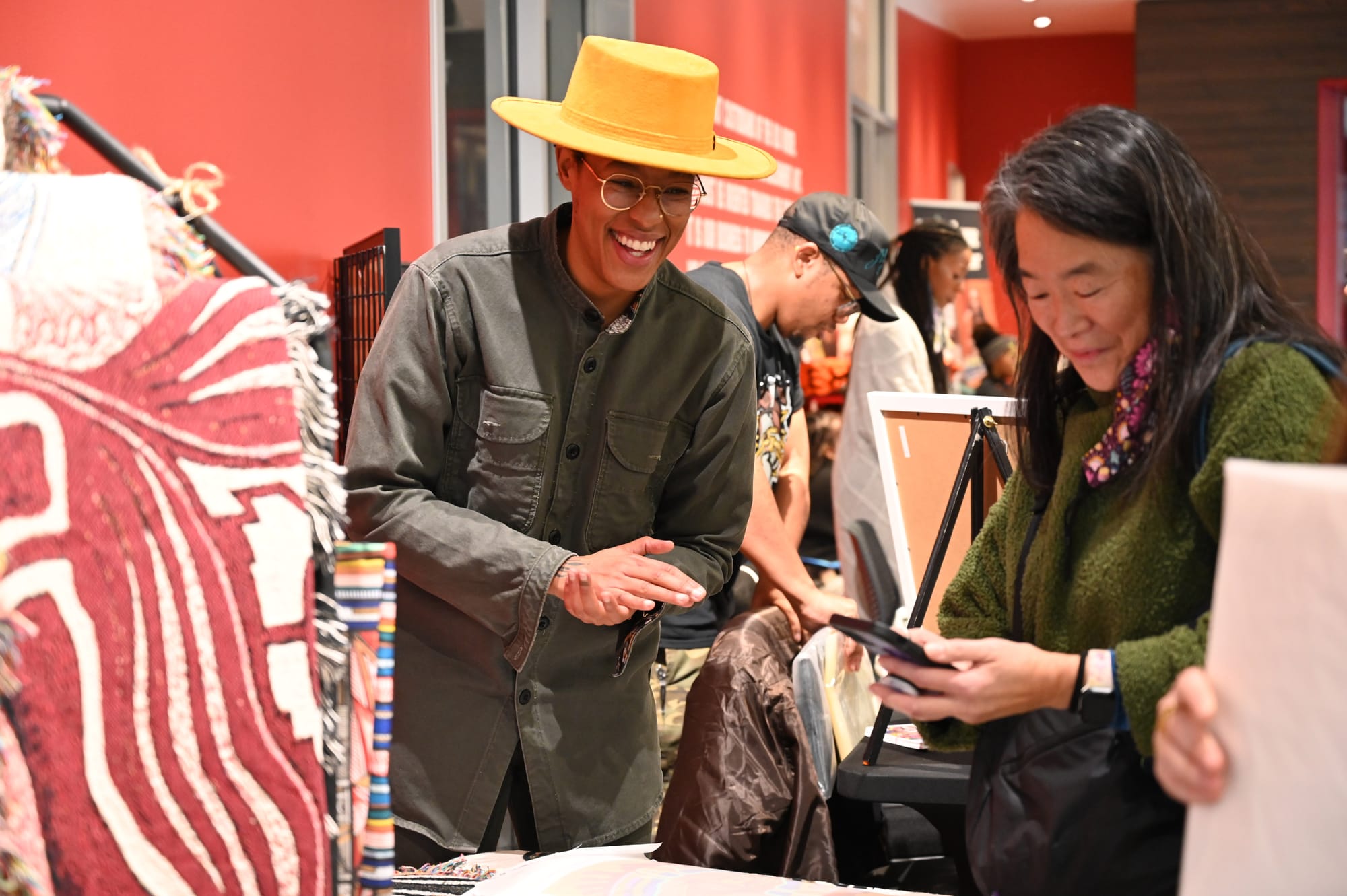
The event is curated in partnership with ARTE NOIR, the Central District arts organization that focuses on Black artists and products made by Black-owned businesses.
The market launched during the lead up to Seattle Opera’s 2023 blockbuster production of X: The Life and Times of Malcolm X as a way of honoring the slain civil rights leader’s advocacy for Black entrepreneurship. “That first market proved so successful that it has become a holiday tradition,” said Minami.
The market gives shoppers the chance to reconnect with their favorite vendors. “We’ve participated every year, and each time a few customers return to check out what’s new or buy something special for a friend or for themselves,” said Marlon Turner, owner of Thankful & Blessed 365, a lifestyle and apparel brand. “The market has been really good for us business-wise, too.”
The free event will also showcase local opera talent and Black vocalists in other genres performing throughout the afternoon.
“I invite everyone to join us and discover handmade gifts, one-of-a-kind decorations, and delectable treats, all while supporting local artistry and celebrating community,” said Minami.
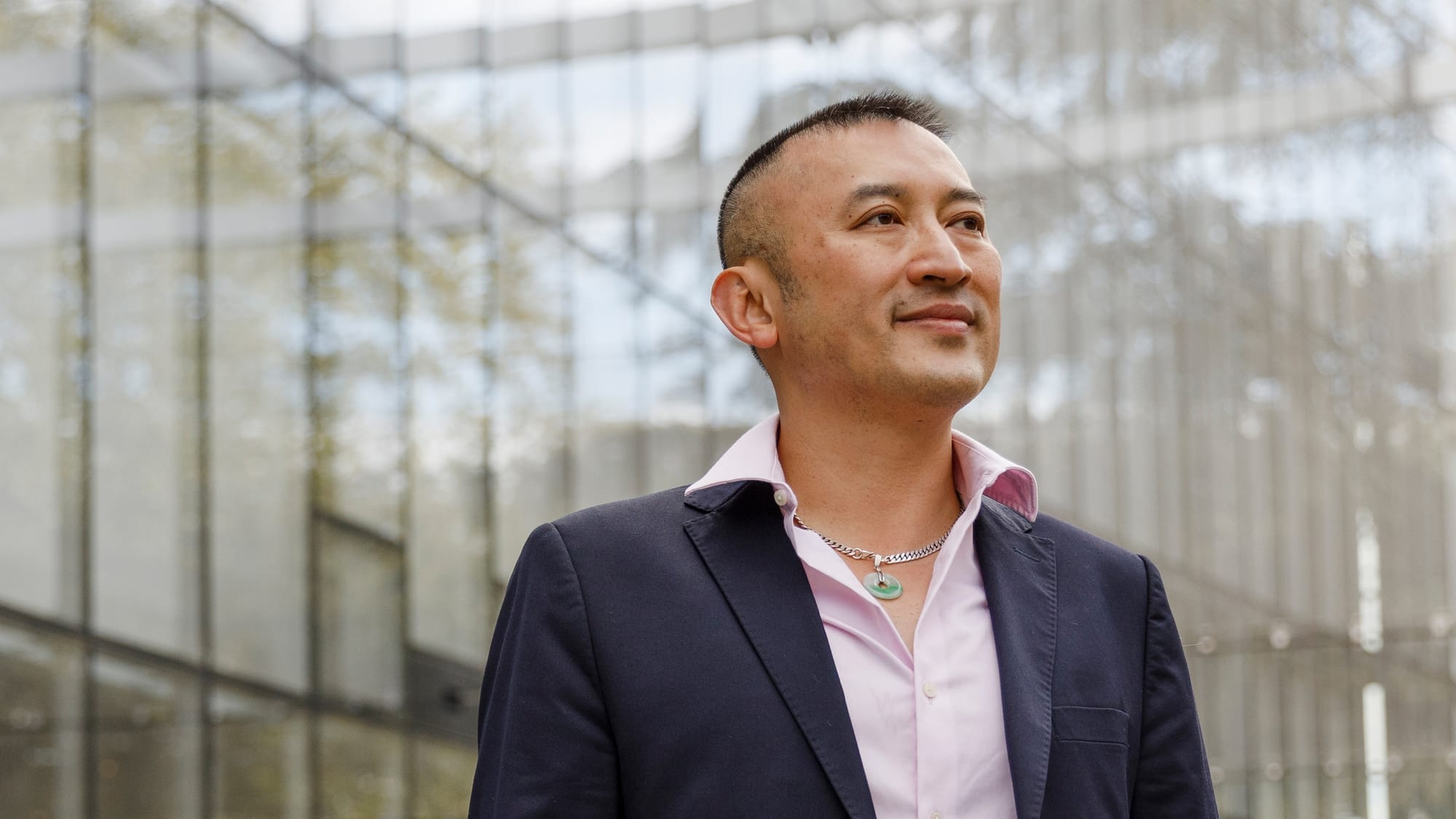
Introducing Huang Ruo
Seattle Opera Composer-in-Residence, 2027–2030
Seattle Opera is honored to welcome Huang Ruo as its inaugural Composer-in-Residence. As the award-winning opera composer of The Monkey King, M. Butterfly, and other acclaimed works, Huang Ruo has been praised by The New York Times for his “distinctive style.” His music and operas have been performed by leading companies and orchestras around the world, including the New York Philharmonic, Santa Fe Opera, BBC Symphony Orchestra, Opera Theatre of St. Louis, Cleveland Orchestra, San Francisco Opera, Netherlands Radio Philharmonic, and Royal Danish Opera.
Huang Ruo is one of the foremost composers of opera in the United States. He is an incredible champion of the art form and one of the most engaging people I’ve ever met. Huang Ruo is a wonderful addition to our family and just the right artist for Seattle Opera.”
–James Robinson, Seattle Opera General & Artistic Director
ANNOUNCING SEATTLE OPERA PREMIERE
M. Butterfly
October 16–30, 2027
Music by Huang Ruo
Libretto by David Henry Hwang
Upcoming Events
GABRIELA LENA FRANK: A MUSICAL PORTRAIT
FRIDAY, NOV. 13, AT 7:00 PM
THE OPERA CENTER
PRICE: $34 SUBSCRIBERS; $39 GENERAL PUBLIC
Experience a recital featuring selections composed by Grammy Award-winning composer Gabriela Lena Frank. Listen to her work and preview music from our upcoming production of El último sueño de Frida y Diego (The Last Dream of Frida and Diego). This performance will be broadcast live on Classical KING as part of their Northwest Focus Live performance series.
JAMIE BARTON & KATHLEEN KELLY IN RECITAL
SATURDAY, NOV. 21, AT 7:30 PM
THE OPERA CENTER
PRICE: $99 GENERAL PUBLIC
Here is your opportunity to experience celebrated mezzo-soprano Jamie Barton in recital, joined by pianist Kathleen Kelly! A “once in a generation voice” (Opera), this is sure to be an unforgettable evening. From being named 2026 Personality of the Year at The BBC Music Magazine Awards to receiving Opera Magazine’s Reader Award in 2021 and a Grammy nomination for Best Solo Vocal Album in 2022, Jamie has wowed audiences around the world.
BLACK ARTISTS MARKET RETURNS
SATURDAY, DEC. 5, 11:00 AM – 5:00 PM
The Opera Center Ring in the holidays with Seattle Opera’s Black Artists Market. The market will feature an array of crafts, specialty gifts, treats created by dozens of local Black artists, artisans, and Black-owned small businesses. The event is curated in partnership with ARTE NOIR, the Central District arts organization that focuses on Black artists and products produced by Black-owned businesses.
YOUTH OPERA PROJECT: AGES 7 – 18
DEC. 10, 2026 – MARCH 21, 2027
THE OPERA CENTER
PROGRAM FEE: $960
Calling all youth opera stars! This program offers young performers a chance to take center stage to learn, rehearse, and perform the youth opera The Hobbit, based on J.R.R. Tolkien’s literary work. The cast will journey to Middle Earth on an epic adventure over the Misty Mountains to reclaim stolen treasure, slay a dragon, and discover a magic ring.
REHEARSALS: THURSDAY 5:00 PM–7:00 PM AND SATURDAYS 10:00 AM–1:00 PM
PUBLIC PERFORMANCES: MARCH 19–21, 2027
Seattle Opera is committed to providing accessible programs to everyone in our community, regardless of financial standing. If you require financial assistance, please complete our financial assistance request form before submitting your registration.
OPERA TALK: THE MAKING OF EL ÚlTIMO SUEÑO DE FRIDA Y DIEGO
FRIDAY, JAN. 15, 2027 AT 7:30 PM
THE OPERA CENTER
FREE, RSVP REQUESTED
Join us for a discussion on El último sueño de Frida y Diego (The Last Dream of Frida and Diego) and hear from its two Pulitzer Prize-winning creators, composer Gabriela Lena Frank and librettist Nilo Cruz, along with award-winning Mexican director Lorena Maza. Learn how the different musical inspirations and cultural elements blended to create one of the most stunning productions in opera today.
OPERA & LITERATURE
TUESDAYS, FEB. 9 – MAR. 23, 2027, 6:30 – 8:00 PM
(NO CLASS ON MAR. 2, 2027)
ONLINE VIA ZOOM
$150 SLIDING SCALE FEE; 1 FLEX PASS CREDIT
This six-week program hosted by Jonathan Dean, Seattle Opera dramaturg, explores the connections between opera and their literary sources, illuminating the ways in which opera enhances storytelling through music. Discover how stories pass from hand to hand, form to form, and culture to culture.
Print Edition