In This Program
The Concert
Thursday, November 19, 2026, at 7:30pm
Friday, November 20, 2026, at 7:30pm
Saturday, November 21, 2026, at 7:30pm
Inside Music Talk with Members of the SF Symphony and LINES Ballet
On stage at 6:30pm before each performance
James Gaffigan conducting
Sergei Prokofiev
Sinfonia concertante in E minor, Opus 125 (1951)
Andante
Allegro giusto
Andante con moto–Allegretto–Allegro marcato
Rainer Eudeikis cello
Intermission
Alonzo King LINES Ballet + San Francisco Symphony
Two World Premiere Ballets
Claude Debussy
Prélude à L’Après-midi d’un faune (1894)
Brief Pause
Aaron Copland
Suite from Appalachian Spring (1945)
Alonzo King LINES Ballet
Alonzo King artistic director and choreographer
Robert Rosenwasser executive director, creative director, and costume designer
Seah Johnson lighting designer
These concerts are generously sponsored by the Athena T. Blackburn Endowed Fund for Russian Music.
Inside Music Talks are supported in memory of Horacio Rodriguez.
Program Notes
Sinfonia concertante in E minor, Opus 125
Sergei Prokofiev
Born: April 23, 1891, in Sontsovka, Ukraine
Died: March 5, 1953, in Moscow
Work Composed: 1950–51
SF Symphony Performances: First—May 1956. Enrique Jordá conducted with Mstislav Rostropovich as soloist.
Most recent—October 2018. Manfred Honeck conducted with
Truls Mørk as soloist.
Instrumentation: solo cello, 2 flutes, piccolo, 2 oboes, 2 clarinets, 2 bassoons, 4 horns, 2 trumpets, 3 trombones, tuba, timpani, percussion (triangle, cymbals, tambourine, snare drum, and bass drum), celesta, and strings
Duration: About 37 minutes
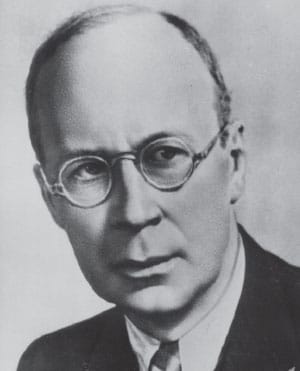
Sergei Prokofiev’s music, which blends innovations in form and tonality with a reverence for classical structures, strikes a middle ground between the more straight- forward Romanticism of Sergei Rachmaninoff (his Russian peer) and the uninhibited modernist tendencies of other 20th-century composers.
After the Russian Revolution of 1917, Prokofiev immigrated to the United States where he continued to pen major works like the opera The Love for Three Oranges while performing as a pianist to make ends meet. After four years, a relocation to Western Europe led to his 1923 marriage to Lina Llubera and saw continued productivity in instrumental compositions—the decade-plus that followed would yield several symphonies, concertos, and a string quartet.
Returning to Russia shortly before the onset of World War II, Prokofiev’s output shifted towards music for children (including his famous Peter and the Wolf) and other projects that might appear politically palatable to a Soviet regime that had recently engaged in highly public censure of its most famous composer, Dmitri Shostakovich. But Prokofiev continued to pen ambitious works like his Romeo and Juliet ballet, and during the war wrote the deeply felt opera War and Peace as well as a Fifth Symphony, piano sonatas, and chamber works.
The prewar edicts governing acceptable artistic style continued to chafe at Prokofiev during his career’s postwar coda. Aside from continued revisions to War and Peace, he finished his cello sonata in 1949, continued to rework his late-1930s cello concerto into what would become the Sinfonia concertante, and began drafting an unaccompanied cello sonata, left unfinished at the time of his 1953 passing (overshadowed, despite the enduring power of his music, by the death of Stalin on the same day).
The Music
The Sinfonia concertante premiered in 1952 in the hands of legendary cellist Mstislav Rostropovich, but its current version was first performed in 1954 after Prokofiev’s death. Its three titanic movements display Prokofiev at the height of his compositional powers, and also demand levels of virtuosity and technique which exceed those of nearly any cello concerto which had come before, and which have been only rarely surpassed since.
The first movement’s opening showcases the cello’s lyricism in a triumphant melody, introduced and accompanied by a martial motif in the winds and lower strings (which lead the orchestra’s interplay with the soloist throughout the movement). By contrast, the following theme—a descending, mournful melody—emerges from a quiet mist introduced by the flute. Leading a reemergence, the cello spends the middle bulk of the movement amplifying its singing legato with virtuosic double-stops—sixths, octaves, and tenths—which contort the cellist’s left hand to its limits. Slowly, momentum starts to build until a flurry of ascending runs returns the ensemble, and then the cello at the white-hot apex of its range, to the opening theme. The second theme’s restatement is extended, winding towards a quiet conclusion.
The second movement finds the soloist in a guttural and unaccompanied frenzy. It whips the clarinets into a twittering anxiety, which, alongside pizzicato strings, accompanies the cello when it finds the opening melody. Two more melodies are introduced—the first angular and tensely wound, the second almost startlingly pastoral. A snarling, chromatic full-orchestra interlude then introduces an extended cadenza, a feature more typical of a concerto’s opening movement. It accelerates into furious arpeggiation, recedes, and then surges forward once more into a fit of double-stops. As the orchestra returns, Prokofiev takes material from the winds’ first-theme accompaniment and fashions it into virtuosic passagework, hinting that a recapitulation is just around the corner—instead, he veers again into developing the two thematic ideas which followed it. The lyrical melody is accompanied by a spare and delicate oom-pah—the angular melody is slowed to half-time in the trombone and clarinet while the cello spins quiet filigree. Once the opening melody returns, Prokofiev continues to cycle between the three thematic areas—it is not until the chromatic snarl returns once more that the cello is launched into its final rendition of the opening music.
The finale, a theme and variations, opens once more with the unaccompanied cello which delivers the unadorned first statement of the theme. Subsequent variations range in character from gregarious to vulnerable—a rendition in which flowing, waltz-like winds are accompanied by skittering solo passagework, several replete with taxing double-stops, and a rendering where a celesta twinkles like delicate clockwork among them.
But most memorable is the coda: a lightning-quick moto perpetuo for the soloist which, after a heraldic interlude of music from the middle movement in the trombone, finishes at a dizzying height.
—Lev Mamuya
Prélude à L’Après-midi d’un faune
Claude Debussy
Born: August 22, 1862, in Saint-Germain-en-Laye, France
Died: March 25, 1918, in Paris
Work Composed: 1892–94
SF Symphony Performances: First—February 1912. Henry Hadley conducted. Most recent—January 2025. Mark Elder conducted.
Instrumentation: 3 flutes, 2 oboes, English horn, 2 clarinets, 2 bassoons, 4 horns, 2 harps, antique cymbals, and strings
Duration: About 10 minutes
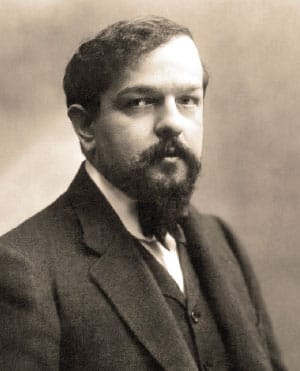
Prelude to the Afternoon of a Faun, Claude Debussy’s first important work for orchestra, is often cited as the point of origin of the French composer’s thinking as a radical innovator. Just as often, the piece evokes associations with so-called impressionism. Debussy disliked that analogy with the visual arts, however, preferring to point to the literary source behind the piece: Stéphane Mallarmé’s poem “L’Après-midi d’un faune” (The Afternoon of a Faun), which dates back to 1865 and was published in 1876.
The poem is a dramatic monologue whose ancient pastoral setting alludes to the Eclogues of Virgil. The setting serves as the backdrop for the erotic fantasies entertained by a faun—a mythic rural deity who is half-man, half-goat—as he recalls his attempts to seduce beautiful nymphs. The faun evokes the seductive spell of music by playing his reed pipes. Debussy initially envisioned an orchestral triptych based on the poem but completed only the first part (which is why he gave it the qualifier “Prelude”).
With Faun, Debussy leaves behind the Romantic world of emotional subjectivity and enters a nebulous, twilit sphere that resounds with harmonic and rhythmic ambiguities. He abandons the principle of conventional thematic development as well, but he does use thematic and harmonic recall throughout the piece for his own expressive ends. Faun thus veers away from the narrative structure of Romantic tone poems, offering a self-contained meditation on Mallarmé’s ode to sex and art.
Debussy replaces such thematic and narrative approaches with a musical process that is closer to the hazy logic of dreams. The score’s breath-like gestures and exquisite instrumental coloring hint at the borderline state between dreaming and consciousness. Debussy’s precision and nuance convey the ebb and flow of lust and longing—and opened the door to a new century of musical experimentation.
This music, as well as the source poem by Mallarmé, held great allure for the dancer and choreographer Vaslav Nijinsky, a star of the expat company the Ballets Russes established in 1909 in Paris by the impresario Sergei Diaghilev. Eager to expand his work as a dancer to include choreography, in 1912 Nijinsky turned to Debussy’s score to create a pioneering early modern ballet.
The Music
In the opening bars, a chromatic flute solo conjures the image of the piping faun. The flute’s line oscillates between a C-sharp in the middle of the staff and a G below—a harmonically unstable interval known as the tritone. This harmonic outline subverts conventional patterns of major and minor and thus casts a tantalizingly ambiguous spell on ears accustomed to clearly defined harmonies.
The precision and nuance of Debussy’s scoring convey the ebb and flow of lust and longing. Shifts in weight and balance among the instrumental textures become musical events. Notice, for example, the perfectly timed touch of the “ancient cymbals” that, toward the end, suddenly cast an entirely new light of wistful reflection on music we have heard.
—Thomas May
Appalachian Spring Suite
Aaron Copland
Born: November 14, 1900, in New York
Died: December 2, 1990, in North Tarrytown, New York
Work Composed: 1944 (Suite 1945)
SF Symphony Performances: First—December 1945. Pierre Monteux conducted. Most recent—September 2018. Michael Tilson Thomas conducted.
Instrumentation: 2 flutes, piccolo, 2 oboes, 2 clarinets, 2 bassoons, 2 horns, 2 trumpets, 2 trombones, timpani, percussion (triangle, suspended cymbals, snare drum, long drum, bass drum, claves, wood block, bells, xylophone), harp, piano, and strings
Duration: About 25 minutes
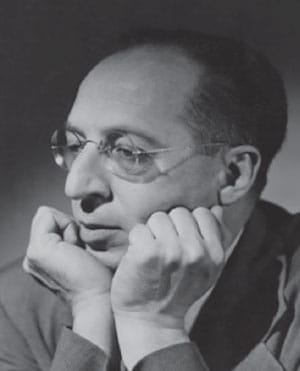
Just as the American Dream remains a flexible and contested idea, there is no such thing as a monolithic “American sound.” Composers have imagined America in very different ways, continually reworking the European legacy of classical music in dialogue with vernacular idioms—from the communal simplicity of Shaker hymnody or the improvisatory language and timbral inflections of jazz to the hybrid musical practices of the present.
Appalachian Spring has become the byword for Aaron Copland’s brand of homespun sincerity—of “a kind of musical naturalness that we have badly needed,” as Copland himself put it. The composer John Adams has likened its musical language to “pieces of Shaker furniture, simple to the point of being humble, but sturdy and effective and free of excess emotional baggage.”
Yet Copland’s path toward this style was anything but straightforward. Born in Brooklyn to Russian Jewish immigrant parents, he studied with Nadia Boulanger in Paris during the 1920s, cultivated his own take on modernism, and engaged with the era’s experiments in “symphonic jazz.” The Great Depression sharpened his desire to communicate with a wider audience. Experiences in Mexico, along with numerous ballet, theater, and film projects in the 1930s, helped him evolve a language of greater simplicity and directness while conveying a distinctly American aura.
In 1943, through the foundation she had established at the Library of Congress, the arts patron Elizabeth Sprague Coolidge commissioned Martha Graham to create a new ballet on American themes, with music by Copland. The project was conceived for the Library’s Coolidge Auditorium, whose construction Coolidge had financed in 1925. After delays, Appalachian Spring received its premiere there on October 30, 1944, Coolidge’s 80th birthday.
Copland’s working title was simply Ballet for Martha. Only after he had composed the score did Graham choose the title Appalachian Spring from “The Dance,” a section of Hart Crane’s poem The Bridge—where “spring” refers to a source of water rather than the season:
O Appalachian Spring! I gained the ledge;
Steep, inaccessible smile that eastward bends
And northward reaches in that violet wedge
Of Adirondacks!—wisped of azure wands.
The original scenario involves a young 19th-century pioneer couple, a Bride and her Husbandman, simultaneously joyful and anxious as they contemplate their future together. A Revivalist Preacher and his followers, along with an older Pioneer Woman, complete the small community around the couple as they prepare for their new life. Graham herself danced the Bride at the 1944 premiere at the Library of Congress; Merce Cunningham created the role of the Preacher, while Isamu Noguchi designed the spare, abstract set. By the end, the couple are left “quiet and strong in their new house.” Composed in the midst of World War II, the ballet’s image of a young couple facing an uncertain future carried an inescapable contemporary resonance.
Copland’s original ballet score was for just 13 players. For the concert suite of 1945, he substantially enlarged the instrumental forces while removing about eight minutes of the original ballet, along with making several smaller cuts and adjustments. The resulting 25-minute suite has become the version most familiar to concertgoers—a musical emblem of American openness and possibility. But in an era marked by climate anxiety, the pastoral world of Appalachian Spring can no longer be heard simply as an uncomplicated vision of open space and renewal.
The Music
A gently paced opening establishes the idyllic pastoral scene: a solo clarinet emerges over softly sustained strings as the harmony gradually opens into bright, widely spaced sonorities—like a dawn mist slowly evaporating. A sudden surge of energy sets the action in motion, followed by a gentle duo for the Bride and her Husbandman.
Dance rhythms—with “suggestions of square dances and country fiddlers,” as Copland described them—animate the episode involving the Preacher and his Followers. The Bride’s solo introduces greater rhythmic intensity as she confronts what Copland called the “extremes of joy and fear and wonder” surrounding her future.
The best-known sequence is a set of variations on the Shaker melody “Simple Gifts,” first presented by solo clarinet. It is the only pre-existing folk tune Copland uses in Appalachian Spring. In the closing pages, the music returns to the stillness of the opening, transformed into a tender hymn.
—TM
About the Artists
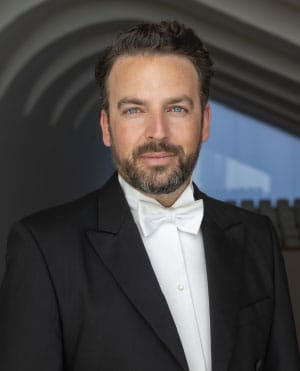
James Gaffigan
James Gaffigan was recently named music director of Houston Grand Opera and will assume this new role in the 2027–28 season, after serving as music director designate this season. He also serves as general music director of Komische Oper Berlin, where he is now in his fourth season, and as music director of the Verbier Festival Junior Orchestra. His former posts include music director of the Palau de les Arts Reina Sofía in Valencia, chief conductor of the Lucerne Symphony, principal guest conductor of both the Netherlands Radio Philharmonic and Trondheim Symphony Orchestra and Opera, and assistant conductor of the Cleveland Orchestra. He made his San Francisco Symphony debut in December 2006 and served as Associate Conductor from 2006–09.
Gaffigan has appeared with the New York Philharmonic, Chicago Symphony, Los Angeles Philharmonic, National Symphony, Boston Symphony, Cleveland Orchestra, Philadelphia Orchestra, Pittsburgh Symphony, London Symphony, London Philharmonic, Bavarian Radio Orchestra, Royal Concertgebouw Orchestra, Staatskapelle Berlin, Deutsches-Symphonie Orchester Berlin, Dresden Staatskapelle, NDR Elbphilharmonie Orchestra, Tonhalle Orchestra Zurich, Rotterdam Philharmonic, and Czech Philharmonic. He has also conducted for the Metropolitan Opera, Bavarian State Opera, Paris Opera, Zurich Opera, Vienna State Opera, Deutsche Oper Berlin, Dutch National Opera, Glyndebourne Festival, Lyric Opera of Chicago, and Santa Fe Opera, among many other companies.
Gaffigan was the first-prize winner of the 2004 Sir Georg Solti International Conducting Competition. A product of New York City Public Schools and a passionate supporter of music education, he studied at the LaGuardia High School of Music and Art before pursuing conducting studies at Rice University.
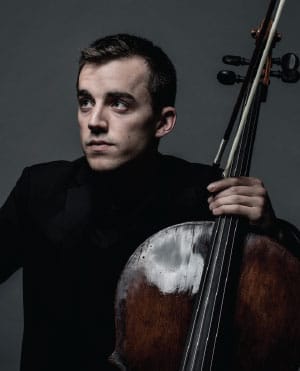
Rainer Eudeikis
Rainer Eudeikis joined the San Francisco Symphony as Principal Cello in 2022 and holds the Philip S. Boone Chair. Prior to his appointment, he was principal cello of the Atlanta Symphony and the Utah Symphony. He made an acclaimed solo debut with the SF Symphony in 2024, performing Esa-Pekka Salonen’s Cello Concerto under the composer’s baton, leading to a commercial release on SFS Media, distributed by Warner Classics. Other notable performances include concerto appearances with the Atlanta Symphony, Utah Symphony, and other ensembles, as well as solo, recital, and chamber music performances across the United States and abroad.
Born in Texas, Eudeikis began studying cello at the age of six. Following studies in Colorado with Jurgen de Lemos, he attended the University of Michigan as a student of Richard Aaron, completing his bachelor of music in three years with highest honors. He received his master of music from Indiana University, where he studied with Eric Kim, and subsequently completed his artist diploma at the Curtis Institute of Music, studying with Carter Brey and Peter Wiley.
Eudeikis has been invited to serve as artist-faculty at the Aspen Music Festival, Brevard Music Center, and Festival Napa Valley, and is a dedicated teacher and coach. He performs exclusively on Larsen strings.
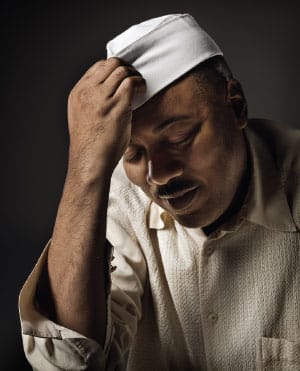
Alonzo King
Alonzo King is an internationally acclaimed pioneer of contemporary ballet and has guided LINES Ballet since 1982. His work has been recognized for its impact on the cultural fabric of San Francisco, as well as internationally by the dance world’s most prestigious institutions. King calls his works “thought structures,” created by the manipulation of energies that exist in matter through laws, which govern the shapes and movement directions of everything that exists.
Working in the repertoires of the world’s leading ballet and modern companies, he has collaborated with distinguished visual artists, musicians, and composers across the globe.
Named a Master of Choreography by the Kennedy Center in 2005, King is the recipient of the NEA Choreographer’s Fellowship, the Jacob’s Pillow Creativity Award, the US Artist Award in Dance, the NY Bessie Award, the SF Arts Medallion Award, and the National Dance Project’s Residency and Touring Awards. In 2015, he received the Doris Duke Artist Award in recognition of his ongoing contributions to the advancement of contemporary dance. King was also named one of America’s “irreplaceable dance treasures” by the Dance Heritage Coalition, joining historic icons in the field. In 2020, he was honored with a Dance Magazine Award, and his choreography appears in the 2023 short film Flower, produced by and starring Misty Copeland. King received San Francisco’s second annual Mayor’s Art Award in 2008, was inducted into the California Hall of Fame in 2022, and received the Minyon Harlin Award from UCSF in 2024 for his service to women and girls with HIV.
King is also a former San Francisco commissioner and a writer and lecturer on humanity and art. He has received honorary doctorates from Dominican University of California, California Institute of the Arts, and the Juilliard School in recognition of his significant contribution to the field of dance.
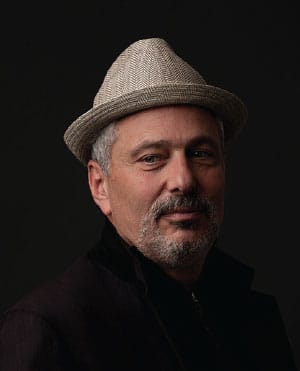
Robert Rosenwasser
Robert Rosenwasser is a co-founder of LINES Ballet. As creative director, he shapes the aesthetic and artistic direction of each project at the company, including conceptual design and production. In addition to his work with LINES Ballet, he has designed for Ballet de Monte Carlo, Béjart Ballet Lausanne, the Royal Swedish Ballet, San Francisco Ballet, Joffrey Ballet, Frankfurt Ballet, and Alvin Ailey American Dance Theater. He has also collaborated on book projects with artists and poets Richard Tuttle, Mei-mei Berssenbrugge, Kiki Smith, Cecilia Vicuña, and Barbara Guest. His work is found at the New York Museum of Modern Art in the Department of Books and Illustrated Prints, at the Whitney Museum, and the Spencer Collection of the New York Public Library. Rosenwasser grew up in New York, attending LaGuardia High School of Music and Art, Cooper Union, and California Institute of the Arts.
Alonzo King LINES Ballet
Alonzo King LINES Ballet is a celebrated contemporary ballet company that has been guided since 1982 by the artistic vision of acclaimed choreographer Alonzo King. Collaborating with extraordinary composers, musicians, writers, and visual artists from around the world, King draws on a diverse set of deeply rooted cultural traditions, imbuing classical ballet with new expressive potential. The company brings new works of illuminating beauty to Bay Area audiences in biannual home seasons. LINES Ballet’s national and international tours allow the company to share its vision of transformative, revelatory dance through performances worldwide.
LINES Ballet is dedicated to training the next generation of artists through its pre-professional Summer Program and Bachelor of Fine Arts Program with Dominican University of California. LINES also makes dance accessible to Bay Area dancers through world-class, affordable classes open to the community.
The Company
Maël Amatoul
Adji Cissoko*
Theo Duff-Grant
Lorris Eichinger
Shuaib Elhassan*
Joshua Francique
Mikal Gilbert
Anna Joy*
Marusya Madubuko*
Tatum Quiñónez*
Amanda Smith*
*Prélude à L’Après-midi d’un faune dancers
LINES Ballet Dancers
Maël Amatoul is native to the French Riviera. He embarked on a journey at the PNSD Rosella Hightower in Cannes, where he trained in ballet and contemporary dance. He has worked on pieces by choreographers including Jean-Christophe Maillot, Christophe Garcia, Hervé Koubi, and Francesco Curci. In 2022, he was awarded a Scholarship of Excellence in Art and Culture from the Côte d’Azur University. After seven years in Cannes, Amatoul decided to open up his dance experience to new techniques and joined the Ailey School. There, he had the opportunity to learn and perform works by Alvin Ailey, Ray Mercer, Branndi Lewis, Renee Robinson, and Clifton Brown. After attending the LINES Ballet Summer Program in June 2023, Amatoul joined Alonzo King LINES Ballet as a company dancer.
Adji Cissoko was born and grew up in Germany, where she trained at the Ballet Academy Munich and graduated with a diploma in dance. Cissoko attended the Jacqueline Kennedy Onassis School at American Ballet Theatre in New York before joining the National Ballet of Canada in 2010. In 2012, she was awarded the Patron Award of Merit by the Patrons’ Council Committee of the National Ballet of Canada. Cissoko joined LINES Ballet in 2014. Since then, she has originated many central roles and guested for galas worldwide. Cissoko has given multiple master classes and taught classes around the world as part of the company’s outreach program. Cissoko choreographed her first piece, AZIZ, for BalletX in 2021. She is also a 2022 recipient of the Toulmin Fellowship and was the artist in residence for Vail Dance Festival in 2023. On January 1, 2026, Cissoko was appointed to the position of associate artistic director of Alonzo King LINES Ballet.
Theo Duff-Grant was born in Vancouver and studied at Goh Ballet Academy for 10 years before completing his training at the Dutch National Ballet Academy. In 2015, he joined the Dutch National Ballet, and in 2017, he moved to Saint Petersburg to join the Mikhailovsky Theatre. He joined LINES Ballet in 2022.
Lorris Eichinger started training in Grenoble, France, at the National Conservatory and continued at the École Nationale Supérieure de Danse de Marseille. After training at the School of American Ballet in New York from 2010 to 2013, Eichinger joined the professional division program of the Pacific Northwest Ballet in Seattle. He then moved back to France to dance with the Jeune Ballet de Lyon. Eichinger danced with De Dutch Don’t Dance in the Netherlands in 2015 and then moved to Israel to join Kamea Dance Company in 2016. He joined LINES Ballet in 2019.
Shuaib Elhassan, from Manhattan’s Lower East Side, began his formal dance training at the Ailey School on a full scholarship. He has also trained at intensives with Earl Mosley’s Institute of the Arts, Jacob’s Pillow, and Complexions Contemporary Ballet, which he later joined as a member. He has also performed with Life Dance Company, Zest Collective, Dance Iquail, and the Von Howard Project. Elhassan joined LINES Ballet in 2014.
Joshua Francique was born and raised in Chicago. He began his dance training with Deeply Rooted Dance Theater in 2015. Francique continued his training at Northern Illinois University and soon after at the Ailey School on a full scholarship. Francique has performed works by Nicole Clark-Springer, Gary Abbott, and Kevin Iega Jeff, among others. In 2020, Francique attended the LINES Ballet Training Program for a year and then joined LINES Ballet in 2022.
Mikal Gilbert grew up in Virginia Beach and developed a love for dance at the age of 19 while studying music performance at the University of the Arts. He then went on to train at Norfolk Academy under the tutelage of Elbert Watson. In 2017, Gilbert was an inaugural member of Complexions Contemporary Ballet’s pre-professional program. In 2018, he continued his studies at the Ailey School as a full scholarship recipient. Gilbert has attended intensives and workshops at Alvin Ailey American Dance Theater, Dance Theatre of Harlem, Complexions, and BalletX. He is a “Dancer of Philadelphia” and has been a member of Koresh Dance Company, Dance Iquail, and Philadanco!, where he performed works by Bernard Gaddis, Milton Myers, Christopher Rudd, and Tommie Wheed. He joined LINES Ballet in 2024.
Anna Joy was born and raised in Rochester, New York, where she began her training at Draper Center for Dance Education. She spent summers at American Ballet Theatre, Houston Ballet, the Royal Ballet School, Alonzo King LINES Ballet, and Complexions Contemporary Ballet. In 2019, Joy competed in Dance Prix de New York where she was offered a full scholarship by Cynthia Harvey to the Upper School at American Ballet Theatre’s Jacqueline Kennedy Onassis School. She graduated in 2023 and joined the Washington Ballet School as a trainee from 2023–24 and joined LINES Ballet in 2025.
Marusya Madubuko is originally from New York. She began her pre-professional training at age 15 with Premiere Division Ballet under the tutelage of Nadege Hottier. In 2019, Madubuko competed at the Royal Grand Prix in Italy, winning second place for her contemporary and classical solo. She trained with the Bolshoi Ballet Academy, the Royal Ballet School, and at San Francisco Ballet School, where she had the opportunity to dance repertoire including Helgi Tómasson’s Nutcracker and Cinderella, as well as George Balanchine’s A Midsummer Night’s Dream. In 2021, she participated in BalletUnleashed’s first creative project Switchback, working with choreographer Cathy Marston to create a solo. Madubuko joined LINES Ballet in 2021.
Tatum Quiñónez began her training at Master Ballet Academy in Phoenix, Arizona. She then continued her training at Ballet West Academy and the BWA Trainee Program. She spent her summers at Ballet Arizona, Ballet Austin, Pacific Northwest Ballet, Ballet West, and Oregon Ballet Theatre. Quiñónez then joined Oregon Ballet Theatre’s second company, OBT2, in 2019. She has performed works by George Balanchine, August Bournonville, William Christensen, Gerald Arpino, Christopher Stowell, James Canfield, and LeeWei Chao. Quiñónez joined LINES Ballet in 2021.
Amanda Smith grew up in Orange County, California, and trained at California Dance Academy, Pointe of Grace, and Anaheim Ballet. In 2008, she was crowned Miss Dance Drill Team California and USA. She moved to New York to study at SUNY Purchase, where she received her BFA in 2012. After graduating, Smith joined Charlotte Ballet and worked with Patricia McBride. In 2015, she moved back to New York, where she joined New York Theatre Ballet. Smith also taught and participated in outside projects including the Black Iris Project and Kymera Dance, and she was featured in a national campaign for the Gap. She then joined the Dance Theatre of Harlem in 2017 and was featured on the cover of Dance Magazine’s 2019 April issue. While at DTH, Smith performed many roles in ballets such as Allegro Brilliante and Blake Works IV. She also guested for Debbie Allen’s Hot Chocolate Nutcracker.
Alonzo King LINES Ballet Staff
Leadership Team
Alonzo King, Choreographer, Artistic Director & Co-Founder
Robert Rosenwasser, Executive Director, Creative Director & Co-Founder
Ilaria Guerra, Chief of Staff & Programs Director
Adji Cissoko, Associate Artistic Director
Pam Hagen, Co-Founder
Development
Madeline DeVries, Development Manager
Lavanya, Database Administrator
Sheri Kuehl, Institutional Giving Manager
Marketing
Jon Finck, Public Relations Consultant
Katie Roy, Digital Marketing Specialist
Finance and Human Resources
Masami Kondo, Director of Finance
Centricity Solutions, HR Services
Pam Hagen, Payroll Manager (emeritus) & Co-Founder
Education
Marina Hotchkiss, BFA Program Director
Anna Beth Lee, Programs Manager
Jamie Wright, Studio Operations Manager
CarOlé Flamenco, Dance Center Coordinator
Information Technology
Matthew Trevino, vCIO Consultant
James Haruta, vCIO Consultant
Company Staff
Brandi Williams, General Manager
Syam Waymon, Assistant to Alonzo King
Seah Johnson, Production Director
Byron Roman, Rehearsal/Stage Manager
Philip Perkins, Sound Designer
Joan Raymond • Abdiel Portalatín Pérez • Keely Weiman • Chantrell Glover • Shannon Maxham • Callie Floor •Kevin Tijerina Costuming, Costume Construction
Julia Erickson • Ilaria Guerra • Meredith Webster, Rehearsal Directors
Adam Cook • Matt Sanford • Josh Weckesser, Stage Supervisors
Booking
Margaret Selby, Director, Selby Artists Management
Thierry DuClos, Director, Delta Danse
Alonzo King LINES Ballet Board of Directors
Raquel Baldocchi
Carolyn Press Chatham, Secretary
Tony Farrell
Joy Johnson
Alonzo King, Artistic Director & Co-Founder
Micki Klearman
Patricia Lawton, Vice Chair
Sandra Lloyd
Lisa Pinckney
Bouchra Rachid
Robert Rosenwasser, Executive Director, Creative Director & Co-Founder
Harry Schoening, Chair
Diana Smith
Pasha Thornton
Aaron Walton
Benjy Weinberger, Treasurer
Al Wong
Advisory Board
Christopher Dydyk
Groundline Fund
Kimberly Hughes
Augustin de Kerversau
Breanna Zwart
Alonzo King LINES Ballet would like to thank the following funders for their invaluable support:
Baker Family Foundation
The Mellon Foundation
Grants for the Arts
LSP Family Foundation
The Shubert Foundation