In This Program
The Concert
Friday, October 2, 2026, at 7:30pm
Teddy Abrams conducting
Edwin Outwater conducting
John Adams
Short Ride in a Fast Machine (1986)
Teddy Abrams conductor
Samuel Barber
Canzone: Moderato from Piano Concerto, Opus 38 (1962)
Yuja Wang piano
Teddy Abrams conductor
Charles Ives
Thanksgiving and Forefathers’ Day (1913) from New England Holidays Symphony
Teddy Abrams conductor
San Francisco Symphony Chorus
Jenny Wong director
Maurice Ravel
Adagio assai from Piano Concerto in G major (1931)
Jean-Yves Thibaudet piano
Edwin Outwater conductor
Selected Songs with Audra McDonald
Audra McDonald vocalist
Bruce Forman guitar
Edwin Outwater conductor
Leonard Bernstein
First Movement (Psalm 108:2; Psalm 100) from Chichester Psalms (1965)
Jamie Bernstein speaker
Edwin Outwater conductor
San Francisco Symphony Chorus
Jenny Wong director
Intermission
Meredith Monk
Panda Chant II from The Games (1983)
San Francisco Symphony Chorus
Jenny Wong director and conductor
John Cage
(orch. Lou Harrison)
Movements I, II, V from Suite for Toy Piano (1948)
Teddy Abrams conductor
Gustav Mahler
Andante moderato from Symphony No. 6 in A minor (1904/06)
Edwin Outwater conductor
Michael Tilson Thomas
Constancy (2020)
World Premiere
John Wilson piano
Francis Poulenc
Rustique and Finale from Sonata for Piano Four Hands (1918/39)
Yuja Wang and Teddy Abrams piano
Michael Tilson Thomas
“Ich lebe mein Leben” from Meditations on Rilke (2019)
Sasha Cooke mezzo-soprano
Edwin Outwater conductor
Mason Bates
(text: Ted Thomas)
“If you listen, there’s a song” (2026)
World Premiere and San Francisco Symphony Commission
Sasha Cooke mezzo-soprano
Jeremy Denk piano
Aaron Copland
“The Promise of Living” from The Tender Land (1954)
Teddy Abrams conductor
San Francisco Symphony Chorus
Jenny Wong director
Video Design: Adam Larsen
Supertitles: Ron Valentino
Chichester Psalms Translation: Noam Cook
Support for the San Francisco Symphony Chorus is provided through the San Francisco Symphony Chorus Endowment Fund, generously established by Peter G. Neumann.
This concert is generously supported by the Ralph I. Dorfman Commissioning Fund.
Program Notes
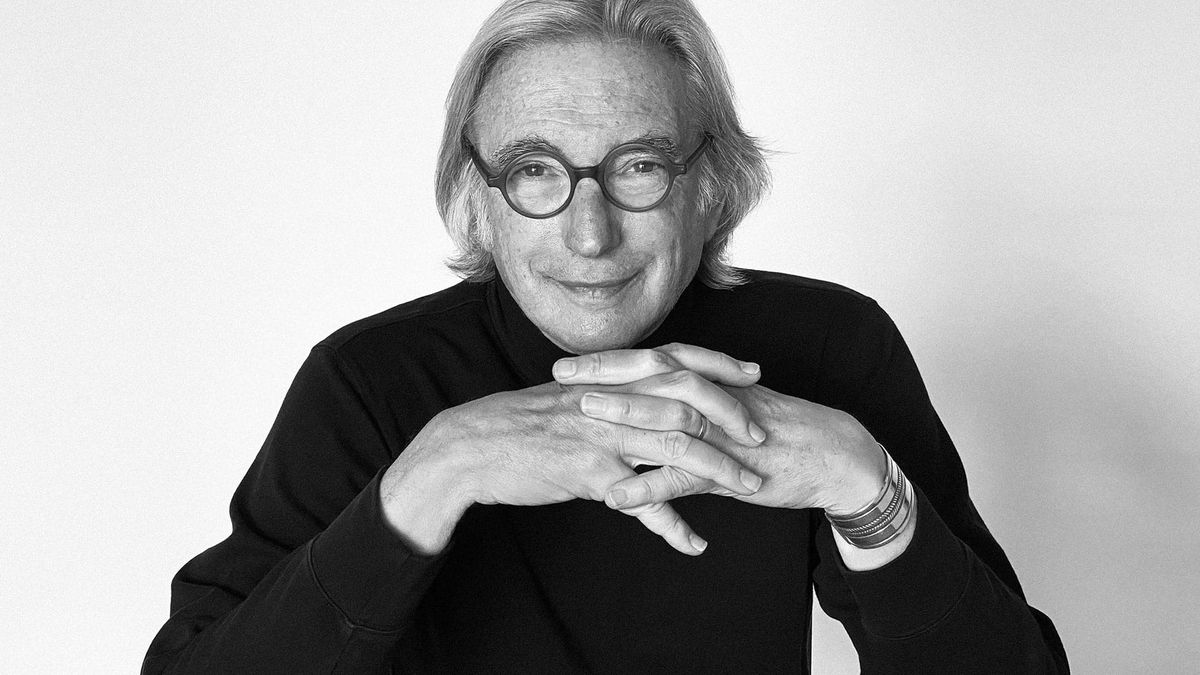
Celebrating the Time
Michael Tilson Thomas
(1944–2026)
In September 1995, when Michael Tilson Thomas began his first season as San Francisco Symphony Music Director, Bay Area audiences were excited, the way basketball fans are excited by LeBron James or readers are excited by a new Murakami novel. Like those fans and readers, music lovers knew good things were in store.
Michael Tilson Thomas had been a high-profile fixture of the music world for almost 30 years. And he was an American—a native Californian, no less—in a profession dominated by European conductors, who because of their continental bona fides were assumed to have all but mystical insight into the “standard” orchestral repertory. MTT substituted energy for mysticism. He was three months shy of 50, not something you would have guessed from the Macy’s ad in the Chronicle, announcing that “Michael Tilson Thomas Conducts His Life in Levi’s.” His image occupied a full page. There he stood, in jeans and wielding a baton, a man of the people, a smile on his face. And the people knew that face. It dominated the Bay Area press. An aggressive PR campaign assured MTT sightings. From above city streets, and from the Financial District to the Presidio, MTT’s piercing visage beckoned audiences to Davies Symphony Hall. Those billboards made him look more rock star than maestro. You could easily believe he was both.
The excitement sprang from more than clever marketing. Expectations for the orchestra had long been growing.
Until 1980, with the opening of Davies Symphony Hall, the San Francisco Symphony had never occupied a permanent home, not since its 1911 founding. The first change the new hall enabled was a year-round schedule. A more significant change followed. Until then, the San Francisco Symphony and San Francisco Opera Orchestra had shared many musicians. Those serving double duty migrated from the pit at the close of the Opera season to the stage as the Symphony season began. With the new 52-week schedule, such sharing was no longer possible, for Symphony and Opera seasons would be concurrent. Symphony musicians were compelled to choose which ensemble they wished to remain with. Those choices resulted in 20 openings in the San Francisco Symphony. The orchestra that inaugurated Davies Symphony Hall was a different San Francisco Symphony than any heard before. Not only were 20 percent of the musicians new, but no one in the orchestra was familiar with the acoustic environment, one that would continue to pose problems. For the next 15 years, two conductors, first Edo de Waart and then Herbert Blomstedt, worked deliberately and carefully to shape and polish this ensemble, their goal to ensure the San Francisco Symphony a place alongside the best orchestras anywhere. The results of such determined stewardship, aided by an extensive renovation of the concert hall, were gradual but sure. The ensemble that awaited Michael Tilson Thomas in September 1995 possessed new capacities. Bay Area music lovers were convinced that MTT, with his prestige, credentials, and personality, was the one to harness those new strengths and pilot the orchestra forward.
For the next 25 years, MTT and the orchestra would fulfill the promise of those early days. To find anything like this musical partnership in the San Francisco Symphony’s earlier history, you had to go back to the 1940s, when the legendary Pierre Monteux led the orchestra out of its Great Depression doldrums to a peak of excellence. And, like Monteux, MTT became a fixture in the community. (That both conductors owned poodles and could be spotted walking their dogs on city streets is a coincidence too obvious to dwell upon yet too perfect to ignore.) MTT’s frenzied schedule took him to orchestras around the world, yet his Pacific Heights home suggested permanence, a stability that, along with the force of his persona and the attention he drew to the orchestra and its music, made him a rarity, an international figure who was also a local presence.
The MTT who arrived in San Francisco came with an extensive resume. The music world first took notice of Michael Tilson Thomas in 1969, when he was an assistant conductor of the Boston Symphony. That October, Boston’s music director, William Steinberg, fell ill after the first half of a Carnegie Hall concert. MTT took over for its remainder. The press lost no time drawing comparisons between him and Leonard Bernstein, whose own first public triumph—also on the Carnegie stage—came in 1943, when he stepped in for Bruno Walter and a love affair with the musical public began. It happens more often than you might think—an assistant subbing for an indisposed maestro. But those rescue missions by Bernstein and MTT have been mythologized.
Bernstein and MTT had in fact known each other for almost a year before MTT finished the concert for Steinberg. In December 1968, an hour-long meeting to introduce MTT had been entered into Bernstein’s schedule. Chemistry rewrote the agenda. The meeting extended to dinner and a Broadway show.
“A concert program, he said, should include works that reflect each other, some diverting, some challenging, some reaffirming.”
The young man Bernstein encountered had come of age in the Los Angeles of the ’50s and ’60s. The city’s music scene still bore the imprint of those who had settled there after fleeing Europe in the ’30s and ’40s—Schoenberg, Stravinsky, Rachmaninoff, Korngold, Klemperer, Walter. As a student, MTT served as accompanist for master classes by cellist Gregor Piatigorsky and violinist Jascha Heifetz. The German émigré composer Ingolf Dahl, one of his most influential teachers at the University of Southern California, opened new ways of thinking about form and expression, a new understanding of how music means. This led to work with Pierre Boulez, Luciano Berio, John Cage, and Lou Harrison at the contemporary music series known as the Monday Evening Concerts.
At Tanglewood and in New York, MTT worked with a different cadre of musicians shaping American music, including Aaron Copland and Bernstein. He explored American masters such as Charles Ives and Carl Ruggles. He learned much from R&B legend James Brown, he accompanied jazz singer Sarah Vaughan, he loved the Beach Boys. A 1971 cover story in the New York Times Magazine was titled with a now-famous quote from Bernstein: “‘He Reminds Me of Me at That Age.’” In the story, Bernstein elaborated: “He’s like me in his total embrace of music of any kind, in the voraciousness, the total promiscuity of it.”
Soon MTT rose through the Boston Symphony conducting ranks; took over the televised New York Philharmonic Young People’s Concerts from Bernstein; assumed his first music directorship with the Buffalo Philharmonic; expanded the record catalog with works by Ruggles and Piston, all-but-unknown Beethoven choral works, Gershwin shows. The London Symphony named him principal conductor. He conceived and led the New World Symphony, which trains graduates of America’s top conservatories for orchestral careers. His watch as the San Francisco Symphony’s longest-serving music director, a tenure that extended to 2020, saw the launch of the Symphony’s own recording label and the release of many Grammy-winning discs, including an acclaimed Mahler symphony cycle. In Keeping Score, online and via video, he introduced Ives, Mahler, Beethoven, and others. With the Symphony he also introduced some of his own music, for since the late 1980s he had been composing steadily and seriously.
He loved and respected his audience, though he expected a modicum of attention in return. I saw his patience snap just once. On a Friday evening in 1997, as the final movement of Tchaikovsky’s Pathétique Symphony ended with the low strings fading to silence, an enthusiastic listener on the main floor, failing to note that MTT had not yet dropped his arms, broke the music’s spell with raucous applause. A handful of others took this as a cue and joined in. MTT turned, clearly exasperated, shaking his head and waving his arms as though to mime I can’t believe it! The audience fell quiet. Then he gestured, signaling something like Come on! Now it’s time to make noise! They obliged. Backstage, the moment had passed and he was again in good spirits, even when a well-wisher told him, with less than perfect diplomacy, how much she had enjoyed the performance—“Except for that idiot! He ruined everything!” He did not, of course, ruin everything, and the gracious maestro took her words in stride.
He knew what he wanted not just from listeners but from the music. A concert program, he said, should include works that reflect each other, some diverting, some challenging, some reaffirming. “The total result should be thought-provoking and fun.” That goal often resulted in programming changes sparked by bursts of last-minute inspiration, sending musicians and music librarians and press departments scrambling as they attempted to execute their orders. MTT understood what he was asking of his colleagues. Trite but true, those late brainstorms were always for the music. Often, a program on paper looked odd or impossible. In performance, everything worked. And since we are speaking of what’s done for the music, we should note one thing besides poodles that MTT shared with Monteux. Neither allowed his personality to come between the music and the listener. Both understood the conductor’s role as catalyst, someone who coordinates, suggests, guides, while the musicians make the music. Conductor and musicians, MTT said, are somehow “able to find a common . . . human understanding, and together [we] are able to make something wonderful happen which can be shared by other people. That is the center of what it’s all about.”
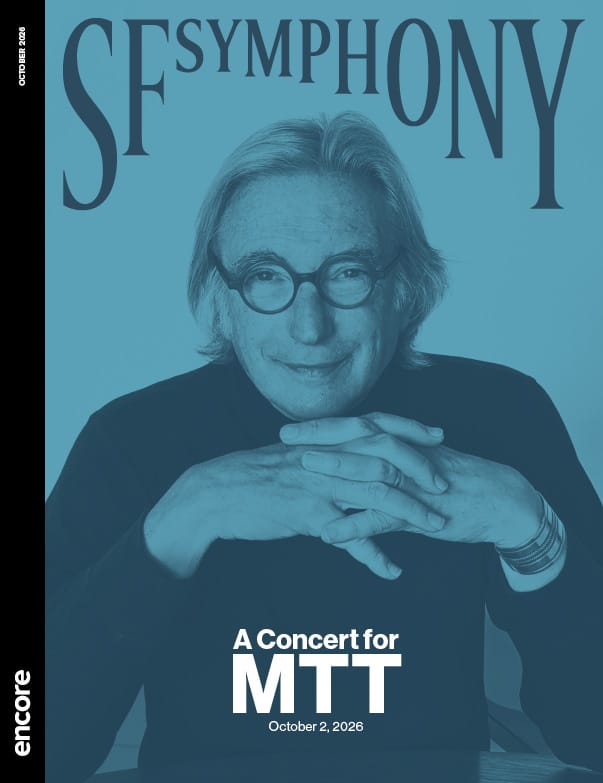
A Concert for MTT
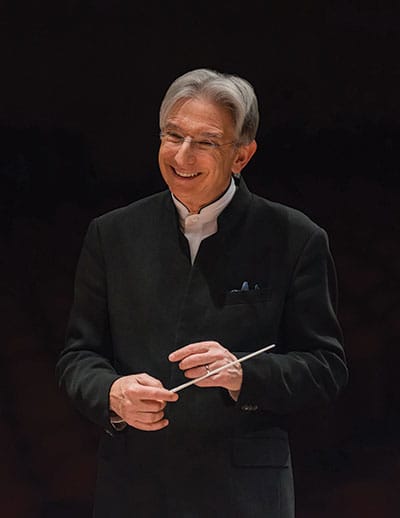
Tonight’s wide-ranging program could have been designed by MTT. American music had no more enthusiastic advocate. More than half of what we hear this evening is by American composers. John Adams (b. 1947), Samuel Barber (1910–81), Mason Bates (b. 1977), Leonard Bernstein (1918–90), John Cage (1912–92), Aaron Copland (1900–90), Lou Harrison (1917–2003), Meredith Monk (b. 1942)—MTT knew them all personally except Barber, whose Piano Concerto includes a serene Canzone that seems made for a concert like this.
MTT’s career-long devotion to Charles Ives (1874–1954) is marked by a movement from the composer’s Holidays Symphony, one of many Ives works MTT recorded. His love of George Gershwin (1898–1937) came via his father, a friend of the composer’s. An early champion of Adams, MTT premiered Short Ride in a Fast Machine with the Pittsburgh Symphony, and today it is one of the most-played of all American compositions. Years later, he advocated for Bates, leading his music with the YouTube Symphony and in San Francisco, and recording it during the 2017 Beethoven and Bates Festival.
French music was one of MTT’s loves. We hear the lovely slow movement of the G-major Piano Concerto by Maurice Ravel (1875–1937) and two movements of a Francis Poulenc (1899–1963)sonata often performed by MTT as an encore. The Ravel is airy and bell-like, the Poulenc a mad scurry.
Gustav Mahler (1860–1911) was another constant in MTT’s career—he conducted the composer’s Ninth Symphony in his San Francisco Symphony debut, in 1974. The Adagio from Mahler’s Sixth Symphony recalls a significant time, for MTT led Mahler Six—sometimes called the Tragic Symphony—the day after the attacks of September 11, 2001.
Tonight’s artists have long histories with MTT. He helped bring pianist Yuja Wang and mezzo-soprano Sasha Cooke to wider attention. Bay Area native Teddy Abrams began conducting studies with MTT at age 12 and is now music director of the Louisville Symphony. Audra McDonald, Jeremy Denk, and Jean-Yves Thibaudet were longtime MTT friends and collaborators. Edwin Outwater served as SF Symphony Resident Conductor from 2001 to 2006; among his posts today, he is music director of the San Francisco Conservatory of Music. John Wilson is regularly engaged as the Symphony’s keyboard artist. Jenny Wong is Director of the SF Symphony Chorus.
Michael Tilson Thomas modeled a well-lived life. He was generous, intense, demanding, driven by the conviction that, though we have one chance only to get it right, we can celebrate the time spent in that pursuit.
—Larry Rothe
About the Artists
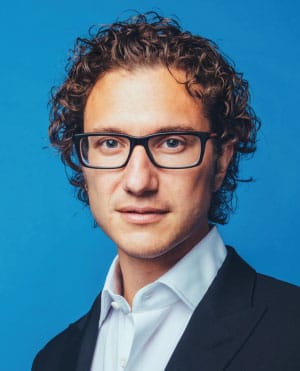
Teddy Abrams
Teddy Abrams, a Grammy Award winner and Musical America’s 2022 conductor of the year, has been the galvanizing force behind the Louisville Orchestra’s artistic renewal since his appointment as music director in September 2014. His Kentucky achievements include the Louisville Orchestra Creators Corps, a residency initiative for composers; the In Harmony Tour, a community-building project funded by the Commonwealth of Kentucky; and collaborations with artists including Chris Thile, Jim James, Jack Harlow, Storm Large, and Jecorey “1200” Arthur, with whom Abrams founded the Louisville Orchestra Rap School.
Beyond Louisville, Abrams has conducted leading orchestras in Europe and North America, including the San Francisco Symphony, with whom he debuted as a conductor in 2012. In 2023, Abrams premiered his own composition Mammoth with the Louisville Orchestra and Yo-Yo Ma in Kentucky’s Mammoth Cave, and in 2024 his piano concerto for Yuja Wang won a Grammy Award. He began a new role as artistic and executive director of the Ojai Music Festival in September 2026.
Abrams first came to the attention of Michael Tilson Thomas when he wrote him a letter at age nine. MTT became a mentor, and they worked together regularly in the years following. Abrams was a conducting fellow at the New World Symphony and he has also been a champion of MTT’s compositions.
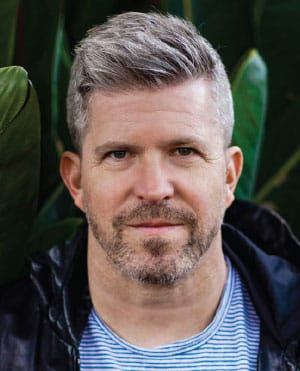
Edwin Outwater
Edwin Outwater regularly works with the world’s top orchestras, institutions, and artists to reinvent the concert experience. His ability to cross genres has led to collaborations with Metallica, Wynton Marsalis, Renée Fleming, and Yo-Yo Ma. He is music director of the San Francisco Conservatory of Music and music director laureate of the Kitchener-Waterloo Symphony.
Recent appearances include the New York Philharmonic, Cleveland Orchestra, Chicago Symphony, Philadelphia Orchestra, San Diego Symphony, Seattle Symphony, and New World Symphony, as well as the Royal Philharmonic in a multi-concert series opening the Steinmetz Hall in Florida. He also served as a producer and musical advisor for the National Symphony’ s 50th anniversary concert at the Kennedy Center. In December 2022, he premiered A Christmas Gaiety at the Royal Albert Hall with Peaches Christ and the BBC Concert Orchestra and returned in 2023. Outwater has held a long association with San Francisco Symphony. He was appointed Resident Conductor and Wattis Foundation Music Director of the SF Symphony Youth Orchestra by Michael Tilson Thomas in 2001 and they remained friends and colleagues for 25 years.
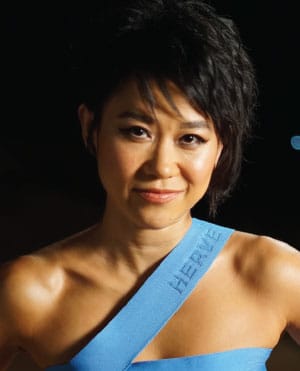
Yuja Wang
Yuja Wang is celebrated for her charismatic artistry, emotional honesty, and captivating stage presence. She has performed with the world’s most venerated conductors, musicians, and ensembles, and is renowned not only for her virtuosity, but her spontaneous and lively performances.
Wang was born into a musical family and began studying the piano at the age of six. She received advanced training in Canada and at the Curtis Institute of Music with Gary Graffman. Her international breakthrough came in 2007, when she replaced Martha Argerich as soloist with the Boston Symphony. Two years later, she signed an exclusive contract with Deutsche Grammophon and has since established her place among the world’s leading artists, with a succession of critically acclaimed performances and albums. Her recordings have garnered multiple awards, including five Grammy nominations and her first Grammy win for Best Classical Instrumental Solo with her 2023 release The American Project, which featured music by Teddy Abrams and Michael Tilson Thomas. For this she has also won an Opus Klassik award in the concerto category.
As a chamber musician, Wang has developed long-lasting partnerships with several leading artists. She made her San Francisco Symphony debut in February 2006 and became a Shenson Young Artist later that year. She returns to the Great Performers Series for a recital in April 2027.
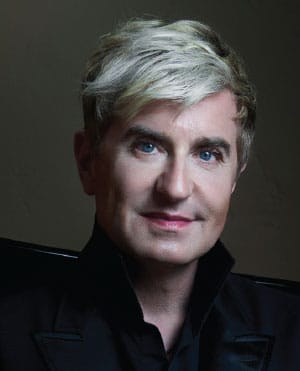
Jean-Yves Thibaudet
Jean-Yves Thibaudet has earned a reputation as one of the world’s finest pianists and is especially known for his diverse interests beyond the classical world, including numerous collaborations in film, fashion, and visual arts. He is the first-ever artist in residence at the Colburn School, which awards several scholarships in his name. He made his San Francisco Symphony debut in October 1994 and performed regularly with Michael Tilson Thomas and the Orchestra.
Thibaudet has recently appeared in concerts and recitals around the world in works ranging from Gershwin’s Concerto in F to Messiaen’s Turangalîla-Symphonie. A champion of Khachaturian’s Piano Concerto, Thibaudet performs the piece with the San Francisco Symphony in June 2027, having previously played it with the St. Louis Symphony and New York Philharmonic. In addition to his orchestral dates, Thibaudet continues to tour with violinist Lisa Batiashvili and cellist Gautier Capuçon; the trio appears at Davies Symphony Hall later this month.
A prolific recording artist, Thibaudet has appeared on more than 70 albums and six film scores. His extensive catalog has received two Grammy nominations, two Echo Awards, the German Record Critics’ Award, the Diapason d’Or, the Choc du Monde de la Musique, the Edison Prize, and Gramophone Awards. Thibaudet is the soloist on Dario Marianelli’s recently reissued score for Pride & Prejudice, which was certified Gold by the RIAA in 2025. His concert wardrobe was designed by Vivienne Westwood.
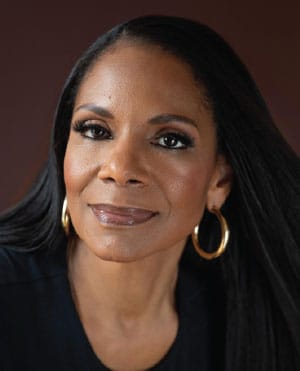
Audra McDonald
Audra McDonald is unparalleled in the breadth and versatility of her artistry as both a singer and an actor. The winner of a record-breaking six Tony Awards, two Grammy Awards and an Emmy, in 2015 she was named one of Time’s 100 most influential people and received the National Medal of Arts from President Barack Obama. In addition to her Tony-winning performances in Carousel, Master Class, Ragtime, A Raisin in the Sun, The Gershwins’ Porgy and Bess, and Lady Day at Emerson’s Bar & Grill—the role that also served as the vehicle for her Olivier Award-nominated 2017 debut in London’s West End—she broke records yet again in 2024–25 when she headlined a new Broadway revival of Gypsy, garnering her an unprecedented 11th Tony nomination.
McDonald’s notable television credits include Private Practice, The Good Wife, The Good Fight, and The Gilded Age, and on film, she has appeared in Disney’s live-action Beauty and the Beast, the documentary Whitney Houston in Focus, Rustin, and the Aretha Franklin biopic Respect. She has issued five solo albums on the Nonesuch label as well as Sing Happy with the New York Philharmonic on Decca Gold. She is a founding member of Black Theatre United, board member of Covenant House International, and prominent advocate for LGBTQIA+ rights, and her favorite roles are those performed offstage, as an activist, wife to actor Will Swenson, and mother. She made her San Francisco Symphony debut in September 1998 in an all-Gershwin program led by Michael Tilson Thomas.
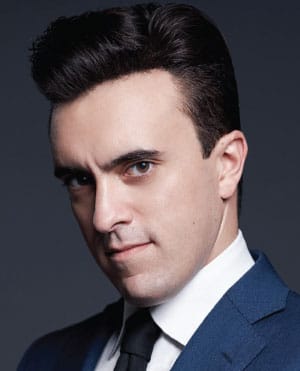
John Wilson
John Wilson performs as a pianist with the San Francisco Symphony and San Diego Symphony, and serves as principal keyboard for the Marin Symphony. In 2026–27 he gives the Bay Area premiere of Caroline Shaw’s piano concerto Watermark and appears as soloist in Rachmaninoff’s Piano Concerto No. 2 with the San Francisco Philharmonic. He has performed Philip Glass’s Piano Concerto No. 1 with the Chamber Orchestra of New York at Carnegie Hall and Beethoven’s Triple Concerto at the Sun Valley Music Festival, and has toured with the San Francisco Symphony under Michael Tilson Thomas and Esa-Pekka Salonen.
Wilson performed on the Grammy-winning San Francisco Symphony recordings of Meditations on Rilke and Adriana Mater. His Avie Records debut featured the world premiere of MTT’s Upon Further Reflection; he also appears on Pentatone’s Grace: The Music of Michael Tilson Thomas. He has premiered works by John Adams, Steve Reich, Timo Andres, and Gabriela Lena Frank. Wilson is a Steinway Artist.
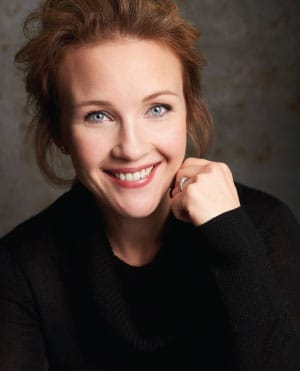
Sasha Cooke
Two-time Grammy Award–winning mezzo-soprano Sasha Cooke has sung at the Metropolitan Opera, San Francisco Opera, English National Opera, Seattle Opera, Opéra National de Bordeaux, and Gran Teatre del Liceu, among others, and with more than 100 symphony orchestras worldwide. This season, she sings Elgar’s Sea Pictures with the Minnesota Orchestra, Ravel’s Shéhérazade with the Houston Symphony, Bach’s Christmas Oratorio with Orchestre National de France, a world premiere by Bernard Foccroulle and Chausson’s Poème de l’amour et de la mer with the London Symphony Orchestra, Verdi’s Requiem with the Baltimore Symphony, and Beethoven’s Ninth Symphony with the Chicago Symphony, among other appearances.
Cooke made her San Francisco Symphony debut in June 2009 and became a Shenson Young Artist in January 2010. She toured Europe with Michael Tilson Thomas and the Symphony, premiered MTT’s Meditations on Rilke (captured on a Grammy-winning SFS Media release), and recorded two of MTT’s songs on Grace: The Music of Michael Tilson Thomas. Last season, she sang Berlioz’s Les Nuits d’été with the Symphony and Music Director Designate Elim Chan.
Cooke is a graduate of Rice University and the Juilliard School. She also attended the Music Academy of the West, Aspen Music Festival, Ravinia Festival’s Stearns Music Institute, Wolf Trap Foundation, Marlboro Music Festival, and the Met’s Lindemann Young Artist Development Program.
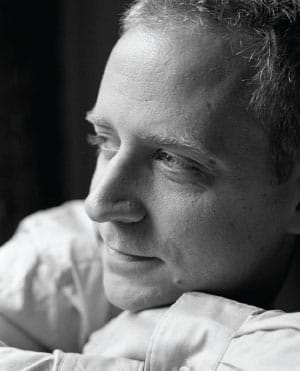
Jeremy Denk
Jeremy Denk is one of America’s foremost pianists. Also a New York Times bestselling author, he is the recipient of both the MacArthur Fellowship and the Avery Fisher Prize, and is a member of the American Academy of Arts and Sciences.
Denk is also known for his original and insightful writing on music. His memoir, Every Good Boy Does Fine, was published to universal acclaim by Random House in 2022. He also wrote the libretto for a comic opera presented by Carnegie Hall, Cal Performances, and the Aspen Festival, and his writing has appeared in the New Yorker, the New Republic, the Guardian, Süddeutsche Zeitung, and on the front page of the New York Times Book Review.
Denk is recognized for his interpretations of the music of Charles Ives, and in celebration of the 150th anniversary of the composer’s birth, Nonesuch Records released a collection of his Ives recordings in 2024. His recording of Bach’s Goldberg Variations for Nonesuch Records reached No. 1 on the Billboard Classical Charts, and his recording of Beethoven’s Piano Sonata Opus 111 paired with Ligeti’s Études was named one of the best discs of the year by the New Yorker, NPR, and the Washington Post, and received special recognition by BBC Radio 3’s Building a Library. He made his San Francisco Symphony debut in 2006 and appeared many times with Michael Tilson Thomas and the Orchestra in San Francisco and on tour.
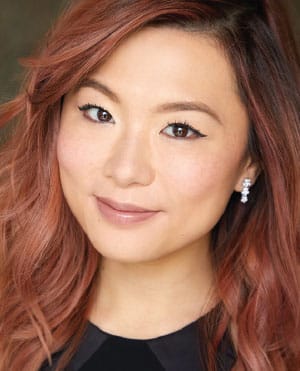
Jenny Wong
Jenny Wong is Chorus Director of the San Francisco Symphony and associate artistic director of the Los Angeles Master Chorale. Her conducting engagements have included the Los Angeles Philharmonic Green Umbrella Series, Los Angeles Opera Orchestra, Long Beach Opera, Phoenix Chorale, and Gay Men’s Chorus of Los Angeles. In 2021, Wong was one of nine national recipients of Opera America’s inaugural Opera Grants for Women Stage Directors and Conductors.
As Chorus Director, Wong worked with Esa-Pekka Salonen and Michael Tilson Thomas, as well as numerous guest conductors. She has also prepared choruses for the Los Angeles Philharmonic and Chicago Symphony, working with conductors Gustavo Dudamel, Susanna Mälkki, Jonathan Cohen, and Osmo Vänskä, among many others. Wong led the SF Symphony Chorus for the Deutsche Grammophon recording of Kaija Saariaho’s Adriana Mater, which won the 2025 Grammy Award for Best Opera Recording, and helped prepare the Los Angeles Master Chorale for the Los Angeles Philharmonic’s recording of Mahler’s Symphony No. 8, which won the 2022 Grammy Award for Best Choral Performance. Together with Grant Gershon and the Los Angeles Master Chorale, Wong was also awarded the 2022 American Prize in Choral Performance.
Wong received her doctor of musical arts and master of music from the University of Southern California and an undergraduate degree in voice from the University of Illinois, Urbana-Champaign. She recently extended her contract as SF Symphony Chorus Director through the 2028–29 season.
San Francisco Symphony Chorus
The San Francisco Symphony Chorus was established in 1973 at the request of Seiji Ozawa, then the Symphony’s Music Director. The Chorus, numbering 32 professional and more than 120 volunteer members, now performs more than 26 concerts each season. Louis Magor served as the Chorus’s director during its first decade. In 1982 Margaret Hillis assumed the ensemble’s leadership, and the following year Vance George was named Chorus Director, serving through 2005–06. Ragnar Bohlin concluded his tenure as Chorus Director in 2021, a post he had held since 2007. Jenny Wong was named Chorus Director in September 2023.
The Chorus can be heard on many acclaimed San Francisco Symphony recordings and has received Grammy Awards for Best Performance of a Choral Work (for Orff’s Carmina burana, Brahms’s A German Requiem, and Mahler’s Symphony No. 8), Best Classical Album (for a Stravinsky collection and for Mahler’s Symphony No. 3 and Symphony No. 8), and most recently Best Opera Recording (for Saariaho’s Adriana Mater).
Lead support for the San Francisco Symphony Chorus this season was provided by Peter G. Neumann.
To learn more about supporting the San Francisco Symphony Chorus Fund, please contact Jay Auslander, Director of Legacy Giving, at 415.503.5404 or jauslander@sfsymphony.org.
San Francisco Symphony Chorus
SOPRANOS
Naheed Attari
Sylvia V. Baba
Alexis Wong Baird
Morgan Balfour*
Arlene Boyd
Olivia T. Brown
Helen J. Burns
Laura Canavan
Rebecca Capriulo
Sara Chalk
Phoebe Chee*
Carol Copperud+
Andrea Drummond
Tonia D’Amelio*
Elizabeth Emigh
Camryn Finn*
Cara Gabrielson*
Susanna Gilbert
Julia Hall
Ashley Hecht
Axelle Heems
Hyun Suk Jang
Betsy Johnsmiller
Jocelyn Queen Lambert
Becky Lau
Ellen Leslie*^
Jennifer Mitchell*^
Hallie Randel
Kelly Ryer
Rebecca Shipan
Daphne Touchais*
Zhangguanglu Wang
Lauren Wilbanks
ALTOS
Carolyn Alexander
Melissa Butcher
Dr. Nicole Daamen
Marina Davis*
Corty Fengler
Sonia Gariaeff*
Emily (Yixuan) Huang
Cathleen Josaitis
Gretchen Klein
Donna Kulkarni
Katherine M. Lilly
Joyce Lin-Conrad
Margaret (Peg) Lisi*
Nancy Munn*
Brielle Marina Neilson*
Kimberly J. Orbik
Tiffany Ou-Ponticelli
Lindsay Marie Rader
Celeste Riepe
Jeanne Schoch
Yuri Sebata-Dempster
Sandy Sellin
Meghan Spyker*^
Mayo Tsuzuki
Makiko Ueda
Merilyn Telle Vaughn*
Heidi L. Waterman*^
Hannah J. Wolf
TENORS
Paul Angelo
Seth Brenzel*
Scott Dickerman
Thomas L. Ellison
Sam Faustine*^
Patrick Fu
Ron Gallman
Kevin Gibbs*
Alec Jeong
Drew Kravin
James Lee
Benjamin Liupaogo*^
Joachim Luis*
Andrew P. McIver
Emilio Peña*
Tim Silva*
Tetsuya Taura
David von Bargen
Nicholas Weininger
Jack Wilkins*
John Paul Young
Jakob Zwiener
BASSES
Ryan Bradford*
Sean Brooks
Phil Buonadonna
Robert Calvert
Sean Casey
Adam Cole*
Noam Cook
James Radcliffe Cowing III
Tony DeLousia*
Malcolm Gaines
Richard M. Glendening
Rob Lloyd Huber
Joshua Hughes*
Ifan Jenkin
Roderick Lowe
Tim Marson
Clayton Moser*^
Case Nafziger
Julian Nesbitt
Matthew C. Peterson*
Timothy Echavez Salaver
Chung-Wai Soong*^
Storm K. Staley
David Varnum*
Julia Vetter
Goangshiuan Shawn Ying
Jenny Wong,
Chorus Director
John Wilson,
Rehearsal Accompanist
*Member of the American Guild of Musical Artists
+Alumna
^Bernstein Solo Octet
About San Francisco Symphony
- San Francisco Symphony
- Calendar
- How to Donate
- Advocacy, Community & Volunteering
- Board of Governors
- Administration
- Your Visit & Experience
Print Edition