In This Program
- The Concert
- Welcome to the Bay Area Youth Orchestra Festival
- Program Notes
- About the Artists
- Beneficiary Organizations
- Youth Orchestra Rosters
- About San Francisco Symphony
The Concert
Sunday, January 18, 2026, at 3:00pm
Wendy Tokuda Master of Ceremonies
Marin Symphony Youth Orchestra
Jim Stopher Music Director
Santa Rosa Symphony Youth Orchestra
Jaco Wong Music Director
San Francisco Symphony Youth Orchestra
Radu Paponiu
Wattis Foundation Music Director
Young People’s Symphony Orchestra
David Ramadanoff Music Director
California Youth Symphony
Leo Eylar Music Director
Giuseppe Verdi
Overture to Nabucco (1841)
Marin Symphony Youth Orchestra
Jim Stopher conductor
Gabriela Lena Frank
Pinkillo Serrano from Apu: Tone Poem for Orchestra (2017)
Sergei Prokofiev
Allegro giocoso from Symphony No. 5 in B-flat major,
Opus 100 (1944)
Santa Rosa Symphony Youth Orchestra
Jaco Wong conductor
Johannes Brahms
Academic Festival Overture, Opus 80 (1880)
Johannes Brahms
(orch. Martin Schmeling)
Hungarian Dance No. 5 in G minor (1869)
San Francisco Symphony Youth Orchestra
Radu Paponiu conductor
Intermission
Antonín Dvořák
Allegro con brio from Symphony No. 8 in G major,
Opus 88 (1889)
Young People’s Symphony Orchestra
David Ramadanoff conductor
Paul Dukas
The Sorcerer’s Apprentice (1897)
California Youth Symphony
Leo Eylar conductor
Dmitri Shostakovich
Andante–Allegro from Symphony No. 10 in E minor,
Opus 93 (1953)
Festival Orchestra
David Ramadanoff conductor
Welcome to the Bay Area Youth Orchestra Festival
Nearly two decades ago, the managers of several Bay Area youth orchestras met through the Association of California Symphony Orchestras (ACSO). Over lunch once a month, they shared their experiences, challenges, and goals. Out of those meetings emerged the idea for the Bay Area Youth Orchestra Festival, a wonderful chance for several youth orchestras from across the Bay Area to perform in Davies Symphony Hall and to meet and engage with their peers. The first Bay Area Youth Orchestra Festival in January 2009 was a huge success, and it was clear that such a gathering would happen again. Subsequent festivals have continued to be a tremendous source of meaning and inspiration for all involved. This is a landmark year for the festival as we mark the 10th BAYOF, with the promise of many more to follow.
In addition to providing our musicians with the rare opportunity to perform in the same venue, this concert allows them to use their special talents to benefit others. The festival’s consortium of orchestras has designated charitable organizations that serve homeless and underserved youth in our individual communities. Our five beneficiaries for this year’s BAYOF are highlighted on our vertical screens in the lobbies; we hope you will take the chance at intermission to learn more about them. The proceeds from this afternoon’s concert will be divided equally among these five organizations.
Our orchestras are committed to assuring the continuation of symphonic music concerts and building future audiences. We all believe music is a powerful tool that can be used for the greater good while promoting social awareness in our students.
Thank you for being here today to make this event a success. We hope this concert will inspire both audience and performers, and that the music will bring our communities together.
David Ramadanoff
Music Director, Young People’s Symphony Orchestra,
Bay Area Youth Orchestra Festival Director, 2026
Leo Eylar
Music Director, California Youth Symphony
Jim Stopher
Music Director, Marin Symphony Youth Orchestra
Jaco Wong
Music Director, Santa Rosa Symphony Youth Orchestra
Radu Paponiu
Wattis Foundation Music Director,
San Francisco Symphony Youth Orchestra
Program Notes
Overture to Nabucco
Giuseppe Verdi
Born: October 9/10, 1813, in Roncole, near Busseto, Italy
Died: January 27, 1901, in Milan
Work Composed: 1841

Giuseppe Verdi was 28 years old when his third opera, Nabucco, was premiered before the demanding audience of La Scala in Milan. His first, Oberto, had been greeted warmly. His second, Un giorno di regno, was such a disastrous flop that he seriously contemplated leaving the musical profession entirely. Fortunately, he forged on, and Nabucco met with resounding success. The opera involves politics, romance, familial revelations, divine retribution, and a dramatic suicide played out at a time when the ancient Babylonians have conquered the Jews. Its most famous expanse is the chorus “Va, pensiero,” which Italians embraced as a virtual national anthem. The Overture, which opens with an ominous brass chorale, incorporates various themes from the opera, including the famous chorus.
—James M. Keller
Pinkillo Serrano from Apu: Tone Poem for Orchestra
Gabriela Lena Frank
Born: September 1972, in Berkeley, California
Work Composed: 2017
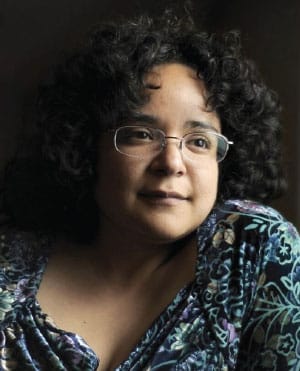
Born in the Bay Area to a mother of mixed Peruvian-Chinese ancestry and a father of Lithuanian-Jewish descent, Gabriela Lena Frank explores her multicultural heritage most ardently through her compositions. Inspired by the works of Bela Bartók and Alberto Ginastera, Frank is something of a musical anthropologist. She has traveled extensively throughout South America and her pieces often reflect and refract her studies of Latin American folklore, incorporating poetry, mythology, and native musical styles into a Western classical framework that is uniquely her own.
Apu: Tone Poem for Orchestra was commissioned by Carnegie Hall for the National Youth Orchestra of the United States and premiered in July 2017. In her own program note, Frank writes:
In Andean Perú, spirits are said to inhabit rocks, rivers, and mountain peaks with the intent of keeping a watchful eye on travelers passing through highland roads. The apu is one of the more well-known spirits that is sometimes portrayed as a minor deity with a mischievous side who is rarely seen. Simple folk song and a solemn prayer often successfully placate the apu to ensure safe passage through the mountains. Apu: Tone Poem for Orchestra begins with a short folkloric song inspired by the agile “pinkillo” flute, a small slender instrument that packs well into the small bags of travelers who must travel light.
—Courtesy of Wise Music Group
Allegro giocoso from Symphony No. 5 in B-flat major, Opus 100
Sergei Prokofiev
Born: April 23, 1891, in Sontsovka, Ukraine
Died: March 5, 1953, in Moscow
Work Composed: 1944

Unlike so much wartime music that reflects overwhelming horror and suffering, Sergei Prokofiev’s Symphony No. 5 is filled with warmth and measured optimism. It seems to acknowledge the heaviness of the Second World War while looking ahead to the future and recognizing what was worth fighting for. “I conceived of it as glorifying the grandeur of the human spirit,” Prokofiev said, “praising the free and happy man—his strength, his generosity, and the purity of his soul.”
Perhaps this optimism came from the fact that in June 1944, as Prokofiev worked on the Fifth Symphony at an artists’ retreat outside Moscow, Allied troops were landing on the Normandy beaches. By the time the symphony premiered in Moscow on January 13, 1945, Soviet troops had advanced far into German-held territory. Two weeks later, the Red Army would liberate Auschwitz and by April reach Berlin. Late that month, Soviet and American troops would link up at the Elbe River, merging the Eastern and Western Fronts and sealing the destruction of the Third Reich.
In the glow of shared victory before the onset of the Cold War, American regard for Soviet culture was at a high point. In November 1945, Prokofiev’s Fifth Symphony received its US premiere with the Boston Symphony and Serge Koussevitzky. It was a tremendous success, landing Prokofiev on the cover of Time magazine, which described the symphony as “a great, brassy creation with some of the intricate efficiency and dynamic energy of a Soviet power plant and some of the pastoral lyricism of a Chekhov countryside.”
The finale (Allegro giocoso) begins with the cello and basses referencing back to the first movement’s main melody. But then the tempo picks up and starts to shake off enormous tension—
the first celebration in a long time.
—Benjamin Pesetsky
Academic Festival
Overture, Opus 80
Johannes Brahms
Born: May 7, 1833, in Hamburg
Died: April 3, 1897, in Vienna
Work Composed: 1880
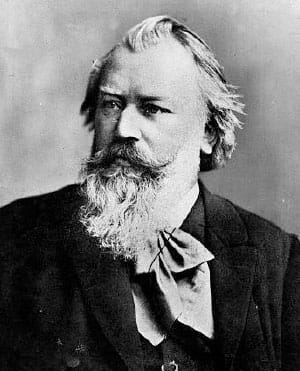
Johannes Brahms’s Academic Festival Overture was written as a musical thank-you note to the University of Breslau (today, Wrocław, Poland) for granting him an honorary doctorate. He had wanted to write a regular thank-you note, but the director of music there, Bernard Scholz, intimated that they expected some sort of musical recompense. So, Brahms obliged. The “academic” elements of the music here can be found in student songs (usually sung while enjoying beverages together) placed throughout the work. It could be said that the emphasis of this piece should be placed more on the word “festival” than “academic.”
There are several popular tunes quoted throughout the overture. The opening is based on the Rákóczi March, a Hungarian piece that Brahms had loved since he was a child. It is also found in Berlioz’s Hungarian March from The Damnation of Faust. Later, three trumpets play the chorale, “Wir hatten gebauet ein stattliches Haus” (we have built a stately house). This Thuringian folk song was turned into a student protest song, and any student would have recognized it. Then the Rákóczi melody returns, albeit slightly differently. After that is “Der Landesvater,” (The father of our country), a lyrical, beautiful melody from the violins and the violas.
Not all of the music is serious, of course. Soon, the bassoons play the rollicking tune from “Was komm dort von der Höh” (What comes from afar). Brahms has a little fun, bringing out the silly character only a bassoon can evoke. At the end, “Gaudeamus igitur” (Therefore, let us be merry) resounds throughout the orchestra, making a joyful noise to conclude the piece.
—Alicia Mastromonaco
Hungarian Dance No. 5 in G minor
Johannes Brahms
(arr. Martin Schmeling)
Work Composed: 1869
If Germany and Austria were at the center of 19th-century European music, then Hungary was the closest neighbor with a distinct tradition—filled with syncopated rhythms, husky melodies, and flashy runs. Brahms heard Hungarian music as a teenager in 1848 when a group of refugees passed through his native Hamburg on their way to the United States. The craze for Austro-German adaptations of this music became known as style hongrois.
Brahms wrote his first ten Hungarian Dances around 1868, and later brought the number up to 21 dances. Originally conceived for piano four hands, he orchestrated several himself, and the rest were arranged by others, including No. 5. Brahms claimed to have based the dances on traditional folk tunes, though many were actually based the work of uncredited Hungarian composers. The tune in No. 5 was originally by Béla Kéler (1820–82), who lodged a copyright claim against Brahms’s publisher.
—B.P.
Allegro con brio from Symphony No. 8 in G major, Opus 88
Antonín Dvořák
Born: September 8, 1841, in Nelahozeves, Bohemia
Died: May 1, 1904, in Prague
Work Composed: 1889
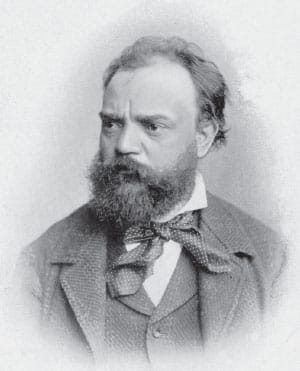
Antonín Dvořák composed his Eighth Symphony in under one month during the summer of 1889. Thirty-five minutes of music composed over the course of a month may not seem extraordinary until one considers that Dvořák had to write 14 lines of music out all by hand, then edit and correct it. He found deep inspiration from his summer home in Vysoká, and in the Czech and Slavonic folk music he heard around him. The composer wanted to develop a new musical language that felt truly like him, not the music that was expected of him.
Importantly, Dvořák didn’t want to have to write the music that his publisher, Simrock, demanded. Simrock, one of the most famous music publishers of the time, pushed Dvořák to publish shorter, easier-to-sell works for piano and chamber groups. Dvořák refused, and when he submitted the symphony for publication, the publisher offered him half of what he was expecting. In contrast, Johannes Brahms had been paid five times as much for his recent symphony. Rather than accept this low offer, Dvořák published the symphony with an English publishing house, Novello.
While this may seem a small detail, it illustrates how Dvořák felt his music was not appreciated the way it should have been because of the hierarchy of Austro-Germanic composers. Thankfully, Dvořák is now one of the most famous symphonists within the canon. And for good reason; this symphony pushes the boundaries of forms and expectations in favor of a more rhapsodic, naturalistic work. Dvořák develops motives and melodies with free expression, rather than focus mainly on following forms.
The first movement (Allegro con brio) opens with a beautiful, somber melody in the cellos, clarinets, bassoons, and horns. Interestingly, this melody was actually written after the rest of the symphony was completed. Dvořák finds ways to reintroduce this theme later in the movement but it shows how this symphony is guided by feel rather than by form.
—A.M.
The Sorcerer’s Apprentice
Paul Dukas
Born: October 1, 1865, in Paris
Died: May 17, 1935, in Paris
Work Composed: 1897
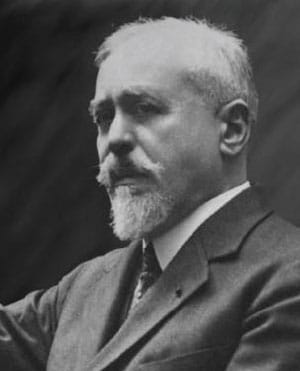
Were it not for a single fantastically successful work, Paul Dukas would be almost a complete stranger to music lovers today. L’Apprenti sorcier (The Sorcerer’s Apprentice), composed after a scenario by Goethe and premiered in 1897, has all but single-handedly kept his name before the concert-going public. Even before Walt Disney’s 1940 film Fantasia catapulted it to mass-media stardom (with Mickey Mouse in the starring role as the Apprentice), it was one of the most frequently performed of all “modern” compositions. The Sorcerer’s Apprentice is a small masterpiece, in its way, a fine enough piece to make a music-lover wish that we had more occasions to visit his regrettably undersized catalogue.
The legend of the sorcerer’s apprentice dates to antiquity, with variations on it occurring in Roman, Greek, and even Egyptian literature. When Johann Wolfgang von Goethe (1749–1832) came to write his classic treatment of it, the ballad “Der Zauberlehrling,” he followed the traditional plot closely. An ambitious apprentice eavesdrops on his master, a sorcerer, to learn the incantation the master uses to turn his broom into a servant. When the master steps out, the apprentice tries out the incantation himself, turning the broom into a servant and commanding it to bring a bucket of water. The problem is that the apprentice failed to learn how to break the spell. The broom-servant continues to bring water practically to the point of inundation; and when the apprentice tries to stop it by cutting the broom in half with an axe, he discovers that he now has two brooms bearing water rather than just one. Fortunately, the master returns in time to set everything aright, and the apprentice feels properly chastised.
—J.M.K.
Andante–Allegro from Symphony No. 10 in E minor, Opus 93
Dmitri Shostakovich
Born: September 25, 1906, in Saint Petersburg
Died: August 9, 1975, in Moscow
Work Composed: 1953
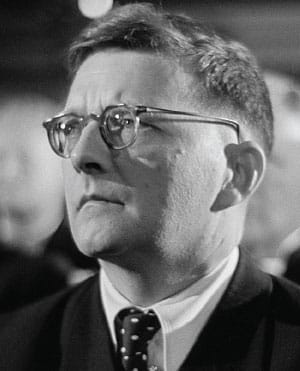
The longest gap in Dmitri Shostakovich’s symphonic output was the eight years between his Symphony No. 9 in 1945 and No. 10 in 1953. In between, he was denounced by Soviet authorities for the second time, accused of “formalism”—writing music without a proper social purpose. He lost his teaching posts at the Leningrad and Moscow conservatories and many of his pieces were blacklisted.
Then on March 5, 1953, Joseph Stalin died, and soon censorship lessened, ushering in what became known as the Khrushchev Thaw. That summer, Shostakovich set to work on his 10th Symphony, finishing the first movement on August 5 and the last on October 25. The following April, the Union of Soviet Composers combed through the 10th Symphony and reluctantly approved it.
The last movement (Andante–Allegro) begins with cellos and basses. Then we hear the oboe, which often appears in Shostakovich’s music at moments of transformation or rebirth. From the Andante introduction, a flute solo bridges into a darting Allegro, channeling a lively klezmer wedding dance. The cathartic ending brings in Shostakovich’s four-note musical monogram: D-S-C-H.
—B.P.
About the Artists
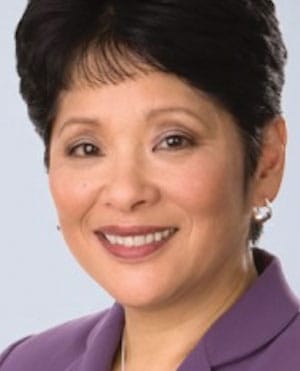
Wendy Tokuda
Wendy Tokuda has anchored and reported in the Bay Area for nearly 30 years. While she retired from daily anchoring in 2010, she continues to profile low-income, at-risk Bay Area teenagers in Students Rising Above. This nationally recognized series has won the Peabody Award, a National Emmy for Public Service, the national Sigma Delta Chi Public Service Award, the NAB Education Foundation’s Service to America Award, and most recently the Temple Award for Creative Altruism. The series led to the creation of the nonprofit Students Rising Above, which has raised millions of dollars to help send these students to college.
Tokuda began her broadcasting career in Seattle as a secretary in public affairs and then as a news reporter. Next, she worked at KPIX for 14 years as an anchor and reporter, co-anchoring the first-place six o’clock and eleven o’clock news. She then moved to Los Angeles and co-anchored the six o’clock news for five years before returning to the Bay Area and KRON 4 in 1997 as an anchor and reporter. She returned to KPIX in 2007, anchoring the five o’clock news.
Tokuda’s awards include the Governors’ Award in recognition of her television work and public service during the National Association of Television Arts and Sciences’ Northern California Emmy Awards ceremony in 2010, an AP Stan Chambers Award for Extraordinary Achievement, and the Good News Award from the Sacramento Chapter of American Women in Radio & Television (recognizing broadcast news that furthers the triumph of the human spirit). She has also won many regional awards, including seven Emmys, three first-place awards from Tri-State United Press International, two Northern California World Affairs Council Awards of Excellence, four California AP Certificates of Excellence, four first place RTNDA awards, three Peninsula Press Club awards, a Golden Mike Award, a Los Angeles Press Club Award, and the Lincoln Child Center’s James Mann Award 2011 for Community Service. She has been honored by many community organizations and was founding president of the Bay Area chapter of the Asian American Journalists Association. In 2010 Tokuda was honored with the RTNDA lifetime achievement award.
Tokuda attended Whitman College in Walla Walla, Washington, holds a BA cum laude from the University of Washington, and attended the Tokyo School of the Japanese Language. She is the coauthor of two children’s books, has two daughters, and lives in Oakland.
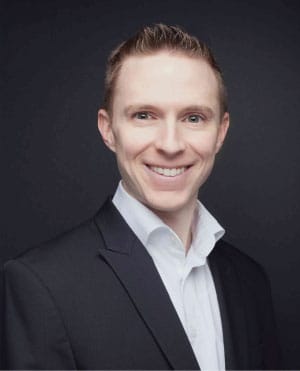
Jim Stopher
Jim Stopher maintains an active career as a conductor, pianist, composer, and educator. At the College of Marin, he conducts the Symphony Orchestra, teaches classes in theory and musicianship, and serves as chair of the music department. Enthusiastic about bringing music to residents of Marin County, Stopher frequently appears as a recitalist and concerto soloist; recent performances have included the Mill Valley Philharmonic and Lucas Valley Chamber Orchestra. In 2023, he made his conducting debut with the Dallas Chamber Symphony, leading the orchestra in the finals of the inaugural Dallas International Violin Competition. He returned in 2024 to conduct for the Dallas International Piano Competition, and will appear there again in 2026.
Stopher studied music theory and composition at Harvard University, piano and conducting at the University of Arizona, and orchestral conducting at the Peabody Conservatory. His original piano music can be heard on his 2018 album Tonal Recall.
Marin Symphony Youth Orchestra
The Marin Symphony Youth Orchestra was founded in 1954 by Hugo Rinaldi, who conducted and expanded its programs for more than 30 years. Currently under the direction of Jim Stopher, MSYO continues to provide young, gifted musicians with an opportunity to participate in a rich and rewarding orchestral community comprising approximately 70 auditioned high school and middle school musicians from the Bay Area. The September through May orchestral season includes winter and spring formal concerts, a recording project at Skywalker Sound, a community Sit-Along concert for kids in March, a concerto competition, and specialized coaching sessions from Marin Symphony players. MSYO toured Budapest, Vienna, and Salzburg in 2025 and plans to tour every three years. MSYO is supported by two separate training orchestras: Crescendo Orchestra and Overture String Ensemble, both directed by Anne Lerner.
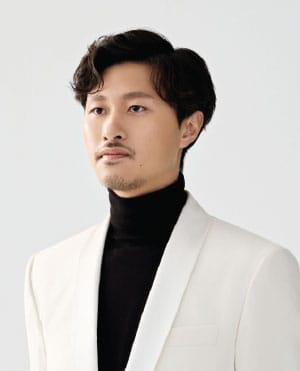
Jaco Wong
Jaco Wong began conducting the Santa Rosa Symphony Youth Orchestra in September 2024. He currently serves as assistant conductor of Opera Parallèle, was previously assistant conductor of the Oakland Symphony, and has been a cover conductor for the San Francisco Symphony. Wong has conducted the Quebec Symphony, Toyama Sinfonia, and Mercury Soul. Other career highlights include serving as an assistant conductor for Festival Opera, the Louisville Orchestra, and Royal Philharmonic; conducting the Taipei Philharmonic for Emmy Award-winning composer Jeremy Zuckerman; and participating in the Cabrillo Festival of Contemporary Music and the Monteux Music Festival.
Wong’s composition Inkling was performed at the New World Symphony. He has also composed for the San Jose Chamber Orchestra, Iris Contemporary Dance Company, Hocket piano duo, Lang Lang, and the Shenzhen Symphony. Wong holds advanced degrees from the San Francisco Conservatory of Music and University of Southern California.
Santa Rosa Symphony Youth Orchestra
The Santa Rosa Symphony Youth Orchestra comprises advanced students, 10–23 years of age, who have had previous orchestral training. Founded in 1959, it is one of the oldest orchestras of its kind in California. It has performed at Carnegie Hall and Davies Symphony Hall and has toured China, Spain, Austria, Hungary, Germany, and the Netherlands.
The Santa Rosa Symphony Youth Ensembles’ mission is to offer young musicians an exceptional educational experience by providing the finest quality orchestral training and performance opportunities in Sonoma County. Its goal is for young musicians to develop an awareness and appreciation of great music in the context of learning responsibility and teamwork, while they participate in the community through public performance.
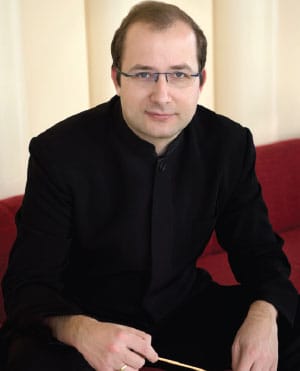
Radu Paponiu
Radu Paponiu was appointed Wattis Foundation Music Director of the San Francisco Symphony Youth Orchestra in fall 2024. Before that, he completed a five-year tenure as associate conductor of the Naples Philharmonic and a seven-year tenure as music director of the Naples Philharmonic Youth Orchestra. He has also served as music director of the Southwest Florida Symphony, assistant conductor of the Naples Philharmonic, and as a member of the conducting faculty of the Juilliard Pre-College.
As a guest conductor, Paponiu has appeared with the Romanian National Radio Symphony, Teatro Comunale di Bologna Orchestra, Transylvania State Philharmonic, Banatul Philharmonic, Louisiana Philharmonic, Rockford Symphony, Colorado Music Festival Orchestra, North Carolina Symphony, California Young Artists Symphony, and National Repertory Orchestra. He has collaborated with soloists such as Evgeny Kissin, Yefim Bronfman, Emanuel Ax, Gil Shaham, Midori, Vladimir Feltsman, Robert Levin, Charles Yang, Nancy Zhou, Stella Chen, and the Ébène Quartet.
Born in Romania, Paponiu began his musical studies on the violin at age seven, came to the United States at the invitation of the Perlman Music Program, and later completed two degrees in violin performance at the Colburn School. He went on to earn a master’s degree in orchestral conducting at New England Conservatory, where he studied with Hugh Wolff.
San Francisco Symphony Youth Orchestra
The San Francisco Symphony Youth Orchestra is recognized internationally as one of the finest youth orchestras in the world. Founded by the San Francisco Symphony in 1981, the SFSYO’s musicians are chosen from more than 200 applicants in annual auditions. The SFSYO’s purpose is to provide an orchestral experience of preprofessional caliber, tuition-free, to talented young musicians. The more than 100 musicians, ranging in age from 12 to 21, represent communities from throughout the Bay Area. The SFSYO rehearses and performs at Davies Symphony Hall under the direction of Radu Paponiu, who joined the San Francisco Symphony as Wattis Foundation Music Director of the San Francisco Symphony Youth Orchestra in the 2024–25 season. Jahja Ling served as the SFSYO’s first Music Director, followed by David Milnes, Leif Bjaland, Alasdair Neale, Edwin Outwater, Benjamin Shwartz, Donato Cabrera, Christian Reif, and Daniel Stewart.
As part of the SFSYO’s innovative training program, musi-cians from the San Francisco Symphony coach the young play-ers each Saturday afternoon in sectional rehearsals, followed by full orchestra rehearsals with Radu Paponiu. Youth Orchestra members regularly meet and work with world-renowned artists: Esa-Pekka Salonen, Michael Tilson Thomas, Herbert Blomstedt, Kurt Masur, John Adams, Yo-Yo Ma, Valery Gergiev, Isaac Stern, Yehudi Menuhin, Wynton Marsalis, Midori, Joshua Bell, Mstislav Rostropovich, Simon Rattle, and many others have worked with the Youth Orchestra. Of equal importance, Youth Orchestra members are able to speak with these prominent musicians about their professional and personal experiences, and about music. The ensemble has toured Europe and Asia, given sold-out concerts in such legendary halls as Berlin’s Philharmonie, Vienna’s Musikverein, Saint Petersburg’s Mariinsky Theater, and Amsterdam’s Concertgebouw, and won first prize in Vienna’s International Youth and Music Festival.
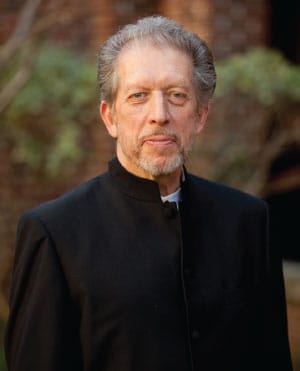
David Ramadanoff
David Ramadanoff has been music director and conductor of the Young People’s Symphony Orchestra since 1989. Under his leadership, YPSO has grown to nearly 100 musicians from across the Bay Area and is recognized as one of California’s leading youth ensembles.
A native of Cleveland, he studied at the Cleveland Institute of Music and Temple University and was a doctoral candidate at the Juilliard School, where he also taught conducting. His career advanced when Seiji Ozawa invited him to serve as Assistant Conductor of the San Francisco Symphony. He performed regularly on the San Francisco Symphony subscription concert series, continuing as Associate Conductor under Edo de Waart.
Ramadanoff won the Leopold Stokowski Conducting Award in 1980 and made his Carnegie Hall debut with the American Symphony in 1982. He served as director of orchestral activities at the San Francisco Conservatory of Music from 1984–88, music director of the Vallejo Symphony Orchestra from 1983–2015, and has guest conducted nationwide. He currently also directs the Master Sinfonia Chamber Orchestra.
Young People’s Symphony Orchestra
Young People’s Symphony Orchestra, now in its 89th season, is the oldest youth orchestra in California and the first independent youth orchestra in the nation. Founded in Berkeley in 1936 by Jessica Marcelli, a pioneering woman conductor, YPSO has nurtured generations of Bay Area students.
Today, YPSO serves musicians ages 11–21 from 30 cities in five counties. Each season, the orchestra presents four subscription concerts plus community chamber and outreach events that connect students with diverse audiences. YPSO also does biennial summer tours, providing transformative educational opportunities that broaden students’ cultural and musical perspectives. Alumni pursue many career paths, and in every field they carry forward the discipline, creativity, and collaboration fostered at YPSO as future leaders in their communities.
YPSO’s mission is “to encourage young people to become exemplary musicians, and young musicians to become exemplary people.” This vision is carried out under the artistic leadership of David Ramadanoff, now in his 37th season, with a team of teachers who provide weekly sectional coaching and mentorship.
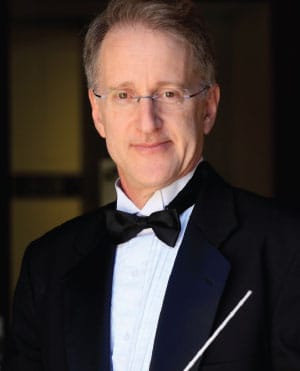
Leo Eylar
Leo Eylar is now in his 36th season as conductor and music director of the California Youth Symphony. Under his direction, the orchestra has enhanced its reputation as one of the finest youth orchestras in the world. Eylar has led the CYS Orchestra on numerous acclaimed and award-winning tours on four continents. He studied conducting at the Hochschule für Musik in Vienna and later returned to the United States to complete his master’s degree in conducting at the San Francisco Conservatory of Music.
Eylar is professor emeritus at California State University, Sacramento, having retired after 30 years as the director of the orchestra and opera programs. As a composer, Eylar was nominated for a Pulitzer Prize in 1995 for his Rhapsody for Orchestra. His works have been performed at Carnegie Hall, as well as in England, the Netherlands, Japan, Germany, Austria, and South America.
California Youth Symphony
The California Youth Symphony, founded in 1952, has earned an international reputation for the excellence of its music programs. In 1963 CYS became the first American youth orchestra to tour overseas when it accepted an invitation to visit Japan. Since then, the orchestra has mounted 24 additional tours to many parts of the world, most recently performing in Spain. CYS will depart on a tour to Japan in June 2026.
The California Youth Symphony’s performances in California have been equally noteworthy and well-received. Its performances have been broadcast on local radio and television. Its guest artists have included such luminaries as Duke Ellington, Jack Benny, and Mary Costa, as well as an ever-expanding roster of rising young talent. The organization comprises additional ensembles, involving nearly 400 participants from more than 100 schools in Northern California.
Beneficiary Organizations

Enriching Lives through Music
Enriching Lives through Music is a tuition-free, intensive music program empowering youth from San Rafael’s Canal neighborhood—an under-resourced, primarily immigrant community in Marin County. Founded in 2014, ELM provides high-quality orchestral training, academic support, and social-emotional development to close to 200 students ages 8–18 annually. Students receive up to 10 hours of weekly instruction, including ensemble rehearsals, private lessons, and mentorship from professional teaching artists. As they advance, ELM provides upgraded instruments, leadership opportunities, college counseling, and pathways to summer festivals and community performances. With a 90 percent retention rate over six years or more, ELM fosters long-term growth, resilience, and achievement. Beyond music, the program builds confidence, discipline, and belonging, preparing students to thrive as musicians, scholars, and leaders. Guided by the belief that arts education is a right, not a privilege, ELM is closing the opportunity gap and transforming lives through the power of music

VOICES Youth Programs Sonoma
VOICES Youth Programs Sonoma provides young people aging out of foster care with family-like support, acceptance, and accountability as they set their own goals and pursue them across VOICES’ youth-led core programs.
Many of the young people VOICES serves have suffered child abuse and neglect, and continue to experience trauma. VOICES’ approach to supporting youth is twofold: With the youth at the center of the process, VOICES works with them on trauma-informed goal setting, and supports them as they learn to manage their trauma triggers so the triggers do not result in behaviors that get in the way of their goal. This leads to healthy and happy youth—ready to take on the world. With a strong focus on trauma-informed care, VOICES Sonoma maintains a youth engagement model that empowers transition-age foster youth to design and implement programming themselves—cultivating leadership skills that will benefit them throughout their lives.
Students Rising Above
Students Rising Above is a Bay Area–based nonprofit that empowers first-generation and low-income students to graduate from college, launch meaningful careers, and achieve economic mobility. Through comprehensive, long-term support—beginning in high school and continuing through college and into careers—SRA provides academic advising, college and financial aid guidance, career exploration, and internships. This holistic model ensures that students are supported at every stage of their journey.
To date, SRA has helped more than 1,000 students earn college degrees and reach life-changing milestones. More than 76 percent of SRA scholars graduate from college, compared with less than 20 percent of their socioeconomic peers. Four out of five SRA students graduate with less than $10,000 in student loan debt, and SRA alumni are twice as likely to secure an economically mobile job by graduation.
Founded in 1998 by news anchor Wendy Tokuda and community relations manager Javier Valencia, SRA began as a scholarship program supporting outstanding Bay Area students who were beating the odds. Recognizing that access to college alone was not enough to guarantee success, SRA became a pioneer in offering wraparound support to help students navigate the academic, emotional, and social challenges of higher education. The organization later expanded to include summer internships and career-guidance programs, equipping students with the skills and experience to transition into the workforce and break cycles of poverty.
Bay Area Music Project
Bay Area Music Project is a nonprofit, social-change-through-music after-school program serving the social-emotional, cultural, and academic needs of children in grades K–12 in under-resourced communities in Alameda.
At BAMP, no child or family is ever turned away because of financial limitations. All students participating receive high-quality music instruction in both small-group and orchestra settings, plus all necessary musical supplies (instruments, songbooks, etc.), a nutritious snack, and academic support during the school year. We empower children to discover their highest potential through musical instruction and performance experiences in a collaborative, orchestral environment that helps build confidence, compassion and teamwork.

DrawBridge
DrawBridge was founded in 1989 by art therapist Gloria Simoneaux, who developed a highly effective method of using the creative arts to help young people work through the complex emotions associated with homelessness and family challenges. DrawBridge has served more than 40,000 families through free expressive arts programs offered at shelters, affordable housing sites, and community centers throughout the San Francisco Bay Area. Children ages five and up are given the opportunity to connect with their community and explore playful creativity that is essential to healthy development. DrawBridge programs are always free for families and offered directly in the communities they serve, removing financial and transportation barriers for participants.
Youth Orchestra Rosters
Marin Symphony Youth Orchestra
First Violins
Arya Dev, Concertmaster ƒ
Clive Baker
Maya Baranovsky ƒ
Yong May Edsall
Emma Erikson
Eleanor Hoang
Kyra Mahal
Claire Mussche
Alexandria Russo
J’Nyah Santos Barreto
Ari Struble-Wahrhaftig ƒ
Ryan Sunwong ƒ
Tipkritta Thomson
Ashley Wang
Nikko Wilkerson
Second Violins
Ethan Sunwong, Principal ƒ
Xavier Gordon
Rafferty Kan
Sara Kojima
Scarlett Lippiatt
Aaron Morales
Dora Pikkarainen- Klein
Henry Rivo
Serafin Slaga
Katherine Staninec
Audrey Swope ƒ
Catalina Wood
Bryant Yuen
Violas
Amelia Loedolff, Principal ƒ
Aidan Andresen
Zyara Galvez
Madhukar Ganorkar
Aarav Mudigonda
Isabella Quesada
Alegra Valente
Gisele Valente
Cellos
Renn Smith, Principal ƒ
Chase Cloney
Logan Eisenbud
Riley Gu
Arjun Krishna
Nate Lee
Aristotle Lin-Hurtubise
Zachary Rice
Shushanik Sepan
Jacob Stoelting ƒ
Oliver Tran
Anita Widney-Large
Basses
Jack Gustke, Principal
Andrew Shumaker
Flutes
Antoine Leung, Principal ƒ
Carson Lotfi
Oboes
Samantha Brinkman, Principal ƒ
Sahar Mayost
Clarinets
Miles Harris, Principal ƒ
Gavin Guan
Sloane Ryan
Bassoons
Marcus Appleby, Principal ƒ
Horns
Khai Murad Principal
Noah Gabler
Trumpets
Sahana Sankaran, Principal
Maxen Ganesh
Trombones
Charlotte Allen, Principal
Holly Tuerke
Tuba
Jethro Livingston
Percussion
Alex Casey, Co-Principal ƒ
Julian Silver, Co-Principal ƒ
Kartikeya Akella
Jim Stopher, Conductor
ƒ Festival Orchestra Member
Staff
Andrei Gorchov, Director of Education and Community Engagement
Dawn Madole-Nkomonde, Youth Programs Manager
Nur Acosta, Rehearsal Manager
Santa Rosa Symphony Youth Orchestra
First Violins
Yihe Wang, Concertmaster ƒ
Benji Margulis, Associate Concertmaster ƒ
Oliver Armstrong
Emily Berna
Amelia Chun ƒ
Sierra Green ƒ
Harris Lim
Grace Lin
Dana Park
Charlotte Peng
Olivia Shin ƒ
Second Violins
Alexander Lee, Co-Principal ƒ
Eleonora Wiser, Co-Principal ƒ
Alexander Armstrong
Noemi Blacklock
Ananda Doel-Agarwal
Irving Grassi
Andrew Hoverman
Nina Jayaraman
Shayla Orozco
Everly Witzel
Benjamin Yoon
Violas
Tristan Karres, Principal ƒ
Ava Aguirre
Addison Bleasdell
Omar Diaz
Cate Huynh
Ethan Morgan
Miles Swarner
Jacob Yoon
Cellos
Galen Armstrong, Co-Principal ƒ
Samuel Lee, Co-Principal ƒ
Jada Blank
Juan Garcia
Anna Kahn
Xander Haemel
Henry Herrod
Luke Roberds
Basses
Ethan Karres, Principal ƒ
Benjamin Peyton, Co-Associate Principal ƒ
Jesse Coppock, Co-Associate Principal ƒ
Zander Bergman
Arthur Swarner
Chiara Weber
Flutes
Alexa Gardner, Principal
Ansh Lamba
Penelope Lin
Sophia Nagra
Oboes
Luka Bizaca, Co-Principal ƒ
Henry Miller, Co-Principal
Alexander Chiu
Reid Heavner
Clarinets
Dylan Loheyde, Principal
Josh Ma, Associate Principal
Marko Bizaca
Sarah Lim
Bassoons
Julia Borin, Principal
Joshua McMillan
Michael Petrov
Horns
Remy Desjarlais, Principal
Kian Hancock, Associate Principal
Parker Frabotta
Max Schulte
Trumpets
Kenny Hamann, Principal
Teddy Belove, Associate Principal
Justin Yang
Trombones
Rania Zara Khairul Anwar, Principal ƒ
Zackery Deguara, Associate Principal ƒ
Tuba
Sebastian Delgado
Percussion & Timpani
Nathra Kem, Principal ƒ
Emmett Caruso
Joanna Chen
Lucca Chen
Felipe Puac
Harp
Caroline Zhou
Piano
Amelia Chun, Principal
Jaco Wong, Conductor
ƒ Festival Orchestra Member
Staff
Elena Sloman, Youth Ensembles Manager
San Francisco Symphony Youth Orchestra
First Violins
Euisun Hong, Co-Concertmaster
Lawrence V. Metcalf Chair
Andrew Zhang, Co-Concertmaster ƒ
Lawrence V. Metcalf Chair
Ethan Chang
Christina Hong
Hyesun Hong
Maximilian Huang
Kayla Hwang
Constance Kuan ƒ
Sydney Li-Jenkins
Aaron Ma
Magdalena Masur
Henry Miller ƒ
Carolyn Ren
Yujin Shin
Calliope Smith
Jenna Son
Henry Stroud
Kate Vo
Lucas Wang
Lucy Wang
Second Violins
Asher Cupp, Co-Principal
Lisa Saito, Co-Principal ƒ
Léopoldine Bréard
Maggie Cai
Janet Chan
Dylan Chua
Udo Funke
Brandon Gao
Evelyn Holmes
Katherine Jang ƒ
Sarah Kumayama
William Liang
Veronica Qiu
Serena She ƒ
Oliver Spivey
Braden Wang
Yihe Wang
Junnosuke Yanagisawa
Katherine Yoo
Riona Zhu
Violas
Bryan Im, Co-Principal ƒ
Yufei Shen, Co-Principal ƒ
Rebekah Sung, Co-Principal
Harper Berry
Colin Breshears
Jamie Cheung
Timothy Cheung
Olivia Haddick
Jaydon Li ƒ
Haoching Liu ƒ
Olivia Park
Galen Russell
Rohan Sangani ƒ
Laurelin Stroh
Nicole Targosz
Cellos
Melissa Lam, Co-Principal ƒ
Ethan Lee, Co-Principal ƒ
Claire Topper, Co-Principal
Ya-Ching Chan
Timothy Huang
Anthony Jung
Donghu Kim ƒ
Blanche Li
Lukas Masur
Yoonsa Park
Cara Wang
Basses
Allison Prakalapakorn, Principal
Alec Blair ƒ
Haku Homma ƒ
Hani Khayatei Houssaini
Vera Kolodko
Yoav Konig
Rouyan Lechner
Rudie Sheehy ƒ
Raiden Tan ƒ
Eric Zhang
Flutes
Esther Kim
Cadence Liu
Emilie Yoo
Wanruo Zhang
Oboes
Gabriel Chodos
Jesse Spain
Liam Ta
Asher Wong
Clarinets
Ryan Beiter ƒ
Subin Kim
Hanting Liu
Adam Thyr
Bassoons
Matthew Chan ƒ
Adam Erlebacher ƒ
Stuthi Jaladanki
Aya Watanabe
Horns
Daniel Cooper ƒ
Elinor Cooper
Owen Ellis ƒ
Violet MacAvoy
Owen Sheridan
Trumpets
James Lee
Julian Moran ƒ
Brady Phan ƒ
Ivan Sokolenko
Trombones
Harvy Chang
Ethan Moran
Lenel Elison Gomintong, Bass Trombone
Tuba
Cameron Strahs ƒ
Percussion & Timpani
Garrett Guo
Jeffrey Lee
Derick Shu
Alexander Xie
Aeneas Yu
Harps
Jessica Cheung
Camille Chu
Keyboard
Dylan Hall
ƒ Festival Orchestra Member
Radu Paponiu,
Wattis Foundation Music Director
Coaching Faculty
David Chernyavsky, Violin
In Sun Jang, Violin
Chen Zhao, Violin
Adam Smyla, Viola
Jill Brindel, Cello
David Goldblatt, Cello
Stephen Tramontozzi, Bass
Catherine Payne, Flute
Russ de Luna, Oboe
Brooks Fisher, Oboe
Matthew Griffith, Clarinet
Jerome Simas, Clarinet
Justin Cummings, Bassoon
Jack Bryant, Horn
Jeff Biancalana, Trumpet
Jonathan Seiberlich, Trombone & Tuba
Jacob Nissly, Percussion & Timpani
Marty Thenell, Percussion & Timpani
Katherine Siochi, Harp
Marc Shapiro, Keyboard
Youth Orchestra Administration
Daniel Hallett, Associate Director,
Youth Orchestra Program
Katie Lee, Youth Orchestra
Administrative Apprentice
Hung-Yu Lin, Youth Orchestra
Administrative Apprentice
Charlotte Lopez, Youth Orchestra
Library Apprentice
Lily Wang, Youth Orchestra
Library Apprentice
Young People’s Symphony Orchestra
First Violins
Henry Stroud, Concertmaster ƒ
Carolyn Ren, Assistant Concertmaster ƒ
Suhyun Ahn
Anju Aoi
Timothy Cheung
Robert DuBois
Daven Ehrlich
Renee Kim
Erik Pompe
Eva Senakarn
Catherine Shin
Chiara Thendean
Sienna Yoo
Emma You
Second Violins
Titus Cheung, Principal ƒ
Jay Lee, Assistant Principal ƒ
Matthew Aganon
Aeriella Chen
Simon Chung
Dason Deng
Beatrix Glynn
Yaashi Jethwa
Ari Kim
Joanne Kim
Prisca Lam
Joan Lee
Obeca Lo
Jonah Vasquez
Vivian Veurink
Zephyr Wang
Archie Yoshida
Richard Zhang
Violas
Ian Baker, Principal ƒ
Daniel Siu, Assistant Principal ƒ
Josh Bahn
Jamel Flores
Miela Hsu
Alex Kainz
Catalina Kaye-Hsu
Ian Nguyen
Parley Marvit
Violet Ozalp
Galen Russell
Dashiell Sanchez-Jackson
Lily Stoliartchouk
Cellos
Donghu Kim, Principal
Oliver Kainz, Assistant Principal ƒ
Rhys Creekmore
Eddie Kim
Dyson Kobayashi
Jun Kwon
Wesley Li-Bland
Akhila Narayan
Tenzin Pahl
Ishaan Ranchod
Sophia Xiong
Dylan Zhu
Basses
Melody Thai, Principal ƒ
Tova Bruland-Vanderwerff
Victor Chen
Reana Mubeen
Flutes
Emilie Yoo, Principal ƒ
Eve Cress
John Faivus
Pippa Stanton-Hsiao
Oboes
Timothy Koo, Principal ƒ
Paula Hazell
Isaac Liu
Olive Lyndon
Clarinets
Ricky Lee, Principal
Prashast Bhatia
Mai Ha Nghiem
Jacob Segrè
Bassoons
Alonzo Rose, Principal
Roshan Dalal
Horns
Grace Ha, Principal
Mikayla Feng ƒ
Damir Godden
Ythien Nguyen
Yichen Zhu
Trumpets
Sean Rudner, Principal
Trombones
Dario San Marchi, Principal ƒ
Jaxon Lim
Ryan Luong, Bass Trombone
Timpani
Roshni Rath ƒ
ƒ Festival Orchestra Member
David Ramadanoff,
Music Director and Conductor
Staff
Nadia Liu, Executive Director
Ed Wharton, Librarian
Sasha Kiryakina, Librarian Intern
Ryan Luong, Librarian Intern
Yvonne Brouard, Board President
Satoko Stroud, Board Vice President
California Youth Symphony
First Violins
Kayla Lee, Co-Concertmaster ƒ
Jina Han, Co-Concertmaster ƒ
Michael Liu, Assistant Concertmaster
Hannah Lee, Assistant Concertmaster ƒ
Olivia Chen
Brian Choi
Claire Choi ƒ
Felix Chuang
Soolynn Jin
Sarah Jiang
Lumi Kim ƒ
Sean Kim ƒ
Henna Lam
Michelle Liu
Eric Ng
Kaito Porter
Saarthak Shankavaram
Matthew Zhang
Second Violins
Ryan Bao, Principal
Vivien Chen, Assistant Principal ƒ
Olivia Cho
Ethan Fei
David He
Chloe Jeon ƒ
Yun (Clara) Jo
Hailey Lam
Ashley Lee
Xiaoyu Lin
Jasleen Lu
Aravind Muralidharan
Jia Park
Jisoo Park
Yu Rong
Felix Wang
Yicen Wang
Madelyn Zhu
Violas
Eleanor Gil, Co-Principal ƒ
Michael Deng, Co-Principal ƒ
Jonathan Cheng ƒ
Elin Choi
Jiayuan (Flora) Fu
Jenna Jin
Taelin Kim
Danna Kim
Jia Lee
Jun Seo Oh
Xiran (Ivy) Sun
Meagan Wang
Angel Yang
Jason Yang
Cellos
Brandon Kang, Co-Principal ƒ
Aiden Kim, Co-Principal
Mia Ella Antonio
Emerson Chang
Michelle Fang
Matthew Hong
Casey Kim ƒ
Clement Lee
JP Lee
Xinrui (Renee) Li
Annie Liu
Haoxuan (Kevin) Mi
Edwin Ma
Hongjoo (Hannah) Nam
Shujun (Margaret) Wang
Kaitlyn Yoon
Basses
Tyler Nichols, Co-Principal
Raiden Tan, Co-Principal
Jaeho Lee
Yiqin Tang
Akalya Rajasekar
Flutes
Olivia Park, Co-Principal 1st ƒ
Ryan Wang, Co-Principal 1st
Tiffany Chou, Principal 2nd
Yongrong Chen
Jessica Cao, Piccolo
Amber Kuo
Iris Hsiung, Principal Piccolo
Oboes
Asher Wong, Principal 1st
Penelope Nah, Principal 2nd
Kayla Park, English Horn
Clarinets
Sola Suzuki, Co-principal 1st
Terri Choi, Co-principal 1st
Andrew Son, Principal 2nd
Elaine Dai
Brendan Malveda
Siqi Zhang
Thomas Gallagher, Bass Clarinet ƒ
Owen Tsai, Bass Clarinet
Bassoons
Ethan Lee, Co-Principal
Omkar Perinkulam, Co-Principal
Horns
Annabelle Lin, Co-Principal
Colin Chien, Co-Principal
Asher Mehta
Ariana Yi
Trumpets
James Lee, Principal
Mihir Shankar, Assistant Principal
Ivan Sokolenko, Assistant Principal
Hayden Lee
Michelle Park
Jacob Shkolnik ƒ
Trombones
Sourabh Bharadwaj, Co-Principal
Harvy Chang, Co-Principal
Neal Arribas-Hidas
Mohit Kulkarni
Lenel Gomintong, Bass Trombone
Tuba
Cameron Strahs
Percussion
Emily Ding ƒ
Darren Gao
Joshua Hsieh
Kevin Ou
Michael Sun
Harps
Olivia Nam
Valarie Wang
ƒ Festival Orchestra Member
Artistic Staff
Leo Eylar, Music Director
Pete Nowlen, Wind Symphony Director
Kati Kyme, String Ensembles Director
Anthony Lanzino, Wind Ensembles Director
Artie Storch, Percussion Director
Administrative Staff
Kiri Loehmann, Executive Director
Brian McKee, Operations Manager
Leone Rivers, Senior Operations Coordinator
Nicole Jeans, Administrative Coordinator
Cathy Jin, Development Associate
Susan Santos, Finance Specialist