Friday, November 13, 2026, at 7:30pm
Saturday, November 14, 2026, at 7:30pm
Sunday, November 15, 2026, at 7:30pm
Inside Music Talk with Members of the SF Symphony
On stage at 6:30pm before each performance
Inside Music Talk with Jenny Judge, University of Melbourne
“Prokofiev, Respighi, and Holmès: Can Instrumental Music Really Tell Stories?”
Prerecorded video talk at sfsymphony.org/RJTalk
Augusta Holmès
Andromède (1883)
First San Francisco Symphony Performances
Ottorino Respighi
Concerto Gregoriano (1921)
Andante tranquillo
Andante espressivo e sostenuto
Finale (Alleluja)
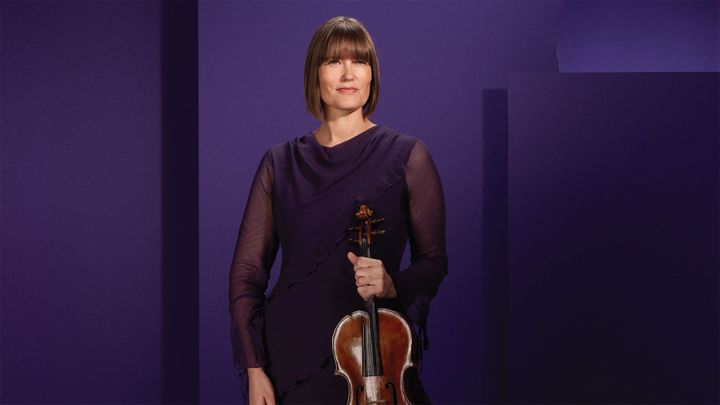
Sayaka Shoji violin
Intermission
Sergei Prokofiev
Selections from Romeo and Juliet, Opus 64 (1938)
Montagues and Capulets
The Child Juliet
Minuet
Masks
Romeo and Juliet
Morning Dance
Romeo at the Fountain
Death of Tybalt
Aubade
Romeo at the Grave of Juliet–
Death of Juliet
Marie Jacquot’s appearance is generously supported by the Shenson Young Artist Debut Fund.
These concerts are generously sponsored by the Athena T. Blackburn Endowed Fund for Russian Music.
Inside Music Talks are supported in memory of Horacio Rodriguez.
Program Notes
No Way to Win: Music and Politics in a Turbulent Age
The summer of 1935 was an idyllic one for Sergei Prokofiev. He and his family spent it in the countryside south of Moscow, at Polenovo, the summer retreat of the Bolshoi Theatre Collective. Each day, Prokofiev would sequester himself in an on-site cottage and work at a blistering pace, emerging occasionally for a game of tennis or a dip in the Oka River. Evenings were spent in conversation with the various dancers, singers, and other notables coming and going from the place. The main item on Prokofiev’s agenda that summer was Romeo and Juliet, the ballet that he had been assured would be staged by the Bolshoi the following year. This was one of several high-profile commissions that the Soviet authorities had dangled before Prokofiev, hoping to entice him to relocate permanently to Moscow. As he sat in that secluded countryside cottage, working on projects that excited him as his children played happily outside, the future must have seemed bright. By the end of the summer, the move was a settled plan. Prokofiev relocated to Moscow in March 1936, his family arriving shortly afterward.
Prokofiev knew that he was taking a risk in returning permanently to the Soviet Union. In fact, there was a clear warning just weeks before the move. In January of 1936, Stalin attended a Moscow performance of Dmitri Shostakovich’s opera Lady Macbeth of the Mtsensk District, which was then enormously popular both in the Soviet Union and beyond. Stalin did not enjoy himself, however, and left after the third act. Two days later, an unsigned article appeared in Pravda, the official newspaper of the Central Committee of the Communist Party, denouncing the opera and Shostakovich himself in the strongest possible terms. Another vicious letter appeared 10 days later. The effect on Shostakovich’s career was immediate and drastic: Lady Macbeth was banned, and Shostakovich lost most of his commissions. Prokofiev read the Pravda articles when he was on tour in Eastern Europe, his wife Lina having mailed them to him from Paris.
Prokofiev may have thought that the authorities wouldn’t meddle with him: his music was more melodic and less “formalist” than Shostakovich’s, after all. He may even have thought that, with Shostakovich dethroned, he might be anointed the new king of Soviet music. In any event, Prokofiev evidently decided that the scandal was not a sufficiently bad omen to warrant a change of plans, and pressed on with the move. This was a fateful decision on his part. While he continued to compose for the rest of his relatively short life, the authorities interfered insistently and continually with his music—starting with Romeo and Juliet, whose journey to the stage ended up being more fraught and protracted than Prokofiev could possibly have imagined on that summer holiday in Polenovo. His passport was taken from him in 1938, putting a permanent end to his international touring career. Despite his frequent attempts to appease the authorities, he was denounced in 1948 for more or less the same musical “crimes” as Shostakovich. His death in 1953 was completely overshadowed by that of Stalin, who, as luck would have it, died the same day.
It was not just the Soviet composers who had to deal with totalitarian politics in one way or another, in the early 20th century. Italian composers did, too. Born in 1879, Ottorino Respighi was acknowledged as one of Italy’s leading composers when Mussolini came to power in 1922. Fortunately for Respighi, he did not have to change course to attract the approval of the regime: Il Duce was already a fan. Indeed, the music that Respighi was composing around this time already expresses a similar atavistic fascination with ancient Roman pageantry to that which would later become associated with Italian fascist propaganda. But there is no indication that this was a deliberate attempt to please the authorities on Respighi’s part: his musical instincts simply ran in that direction, and he wasn’t all that interested in politics anyway. Respighi did, however, make one political statement late in his career: he was a signatory on a manifesto decrying emerging modernist musical trends. One might have thought that this would attract the approval of the regime—but ironically, the famously mercurial Mussolini took the side of the modernists.
Although Augusta Holmès did not have to contend with totalitarianism, she had battles of her own with repressive politics. Born in 1847 in Paris, Holmès felt herself to be thoroughly Parisian—but since her parents had been Irish, the authorities didn’t see it that way. She was refused entry to the Paris Conservatory on the grounds of nationality. Undaunted, Holmès set about studying composition with César Franck instead. Holmès’s music is heavily influenced by Richard Wagner: she was known in her lifetime for strident, assertive music composed in genres that were considered masculine. However, Holmès wasn’t long discovering that for a female composer in the late 19th century, there was no way to win: if you wrote “like a woman,” you would be ignored, and if you wrote “like a man,” you would be derided. In a review of Holmès’s symphonic poem The Argonauts, Camille Saint-Saëns criticized it for “excessive virility—a frequent fault with woman composers.” No doubt this cattiness on Saint-Saëns’s part had nothing whatsoever to do with the fact that he had once proposed marriage to Holmès, and she had turned him down.
Andromède
Augusta Holmès
Born: December 16, 1847, in Paris
Died: January 28, 1903, in Versailles
Work Composed: 1883
First SF Symphony Performances
Instrumentation: 2 flutes, piccolo, 2 oboes, English horn, 2 clarinets, 4 bassoons, 4 horns, 4 trumpets, 3 trombones, tuba, timpani, percussion (triangle, cymbals, and bass drum), 2 harps, and strings
Duration: About 15 minutes
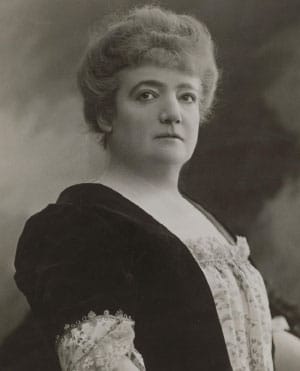
The name Andromeda—Andromède in French—makes a modern hearer think of the galaxy of the same name. But in the late 19th century, the name would have primarily summoned images of Greek mythology: specifically, the myth of Perseus and Andromeda. Holmès’s Andromède, written in 1883, is a musical illustration of that myth, as recounted in a poem that Holmès herself wrote to accompany the music.
Andromeda is the daughter of Cepheus and Cassiopeia, rulers of Ethiopia. When her mother boasts that Andromeda is more beautiful than the sea nymphs, Poseidon is enraged, and sends the monster Cetus to ravage the coast. In a bid to appease Poseidon, Cassiopeia chains Andromeda to the rocks, offering her as a human sacrifice. But before she can be devoured by Cetus, Perseus swoops in to save her, and takes her to Greece where she reigns as his queen.
Andromède opens in dramatic fashion, with an imposing, authoritative fanfare on trombones followed by ominous rumbling on low strings. Poseidon is pronouncing on Andromeda’s fate. A lighter, syncopated melody on strings swoops in, before the sea monster’s arrival is heralded by a barrage of dissonant stabs. The mood shifts abruptly as the violins sound Andromeda’s plaintive lament. Eventually, a glimmer of light heralds Perseus’s arrival, with a delicate, repeated motif in the strings evocatively suggesting Pegasus’s wingbeats. A warmer, more triumphal theme emerges as the two see each other, and the music gathers pace and excitement until Andromeda is finally freed. But instead of ending the piece in a blaze of triumph, Holmès instead chooses to bring the tale to a close on a more serene and searching note. Solo lines emerge for winds and strings, and the piece finally dissolves into ethereal transcendence.
Concerto Gregoriano
Ottorino Respighi
Born: July 9, 1879, in Bologna, Italy
Died: April 18, 1936, in Rome
Work Composed: 1921
SF Symphony Performances: First and only—March 1931. Issay Dobrowen conducted with Jascha Veissi as soloist.
Instrumentation: solo violin, 2 flutes, 2 oboes, English horn, 2 clarinets, bass clarinet, 2 bassoons, 4 horns, 2 trumpets, 3 trombones, timpani, harp, celesta, and strings
Duration: About 30 minutes
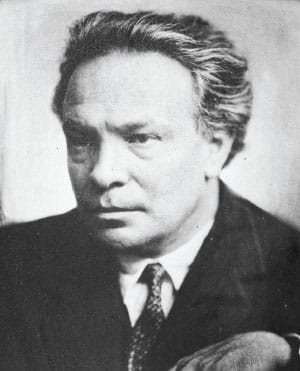
Concerto Gregoriano was written in 1921, when Respighi was in his mid-40s, and premiered the following year. It is Respighi’s third violin concerto. Around this time, he was surging to national and international prominence, due in large part to Arturo Toscanini’s championing of his orchestral tone poem Fountains of Rome. Concerto Gregoriano reflects Respighi’s newfound fascination with early Christianity, and with Gregorian chant in particular. This was one of the many passions that he and his beloved wife Elsa had in common: Respighi often requested that she sing monodies to him. Respighi’s interest in and study of Gregorian chant would go on to color almost all of his subsequent works.
The first movement (Andante tranquillo) begins in an atmosphere of quiet meditation. Strings hover in the air as the opening theme, played on oboe, brings a Baroque dance to mind. The entry of the solo violin affirms the gentle, pastoral mood. The quicker, more urgent middle section brims with reverent ardor, the solo lines here often reminiscent of plainsong. The opening material returns, and an introspective cadenza brings the movement to a close.
The second movement, Andante espressivo e sostenuto, follows immediately after the first. The mood here is more rhapsodic and exultant than the first movement. An expressive, lyrical melody on violin is soon joined by the orchestra, low strings playing a countermelody that is immediately reminiscent of medieval chant. A quicker, more intricate middle section sees the soloist passing melodic fragments back and forth with various sections of the orchestra. The opening theme returns in the violin’s highest register, and the movement comes to a peaceful close.
The third movement, Finale (Alleluja), opens with an exuberant, joyful brass melody. The atmosphere here is markedly more festive and dance-like than the preceding movements, but the tone of reverence persists. The solo violin soars over warm, lush orchestral textures until the dramatic cadenza, in which the soloist is accompanied by rumbling timpani. The opening theme reappears, hushed at first and then increasingly jubilant, and the concerto comes to a close with a triumphant flourish.
Selections from Romeo and Juliet, Opus 64
Sergei Prokofiev
Born: April 23, 1891, in Sontsovka, Ukraine
Died: March 5, 1953, in Moscow
Work Composed: 1935–38
SF Symphony Performances: First—November 1943. Pierre Monteux conducted Suite No. 1. Most recent—September 2024. Esa-Pekka Salonen conducted at the Opening Gala.
Instrumentation: 2 flutes, piccolo, 2 oboes, English horn, 2 clarinets, bass clarinet, 2 bassoons, contrabassoon, tenor saxophone, 4 horns, 3 trumpets, 3 trombones, tuba, timpani, percussion (bass drum, church bell, cymbals, orchestra bells, snare drum, tambourine, triangle, wood block, and xylophone), harp, piano, celesta, and strings
Duration: About 20 minutes
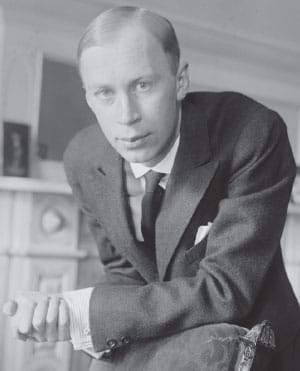
Prokofiev began composing Romeo and Juliet in 1935, on the understanding that it would be staged in Moscow the following year. However, the ballet didn’t receive its premiere until 1938, after a protracted and agonizing composition process in which the authorities repeatedly intervened. Moreover, since the premiere was held not in Moscow but in Brno (then in Czechoslovakia), Prokofiev couldn’t even attend: the Soviet authorities had recently confiscated his passport. Despite its troubled beginning, however, Romeo and Juliet has endured as one of Prokofiev’s most popular and engaging works, showcasing as it does his remarkable melodic gift, as well as his mastery of orchestration. For this performance, the orchestra plays selected movements from the orchestral suites that Prokofiev adapted from the full ballet score.
“Montagues and Capulets” opens with a menacing sequence of dissonant chords that rises from the depths of the orchestra like a tidal wave. This visceral illustration of the hostility between the feuding Montague and Capulet families sets the scene for the famous “Dance of the Knights” theme: a dogged melody in upper strings over a grinding, heavy oom-pah rhythm on brass and low strings. A lighter middle section provides some breathing space, but the relentless opening material makes an insistent return, and the movement ends with a sense of foreboding.
Light, airy and quick on its feet, “The Child Juliet” is an affectionate portrayal of girlish mischief and high spirits. Light, quicksilver melodies dart every which way over a delicate, glistening orchestral texture. A more meditative, lyrical theme suggests inner depth and the dawning of emotional maturity. The Minuet strikes a more public, stately tone. The orchestration is more restrained and conventional than either of the previous two movements, lending the movement a conservative, rather self-satisfied sheen. The wry, puckish character of “Masks” is given definition and sparkle by delicate touches of percussion. The light, mischievous mood is somewhat reminiscent of “The Child Juliet,” but there is an undertone of something approaching malevolence here.
“Romeo and Juliet” begins with a lyrical love theme stretching out exultantly over delicate orchestration. Brass and low strings provide an undertone of urgency. The orchestral texture slowly blossoms into full flower, and finally, the music drifts off into the distance. “Morning Dance” is full of bright-eyed energy and bustle. Melodies and rhythmic motifs move quickly around the orchestra, suggesting a crowded, lively scene. Where “Morning Dance” is all exterior, “Romeo at the Fountain” is all interior. A searching, lyrical theme gives way to a thoughtful, hesitant rhythm on strings, given definition and color by the woodwinds. The overall mood here is hesitant, unsure, and full of inchoate longing. “Death of Tybalt” begins in a flurry of agitation, full of percussive stabs in the strings and staccato outbursts in brass and woodwind. The music accelerates slowly but inexorably until a series of slow, merciless hammer-blows brings it to a hard stop. The orchestra gathers itself, and embarks on a grim, ceremonial funeral march.
“Aubade” is light and pastoral, full of air and sunshine. A delicate melody floats over a transparent, arpeggiated accompaniment, with the occasional clarion call from the brass section. The overall impression here is of the freshness of early morning. Any impression of lightness dissipates at the opening of “Romeo at the Grave of Juliet,” which is anguished and tortured from the start. Fragments of melodic material from earlier movements return, now disfigured by grief. The music strains toward an agonized climax before collapsing into exhausted silence. In “Death of Juliet,” the love theme from the earlier balcony scenes returns, now haunted by loss. Long, unbroken phrases unspool slowly, yearning for something that never comes.
—Jenny Judge
About the Artists
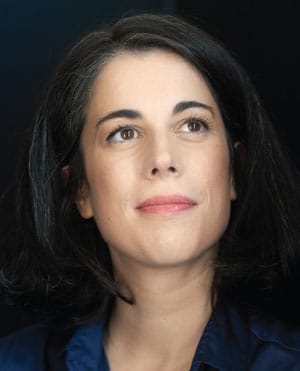
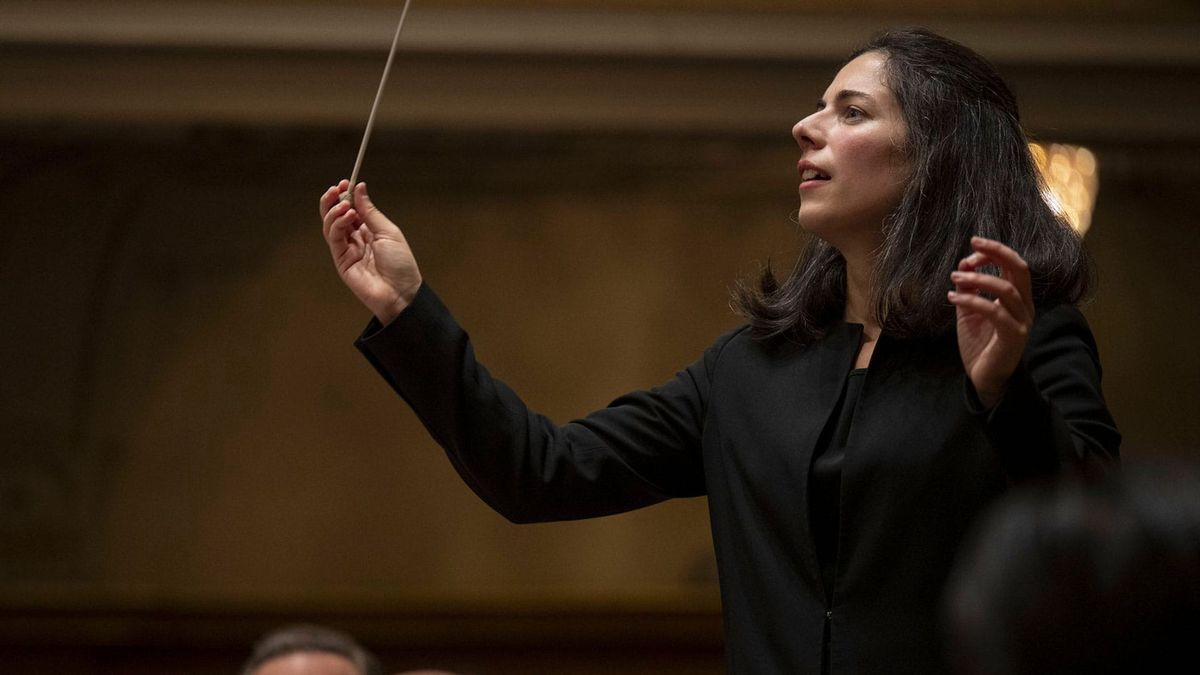
Marie Jacquot
Marie Jacquot recently began her position as principal conductor of the WDR Symphony, with whom she already has a close connection through a wide variety of projects. She additionally serves as principal conductor of the Royal Danish Theater, and previously served as principal guest conductor of the Vienna Symphony. She makes her San Francisco Symphony debut with these performances.
This season, Jacquot appears with the Berlin Staatskapelle, Swedish Radio Orchestra, Munich Philharmonic, London Philharmonic, Orchestre de Paris, Gothenburg Symphony, and Staatskapelle Dresden. Recent appearances have taken her to the Leipzig Gewandhaus Orchestra, Bavarian Radio Symphony, Hamburg Philharmonic, BBC Symphony, Filarmonica della Scala, Zurich Tonhalle Orchestra, Oslo Philharmonic, Orchestre National de France, Orchestre Philharmonique de Radio France, Orchestre Symphonique de Montréal, Detroit Symphony, Dallas Symphony, Yomiuri Nippon Symphony, and Cleveland Orchestra.
After studying trombone in Paris, Jacquot pursued conducting in Vienna and Weimar, where she held a scholarship of the German Music Council. She was awarded the Ernst Schuch Prize in 2019 and the 2024 Palm Révélation, Chef d’Orchestre award at the 31st Victoires de la Musique Classique.

Sayaka Shoji
Sayaka Shoji appears this season with Ensemble Resonanz, Filarmonica Banatul Timişoara, the National Taiwan Symphony, and debuts at the Tsinandali Festival. She has also worked with the Berlin Philharmonic, Vienna Symphony, Los Angeles Philharmonic, New York Philharmonic, London Symphony, Philharmonia Orchestra, BBC Symphony, Mariinsky Orchestra, NHK Symphony, Czech Philharmonic, Israel Philharmonic, Rotterdam Philharmonic, and Cleveland Orchestra, among others. She made her San Francisco Symphony debut in October 2024 and previously appeared on the Great Performers Series in 2017 on tour with the St. Petersburg Philharmonic.
A prolific recording artist, Shoji has released 11 albums on Deutsche Grammophon and is featured with the San Francisco Symphony and Esa-Pekka Salonen on a 2026 digital release of Shostakovich’s Violin Concerto No. 1.
Shoji was born in Tokyo and moved to Siena, Italy, at the age of three. She plays the Stradivarius “Recamier” violin, ca. 1729, kindly loaned to her by Ueno Fine Chemicals Industry Ltd.