In This Program
The Concert
Friday, May 15, 2026, at 7:30pm
Saturday, May 16, 2026, at 7:30pm
Sunday, May 17, 2026, at 2:00pm
Inside Music Talk with David H. Miller, UC Berkeley Department of Music
On stage Friday and Saturday at 6:30pm
Inside Music Talk with members of the San Francisco Symphony
On stage Sunday at 1:00pm
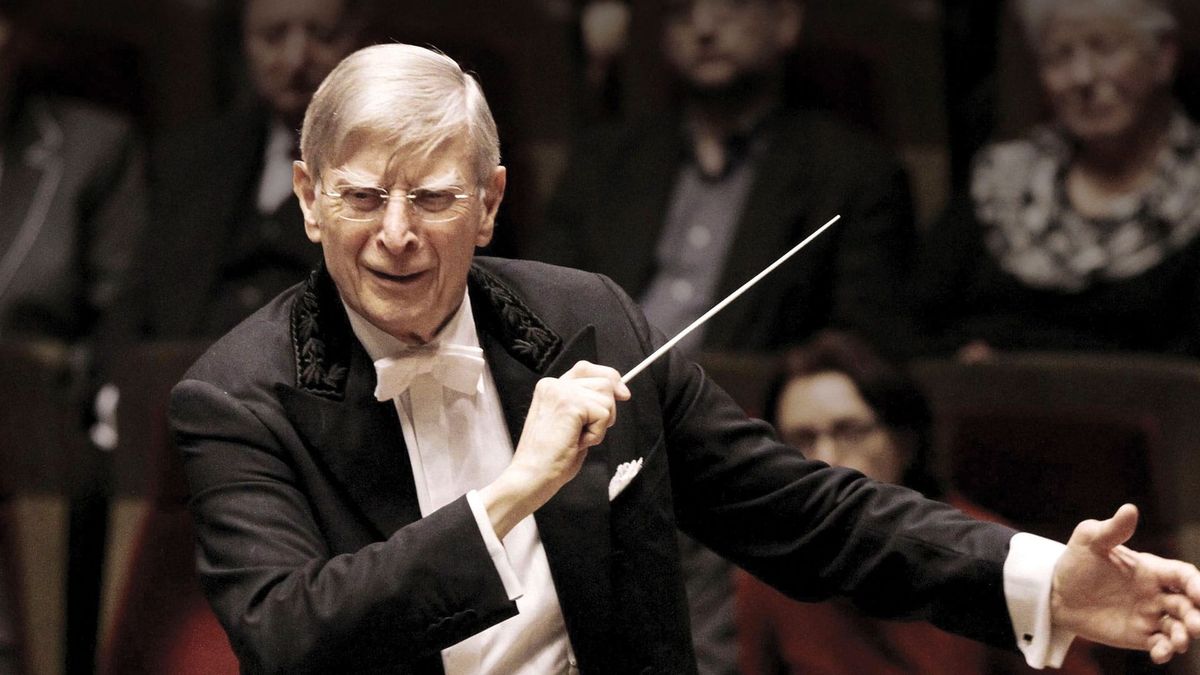
Herbert Blomstedt conducting
Gustav Mahler
Symphony No. 9 in D major (1909)
Andante comodo
In the tempo of a comfortable ländler
Rondo burleske
Adagio
This program is performed without intermission.
These concerts, a part of the Barbro and Bernard Osher Masterworks Series, are made possible by a generous gift from Barbro and Bernard Osher.
Inside Music Talks are supported in memory of Horacio Rodriguez.
Program Notes
At a Glance
Symphony No. 9 in D major
Gustav Mahler
Born: July 7, 1860, in Kaliště, Bohemia
Died: May 18, 1911, in Vienna
Work Composed: 1908–09
SF Symphony Performances: First—April 1965. Josef Krips conducted. Most recent—June 2019. Michael Tilson Thomas conducted.
Instrumentation: 4 flutes, piccolo, 4 oboes, English horn, 3 clarinets, bass clarinet, E-flat clarinet, 4 bassoons, contrabassoon, 4 horns, 3 trumpets, 3 trombones, tuba, timpani (2 players), percussion (triangle, cymbals, tam-tam, chimes, large bells, snare drum, bass drum, and glockenspiel), 2 harps, and strings
Duration: About 90 minutes
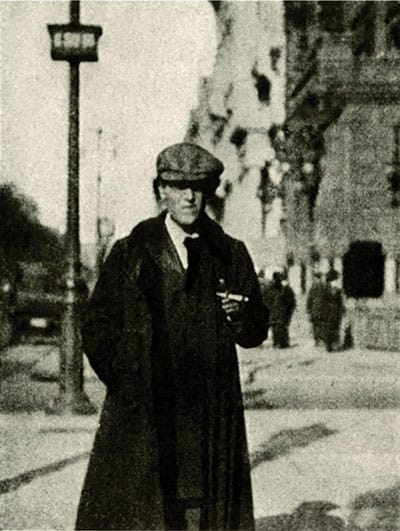
March, 1910. New York City is booming. Every day, thousands of voyage-weary immigrants shuffle through the long inspection lines at Ellis Island, wondering what kind of life awaits them on the other side of the harbor. Some of these new arrivals will find work in the thriving Garment District, whose pavements fairly tremble with the chatter of sewing machines. Some, mostly Irish immigrants, will be hired as “sandhogs”—these are the men building the new tunnels between Manhattan and the surrounding boroughs—and so will spend their days laboring underwater in dark, cramped chambers of compressed air. Still others will have to swallow their fear of heights in order to join the ranks of construction workers high above the city streets, where they will learn to inch along steel girders as they hammer together the massive skeletons of New York’s first skyscrapers.
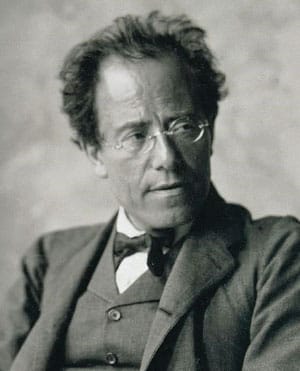
In a suite at the Hotel Savoy, on the newly chic Fifth Avenue, a diminutive Austrian sits annotating a manuscript. He too is a recent arrival to these shores; he too has felt the scrutiny of the Ellis Island bureaucrats. But in almost every other respect, this man is unlike the other Europeans streaming into New York City. Since his arrival, he has lodged not in a flea-infested Lower East Side tenement, as so many of his fellow immigrants have been forced to do, but in New York’s most exclusive hotels. And instead of having to roll the dice on the blue-collar labor market, he has been head-hunted for one of the most prestigious jobs in the city: namely, maestro of the newly reconstituted New York Philharmonic, with his (hefty) salary paid by the city’s bon ton. This neatly attired 49-year-old, bent over his papers, is Gustav Mahler, erstwhile star conductor of the Vienna Court Opera; and the manuscript he is working on is his own Ninth Symphony. He had completed it the previous summer, and he is now making final edits to the manuscript before handing it over to the publishers.
From the outside, it looks like Mahler has it made: plenty of money, the esteem of his peers, a beautiful wife whom he adores. But it’s been a rough few years for Mahler. In the summer of 1907, his eldest daughter Maria had died of scarlet fever and diphtheria at the age of four. Two days after that, Mahler had himself been diagnosed with a congenital heart defect. And if that weren’t enough, antisemitic factions in Vienna were at the time vituperating against him in the press, and had been for months. Small wonder that when the offer of a fresh start in the United States came in, Mahler had jumped at the chance. Now, almost three years on from the death of his little girl, things are looking up. His grief is a little softer, less raw than it was. The initial shock of his diagnosis has faded, and he’s feeling much better physically. And New York excites him: a regular passenger on the subway, Mahler is keen to sample everything that this boom town has to offer. (Not just the high-brow fare, either. He and his wife, Alma, have attended a séance; they have even had a wide-eyed look around a Chinatown opium den.) In March 1910, then, as he looks down with satisfaction at the score of his latest symphony, Mahler has every reason to be optimistic.
Mahler doesn’t know it, but things are about to fall apart. A few months from now, Alma will meet a young architect by the name of Walter Gropius, embarking on an affair that will tear Mahler to shreds. In February 1911, just when it’s starting to look like their marriage might survive, Mahler will come down with a mysterious illness that he and his doctors initially think is flu, but is in fact endocarditis, an inflammation of the heart. This illness will linger through March 1911, worsen through April; attempts at treatment will prove ineffective.
And his Ninth Symphony, whose score Mahler is now editing so assiduously? He’ll never hear it performed. Because by the end of May 1911, just over a year from now, Mahler will be dead.
Mahler’s Ninth Symphony was premiered by the Vienna Philharmonic in June 1912, with Mahler’s close friend and collaborator Bruno Walter at the podium. Almost immediately, audiences began to interpret the work in light of its composer’s untimely death the year before. Some began to mutter darkly that the “Curse of the Ninth” had claimed another victim. (This was the superstition that a composer is doomed to die before completing a 10th symphony.) Others claimed that the symphony was Mahler’s conscious farewell to music, or indeed to life itself. However, neither view really holds water. First, those who insisted that Mahler had fallen victim to the Curse had to overlook the inconvenient fact that Mahler had actually written 10 symphonies; he had just given the “real” ninth, Das Lied von der Erde, a name rather than a number. And second, the “conscious farewell” hypothesis begins to look dubious when one considers that when Mahler completed his Ninth in the summer of 1909, he was about as far from bidding farewell to music (or indeed life) as he had ever been. He was on the cusp of his first season at the helm of his new American orchestra: a new chapter of his musical career was about to begin. Indeed, in a 1909 letter to Bruno Walter, Mahler had written, “I have more thirst for life than ever, and find the ‘habits of existence’ sweeter than ever.”
Still, interpretations of the Ninth Symphony according to which it signifies a final parting are, if not quite justified, at least understandable—and not just because it was the last work Mahler completed, either. For one thing, Mahler had always been preoccupied with death: by his own admission, he had long sought to work out, in musical sound, how life could have meaning given that we’re all doomed to die. But more importantly, the music of the Ninth is itself readily amenable to interpretation in terms of a last farewell, especially given its intimate tone. Mahler’s first eight numbered symphonies are for the most part assertive and declamatory—but this one is different. Instead of exclaiming for all to hear, the Ninth Symphony begins by tapping one’s shoulder and drawing one in, as though confiding a secret. Over the ensuing four movements, the music veers and roils through almost every imaginable emotion, before ending not in triumph—as used to be Mahler’s wont—but in a detached, contemplative serenity, as though the music were regarding the world from afar through half-closed eyes. It’s understandable that audiences, thinking of Mahler’s demise as they listened, should have found their thoughts turning to deathbed confessions, agonized goodbyes, and voices speaking from eternity.
The Music
The Ninth Symphony is, like many other works of its kind, an orchestral work consisting of four movements, with no vocal parts. But it departs from symphonic norms in various ways. For one, the first and fourth movements are slow rather than fast. Second, those two outer movements are far longer than is usually the case. And third, while symphonies usually wend through various keys before eventually returning to the key of the first movement, that’s not the case here: the work starts in D major and ends in D-flat major.
The first movement (Andante comodo) begins with just three voices: cello, harp, and horn. Quietly, almost surreptitiously, this little group gives us the basic musical ingredients that will form the substance of this massive movement. The first is a hesitant, syncopated rhythm that starts on cellos and is completed by the horn. (This is the motif that Leonard Bernstein rather fancifully interpreted as representing Mahler’s irregular heartbeat.) The second is a gentle, arc-shaped motif of four notes, played by the harp. The third is a muted horn fanfare. These elements act as signals throughout the movement: whenever you hear one of them, you know that something noteworthy is about to happen. Once these have been presented, the first theme emerges: this is a warm, romantic melody on strings that starts with a two-note sighing motif. A minute or so later, the sense of softness and security that the first theme has established is swept aside, as the swirling, anxious, almost neurotic second theme appears. The opposing forces that these themes represent—comfort and love on the one hand, unease and fear on the other—abrade each other to increasingly destructive effect as the movement progresses, until a cataclysmic collision occurs that destroys them both. In the aftermath, an atmosphere of serenity descends. A fragment of the first theme repeats itself, before trailing off, as though it’s forgotten what it meant to say.
When the second movement begins (“In the tempo of a comfortable ländler”), we are very much back in the workaday world. A little woodwind preamble heralds the first ländler theme, which clod-hops in on second violins. (The ländler is a rustic dance with origins in Central Europe. Mahler had always been fond of the ländler: it appears in several of his symphonies.) This rather unpolished dance is bucolic, cheerful, and a little unsteady on its feet. Eventually, as the ländler loses its way somewhat, a new theme asserts itself: a faster, more assured waltz theme in E major. This theme is a little too fussy, a little too self-aware: one suspects that Mahler is not merely representing city life here, but satirizing it. As in the first movement, the mutually hostile forces of which these two themes are emblematic—in this case, country simplicity versus urbane sophistication—are clearly at odds, though they don’t so much confront each other as collide abruptly and repeatedly, in a series of jarring key-switches and rhythmic jolts. As in the first movement, we are left with a sense that conflict is everywhere, but that no easy resolution is in the offing.
The third movement (Rondo burleske) is an altogether more violent affair. Brass and strings explode out of the gate, letting loose a volley of melodic and rhythmic fragments that disintegrate almost as soon as they’re heard. There is an element of glee to the fury one hears in the music, as though some evil spirit were wreaking havoc purely for the fun of it. The texture is intricately contrapuntal, and one occasionally hears a snatch of a melodic fragment that wouldn’t be out of place in a Baroque concerto—but it’s all wrong, disfigured, warped somehow. Around the middle of the movement, hostilities abruptly cease. Lyrical strings emerge to remind us of the warmth and safety of the opening of the first movement. But the demon goes on the rampage again, and the movement ends in a blaze of fury.
The fourth and final movement (Adagio) is striking in its refusal to resolve, or even to engage with, the violent conflicts of the previous movements. There is no triumphant victory on offer here, no ecstatic moment of redemption. But the movement isn’t an expression of nihilistic life-denial, either. Instead, the Ninth’s Adagio is a quiet, earnest affirmation of life, in full knowledge of the anguish that being human inevitably involves. The movement opens with a hymn-like theme on strings, establishing a reverent, even religious atmosphere. Each time it repeats, this theme grows increasingly insistent, until a crisis is reached; after this, a final prayer is offered that gradually—almost imperceptibly—dissolves into silence. As the last sounds fade, one has the sense of being far above the earth, watching it grow smaller as one drifts slowly, silently away into the blackness of space.
—Jenny Judge
About the Artist

Herbert Blomstedt
Noble, charming, sober, modest. Such qualities may play a major role in human coexistence and are certainly appreciated. However, they are rather atypical for extraordinary personalities such as conductors. Whatever the general public’s notion of a conductor may be, Herbert Blomstedt is an exception, precisely because he possesses those very qualities which seemingly have so little to do with a conductor’s claim to power. That he disproves the usual clichés in many respects should certainly not lead to the assumption that he does not have the power to assert his clearly defined musical goals. Anyone who has attended Herbert Blomstedt’s rehearsals and experienced his concentration on the essence of the music, the precision in the phrasing of musical facts and circumstances as they appear in the score, the tenacity regarding the implementation of an aesthetic view, is likely to have been amazed at how few despotic measures were required to this end. Basically, Herbert Blomstedt has always represented that type of artist whose professional competence and natural authority make all external emphasis superfluous. His work as a conductor is inseparably linked to his religious and human ethos, and his interpretations combine great faithfulness to the score and analytical precision, with a soulfulness that awakens the music to pulsating life. In the more than 60 years of his career, he has acquired the unrestricted respect of the musical world.
Born in the United States to Swedish parents and educated in Uppsala, New York, Darmstadt, and Basel, Herbert Blomstedt gave his conducting debut in 1954 with the Stockholm Philharmonic and subsequently served as chief conductor of the Oslo Philharmonic, Swedish Radio Orchestra, Danish Radio Orchestra, and Staatskapelle Dresden.
Later, he became Music Director of the San Francisco Symphony from 1985–95, chief conductor of the NDR Symphony, and music director of the Leipzig Gewandhaus Orchestra. His former orchestras in San Francisco, Leipzig, Copenhagen, Stockholm and Dresden, as well as the Bamberg Symphony and the NHK Symphony Orchestra, all honored him with the title Conductor Laureate. Since 2019, he has been an honorary member of the Vienna Philharmonic.
Blomstedt holds several honorary doctorates, is an elected member of the Royal Swedish Music Academy, and was awarded the German Great Cross of Merit with Star. Over the years, all leading orchestras around the globe have been fortunate to secure the services of the highly respected Swedish conductor. At the age of 98, he continues to be at the helm of all leading international orchestras with enormous presence, verve and artistic drive.
David H. Miller is an assistant professor of practice in music and American studies at UC Berkeley. His research focuses on modernist music, particularly that of Anton Webern, and its performance and reception in the United States. At Cal, he has taught courses on J.S. Bach, interwar American music, and postwar American experimentalism. As a performer, he focuses on Baroque double bass and viola da gamba, and directs the University Baroque Ensemble. He holds a BA in music from Harvard University and a PhD in musicology from Cornell University.