In This Program
The Concert
Friday, May 8, 2026, at 7:30pm
Saturday, May 9, 2026, at 7:30pm
Sunday, May 10, 2026, at 2:00pm
Inside Music Talk with members of the San Francisco Symphony
On stage Friday and Saturday at 6:30pm, Sunday at 1:00pm
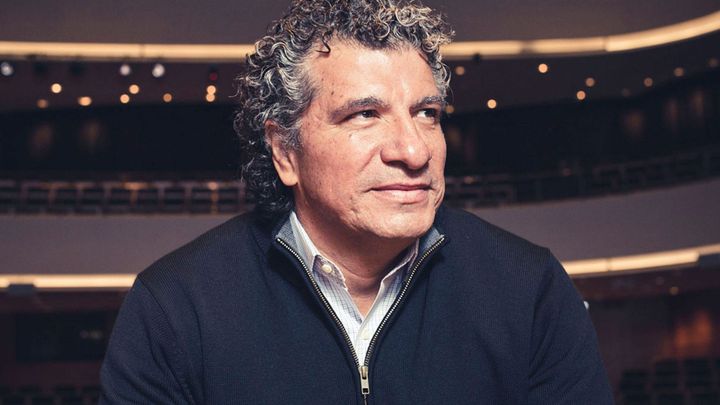
Dima Slobodeniouk conducting
Henri Dutilleux
Métaboles (1964)
Incantatoire: Largamente
Linéaire: Lento moderato
Obsessionnel: Scherzando
Torpide: Andantino
Flamboyant
Jacques Ibert
Flute Concerto (1934)
Allegro
Andante
Allegro scherzando
Yubeen Kim
Intermission
Piotr Ilyich Tchaikovsky
Symphony No. 4 in F minor, Opus 36 (1878)
Andante sostenuto–Moderato con anima, in movimento di valse
Andantino in modo di canzona
Scherzo, pizzicato ostinato: Allegro
Finale: Allegro con fuoco
These concerts are generously sponsored by the Athena T. Blackburn Endowed Fund for Russian Music.
The May 8 concert is sponsored by Dr. John S. Yao & Dr. Pauline Mysliwiec.
Inside Music Talks are supported in memory of Horacio Rodriguez.
Program Notes
At a Glance
Piotr Ilyich Tchaikovsky wrote his Symphony No. 4 for his mysterious patron, Nadezhda von Meck, with whom he carried on an intimate correspondence but never met. He told her the Symphony was about fate, which he imagined as the “sword of Damocles over our head,” represented by a recurring brass fanfare.
Métaboles
Henri Dutilleux
Born: January 22, 1916, in Angers, France
Died: July 25, 2013, in Paris
Work Composed: 1959–64
SF Symphony Performances: First—January 1990. Kent Nagano conducted. Most recent—February 2014. Lionel Bringuier conducted.
Instrumentation: 4 flutes (3rd and 4th doubling piccolos), 3 oboes, English horn, 2 clarinets, E-flat clarinet, bass clarinet, 3 bassoons, contrabassoon, 4 horns, 4 trumpets, 3 trombones, tuba, timpani, percussion (triangle, cymbals, small suspended cymbal, Chinese cymbals, tam-tams, snare drum, tom-toms, bass drum, cowbell, temple blocks, glockenspiel, and xylophone), harp, celesta, and strings
Duration: About 20 minutes
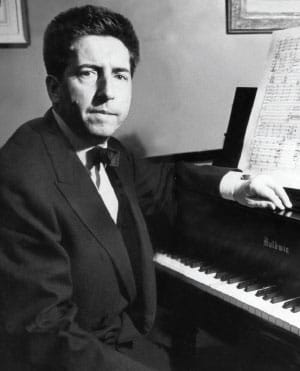
Henri Dutilleux surely ranked among the most obsessively perfectionist composers of his time. The extreme care with which he shaped his music gave his scores a jewel-like precision. An unwaveringly critical attitude of self-appraisal was characteristic and formed a key to Dutilleux’s artistic personality. The composer reportedly rejected a large amount of material in the process of molding the relatively small list of works he allowed to be published throughout a lengthy career.
In the constellation of postwar musical developments, he was generally presented as a loner of sorts. Dutilleux did not belong to any larger movement, and a healthy variety of technical and stylistic approaches pervaded his music. Although born roughly in the generation separating Olivier Messiaen and Pierre Boulez, he always stood apart from the sackcloth-and-ashes earnestness—least of all the doctrinaire conformism—that once marked so much international postwar modernism. Nor does he convey the cheeky aesthetic of ready-made, ironic quotations associated with postmodernism.
A chief appeal of Dutilleux’s music is its sensuousness of texture—a colorful garden of sounds so delicately cultivated that he often brings to mind a latter-day Ravel. Although he became identified with highly coloristic, abstract orchestral scores, Dutilleux frequently tapped into the visual arts and literature to enrich his inspiration, revealing a synergistic approach. When he taught music at the École Normale in Paris, his classes often included visits to art galleries. A number of his major compositions involve relationships with literature or painting.
Dutilleux grew up in an arts-loving family of amateur musicians and studied at the Paris Conservatory, where he eventually won the Prix de Rome. The outbreak of the Second World War intervened, and the young composer had to return abruptly from Italy to Paris. Subsequently, he patched together a career working as a chorus master at the Opéra and writing musical arrangements for nightclubs. Later he took a post with Radio France writing incidental music for radio plays. He gradually found his authentic voice in instrumental music, beginning with works such as the Piano Sonata and the Symphony No. 1.
Dutilleux’s international reputation began to take root in the 1960s, largely as a result of commissions from American orchestras, including the Boston Symphony and, for Métaboles, the Cleveland Orchestra under George Szell. Characteristically written over a period of several years, Métaboles represents the composer’s search for a new kind of internal logic and musical form. Dutilleux discovered a creative model in the evolutionary processes of nature itself. In Métaboles, he focuses on mysterious turning points—what the composer termed an “interior evolution”—through which musical ideas gradually change character until they seem entirely new, though they remain transformations of what came before.
The Music
Métaboles is organized as a single span of five successive sections, each bearing its own evocative title. The work is driven by a process of metamorphosis: melodic, harmonic, and rhythmic ideas introduced at the outset of each section gradually undergo “deformation” through a process of musical metabolism, giving rise to new motifs that come to the fore in the sections that follow. At the same time, Dutilleux continually varies the orchestral texture, bringing a different instrumental family into the spotlight in each of the first four sections before the full orchestra is engaged in the fifth. The result is an intricate play of timbres that, in effect, gives the work the character of a compact orchestral concerto.
The opening section, Incantatoire, places the woodwinds in the foreground, its ritualistic character recalling the primal atmosphere of Igor Stravinsky’s The Rite of Spring. Strings dominate the second section, Linéaire, where their increasingly divided lines create an otherworldly sonority. The third section, Obsessionnel, shifts the focus to the brass, whose sharply clipped figures unfold against stealthy string textures. In Torpide, percussion and clarinets combine in a play of striking colors and resonances that lead into the final section, Flamboyant, where the full ensemble gathers in a multi-layered surge that brings the work’s evolving processes to their culmination.
—Thomas May
Flute Concerto
Jacques Ibert
Born: August 15, 1890, in Paris
Died: February 5, 1962, in Paris
Work Composed: 1934
SF Symphony Performances: First—April 1969. Antonio de Almeida conducted with Paul E. Renzi as soloist. Most recent—September 1983. Edo de Waart conducted with James Galway as soloist.
Instrumentation: solo flute, 2 flutes, 2 oboes, 2 clarinets, 2 bassoons, 2 horns, trumpet, timpani, and strings
Duration: About 20 minutes
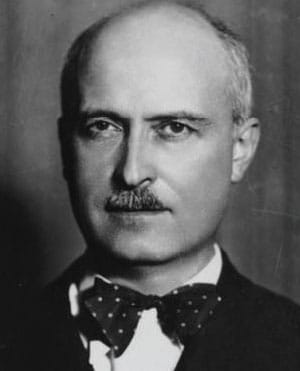
In the effervescent musical atmosphere of 1920s Paris, where many composers cultivated an attitude of wit, lightness, and irreverence, Jacques Ibert stood somewhat apart. A member of the generation whose early careers were profoundly interrupted by the First World War, he was by inclination too eclectic to adhere to any particular group—even to one as loosely defined as “Les Six,” though at his cheekiest he could seem an honorary member. Rather than align himself with a single movement or artistic direction—a resistance to aesthetic dogma he shared with his compatriot Henri Dutilleux—Ibert cultivated a notably fluid and flexible style. His music resists easy labeling and moves effortlessly from Classical transparency and contrapuntal dexterity to clever references to popular idioms, including jazz.
Encouraged by his pianist mother, and against his businessman father’s objections, Ibert trained at the Paris Conservatory and, following the interruption of the First World War—during which he served as both a nurse and a naval officer—won the prestigious Prix de Rome on his very first attempt. He made a memorable first impression on the public with an orchestral piece inspired by Oscar Wilde’s “The Ballad of Reading Gaol.”
Ibert’s catalogue includes operas, ballets, symphonic works, chamber music, and a considerable quantity of incidental music, theater having become an abiding passion in his early years. He also had an instinctive gift for crafting music for the emerging mass media of cinema and radio. Ibert helped pay his way through his years as a student by working as a silent movie piano accompanist and eventually composed more than 60 film scores, including for the 1948 Orson Welles version of Macbeth.
However much Ibert partook of the playful irreverence associated with the Parisian scene of the 1920s—as in such works as Divertissement, his incidental music to a farce—he was later tapped as an upholder of French musical tradition. Starting in 1937, he served for more than two decades as a cultural diplomat through his position as director of the Académie de France at the Villa Medici in Rome—apart from the interruption of another world war, when his music was banned by the Vichy government. He became the first musician to hold that position. Ibert also briefly headed the combined administration of the Paris Opera and the Opéra-Comique.
According to biographer Alexandra Laederich, Ibert’s musical language, though stylistically diverse, remains grounded in a clear tonal language and is distinguished by transparent orchestral writing. The Flute Concerto, composed in the early 1930s for the celebrated French flutist Marcel Moyse, brings these qualities into vivid focus.
The Music
Like Ibert’s other concertos—for cello, oboe, and even a miniature concerto for alto saxophone—the Flute Concerto radiates a gentle, good-humored hedonism: less capricious than the more experimental currents of Parisian modernism, yet animated by delectable melodic playfulness. It belongs to a strain of 20th-century music that looks back to earlier models with fresh imagination.
The concerto opens with chords whose disorienting dissonance quickly dissolves—a touch of musical mischief—before the solo flute takes off in a sparkling breeze of rapid-fire figures. Only momentarily does this headlong energy relax to articulate a more lyrical second theme, Ibert gracefully balancing the flute’s voice against his modest orchestra throughout. A dreamlike Andante of tender lyricism reveals the composer’s melodic gift in the flute’s liquid legato; its warm cantabile seems to extend beyond the horizon. The mood shifts in a contrasting section, while the reprise reformulates the melody as an intimately intricate duo for solo violin and flute.
Ibert unleashes all his inventive exuberance in the energetically playful finale, the longest of the three movements, fittingly marked Allegro scherzando. Here the flute darts through passages of whirling dexterity, buoyed by dance-like rhythms and flashes of jazzlike syncopation that alternate with more leisured considerations of the material, particularly in a solo cadenza near the end. The extraordinary degree of agility and rhythmic precision Ibert’s music demands across the instrument’s registers has made this movement a favorite test piece for flute students at the Paris Conservatory.
—TM
Symphony No. 4 in F minor, Opus 36
Piotr Ilyich Tchaikovsky
Born: May 7, 1840, in Kamsko-Votkinsk, Russia
Died: November 6, 1893, in Saint Petersburg
Work Composed: 1878
SF Symphony Performances: First—January 1913. Henry Hadley conducted. Most recent—July 2024. Earl Lee conducted.
Instrumentation: 2 flutes, piccolo, 2 oboes, 2 clarinets, 2 bassoons, 4 horns, 2 trumpets, 3 trombones, tuba, timpani, percussion (triangle, cymbals, and bass drum), and strings
Duration: About 45 minutes
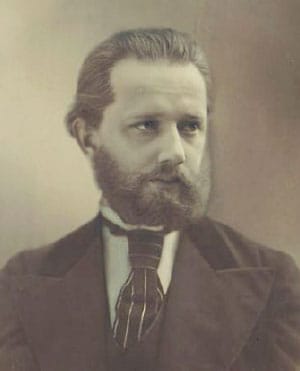
Piotr Ilyich Tchaikovsky’s Fourth Symphony starts with a clashing fanfare—an idea the composer connected with the famous opening of Beethoven’s Fifth, widely understood to represent fate. But their conceptions of fate are wildly different: For Beethoven, the shock of the opening idea, the knock at the door, generates the rest of the movement and propels the entire symphony. But for Tchaikovsky, fate is not a creative force, instead it’s an intrusion that thwarts peace and shatters beauty.
He wrote as much to Nadezhda von Meck, his patron and confidante, and the secret dedicatee of the Fourth Symphony:
This is Fate, the force of destiny, which ever prevents our pursuit of happiness from reaching its goal, which jealously stands watch lest our peace and well-being be full and cloudless, which hangs like the sword of Damocles over our heads and constantly, ceaselessly poisons our souls.
He goes on, providing her with a description of the entire piece in similar terms. Whether this program guided his composition from inception, or whether it was an after-the-fact translation of music into words for the benefit of a patron, is unknown.
But Tchaikovsky certainly had reason to think of fate in such a way, especially as 1877 marked a major crisis in his life. He had just left his new wife, Antonina Milyukova, whom he had married earlier that same year. Tchaikovsky, who biographers generally believe was gay, thought they were entering a marriage of convenience—she, apparently, didn’t know or understand this. He was still recuperating from the ordeal of their separation when he wrote most of the Fourth Symphony.
We can also look at the symphony through an aesthetic and political lens: Though Tchaikovsky drew a comparison to Beethoven, he wasn’t fully an admirer, and was even less an admirer of Johannes Brahms, who was seen as Beethoven’s heir and the leading symphonist of the day. Tchaikovsky criticized what he heard as overly analytical, tightly-constructed Germanic music. But at the same time, he stood apart from his fellow Russian composers as more educated, more professional, and more Western.
Most of his compatriots were musically self-educated and held day jobs (Alexander Borodin notably as a chemist, others as civil servants and military officers). Even Tchaikovsky initially worked as a civil servant for three years before the Saint Petersburg Conservatory opened its doors in 1862. It was the first place a Russian could receive a formal music education, taught in Russian, without leaving the country. Tchaikovsky enrolled and graduated with the first class.
In the following years, he struggled with the symphonic form, trying to avoid the intentionally exotic Eastern-ness that brought Mikhail Glinka and Borodin both cachet and derision in Western Europe, while also trying to downplay the nuts-and-bolts craftsmanship his conservatory teachers had obsessed over.
The Fourth Symphony is a stunning realization of this middle path. Tchaikovsky found he could place unrelated musical ideas next to each other and let the latent drama of their juxtapositions emerge. It’s a technique that also served him well in opera and ballet, where music delineates characters as they interact and come into conflict.
In the symphony, nothing is quite so literal: Heroes and fairytale characters are stripped down to anonymous musical ideas, then cast into four movements which roughly hit the expected markers of the symphonic form. But what unfolds in-between is wholly original and unexpected.
The Music
After the fateful fanfare recedes, the main theme is a waltz—an unusual choice for the first movement of a symphony. From there comes a succession of escapist melodies, which Tchaikovsky called “sweet tender dreams.” But fate is never far away, returning violently three more times, shattering any illusion of peace.
The slow movement, Andantino in modo di canzona (in the manner of a song), has a mournful theme, first presented in the oboe, then cellos, then elaborated upon, and finally ending with the bassoon.
The Scherzo explodes the orchestra into its constituent factions. First, the plucked strings scurry along. Then, the strings drop out and the woodwinds play a rustic tune. Next comes the brass (with some clarinet and piccolo for color), and then the plucked strings return. While traditional orchestration focused on blending and subtle layering, Tchaikovsky found bold effects in the opposite approach.
The finale begins from a point of triumph, then descends back into tumult. It is no surprise that fate makes a return, and the result—whether transcendent or cataclysmic—is something listeners might ponder. Tchaikovsky, in a nod to his more nationalistic colleagues, quotes a Russian folksong, which could provide a subtext: “I will take a walk in the forest, I will cut down the birch tree, Lyu-li, lyu-li, I’ll cut it down.” But from that tree, the singer makes a balalaika.
—Benjamin Pesetsky
A version of this note previously appeared in the program book of the
St. Louis Symphony.
About the Artists
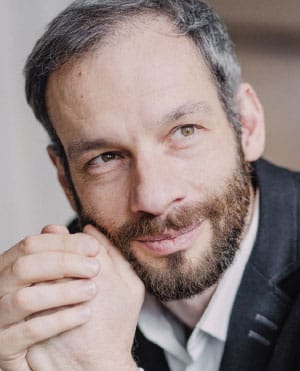
Dima Slobodeniouk
Dima Slobodeniouk served as music director of Orquesta Sinfónica de Galicia from 2013–22 and as principal conductor of the Lahti Symphony and artistic director of the Sibelius Festival from 2016–21. Together with Orquesta Sinfónica de Galicia, he built an extensive and highly acclaimed media library of live concert recordings.
This season, Dima Slobodeniouk appears with the New York Philharmonic, Pittsburgh Symphony, Houston Symphony, Boston Symphony at Tanglewood and Symphony Hall, Cleveland Orchestra at Blossom Music Festival, and he debuts with the St. Louis Symphony. In Europe, he leads the WDR Symphony, Dresden Philharmonic, Finnish Radio Symphony, Netherlands Radio Philharmonic, Bergen Philharmonic, Antwerp Symphony, and Vienna Symphony. In recent seasons, he has also collaborated with the Berlin Philharmonic, London Symphony, Leipzig Gewandhaus Orchestra, Royal Concertgebouw Orchestra, Munich Philharmonic, Tonhalle Orchestra Zurich, and NHK Symphony. He made his San Francisco Symphony debut in January 2020 and will return in March 2027 for a program of works by Jean Sibelius, Einojuhani Rautavaara, and Gabriella Smith.
Slobodeniouk’s recordings include Esa-Pekka Salonen’s Cello Concerto with the Rotterdam Philharmonic and soloist Nicolas Altstaedt and works by Stravinsky with the Orquesta Sinfónica de Galicia for BIS. Other recordings include works by Kalevi Aho with the Lahti Symphony, which won a 2018 BBC Music Magazine Award.
A passionate believer in widening opportunity, Slobodeniouk launched a conducting initiative during his tenure at Orquesta Sinfónica de Galicia, giving aspiring conductors podium time with a professional orchestra and the opportunity to work with him on selected repertoire. Slobodeniouk studied violin at Helsinki’s Sibelius Academy, where he also took up conducting studies with Leif Segerstam, Jorma Panula, and Atso Almila.

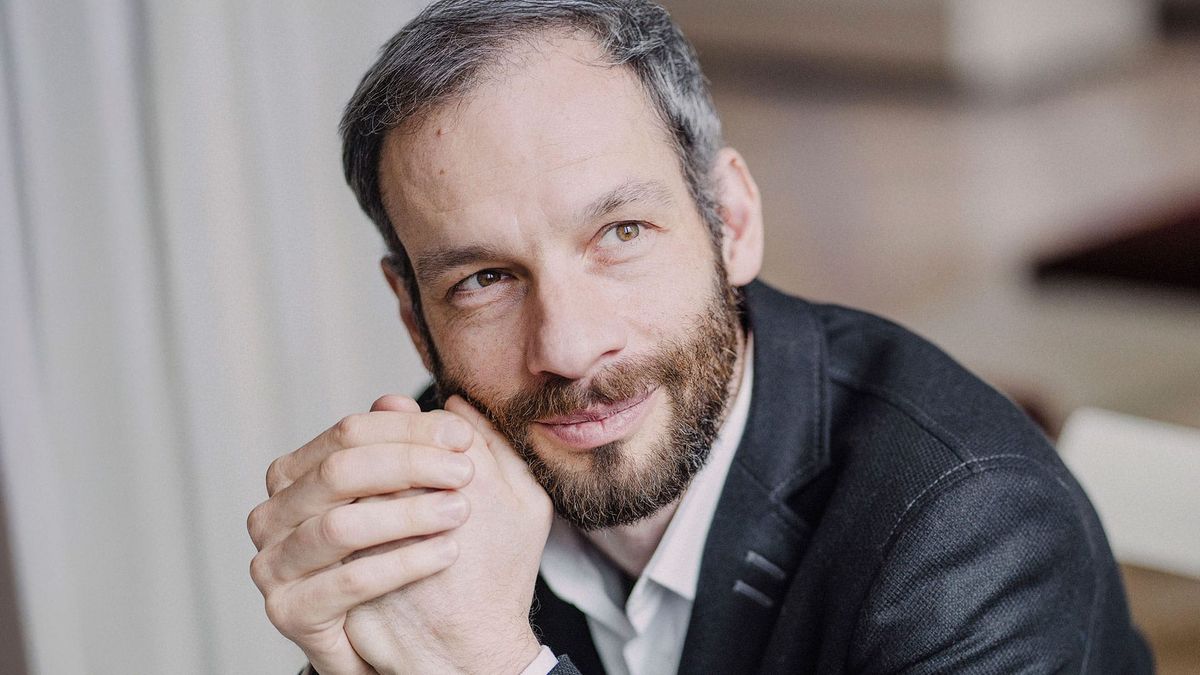
Yubeen Kim
Yubeen Kim joined the San Francisco Symphony as Principal Flute in January 2024 and holds the Caroline H. Hume Chair. He was previously principal flute of the Berlin Konzerthaus Orchestra and has frequently played as guest principal flute with the Berlin Philharmonic. He is also a professor of flute at the San Francisco Conservatory of Music, where he is passionate about teaching and mentoring the next generation of musicians. He made his San Francisco Symphony concerto debut in Bach’s Brandenburg Concerto No. 5 last November, and makes his solo debut with the full orchestra on this week’s program.
Kim won first prizes at the ARD International Music Competition and Prague Spring International Music Competition, as well as second prize at the Concours de Genève when no first prize was awarded. As a soloist, he has been invited to perform at numerous concerts and festivals, including the Prague Spring Festival, Nimus Festival, LA Philharmonic’s Green Umbrella New Music Series, Bemus Festival, Festival du Jura, Weiwuying International Music Festival, and Tongyeong International Music Festival. He has appeared as a soloist with the Bavarian Radio Symphony, Berlin Konzerthaus Orchestra, Bochumer Symphony, Turku Philharmonic, and Zagreb Philharmonic. He also performs regularly in Korea with the Seoul Philharmonic, KBS Symphony, Korean Chamber Orchestra, Korean National Symphony, Bucheon Philharmonic, Daejeon Philharmonic, Chungnam Philharmonic, Cheongju Philharmonic, and Ensemble of Tokyo.
Originally from South Korea, Kim started taking piano and violin lessons at age six before switching to the flute at nine years old. He studied at the Lyon Conservatory and Paris Conservatory, and graduated from the Hochschule für Musik Hanns Eisler in Berlin with a concert exam degree.
Three Questions with Yubeen Kim
How did you begin playing the flute?
YK: My dad is a musician, he plays double bass in a Korean orchestra, so I was always close to music. I started learning piano at six, learned violin for a while, and finally discovered flute because my mom was studying it as a hobby. Flute was almost like a toy, I really enjoyed playing it starting at nine years old.
What kind of flute do you play?
YK: I play a Brannen-Cooper flute, which is made in the USA. I have a French head-joint by Salvatore Faulisi.
Do you notice different playing styles between France and the United States?
YK: French playing emphasizes intimacy and elegance. In the States, we have slightly different taste, which can be more powerful, majestic, and confident.