In This Program
- Welcome
- Remembering Michael Tilson Thomas
- Music is Music: Debuting conductor Miguel Harth-Bedoya traces musical origins
- Tyler Taylor: Stoking Embers
- Emerging Black Composers Project
- News & Notes
- Community Connections
- Meet the SF Symphony Musicians
- Print Edition
 San Francisco Symphony
 San Francisco Symphony
 San Francisco Symphony
 San Francisco Symphony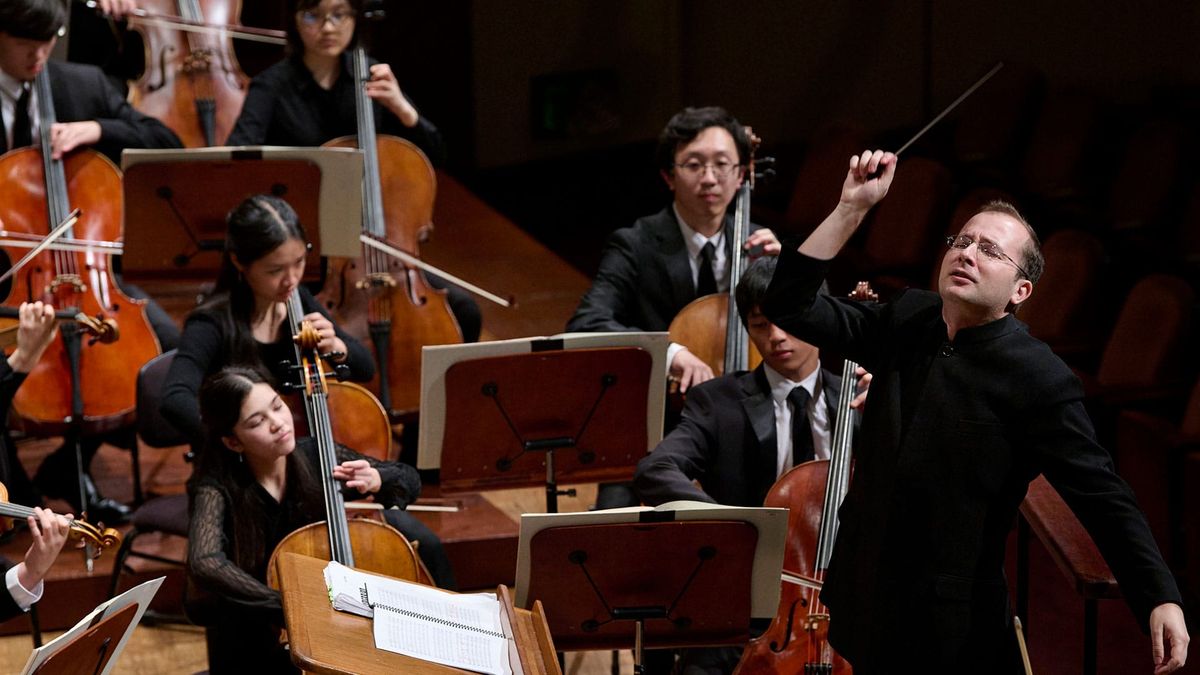
 San Francisco Symphony
 San Francisco Symphony
 San Francisco Symphony
 San Francisco Symphony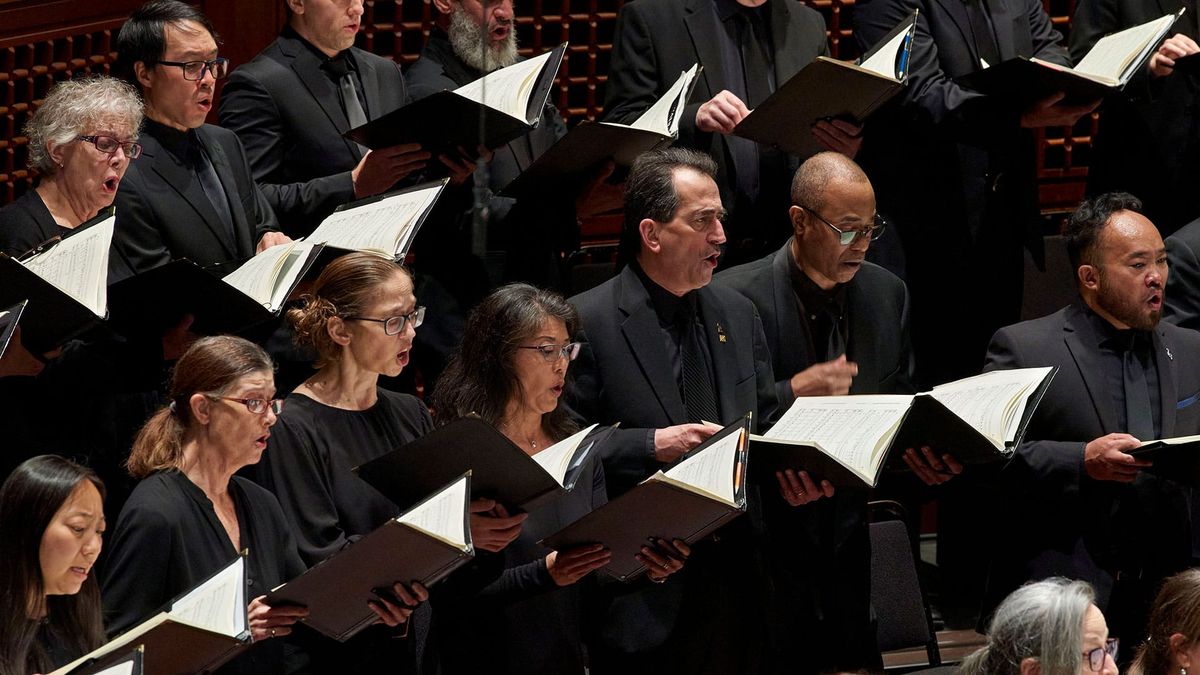
Welcome
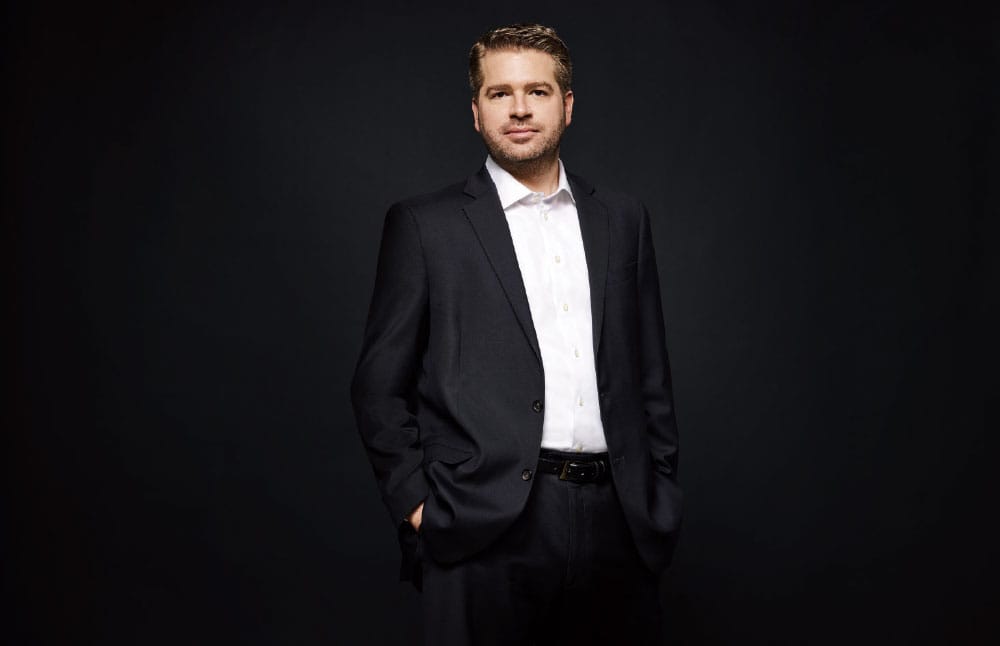
This month’s San Francisco Symphony concerts demonstrate the full range of our programming, from film performances to a world premiere and appearances by Symphony musicians as soloists. That breadth is further expanded by the SF Symphony Chorus and SF Symphony Youth Orchestra, whose concerts highlight different facets of our musical life.
For more than 50 years, the San Francisco Symphony Chorus has brought together volunteer and professional singers to perform major choral works with orchestra. Just as special are the Chorus’s own concerts, which spotlight more intimate repertoire you won’t hear them perform otherwise. This month’s program, conducted by Chorus Director Jenny Wong, highlights the depth and continued growth of their work together.
Led by Wattis Foundation Music Director Radu Paponiu, the San Francisco Symphony Youth Orchestra provides a vital tuition-free training ground for young musicians from across Northern California. Alongside its core activities, the SFSYO offers meaningful opportunities for these musicians to step forward as artists. Their concert this month features the Scherzo for Orchestra by SFSYO keyboardist and composer Dylan Hall, one example of the creativity and emerging talent within this ensemble.
Together, these ensembles form a vibrant and interconnected musical community. We invite you to experience the many dimensions of the San Francisco Symphony’s musical family this month.
Matthew Spivey
Chief Executive Officer, San Francisco Symphony
Remembering Michael Tilson Thomas
(1944–2026)
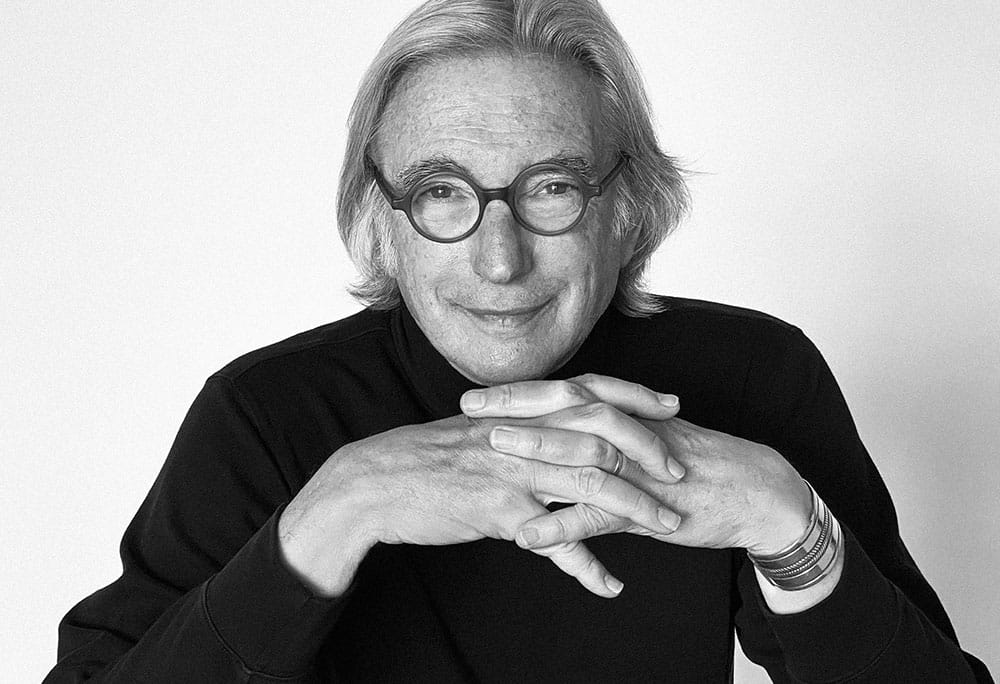
Even as one of music’s elder statesmen, Michael Tilson Thomas embodied youth: eager, seeking, demanding, rejoicing—destined, you would think, to go on with no end in sight. Which makes the loss more difficult to comprehend. MTT died on April 22. He was 81.
Michael Tilson Thomas first conducted the San Francisco Symphony in 1974, at age 29. Five years earlier he had come to national attention when, as assistant conductor of the Boston Symphony Orchestra, he stepped in for conductor William Steinberg at Carnegie Hall. That launched a career with few parallels in this country’s music history. Soon he was spotlighted in recordings with the Boston Symphony—including music of Ives and Walter Piston and Carl Ruggles, announcing what would be a lifelong commitment to American composers. On CBS-TV, he took over as host of the New York Philharmonic Young People’s Concerts from Leonard Bernstein, who in 1971 told The New York Times, “I don't fling the word genius around lightly, but I fling it around about Michael. He reminds me of me at that age …. [H]e's like me in his total embrace of music of any kind, in the voraciousness, the total promiscuity of it.” MTT committed himself as easily to Gershwin as to Beethoven. He accompanied master classes of Heifetz and Piatigorsky and revered Soul legend James Brown.
Dip into his resume and you find he was profiled on PBS’s American Masters, headed ensembles from the Buffalo Philharmonic to the London Symphony Orchestra, was awarded the National Medal of Arts, Kennedy Center Honors, membership in the American Academy of Arts and Letters. A devoted educator, he conceived and led the New World Symphony, which trains graduates of America’s top conservatories for orchestra careers. As the San Francisco Symphony’s longest-serving music director, from 1995 to 2020, he ensured the orchestra consolidated its reputation. His watch saw the launch of the Symphony’s own recording label and the release of many Grammy-winning discs, including an acclaimed Mahler symphony cycle. In Keeping Score, online and via video, he introduced Ives, Mahler, Beethoven, and others. He and the Orchestra toured the country and the world. But it was his concerts here that made all the difference. He led us into new places, even in familiar music, and before the downbeat he offered well-chosen words to help us find our place in what we were about to hear.
Under MTT, everything sounded newly sprung, yet he emphasized the conductor’s role mainly as catalyst. Conductor and musicians, he said, are somehow “able to find a common…human understanding, and together [we] are able to make something wonderful happen which can be shared by other people. That is the center of what it’s all about.” While battling the glioblastoma he knew would end his life, he continued against odds that would have silenced others, as though determined that music should have the last word.
Michael Tilson Thomas offered a model for what a musician’s life can be. He gave San Francisco the orchestra it was meant to have.
In recognition of Michael Tilson Thomas’s extraordinary impact on the San Francisco Symphony and the broader musical world, the Symphony’s Board of Governors has made a founding commitment to establish an endowed fund in his honor that will strengthen the future of the orchestra he shaped so profoundly.
To learn more about supporting the Michael Tilson Thomas Legacy Fund, please contact support@sfsymphony.org.
The San Francisco Symphony will dedicate the June 18, 20–21 performances of Beethoven’s Ninth Symphony to Michael Tilson Thomas. Plans for a special concert in celebration of his life and lasting impact will be shared at a later date.
Music Is Music
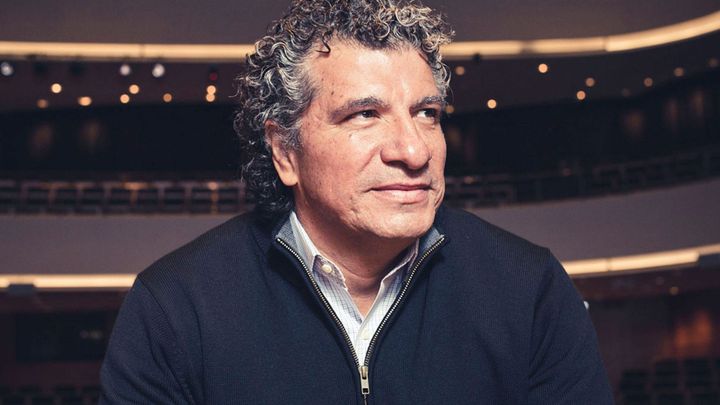
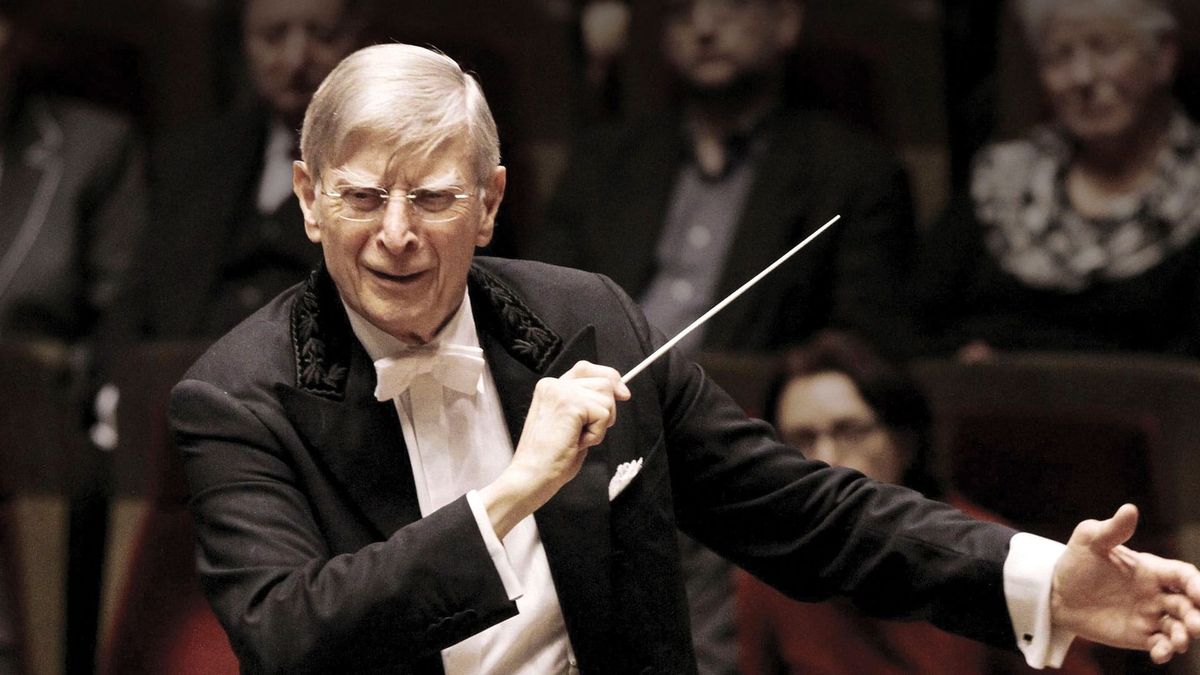
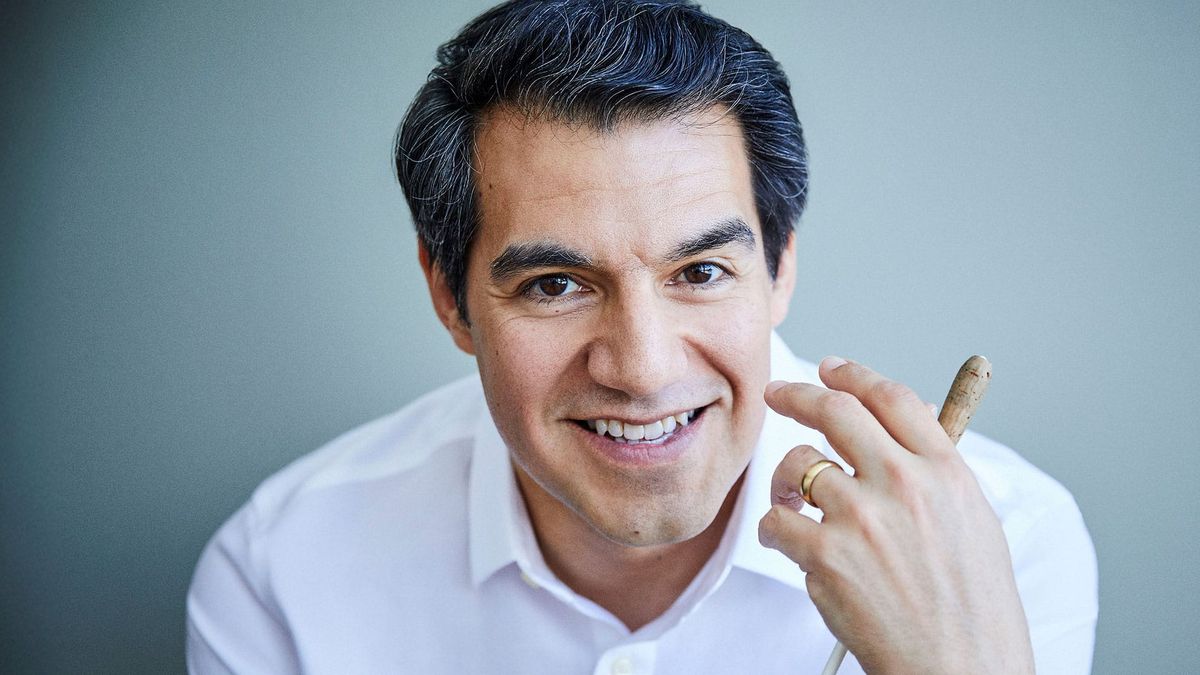
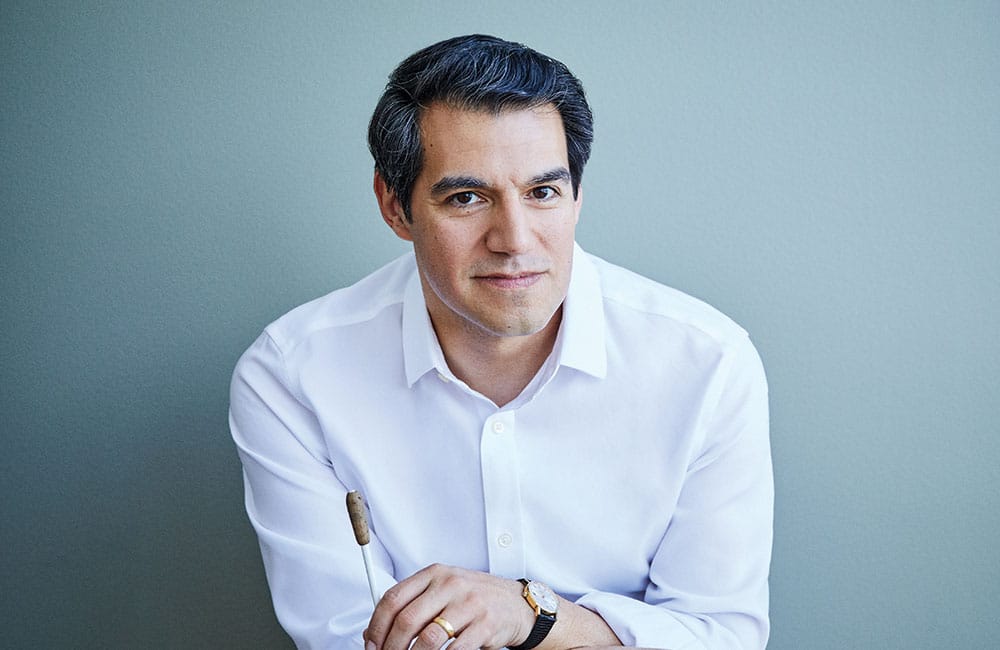
Debuting conductor Miguel Harth-Bedoya traces musical origins • by Steve Holt
Photo: Michal Novak
GROWING UP IN PERU, conductor Miguel Harth-Bedoya wasn’t steeped in the kind of music he conducts today.
“I got into Italian opera when working on a stage crew, and I danced in a folk company when I was 15 or 16. So that was the music I grew up with.” A moment of discovery came when he enrolled at the Curtis Institute of Music in Philadelphia. “I thought, ‘Oh my goodness, what is this music?’ I had never heard Brahms or Tchaikovsky symphonies back home. From this I learned that music is music. It doesn’t matter what you know, from what style or what period. If music touches you, then it’s music.”
Harth-Bedoya makes his San Francisco Symphony Orchestral Series debut this month with a dynamic concert highlighting the music of Spain and the Americas—a grand tour of a spectacular sonic landscape.
Does Harth-Bedoya consider himself a musical ambassador for Latin America?
“Oh, that’s too much of an honor! I would say I’m a messenger for that music, but I believe music comes from places in countries, not simply countries. Look at the Inca Empire. Before the Spaniards arrived, the empire encompassed what is now Peru, Bolivia, Ecuador, Colombia, Chile, and Argentina. What was one country is now six, but the places haven’t changed. The Andes are where the Andes are. The Amazon River is exactly where it’s always been. So I prefer to refer to music from the Americas as being from specific places on Earth connected to people, rather than necessarily countries.”
Harth-Bedoya is founder and artistic director of Caminos del Inka, a nonprofit dedicated to performing and preserving the musical heritage of South America. The project was inspired by Yo-Yo Ma’s Silkroad Project, created in 1998 to foster cross-cultural collaboration. The cellist encouraged Harth-Bedoya to create something like Silkroad for South American music. “It basically is the poetic idea of The Caminos del Inca, a system of trails and roads connecting all those parts of the Inca Empire,” Harth-Bedoya says. “It’s a metaphor for the music of this region. The mission is very simple: To research, preserve, publish, and promote the music of the Americas in whatever form, from any period. In fact, the earliest music that I’ve worked with in this project is from 2,000 BCE. Think of it, Peruvian music in the time of the ancient Egyptians!”
For his program with the San Francisco Symphony, Harth-Bedoya offers a newer work with Peruvian origins, Jimmy López’s Shift, heard in its United States premiere. A concerto for trombone commissioned by the San Francisco Symphony, Shift gives Principal Trombone Timothy Higgins a chance to show what he and his instrument can do. “It just pushes the trombone’s abilities to deal with things it hasn’t done before,” says Harth-Bedoya. The title refers to the Doppler effect, the apparent change in a sound as its source moves. Shift’s movements have names like Sound, Water, and Light. “I’m always very, very attentive if a composer uses a word, either in the title or in actual indications in the score, such as ‘with expression,’ or ‘with passion’ and the like. I’ve never conducted this piece; for now, all I have are these keywords, and an instrument that can be as powerful as an entire orchestra. Still, I can tell from the score, it’s a very engaging piece.”
While the other pieces on Harth-Bedoya’s program have elements of dance, it wasn’t originally planned that way.
“We were looking first at what the orchestra hasn’t played in a while, like Turina’s Danzas fantásticas. Then we began thinking of how to unite what we call ‘Iberia America,’ Spain and the Americas. That led us to Ginastera (from Argentina). And Ravel is a must. He was a French citizen, but of Basque descent. So it created this big pot, a fusion of dances and rhythms.”
Danzas fantásticas is a 20th-century piece with deep roots in Spain’s past. “In the 19th century, the most famous ‘Spanish’ orchestral music was composed by French or Russian composers, but not by Spanish composers. In this work, Turina very much looks back to the earlier, and definitely Spanish, romantic musical tradition.”
The danzas in the piece are all classic Spanish dances: a jota from Aragon, a Basque zortziko, an Andalusian farruca. They’re each introduced by a quotation from the novel La orgía by José Más, a contemporary of Turina, describing metaphorically the meaning of the dance. Harth-Bedoya offers a translation for the first one: “‘It appears as if the figures in that incomparable painting were moving inside the chalice of a flower.’” He marvels: “I mean, just what do you do with that!”
In addition to conducting orchestras and operas in leading venues all over the world, Harth-Bedoya makes time for teaching. He’s resident director of orchestras and professor of conducting at the Shepherd School of Music at Rice University. And he established the Conducting Institute, created to teach the fundamentals of conducting to students from high school and up, through workshops, courses, and seminars.
Citing mentors such as Otto-Werner Mueller at Curtis, and later Kurt Masur and Esa-Pekka Salonen, Harth-Bedoya says, “I’ve been so blessed, and I’m so grateful to so many individuals who have helped me become who I am.” He stresses that in teaching, he’s the one who benefits the most. “I don’t call it teaching, I call it sharing. I share what I have done and what I know, but I also share what I don’t know, because I’ll start learning it in order to advance. This teaching-sharing has always been in my mind as a way to give back to the people who have helped me, but then I give it to the ones coming after me. I just love it. It’s very inspiring to be able to benefit younger musicians, and also learn from them.”
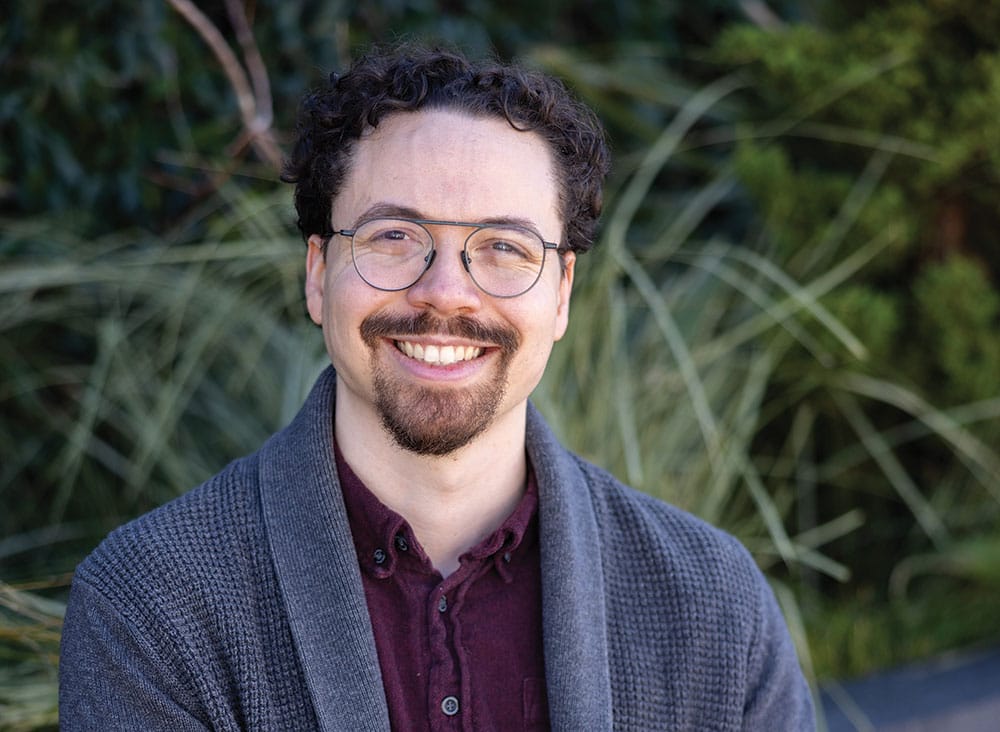
Tyler Taylor: Stoking Embers
by Allegra Chapman
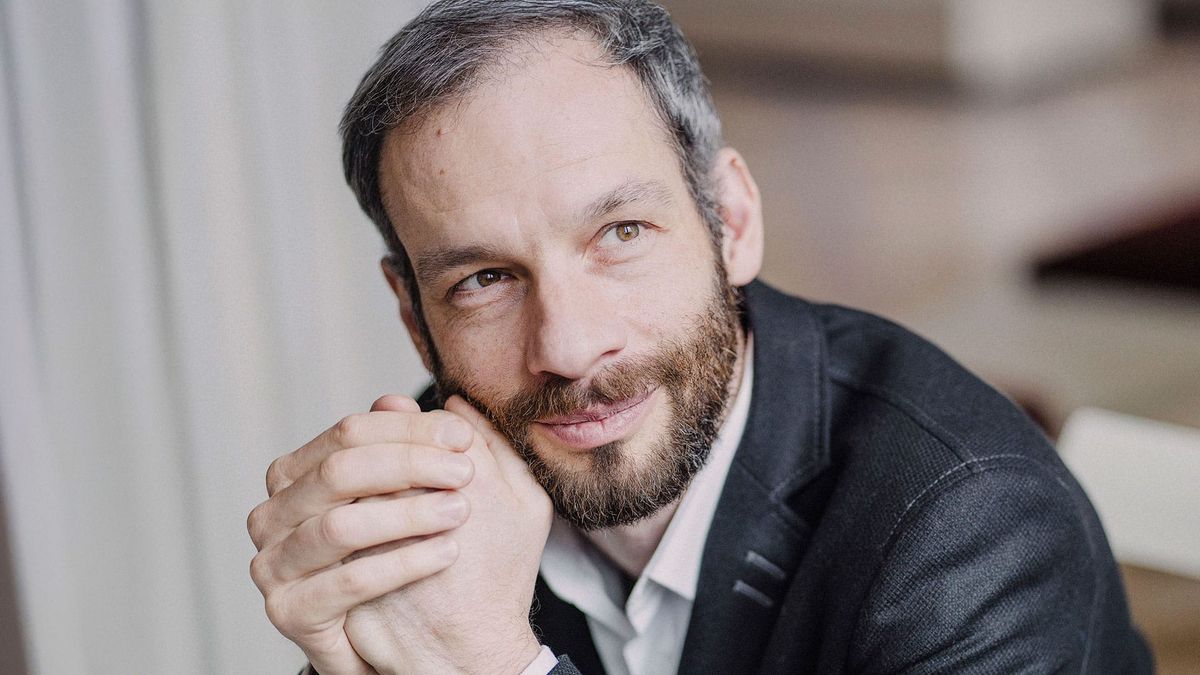
Photo: Matthew Wasburn
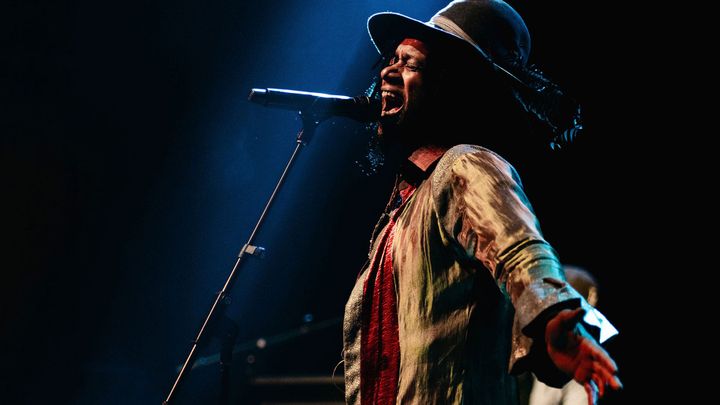
TYLER TAYLOR, winner of the 2024 Michael Morgan Prize from the Emerging Black Composers Project, first experienced making music through the bell of a horn. His perspective as a horn player encouraged curiosity, reflection, and a love of big orchestration, naturally feeding and shaping his compositional voice.
“You get to look out over the orchestra and take in everything,” he said in a recent interview. “You see the string section, you can even see their music. You can see the woodwinds, you see their music. Sometimes there are large expanses of time where you’re resting and just taking in the sounds of the orchestra.” During these periods, he would reflect not only on the sound of the music, but also on its structure.
Taylor started playing the horn at 12 years old in middle school band. He and his family originally chose the instrument as a way to access higher education. His family did not have a musical background, but his mother, raising two sons on her own with limited financial means, realized that scholarships were available to students who played less popular instruments. His older brother took up the trombone and he decided to learn the horn, quickly falling in love with the instrument and band music.
Before very long, Taylor started to wonder about how music was put together. When no one around him could provide satisfactory answers, he embarked on a self-guided journey. He discovered notation software and, unaware of the rich tradition preceding him, decided to input all of Mozart’s horn concertos so that he could listen to the computer’s MIDI playback and study the scores. (As he later learned, many composers over the centuries, from J.S. Bach to John Adams, have learned to write music by similarly transcribing pre-existing works.)
Taylor brought snippets of musical ideas to his band director who was not equipped to teach him composition, but gave him feedback on his notation. In his senior year of high school, the director suggested that Taylor write a piece for the band. That became his first publicly performed composition, Greenlight. Nowadays, Taylor works with the Louisville Young Composers Orchestra and the Cleveland Youth Orchestra to support the next generation of public school students who may have a similar curiosity around composition, but no other avenue for exploration.
Taylor knew that he wanted to study both composition and horn performance in college, which took him first to the University of Louisville, where he earned his bachelor’s degree, then to the master of music program at the Eastman School of Music, designed to support composers with parallel instrumental studies. For his doctorate, he attended Indiana University, where he majored in composition while minoring in horn and music theory. Playing the big Romantic orchestral composers and large-scale contemporary works in school orchestra fostered his ear for orchestration.
“Sitting in the core of the orchestra, you experience the way the composers have used the horn as a foundation of harmony.” He feels a kinship with Gustav Mahler and Richard Strauss (himself the son of a horn player). “As a horn player, I have a deep admiration for composers like Mahler and Strauss, and I think you can see that in my scores. Not stylistically, but in my approach to orchestration and my desire for large orchestras.”
The influence of Taylor’s horn playing on the development of his compositional voice perhaps goes deeper than instrumentation and orchestration. His many hours of reflection and perspective taking in the horn section mirror his approach to the world around him outside the orchestra. He views his early works as having a “youthful, kind of lighthearted and playful” quality, but says that as he began to reflect more critically on the world and his place in it, a shift in tone resulted. He laughed as he said, “I don’t want it to sound pessimistic, but when you’re in early adulthood and starting to look around, some of the things you learn are not the most pleasant.” So he began to explore how he might use symphonic forces as a way to navigate and understand a sometimes difficult world.
Taylor says that winning the Michael Morgan Prize has been life changing. And the prize is not the only recent recognition of his work from a major orchestra. In 2025, he was named the new Daniel R. Lewis Composer Fellow with the Cleveland Orchestra, a three-year position. He describes this career moment as “two pretty big escalations I’m extremely grateful for.”
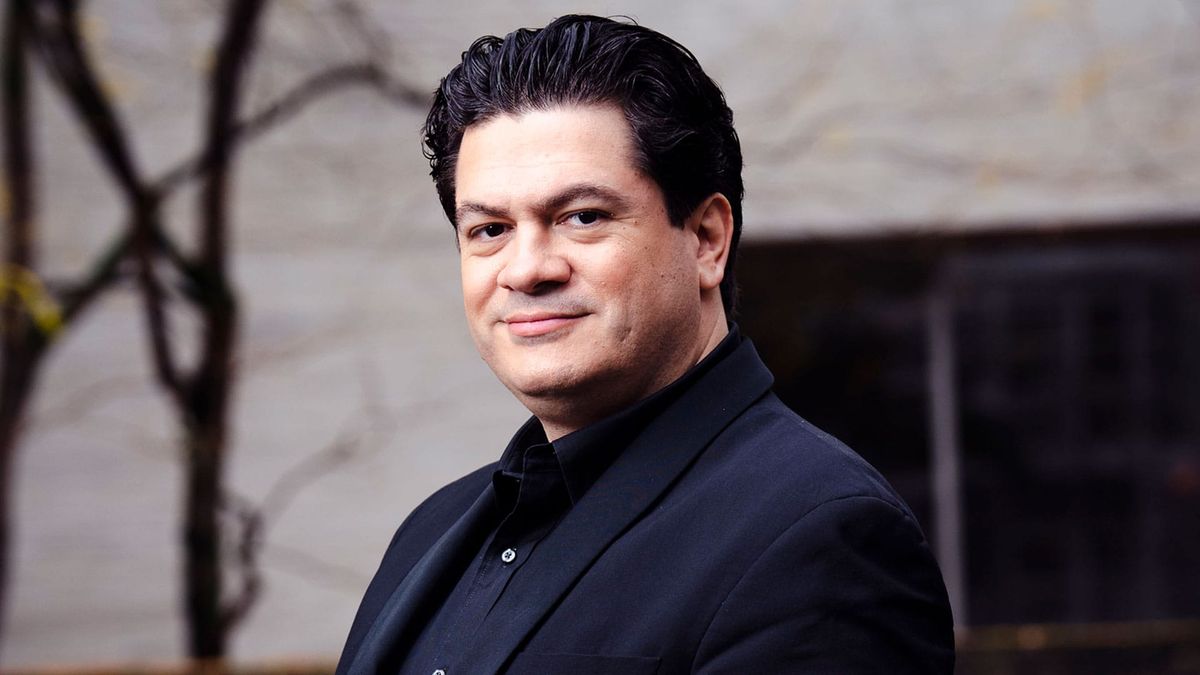
Taylor says his work creates “abstract musical analogies for social-political happenings, both present and past.” As in Embers, his SF Symphony commission premiering May 22–24 with conductor Cristian Măcelaru, these musical analogies often take the form of “scenarios” that play out like experiments.
When Taylor visited San Francisco for the first time in February 2025 and again in December 2025 for a reading of his earliest drafts with the orchestra at the San Francisco Conservatory of Music, he had five minutes of music written and could only answer SFCM orchestra director Edwin Outwater’s question “what happens next?” with “figuring that out!”
During both visits, he described “an overwhelming sense of joy” and walked for miles from Civic Center across the Golden Gate Bridge. Contrasting emotions around national events of the past year have inevitably worked their way into the music as the piece evolved. He struggled to incorporate an optimistic trumpet solo that presented itself to him as a thematic idea, but ultimately realized that it had a place in the piece too. “I read the headlines … and it feels sometimes difficult to have optimism. However, I did think it was important for the piece not to be just doom and gloom the entire time. To offer that optimism is an option.” When the trumpet solo returns at the piece’s climax, it has been transformed by a darker sound world so that it is no longer as bright and radiant, but still powerful—like an ember.
Emerging Black Composers Project
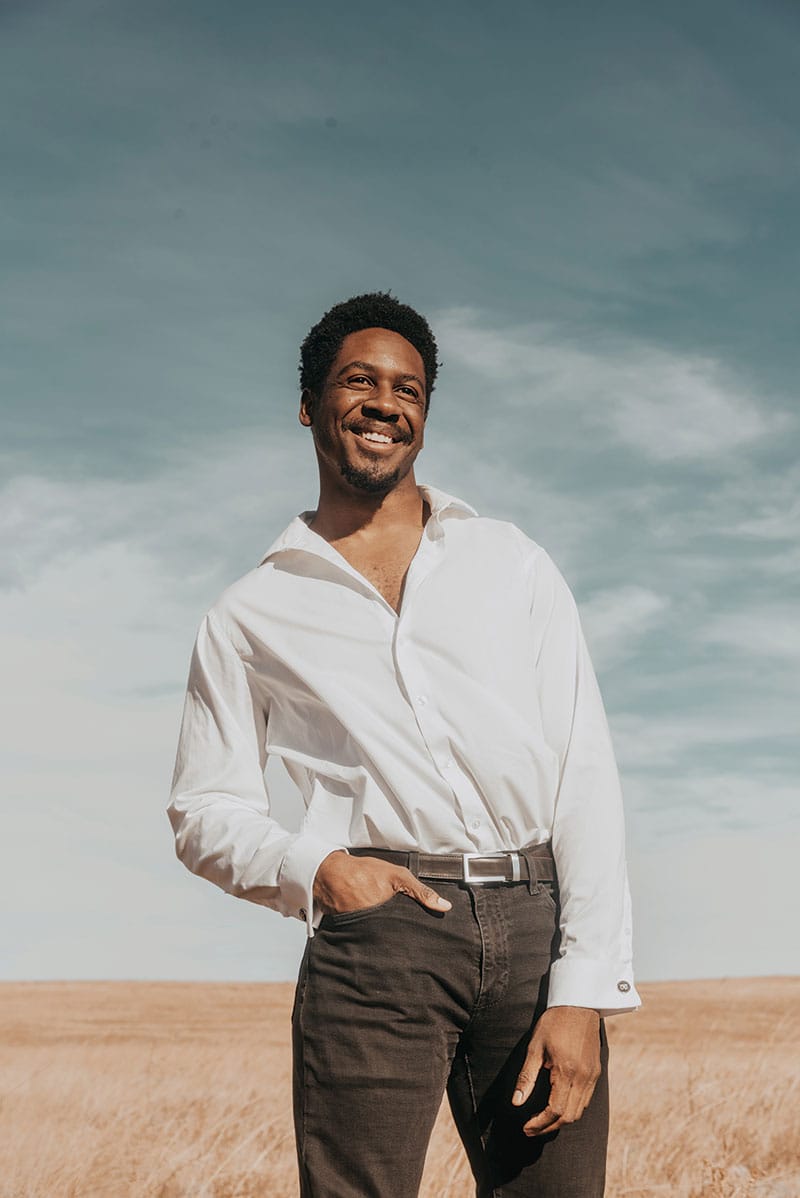
The Emerging Black Composers Project (EBCP) was created to spotlight early-career Black American composers and their music. Launched by the San Francisco Symphony and San Francisco Conservatory of Music in 2020, the inaugural first-place commission was given in June 2021 to Trevor Weston. Subsequent winners include Jens Ibsen, Xavier Muzik, and Tyler Taylor. In October 2025, Kyle Rivera was named the fifth winner of the Emerging Black Composers Project’s Michael Morgan Prize, named in honor of Michael Morgan, longtime Oakland Symphony music director and co-founder of EBCP before he died in 2021.
The recipient of the Michael Morgan Prize receives a $15,000 award as well as a commission for a new work to be premiered by the San Francisco Symphony. The winner also receives mentorship from SFCM Music Director Edwin Outwater and Daniel Bartholomew-Poyser, Resident Conductor of Engagement and Education at the SF Symphony and chair of the EBCP selection committee.
All applications are judged through an anonymous process by a committee of leaders in the field that include Kedrick Armstrong, Valérie Sainte-Agathe, Nico Muhly, Shawn Okpebholo, first-year winner Trevor Weston, Edwin Outwater, and Daniel Bartholomew-Poyser, among others.
The Emerging Black Composers Project is underwritten by Michèle and Laurence Corash.
News & Notes
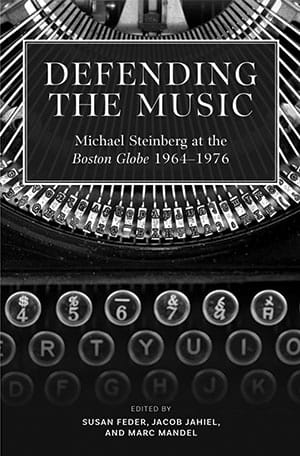
Out Now: Defending the Music: Michael Steinberg at the Boston Globe, 1964–1976
Michael Steinberg remains a periodic presence in the San Francisco Symphony’s program book through notes he wrote as program annotator from 1979 to 1999 and as a contributing writer until his death in 2009.
For a dozen years, from 1964 to 1976, Steinberg was the classical music critic of the Boston Globe, writing reviews that were erudite, educational, unfailingly readable, and unflinchingly outspoken.
A new Oxford University Press volume, Defending the Music: Michael Steinberg at the Boston Globe, 1964–1976, brings together, for the first time, some 300 selections from the more than 2,000 reviews, essays, and features created during his Globe tenure. Written with a combination of wit, elegance, and passion, these selections bear witness to some of the most important music and musicmaking of the time.
Conceived by Steinberg’s widow, Jorja Fleezanis—former SF Symphony Associate Concertmaster—Defending the Music was seen to completion after her death by Marc Mandel, Susan Feder, and Jacob Jahiel. The book will appeal to a wide range of concertgoers, music aficionados, record collectors, teachers, and students, and serves as a companion volume to the four existing compilations of Steinberg’s writings published by Oxford University Press.
Community Connections
Bindlestiff Studio
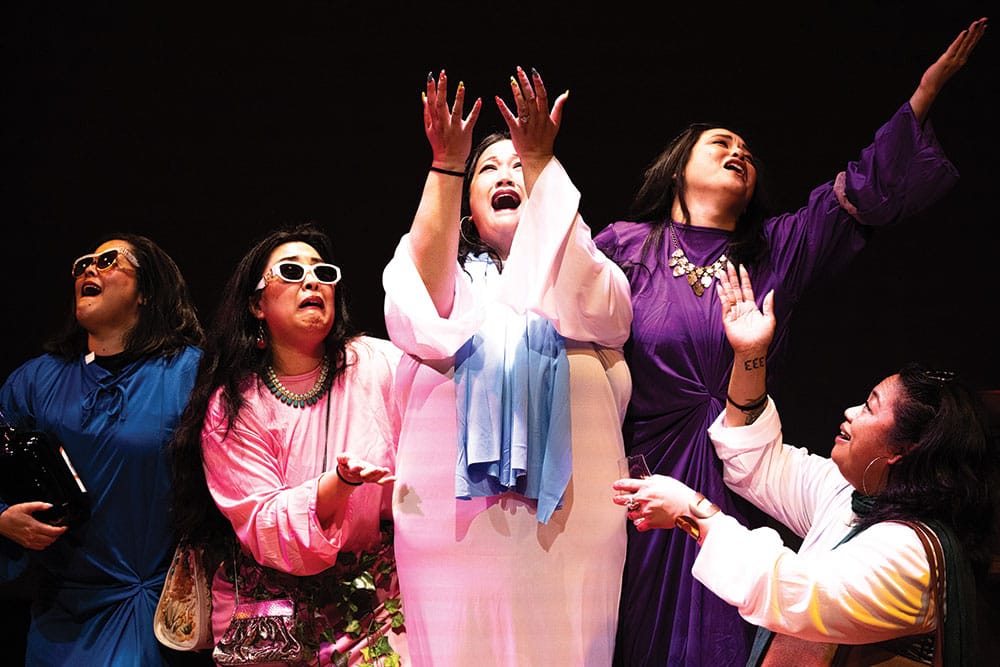
Since 1989, Bindlestiff Studio has provided San Francisco’s South of Market area a vital performance arts space. As the only professionally run black box theater in the nation dedicated to showcasing the performing arts of the Philippine diaspora, Bindlestiff welcomes everyone to explore unique narratives that help shape the Bay Area’s rich cultural landscape.
With diverse offerings in theater, music, film, and dance, as well as workshops in writing, acting, directing, and stand-up comedy, Bindlestiff cultivates a wide range of artists rooted in bold artistic expression and community engagement. The studio strives to be a creative space where audience members can blossom from watching in their seats to performing on stage.
Premiering this year are Indios Bravos, three one-act plays from emerging local playwright, Jordan Guingao; Stories High 26, Bindlestiff’s long-running page-to-stage workshop series; and the return of Tagalog Fest, featuring award-winning plays written and performed in Tagalog. Learn more at bindlestiffstudio.org.
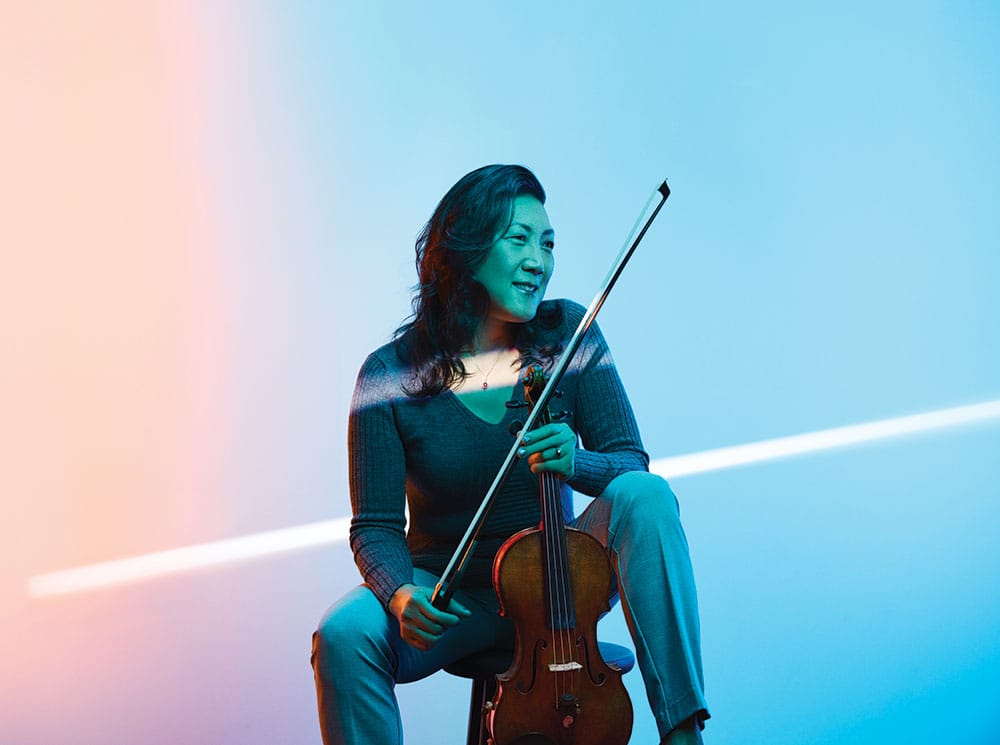
Meet the Musicians
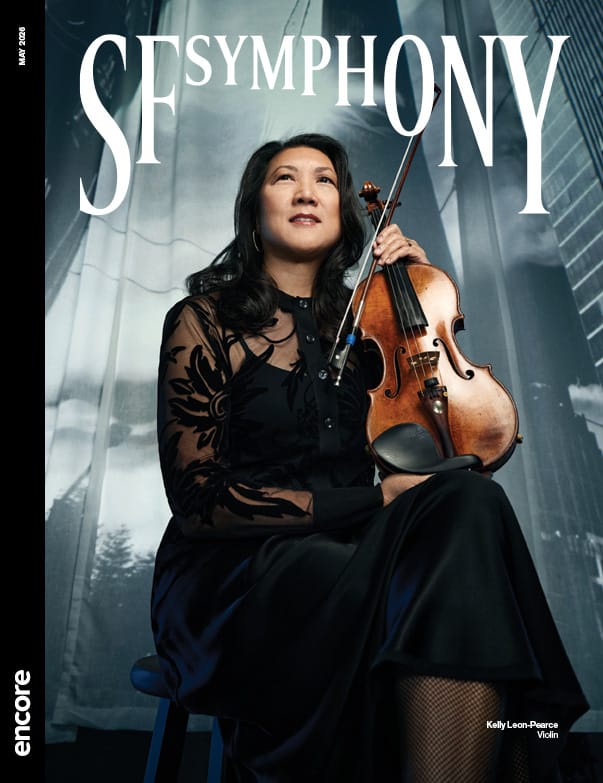
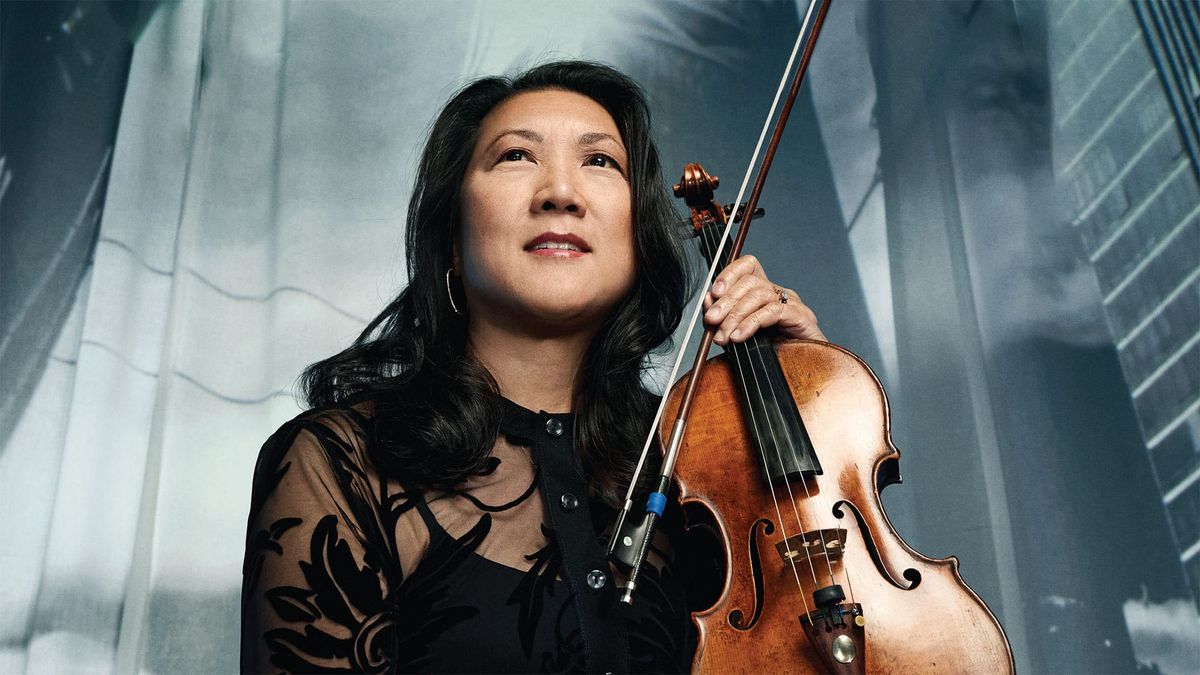
Kelly Leon-Pearce • Second Violin
Photo: Cody Pickens
Kelly Leon-Pearce joined the San Francisco Symphony in 1990.
What was a really memorable performance from your career so far?
Performing Stravinsky’s The Rite of Spring with Joffrey Ballet in 1991. I had performed it many times before, but to be able to watch the ballet performed too? That was incredible!
How did you begin playing violin?
My mother, who always wanted a white baby-grand piano in her living room, started my older siblings at a music school after they started plinking out tunes from Romper Room. She noticed small children with tiny violins and thought she would let Suzanne, my sister (who is now also in the Symphony), start as well. I was always told not to touch her violin, but as any parent can guess. . . I couldn’t keep myself away!
It sounds like you come from a very musical extended family.
I do! At one time, my sister, her husband, his sister, and her husband were all violinists in the Symphony! My other sister and sister-in-law are both amazing pianists married to world-class pianists too. And no, we don’t actually gather around and jam after dinner.
And what about teachers? Who did you learn the most from?
Jean Rupert was the teacher who started me, and she took me through about 12. Those were really formative years and were very important. Then I also studied with Dorothy DeLay at Juilliard.
Can you tell us about your violin?
My violin was made by Jean-Baptiste Vuillaume, a French luthier. My sister also plays a Vuillaume, she got hers about a year
before I got mine. I asked my friend and violin dealer to show me some instruments, and this was the first one I saw. At least two colleagues said, “if you don’t buy it, I will,” so I had to get it before somebody else snatched it up. It has an amazing tone. It carries, and it’s rich, and it’s thick, and it’s ahhhhhhh. . . (sighs)
What about your bow?
My favorite two bows are by Émile Ouchard and François Voirin. Voirin used to work in Vuillaume’s shop, so I like to think it used to be played together with my violin back in the 1800s.
How does the conductor affect how the orchestra plays?
I’d liken the conductor to the director of a play. You can see a play directed by many different people and it won’t be the same. Take Beethoven Fifth, it’s been around for 200 years, but every conductor does it differently. You may want to be as authentic as possible to Beethoven, but did he want it to be heroic, or was he just angry? Is it sad and morose, or is it just contemplative, thoughtful, or peaceful?
How do you spend time outside of work?
Now that my husband has retired from his dental practice, I no longer have to do his bookkeeping. It’s freed up quite a bit of time to hike, kayak, bake, and knit (mostly baby sweaters for orchestra babies and other friends’ babies too). I’ve also taken up indoor rock climbing and pottery making on a wheel.
What do you love about the orchestra?
I love being part of this fabulous musical family! It’s just such an amazing experience to be in the midst of all this luscious sound and to share its beauty with our audiences!
Print Edition