In This Program
The Concert
Friday, May 29, 2026, at 7:30pm
Saturday, May 30, 2026, at 7:30pm
Inside Music Talk with James M. Keller
On stage Friday and Saturday at 6:30pm
Miguel Harth-Bedoya conducting
Alberto Ginastera
Estancia Suite, Opus 8a (1941)
The Land Workers (Los trabajadores agrícolas)
Wheat Dance (Danza del trigo)
The Cattlemen (Los peones de hacienda)
Malambo: Final Dance (Danza final)
Jimmy López
Shift (2024)
Sound
Water
Light
Sonoluminescence
San Francisco Symphony Commission and US Premiere
Timothy Higgins trombone
Intermission
Joaquín Turina
Danzas Fantásticas, Opus 22 (1919)
Exaltación (Ecstasy)
Ensueño (Daydream)
Orgía (Orgy)
Maurice Ravel
Rapsodie espagnole (1908)
Prélude à la nuit: Très modéré
Malagueña: Assez vif
Habanera: Assez lent et d’un rythme las
Feria: Assez animé
These concerts, a part of The Barbro and Bernard Osher Masterworks Series, are made possible by a generous gift from Barbro and Bernard Osher.
Inside Music Talks are supported in memory of Horacio Rodriguez.
Program Notes
At a Glance
The second half turns to Europe. Joaquín Turina’s Danzas Fantásticas was inspired by the novel La orgía by José Más. Each of the three movements relates to a quote from the book. Finally, Maurice Ravel’s Rapsodie espagnole boasts castanets and tambourine, shadowy low winds, muted brass, and blazing instrumental colors—perhaps a tribute to his Spanish mother.
Estancia Suite, Opus 8a
Alberto Ginastera
Born: April 11, 1916, in Buenos Aires
Died: June 25, 1983, in Geneva
Work Composed: 1941
SF Symphony Performances: First—July 2005. JoAnn Falletta conducted. Most recent—September 2021. Esa-Pekka Salonen conducted in a choreographed performance with Alonzo King
Lines Ballet.
Instrumentation: 2 flutes (doubling piccolos), 2 oboes, 2 clarinets, 2 bassoons, 4 horns, 2 trumpets, timpani, percussion (triangle, cymbals, tam-tam, tambourine, military drum, tenor drum, bass drum, castanets, and xylophone), piano, and strings
Duration: About 14 minutes
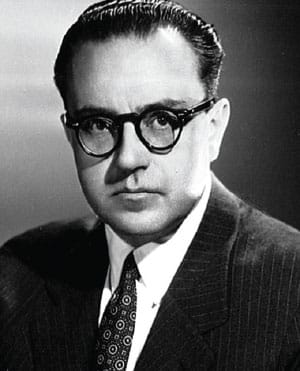
Born into a family of Catalan and Italian roots, Alberto Ginastera was entirely schooled in his native Argentina, principally at the National Conservatory of Music in Buenos Aires. By the time he was 18 he was awarded first prize in a composition contest, and in quick succession he produced numerous pieces employing native Argentine rhythms or folk melodies. He later destroyed or withdrew many of these early works, denouncing them as immature examples of his art. Nonetheless, some have found at least borderline places in the repertoire, including his Danzas Argentinas (for piano, 1937), his ballet Estancia, and his chamber composition Impresiones de la Puna (1934).
His later works moved toward an abstracted modernism, even exploring serial composition and polytonality. Nonetheless, he remained concerned about the gap that separated audiences from classical composition during his lifetime, and proclaimed that the proper aspiration of a composer was “to be integrated into society, not stand apart from it.” Outwardly, Ginastera was reserved, polite, and formal. In the late 1960s, just when his opera Bomarzo was leaving audiences aghast from its alleged lewdness, his fellow composer and longtime friend Aaron Copland commented on “the tremendous contrast between the outward personality and the inner man.” “He is never off the cuff,” Copland continued, “but speaks always with due consideration for feelings and decorum. He’s the last man in the world you’d expect to shock people with a sensational opera. A lot goes on inside we don’t know about, obviously.”
Estancia resulted from a 1941 commission from American Ballet Caravan. The group’s director, Lincoln Kirstein, envisioned an evening of three one-act ballets by three Latin American composers—Ginastera, Francisco Mignone of Brazil, and Domingo Santa Cruz of Chile—with George Balanchine choreographing all three pieces. The troupe disbanded in 1941, before the project could be realized, but Ginastera had finished his score and was able to get some instant mileage out of it by extracting four sections to stand as his Estancia Suite, a huge hit at its premiere, which took place on May 12, 1943, with Juan Emilio Martini conducting the Orquesta del Teatro Colón in Buenos Aires. The ballet would not be staged until 1952—also in Buenos Aires, with choreography by Michel Borowski instead of Balanchine.
When Ginastera composed Estancia, he was going through his phase of “objective nationalism” (as he termed it), transposing elements of folk music directly into a classical format. The ballet’s scenario was perfectly suited to this approach. Its plot is minimal—city boy falls in love with country girl, who grows to like him only when he develops the skills of a ranch-hand—but its five scenes add up to a celebration of rural life in Argentina. The complete ballet (though not the Suite) even includes sung and recited passages from El Gaucho Martín Fierro, José Hernández’s epic poem from the 1870s about the lives of the gauchos on the Pampas, a text that is deeply ingrained in the psyche of all Argentines.
Shift, Concerto for Trombone and Orchestra
Jimmy López
Born: October 21, 1978, in Lima, Peru
Work Composed: 2024
SF Symphony Commission and US Premiere
Instrumentation: solo trombone, 2 flutes, 2 oboes, 2 clarinets, 2 bassoons, 4 horns, 2 trumpets, timpani, percussion (triangle, crash cymbals, suspended cymbal, tam-tam, snare drum, bass drum, wood blocks, guiro, cabasa, vibraslap, whip, glockenspiel and vibraphone), harp, and strings
Duration: About 25 minutes
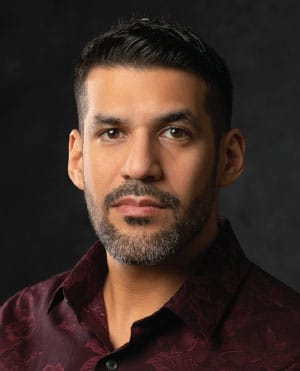
Born and raised in Lima, Jimmy López didn’t pay much attention to his country’s traditional musical culture until he left for graduate study in Finland. “There,” he says, “I realized that in order to develop a distinct voice I could not continue ignoring my geographical origins.” Doctoral study at UC Berkeley helped cement his musical outlook, in which vibrant South American sounds are fused with the techniques of the European and American avant garde—an amalgam he describes as “an invented folklore of sorts.” “Europe has strong traditions,” he said, “and it is hard for Europeans to let go of them sometimes. California, in turn, is fertile ground for innovation in many areas.”
His opera Bel Canto, with a libretto by playwright Nilo Cruz based on the popular novel by Ann Patchett, was premiered by Lyric Opera of Chicago in 2015. In 2018, his oratorio Dreamers (also to a Nilo Cruz libretto), about the plight of young undocumented immigrants, gained national attention (Cal Performances and Stanford Live were members of the consortium that commissioned it). He is widely represented by his instrumental compositions, particularly his symphonic works, which are regularly programmed by orchestras in the Americas and Europe—five symphonies so far (with a sixth scheduled to be premiered next season), as well as concertos featuring tenor saxophone, koto, piano, flute, cello, and violin (plus a concerto grosso spotlighting violin and cello), in addition to the trombone concerto Shift played here (which was premiered in June 2024 with Tarmo Peltokoski leading the Rotterdam Philharmonic and soloist Jörgen van Rijen). López served as composer-curator for the Chicago Symphony in the 2024–25 season, and this season and next he is composer-in-residence for the San Diego Symphony and Orchestre Symphonique de Montréal.
López describes Shift as a vehicle focusing on the trombone’s “kaleidoscopic range of expressive properties.” He continues, describing it as
a musical exploration of the behavior of waves as observed through the Doppler effect (or Doppler shift—hence the title) in three different mediums: sound, water, and light, each giving its name to the first three movements, with a fourth and final movement bringing all these elements together within the frame of a phenomenon called sonoluminescence.... The trombone’s unique design, extensive range, wide dynamic and expressive possibilities, and its ability to bend sound through the use of glissandi, are unparalleled among wind instruments, making it the ideal instrument to evoke … the Doppler effect.
We have all witnessed the Doppler effect in a passing police siren whose pitch rises as it approaches and descends as it departs. This is just the starting point of López’s concerto, which is also inspired by how the Doppler effect behaves not only in sound but also in water and through light waves. Less familiar is sonoluminescence, which “occurs when a sound wave impacts a gaseous bubble enclosed within a liquid, making the bubble collapse quickly, and emit a flash of light when it bursts”—suggested by the snapping gesture that opens the finale.
Danzas Fantásticas, Opus 22
Joaquín Turina
Born: December 8, 1882, in Seville
Died: January 14, 1949, in Madrid
Work Composed: 1919
SF Symphony Performances: First—March 1958. Enrique Jordá conducted. Most recent—August 2002. Keith Lockhart conducted.
Instrumentation: 3 flutes (3rd doubling piccolo), 2 oboes, English horn, 2 clarinets, bass clarinet, 2 bassoons, contrabassoon, 4 horns, 3 trumpets, 3 trombones, tuba, timpani, percussion (triangle, cymbals, bells, drum, and bass drum), harp, and strings
Duration: About 15 minutes
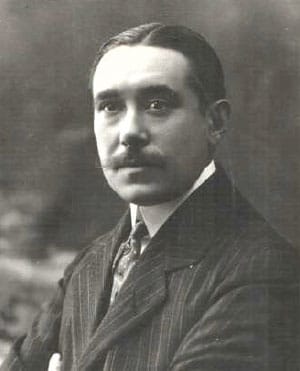
There were limitations for composers developing in Spain at the end of the 19th century, so like many Spanish composers of his generation, Joaquín Turina headed for Paris. Arriving there in 1905, he caught up with his old friend Manuel de Falla, found a new champion in Isaac Albéniz, studied composition with Vincent d’Indy at the Schola Cantorum, and pursued private piano study with the virtuoso Moritz Moszkowski. Albéniz and Falla both encouraged him to seek inspiration in the folk music of their native Spain, and when he returned home at the outbreak of war in 1914, he did indeed proceed mostly along nationalistic lines. Turina’s catalogue, which runs to slightly more than 100 opus numbers, is especially rich in genre pieces and portrait movements for piano, and even his statements in “major” genres tend to be tempered through pictorial or programmatic overtones.
His three Danzas Fantásticas are entirely characteristic in this regard. Their inspiration derived from his reading of the novel La orgía by his countryman José Más. But even at that, Turina insisted that the inspiration was general rather than literal. “The author has desired to translate the sensation of human movement into the composition’s spiritual and expressive content,” he explained, vaguely. The piece exists in parallel versions for solo piano and for orchestra; the symphonic setting was premiered on February 13, 1920, with Bartolomé Pérez y Casas conducting the Orquesta Filarmónica de Madrid in that city’s Teatro Price.
The score to each of the dances is headed by an epigraph drawn from Más’s novel:
I. Exaltación: It appeared as if the figures in that incomparable painting moved within the calyx of a flower.
II. Ensueño: The strings of the guitar, upon sounding, were like laments of a soul that could not bear more than the weight of bitterness.
III. Orgía: The perfume of the flowers was mixed with the odor of the manzanilla, and happiness rose from the depth of the slender cups, filled with incomparable wine, like incense.
Following a brief, slow, richly harmonized introduction, the first movement breaks into a lively Spanish dance, quiet at first but working up considerable steam. “It recalls, from very considerable distance, the jota aragonesa,” wrote Turina on his manuscript score. The delicate second movement offers relaxed contrast, but it is elegantly energized through the alternation of sections in 5/8 and 6/8 meter. These contrasts go to the heart of the piece, as Turina clarified in his manuscript notation: “It mixes rhythms and melodic material from the Basque country and from Andalucía, which complement each other exotically.” The set concludes with Orgía, the title of which is an overt nod to the novel by Más. “This is an Andalusian farruca,” wrote Turina, “with flamenco ornaments and filigree, falsetas [interludes] of the guitar, hesitating in Gypsy style and the jipíos [instrumental introductions] of cante jondo [flamenco vocal style].”
Rapsodie espagnole
Maurice Ravel
Born: March 7, 1875, in Ciboure, France
Died: December 28, 1937, in Paris
Work Composed: 1907–08
SF Symphony Performances: First—October 1923. Alfred Hertz conducted. Most recent—January 2013. Charles Dutoit conducted.
Instrumentation: 2 flutes, 2 piccolos, 2 oboes, English horn, 2 clarinets, bass clarinet, 3 bassoons, contrabassoon, 4 horns, 3 trumpets, 3 trombones, tuba, timpani, percussion (triangle, cymbals, tam-tam, tambourine, snare drum, bass drum, castanets, and xylophone), 2 harps, celesta, and strings
Duration: About 15 minutes
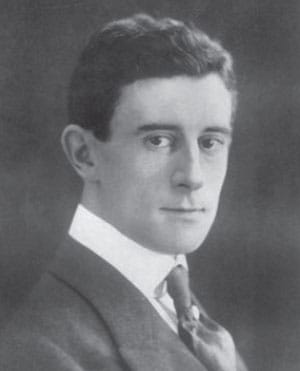
When Manuel de Falla heard Maurice Ravel’s newly composed Rapsodie espagnole in 1907, he marveled at its authentic Spanish flavor. “The mystery was soon explained,” he explained. “Ravel’s was a Spain he had felt in an idealized way through his mother. She was a lady of exquisite conversation. She spoke fluent Spanish, which I enjoyed so much when she evoked the years of her youth, spent in Madrid, an epoch earlier than mine, but traces of its habits that were familiar to me still remained.”
Even if the opening movement were not explicitly titled Prelude to the Night, listeners would likely sense deepening darkness and mystery. But the night is as beautiful as it is frightening: perhaps the ravishing burst of color highlighted by harp and upward-surging strings represents the heady fragrance of a moonflower, or the little cadenza for two clarinets the sudden flight of a nocturnal moth. The second movement, Malagueña, proceeds from the opening movement following just a pause for breath. It turns out to be less impetuous than one might anticipate from a dance movement. By the end, the vigor that has been built up is dispelled in a languorous solo for English horn, after which this miniature movement, hardly two minutes in duration, simply evaporates into the mist.
Falla claimed that when Ravel wanted to characterize Spain musically, “he showed a predilection for the habanera, the song most in vogue when his mother lived in Madrid.... That is why the rhythm, much to the surprise of the Spaniards, went on living in French music although Spain had forgotten it half a century ago.” This Habanera—slow, seductive, syncopated—began life as a work for two pianos in 1895, but it comes across as far more evocative in this orchestrated version of 12 years later. Curiously, Ravel remained unsatisfied. “I like the music,” he later told the composer Francis Poulenc, “but it’s so badly orchestrated!” Poulenc continues the account: “‘How can you possibly claim that?’ I protested. And then he said something which could only have come from a truly extraordinary technician: ‘The orchestra’s too large for the number of bars.’ A wonderful remark.”
The Habanera’s spirit is perfectly summed up in its tempo heading: Assez lent et d’un rythme las (Rather Slow, and with a Weary Rhythm). The quotation from Baudelaire which the composer inscribed in the original two-piano version seems fully à propos to this reincarnation: Au pays parfumé que le soleil caresse—“In the perfumed land that the sun caresses.”
The considerable tension built up through the restraint of the first three movements is released with passionate abandon in the finale (Assez animé; “Rather Animated”), where Ravel’s pulsating rhythms combine with full-bodied instrumentation to evoke the vigor of a celebration: a busy gathering in which disparate songs and sensations compete for our attention, like a musical echo of an incandescent canvas by Sorolla. In the Rapsodie espagnole Ravel achieved for the first time the subtle orchestration that would henceforth be his unique fingerprint.
—James M. Keller
James M. Keller served as the San Francisco Symphony’s Program Annotator from 2000 until his retirement at the end of last season, and continues as a Contributing Writer to the program book. He is the author of Chamber Music: A Listener’s Guide (Oxford University Press).
About the Artists
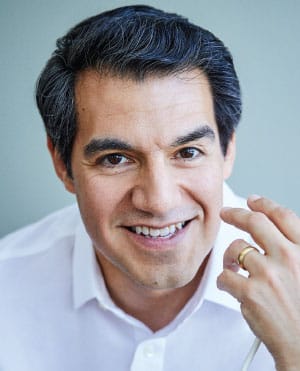
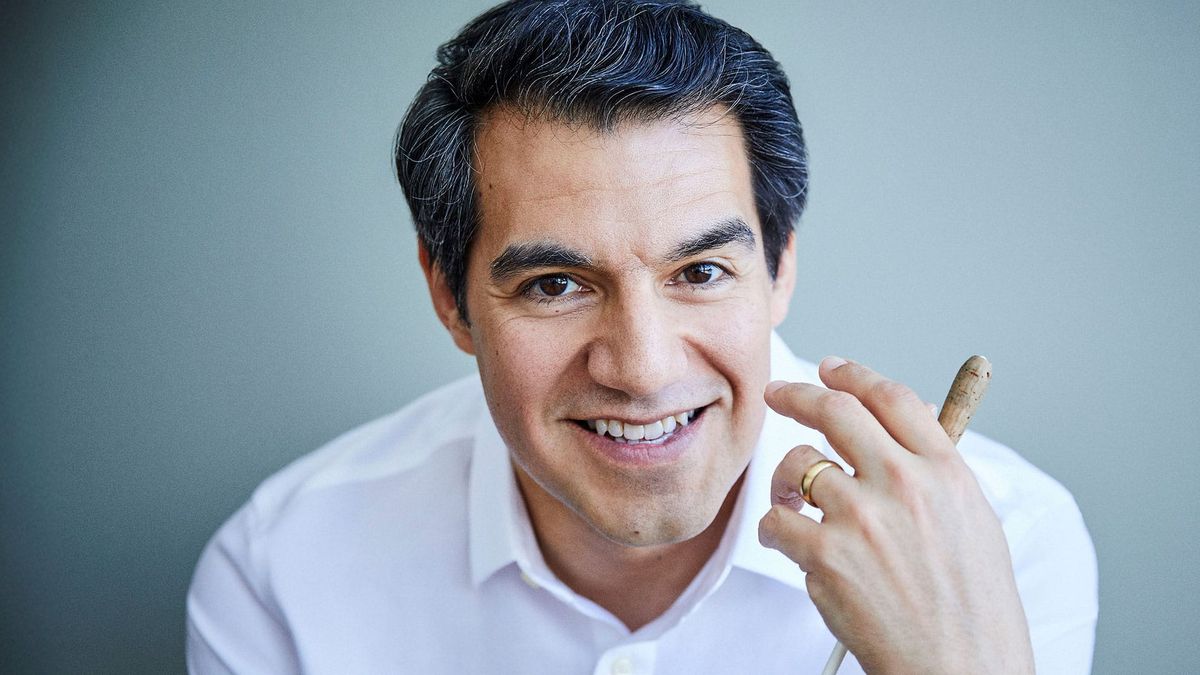
Miguel Harth-Bedoya
Miguel Harth-Bedoya is resident director of orchestras and professor of conducting at Rice University’s Shepherd School of Music and the founder of the Conducting Institute. He was previously chief conductor of the Norwegian Radio Orchestra and music director of the Fort Worth Symphony, where he is now music director laureate. He has also held music director positions with the Auckland Philharmonia, Eugene Symphony, Lima Philharmonic, and New York Youth Symphony, and was associate conductor of the Los Angeles Philharmonic.
As a guest conductor, Harth-Bedoya has led the Boston Symphony, Cleveland Orchestra, Chicago Symphony, Philadelphia Orchestra, Los Angeles Philharmonic, Baltimore Symphony, Atlanta Symphony, Dallas Symphony, St. Louis Symphony, Helsinki Philharmonic, MDR Sinfonieorchester Leipzig, New Zealand Symphony, Sydney Symphony, Melbourne Symphony, London Philharmonic, Munich Philharmonic, Dresden Philharmonic, and Tonhalle Orchestra Zurich, among others. He made his San Francisco Symphony debut with the Día de los Muertos concert in November 2023 and makes his Orchestral Series debut this week.
With a passionate devotion to unearthing new South American repertoire, Harth-Bedoya is the founder and artistic director of Caminos del Inka, a nonprofit organization dedicated to researching, performing, and preserving the rich musical legacy of South America. His discography includes albums on Harmonia Mundi, Deutsche Grammophon, Decca, Naxos, and MSR Classics, among other labels. He has recorded works by Jimmy López for Harmonia Mundi and MSR Classics, and led Traditions and Transformations: Sounds of Silk Road Chicago with the Chicago Symphony and Yo-Yo Ma, which received two Grammy nominations.
Born and raised in Peru, Harth-Bedoya received his bachelor of music degree from the Curtis Institute of Music and his master of music from the Juilliard School.
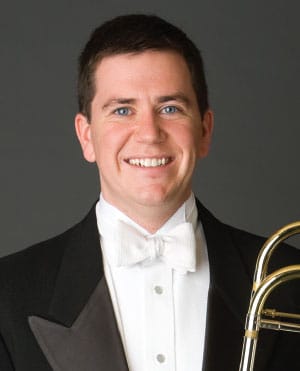
Timothy Higgins
Timothy Higgins joined the San Francisco Symphony as Principal Trombone in 2008 and holds the Robert L. Samter Chair. Since the start of the 2025–26 season, he has served as principal trombone of the Chicago Symphony while on leave from the SF Symphony. Before joining the SF Symphony, he was acting second trombone with the National Symphony. As an educator, Higgins has served on the faculties of the San Francisco Conservatory of Music, Northwestern University’s Bienen School of Music, and the Pokorny Low Brass Seminar at Northern Illinois University. He has also been part of the brass faculty at the Aspen Music Festival and Pacific Music Festival and led masterclasses worldwide.
In addition to an active performing career, Higgins is a composer and arranger. This past October, the SF Symphony commissioned and premiered his work Market Street, 1920s, and in 2021 Higgins composed and premiered his own Trombone Concerto, commissioned by Michael Tilson Thomas, with the Symphony. Additional arrangements and compositions by Higgins have been commissioned or performed by the Chicago Symphony, New York Philharmonic, Los Angeles Philharmonic, Cleveland Orchestra, Detroit Symphony, Kansas City Symphony, Steamboat Springs Strings Festival, and numerous university brass ensembles.
Originally from Houston, Higgins studied at Northwestern University. In 2005, he won the Robert Marsteller Solo Trombone Competition, as well as the International Trombone Association Trombone Quartet Competition with his group CT3. While attending the Tanglewood Music Center, he was awarded the Grace B. Upton Award for Outstanding Fellow. Higgins is a Bach Artist and an Ultimate Brass Artist.