In This Program
The Concert
Sunday, May 31, 2026, at 2:00pm
San Francisco Symphony Chorus
Jenny Wong director and conductor
John Wilson piano
Jonathan Dimmock organ
Johannes Brahms
O schöne Nacht, Opus 92, no.1 (1877)
Gabriel Fauré
Cantique de Jean Racine, Opus 11 (1865)
James MacMillan
“O Radiant Dawn” from The Strathclyde Motets (2010)
Lili Boulanger
Hymne au soleil (1912)
Marina Davis alto soloist
Ola Gjeilo
“Across the Vast, Eternal Sky” (2017)
Traditional
(arr. Shawn Kirchner)
Heavenly Home (2010)
Hallelujah
Angel Band
Unclouded Day
Intermission
Morten Lauridsen
Lux Aeterna (1997)
Introitus
In te, Domine, speravi
O nata lux
Veni, Sancte Spiritus
Agnus Dei
Lead support for the San Francisco Symphony Chorus this season is provided through a visionary gift from an anonymous donor.
Program Notes
O schöne Nacht, Opus 92, no.1
Johannes Brahms
Born: May 7, 1833, in Hamburg
Died: April 3, 1897, in Vienna
Work Composed: 1877
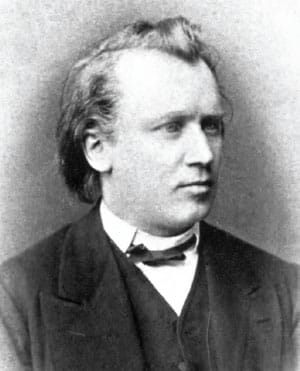
Pianist-composer Johannes Brahms was born in the Free and Hanseatic City of Hamburg in 1833 and died in Vienna after a long and successful career at the age of 63. During his youth, German nationalism and liberalism were on the rise as a reaction to Napoleon’s northern campaigns, and it was important to him to set German poetry as choral music and art song. In Brahms’s birth year, German-speaking Europe included more than 300 separate political entities: the formal unification of Germany finally occurred in 1871, just two years after the premiere of his German Requiem.
Brahms was also an active conductor: he maintained one of the largest personal libraries of choral music in Europe. Handel’s oratorios particularly inspired him, and the great fugues that cap the third and sixth movements of his Requiem show this influence. As a choral conductor, Brahms preferred Baroque motets, especially those of Heinrich Schütz (1585–1672) and Johann Sebastian Bach (1685–1750).
His beautiful “O schöne Nacht” emphasizes the lush landscape of Georg Daumer’s poem: a fairy-tale night sky lit by a moon. Our eyes are lifted up by the rising E-major chords, and we might hear twinkling stars and twittering birds in the fluttering accompaniment. The composer slightly altered the original poem, as in the adjacent “sh” sounds in “Im Fliederbusche schlägt” (In lilac bushes sing) to bring out the hushed whispers of two lovers.
Cantique de Jean Racine, Opus 11
Gabriel Fauré
Born: May 12, 1845, in Pamiers, France
Died: November 4, 1924, in Paris
Work Composed: 1865
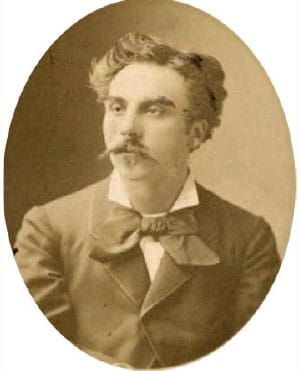
As an organ student, Gabriel Fauré was Saint-Saëns’s protégé and most celebrated pupil; he studied Gregorian chant and Renaissance polyphony from ages nine to 20 at the École Niedermeyer in Paris. Fauré won the school’s first prize in student composition in 1865 with his Cantique de Jean Racine for choir and organ. César Franck, to whom the work is dedicated, conducted the premiere on August 4, 1886. Fauré chose Jean-Baptiste Racine’s “elegant and rather florid” French translation of a medieval Ambrosian hymn for matins, Consors paterni luminis. Racine (1639–99) was a French dramatist and poet who translated several portions of the Roman Breviary in 1688. Fauré set this heartfelt entreaty to God with restrained lyricism punctuated by occasional elements of dissonance.
Chant-like melodies unify both Fauré’s Cantique and his Requiem: he felt called to compose “appropriate” sacred music, contrasting with contemporary practice (both in his time and since the Second Vatican Council) of fitting religious texts to folk, popular, and even operatic melodies. His first professional appointment was at the Church of Saint-Sauveur in Rennes, but he was fired for excusing himself during the sermons to smoke and for arriving at services still dressed in the previous night’s evening attire. Despite this early setback, Fauré spent more than 40 years as a church musician, composing two dozen Latin motets, a Latin Requiem, and this unique French setting.
O Radiant Dawn from The Strathclyde Motets
James MacMillan
Born: July 16, 1959, in Kilwinning, Scotland
Work Composed: 2010
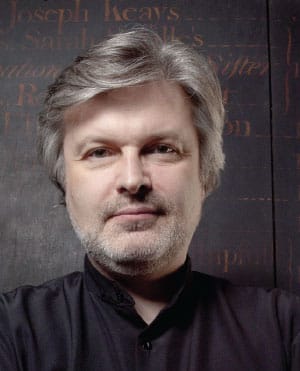
Scottish composer James MacMillan has conducted the BBC Philharmonic, the Philharmonia Orchestra’s Music of Today series, and the Royal Scottish National Orchestra’s Discovery series. Based in Glasgow, he teaches part-time at the Royal Scottish National Academy of Music and Drama. This motet shows his strongly-held Roman Catholic beliefs and love of Scottish folk melody. O Radiant Dawn (2010) was composed for the Strathclyde University Chamber Choir: its ancient text is one of seven “Great O” antiphons, sung on medieval feast days preceding Christmas. MacMillan’s austere and quietly hopeful harmonies foretell the coming dawn and birth of Jesus.
Hymne au soleil
Lili Boulanger
Born: August 21, 1893, in Paris
Died: March 15, 1918, in Mézy-sur-Seine, France
Work Composed: 1912
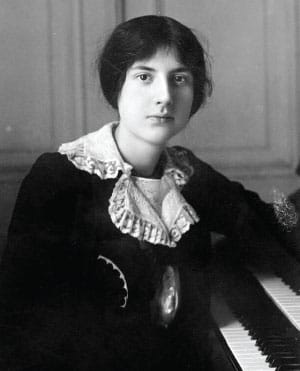
Lili Boulanger, the precociously talented sister of the famed teacher Nadia Boulanger, was the first female composer to win the coveted Prix de Rome in 1913. A rising star of Belle Époque French music, she died tragically young, leaving us just a few shimmering, impressionist masterpieces. The triumphant Hymne au soleil dates from the end of her teens; it is notable for rich harmonies and declamatory choral fanfares inviting us to bless the “reborn sun.” The text by Casimir Delavigne (1793–1843), a patriotic French poet who was inspired by Greek myths, bathes us in the luminous warmth of a Mediterranean sunrise. Boulanger responds with pulsing rhythms and inventive counterpoint representing the “seven rushing steeds” who pull the sun’s chariot, creating “infinite waves” of light.
Across the Vast, Eternal Sky
Ola Gjeilo
Born: May 5, 1978, in Skui, Norway
Work Composed: 2017
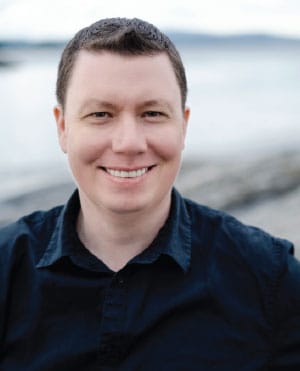
Ola Gjeilo is one of America’s leading choral composers, a Juilliard graduate originally from Norway. He has published dozens of Latin motets and choral miniatures (both a cappella and with piano). Across the Vast, Eternal Sky was composed for Gjeilo’s 2017 Winter Songs album, and is perhaps the most profound of the collection. The composer was inspired by a four-stanza poem of Charles Anthony Silvestri (b. 1965), celebrating radiance, rebirth, and aging with grace. The title is taken from Silvestri’s final image (“I will appear again/when the sunset paints/flames across the vast, eternal sky”). Gjeilo pairs a lush, sometimes driving piano accompaniment with urgent, full-bodied singing that blooms with optimism.
Heavenly Home: Three American Songs
Traditional (arr. Shawn Kirchner)
Born: June 22, 1970, in Cedar Falls, Iowa
Work Composed: 2010
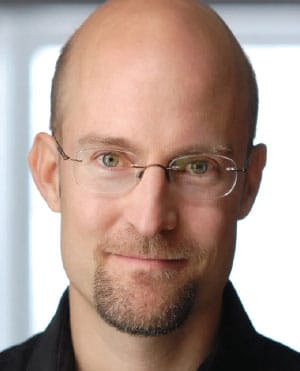
Iowa native Shawn Kirchner has served as a composer in residence and tenor for the LA Master Chorale, where he has developed new works from folk, carol, and poetic sources. He describes this 13-minute cycle of 19th-century religious songs as “newly-composed material that weaves through the melodious source material, resulting in intricate counterpoint and rich harmonic textures.” The set was premiered by Grant Gershon and the Master Chorale at Disney Hall. The lilting “Hallelujah” surrounds a beloved Sacred Harp tune with transcendent swirls of energy. “Angel Band” is a richly expansive eight-part setting of the beloved William Bradbury tune. The bright “Unclouded Day” combines traditional bluegrass vocal stylings with fugue, building to a climax “in the city that is made of gold.”
Lux Aeterna
Morten Lauridsen
Born: February 27, 1943, in Colfax, Washington
Work Composed: 1997
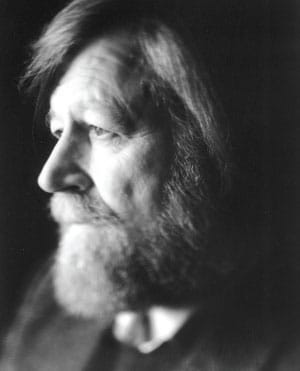
Morten Lauridsen, an influential professor of composition at the University of Southern California’s Thornton School of Music, has established a new canon of American choral classics. Five recent collections have received Grammy Award nominations, including the premiere recording of his Lux Aeterna by the Los Angeles Master Chorale under the direction of Paul Salamunovich. Raised in Oregon, Lauridsen worked as a US Forest Service lookout on an isolated tower near Mount St. Helens. As a result of this solitary experience and self-examination, he decided to focus on music, dividing his creative life between Los Angeles and his summer cabin on a remote island in Puget Sound.
In Choral Music in the Twentieth Century, musicologist Nick Strimple described him as “the only American composer in history who can be called a mystic.... [His] probing, serene work contains an elusive and indefinable ingredient that leaves the impression that all the questions have been answered.”
Since the Medieval period, composers have set Latin texts from the Catholic requiem mass. Lauridsen shaped his own mini-requiem, he said, by selecting texts “drawn from sacred Latin sources, each containing references to light. The piece opens and closes with the beginning and ending of the requiem mass, with the three central movements drawn, respectively, from the Te Deum (including a line from the Beatus Vir), O nata lux and Veni, Sancte Spiritus.” This is an “intimate work of quiet serenity,” expressing “hope, reassurance, faith and illumination in all of its manifestations… I wrote it as my mother was in the process of dying, so it was a way of, as so many artists do, of dealing with that kind of a situation in an artistic way.”
The composer has described how he highlighted specific sonorous clusters of sound, quoting from his own works: “The instrumental introduction to the Introitus softly recalls motivic fragments from two pieces especially close to my heart (my settings of Rilke’s Contre qui, Rose and O Magnum mysterium) which recur throughout the work in various forms. Several new themes in the Introitus are then introduced by the chorus, including an extended canon on “et lux perpetua.”
The middle three movements are Trinitarian, dwelling on God the Father, God the Son, and God the Holy Spirit. The In te, domine, speravi is unified by a 1677 Lutheran chorale tune Herzliebster Jesu and concludes with a Baroque-style inverted canon on the text “fiat misericordia.” The two central movements (O nata lux and Veni, Sancte spiritus) are “paired songs—the former, the central a cappella motet and the latter, a spirited, jubilant canticle.” A quiet setting of the Agnus Dei precedes the final Lux Aeterna, joyful Alleluia, and seven-fold Amen based on the opening music. The result is a choral masterwork of uncommon richness and complexity, of beauty and serenity.
—Laura Stanfield Prichard
Text and Translations
Brahms: O schöne Nacht!
O schöne Nacht!
Am Himmel märchenhaft
erglänzt der Mond in seiner ganzen Pracht;
Um ihn der kleinen Sterne liebliche
Genossenschaft.
Es schimmert hell der Tau
Am grünen Halm; mit Macht
Im Fliederbusche schlägt die Nachtigall;
Der Knabe schleicht zu seiner Liebsten sacht—
O schöne Nacht!
—Georg Friedrich Daumer
Oh beautiful night!
In the heavens, like a fairy tale,
the moon gleams in full splendor;
Surrounded by little stars,
A lovely array.
The dew on the green grass
sparkles brightly;
The nightingale warbles mightily in the lilacs;
The youth steals softly away to his beloved—
Oh beautiful night!
Fauré: Cantique de Jean Racine
Verbe égal au Très-Haut, notre unique espérance,
Jour éternel de la terre et des cieux,
De la paisible nuit nous rompons le silence:
Divin Sauveur, jette sur nous les yeux.
Répands sur nous le feu de ta grâce puissante;
Que tout l’enfer fuie au son de ta voix;
Dissipe le sommeil d’une âme languissante
Qui la conduit à l’oubli de tes lois!
Ô Christ! sois favorable à ce peuple fidèle,
Pour te bénir maintenant rassemblé;
Reçois les chants qu’il offre à ta gloire immortelle,
Et de tes dons qu’il retourne comblé.
—Jean Racine
O Word of the Almighty, our only hope,
eternal light of earth and heaven,
we break the silence of the quiet night:
Divine Savior, turn your gaze upon us.
Pour on us the fire of your mighty grace;
May all of hell flee at the sound of your voice.
Rouse us from the sleep of weary souls
that leads us to forget your law.
O Christ, look with kindness on your faithful people,
now gathered to sing your praise.
Receive the hymns we offer to your immortal glory,
and send us forth filled with your gifts.
Boulanger: Hymne au soleil
Du soleil qui renaît bénissons la puissance.
Avec tout l’univers célébrons son retour.
Couronné de splendeur, il se lève, il s’élance.
Le réveil de la terre est un hymne d’amour.
Sept coursiers qu’en partant le Dieu contient à peine,
Enflamment l’horizon de leur brûlante haleine.
O soleil fécond, tu parais!
Avec ses champs en fleurs, ses monts, ses bois épais,
La vaste mer de tes feux embrasée,
L’univers plus jeune et plus frais,
Des vapeurs de matin sont brillants de rosée.
—Casimir Delavigne
Let us bless the power of the reborn sun.
With all the universe let us celebrate its return.
Crowned in splendor, it rises and takes flight.
The waking of the earth is a hymn of love.
Seven steeds, which the god can scarcely restrain,
set the horizon ablaze with their burning breath.
O fruitful sun, you appear!
With flowering fields, mountains, and deep forests,
the vast sea kindled by your fire,
the universe renewed, younger and fresher,
morning mists glisten bright with dew.
Lauridsen: Lux Aeterna
Introitus
Requiem aeternam dona eis, Domine,
et lux perpetua luceat eis.
Te decet hymnus, Deus, in Sion,
et tibi redetur votum in Jerusalem.
Exaudi orationem meam.
Ad te omnis caro veniet.
Requiem aeternam dona eis, Domine,
et lux perpetua luceat eis.
—
Grant them eternal rest, O Lord,
and let everlasting light shine upon them.
To you, O God, praise is due in Zion,
and homage will be done in Jerusalem.
Hear my prayer.
Unto you all flesh shall come.
Grant them eternal rest, O Lord,
and let everlasting light shine upon them.
In te, domine, speravi
Tu ad liberandum suscepturus hominem,
non horruisti Virginis uterum.
Tu devicto mortis aculeo,
aperuisti credentibus regna caelorum.
Exortum est in tenebris lumen rectis.
Miserere nostri, Domine, miserere nostri.
Fiat misericordia tua, Domine,
super nos quemadmodum speravimus in te.
In te, Domine, speravi;
non confundar in aeternum.
—
To deliver us, you became human,
and did not turn away from the Virgin’s womb.
When you triumphed over death’s sting,
you opened heaven’s kingdom to all believers.
A light has risen in the darkness for the upright.
Have mercy on us, Lord, have mercy on us.
O Lord, let your mercy shine upon us,
as we have hoped in you.
O Lord, I have trusted you;
let me not be put to shame.
O nata lux
O nata lux de lumine,
Jesu redemptor saeculi,
dignare clemens supplicum
laudes preces que sumere.
Qui carne quondam contegi
dignatus es pro perditis.
Nos membra confer effici
tui beati corporis.
—
O light born of light,
Jesus, redeemer of the world,
with mercy receive
the praises and prayers we offer.
You who once took human form
for the sake of the lost,
grant that we may become members
of your blessed body.
Veni, Sancte Spiritus
Veni, Sancte Spiritus,
et emitte caelitus
lucis tuae radium.
Veni, pater pauperum,
veni, dator munerum
veni, lumen cordium.
Consolator optime,
dulcis hospes animae,
dulce refrigerium.
In labore requies,
in aestu temperies
in fletu solatium.
O lux beatissima,
reple cordis intima
tuorum fidelium.
Sine tuo numine,
nihil est in homine,
nihil est innoxium.
Lava quod est sordidum,
riga quod est aridum,
sana quod est saucium.
Flecte quod est rigidum,
fove quod est frigidum,
rege quod est devium.
Da tuis fidelibus,
in te confidentibus,
sacrum septenarium.
Da virtutis meritum,
da salutis exitum,
da perenne gaudium.
—
Come, Holy Spirit,
and send forth from heaven
the radiance of your light.
Come, Father of the poor,
come, giver of gifts,
light of hearts.
Source of our comfort,
sweet guest of the soul,
gentle refreshment.
In labor, you are rest,
in heat, coolness,
in grief, solace.
O most blessed light,
shine within the hearts
of your faithful.
Without your divine presence,
there is nothing in us,
nothing free from harm.
Wash what is unclean,
give water to what is dried up,
heal what is wounded.
Bend what is rigid,
warm what is cold,
guide what has gone astray.
Give to your faithful,
who place their trust in you,
the fullness of your gifts.
Grant the reward of virtue,
the hope of salvation,
and everlasting joy.
Agnus Dei
Agnus Dei, qui tollis peccata mundi:
dona eis requiem.
Agnus Dei, qui tollis peccata mundi:
dona eis requiem sempiternam.
Lux aeterna luceat eis, Domine,
cum Sanctis tuis in aeternum,
quia pius es.
Requiem aeternam dona eis, Domine,
et lux perpetua luceat eis.
Alleluia. Amen.
—
Lamb of God, who takes away the sins of the
world, grant them rest.
Lamb of God, who takes away the sins of the
world, grant them everlasting rest.
Let eternal light shine on them, O Lord,
with your saints forever,
for you are merciful.
Grant them eternal rest, O Lord,
and let everlasting light shine upon them.
Alleluia. Amen.
About the Artists
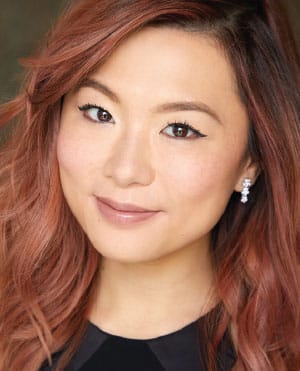
Jenny Wong
A native of Hong Kong, Jenny Wong is Chorus Director of the San Francisco Symphony and associate artistic director of the Los Angeles Master Chorale. Her conducting engagements have included the Los Angeles Philharmonic Green Umbrella Series, Los Angeles Opera Orchestra, Pasadena Symphony and Pops, the Industry, Long Beach Opera, Phoenix Chorale, and Gay Men’s Chorus of Los Angeles. In 2021, Wong was one of nine national recipients of Opera America’s inaugural Opera Grants for Women Stage Directors and Conductors.
As Chorus Director, Wong has worked with Esa-Pekka Salonen and Michael Tilson Thomas, as well as numerous guest conductors. She has also prepared choruses for the Los Angeles Philharmonic and Chicago Symphony, working with conductors Gustavo Dudamel, Susanna Mälkki, Jonathan Cohen, and Osmo Vänskä, among many others. Wong led the SF Symphony Chorus for the Deutsche Grammophon recording of Kaija Saariaho’s Adriana Mater, which won the 2025 Grammy Award for Best Opera Recording, and helped prepare the Los Angeles Master Chorale for the Los Angeles Philharmonic’s recording of Mahler’s Symphony No. 8, which won the 2022 Grammy Award for Best Choral Performance. Together with Grant Gershon and the Los Angeles Master Chorale, Wong was also awarded the 2022 American Prize in Choral Performance in the Professional Division.
Wong received her doctor of musical arts and master of music from the University of Southern California and an undergraduate degree in voice from the University of Illinois, Urbana-Champaign. She recently extended her contract as SF Symphony Chorus Director through the 2028–29 season.
About the SF Symphony Chorus
The San Francisco Symphony Chorus was established in 1973 at the request of Seiji Ozawa, then the Symphony’s Music Director. The Chorus, numbering 32 professional and more than 120 volunteer members, now performs more than 26 concerts each season. Louis Magor served as the Chorus’s director during its first decade. In 1982 Margaret Hillis assumed the ensemble’s leadership, and the following year Vance George was named Chorus Director, serving through 2005–06. Ragnar Bohlin concluded his tenure as Chorus Director in 2021, a post he had held since 2007. Jenny Wong was named Chorus Director in September 2023.
The Chorus can be heard on many acclaimed San Francisco Symphony recordings and has received Grammy Awards for Best Performance of a Choral Work (for Orff’s Carmina burana, Brahms’s German Requiem, and Mahler’s Symphony No. 8), Best Classical Album (for a Stravinsky collection and for Mahler’s Symphony No. 3 and Symphony No. 8), and most recently Best Opera Recording (for Saariaho’s Adriana Mater).
Lead support for the San Francisco Symphony Chorus this season is provided through a visionary gift from an anonymous donor.
To learn more about their generous gift, a new Chorus endowment, and ways to support it, please contact Jay Auslander, Director of Legacy Giving, at 415.503.5404 or jauslander@sfsymphony.org.
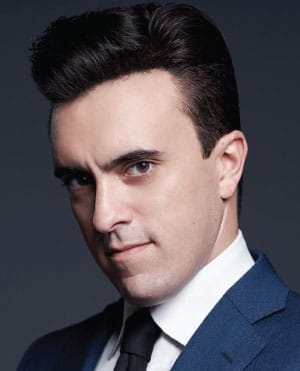
John Wilson
John Wilson is regularly engaged as a pianist with the San Francisco Symphony and serves as principal keyboard for the Marin Symphony, San Diego Symphony, and Oakland Symphony. In recent seasons he has appeared at Carnegie Hall, at the San Francisco Conservatory of Music, and on the SF Symphony’s SoundBox and Chamber Music series. A passionate advocate for contemporary music, Wilson has premiered works by Michael Tilson Thomas, John Adams, Timo Andres, and Steve Reich.
Wilson performed on the Grammy Award–winning recording of Michael Tilson Thomas’s Meditations on Rilke as well as on the recent release of Grace: The Music of Michael Tilson Thomas on Pentatone. His 2022 solo debut album on Avie Records featured the world premiere of MTT’s Upon Further Reflection.
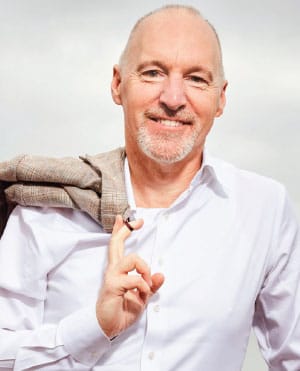
Jonathan Dimmock
Jonathan Dimmock has served the SF Symphony as a regular organist and harpsichordist since 2005, and has recorded and toured with the Symphony. He is also principal organist at the Legion of Honor, director of music at Congregation Sherith Israel, and an international recitalist. He previously served at St. John the Divine in New York, St. Mark’s in Minneapolis, and Grace Cathedral in San Francisco.
Dimmock has recorded more than 50 CDs and can be heard on the SF Symphony’s Grammy Award–winning recording of Mahler Symphony No. 8. His love of Bach led him to cofound American Bach Soloists in 1988.

Marina Davis
Marina Davis has performed with Chora Nova, Against the Grain Theatre, Opera on the Avalon, Halifax Summer Opera Festival, Symphony by the Bay, and Opera 5. She earned a bachelor of music degree from the University of Toronto and a master of music and postgraduate diploma from the San Francisco Conservatory of Music. She is a member of the chamber folk duo Shadow Julian, which released a debut album, Through the Endless Coil, last December. She won Symphony by the Bay’s Young Artist Concerto Competition, was a finalist in the American Prize for Art Song/Oratorio, and was a recipient of SFCM’s Phyllis C. Wattis Scholarship and the University of Toronto’s Greta Kraus Award.
San Francisco Symphony Chorus
SOPRANOS
Elaine Abigail
Adeliz Araiza
Naheed Attari
Sylvia V. Baba
Alexis Wong Baird
Katelan Bowden*
Arlene Boyd
Olivia T. Brown
Helen J. Burns
Laura Canavan
Rebecca Capriulo
Sara Chalk
Phoebe Chee*
Tonia D’Amelio*
Elizabeth Emigh
Amy Foote*
Cara Gabrielson*
Tiffany Gao
Susanna Gilbert
Julia Hall
Axelle Heems
Hyun Suk Jang
Betsy Johnsmiller
Kate Juliana
Kyounghee Lee
Ellen Leslie*
Caroline Meinhardt
Ria Patel
Diana Pray*
Laura Prichard
Bethany R. Procopio
Hallie Randel
Kelly Ryer
Rebecca Shipan
Elizabeth L. Susskind
Daphne Touchais*
Zhangguanglu Wang
Lauren Wilbanks
Leilani Zhang
Helene Zindarsian*
ALTOS
Carolyn Alexander
Melissa Butcher
Enrica Casucci
Dr. Nicole Daamen
Marina Davis*
Valeria D. Estrada Jaime
Corty Fengler
Amy L. Hespenheide
Emily (Yixuan) Huang
Kelsey M. Ishimatsu Jacobson
Cathleen Josaitis
Gretchen Klein
Katherine M. Lilly
Joyce Lin-Conrad
Madi Lippmann
Margaret (Peg) Lisi*
Brielle Marina Neilson*
Kimberly J. Orbik
Tiffany Ou-Ponticelli
Leandra Ramm*
Linda J. Randall
Celeste Riepe
Kathryn Schumacher
Yuri Sebata-Dempster
Sandy Sellin
Meghan Spyker*
Hilary W. Stevenson
Kyle S. Tingzon*
Mayo Tsuzuki
Makiko Ueda
Merilyn Telle Vaughn*
Heidi L. Waterman*
Hannah J. Wolf
TENORS
Paul Angelo
Justin Chandler Baptista
Carl A. Boe
Alexander P. Bonner
Seth Brenzel*
Dean Christman
Daniel J. Costa
Scott Dickerman
Thomas L. Ellison
Christian Emigh
Sam Faustine*
Patrick Fu
Ron Gallman
Kevin Gibbs*
Michael Jankosky*
Alec Jeong
Drew Kravin
James Lee
Benjamin Liupaogo*
Monty M. Maisano
Jack O’Reilly
David Kurtenbach Rivera*
Tim Silva*
Grant J. Steinweg
Tetsuya Taura
John A. Vlahides
David von Bargen
Jack Wilkins*
John Paul Young
Jakob Zwiener
BASSES
Matthew Ahn
Simon Barrad*
Sean Brooks
Phil Buonadonna
Robert Calvert
Sean Casey
Adam Cole*
Noam Cook
James Radcliffe Cowing III
Tony DeLousia*
Malcolm Gaines
Richard M. Glendening
Luis González*
Vasco Hexel
Oliver W. Holt*
Rob Lloyd Huber
Bradley A. Irving
Roderick Lowe
Tim Marson
Case Nafziger
Julian Nesbitt
Bradley C. Parese
Matthew C. Peterson
Michael Prichard
Timothy Echavez Salaver
Storm K. Staley
Connor Tench
David Varnum*
Julia Vetter
Nick Volkert*
Elliot Yates
Goangshiuan Shawn Ying
Jenny Wong,
Chorus Director
John Wilson,
Rehearsal Accompanist
*Member of the American Guild of Musical Artists