In This Program
The Concert
Thursday, October 15, 2026, at 7:30pm
Lisa Batiashvili violin
Gautier Capuçon cello
Jean-Yves Thibaudet piano
Dmitri Shostakovich
Piano Trio No. 1 in C minor, Opus 8 (1923)
Claude Debussy
Piano Trio in G major (1880)
Andantino con moto allegro
Scherzo. Intermezzo. Moderato con allegro
Andante espressivo
Finale. Appassionato
Intermission
Antonín Dvořák
Piano Trio No. 3 in F minor, Opus 65 (1883)
Allegro ma non troppo
Allegretto grazioso
Poco Adagio
Allegro con brio
Manu Martin
Lim Symphony of the Oceans Trio (2025)
Program Notes
Piano Trio No. 1 in C minor, Opus 8
Dmitri Shostakovich
Born: September 25, 1906, in Saint Petersburg
Died: August 9, 1975, in Moscow
Work Composed: 1923
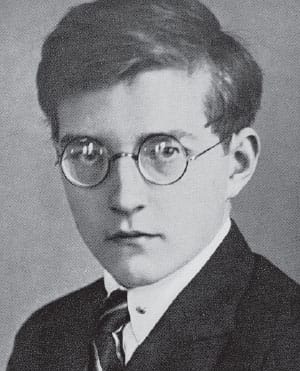
It’s a musical love letter from a smitten teenager to a young lady, composed while he was recuperating from tuberculosis in a Crimean sanitarium. But Dmitri Shostakovich wasn’t your usual infatuated 16 year old, and not only because of his immense musical gifts. His childhood had been dominated by the revolutions that swept away Romanov rule and established a communist regime. Life was tough for everybody in those grim years of civil war and famine, and Petrograd Conservatory students received no special dispensations. Shostakovich might have starved without assistance from Alexander Glazunov, who, having seen that his teenaged student was at risk of malnutrition from the severe food rationing imposed in the years immediately following the Bolshevik Revolution, used his influence to get his protégé’s rations increased. Family support was meager, especially after his father died from pneumonia. Shostakovich earned a pittance as the piano player in silent movie theaters. He hated it.
Yet anything and everything that came his way went into his voracious musical intellect, there to be absorbed, interpreted, manipulated, transformed, and recombined. He got to know the latest trends: jazz and musical theater and the wild stuff coming out of Weimar Germany. He soaked up Stravinsky and Prokofiev, Tchaikovsky and Mahler. Having taken it all in, he funneled it through the nervous intensity and kooky sense of humor that remained fundamental characteristics of his style thereafter.
That said, he was still a work in progress as of 1923. This early love-letter piano trio, originally titled Poème, not only wears its heart on its sleeve but also its influences, including Wagner’s Tristan und Isolde and the broad ardor of those emotive silent films. It’s a one-movement, loosely joined sonata form built from two important themes, the first of which channels Tristan via three notes descending chromatically without gaps. First heard as G-flat–F–E in the cello, it is immediately answered by C–B–A-sharp in the violin. That idea weaves throughout the entire trio, sometimes heard in its original guise, other times modified by whole-step or larger gaps, or even inverted (stated upside-down). Before long the tempo picks up and that chromatic idea gets tossed about all three instruments in a garrulous, grimly funny gabfest.
The mood changes at midpoint with a heartfelt Adagio that presents a simple stepwise lyrical theme accompanied by a light shimmer in the piano, sounding for all the world like some suave concoction by a Russian saloniste of the Anton Arensky stripe. Before long the recapitulation arrives with the spooky chromaticism of the opening materials. Many sonata-form movements tack on a closing coda in which formal punctilio is relaxed in favor of freeform writing, and that’s exactly what happens here, allowing the piece to work itself up to a flamboyant conclusion in pristine, shiny C major, fortississimo.
Even though Shostakovich played the trio at least once in 1924, the piece swiftly dropped out of sight and remained hidden for six decades. The ravages of time obliged Shostakovich’s pupil Boris Tishchenko to reconstruct the final 22 measures before the trio could be published in 1983, eight years after Shostakovich’s death. Not surprisingly, it is dedicated to that youthful love of his, Tatyana Glivenko.
Piano Trio in G major
Claude Debussy
Born: August 22, 1862, in Saint-Germain-en-Laye, France
Died: March 25, 1918, in Paris
Work Composed: 1880
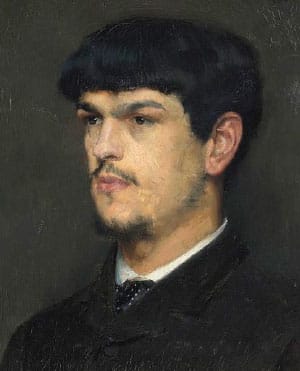
Claude Debussy’s intense musical talent is witnessed by his having been enrolled in the Paris Conservatory at the age of 10. But the gifted lad was no shrinking violet. By his fifth year he had alienated most of the faculty with his rebelliousness, disrespect, and dismissive attitudes towards traditional musical studies. Fortunately he retained the support of his piano teacher Antoine Marmontel, who eventually recommended him for a seasonal job with iron-willed Russian widow and music lover Nadezhda von Meck, Tchaikovsky’s benefactor and epistolary confidant.
It was Madame von Meck’s practice to take her family on yearly excursions to various picturesque locales in France, Switzerland, and Italy. Debussy’s duties included teaching piano to one of the daughters, accompanying another’s singing, playing in a piano trio, and joining Nadezhda herself in reading four-hand arrangements of various orchestral works, especially those by her dear friend Tchaikovsky. He joined the family in Interlaken, Switzerland, and after stops hither and yon they settled in Fiesole, in Tuscany near Florence. Debussy remained with them in Fiesole for a full two months until mid-November 1880, when he returned to the conservatory.
Madame von Meck wasn’t particularly taken with his piano playing—too clinical for her tastes—but she was bowled over by his sight-reading ability. After reading through a piano duet version of Tchaikovsky’s Fourth Symphony, she reported to the composer that her young partner “didn’t play it well, but he sight-read it marvelously. It’s his sole, but very great merit. He can read a score, even yours, at sight.”
Debussy was only 18 at the time, and a decidedly puerile 18 at that. So far his forays into composition had been short trifles of a few minutes duration, but at Madame’s request he produced a full-length, four-movement piano trio. In September 1880 Nadezhda wrote to Tchaikovsky that “my Frenchman also wrote a very beautiful trio. I regret, dear friend, that I cannot send it to you for your review, because it will be impossible to copy since he is leaving in a few days.” In all likelihood Debussy played the work in Fiesole with the house trio of himself, violinist Ladislav Pachulsky, and cellist Piotr Danilchenko, after which sent the score to his harmony teacher Émile Durand. Sadly, all but the first movement subsequently disappeared.
The remaining three movements were discovered by American musicologist Elwood Derr in 1982, among a sheaf of manuscripts bequeathed to the University of Michigan’s School of Music by Debussy’s piano student Maurice Dumesnil. After 20 missing measures were reconstructed from a surviving cello part, the trio was published by Henle in 1986. (Part of it had been recorded as early as 1984.)
Anyone expecting to hear a lost Debussy masterpiece is likely to be disappointed, for this lovely trio evokes the pastel elegance of Massenet and Delibes. The eminent critic Harold C. Schonberg heard the 1984 partial recording and reported the trio to be relatively anonymous juvenilia. “You can have a lot of fun putting it on the turntable and asking your learned friends who the composer is. Nothing in the music suggests Debussy. It is sweet, sentimental, and sugared; it verges on the salon.”
That salon style is very much in evidence in the Andantino con moto allegro first movement, cast in a loose sonata-allegro form that hits all of the requisite marks but focuses far more on lyrical charm than structural detail. The second-place Scherzo and Intermezzo is surely the high point of the trio, a pussy-footing confection that marks the first, but definitely not the last, time that a Debussy piece would manifest feline sensibilities.
There’s something a bit dutiful about the succession of tidy four-bar phrases that make up the third movement Andante espressivo, attractive though it is. The concluding Appassionato offers a goodly assortment of dandy tunes that go far to offset an unfortunate tendency to ramble.
Piano Trio No. 3 in F minor, Opus 65
Antonín Dvořák
Born: September 8, 1841, in Nelahozeves, Bohemia
Died: May 1, 1904, in Prague
Work Composed: 1883
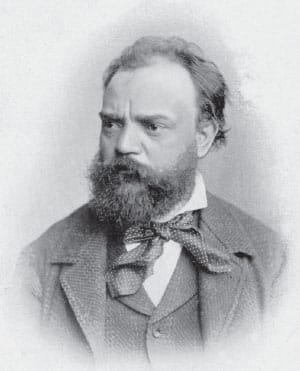
Antonín Dvořák’s four piano trios exemplify those virtues that have made his music so attractive to listeners and performers alike. Much like his mentor Johannes Brahms, Dvořák spoke in a late-Romantic language that was stripped of Wagnerian complexities, while he steadfastly maintained traditional Classical structures such as sonata form and rondo. Dvořák injected a healthy dose of Bohemian folk music into the mix, wrapping everything up with his superb ear for instrumental sonority. Furthermore, his work is refreshingly free of neuroticism or narcissism, traits that tend to loom large among late Romantic composers.
Which isn’t to say that his music is always cheerful and optimistic, because it isn’t. Dvořák’s psychological makeup included a deep current of elemental passion. Listeners may be familiar with the dark hues of the Seventh Symphony, for example, a work shot through with dramatic fervor and melancholic episodes. Written just one year before that symphony, Dvořák’s F-minor piano trio is another instance of that fervent persona, Brahmsian in its tight construction, symphonic instrumental textures, and serious overall mien, but vintage Dvořák in its sustained lyricism, the folkish dance style of its second movement, and the sturdy confidence of its conclusion.
From the get-go it was recognized as among Dvořák’s finest accomplishments. In February 1884, just a few months after the work’s premiere, prominent critic Eduard Hanslick reported that the trio “demonstrates that the composer finds himself at the pinnacle of his career. If we disregard the smaller genres, it is particularly the Symphony in D major, the string sextet, and now the trio in F minor which rank Dvořák among the world’s greatest modern masters.”
Brahms and Dvořák share a characteristic compositional gambit in stating their most important motivic materials at the very beginning of a piece, often unclothed by any obfuscating accompaniment. The F-minor Trio provides a textbook example of the technique, via a unison melody in the strings that not only outlines a triad, but also features three instances of a dotted-note skip that becomes a pervasive rhythmic gesture. It’s also worth noting that none of the primary themes close off completely, a strategy that heightens an overall mood of suspense. Dvořák handles the first movement’s sonata form in the grand Brahmsian manner, making full use of three important key centers instead of the usual two and constructing a complex midway development section, the whole capped off by an extensive coda that revisits important ideas from the movement, including those motivic materials from the opening theme.
After the first movement’s heft, seriousness, and urgent drive, the second-place Allegretto grazioso makes for a refreshing contrast with a crisp dance-like tune in the piano set against bouncy triplets in the strings. The movement is structured in da capo form, in which a reprise leads to a contrasting episode, after which the performers are instructed to return to the beginning and repeat the reprise verbatim. Dvořák heightens the difference between reprise and episode via modal changes—reprise in minor, episode in major—as well as sharply contrasting overall demeanors: the reprise is sturdy and angular, while the episode positively purrs its way along.
The third-place Poco adagio lies at the very heart center of the work. A moment’s listening reveals kinship with the first movement in the dotted-rhythm skip with which the primary theme begins, but what was previously magisterial is now beguiling, in a heartfelt cello line, soon joined by the violin, that surely ranks among Dvořák’s most captivating melodies. The movement’s expansive three-part form includes a central interlude that suspends a dialog between the strings over shimmering figurations in the piano.
The finale is cast in sonata-rondo form. In this case it’s a rhythmically complex affair that savors of the Czech furiant, all robust energy, shifting meter, and unexpected accents. The contrasting episodes soften all that aggression with gently swaying waltz rhythms and softly contoured melodies. Towards the end comes a hushed passage in major that briefly revisits the first movement themes, followed by an impulsive and high-spirited dash to the finish line in bright, optimistic F major.
—Scott Foglesong
Lim Symphony of the Oceans Trio
Manu Martin
Born: 1980, in France
Work Composed: 2025
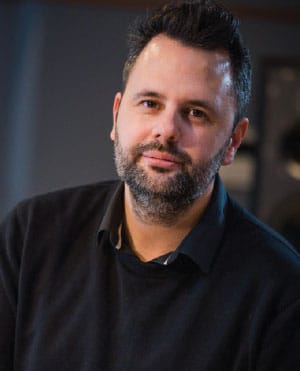
Lim Symphony of the Oceans is a new piano trio specially arranged for Jean-Yves Thibaudet, Gautier Capuçon, and Lisa Batiashvili. Derived from a large-scale symphonic work by French composer Manu Martin, this piano trio version from creators Susan Lim and Christina Teenz Tan showcases the intimate, expressive quality possible in blending three distinct instrumental voices.
—B-C-T Trio
About the Artists
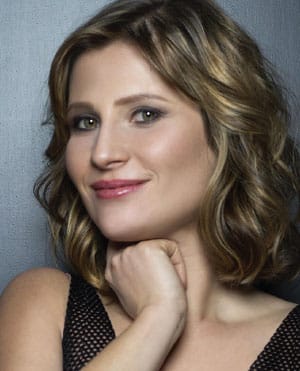
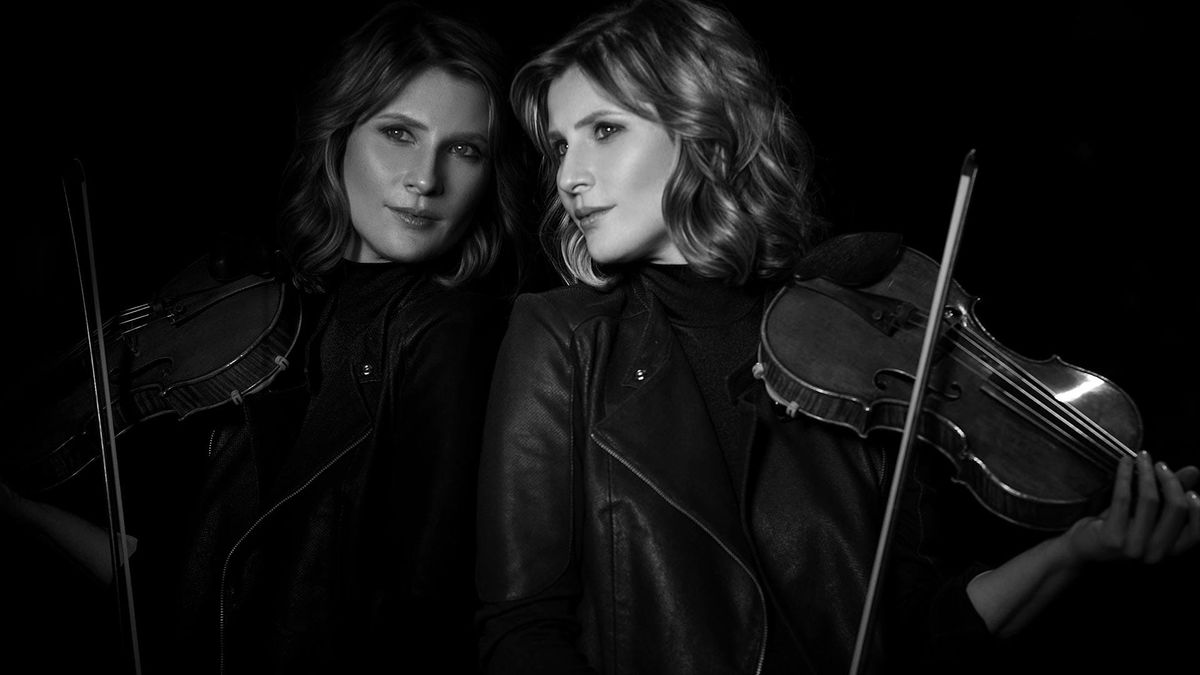
Lisa Batiashvili
Lisa Batiashvili is a Georgian-born German violinist. Recent highlights include a tour with the Munich Philharmonic, appearances with Yannick Nézet-Séguin in Montreal and Philadelphia, and a tour with the Oslo Philharmonic and Klaus Mäkelä. Other engagements include projects with Filarmonica della Scala, Potsdam Kammerakademie, City of Birmingham Symphony, BBC Symphony Orchestra, Swedish Radio Symphony, Philharmonia Orchestra, Los Angeles Philharmonic, and her passion project City Lights with the Lucerne Symphony. She debuted with the San Francisco Symphony in January 2006 and toured to Southern California with the Orchestra and Esa-Pekka Salonen in March 2024.
Recording exclusively for Deutsche Grammophon, Batiashvili’s recent releases include Secret Love Letters with Nézet-Séguin and the Philadelphia Orchestra, City Lights, and Visions of Prokofiev. Her discography has earned an Opus Klassik Award and international critical acclaim. In 2021, she founded the Lisa Batiashvili Foundation, fulfilling a lifelong commitment to supporting exceptionally talented young Georgian musicians and helping them thrive in international musical careers. Advocacy and cultural responsibility are central to her artistic life. She lives in Berlin and performs on a 1739 Joseph Guarneri del Gesù violin, generously loaned by a private collector.
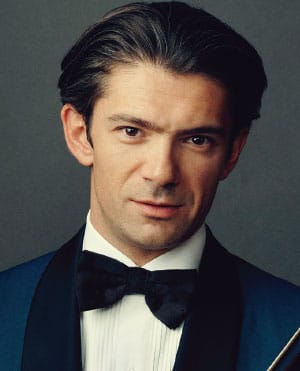
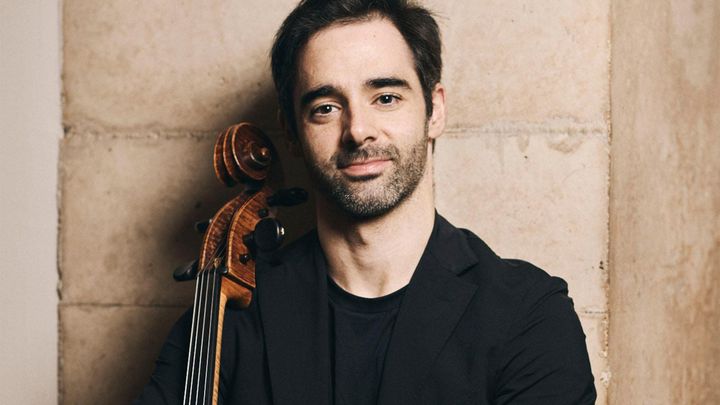
Gautier Capuçon
Gautier Capuçon is one of the foremost cello ambassadors in the 21st century. Performing worldwide with leading conductors and instrumentalists, he also created the Fondation Gautier Capuçon in 2022, dedicated to supporting outstanding young musicians.
Highlights of his 2026–27 season include a return to the BBC Proms with the BBC Symphony and appearances with the Singapore Symphony, Berlin Radio Symphony, Filarmonica della Scala, WDR Symphony Orchestra Cologne, Sydney Symphony, and Boston Symphony, among others. He also tours with Orchestre Philharmonique de Radio France, Leipzig Gewandhaus Orchestra, Netherlands Philharmonic, and Orchestre de Paris. In addition to the current trio tour with Lisa Batiashvili and Jean-Yves Thibaudet, he also performs Beethoven piano trios with Evgeny Kissin and Maxim Vengerov at Chicago’s Symphony Center and Carnegie Hall.
An exclusive recording artist for Erato (Warner Music), Capuçon has a rich discography that has earned numerous awards. His 2020 release Émotions reached gold status in France, topping the charts for more than 30 weeks. His next album, Sensations (2022), became the first classical recording to reach No. 1 in France’s all-genre charts, followed by Destination Paris (2023). In 2025, he released the album Gaïa with 16 new compositions commissioned by the San Francisco Symphony and premiered on the Great Performers Series. Capuçon made his San Francisco Symphony debut in November 2009 as a Shenson Young Artist.
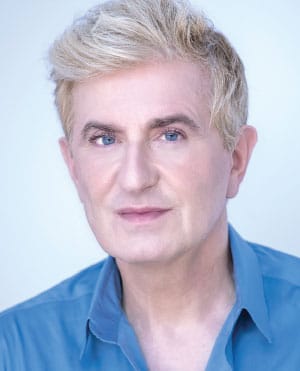
Jean-Yves Thibaudet
Jean-Yves Thibaudet has earned a reputation as one of the world’s finest pianists and is especially known for his diverse interests beyond the classical world, including numerous collaborations in film, fashion, and visual arts. He is the first-ever artist in residence at the Colburn School, which awards several scholarships in his name. He made his San Francisco Symphony debut in October 1994.
A prolific recording artist, Thibaudet has appeared on more than 70 albums and six film scores. His extensive catalog has received two Grammy nominations, two Echo Awards, the German Record Critics’ Award, the Diapason d’Or, the Choc du Monde de la Musique, the Edison Prize, and Gramophone Awards. Thibaudet is the soloist on Dario Marianelli’s reissued score for Pride & Prejudice, which was certified Gold by the RIAA in 2025. His playing can also be heard on Atonement, The French Dispatch, Extremely Loud & Incredibly Close, and Wakefield. His concert wardrobe was designed by Vivienne Westwood.