In This Program
The Concert
Friday, October 16, 2026, at 7:30pm
Saturday, October 17, 2026, at 7:30pm
Sunday, October 18, 2026, at 2:00pm
Inside Music Talk with Scott Foglesong, San Francisco Conservatory of Music
On stage one hour before each performance
Xian Zhang conducting
Zoltán Kodály
Dances of Galánta (1933)
Lento
Allegretto moderato
Allegro con moto, grazioso
Allegro
Allegro vivace
Piotr Ilyich Tchaikovsky
Rococo Variations, Opus 33 (1876)
Pablo Ferrández cello
Intermission
Antonín Dvořák
Symphony No. 8 in G major, Opus 88 (1889)
Allegro con brio
Adagio
Allegretto grazioso
Allegro ma non troppo
These concerts are generously sponsored by the Athena T. Blackburn Endowed Fund for Russian Music.
Inside Music Talks are supported in memory of Horacio Rodriguez.
Program Notes
Dances of Galánta
Zoltán Kodály
Born: December 16, 1882, in Kecskemét, Hungary
Died: March 6, 1967, in Budapest
Work Composed: 1933
SF Symphony Performances: First—November 1953. Ferenc Fricsay conducted. Most recent—July 2021. Lina González-Granados conducted.
Instrumentation: 2 flutes (2nd doubling piccolo), 2 oboes, 2 clarinets, 2 bassoons, 4 horns, 2 trumpets, timpani, percussion (triangle, snare drum, and glockenspiel), and strings
Duration: About 15 minutes
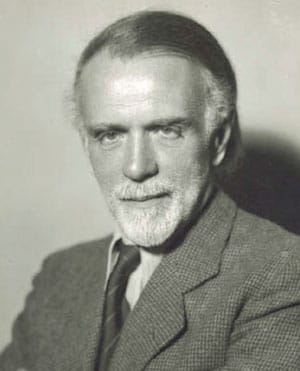
Zoltán Kodály was a firm believer in the power of music as a historical, educational, and civic tool, and a passionate advocate for the musical traditions of his native Hungary. Born in 1882 in what was then known as Austria-Hungary to amateur musician parents, Kodály’s vision in composing, cataloguing folk music, and devising his pedagogical system revolved around the articulation of a distinctly Hungarian identity free from “Germanization.”
Despite living through periods of seismic political change (which included both World Wars, an antisemitic and right-wing regime, a Stalinist government, and the 1956 Uprising), this commitment never wavered. Since his student days, Kodály’s musical talent was always paired with an academic spirit of inquiry. These interests would manifest in the folk-song collection tours he undertook in the years preceding World War I with Béla Bartók (a close friend and collaborator)—the tours were his primary inspiration for both his developing practices as a composer and educator.
In the interwar period, Kodály began to travel more widely as his orchestral and choral compositions found an international audience. But he remained equally devoted to his work in Hungary: lecturing, writing, and teaching composition in order to popularize his folk music-centric philosophy. Despite his vocal opposition to Hungary’s Nazi-allied government and antisemitic discrimination during World War II, Kodály remained in the country and retained a prominent position in Hungary’s musical life while Bartók emigrated to the United States.
Kodály’s ideas—about the preservation of folk traditions and their use in music education—have since found significant influence both inside and outside of his home country. In the later decades of his life, his educational system was introduced in more than 100 schools across Hungary—meanwhile, two years after death in 1967, the first foreign Kodály Society (chapters now operate in 34 countries) dedicated to his methods was founded just across the Bay in Oakland.
The Music
Named for the rural town in present-day Slovakia where Kodály spent his early childhood, Dances of Galánta was commissioned by the Budapest Philharmonic Society on the occasion of its 80th anniversary.
Despite Kodály’s extensive study of his native folk music, Galánta is instead rooted in a style of music called verbunkos, which as scholar Courtney Nichols notes, was Romani in origin, widely referenced in classical music from across Europe, and only later associated with Hungarian tradition. You can hear its signature elements—a recurring slow section (lassú) defined by a dotted rhythm and fast, rhythmic passages (friss)—clearly in the work, though these elements are amplified with classical techniques: rich orchestration, the introduction of major and minor harmonies underneath pentatonic and modal melodies, and detailed rhythmic notation which mimics a sense of freedom in timing.
Though many instruments—among them cellos, horns, and violins—get their turn with the lassú theme, it is the clarinet whose keening voice most often takes up the material. The friss sections—full of nimble doubling in the winds, stretches of rhythmic unison across many sections of the orchestra, and breakneck syncopations—demand virtuosity from nearly every section of the orchestra.
After the opening’s lyric and roving examination of the lassú themes, the piece’s first friss deviation is light and sparkling. These affects change as the alternation continues—some subsequent statements of the lassú are full-voiced and emotionally intense, while the additional friss interludes between them range from the spunkily syncopated to the off-kilter and lumbering.
As the longest and most substantial friss section integrates these different emotional registers and builds towards a feverish intensity, it is interrupted by one more contemplative, lyrical interlude. As the clarinet’s pondering dissipates, the high-tempo material returns as quickly as it was halted, ending the piece in a dramatic flash.
—Lev Mamuya
Rococo Variations, Opus 33
Piotr Ilyich Tchaikovsky
Born: May 7, 1840, in Kamsko-Votkinsk, Russia
Died: November 6, 1893, in Saint Petersburg, Russia
Work Composed: 1876
SF Symphony Performances: First—March 1923. Alfred Hertz conducted with Willem Dehe as soloist. Most recent—September 2018. Michael Tilson Thomas conducted the Opening Gala with Oliver Herbert as soloist.
Instrumentation: solo cello, 2 flutes, 2 oboes, 2 clarinets, 2 bassoons, 2 horns, timpani, and strings
Duration: About 18 minutes
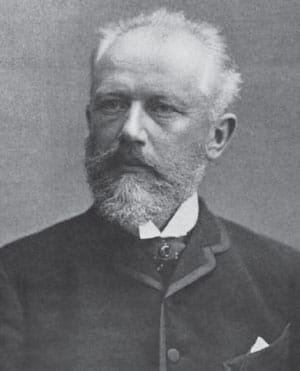
Piotr Ilyich Tchaikovsky is a titan both among Russian composers and other notable figures of the Romantic era at large. A composer of soloistic, chamber, orchestral, and vocal works, his contributions to each sphere stand as staples of those forms.
A sensitive child who found solace at the keyboard and in poetry, Tchaikovsky initially studied for the civil service. But after a brief and successful career following his graduation in 1859, he found it impossible to continue ignoring the work about which he was most passionate—he entered music school only a year later.
Upon his graduation from the Saint Petersburg Conservatory in 1865, Tchaikovsky’s characteristic sensibility was formed—a mode of music known and loved for its unabashed emotionality. This was perhaps a function of his experiences with tragedy as much as of the tools he received through his musical education: the untimely death of his mother while 14-year-old Tchaikovsky studied at boarding school, his repressed homosexuality—long denied by Russian censors but now a matter of record—and his brief and disastrous marriage to a fiancée threatening suicide should she not have received a proposal.
The latter event threatened to derail a prominent career as a composer and professor at Moscow Conservatory, and compelled Tchaikovsky to take flight, traveling around Europe for a time. But upon his arrival homewards a year later, he returned to his productive vein, penning some of his most widely performed pieces.
The Music
Tchaikovsky wrote the Rococo Variations towards the end of his first decade in Moscow (1866–76). The work was premiered with Tchaikovsky in absentia as he dealt with the dissolution of his marriage.
The piece is a paean to Mozart, whose music the young Tchaikovsky once described as “a sacred delight.” And for a work forged from admiration for the Classical-era master, what form could be more fitting than a theme and variations, the structure in which Mozart’s ability to wring endless variety out of simple materials was most prominently displayed?
From a plain-spoken, well-mannered melody (“Rococo” in style but actually written by Tchaikovsky himself), he conjures variations which toggle between the cello’s capacity for lyricism and virtuosity (though the soloist who premiered the work, Wilhelm Fitzhagen, is partially responsible for the way these contrasts unfold, having reordered several of the variations to form the version most commonly performed today). The first variation’s roving triplets and pirouette-like jumps in register, the second’s garrulous 16th-note exchanges with the first violins—these iterations contrast with the gentle, aria-like third variation and the trepidatious, minor-hued Andante of the sixth.
The pair in between make use of both registers—in the fourth, a crisp restatement of the theme adorned with dotted rhythms distracts itself into a flurry of ricochet before returning to its train of thought, more full-voiced than before. The fifth follows a similar pattern, with the soloist alternating between stretches of trilling filigree which augment the melody in the flute, and stretches of unaccompanied cadenza.
The finale is off to the races—a moto perpetuo, a flurry of rapid 32nd notes, and a final summit which takes the cello to the top of its range.
—L.M.
Symphony No. 8 in G major, Opus 88
Antonín Dvořák
Born: September 8, 1841, in Nelahozeves, Bohemia
Died: May 1, 1904, in Prague
Work Composed: 1889
Instrumentation: 2 flutes (2nd doubling piccolo), 2 oboes (2nd doubling English horn), 2 clarinets, 2 bassoons, 4 horns, 2 trumpets, 3 trombones, tuba, timpani, and strings
SF Symphony Performances: First—October 1930. Basil Cameron conducted. Most recent—March 2026. Itzhak Perlman conducted.
Duration: About 35 minutes
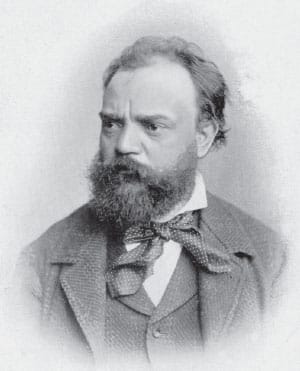
By 1889 Antonín Dvořák was an internationally famous composer, far from his beginnings as a Bohemian butcher’s son, local organist, and orchestral violist. In 1884 he toured England for the first time, conducting his own works in major London venues to great acclaim, and then returned home with the proceeds—buying an idyllic countryside property in Vysoká, where his sister-in- law and her husband lived. He renovated an old building into a summer residence, complete with an upright piano and studio to work in. Apart from music, he took great pleasure in gardening and raising pigeons there, alongside his wife and children.
The Eighth was really his third fully mature symphony. While the breakthrough Sixth had been intended for the Vienna Philharmonic, and the Seventh for London’s Royal Philharmonic Society, Dvořák seems to have begun the Eighth without a specific orchestra in mind. He began writing it at Vysoká in late August 1889 and completed it that November. He offered to bring it to Moscow as part of a tour organized by Tchaikovsky, but ultimately the premiere happened at home in Prague on February 2, 1890, with the National Theatre Orchestra. Dvořák dedicated the symphony to the Czech Academy of Sciences and Arts, which subsequently inducted him, and in the following years he would conduct the piece widely, including performances in London, Frankfurt, at the University of Cambridge, and at the 1893 Chicago World’s Fair.
The Berlin-based Fritz Simrock had been Dvořák’s primary publisher ever since Brahms introduced them with a recommendation in 1877. Their relationship had become strained, however, after Simrock made a lowball offer for Dvořák’s Seventh Symphony, and then outright declined to publish the Eighth, asking for more marketable chamber works instead. Dvořák, calling on his new English connections, turned to the London firm Novello, which published the Eighth in 1892.
The Music
“With this symphony, [Dvořák] wanted to produce a work that differed from his other symphonies and that elaborated the musical contents in a new way,” observed the composer’s first biographer, Otakar Šourek. The symphony’s tuneful beauty can hide its inventiveness: themes are rarely more than a few measures long, connecting and developing more through intuition than by formal devices. Brahms thought this was a shortcoming: “There’s too much that’s fragmentary, incidental, loitering about in the piece. Everything is fine, musically captivating and beautiful—but no main point!”
Dvořák, however, was beginning to see himself more as a musical poet or painter than strictly a composer in the Brahmsian mold. The musicologist Klaus Döge identifies the Eighth Symphony as a turning point in his career, part of a “compositional reorientation” toward more evocative and freely conceived music.
The first movement begins in the key of G minor with a lyrical cello melody that feels slower than the marked tempo of Allegro con brio. Is this is just an introduction or actually the main theme? The distinction breaks down as the flute entrance seems to be the “real” subject (set in the major home key with a livelier feel), yet the opening melody recurs later, which wouldn’t be expected of a simple introduction. Dvořák is creating his own organic form.
The two middle movements carry over subtle links from the first movement. The Adagio inverts the first movement’s opening—this time beginning with a major key idea in the strings before the flute enters with a pastoral minor response. A middle section paints a countryside scene, no doubt inspired by Vysoká, complete with a solo fiddle. The third movement, Allegretto grazioso, offers a sinuous waltz contrasted with an earthier folk dance (with a tune derived from Dvořák’s 1874 one-act opera The Stubborn Lovers).
The finale starts with a fanfare from two trumpets, introducing another cello theme that becomes the subject of evolving variations. Dvořák indulges in a bit of silliness with braying trills in the woodwinds and horns before a dramatic climax and energetic collapse.
The biographer Šourek thought the Eighth confirmed “not only Dvořák’s vital and artistic maturity, but also his personal and national originality,” surpassing his previous symphonies with “the charm of its suggestive, warmly intimate, and regional individuality.”
—Benjamin Pesetsky
This program note was originally written for the Melbourne Symphony.
About the Artists
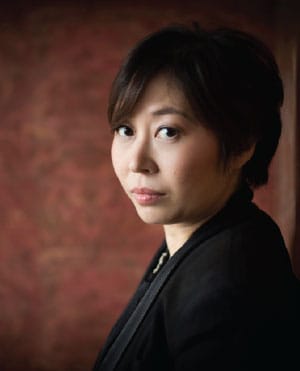
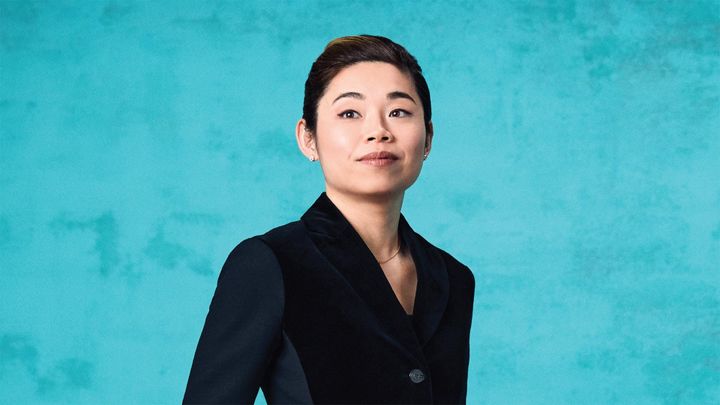
Xian Zhang
Xian Zhang is currently in her second season as music director of the Seattle Symphony and her 11th season as music director of the New Jersey Symphony. She was also recently appointed principal guest conductor of the China NCPA Orchestra in Beijing and serves as conductor emeritus of the Orchestra Sinfonica di Milano.
Her Deutsche Grammophon recording of works by Jennifer Higdon and Kevin Puts with the Philadelphia Orchestra and Time for Three won Grammy Awards in 2022 for Best Contemporary Classical Composition and Best Classical Instrumental Solo, and she won two mid-Atlantic Emmy Awards for the New Jersey Symphony’s concert films made during the pandemic. Her first recording for Seattle Symphony Media, an album of orchestral works by Qigang Chen, was released in August 2026.
Zhang appears this season with the Los Angeles Philharmonic, Toronto Symphony, São Paulo Symphony, Philharmonia Orchestra, Orchestre Philharmonique de Radio France, Berlin Radio Symphony, and Orchestre National de Belgique, among others. She has also appeared with the Philadelphia Orchestra, New York Philharmonic, Metropolitan Opera, St. Louis Symphony, Montreal Symphony, National Arts Centre Orchestra Ottawa, and Netherlands Radio Philharmonic. She made her San Francisco Symphony debut in February 2018.
Zhang previously served as principal guest conductor of the Melbourne Symphony and BBC National Orchestra of Wales, becoming the first female conductor to hold a titled role with a BBC orchestra. She was also the first woman to hold a music director position with a major Italian orchestra and the first woman to serve as music director of a major American West Coast orchestra.
Zhang studied piano and conducting at the Central Conservatory of Music in Beijing. She won first prize in the Maazel-Vilar Con- ducting Competition in 2002 and was appointed New York Philharmonic’s assistant conductor, subsequently becoming their associate conductor and the first holder of the Arturo Toscanini Chair. In 2023 she was awarded an honorary doctorate by the Juilliard School and in 2026 was elected member of the American Academy of Arts and Sciences.
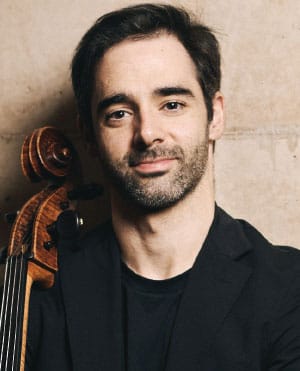
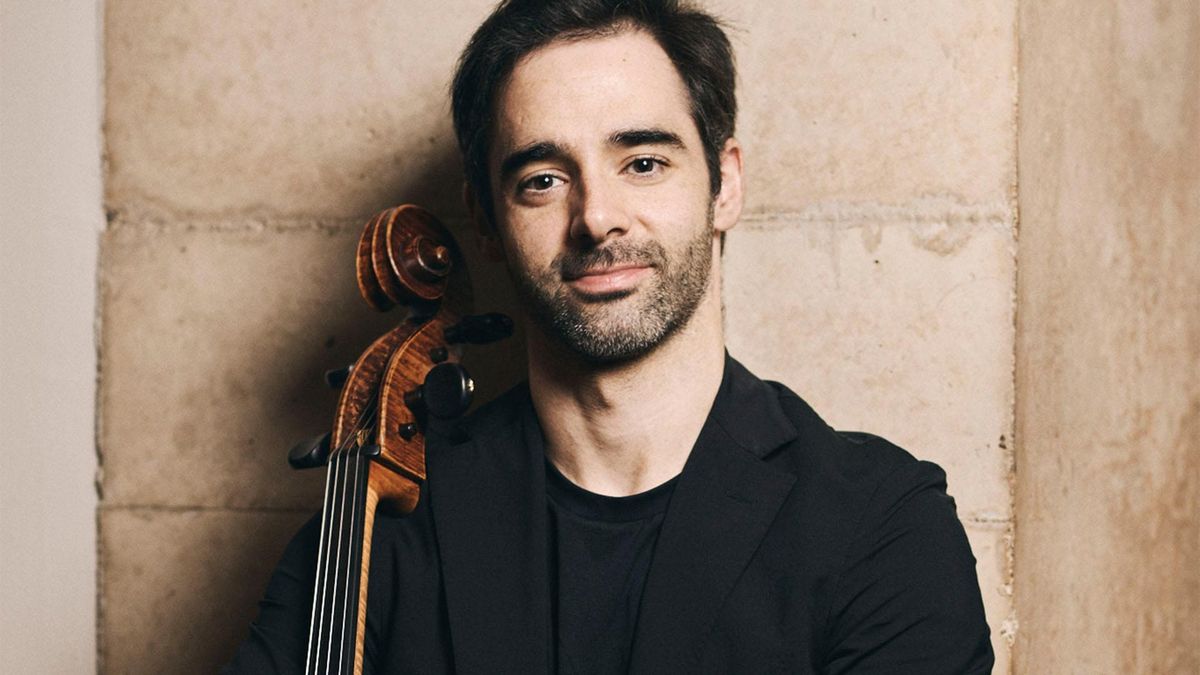
Pablo Ferrández
Pablo Ferrández was a prizewinner at the XV International Tchaikovsky Competition in 2015. This season, he debuts at the BBC Proms with the Royal Philharmonic and with the Leipzig Gewandhaus Orchestra, Chamber Orchestra of Europe, Philadelphia Orchestra, and Royal Scottish National Orchestra. He tours Spain with the Musikkollegium Winterthur Orchestra and Germany with the BBC Philharmonic, and also appears at the Verbier Festival.
Recent seasons have taken Ferrández to the Boston Symphony, Cleveland Orchestra, Los Angeles Philharmonic, Pittsburgh Symphony, Filarmonica della Scala, Toronto Symphony, Zurich Tonhalle Orchestra, Bavarian Radio Orchestra, Bamberg Symphony, Munich Philharmonic, NDR Elbphilharmonie, Rotterdam Philharmonic, Oslo Philharmonic, Beijing NCPA Orchestra, Tokyo Philharmonic, and Seoul Philharmonic, among others.
His debut album, Reflections (2021), released on Sony Classical, won the Opus Klassik Award. His second album, released in 2022, paired him with Anne-Sophie Mutter and Lambert Orkis in the Brahms Double Concerto with the Czech Philharmonic and Manfred Honeck, as well as in Clara Schumann’s Piano Trio. His most recent release, Moonlight Variations (2025), featuring Tchaikovsky’s Rococo Variations with the Swedish Chamber Orchestra, topped streaming charts and received critical acclaim.
Ferrández plays the Antonio Stradivarius “Archinto” cello of 1689, on a generous life-long loan from a member of the Stretton Society. He made his San Francisco Symphony debut in May 2024.