In This Program
The Concert
Thursday, October 22, 2026, at 7:30pm
Friday, October 23, 2026, at 7:30pm
Saturday, October 24, 2026, at 7:30pm
Joe Hisaishi conducting
David Lang
mountain (2014)
Steve Reich
Music for Ensemble and Orchestra (2018)
I. Sixteenths
II. Eighths
III. Quarters
IV. Eighths
V. Sixteenths
San Francisco Symphony Commission
Intermission
Joe Hisaishi
Concerto for Orchestra (2026)
I.
II.
III.
IV.
V.
San Francisco Symphony Commission and West Coast Premiere
Lead support for this concert series is provided by The Phyllis C. Wattis Fund for New Works of Music.
Program Notes
mountain
David Lang
Born: January 8, 1957, in Los Angeles
Work Composed: 2014
SF Symphony Performances: First and only—July 2015.
Edwin Outwater conducted at Pier 27.
Instrumentation: 4 flutes, 4 oboes, 3 clarinets, bass clarinet, 3 bassoons, contrabassoon, 4 horns, 4 trumpets, 4 trombones, tuba, timpani, percussion (large bass drum, vibraphone, and xylophone), harp, and strings
Duration: About 13 minutes
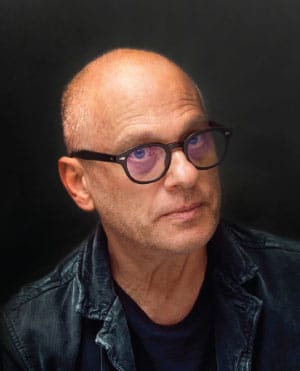
I have never been much of a nature guy. Probably my favorite nature experience happened when our kids were young, when my wife and I rented a summer cottage in Vermont. It was a very modest place but there was a little balcony off the bedroom that looked right out on a mountain, and I would sit there for hours, staring at the view. I wasn’t close enough to see any detail, or to differentiate among the plants or rocks or features, or to get my feet dirty. (This is really about as close to nature as I ever want to get . . . . ) What impressed me so much about the view was how unchanging it was. It was rugged and beautiful and far away and imposing and timeless, and it was that way every time I looked at it. Its dependability seemed to be a big part of its strength.
Of course, time is different for different things. Our lives don’t last very long, so our experiences and our attentions—and our music—tend to fill up with things that pass through us or by us very quickly. Mountains, on the other hand, don’t change too fast. Their lives seem eternal to us. Maybe it’s useful for us occasionally to contemplate the eternal.
—David Lang
Music for Ensemble and Orchestra
Steve Reich
Born: October 3, 1936, in New York
Work Composed: 2018
SF Symphony Commission
SF Symphony Performances: First and only—June 2019.
Joshua Gersen conducted.
Instrumentation: Ensemble—2 flutes, 2 oboes, 2 clarinets, 2 pianos, 2 vibraphones, electric bass, and strings. Orchestra—4 trumpets and strings.
Duration: About 20 minutes
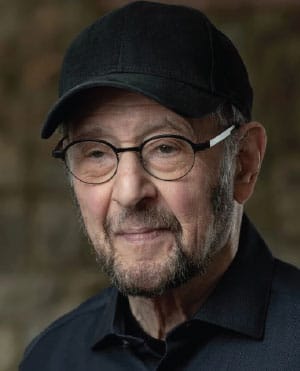
Music for Ensemble and Orchestra is an extension of the Baroque concerto grosso where there is more than one soloist. Here there are 20 soloists—all regular members of the orchestra, including the first stand strings and winds, as well as two vibraphones and two pianos. The piece is in five movements, though the tempo never changes, only the note value of the constant pulse in the pianos. Thus, an arch form: sixteenths, eighths, quarters, eighths, sixteenths. Music for Ensemble and Orchestra is modeled on my Runner of 2016, which has the same five movement form.
—Steve Reich
Concerto for Orchestra
Joe Hisaishi
Born: December 6, 1950, in Nakano, Japan
Work Composed: 2026
San Francisco Symphony Commission and West Coast Premiere
Instrumentation: 3 flutes (3rd doubling piccolo), 2 oboes, English horn, 3 clarinets (3rd doubling bass clarinet), 2 bassoons, contrabassoon, 4 horns, 3 trumpets, 3 trombones, tuba, timpani, percussion (triangle, cymbals, suspended cymbal, ride cymbal, finger cymbals, high-hat, tam-tam, tambourine, snare drum, bongo drums, tom-tom, bass drum, claves, cabasa, shaker, wood block, glockenspiel, vibraphone, xylophone, and marimba), harp, piano, celesta, and strings
Duration: About 45 minutes
My Concerto for Orchestra was composed on a joint commission from 10 ensembles, including the San Francisco Symphony, National Symphony Orchestra, and Toronto Symphony Orchestra.
This form, which treats the entire orchestra in a soloistic manner, is best known through the works of Béla Bartók, Witold Lutosławski, and Zoltán Kodály, though many other composers have taken it on, as it is a form well worth the effort. But conceptually, there’s also a difficult side to it. Many composers shape a work by developing both logical thought and intuitive imagination, asking questions about the work like “What will its theme be?,” “What will it express?,” and so on. In a concerto for orchestra, the musicians’ own playing becomes the principal focus of expression. In other words, it departs from the usual mode of composition using the orchestra to express something—here, the orchestra itself is the subject.
At first, I was thrown off by this. But rather than making the music about some arbitrary something!, what I aim for is the pure sense of motion in sound found in Baroque music: Bach first and foremost. Having conducted Bartók’s Concerto for Orchestra and Steve Reich’s The Desert Music myself, I approached this composition with the origins of minimalist music in mind; I took a more contemporary rhythmic approach in the first and third movements, giving melodic solo parts to each instrument in the second and fourth movements, and the final movement (which, in fact, I am rushing to put the finishing touches on even as I write this) is constructed by fusing the two, bringing the whole work together. In all, it will be a five-movement piece approximately 45 minutes long.
It is very difficult to perform. That is something I reflect on seriously as the composer. And yet, from my own experience having conducted orchestras around the world, I have faith in the high standard of orchestral playing today. And I hope that the members of the orchestra and everyone in the audience will enjoy the entertainment that lies beyond those difficulties.
—Joe Hisaishi
Translation: Reina Murooka
About the Artist
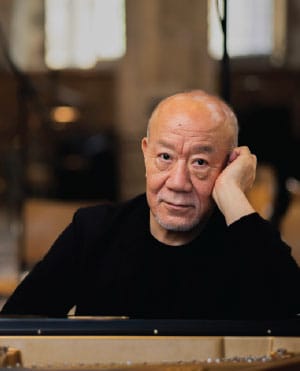
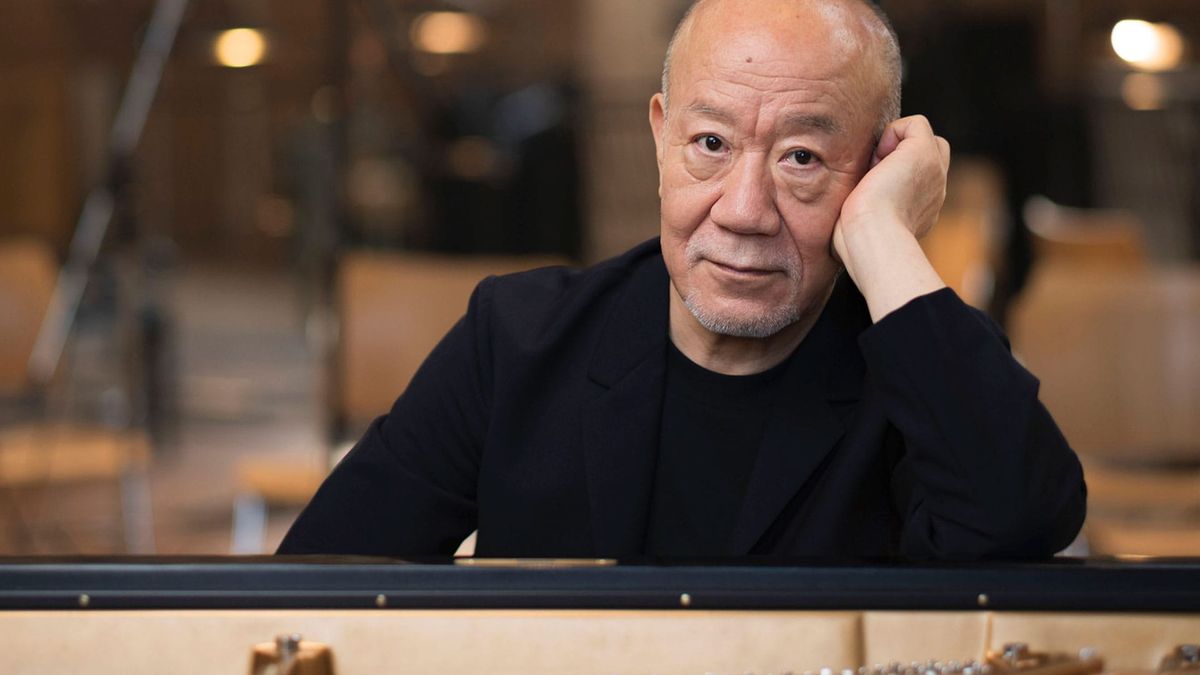
Joe Hisaishi
Joe Hisaishi is a composer, conductor, and pianist. His recent symphonic engagements have included the Los Angeles Philharmonic (where he is composer in focus), Philadelphia Orchestra (where he is composer in residence), Royal Philharmonic (where he is composer in association), Cleveland Orchestra, Pittsburgh Symphony, Seattle Symphony, Toronto Symphony, Chicago Symphony, Helsinki Philharmonic, Rotterdam Philharmonic, and Vienna Symphony. He is also music director of the Japan Century Symphony and made his San Francisco Symphony debut in September 2024.
Renowned for his long-standing collaboration with Japanese anime director Hayao Miyazaki, Hisaishi has won international awards for his scores. His popular soundtracks for Spirited Away, My Neighbor Totoro, Howl’s Moving Castle, Kiki’s Delivery Service, and Ponyo, among others, capture his sensitive and imaginative amalgamation of symphonic and minimalist genres. Many of these iconic works have been brought to huge live audiences in his recent performances in Madison Square Garden, Paris’s La Défense, Munich’s Olympic Hall, and the Tokyo Dome.
A Deutsche Grammophon exclusive artist, Hisaishi has released the titles Merry-Go-Round of Life and A Symphonic Celebration, bringing fresh excitement to his Studio Ghibli masterpieces. Joe Hisaishi in Vienna features the world premiere recordings of two of his compositions—Symphony No. 2 and Viola Saga—and his most recent recording, Joe Hisaishi Conducts, includes the music of Reich alongside his The End of the World.
Hisaishi has collaborated with artists including Nico Muhly, Bryce Dessner, Nadia Sirota, Philip Glass, David Lang, and Terry Riley. Since 2014, he has been presenting his eponymous Music Future concerts in Tokyo, bringing together the works and talents of these notable collaborators. He holds a young composers’ competition every year to inspire and empower young composers, and the winning composition makes its world premiere at his Music Future concerts.