In This Program
- The Concert
- Program Notes
- About the Artists
- Claude Debussy: Le Jet d’eau
- Maurice Ravel: Shéhérazade
- About San Francisco Symphony
The Concert
Friday, November 6, 2026, at 7:30pm
Sunday, November 8, 2026, at 2:00pm
Inside Music Talk with Alicia Mastromonaco
On stage one hour before each performance
Fabien Gabel conducting
Vincent d’Indy
Istar, Symphonic Variations, Opus 42 (1896)
Maurice Ravel
Shéhérazade (1903)
Asie
La Flûte enchantée
L’Indifférent
Claude Debussy
Le Jet d’eau (1889/1907)
Isabel Leonard mezzo-soprano
Intermission
Richard Strauss
Symphonic Fantasy on Die Frau ohne Schatten (1916)
First San Francisco Symphony Performances
The November 8 concert is presented in partnership with

Inside Music Talks are supported in memory of Horacio Rodriguez.
Program Notes
Istar, Symphonic Variations, Opus 42
Vincent D’Indy
Born: March 27, 1851, in Paris
Died: December 2, 1931, in Paris
Work Composed: 1896
SF Symphony Performances: First—February 1926. Alfred Hertz conducted. Most recent—April 1950. Pierre Monteux conducted.
Instrumentation: 2 flutes, piccolo, 2 oboes, English horn, 2 clarinets, bass clarinet, 3 bassoons, 4 horns, 3 trumpets, 3 trombones, tuba, timpani, percussion (triangle and cymbals), 2 harps, and strings
Duration: About 14 minutes
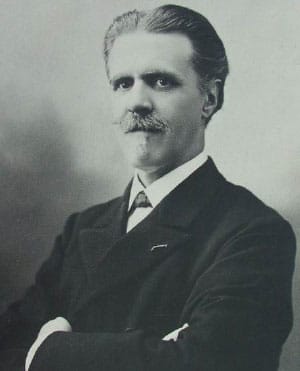
Vincent D’Indy had an outsize role in the cultural life of the fin de siècle Parisian musical world. A devoted student of César Franck, D’Indy inherited Franck’s admiration for Richard Wagner and Germanic music, and melded both Germanic and French styles into his compositions. D’Indy broke away from the Paris Conservatory after a clash of pedagogical beliefs and formed his own music school, the Schola Cantorum. Over his long career, he taught a long list of successful students ranging from Arthur Honegger to Darius Milhaud to Cole Porter. D’Indy left a legacy not only of his compositions, but also as a teacher, and more problematically, a legacy of right-wing nationalism and antisemitism. D’Indy’s admiration for Wagner stretched beyond his music; the Frenchman was well acquainted with Wagner’s essay Das Judentum in der Musik, and wrote his own tract on Wagner in 1930 that supported his antisemitic ideas.
Istar became a musical calling card for D’Indy. The composer often programmed the work during his conducting appearances, and the piece enjoyed a warm reception in the beginning of the 20th century. Alfred Hertz first brought Istar to the San Francisco Symphony in 1926, followed by Pierre Monteux in 1936, and the New York Philharmonic programmed the work 17 times between 1927–33 with various conductors.
D’Indy takes his title from the deity Ishtar (also Inanna), the Sumerian, Assyrian, and Babylonian goddess of fertility, sexual love, and war. The stories of Ishtar in the underworld are multitudinous, but D’Indy’s version follows the tale of Ishtar’s descent into the underworld to save her beloved, Tammuz, from Ereshkigal, the goddess of the underworld and Ishtar’s sister.
In the underworld, Ishtar must pass through seven portals to reach Ereshkigal. At each portal, Ishtar is divested of a piece of her raiment by an underworld guard, until she finally stands before her sister in the depths of the underworld, fully in the nude.
D’Indy employs a peculiar compositional strategy for the structure of the piece: it is a theme and variations, but in reverse. In other words, the most complex and ornate variation is heard at the beginning, and the theme bares itself in its entirety only near the end. Each of the seven variations represents one of the portals through which Ishtar must pass on her journey.
The piece is not simply a variations and theme. D’Indy incorporates three distinct musical elements: The theme (representing Ishtar), a summons motive, and a march motive. The piece opens with the summons motive, a distant stopped horn intoning the notes G–F–E-flat. It signals that Ishtar has arrived at a new portal. It is also a fragment of the Ishtar theme, but this only begins to become apparent in later variations. After the summons motive the march motive begins, a minor scale with “exotic” inflections, ushering Ishtar along in her quest. Both motives transform and evolve within each variation, but the form stays the same: variation (which includes elements of the summons, and eventually larger segments of the theme), then march, and finally summons again.
D’Indy was not immune to the fin de siècle fascination with orientalism, as exemplified through the story, the exoticism found throughout the piece, and finally, the Ishtar theme itself. With more of the corporeal form exposed, the music becomes less florid, less veiled in late 19th-century Romanticism. The sensuous, sinewy music that represents Ishtar as she stands before Ereshkigal, proud and fully nude, abounds with sighing figures that wend their way upward. The entire orchestra plays the theme in unison. The musicians, like Ishtar, perform a musical denuding as they spin the theme together as one toward the climax of the theme, which turns out to be the summons figure itself. It is as if Ishtar’s form finally becomes clear; not only her body but her intentions to rescue her beloved and the lengths she will go to get what she wants.
D’Indy evokes an entire musical underworld, deftly assembling layers of overlapping musical motives within variations, while subverting the traditional musical form to create a dramatic arc. And yet, even in such an ambitious work, the piece does not feel belabored or trite; it is instead transcendent and masterful. One could only wish that D’Indy had been able to spend more of his time committed to compositions such as this.
Shéhérazade
Maurice Ravel
Born: March 7, 1875, in Ciboure, France
Died: December 28, 1937, in Paris
Work Composed: 1903
SF Symphony Performances: First—February 1928. Maurice Ravel conducted with Lisa Roma as soloist. Most recent—July 2019. Gemma New conducted with Kelley O’Connor as soloist.
Instrumentation: solo mezzo-soprano, 2 flutes, piccolo, 2 oboes, English horn, 2 clarinets, 2 bassoons, 4 horns, 2 trumpets, 3 trombones, tuba, timpani, percussion (triangle, cymbals, suspended cymbals, tam-tam, tambourine, snare drum, bass drum, and glockenspiel), 2 harps, celesta, and strings
Duration: About 18 minutes
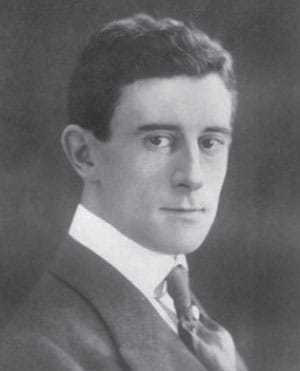
It goes without saying that all music is a reflection of its time, even pieces that are now viewed as timeless staples of the canon. Maurice Ravel’s Shéhérazade, as with D’Indy’s Istar, is a prime example of fin de siècle orientalism, with its qualities of sensuality, exoticism, and yearning for a faraway, hedonistic land full of freedom and excitement.
Early in his career, Ravel wrote two versions of Shéhérazade, composed five years apart. The first was a concert overture written in 1898, during his brief tenure as a composition student at the Paris Conservatory, and the second, a setting of three poems, was composed in 1903. Ravel borrowed from his earlier work, and turned to his friend Léon Leclère, known by his pen name Tristan Klingsor, for the text. A devout Wagnerian, the poet chose titular hero Tristan for his given name and the villain from Parsifal for his surname, although later in his life he distanced himself by saying he chose them because he liked the sounds of the names. A symbolist poet, Klingsor was fascinated with the sounds his poetry made, which made his works a fertile subject for music-setting. Ravel and Klingsor were friends through a group of male avant-garde artists, musicians, poets, and writers in Paris who called themselves Les Apaches. Klingsor wrote a series of 100 poems in 1903, inspired by One Thousand and One Nights, which had become wildly popular after an 1899 republication with a new translation by French Egyptian scholar Dr. Joseph Charles Madrus.
The first movement, “Asie” (Asia) centers around the narrator’s yearning to be immersed in the Orient. The vocal line opens with an ascending gesture, following an oboe solo reminiscent of the Armenian duduk (a traditional double-reed instrument). “Asie, Asie, Asie.” To the narrator, even the sound of the word is so scintillating, full of enchantment, mystery, and the promise of exotic experiences, that it must be thrice repeated. The singer also repeats “je voudrais” (I want) more than a dozen times, wishing to see “roses and blood,” “eyes dark with love,” and “smiling assassins.”
“La Flûte enchantée” (The Enchanted Flute) centers around the narrator yearning to hear a young lover play his flute, while an aging husband sleeps. The movement bears striking resemblance to Debussy’s Prélude á l’Après-midi d’un faune, as both open with a lustrous, sinewy flute solo. The flute and voice become intertwined toward the end of the movement, an enmeshment of the imagination as the narrator moves away from the sleeping husband and toward the sound of the flute.
The third movement, “L’Indifferent” (The Indifferent One), carries with it deeper connotations—of an indifferent lover, a youth on the cusp of becoming a man. L’Indifferent does not yet know the melancholy, the nostalgia that the older narrator feels in seeing this boy’s fleeting youth and innocence, or in seeing that youth pass by without even noticing the older figure. There is an atemporality in “L’Indifferent”—time seems to float, ambiguously ambling. Indeed, the entire orchestra wrenches to a halt at “mais non, tu passes” (but you walk by), which provides a sense of preemptive obsolescence in the older narrator. In a sense, even if the narrator escapes to Asie, there is no escaping the invisibility of age, or of unrequited desire. It is an unstable feeling, represented in the unstable harmonies. The only moments of harmonic stability are the opening and closing of the song, sans the singer.
Ravel later wrote that in composing Shéhérazade, “I succumbed to the profound fascination which the Orient has exerted upon me since childhood.” Ravel’s fascination stems from the cultural milieu in which he found himself, of course, but it also perhaps related to the perceived sexual freedom he imagined there, outside of the heteronormative expectations of Parisian society. This notion of freedom is of interest in the context of Shéhérazade not least of all because of the sensuality of the text, but also because of the historical precedent of homoeroticism in the trope of “L’Indifferent,” first in a painting by 18th-century painter Antoine Watteau, and later in this work. It is also worth noting that while Shéhérazade is often performed by a female singer, Ravel did not necessarily conceive of it solely for a woman’s voice. When a male singer performs the work, the affect is different, which may provide other insights into the text and word painting. Ravel was trying to be iconoclastic in this work; whether that was for his own self-identity, or to challenge norms is impossible to decipher.
Le Jet d’eau
Claude Debussy
Born: August 22, 1862, in Saint-Germain-en-Laye, France
Died: March 25, 1918, in Paris
Work Composed: 1889 (orch. 1907)
First SF Symphony Performances
Instrumentation: solo mezzo-soprano, 3 flutes, 2 oboes, 2 clarinets, 2 bassoons, 4 horns, 2 trumpets, 2 harps, celesta, and strings
Duration: About 5 minutes
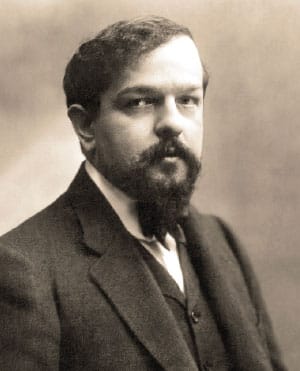
Claude Debussy is often described as an impressionist composer, but he saw himself more in the symbolist movement of the late 19th century. These artists, poets, and musicians sought to transcend rational thinking and realism imposed by scientific thought and were devotees of the indefinite and mysterious. Debussy’s Parisian circle was particularly entranced by Baudelaire and Wagner. “Le Jet d’eau” (The Fountain) is from the song cycle Cinq Poèmes de Baudelaire, composed in 1889. “Le Jet d’eau” was selected from Baudelaire’s volume of poetry Les Fleurs du mal, written in the wake of an industrializing Paris. The poems addressed themes of eroticism, decadence, violence, and an obsession with death.
Debussy’s orchestration, completed in 1907, evokes the sensual repose of the poem’s subject. The narrator is admiring their lover’s beauty in the resplendent moonlight, as a sheaf of water falls from a fountain in the courtyard like a shower of great tears. The lush orchestration is far more expansive than the original piano accompaniment, evoking a much more public display of this intimately private moment. The piece represents a transitional time in the composer’s life, just before his Suite bergamasque and a few years before his opera Pelléas et Mélisande, by which point he had moved beyond the influence of Wagner and into his own musical vernacular.
Symphonic Fantasy on Die Frau ohne Schatten
Richard Strauss
Born: June 11, 1864, in Munich
Died: September 8, 1949, in Garmisch-Partenkirchen, West Germany
Work Composed: 1916
First SF Symphony Performances
Instrumentation: 4 flutes, piccolo (3rd flute doubling additional piccolo), 2 oboes, English horn, 3 clarinets, basset horn, bass clarinet, 3 bassoons, contrabassoon, 4 horns, 4 trumpets, 3 trombones, tuba, timpani, percussion (triangle, cymbals, tambourine, bass drum, castanets, glockenspiel, and xylophone), 2 harps, celesta, organ, and strings
Duration: About 25 minutes
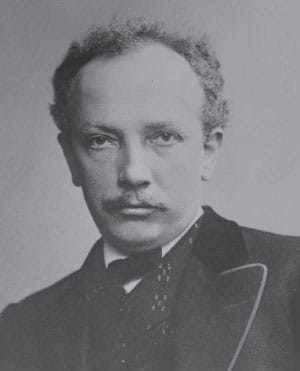
Richard Strauss and librettist Hugo von Hofmannsthal had a long collaborative relationship that produced some of the most important operas of the 20th century: Elektra, Der Rosenkavalier, Ariadne auf Naxos, Die Frau ohne Schatten, Die Aegyptische Helena, and Arabella. Die Frau ohne Schatten (The Woman Without a Shadow) is the longest of these operas, has an enormous orchestra of more than 100 players, and the libretto is undoubtedly the most complicated and convoluted of their collaborations. The Symphonic Fantasy distills the four-hour opera to around 25 minutes of music, without any singing but with most of the important leitmotifs and stirring musical drama of the full-length production.
It is helpful to understand the drama of the story unfolding in the music. The opera takes place on three different planes: that of the spirit world, where the god Keikobad, and eventually the voices of unborn children, reside. Then there is the human world of Barak (a dyer) and his wife. Third, there is a middle plane which serves as a link between the ethereal and mortal planes. This is where the Emperor and his wife (the daughter of Keikobad) reside. Scenes include imperial gardens, the dyer’s hut, a cottage in the woods, a temple, an underground vault, and an ethereal landscape.
The story centers around the Emperor’s otherworldly wife and her lack of a shadow. Unless she can procure a shadow that will allow her to produce children, her husband will turn to stone. The Empress and her Nurse travel to the mortal plane to coerce the wife of Barak to sell her shadow to the Empress. Ultimately, in an act of 11th-hour self-sacrifice, the Empress decides she cannot take the woman’s shadow. After a long pause, a ray of light shoots down on her and she is rewarded with a shadow of her own after all. Barak and his wife and the Emperor and Empress are reunited, along with a choir of all their unborn children.
This Märchen (fairy tale) opera bears themes around a woman’s quest for humanity, only achievable by becoming a mother, with the subplot of the dyer and his wife not getting along to the point where she would deprive him of children by giving up her own shadow. These are questionable themes for today’s audience, but the opera was also not immune from criticism and confusion after its 1919 premiere in the wake of World War I.
The Fantasy opens with low brass intoning the leitmotif for Keikobad, a brash, intimidating three-note theme. Then the low woodwinds slither through the Nurse’s leitmotif, which evokes the character’s insidious manipulation of others in order to acquire a shadow for the Empress. Next arrives the leitmotif for Barak’s goodness, a tender, lyrical melody. Strauss iterates on this theme, clearly setting the scene for a husband who was unfairly treated. After the denouement of Barak’s theme, the leitmotif for discontent makes its first appearance, played by the English horn. Strauss continues interpolating one leitmotif after another throughout the work, painting the narrative of the opera through the instruments alone.
Though Strauss does not engage with the same type of exoticism of the first two French works on this program, Hofmannsthal’s libretto is set in the “South Eastern Islands,” an imaginary faraway land. In this sense, it maintains similar themes of otherness, of the yearning of women, the desires of men, and how people imagine finding their own humanity. All three pieces consider gender in terms of form, function, sensuality, and sexuality, and provide fertile ground for listeners to question what these roles and expectations mean more than a century after the pieces on this program were premiered.
—Alicia Mastromonaco
About the Artists
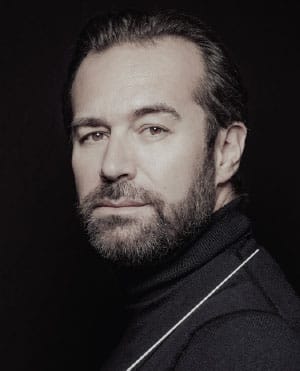
Fabien Gabel
Fabien Gabel is music director of the Tonkünstler Orchestra, leading concerts across the orchestra’s homes at the Vienna Musikverein, St. Pölten, and Grafenegg. This season, he returns to the Chicago Symphony, Danish National Symphony, Deutsches Symphonie-Orchester Berlin, and Orchestre Philharmonique de Radio France, and debuts with the Sydney Symphony, Finnish Radio Symphony, and Dresden Philharmonic. In recent seasons, he has also appeared with the Cleveland Orchestra, Minnesota Orchestra, Orchestre Symphonique de Montréal, London Philharmonic, Mahler Chamber Orchestra, Royal Stockholm Philharmonic, Seoul Philharmonic, and Metropolitan Opera. Gabel works regularly with all major Parisian orchestras as well as the Paris Opera. He made his San Francisco Symphony debut in February 2020.
Gabel drew international attention in 2004 as the winner of the Donatella Flick Conducting Competition, and then served as assistant conductor of the London Symphony from 2004–06. He went on to be music director of the Orchestre Symphonique de Québec between 2012–21 and the French National Youth Orchestra from 2017–21. Born in Paris to a family of accomplished musicians, Gabel began playing the trumpet at the age of six and honed his skills at the Paris Conservatory and at the Hochschule für Musik Karlsruhe. He played with various Parisian orchestras before embarking on his conducting career. Gabel was named Chevalier des Arts et des Lettres by the French government in January 2020.
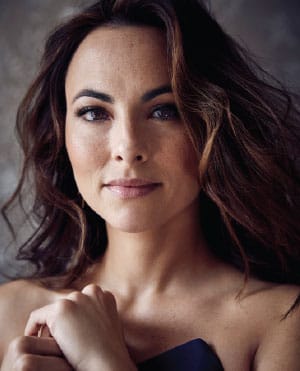
Isabel Leonard
This season, Isabel Leonard makes her house debut at Teatro Real in Madrid as Rosina in The Barber of Seville and sings her role debut as Julie in Show Boat with Houston Grand Opera. She is also featured as a soloist in the Metropolitan Opera’s Diamond Jubilee Gala. Orchestral highlights include opening the Houston Symphony’s season, a gala appearance with the San Diego Symphony, and performances with the St. Louis Symphony. She made her San Francisco Symphony debut in October 2013.
Leonard has extended her reach beyond classical music audiences through an active presence in film and popular culture. Her television and film credits include an appearance in the Rebecca Miller film She Came to Me and the Leonard Bernstein biopic Maestro, directed by Bradley Cooper. She has also been featured on Sesame Street, in scenes from Terrence McNally’s Masterclass, and is a familiar presence as a regular host of the Met’s Live in HD broadcasts.
Leonard is a recipient of the Richard Tucker Award and earned three Grammy Awards for Michael Tilson Thomas’s From the Diary of Anne Frank, recorded with the San Francisco Symphony on SFS Media; Ravel’s L’enfant et les sortilèges on Decca; and Thomas Adès’s The Tempest from the Metropolitan Opera on Deutsche Grammophon. She sits on the board of trustees at Carnegie Hall and on the artistic advisory board of ArtSmart. A native New Yorker, Leonard is a graduate of the Juilliard School.
Maurice Ravel: Shéhérazade
ASIE
Asie, Asie, Asie,
Vieux pays merveilleux des contes de nourrice
Où dort la fantaisie comme une impératrice
En sa forêt tout emplie de mystère.
Asie,
Je voudrais m’en aller avec la goélette
Qui se berce ce soir dans le port,
Mystérieuse et solitaire
Et qui déploie enfin ses voiles violettes
Comme un immense oiseau de nuit dans le ciel d’or.
Je voudrais m’en aller vers les îles de fleurs
En écoutant chanter la mer perverse
Sur un vieux rythme ensorceleur.
Je voudrais voir Damas et les villes de Perse
Avec les minarets légers dans l’air;
Je voudrais voir de beaux turbans de soie
Sur des visages noirs aux dents claires;
Je voudrais voir des yeux sombres d’amour
Et des prunelles brillantes de joie
En des peaux jaunes comme des oranges;
Je voudrais voir des vêtements de velours
Et des habits à longues franges.
Je voudrais voir des calumets entre des bouches
Tout entourées de barbe blanche;
Je voudrais voir d’âpres marchands aux regards louches,
Et des cadis, et des vizirs
Qui du seul mouvement de leur doigt qui se penche
Accordent vie ou mort au gré de leur désir.
Je voudrais voir la Perse, et l’Inde et puis la Chine,
Les mandarins ventrus sous les ombrelles,
Et les princesses aux mains fines,
Et les lettrés qui se querellent
Sur la poésie et sur la beauté;
Je voudrais m’attarder au palais enchanté
Et comme un voyageur étranger
Contempler à loisir des paysages peints
Sur des étoffes en des cadres de sapin
Avec un personnage au milieu d’un verger;
Je voudrais voir des assassins souriants
Du bourreau qui coupe un cou d’innocent
Avec son grand sabre courbé d’Orient.
Je voudrais voir des pauvres et des reines;
Je voudrais voir des roses et du sang;
Je voudrais voir mourir d’amour ou bien de haine.
Et puis m’en revenir plus tard
Narrer mon aventure aux curieux de rêves
En élevant comme Sindbad ma vieille tasse arabe
De temps en temps jusqu’à mes lèvres
Pour interrompre le conte avec art . . .
—
ASIA
Asia, Asia, Asia,
ancient and wondrous land of our nurses’ tales,
where phantasy sleeps like an empress
in its forest all filled with mystery.
Asia!
How I would like to go with the schooner
that lies rocking tonight in the port,
mysterious and solitary,
and spreads its violet sails at last
like a great night bird in the golden sky!
I’d like to go towards the isle of flowers,
listening to the perverse sea singing
on an old bewitching rhythm.
I’d like to see Damascus and the cities of Persia,
with their fragile minarets floating in the air
I’d like to see fine silken turbans
above faces with gleaming teeth.
I’d like to see eyes dark with love
and pupils sparkling with happiness
in skins golden as oranges.
I’d like to see velvet gowns
and long fringed coats.
I’d like to see pipes in mouths
fringed all about with snow-white beard.
I’d like to see sharp merchants with shifty looks,
and cadis and vizirs,
who, with a single crook of the finger,
dispense life or death as the spirit moves them.
I’d like to see Persia and India, and then China.
Big-bellied mandarins beneath umbrellas,
and princesses with delicate hands,
and wise men disputing
of poetry and beauty.
I’d like to linger in the enchanted palace
and like a foreign traveler
contemplate at leisure landscapes painted
on stuffs in frames of spruce,
with a figure in the center of an orchard.
I’d like to see assassins watching with a mocking smile
as the executioner chops off an innocent head
with his great curving Oriental scimitar.
I’d like to see beggars and queens,
I’d like to see roses and blood,
I’d like to see men dying of love or else of hate.
And then return later
to relate my adventures to those intrigued by dreams,
like Sinbad, raising my old Arabian cup
to my lips every so often,
in order artfully to interrupt the tale . . .
LA FLÛTE ENCHANTÉE
L’ombre est douce et mon maître dort,
Coiffé d’un bonnet conique de soie
Et son long nez jaune en sa barbe blanche.
Mais moi, je suis éveillée encor
Et j’écoute au dehors
Une chanson de flûte où s’épanche
Tour à tour la tristesse ou la joie,
Un air tour à tour langoureux ou frivole
Que mon amoureux chéri joue,
Et quand je m’approche de la croisée,
Il me semble que chaque note s’envole
De la flûte vers ma joue
Comme un mystérieux baiser.
—
THE ENCHANTED FLUTE
The darkness is pleasant and my master is asleep,
wearing a silken cap like a cone,
with his long yellow nose sunk in his white beard.
But I am still awake,
and am listening to the song
of a flute outside, which pours out
sadness and joy by turns—
a tune alternatively languorous and frivolous
that my lover is playing.
And when I draw near the window
it seems to me each note flies
straight from the flute to my cheek
like a mysterious kiss.
L’INDIFFÉRENT
Tes yeux sont doux comme ceux d’une fille,
Jeune étranger,
Et la courbe fine
De ton beau visage de duvet ombragé
Est plus séduisante encor de ligne.
Ta lèvre chante sur le pas de ma porte
Une langue inconnue et charmante
Comme une musique fausse . . .
Entre! Et que mon vin te réconforte . . .
Mais non, tu passes
Et de mon seuil je te vois t’éloigner
Me faisant un dernier geste avec grâce
Et la hanche légèrement ployée
Par ta démarche féminine et lasse . . .
—Tristan Klingsor
—
THE INDIFFERENT ONE
Your eyes are gentle as a girl’s,
young stranger,
and the delicate curve
of your handsome face shaded with down
is even more seductive of outline.
On my doorstep your lips sing
a fascinating unknown tongue,
deceptively like music . . .
Come in, and let my wine refresh you . . .
But no, you pass on
and I see you draw away from my threshold,
making me a last graceful salute,
your hips lightly undulating
in your lethargic effeminate gait . . .
Translation: Peggie Cochrane
Claude Debussy: Le Jet d’eau
Tes beaux yeux sont las, pauvre amante!
Reste longtemps, sans les rouvrir,
Dans cette pose nonchalante
Où t’a surprise le plaisir.
Dans la cour le jet d’eau qui jase
Et ne se tait ni nuit ni jour,
Entretient doucement l’extase
Où ce soir m’a plongé l’amour.
La gerbe d’eau qui berce
Ses mille fleurs,
Que la lune traverse
De ses pâleurs,
Tombe comme une averse
De larges pleurs.
Ainsi ton âme qu’incendie
L’éclair brûlant des voluptés
S’élance, rapide et hardie,
Vers les vastes cieux enchantés.
Puis, elle s’épanche, mourante,
En un flot de triste langueur,
Qui par une invisible pente
Descend jusqu’au fond de mon cœur.
La gerbe d’eau qui berce
Ses mille fleurs . . .
Ô toi, que la nuit rend si belle,
Qu’il m’est doux, penché vers tes seins,
D’écouter la plainte éternelle
Qui sanglote dans les bassins!
Lune, eau sonore, nuit bénie,
Arbres qui frissonnez autour,
Votre pure mélancolie
Est le miroir de mon amour.
La gerbe d’eau qui berce
Ses mille fleurs . . .
—Charles Baudelaire
—
Your beautiful eyes are weary, poor lover!
Rest awhile, without opening them,
in this languid pose,
where pleasure has surprised you.
The babbling fountain in the courtyard,
never silent by day or by night,
sweetly prolongs the ecstasy
into which love has plunged me this evening.
The sheaf of water that cradles
its thousand flowers,
through which the moonlight passes
with its pallid glow,
falls like a shower
of great tears.
And so your soul, ignited
by the burning flash of rapture,
takes flight, swift and daring,
toward vast enchanted skies.
Then, dying, it spills over,
in a wave of sad listlessness,
following an unseen slope
down to the depths of my heart.
The sheaf of water that cradles
its thousand flowers . . .
O you, whom night makes so beautiful,
how sweet it is, bending close to your breast,
to listen to the eternal lament
sobbing among the fountain basins!
Moonlight, the sound of water, blessed night,
trees that tremble all around,
your pure melancholy
mirrors my love.
The sheaf of water that cradles
its thousand flowers . . .