In This Program
The Concert
Sunday, October 4, 2026, at 7:30pm
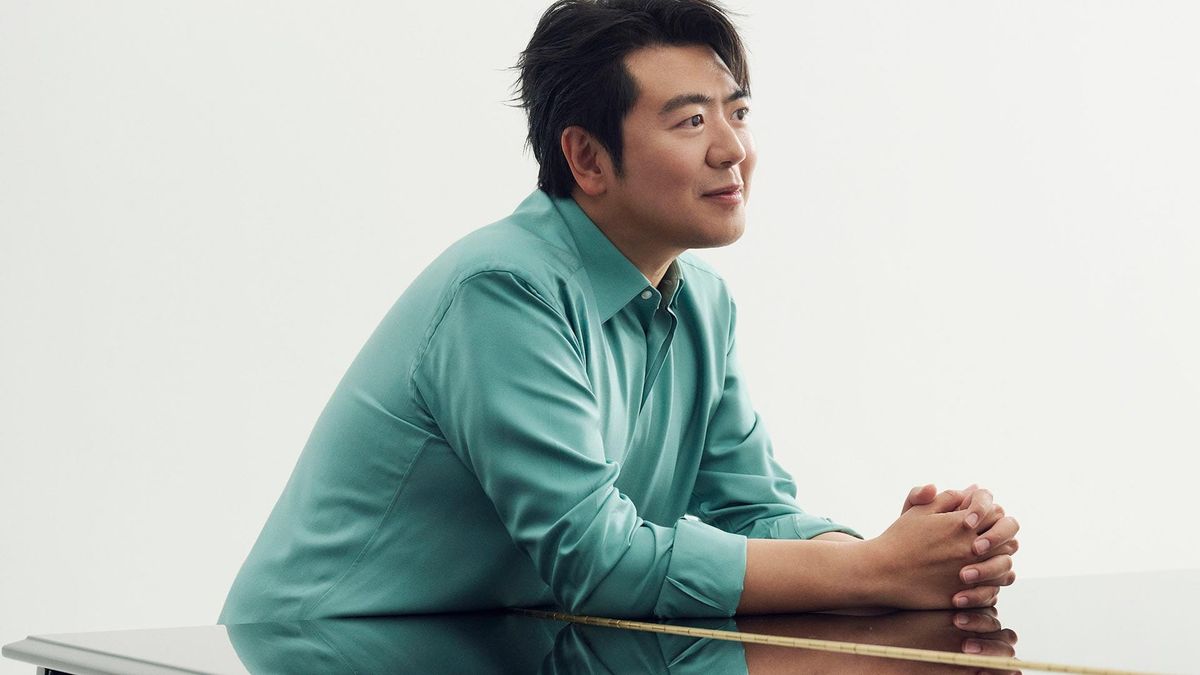
Lang Lang piano
Wolfgang Amadeus Mozart
Rondo in D major, K.485 (1786)
Ludwig van Beethoven
Piano Sonata No. 8 in C minor, Opus 13, Pathétique (1798)
Grave–Allegro di molto e con brio
Adagio cantabile
Rondo: Allegro
Ludwig van Beethoven
Piano Sonata No. 31 in A-flat major, Opus 110 (1821)
Moderato cantabile molto espressivo
Allegro molto
Adagio ma non troppo
Fuga: Allegro ma non troppo
Intermission
Isaac Albéniz
Selections from Suite española, Opus 47 (1886)
Granada (Serenata)
Cataluña (Corranda)
Sevilla (Sevillanas)
Cádiz (Canción)
Asturias (Leyenda)
Castilla (Seguidillas)
Enrique Granados
Quejas, o La Maja y el ruiseñor from Goyescas, Opus 11, no.4 (1911)
Franz Liszt
Consolation No. 2 in E major (1850)
Tarantella from Venezia e Napoli (1840)

Program Notes
Rondo in D major, K.485
Wolfgang Amadeus Mozart
Born: January 27, 1756, in Salzburg
Died: December 5, 1791, in Vienna
Work Composed: 1786
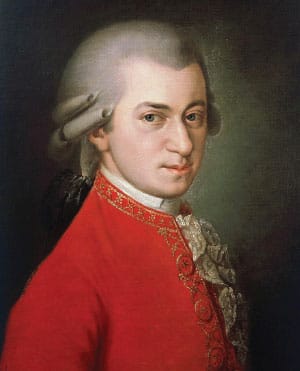
Wolfgang Amadeus Mozart’s D-major Rondo is attractive, charming, and not a rondo. That’s Franz Niemetschek’s fault. Mozart’s first biographer and an early owner of the original manuscript, he slapped a “rondo” label on a piece in standard-grade sonata form that Mozart had identified only as Allegro.
Name notwithstanding, the D-major something-or-other provides an unusual example of Mozart’s employment of a technique that’s normally associated with Joseph Haydn: “monothematic” sonata form, or using the same melody for the primary and secondary themes. That sort of thing can turn tiresome in a heartbeat, but by dint of skillful management of his key centers and judicious positioning of his themes, Mozart keeps this ever-popular piano piece fresh and engaging throughout its entire length.
Piano Sonata No. 8 in C minor, Opus 13, Pathétique
Ludwig van Beethoven
Baptized: December 17, 1770, in Bonn
Died: March 26, 1827, in Vienna
Work Composed: 1798
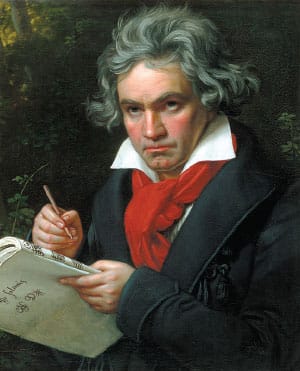
Ludwig van Beethoven arrived in Vienna at a propitious time for his career development. Mozart was recently deceased, Haydn was either away in London or occupied with his late-period oratorios and masses, and nobody else in town was all that competitive. The young Beethoven was just as thrilling a pianist as he was a composer, and his volatile personality enhanced rather than diminished his appeal. In this so-called “early period” of the 1790s, Beethoven’s works not only showcase the nervy brilliance of a young celebrity, but they also anticipate the titan to come.
One may dub Beethoven’s Opus 13 as godfather to a century’s worth of piano sonatas. It expanded the character of the solo sonata far past its original drawing-room persona and endowed it with a near-symphonic vibe. There had been nothing remotely like the Pathétique’s first movement; the opening Grave states its intentions via powerful rhetorical flourishes then leads into an Allegro of unprecedented pianistic power, what with its left-hand oscillating octaves—essential to an intermediate pianist’s training to this day—and its nonstop propulsiveness. That the Grave recurs twice within the main body of the movement, at the end of the Exposition and just prior to the explosive coda, makes the movement all that more unpredictable, radical, and revolutionary.
The second-place Adagio cantabile reverts to a more inward, domestic venue, via lyric composure and an exquisite primary theme, not to mention its key of A-flat major, always richly colored in Beethoven. Then comes the Allegro finale, cast in sonata-rondo form, a challenging structure that began appearing in the 1780s and is generally restricted to only those composers whose craftsmanship is highly secure. Technical concerns aside, the Allegro rekindles the fires of the opening movement, with only the briefest of respites before an unexpected flare brings the sonata to an abrupt close.
Piano Sonata No. 31 in A-flat major, Opus 110
Ludwig van Beethoven
Work Composed: 1821
When in May 1820 Beethoven contracted with Berlin publisher Adolph Martin Schlesinger for a set of three piano sonatas, the plan was for a reasonably quick turn-around of three months. That was soon revealed as magical thinking from both parties, although Beethoven did submit a more-or-less complete Sonata in E major, Opus 109, by September. That was actually quite impressive under the circumstances. Even if Beethoven wasn’t preoccupied with several other demanding projects (he was), and even if his health wasn’t precarious (it was), he was unlikely to have been capable of producing three such radical rethinkings of the piano sonata in so short a time. Creations of such sublimity do not spring into existence overnight—or even over 90 nights. Beethoven took the time he needed, so the next sonata, Opus 110 in A-flat major, was not available until early 1822, while the final sonata, Opus 111 in C minor, appeared a year later.
Opus 110 displays numerous characteristics of Beethoven’s late style: forms either pared down to the bare essence or disassembled and re-assembled in new guises, the extensive use of counterpoint, the importation of theatrical elements such as recitative, aria, and even popular songs into instrumental genres, contrasts so extreme as to test the boundaries of coherence, novel instrumental sonorities, and a dramatically expanded emotional range, all unified by motifs that recur throughout.
Beethoven’s indication of con amabilità (with amiability) in the very first measure could very well apply to the entire first movement. A Schubertian primary theme is followed by a sturdier secondary theme, marked by solid left-hand chords and a constantly ascending right-hand melody, soon followed by an almost resigned-sounding closing theme. The development is simple while the recapitulation is considerably expanded, leading to a coda that ends, after a fleeting moment of angst, with a pair of delicate A-flat major chords.
The Allegro molto is a scherzo—although unmarked as such—that crackles with broad humor despite its minor mode. It doesn’t come to a conclusive ending, but rather spins off into an F-major triad that resolves into the ensuing transition, a recitative-like Adagio, ma non troppo notated mostly without bar lines.
Operatically-tinged instrumental recitatives aren’t all that common in Beethoven’s earlier work, but in his late period they became significantly more frequent. In this, one of Beethoven’s most remarkable adaptations of operatic idioms, the piano is called upon to mimic a human voice, leading directly into the Arioso dolente, an utterance of transcendent beauty and harmonic mystery. The arioso leads without pause to the radiant Fuga, culminating in what is surely one of the most optimistic endings in all Beethoven.
Selections from Suite española, Opus 47
Isaac Albéniz
Born: May 29, 1860, in Camprodón, Spain
Died: May 18, 1909, in Cambo-les-Bains, France
Work Composed: 1886
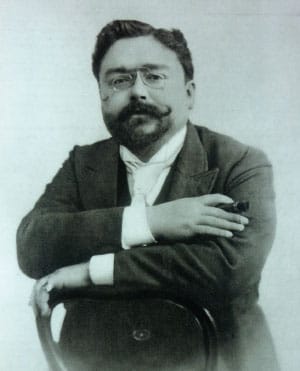
Late in his sadly brief career, Isaac Albéniz was to create one of the enduring monuments of Spanish music: Iberia, 12 brilliant fusions of contemporary French idiom with Spanish traditional styles and Lisztian piano virtuosity. The seeds for Iberia are manifest in the early Suite española, a fragrant collection of dance rhythms, folk idioms, and guitar techniques ingeniously transferred to the piano. Begun in 1886 with just four pieces, the suite reached its final form only after Albéniz’s death when the editor Hofmeister added four more pieces drawn from various publications, assigning the whole a more or less random “Opus 47” catalog number. (There is no rhyme or reason to Albéniz’s opus numbers; he was careless about keeping track of his own compositions.)
A sonic tour of Hispanophone regions, the movements of the Suite española each carry a geographical name along with a musical title. The opening Granada is a fine, lyrical serenade that Albéniz intended to reflect the region’s Arabic influences, its striking evocation of guitar technique so effective that the piece is better known in Miguel Llobet’s guitar transcription than in its original piano version. It is followed by a corranda from Catalonia (Cataluña), a popular dance related to the corrente found in Baroque suites, especially in its triple meter and jaunty dotted rhythms.
Albéniz himself premiered Sevilla in 1885. A rhythmic dance in triple meter, the Sevillanas was traditionally both sung and danced during the summer feria in Seville. It is among Albéniz’s few pieces about his native Catalonia, and is appropriately dedicated to his Catalan querida Madre, “dear mother.”
Cádiz (referring to both the city and the region) is subtitled “Canción”—in some editions, anyway; others might call it a “Saeta” or “Serenata”—it presents a sweetly lyrical melody in octaves that flanks a notably darker middle section. Asturias, one of the pieces added later to the suite, is misnamed by the publisher. It has nothing particularly to do with the northern Spanish region of Asturias, but is a flamenco-based evocation of Andalusia. Easily the most guitar-like movement of the suite, Asturias stands among the most familiar and beloved works in the guitar repertory, described by Albéniz biographer Walter Aaron Clark as “pure Andalusian flamenco.”
Finally, Castilla derives from Castilian folk songs, as its name implies. The piece is a seguidilla, a fast and sharply rhythmic dance in triple meter with elaborate and animated footwork but relatively little upper-body movement.
Quejas, o La Maja y el ruiseñor from Goyescas, Opus 11, no.4
Enrique Granados
Born: July 27, 1867, in Lérida, Catalonia, Spain
Died: March 24, 1916, in an attack on the SS Sussex in the
English Channel
Work Composed: 1911
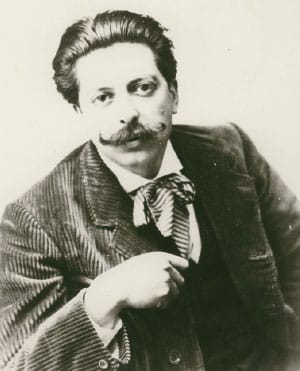
“I am enamored with the psychology of Goya, with his palette, with him, with his muse the Duchess of Alba, with his quarrels with his models, his loves and flatteries.” So wrote Catalan composer Enrique Granados, whose piano suite Goyescas celebrates the world of Goya’s bohemian majos (young men) and majas (young women) with lavish music that is “like passing the fingers through masses of richly coloured jewels,” according to English critic Ernest Newman.
Granados was abundantly equipped to capture the world of the majos in music. His fascination with native Spanish music was matched by his mastery of the grand Romantic piano tradition at its most exuberant. His piano writing was vigorous, melodic, rich, and usually fun—albeit shatteringly difficult—to play. He was not a composer who bothered overly with formal or other structural issues; his writing was fluid, often quasi-improvisatory, and structurally free.
Quejas, o La Maja y el ruiseñor (The Maiden and the Nightingale) is the acknowledged crown jewel of the Goyescas, a touching evocation of a woman worried about her lover’s safety in a duel, who “sits on a bench in the palace garden, listening to the sad song of a nightingale under the light of the moon.”
Consolation No. 2 in E major
Franz Liszt
Born: October 22, 1811, in Doborján, Hungary
Died: July 31, 1886, in Bayreuth, Kingdom of Bavaria
Work Composed: 1849–50
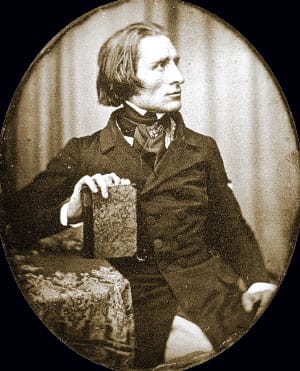
The character piece is to Romantic piano literature what the art song is to vocal repertory: a whiff of bottled emotion, designed to be heard in a small gathering, or just as a private affair between performer and score.
Composers gave typically gave their character pieces a wide variety of titles, some fanciful and others rather dry statements of purpose. Johannes Brahms, never one for programmatic whimsy, referred to his late masterworks in the genre as Klavierstücke—that is, piano pieces, and it doesn’t get more matter-of-fact than that. Franz Liszt was more inclined towards the extra-musical; his character pieces bear descriptive titles such as Sposalizio, Après une lecture de Dante, or Vallée d’Obermann. But he also produced his fair share of Album Leaves and Klavierstücke.
With his Consolations, aka Six Poetic Thoughts, Liszt journeyed to the domain of the Chopin nocturnes. Even if the third piece is the most often programmed, there’s a great deal to say for the ineffable charm of the second in E major, a delectable poetic morceau that takes an unaffected melody through its paces in a three-part form—that is, two statements of the theme flanking a brief central interlude. The third section includes an instance of what was considered a special pianistic effect back in Liszt’s day, the impression of a ghostly third hand that plays the melody in the middle of the keyboard, surrounded by upper and lower lines. The piece ends with a brief coda that revisits the interlude.
Tarantella from Venezia e Napoli
Franz Liszt
Work Composed: 1840
Liszt was many things to many people, but lazy he most indubitably was not. His catalog of piano music contains hundreds upon hundreds of pieces in a vast array of genres. Fortunately, Liszt gathered some of his prolific output into named collections, among which we find the three volumes of Années de pèlerinages (Years of Pilgrimage). It’s 26 pieces in all, geographically organized; the first volume focuses on Switzerland, and the second on Italy. (The third volume is rather less rooted.)
The Années give us access to the mind of a high-voltage personality who never let a single experience escape his creative dynamo. Liszt looked at, listened to, thought on, and dreamed about everything he encountered. The Italian volume covers an extraordinarily wide gamut of inspirations, from Petrarch to Rafael to Dante, and as if that wasn’t enough, Liszt threw in a three-piece supplement Venezia e Napoli that includes the astounding Tarantella, a blazing virtuoso display piece that takes pianistic derring-do to peak levels. It’s the sort of thing that made Liszt the era’s equivalent of a rock star, and even nowadays it hasn’t lost its capacity to astonish.
—Scott Foglesong
About the Artists
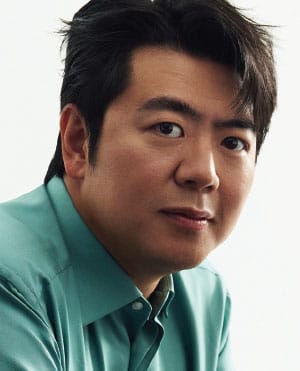
Lang Lang
As a pianist, educator, and philanthropist, Lang Lang is one of the world’s most influential and committed ambassadors for the arts in the 21st century. Equally happy playing for billions of viewers at the 2008 Olympic Opening Ceremony in Beijing or for a few hundred children in the public schools, he is a master of communicating through music.
Lang Lang performs with the world’s top orchestras, collaborating with conductors including Simon Rattle, Gustavo Dudamel, Daniel Barenboim, and Christoph Eschenbach. Known for thinking outside the box, Lang Lang has also performed with Metallica, Pharrell Williams, and Herbie Hancock. In 2008 he founded the Lang Lang International Music Foundation. In 2013 the Secretary General of the United Nations designated him a Messenger of Peace, focusing on global education.
Lang Lang started playing the piano at age three and gave his first public recital at five. He entered Beijing’s Central Music Conservatory at nine; four years later, he won first prize at the International Tchaikovsky Competition for Young Musicians. He then moved to Philadelphia to study with pianist Gary Graffman at the Curtis Institute of Music. He was 17 when his big break came: substituting for André Watts at the Gala of the Century, playing Tchaikovsky’s First Piano Concerto with the Chicago Symphony. He became an overnight sensation. He made his San Francisco Symphony debut in October 2000 as a Shenson Young Artist.
In 2010, Lang Lang received the Crystal Award in Davos and was chosen as one of the 250 Young Global Leaders by the World Economic Forum. He holds honorary doctorates from the Royal College of Music, the Manhattan School of Music, and New York University. In December 2011 he was honored with the highest prize awarded by the Ministry of Culture of the People’s Republic of China and also received the highest civilian honors in Germany (Merit of the Federal Republic of Germany) and France (Medal of the Order of Arts and Letters). In 2016 he was invited to the Vatican to perform for Pope Francis. He has also performed for numerous other international dignitaries, including four US presidents and the leaders of many nations.