In This Program
The Concert
Sunday, October 25, 2026, at 2:00pm
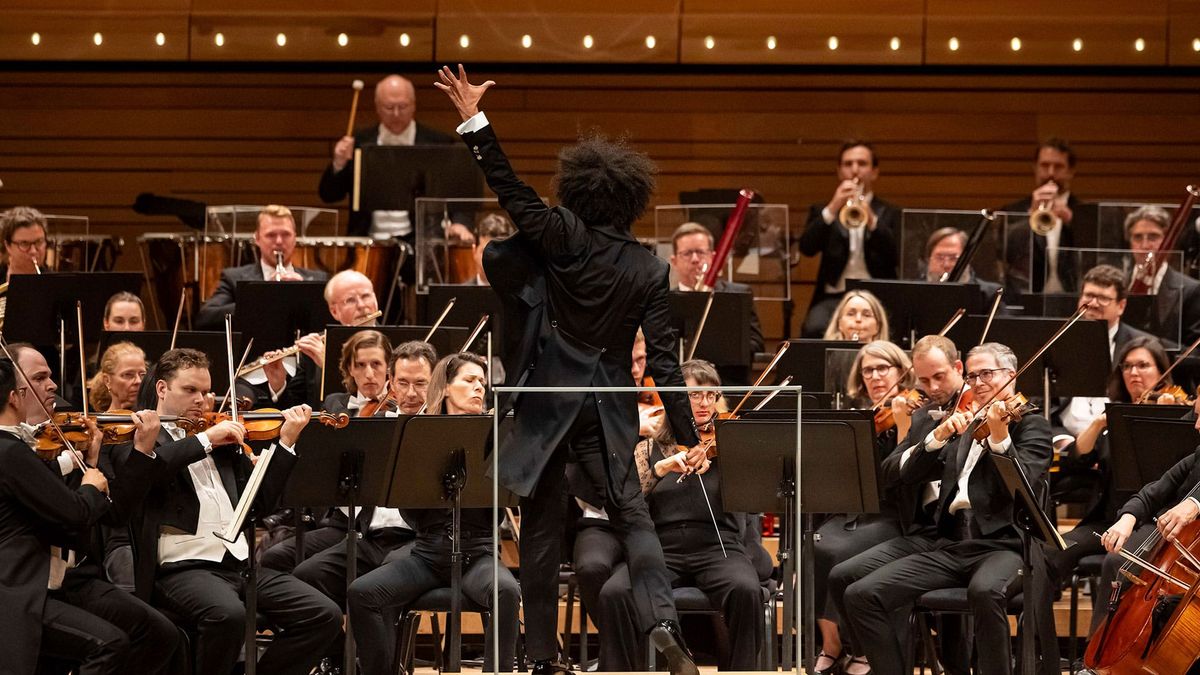
Rafael Payare music director and artistic director
Orchestre Symphonique de Montréal
Piotr Ilyich Tchaikovsky
Violin Concerto in D major, Opus 35 (1878)
Allegro moderato–Moderato assai
Canzonetta: Andante
Finale: Allegro vivacissimo
Leonidas Kavakos
Intermission
Dmitri Shostakovich
Symphony No. 10 in E minor, Opus 93 (1953)
Moderato
Allegro
Allegretto–Lento–Allegretto
Andante–Allegro
Program Notes
Violin Concerto in D major, Opus 35
Piotr Ilyich Tchaikovsky
Born: May 7, 1840, in Kamsko-Votkinsk, Russia
Died: November 6, 1893, in Saint Petersburg, Russia
Work Composed: 1878
Instrumentation: solo violin, 2 flutes, piccolo, 2 oboes, English horn, 2 clarinets, 2 bassoons, 4 horns, 2 trumpets, 3 trombones, tuba, timpani, percussion (cymbals and bass drum), harp, and strings
Duration: About 33 minutes
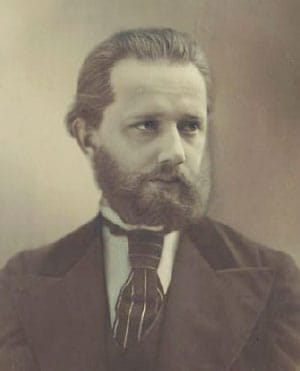
Piotr Ilyich Tchaikovsky wrote his Violin Concerto during a complex period of his life, a time of deep reflection and remembrance. Although they never officially divorced, his 1877 marriage to Antonia Ivanovna Milyukova fell apart within two months. Tchaikovsky’s sexuality as a gay man has been extensively researched and written about, and he married Milyukova only under duress in the first place. The dissolution had a deep and lasting impact on the composer’s psyche, causing (among other things) depression, impaired creativity, and an insatiable wanderlust. In particular, the following eight years, from 1877–85, were a time of constant travel throughout Europe.
The failure of his marriage was somewhat ameliorated by a new and more lasting epistolary relationship between the composer and his longtime patroness, Nadezhda von Meck. She first wrote to the composer in 1877, and although they never met in person, as was their agreement, her patronage spanned 13 years and 1,200 letters. It is thanks to these letters that we know so much about Tchaikovsky’s inner life.
It was due to von Meck’s largesse that Tchaikovsky spent the summer of 1878 in Clarens, Switzerland, a small resort near Lake Geneva (incidentally, Clarens was also where Stravinsky later wrote The Rite of Spring and Pulcinella). Tchaikovsky wanted to retreat from the world following his marriage fiasco, and try to find his musical voice once again. During this time, a former student, violinist Iosif Kotek, came to visit. Kotek, who was studying in Berlin with the famous violinist Joseph Joachim, had been an intermediary between Tchaikovsky and von Meck. The two played through many violin pieces together, including Édouard Lalo’s Symphonie espagnole. Tchaikovsky was enormously inspired by this “Spanish symphony” and decided to begin work on a violin concerto himself.
The concerto famously endured one of the most brutal invectives in music history from Eduard Hanslick, a famously opinionated Viennese critic, aestheticist, and historian. Hanslick was a champion of Brahms, whose own violin concerto had been premiered just a few years earlier. Hanslick wrote that after Tchaikovsky’s inoffensive opening, “soon vulgarity gains the upper hand and asserts itself to the end of the first movement. The violin is no longer played; it is pulled, torn, made black and blue.” This is likely regarding the emphatically virtuosic triple stops that can indeed sound belabored in certain hands. Hanslick continued that the Adagio is on its best, “winning” behavior. But the finale is another story. He wrote:
[It] breaks off to make way for a finale that transfers us to a brutal and wretched jollity of a Russian holiday. We see plainly the savage vulgar faces, we hear curses, we smell vodka. Friedrich Vischer once observed, speaking of obscene pictures, that they stink to the eye. Tchaikovsky’s Violin Concerto gives us for the first time the hideous notion that there can be music that stinks to the ear.
It is unclear whether Hanslick ever revisited this concerto or expressed changing opinions of the piece as it gained traction among the violinists of the day. What is clear is that this review deeply affected Tchaikovsky, who is said to have quoted it from memory for the rest of his life.
The composer was also upset that several Russian authorities on violin music refused to play the piece, including its dedicatee, Leopold Auer. Tchaikovsky wrote that Auer had “played all manner of dirty tricks” on him by calling the piece unplayable and claiming it made a “mockery of the public.” Similarly, Kotek refused to play the piece in public, despite having advised on its composition and having helped to compose the first movement cadenza. Tchaikovsky wrote in a letter how grateful he was to Adolf Brodsky for being the “heroic” violinist to premiere the work, four years after its composition. In another he stated, “I don’t fare well with the critics,” and noted how deeply touched he was by Brodsky’s valiant premiere.
Thankfully for today’s audiences, the violin concerto has become one of the most standard pieces of the repertoire, often played and much beloved. Far from being unplayable, precocious violinists learn it at a young age and perform it regularly.
The Music
The first movement begins with a short, gentle introduction, then the violin enters with a quasi-improvisatory passage that transitions into the first theme of the movement. One of the main transition motifs is the use of chromatic scales to move from one passage to the next. The violinist plays several expository iterations of this first theme and the second theme, which builds into a massive orchestral reprisal of the first theme. The violin leads the orchestra through a short development (with many similarities to the first movement of the Fourth Symphony, which the composer completed the same year), until the orchestra takes back over with the first theme again, cueing up a massive cadenza. Interestingly, Tchaikovsky wrote out the whole cadenza, shifting away from the practice of letting the soloist perform their own. The orchestra returns with a duet between the soloist and flute. Finally we arrive at the coda, which was written at a time when silent audiences were not the common practice. It is all but impossible to sit quietly in one’s seat at the end of this thrilling race to the end.
The second movement opens with a wind chorale, tinted by melancholy and nostalgia. This sets the tone for the more introverted movement, and meanders from one theme to the next and back again. Rather than ending decisively as in the first movement, the second movement transitions slowly, portentously, to the final movement. Again, the orchestra leads the charge to the violinist’s entrance. As soon as it takes off, Tchaikovsky incorporates elements of Russian folk music, including open drones and folk-like melodies. The movement has a more nostalgic middle section, but ends heroically with the first theme, capped off by a quintessential Tchaikovsky-length coda.
—Alicia Mastromonaco
Symphony No. 10 in E minor, Opus 93
Dmitri Shostakovich
Born: September 25, 1906, in Saint Petersburg
Died: August 9, 1975, in Moscow
Work Composed: 1953
Instrumentation: 2 flutes, piccolo (2nd flute doubling 2nd piccolo), 2 oboes, English horn (doubling 3rd oboe), 2 clarinets, E-flat clarinet (doubling 3rd clarinet), 2 bassoons, contrabassoon (doubling 3rd bassoon), 4 horns, 3 trumpets, 3 trombones, tuba, timpani, percussion (triangle, tambourine, cymbals, tam-tam, snare drum, bass drum, and xylophone), and strings
Duration: About 53 minutes
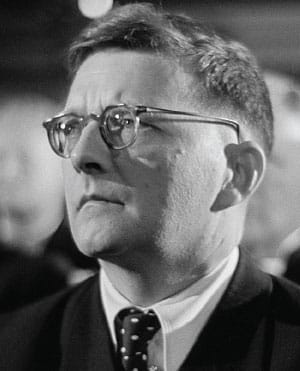
The longest gap in Dmitri Shostakovich’s symphonic output was the eight years between his Symphony No. 9 in 1945 and No. 10 in 1953. In between, he was denounced by Soviet authorities for the second time, accused of “formalism”—writing music without a proper social purpose. He lost his teaching posts at the Leningrad and Moscow conservatories and many of his pieces were blacklisted. He turned to writing film music for money and composed grand “politically correct” (in the original sense) cantatas with an eye toward rehabilitation.
Then on March 5, 1953, Joseph Stalin died, and soon censorship lessened, ushering in what became known as the Khrushchev Thaw. That summer, Shostakovich set to work on his 10th Symphony, finishing the first movement on August 5 and the last on October 25. Some parts may have earlier origins—a colleague said he showed her portions in 1951, and an unfinished violin sonata from 1945 explored similar material. The symphony was premiered on December 17, 1953, by the Leningrad Philharmonic.
Solomon Volkov’s 1979 book Testimony, which purports to be Shostakovich’s memoir smuggled out of the Soviet Union, describes the symphony as a “portrait of Stalin and the Stalin years,” with the second movement Scherzo specifically intended as an effigy of the dictator himself. The authenticity of the posthumously published book, which paints Shostakovich as a secret dissident writing cryptic protests, is widely disputed, particularly by biographer Laurel E. Fay and the late musicologist Richard Taruskin. Certainly Shostakovich recognized absurdities in Soviet ideology and at times satirized and pushed against them in his music. However, during his life, he was viewed in both Russia and the West as a loyal Communist who twice fell out of favor (not uncommon under a mercurial regime), and never as an anti-government artist.
A 1969 program note for the San Francisco Symphony was typical in describing Shostakovich as composing “music he felt served the ideal of his country, which he seems whole-heartedly to have accepted as his own ideal.” Discussing the 10th Symphony for its first San Francisco performance a decade before Testimony, that writer saw no portrait of Stalin, only noting that the piece’s tragic tone conflicted with the Soviet mandate for optimism, and concluding that the work’s obvious musical merit forced the censors to accept it anyway.
Indeed, in April 1954, the Composers’ Union combed through the 10th Symphony and reluctantly approved it. Listeners today might reasonably intuit that its grimness reflects the abuse and terror Shostakovich experienced under Stalinism, but to take it as a subversive statement, one must consider whether something that slipped past both Soviet authorities and American commentators at the time can be meaningfully subversive at all.
The Music
The first movement is a magnificently paced Moderato that builds tension in a single-minded expanse through a series of harrowing climaxes. It begins in the cellos and basses and grows into a string chorale that is somehow both calm and deeply uneasy at the same time. A winding clarinet solo feels like the first utterance of what had so far only been internal; a horn cry introduces fuller symphonic writing, before falling back with a quiet brass chorale and the lonesome clarinet again. Then a new element: a wry little flute solo, accompanied by plucked strings. Slowly this builds up to an overwhelming fortissimo, and just when it seems like there’s no more room to crescendo, Shostakovich brings in military drums and then three devastating crashes on the tam-tam. He follows with an organ-like falloff before touching on the opening again, now in the bassoons. This time, instead of clarinet, the movement dissolves in the eerie whistle of piccolo and thump of timpani.
The seething scherzo reworks material from the first movement at about five times the speed in one-sixth the time. Pages of fortissimo rush across the conductor’s desk as the orchestra drives relentlessly forward. In a stomach-dropping instant, the strings are hushed into near silence without breaking their frantic flight. They re-crescendo to a savage cutoff.
The third movement, Allegretto, cautiously peeks out to look around. Along comes an ironic parade, with piccolo and flute accompanied by timpani and triangle. The pitches spell out an emblem—D-S-C-H. “Dmitri Schostakowitsch” (in German spelling, where S means E-flat and H means B-natural). It became a recurring hallmark in his later works, and appears prominently here for the first time.
There’s a second name hidden in lonesome horn calls: E-La-Mi-Re-A. “Elmira” (in a mix of German and French note names). She was Elmira Nazirova, a Jewish Azerbaijani pianist and composer who had studied with Shostakovich in the late 1940s. They reconnected when he visited Baku in 1952, and in April 1953, he pursued a one-sided emotional affair with her by mail. She accepted his invitation to attend the symphony’s first Moscow performance, and he gave her an autographed copy of the score. Between its pages, their musical monograms mingle and slip apart.
The last movement, like the first, begins with cellos and basses. A familiar color, but this time with different, vaguer music. Then we hear the oboe—an instrument hardly used lyrically in the previous movements, but one that often appears in Shostakovich’s music at moments of transformation or rebirth. From the Andante introduction, a flute solo bridges into a darting Allegro, channeling a lively klezmer wedding dance. Yet its materials are not so different from those of the terrifying Scherzo, just as the triumphant D-S-C-H ending recontextualizes elements from the first and third movements, turning calamity into catharsis.
—Benjamin Pesetsky
About the Artists
Rafael Payare
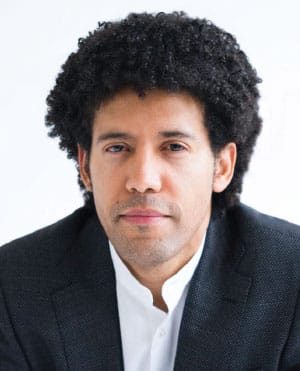
Rafael Payare is in his fifth season as music director of the Orchestre Symphonique de Montréal and his seventh as music director of the San Diego Symphony. From 2014–19, he served as principal conductor and music director of the Ulster Orchestra, with whom he made two appearances at the BBC Proms. In recognition of his artistic contributions to the orchestra and to the city of Belfast, he now holds the title of conductor laureate.
Payare regularly works with many of the world’s leading orchestras including the Vienna Philharmonic, Chicago Symphony, Munich Philharmonic, Orchestra dell’Accademia Nazionale di Santa Cecilia, Berlin Staatskapelle, Zurich Tonhalle Orchestra, London Symphony, Chamber Orchestra of Europe, and New York Philharmonic. Recent highlights include his debut with the Royal Concertgebouw Orchestra and return engagements with the NHK Symphony Orchestra, Cleveland Orchestra, and Philadelphia Orchestra. He made his San Francisco Symphony debut in May 2023 and returns next June.
Dedicated to nurturing the next generation of musicians, Payare maintains a close relationship with the Royal College of Music in London, where he leads the Symphony Orchestra each season. He has also worked with youth ensembles including the Chicago Civic Orchestra, Orchestra of the Americas, and the Filarmónica Joven de Colombia. He is a graduate of the El Sistema program in Venezuela, began his formal conducting studies in 2004 under the guidance of José Antonio Abreu, and has since conducted all of Venezuela’s major orchestras, including the Simón Bolívar Symphony.
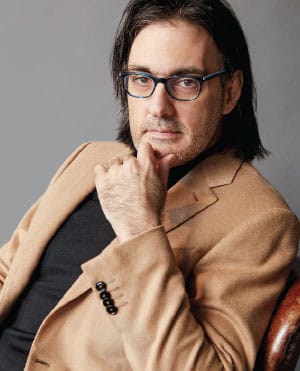
Leonidas Kavakos
Highlights of Leonidas Kavakos’s recent seasons include performances with the Royal Concertgebouw Orchestra, New York Philharmonic, Leipzig Gewandhaus Orchestra, Frankfurt Radio Symphony, NHK Symphony, NDR Symphony, Orchestra dell’Accademia Nazionale di Santa Cecilia, and conducting engagements with the Czech Philharmonic, London Philharmonia, Barcelona Symphony, and Minnesota Orchestra. In 2022, he founded the ApollΩn Ensemble, a chamber group of elite Greek musicians, and in 2025 he took over as the artistic director of the “Classic Revolution” Festival at Lotte Concert Hall in Seoul.
Kavakos’s award-winning discography includes the Brahms Violin Concerto with the Leipzig Gewandhaus Orchestra and Riccardo Chailly on Decca, and play-directing the Beethoven Violin Concerto with the Bavarian Radio Symphony on Sony Classical. He was named Echo Klassik Instrumentalist of the Year for his recording of the complete Beethoven sonatas with Enrico Pace. With Emanuel Ax and Yo-Yo Ma, Kavakos has released a series of trio recordings, and he has recorded Bach’s violin concertos with the ApollΩn Ensemble.
Kavakos curates an annual violin and chamber music masterclass in Athens, where he was born and brought up in a musical family. In 2022, he was elected by the Academy of Athens as a member of the Chair of Music in the Second Class of Letters and Fine Arts for his services to music. In 2024, he was appointed professor of violin at the Basel Academy of Music. Kavakos plays the “Willemotte” Stradivari violin of 1734. He made his San Francisco Symphony debut with a March 1994 recital and debuted with the Orchestra in April 2005.
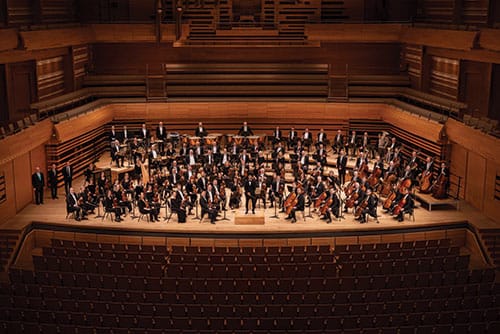
Orchestre Symphonique de Montréal
Founded in 1934 by Antonia Nantel, Wilfrid Pelletier, and Athanase David, the Orchestre Symphonique de Montréal is a distinguished leader of musical life in Quebec and Canada. Recognized as one of the finest orchestras in the world, whose core activity is to perform the vast orchestral repertoire with conductors and soloists of the highest caliber, the OSM is an essential cultural ambassador.
Under the direction of conductor Rafael Payare, the OSM perpetuates several rich traditions rooted in its long history of social involvement and embodied in far-reaching projects, world-class tours, and a superb discography. Firmly anchored in today’s world, the OSM’s innovative artistic programming in both concerts and recordings brings modern-day relevance to the symphonic repertoire while strengthening the orchestra’s place at the heart of its home base in Quebec’s metropolis. Over the years, the OSM has crisscrossed Canada and toured abroad, traveling to Quebec’s Far North as well as to the United States, Latin America, Europe, and Asia. The OSM’s discography totals more than 100 recordings on the Decca, Analekta, CBC Records, ECM, EMI, Philips, Sony, and Pentatone labels, earning more than 110 national and international awards. They made their Davies Symphony Hall debut, presented by the San Francisco Symphony, in November 1981.
Orchestre Symphonique de Montréal is presented by Hydro-Québec. The orchestra also gratefully acknowledges the Conseil des arts et des lettres du Québec, the Canada Council for the Arts, the Gouvernement du Québec, the Conseil des arts de Montréal, as well as the OSM Foundation for their support.
Orchestre Symphonique de Montréal
Rafael Payare, Music Director and Artistic Director
Johann Stuckenbruck, Assistant Conductor
FIRST VIOLINS
Andrew Wan, Concertmaster
Olivier Thouin, First Associate Concertmaster
Marianne Dugal, Second Associate Concertmaster
Jean-Sébastien Roy, First Assistant
Satoka Abo
Sydney Adedamola
Dominique Bégin
Marc Béliveau
Annie Guénette
Marie Lacasse
Ariane Lajoie
Abby Walsh
Richard Zheng
Katherine Palyga
Chloé Chabanole
Lizann Gervais
SECOND VIOLINS
Alexander Read, Principal
Marie-André Chevrette, Associate
Brigitte Rolland, First Assistant
Joshua Peters, Second Assistant
Ladusa Chang-Ou
Éliane Charest-Beauchamp
Ann Chow
Mary Ann Fujino
Alison Mah-Poy
Monique Poitras
Austin Wu
Daniel Yakymyshyn
Katherine Manker
TJ Skinner
VIOLAS
Victor Fournelle-Blain, Principal
Charles Pilon, Associate
Emily Rekrut-Pressey, First Assistant
Joseph Burke
Scott Chancey
Sofia Gentile
Natalie Racine
Rosemary Shaw
Maude Fréchette
Wilhelmina Hos
David Montreuil
Amina Tébini
CELLOS
Brian Manker, Principal
Anna Burden, Associate
Tavi Ungerleider, First Assistant
Sophie van der Sloot, Second Assistant
Geneviève Guimond
Justine Lefebvre
Sylvain Murray
Peter Parthun
San Rim
Julien Siino
BASSES
Ali Kian Yazdanfar, Principal
Eric Chappell, Assistant
Jeanne Corpataux-Blache
Scott Feltham
Andrew Goodlett
Peter Rosenfeld
Edward Wingell
Andrew Horton
FLUTES
Timothy Hutchins, Principal
Albert Brouwer, Associate Principal (Interim)
Florence Laurain, Second Flute
Christopher James, Piccolo
OBOES
Alex Liedtke, Principal
Vincent Boilard, Associate Principal
Tai Yokomori, Second Oboe
Jean-Luc Côté
CLARINETS
Todd Cope, Principal
Alain Desgagné, Associate Principal
Ryan Toher, Second Clarinet and E-flat Clarinet
André Moisan, Bass Clarinet
BASSOONS
Stéphane Lévesque, Principal
Mathieu Harel, Associate Principal
Martin Mangrum, Second Bassoon
Michael Sundell, Contrabassoon
HORNS
Catherine Turner, Principal
Denys Derome, Associate Principal
Corine Chartré-Lefebvre, Second Horn
Florence Rousseau, Third Horn
Nadia Côté, Fourth Horn
TRUMPETS
Paul Merkelo, Principal
Stéphane Beaulac, Associate Principal
Robert Weymouth, Second Trumpet
Samuel Dusinberre, Fourth Trumpet and Section
TROMBONES
James Box, Principal
Charles Benaroya, Second Trombone
Pierre Beaudry, Bass Trombone
TUBA
Austin Howle, Principal
TIMPANI
Andrei Malashenko, Principal
Hugues Tremblay, Associate Principal and Percussion
PERCUSSION
Serge Desgagnés, Principal
Corey Rae
Joshua Wynnyk
HARP
Jennifer Swartz, Principal
Robin Best
PIANO
Olga Gross
LIBRARIAN
Michel Léonard