In This Program
The Concert
Friday, October 9, 2026, at 7:30pm
Saturday, October 10, 2026, at 7:30pm
Sunday, October 11, 2026, at 2:00pm
Inside Music Talk with Benjamin Pesetsky
On stage one hour before each performance
Karina Canellakis conducting
Victoria Borisova-Ollas
The Kingdom of Silence (2003)
Sergei Prokofiev
Violin Concerto No. 2 in G minor, Opus 63 (1935)
Allegro moderato
Andante assai
Allegro ben marcato
Nicola Benedetti
Intermission
Sergei Rachmaninoff
Symphonic Dances, Opus 45 (1940)
Non allegro
Andante con moto (Tempo di valse)
Lento assai–Allegro vivace
Lead support for this concert series is provided by The Phyllis C. Wattis Fund for Guest Artists.
The October 9 concert is presented in partnership with

Inside Music Talks are supported in memory of Horacio Rodriguez.
Program Notes
The Kingdom of Silence
Victoria Borisova-Ollas
Born: December 21, 1969, in Vladivostok, Russia
Work Composed: 2003
SF Symphony Performances: First and only—November 2006. Vladimir Ashkenazy conducted.
Instrumentation: 3 flutes (3rd doubling alto flute), 3 oboes, English horn, 3 clarinets, bass clarinet, 3 bassoons, contrabassoon, 4 horns, 3 trumpets, 3 trombones, tuba, timpani, percussion (suspended cymbals, Thai gongs, tam-tam, tom-toms, bass drum, mark tree, temple blocks, wood blocks, glockenspiel, vibraphone, chimes, and marimba), harp, piano (doubling celesta), and strings
Duration: About 14 minutes
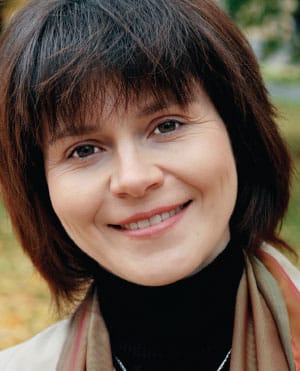
Born in the Russian Far Eastern city of Vladivostok, Victoria Borisova-Ollas received her education through Moscow’s conservatory system. She later studied at London’s Royal College of Music and in Sweden, and has made her home in Stockholm since her early 20s. The composer herself has observed that “the place where I live and work is not that important,” although she prefers cities with an active music infrastructure. She first came to international attention in 1998, when Wings of the Wind won second prize in the inaugural Masterprize competition for orchestral composers. She went on to receive several major Swedish honors, becoming the first woman to receive the Royal Swedish Academy of Music’s Christ Johnson Prize for Composition in 2011.
The Kingdom of Silence is dedicated to the memory of Nikolai Korndorf, one of Borisova-Ollas’s teachers at the Moscow Conservatory, whom she describes as “an extraordinary personality among his generation of Russian composers.” Korndorf, who spent his final decade in Vancouver, believed that music could address philosophical, religious, and moral questions, including a person’s spiritual life and relationship with the surrounding world. Something of that outlook is reflected in Borisova-Ollas’s own recurring engagement with spiritual questions, particularly through the Psalms.
The title The Kingdom of Silence was inspired by a line from Psalm 94, freely translated from a Russian version of the Bible. The psalm is both a lament on the apparent ubiquity of evil and a declaration of confidence in divine protection: “If the Lord had not helped me, I would have laid down in the silence of death.”
The work has the character of a requiem—and of a meditation on what lies beyond death. “The mysterious country where we all should go to after our lifetime has many different names,” Borisova-Ollas notes. “The Kingdom of Silence is one of them.”
The piece begins with celesta and glockenspiel against the divided violins’ tremolos and harmonics. The peaceful tempo and melodic simplicity suggest what the composer calls a “lullaby . . . wrapped in the ‘echo’ of string instruments.”
A low tremolo in the piano marks a turning point as the atmosphere grows increasingly troubled. A new crisis arrives in an allegro furioso of military-sounding summons from trumpets and percussion, with angry cross-rhythms from brass and strings adding to the melee. As the fury dies down, the trumpets begin to ring out with a noble lament.
Glissandos emerge from the depths, and rustlings on the chime-tree return us to the music with which the piece began. The Kingdom of Silence concludes with the lullaby in fading, delicately dissonant ambiguity. Borisova-Ollas wonders: “But the dream itself—does it ever end?”
—Thomas May
Violin Concerto No. 2 in G minor, Opus 63
Sergei Prokofiev
Born: April 23, 1891, in Sontsovka, Ukraine
Died: March 5, 1953, in Moscow
Composed: 1935
SF Symphony Performances: First—January 1940. Pierre Monteux conducted with Jascha Heifetz as soloist. Most recent—January 2017. James Gaffigan conducted with Simone Lamsma as soloist.
Instrumentation: Solo violin, 2 flutes, 2 oboes, 2 clarinets, 2 bassoons, 2 horns, 2 trumpets, percussion (bass drum, castanets, cymbals, snare drum, and triangle), and strings
Duration: About 25 mins
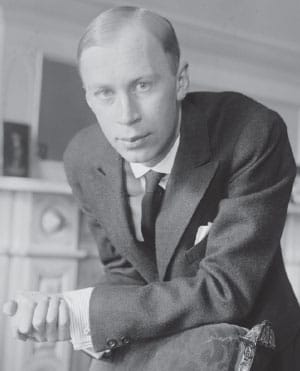
By 1935 Prokofiev was tiring of the restless existence that is reflected in his account of the genesis of this concerto. He would continue to travel as conductor and pianist until the outbreak of war in 1939, but a yearning to settle—and to settle in his homeland—had been growing stronger. He had left Russia in March 1918 and returned for the first time in 1927. His repatriation by degrees continued as his visits became more and more frequent, and in 1936, he, his wife, and their two children took an apartment in Moscow.
Assessment of Prokofiev was long muddied by politics. Soviet critics maintained that he had lost himself during his long sojourn in the West and that he found what he had lost only when he came home. Conversely, Western writers tended to deplore Prokofiev’s decision to go back, many implying that the demands of Socialist Realist aesthetics ruined him as an artist.
He himself recognized in his life work four “basic lines,” which he called classical, modern, motoric, and lyrical. All are present all the time, although of course in different balances. The Violin Concerto No. 2 is a work in which these characteristics live together convincingly.
The Music
The violinist begins the concerto alone, playing a slightly elaborated G minor chord, ruminating on this very simple matter for eight measures. The orchestral sound—just muted violas and basses, two octaves apart—is austere. Prokofiev had first thought of writing a “concert sonata,” and although the work became more concerto-like than he had at first imagined, the mood is often intimate in a way that suggests he had not entirely let go of his initial idea. It is a versatile theme, and very soon Prokofiev lets us hear it as a canon with the violin trailing the cellos and basses.
After further play with fragments of this theme, the music slows slightly for a new melody, one so sweetly lyric that we could almost imagine a page from one of the Romeo and Juliet notebooks had found its way into the sketches for the Concerto. Not long before beginning work on this score, Prokofiev, sincerely but also with a canny sense for what was wanted in the Soviet Union, had issued a manifesto proclaiming that “what we need is great music.” (No losing points there.) The sine qua non of great music, he went on to declare, was that it be “melodious [and] that the melody must be simple and comprehensible, without being repetitive or trivial.” This quasi-Romeo theme here is like a textbook demonstration of what he meant. This melody and the first idea provide Prokofiev with all the material he requires for this movement: his harmonic energy, at its strongest here, and his inventive violin writing carry him brilliantly to the end.
Prokofiev gently sets the second movement in motion with a simple arpeggiated accompaniment in triplets. As the pizzicato triplets continue, the solo violin enters with one of Prokofiev’s most inspired melodies. The slight sense of rhythmic dissonance produced by the way its duplets are set against the orchestra’s triplets gives it just the right amount of edge. This and the Romeo theme in the first movement are indeed examples of a manner one would not have found in Prokofiev’s music before the 1930s. Here Prokofiev gives us another of his characteristic harmonic shifts when, at the conclusion of the violin’s first long clause, he lifts the music and puts it down in B major—but pianissimo, dolcissimo, and with the strings muted.
At the close of the paragraph, Prokofiev brings in a slightly faster interlude. The accompaniment is stripped down, and we hear a constant succession of rapid triplets, some in repeated notes, some as mordents, and a few arpeggiated. The principal melody returns, now with the accompaniment enriched and culminating in a magically scored passage in which the solo violin scurries like a dragonfly on a pond. A second interlude, also faster than the main tempo, offers an effective combination of highly energized melodic writing both for orchestra and solo with busy figurations. When the first theme returns, the orchestral violins get to play the melody, which is what they must have been yearning to do all this time. The soloist adds a highflying descant. The very brief coda, with muted cellos, horns, and clarinets reminding us of the melody’s opening, is especially lovely.
After these dreams, the finale jolts us into a rude awakening. This is dance music, and perhaps Prokofiev added the castanets and other suggestions of Spanish flavoring because he knew that the Concerto would first be played in Madrid. Here Prokofiev indulges his appetite for dissonance and fierce accent, so firmly kept in check in the first two movements. The closing pages are marked tumultuoso.
—Michael Steinberg
Symphonic Dances, Opus 45
Sergei Rachmaninoff
Born: April 1, 1873, in Semyonovo, Staraya Russa, Russia
Died: March 28, 1943, in Beverly Hills, California
Work Composed: 1940
SF Symphony Performances: First—May 1949. Dmitri Mitropoulos conducted. Most recent—November 2022. Juraj Valčuha conducted.
Instrumentation: 2 flutes, piccolo, 2 oboes, English horn, 2 clarinets, bass clarinet, 2 bassoons, contrabassoon, alto saxophone, 4 horns, 3 trumpets, 3 trombones, tuba, timpani, percussion (triangle, cymbals, tam-tam, tambourine, snare drum, bass drum, chimes, glockenspiel, and xylophone), harp, piano, and strings
Duration: About 35 minutes
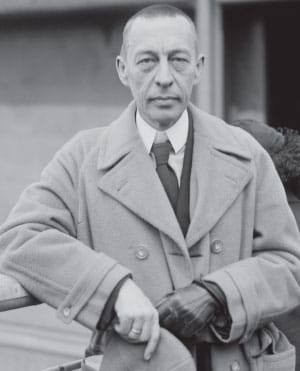
Last works are often romanticized in the popular imagination. Think of Bach’s Art of Fugue, Mozart’s Requiem, Schubert’s last piano sonatas, or Beethoven’s late string quartets. Some are capstones to a life’s work, while others seem to look beyond this world.
Sergei Rachmaninoff’s Symphonic Dances has a place alongside these pieces, and is perhaps the most intentional of final works. He left Russia following the 1917 Revolution, and when not touring, was variously based in New York, France, and at his Swiss villa. By 1940 he had relocated permanently to the United States to escape the Second World War, and had not composed a piece in almost four years. He wrote the Symphonic Dances that summer at a rented estate on Long Island, and then hung it up as a composer, despite performing as a pianist for another two years. It was the single exception to six years of compositional silence.
But what an exception: He took everything recognizably Rachmaninoff—the blankets of melody, sly harmonies, saturated colors, and Russian Orthodox chants—and packed it into three taut movements. Stylistically, Rachmaninoff was always a composer of the long 19th century, but he had become a man of the 20th, interested in cars, speedboats, and airplanes. In these dances, he invited some of that streamlined luxury into his plush Romanticism.
The piece’s origins lie in a proposed collaboration with Michel Fokine, the Russian choreographer who had created The Firebird and Petrushka with Igor Stravinsky in 1910–11, and later immigrated to New York. He had choreographed Rachmaninoff’s Rhapsody on a Theme of Paganini in 1937, and the composer was eager to work with him on something new. He envisioned a piece called Fantastic Dances with movements called Midday, Twilight, and Midnight. He began to sketch it out for two pianos, but when the project fell through, he changed course and made it a concert work for the Philadelphia Orchestra and Eugene Ormandy, who premiered it in January 1941.
The Music
The first dance is high-strung, mechanized. But after several minutes it peters out, giving way to one of the most breathtaking moments in the orchestral repertoire. After a brief silence, the oboe and clarinet waver quietly, and then the alto saxophone enters with an aching solo that feels like it was discovered more than it was written. The warmth of the melody contrasts with the coldness of its scoring, with duets and trios of woodwinds ingeniously dovetailed. For nearly three whole minutes the winds play alone: it is intimate yet faraway, endless but somehow fleeting. Long withheld, the strings finally take up the melody in lush octaves, accompanied by piano and harp. When the outpouring is exhausted, Rachmaninoff gears back up to the quick, stoic opening, and it never comes back (neither does the saxophone). But the end of the movement introduces another melody in the strings—this one borrowed from his First Symphony, whose devastating trainwreck premiere in 1897 had sent him into hypnotherapy. Its brief, gentle reappearance here is Rachmaninoff closing the book on a painful chapter of his youth.
The second dance is a waltz, which by the mid 20th century already conjured nostalgia for a decadent, aristocratic past. Rachmaninoff’s take is not a bitter, ironic twist on the high Viennese style, like Maurice Ravel’s La valse, but more a dusty half-memory of a Tchaikovsky ballet.
After a brief procession of halting fragments and tolling bells, the finale hastens into an excited flurry of scrubby strings, and touches of tambourine and xylophone. But the most prominent tune (first heard in the piccolos and then violas) is actually adapted from Rachmaninoff’s Blagosloven yesi, Gospodi (Blessed Art Thou, O Lord) from All-Night Vigil (1915). He takes a piece of Orthodox liturgy and remakes it as a jaunty orchestral groove.
A lugubrious interlude melts into a cradle song, and then Rachmaninoff resets to the frenetic opening. This time it culminates in the Dies irae—the Latin chant from the Requiem Mass—which we realize has been insinuating itself all along. But Rachmaninoff treats it not with dread, but with awe, then playfulness. A fateful drumroll reintroduces the gutsy Russian chant, after which Rachmaninoff simply writes “Alliluya” at the top of the score. Never has death’s dance been met with such joy and swagger.
—Benjamin Pesetsky
About the Artists
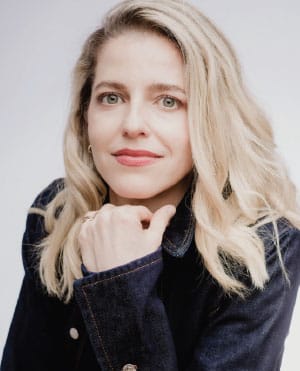
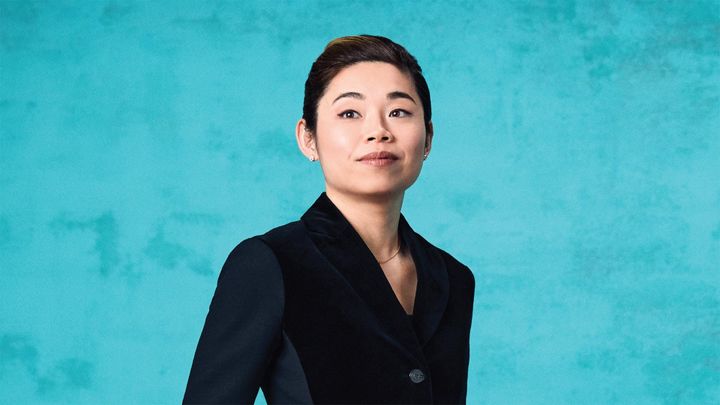
Karina Canellakis
Karina Canellakis has been chief conductor of the Netherlands Radio Philharmonic since 2019 and principal guest conductor of the London Philharmonic since 2021. This season she debuts at the Bavarian State Opera, Pittsburgh Symphony, Orchestre Philharmonique de Radio France, and Gothenburg Symphony, and returns to the Royal Concertgebouw Orchestra, Bavarian Radio Orchestra, Chicago Symphony, and Berlin Radio Symphony.
Canellakis made her conducting debut with the Vienna Philharmonic in January 2026 and has developed close relationships with the Bavarian Radio Orchestra, Orchestre de Paris, and Vienna Symphony. She is a repeat guest with the New York Philharmonic, Boston Symphony, Chicago Symphony, Cleveland Orchestra, Philadelphia Orchestra, and Los Angeles Philharmonic. She was principal guest conductor of the Berlin Radio Symphony from 2019–23, and in 2023–24 was a featured artist in residence at the Musikverein. She has toured Australia and made her debut in Japan in July 2025 with the Tokyo Metropolitan Symphony Orchestra and at the Pacific Music Festival in Sapporo. She made her San Francisco Symphony debut in October 2019.
Her recordings with the Netherlands Radio Philharmonic on Pentatone include a Grammy Award–nominated release of Bartók’s Concerto for Orchestra and Four Orchestral Pieces. Last June, her recording of Rachmaninoff’s The Bells and Symphonic Dances was released to critical acclaim. Canellakis grew up in a musical family in New York and was encouraged to become a conductor by Simon Rattle while playing as a violinist in the Berlin Philharmonic’s Karajan-Akademie. She performed for several years as soloist, guest leader, and chamber musician, spending summers at the Marlboro Music Festival, until conducting eventually took over after she won the Sir Georg Solti Award in 2016.
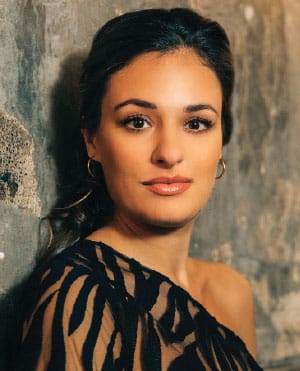
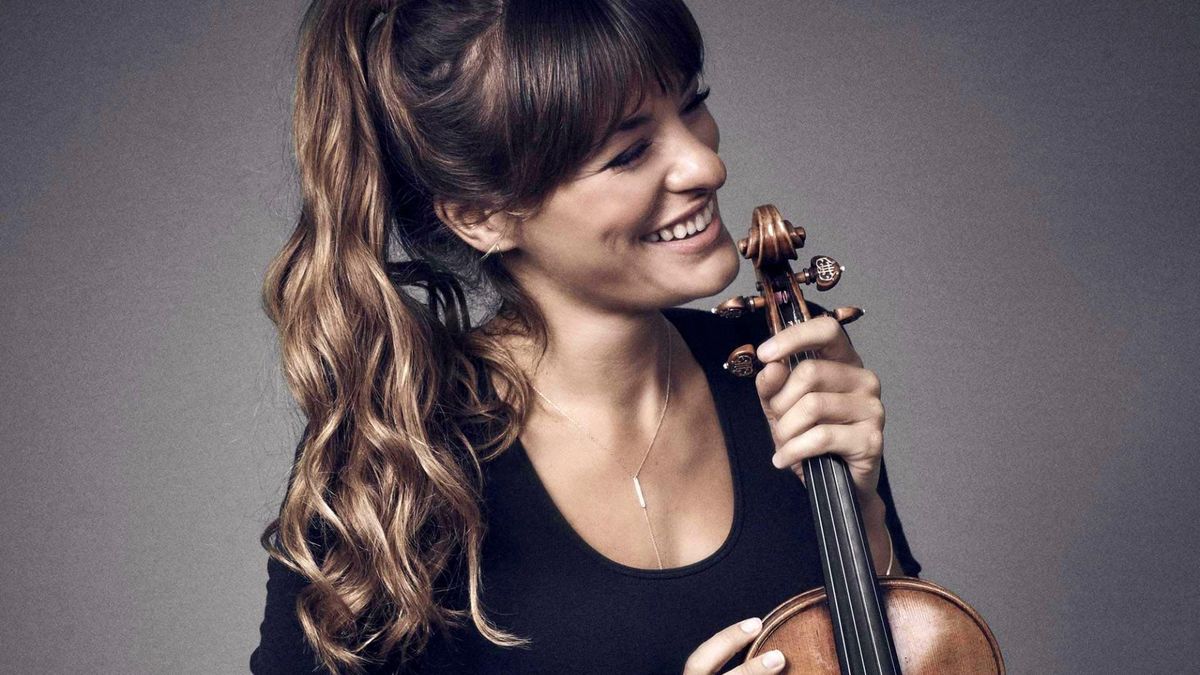
Nicola Benedetti
Nicola Benedetti appears this season with the Cincinnati Symphony, Philharmonia Orchestra, Los Angeles Philharmonic, and Scottish Chamber Orchestra. She made her San Francisco Symphony debut at the 2012 New Year’s Eve concert, made her subscription debut in March 2017, and became a Shenson Young Artist in 2020.
Winner of the 2020 Grammy Award for Best Classical Instrumental Solo in Wynton Marsalis’s Violin Concerto, as well as Best Female Artist at both 2012 and 2013 Classical BRIT Awards, Benedetti records exclusively for Decca. In 2021, BBC Music Magazine named her “Personality of the Year” for her online support of many young musicians during the pandemic.
In 2019, she established the Benedetti Foundation, which delivers transformative experiences through mass music events and unites those who believe music is integral to life’s education. In its first four years, the foundation has worked with close to 70,000 participants of all ages and levels, instrumentalists and non-instrumentalists alike, across 105 countries. Its free online educational video resources have had more than six million views.
Benedetti was appointed a CBE in 2019, awarded the Queen’s Medal for Music in 2017, and an MBE in 2013. In addition, she holds the positions of vice president of the National Children’s Orchestras; “big sister” for Sistema Scotland; and patron of the National Youth Orchestras of Scotland’s Junior Orchestra, Music in Secondary Schools Trust, and Junior Conservatoire at the Royal Conservatoire of Scotland. In 2022, Benedetti became the festival director of the Edinburgh International Festival, becoming both the first Scottish and first female director since its beginning in 1947.