In This Program
- The Concert
- Program Notes
- About the Artists
- Richard Strauss: Four Last Songs
- About San Francisco Symphony
The Concert
Thursday, October 1, 2026, at 2:00pm
Saturday, October 3, 2026, at 7:30pm
Sunday, October 4, 2026, at 2:00pm
Inside Music Talk: Postconcert Conversation with Benjamin Pesetsky
Thursday: On stage immediately following the matinee
Inside Music Talk with Peter Grunberg
Saturday and Sunday: On stage one hour before each performance
Santtu-Matias Rouvali conducting
Richard Strauss
Four Last Songs (1948)
Frühling
September
Beim Schlafengehen
Im Abendrot
Renée Fleming soprano
Intermission
Richard Strauss
Ein Heldenleben, Opus 40 (1898)
Thursday matinee concerts are endowed by a gift in memory of Rhoda Goldman.
Inside Music Talks are supported in memory of Horacio Rodriguez.
Program Notes
Four Last Songs
Richard Strauss
Born: June 11, 1864, in Munich
Died: September 8, 1949, in Garmisch-Partenkirchen, West Germany
Work Composed: 1948
SF Symphony Performances: First—March 1960. Enrique Jordá conducted with Elizabeth Schwarzkopf as soloist. Most recent—November 2010. Michael Tilson Thomas conducted with Elza van den Heever as soloist.
Instrumentation: solo soprano, 3 flutes, piccolo (3rd flute doubling 2nd piccolo), 2 oboes, English horn, 2 clarinets, bass clarinet, 3 bassoons (3rd doubling contrabassoon), 4 horns, 3 trumpets, 3 trombones, tuba, timpani, harp, celesta, and strings
Duration: About 22 minutes
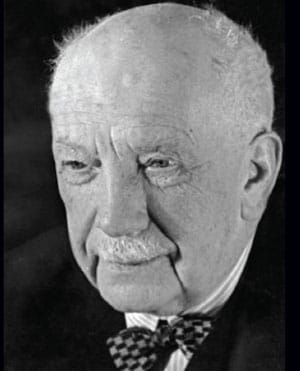
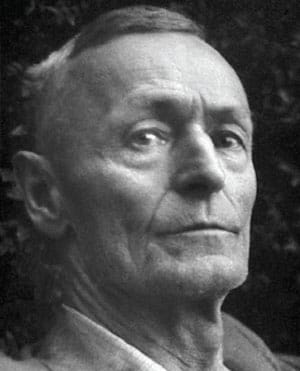
Richard Strauss wrote Four Last Songs (Vier letzte Lieder) in 1948, beginning with the poem “Im Abendrot” (“At Sunset” or “In the Twilight”) by Joseph von Eichendorff (1788–1857). Its image of a husband and wife at the end of their lives, watching two larks fly upward together, clearly moved the 84-year-old composer. He enriched the project with three poems by Hermann Hesse (1877–1962), who had won the Nobel Prize in Literature in 1946, but was still 20 years out from his enduring fame as a proto-countercultural figure.
Hesse had no time for Strauss, whom he considered tainted by association with Nazism. “We have no right to level accusations, yet we do have the right to distance ourselves from him,” Hesse wrote in 1946. Between 1933–35 Strauss had served as president of the Reichsmusikkammer (Reich Chamber of Music) under Joseph Goebbels, and mingled with other top Nazis before falling sharply out of favor for continuing to work and correspond with the Jewish writer and librettist Stefan Zweig. In the ensuing war, Strauss used his influence to protect his own Jewish daughter- in-law, Alice, and two half-Jewish grandsons from deportation to concentration camps, and even drove to the Theresienstadt (Terezín) ghetto, where he unsuccessfully begged for the release of her other relatives.
After the fall of the Third Reich, when occupying American soldiers arrived at his estate, he grandly identified himself as “Richard Strauss, the composer of Rosenkavalier and Salome,” gripping a pile of manuscripts as proof, and the GIs dined with his family.
Yet Strauss was soon pushed into Swiss exile, living under a cloud of suspicion for his actions in the 1930s. A denazification tribunal slowly considered his case, and in 1948 declared him “not incriminated.” He was allowed to move back to his Bavarian home, where he died the following year.
Strauss had officially retired from composition in 1941 after completing the opera Capriccio, but he continued to write instrumental works and songs, which he humorously dismissed as “wrist exercises.” The Four Last Songs were among the last-of-the-last: he completed the settings, but did not live to collect them together and hear them premiered. The title was added posthumously by Ernst Roth, his editor at Boosey & Hawkes, who also chose the order of the songs when they were published in 1950.
The Music
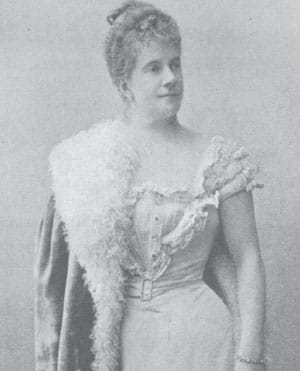
These songs are a remarkable final bow, aching, but peaceful. “Frühling” (Spring) recalls a shared youth. “September” sheds its leaves and brings us back to the colder present, while “Beim Schlafengehen” (Upon going to sleep) finds freedom and even excitement in the prospect of death. Finally “Im Abendrot” (In the twilight) is Strauss’s tribute and farewell to his wife, Pauline. She was the daughter of a Bavarian general, with an aristocratic demeanor and an artist’s spirit, and they met when he gave her voice lessons in 1887. After a long courtship, they married in 1894. She sang Freihild in the premiere of Strauss’s first opera, Guntram, sang Elisabeth in Wagner’s Tannhäuser for Strauss’s conducting debut at Bayreuth, and they often gave recitals together. Even after she retired from singing, her personality inspired elements of his operas and tone poems, and her voice remained the mental model for his soprano parts. The critic Eduard Hanslick once jabbed, “we may surely call her [Richard’s] better and more beautiful half.”
In the last stanza of “Im Abendrot,” Strauss slightly alters the poet Eichendorff’s words from “that” (das) to “this” (dies)—“could that this perhaps be death?”—making it more immediate, experienced in the moment. The orchestra answers affirmatively with a theme quoted from Strauss’s 1889 tone poem Tod und Verklärung (Death and Transfiguration).
A year later, when Strauss lay dying, he thought he heard music from somewhere beyond—but it was familiar. “I wrote it 60 years ago in Tod und Verklärung,” he told his daughter-in-law. “This is just like that.”
Ein Heldenleben, Opus 40
Richard Strauss
Work Composed: 1898
SF Symphony Performances: First—April 1926. Alfred Hertz conducted. Most recent—May 2023. Rafael Payare conducted.
Instrumentation: 3 flutes, piccolo, 4 oboes (4th doubling English horn), 2 clarinets, bass clarinet, E-flat clarinet, 3 bassoons, contrabassoon, 8 horns, 5 trumpets, 3 trombones, 2 tubas, timpani, percussion (cymbals, tam-tam, tenor drum, small military drum, and bass drum), 2 harps, and strings
Duration: About 45 minutes
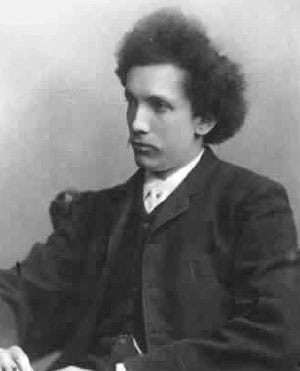
Ein Heldenleben (“A Hero’s Life” or “A Heroic Life”) must be the most egotistical piece in the orchestral repertoire—a musical self-depiction of Richard Strauss battling villainous music critics, romancing a lady, reminiscing over past triumphs, and finally growing wise and settling into a happy retirement. Written between 1897–98, Strauss intended it as the “serious” counterpoint to his comic tone poem Don Quixote, written around the same time. While Don Q. is a mock hero who fancies himself a chivalrous knight, the composer protagonist of Heldenleben seems to be the real deal. Still, Strauss was not oblivious to his monstrous act of autobiography—the music is mostly played straight, but the narrative framework is best understood with a dose of winking humor.
Strauss conducted the premiere in Frankfurt on March 3, 1899, though he dedicated it to Willem Mengelberg and the Concertgebouw Orchestra in Amsterdam. His preference was to program it alongside Don Quixote; together they were his last tone poems (not counting the symphonically titled Alpine Symphony and Symphonia domestica)—by the turn of the century, he turned mostly to opera, which he pursued until his semi-retirement in the early 1940s.
The tone-poem genre originated with Franz Liszt in 1848, and its fusion of instrumental music with “programmatic” storytelling was controversial for much of the 19th century. Though the so-called War of the Romantics between radical Liszt-Wagnerians and conservative Schumann-Brahmsians had cooled by the time Strauss joined Team Program Music in the mid-1880s, it clearly left him with a heightened sense of stakes when it came to musical aesthetics, not to mention a raw sensitivity to criticism.
In Ein Heldenleben, Strauss was inspired by Beethoven’s Eroica Symphony (originally dedicated to Napoleon) and his own lifelong interest in the romantic hero tradition. Wanting to distill the heroic archetype into a tone poem, he drew from his own experiences as a kind of compositional method acting. While Strauss never fought a battle or wooed a princess, he found modest parallels in his career struggles and marriage. With a little imagination and wit, he could declare: “I do not see why I should not compose a symphony about myself; I find myself quite as interesting as Napoleon.”
The Music
The music unfolds in six continuous sections. The opening (Der Held) introduces the hero in a leaping (and heroically difficult) line for horns and low strings, soon elaborated upon and driven forward in vivid color. The next section introduces the hero’s enemies (Des Helden Widersacher), hilariously sniveling music critics in flutes, oboes, and low brass. “They are jealous, they envy him, they sneer at his aims and endeavours, they are suspicious of his sincerity,” described the early commentator Philip Hale. “Nor is there any music more maliciously, malevolently petty,” added Paul Rosenfeld, an offended music critic.
The third section (Des Helden Gefährtin) introduces the hero’s companion and love interest. Suddenly the piece turns into a little violin concerto, the soloist representing the leading lady, growing into a wild exploration lushly colored by two harps. Strauss later described:
It’s my real-life wife, Pauline, whom I wanted to portray. She is very complex, very feminine, a little perverse, something of a flirt, never twice alike, every moment different from what she was the moment before. At the beginning, the hero follows her . . . but she always flies further away. Then at the end he says, “No, I’m staying here.” He stays in his thoughts . . . Then she comes to him.
With his companion by his side, the hero is ready for the battlefield (Des Helden Walstatt), where he vanquishes his critics with military drums and brass calls. The next section, Des Helden Friedenswerke (The Hero’s Deeds of Peace) revisits highlights from Strauss’s earlier tone poems, including Don Juan, Also sprach Zarathustra, Tod und Verklärung, and Don Quixote. “The only way I could express works of peace was through themes of my own,” Strauss said.
Now wise and fulfilled, the hero retreats from the world and becomes a sage (Des Helden Weltflucht und Vollendung). In his sketchbook, Strauss jotted his plan for the ending: “[the hero] withdraws entirely into the idyll, in order to live only for his thoughts, his wishes, the unfolding of his own personality in quiet and contemplation. Autumnal forest—resignation at the side of the beloved—music dies away warm-heartedly.”
—Benjamin Pesetsky
These program notes were originally written for the Melbourne Symphony.
Peter Grunberg served as musical assistant to Michael Tilson Thomas at the San Francisco Symphony, where he has been an assistant producer on several Grammy Award–winning recordings and given hundreds of preconcert talks. He has collaborated in recital with Frederica von Stade and Thomas Hampson, conducted at the Moscow Conservatory and Sydney Opera House, and performed at the Aix-en-Provence Festival and at Tanglewood.
About the Artists
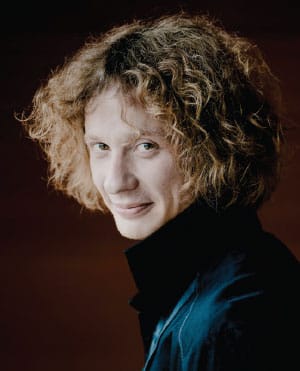
Santtu-Matias Rouvali
Santtu-Matias Rouvali is principal conductor of the Philharmonia Orchestra in London and honorary conductor of the Tampere Philharmonic, close to his home in Finland. This season he returns to the Cleveland Orchestra and New York Philharmonic, and in Europe appears with Orchestra Filarmonica della Scala, Orchestre Philharmonique de Radio France, and Tonhalle‑Orchester Zürich, among others. In 2025, he toured the United States and Korea with the Philharmonia and in 2027 will tour with them to Cologne, Dortmund, and Munich. He makes his San Francisco Symphony debut with these performances.
Rouvali previously served as chief conductor of the Gothenburg Symphony, with whom he completed a Sibelius cycle recording with Alpha Classics in 2025. He went on to record Sibelius’s Violin Concerto with Ava Bahari, and in 2027 will conduct a recording of Kullervo, continuing this acclaimed recording series. His Sibelius recordings have earned awards including Gramophone Editor’s Choice, Choc de Classica, a prize from the German Record Critics, the Diapason d’Or “Découverte,” and Radio Classique’s Trophée.Philharmonia Records’ first release—a double‑CD titled Santtu conducts Strauss—was issued in March 2023, followed by recordings of Tchaikovsky’s Swan Lake and Prokofiev’s Symphony No. 5. Mahler’s Symphony No. 2, the second release on the label, appeared in September 2023, followed by Santtu conducts Stravinsky in March 2024, featuring The Firebird Suite and Petrushka. Another significant release—Beethoven’s Triple Concerto with Benjamin Grosvenor, Nicola Benedetti, and Sheku Kanneh‑Mason—was released on Decca in May 2024.

Renée Fleming
Renée Fleming is internationally celebrated for her vocal and dramatic artistry, as well as her dedicated advocacy for the powerful impacts of the creative arts in health. A 2023 Kennedy Center honoree and winner of five Grammy Awards and the National Medal of Arts, she has sung for momentous occasions from the Nobel Peace Prize ceremony to the Super Bowl.
Her new album, The Fiddle and the Drum, was released last May. A collaboration with 19-time Grammy Award–winning banjo virtuoso Béla Fleck, the album celebrates Appalachian bluegrass and folk music, with contributions from featured artists Dolly Parton, Vince Gill, Jerry Douglas, Aoife O’Donovan, Sierra Hull, and Sarah Jarosz. This fall, she brings her acclaimed portrayal of Pat Nixon in John Adams’s Nixon in China to the Washington National Opera.
Fleming’s anthology Music and Mind: Harnessing the Arts for Health and Wellness was published in 2024. A prominent advocate for research at the intersection of arts, health, and neuroscience, she has presented her live program Music and Mind in more than 70 cities around the world. The Renée Fleming NeuroArts Investigator Awards, her initiative with the Aspen Institute and the NeuroArts Blueprint, funds interdisciplinary research projects by early-career scientists in collaboration with creative artists.
Co-artistic director of the Aspen Opera Center and VocalArts at the Aspen Music Festival, Fleming is also artist development advisor at Wolf Trap Opera. Her other awards include the Fulbright Lifetime Achievement Medal and honorary doctorates from 10 major universities. She made her San Francisco Symphony debut in March 2002, singing Strauss’s Four Last Songs and Michael Tilson Thomas’s Poems of Emily Dickinson.
Richard Strauss: Four Last Songs
Frühling
In dämmrigen Grüften
Träumte ich lang
Von deinen Bäumen und blauen Lüften,
Von deinem Duft und Vogelgesang.
Nun liegst du erschlossen
In Gleiss und Zier,
Von Licht übergossen
Wie ein Wunder vor mir.
Du kennst mich wieder
Du lockest mich zart,
Es zittert durch all meine Glieder
Deine selige Gegenwart!
—Hermann Hesse
—
Spring
In twilight chambers
I have dreamt
of your trees and blue skies,
of your scents and your bird-song.
Now you are revealed,
shining, splendid,
drenched in light,
lying before me like a miracle.
You recognize me once more,
you beckon to me gently.
Every fiber of my being trembles
with your ravishing presence!
September
Der Garten trauert,
Kühl sinkt in die Blumen der Regen.
Der Sommer schauert
Still seinem Ende entgegen.
Golden tropft Blatt um Blatt
Nieder vom hohen Akazienbaum.
Sommer lächelt erstaunt und matt
In den sterbenden Gartentraum.
Lange noch bei den Rosen
Bleibt er stehn, sehnt sich nach Ruh.
Langsam tut er die
Müdgewordnen Augen zu.
—Hermann Hesse
—
September
The garden mourns.
The cool rain fills the flowers.
Summer trembles
at the thought that the end is near.
Like drops of gold, the leaves
fall from the tall acacia.
Summer smiles, stunned and spent
in the dying garden-dream.
For a long time, he remains standing
near the roses, longing for rest.
Slowly, his eyes,
grown weary with sleep, will close.
Beim Schlafengehen
Nun der Tag mich müd gemacht,
Soll mein sehnliches Verlangen
Freundlich die gestirnte Nacht
Wie ein müdes Kind empfangen.
Hände, lasst von allem Tun,
Stirn, vergiss du alles Denken,
Alle meine Sinne nun
Wollen sich in Schlummer senken.
Und die Seele unbewacht,
Will in freien Flügen schweben
Um im Zauberkreis der Nacht
Tief und tausendfach zu leben.
—Hermann Hesse
—
Going to Sleep
The day has been so tiring.
I give myself up
to the friendly starry night.
May it receive me as it would a weary child.
Hands, stop all your work.
Head, forget all thoughts.
All my senses
want to sink into slumber.
And the soul, unguarded,
will soar in free flight,
and in night’s magic circle
live deeply, and in a thousand different ways.
Im Abendrot
Wir sind durch Not und Freude
Gegangen Hand in Hand:
Vom Wandern ruhen wir beide
Nun überm stillen Land.
Rings sich die Täler neigen,
Es dunkelt schon die Luft,
Zwei Lerchen nur noch steigen
Nachträumend in den Duft.
Tritt her und lass sie schwirren,
Bald ist es Schlafenszeit.
Dass wir uns nicht verirren
In dieser Einsamkeit.
O weiter, stiller Friede!
So tief im Abendrot,
Wie sind wir wandermüde—
Ist dies etwa der Tod?
—Josef von Eichendorff
—
At Sunset
We have gone through trouble and joy
hand in hand.
Now, both of us will rest
and stop wandering through this quiet country.
The valleys rise around us,
the air is growing darker.
In the mist,
two larks are rising dreamily.
Come closer, and let them fly.
Soon it will be time to sleep.
Let us just be sure not to lose our way
in this loneliness.
Oh peace, so broad and silent,
so deep in the evening’s glow,
we are so tired of wandering—
could this perhaps be death?
Translations: Larry Rothe