In This Program
The Concert
Sunday, September 20, 2026, at 2:00pm
Musicians of the San Francisco Symphony
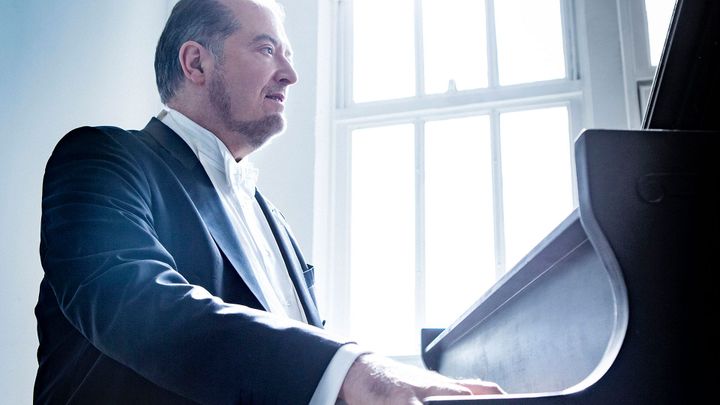
Garrick Ohlsson piano
Johannes Brahms
Piano Trio No. 2 in C major, Opus 87 (1882)
Allegro
Andante con moto
Scherzo–Presto
Finale–Allegro giocoso
Melissa Kleinbart violin
Amos Yang cello
Garrick Ohlsson piano
Ramiro Boero
Astor Piazzolla
Impulso Suite (2009)
La muerte del ángel (1965)
Decarísimo (1961)
Ramiro Boero bandoneón
Sumi Lee piano
Polina Sedukh violin
Scott Pingel bass
Intermission
Amy Beach
Piano Quintet in F-sharp minor, Opus 67 (1907)
Adagio: Allegro moderato
Adagio espressivo
Allegro agitato
Florin Parvulescu violin
Dan Carlson violin
Jonathan Vinocour viola
David Goldblatt cello
Garrick Ohlsson piano
Program Notes
Piano Trio No. 2 in C major, Opus 87
Johannes Brahms
Born: May 7, 1833, in Hamburg
Died: April 3, 1897, in Vienna
Work Composed: 1880–82
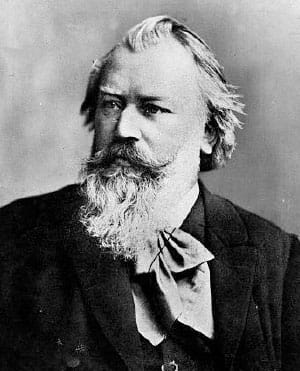
Piano trios are such ubiquitous mainstays of the chamber repertoire that one might think they were a natural marriage of equals, with violin, cello, and piano blending effortlessly into a seamless whole. The reality is quite different, for this is a marriage so troubled as to border on dysfunctional. The fault lies mostly in the piano, which weighs a hundredfold more than a violin and cello combined, and it’s a lot louder. String players tend to get skittish when there’s a piano in the mix. They have good reason to be that way.
It wasn’t always so tricky. Early fortepianos produced modest volume and balances were easy enough to achieve. Beethoven’s seven piano trios elevated the genre substantially, but his pianos were lightweight enough to restrict the potential havoc wrought by hooligan pianists. The trouble really started in the mid-19th century as the modern piano reached its full maturity, complete with cast iron frame, steel strings, and thick felt hammers. With that, the piano trio became a downright obstreperous beast of a genre, and composers were obliged to cope as best they could.
Pianist-composer that he was, Johannes Brahms was well aware of the challenge. With the 1878 Violin Sonata in G major he had balanced violin and piano to his satisfaction. A few years later he applied what he had learned to the first movements of two candidate piano trios, one in E-flat major and the other in C major. He sent both off to his friends Theodor Billroth and Clara Schumann for feedback. Although they preferred the E-flat major movement, Brahms opted for the C-major piece and consigned the loser to the living-room fireplace. Two years later the four-movement C-major piano trio had come into being. Relentless self-critic though he was, Brahms knew a good thing when he wrote it, and gushed to his publisher that the C-major trio was the best thing they had brought out for at least a decade.
The secret sauce that gives the C-major trio its excellent sonic balance is made up of two ingredients. First up is the frequent placement of violin and cello in unison octaves, creating a firm wall that resists being pushed over by the piano. The other is a brilliant use of the piano’s exceptionally wide pitch range. More often than not, Brahms places the piano’s important materials well out of the way of the strings—typically much higher, or sometimes both lower (left hand) and higher (right hand).
If Brahms opens a work with a baldly-stated melodic-rhythmic figure, pay close attention, because it’s critical material that he will develop throughout the entire composition. This trio commences with an outlined triad in the strings alone, characterized by a little rhythmic skip via a dotted note. That kicks off a first-movement sonata form that extracts everything it possibly can from that basic idea. It’s followed by a distinctly stern march-like second movement in the minor mode that’s characterized by a short-long “scotch snap” rhythm. But its square-shouldered rectitude is all too apt to give way to melancholy lyricism as the movement progresses.
The third-place Scherzo ranks among Brahms’s all-time best quickstep inspirations, much of it pianissimo, fleeting and volatile. The slightly slower mid-point interlude thrums with lyrical ardor, its heart firmly on its sleeve but its dignity intact throughout, after which the Scherzo resumes, ending in a downright Debussyean hush. Careful attention to the opening statement of the Allegro giocoso finale pays off, since the melody and its striking raised fourth scale degree, together with its hesitation-step rhythm, will pervade throughout.
Impulso Suite
Ramiro Boero
Born: 1975, in Buenos Aires
Work Composed: 2009
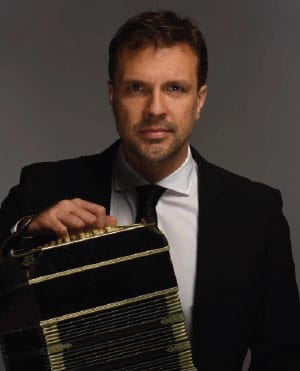
Tango was born in the Buenos Aires neighborhood of La Boca, now popular with tourists for its colorful painted houses, vibrant cultural mix, and enduring tango culture. Settled by Italian immigrants in the early 19th century, the La Boca barrio was a busy port along the Matanza River that actually became a micronational republic for part of the 20th century, known for its hardworking, no-nonsense inhabitants. La Boca underwent a revival in the 1950s that was spearheaded by a group of artists known as the Impulse Group, who began resuscitating the barrio by painting the houses, encouraging outdoor theater, and reviving its main street, El Caminito.
The Impulso Suite celebrates those artists in three movements, each dedicated to one of the major La Boca painters. It’s the brainchild of popular Argentine performer, arranger, and composer Ramiro Boero, who has won a number of awards for his vibrant compositions and fruitful collaborations with legendary tango artists. His instrument is the bandoneón, a kind of concertina in which bellows held between the hands push air through a set of reeds that are controlled by a grid of buttons rather than a keyboard.
First up is Benito Quinquela Martín, an abandoned orphan who studied drawing at a night school and elevated himself into one of Argentina’s most celebrated painters; he specialized in monumental scenes of ships and dockworkers, very much in keeping with La Boca’s pre-tourist ambiance. He’s followed by Fortunato Lacámera, born and raised in La Boca to a humble family, and a laborer who eventually dedicated his life to painting intimate domestic subjects. Then comes José Desiderio Rosso, a self-taught painter who helped to found the Impulse Group. He was a portrayer of everyday life whose work often savored of nostalgia, melancholy, and the sweetness of simple pleasures. Since he preferred to work in the open air, his canvases often manifest the spontaneity of a snapshot, a morsel of reality caught in an instant.
La muerte del ángel
Decarísimo
Astor Piazzolla
Born: March 11, 1921, in Mar del Plata, Argentina
Died: July 4, 1992, in Buenos Aires
Works Composed: La muerte del ángel—1965. Decarísimo—1961.
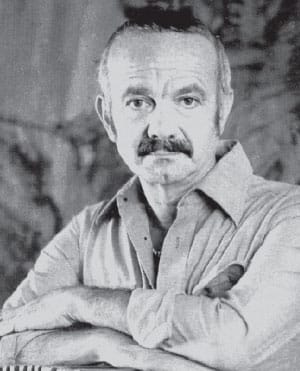
Born in Argentina and raised in New York, Astor Piazzolla will be forever associated with the tango, not only via his many performances, but also from his abundant compositions that incorporate the rhythms and overall affect of the tango with a wide variety of concert genres. Consider his popular Four Seasons of Buenos Aires, which views Vivaldi’s beloved violin concertos through a tango-infused lens. Happily, we can hear both his playing and his compositions via a long series of distinguished recordings; he was in great form up until the 1990 cerebral hemorrhage that left him in a two-year coma until his death in 1992.
Like Ramiro Boero, Piazzolla’s instrument was also the bandoneón, with which he is indelibly associated. In the 1960s he began rocking the tango world with nuevo tango, which he described as a mix of tango with comedic, tragic, and disreputable elements. La muerte del ángel was an early nuevo tango piece, originally part of a ballet score. This angel’s death is a surprisingly sizzling affair, filled with Stravinskian cross-rhythms and surging harmonies.
We have videos of Piazzolla himself performing the dance fantasy Decarísimo—that’s a musical term for a specific tango style that originated in the 1920s. It opens with a richly ornamented bandoneón solo before launching into a wonderfully flamboyant tango that combines vaulting lyrical lines with surging dance rhythms.
Piano Quintet in F-sharp minor, Opus 67
Amy Beach
Born: September 5, 1867, in Henniker, New Hampshire
Died: December 27, 1944, in New York
Work Composed: 1907
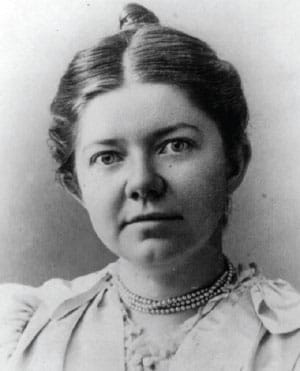
It would be one thing if she had been obscure in her lifetime. But she wasn’t. Amy Beach was very much a somebody, as successful a composer as late 19th-century America was capable of producing, lauded, praised, reviewed, published, and above all, performed.
So the neglect following her death in 1944 seems unfair, inexplicable, and wrong. A plausible explanation arises when we consider that she was a prominent member of the Second New England School of late 19th-century American composers centered around Boston. They had all gone dark by the mid-20th century, done in by that era’s distaste for Romantic opulence. Only Edward MacDowell remained dimly lit. Amy Beach is now undergoing a posthumous revival, while John Knowles Paine, Arthur Foote, George Chadwick, George Whiting, and Horatio Parker remain mostly unrevived.
Beach might have been America’s first notable woman composer, but she was first and foremost an excellent composer, and other musicians knew it. Which isn’t to say that she didn’t have to endure pigheaded male chauvinism; she did. Well-meaning critics would marvel how some Beach composition just didn’t sound like the work of a woman—by which they meant lightweight, trivial, unassuming, and uncomplicated. Her husband Henry asked that she mostly refrain from performing, that being viewed in conservative circles as an unseemly activity for an upper-class woman. (After Henry died in 1910, Amy entered public life, where she belonged.) “To women she was a heroine,” writes biographer Adrienne Fried Block, “not as glamorous as a diva perhaps, but all the more remarkable for having ventured into a field of composition thought to be the exclusive preserve of men—and having succeeded.”
There is no question that Beach’s 1907 Piano Quintet was influenced by Brahms, whose F-minor quintet she had performed in 1900 with the Kneisel Quartet. Among the most obvious references is the jagged chromatic main theme in the Brahms finale that informs the primary theme of Beach’s first movement. But listeners are just as likely to hear the echo of another important piano quintet—the one by César Franck, not so much in terms of form, but in the overall harmonic language, far more Franckian than Brahmsian.
Amy Beach experienced color synesthesia, in which certain tones and key centers match to specific colors. No two synesthetes have the same matchings, and no synesthetes match all tones and key centers to colors. In Beach’s case, the quintet’s key of F-sharp minor was strongly associated with black, which helps to explain the first movement’s distinctly morbid quality. However, the magical lyrical effusion of the second movement is cast in the much less gloomy key of D-flat major, which Beach probably mapped to a considerably warmer color—if she had a match at all. The Allegro agitato finale refrains from any overt gloom but evinces a steely tensile strength interleaved with chorale-like passages that manifest an unmistakable Franckian vibe. Multi-sectioned and complex, it’s among the more intriguing finales in the late-Romantic chamber literature, a striking large-scale creation that brings this altogether admirable quartet to a blazing conclusion in F-sharp major.
—Scott Foglesong
About the Artists
Melissa Kleinbart joined the San Francisco Symphony in 1998 and holds the Katharine Hanrahan Chair. She was previously associate concertmaster with the San Francisco Opera Orchestra and assistant concertmaster with the Vancouver Symphony. She has made solo appearances with the Philadelphia Orchestra, Vancouver Symphony, and New York Symphonic Ensemble; participated in the Marlboro and Tanglewood festivals; and performed with the Chamber Music Society of Lincoln Center. She is a graduate of the Juilliard School.
Amos Yang joined the San Francisco Symphony in 2007 as Assistant Principal Cello and holds the Karel & Lida Urbanek Chair. He was previously a member of the Seattle Symphony and a member of the Maia String Quartet. Born and raised in San Francisco, he was a member of the SF Symphony Youth Orchestra and San Francisco Boys Choir, and earned bachelor’s and master’s degrees from the Juilliard School.
Garrick Ohlsson was the winner of the 1970 Chopin International Piano Competition and commands an enormous repertoire which ranges over the entire piano literature. He lives in San Francisco, where he serves on the piano faculty of the San Francisco Conservatory of Music. He made his San Francisco Symphony debut in May 1972. Read more about Ohlsson.
Polina Sedukh, a native of Saint Petersburg, Russia, joined the San Francisco Symphony in 2007. She was previously a member of the Boston Symphony and made her solo debut with the Chamber Orchestra of Liepaya in Latvia at the age of seven, followed by recital tours in the United States, Germany, and Austria. In 2022 she discovered the music and dance of Argentine tango and now performs with local bands. In 2026 she participated in the SF Tango Academy to delve deeper into its violin techniques and traditions.
Scott Pingel was named Principal Bass of the San Francisco Symphony in 2004, and was previously principal of the Charleston Symphony and a member of the New World Symphony. He studied at the University of Wisconsin-Eau Claire and Manhattan School of Music, and also performs as a jazz musician.
Sumi Lee won several piano competitions in Korea and attended San Francisco Conservatory of Music, where she earned a master’s degree. Beginning in 2017 she spent two years studying Argentine tango music in Buenos Aires and now performs and produces traditional and contemporary tango concerts in the Bay Area. She makes her debut at the San Francisco Symphony with this performance.
Ramiro Boero is an Argentine bandoneón player, arranger, and composer born in Buenos Aires. He has soloed with the Madrid Symphony, Argentine National Symphony, Montevideo Philharmonic, and São Paulo Jazz Symphony, among other groups. He makes his debut at the San Francisco Symphony with this performance.
Florin Parvulescu joined the San Francisco Symphony first violins in 1998. A native of Romania, he was previously a member of the St. Louis Symphony and Baltimore Symphony, won the 1993 Marbury Competition at the Peabody Conservatory, and was a prizewinner in the 1994 Yale Gordon Concerto Competition. He also attended the American Academy of Conducting at the Aspen Music Festival.
Dan Carlson joined the San Francisco Symphony in 2006. He currently serves as Principal Second Violin, holding the Dinner & Swig Families Chair. He previously served as rotating concertmaster for the New World Symphony and he has made solo appearances with the Phoenix Symphony, Chicago String Ensemble, New World Symphony, and the Prometheus Chamber Orchestra. A graduate of the Juilliard School, he has performed chamber music extensively throughout New York.
Jonathan Vinocour joined the San Francisco Symphony as Principal Viola in 2009 and was previously principal viola of the St. Louis Symphony and guest principal of the Leipzig Gewandhaus Orchestra and Chicago Symphony. He has frequently soloed with the SF Symphony and has also played concertos with the St. Louis Symphony, La Jolla Music Society, Mainly Mozart Festival Orchestra, and New World Symphony. He serves on the faculty of the San Francisco Conservatory of Music as well as the Aspen Music Festival and School. He plays on a 1784 Lorenzo Storioni viola on loan from the SF Symphony.
David Goldblatt joined the San Francisco Symphony cello section in 1978 and holds the Christine & Pierre Lamond Second Century Chair, having previously played in the Pittsburgh Symphony. A graduate of the Curtis Institute of Music, he has also performed with the Concerto Soloists of Philadelphia and Santa Fe Opera Orchestra.