In This Program
- The Concert
- About All San Francisco
- Celebrating CANA
- Program Notes
- About the Artists
- About San Francisco Symphony
The Concert
Friday, September 25, 2026, at 7:30pm
Inside Music Talk with Alicia Mastromonaco
On stage at 6:30pm
Giancarlo Guerrero conducting
John Adams
The Chairman Dances (1985)
Carl Maria von Weber
Bassoon Concerto in F major, Opus 75 (1811)
Allegro ma non troppo
Adagio
Rondo: Allegro
Joshua Elmore
Intermission
Gabriela Lena Frank
Three Latin American Dances (2004)
Introduction: Jungle Jaunt
Highland Harawi
The Mestizo Waltz
Nicolai Rimsky-Korsakov
Capriccio espagnol, Opus 34 (1887)
Alborada
Variazioni
Alborada
Scena e canto gitano
Fandango asturiano
This concert is presented in partnership with

Inside Music talks are supported in memory of Horacio Rodriguez.
About All San Francisco
When Louise M. Davies Symphony Hall opened in 1980, the San Francisco Symphony inaugurated what has become a beloved tradition: the All San Francisco Concert. This performance for the community, presented in partnership with the San Francisco Arts Commission, is one of the highlights of the Symphony’s season-opening activities, and is dedicated to the Bay Area's many impactful community groups and nonprofit organizations for their invaluable work in enriching our region. This year we are thrilled to welcome thousands of community members to this special concert.
In 2007, the SF Symphony and its partners sought to honor the founder of the All San Francisco Concert, SF Symphony Life Govenor Ellen Magnin Newman, through the creation and sponsorship of the Ellen Magnin Newman Award. This award is now presented annually at the All San Francisco Concert to a Bay Area community-based organization that strengthens the region’s cultural fabric and serves families and individuals to create a more just and equitable society for everyone who lives here. The 2026 recipient of the Ellen Magnin Newman Award is Cultura y Arte Nativa de las Americas.
HONORARY CHAIR
Ellen Magnin Newman
CO-CHAIRS
Rodney Earl Jackson Jr.,
San Francisco Bay Area Theatre Company (SFBATCO)
Judy Tsang, ITVS
COMMITTEE
Erik Auerbach, First Exposures
Ryan Babbitt, Booker T. Washington Community Service Center
Edith Castorena, Brava! For Women in the Arts
Carrie Cottini, SFJAZZ
Rebeca Abidaíl Flores, Artist & First Exposures Programs Manager
Brittany Ford, MAGIC SF, San Francisco Public Defender’s Office
Leslie Hawkins, Nonprofit Arts and Culture Event Producer
Donna Hilliard, Code Tenderloin
Cristina Ibarra, Yerba Buena Gardens Festival
Cynthia Inaba, Fine Arts Museums of San Francisco
Evan Johnson, Theatre Arts Program Director & Local Arts Community Builder
Lisa Kvetchman, Community Organizer
Joanne Lee, Arts, Culture, and Community Development Consultant
Sally Low, San Francisco Symphony Volunteer Council Chair
Andrea Martin, Asian Art Museum
Robert Melton, Commonwealth Club World of Affairs of California, Chair Arts Forum/Art Curator
Barbara Ockel, Shipyard Trust for the Arts (STAR)
Nia Pearl, Poet and Literary Arts Curator
Ryan Pinter, UC Law San Francisco
Josué Rojas, San Francisco-Based Fine Artist & Muralist
Julie Strobel, Openhouse
Concert Sponsor
The Board of Governors of the San Francisco Symphony gratefully acknowledges the support of the San Francisco Arts Commission.
Music for A City
In founding the San Francisco Symphony in 1911, San Francisco’s civic leaders sought to create a permanent orchestra in our music-loving city. For more than 85 years, the San Francisco Symphony has partnered with the San Francisco Arts Commission to enrich and serve its vibrant community through music. The partnership dates back to 1935, when President Franklin Delano Roosevelt encouraged all cities to support local symphonies believing that music was good for the soul of the people. San Franciscans followed suit and passed an historic charter amendment allocating funds to support the Symphony.
Through this mutually beneficial partnership, the Arts Commission funding contributes to the Symphony’s community programs, supports concerts such as Día de los Muertos and Lunar New Year, and helps bring a broad audience to experience its music and programs. This partnership also enables the Arts Commission to distribute funds to support and strengthen cultural equity throughout the city.
The San Francisco Symphony is honored to partner with the San Francisco Arts Commission to continue its work as San Francisco’s orchestra.
Celebrating CANA
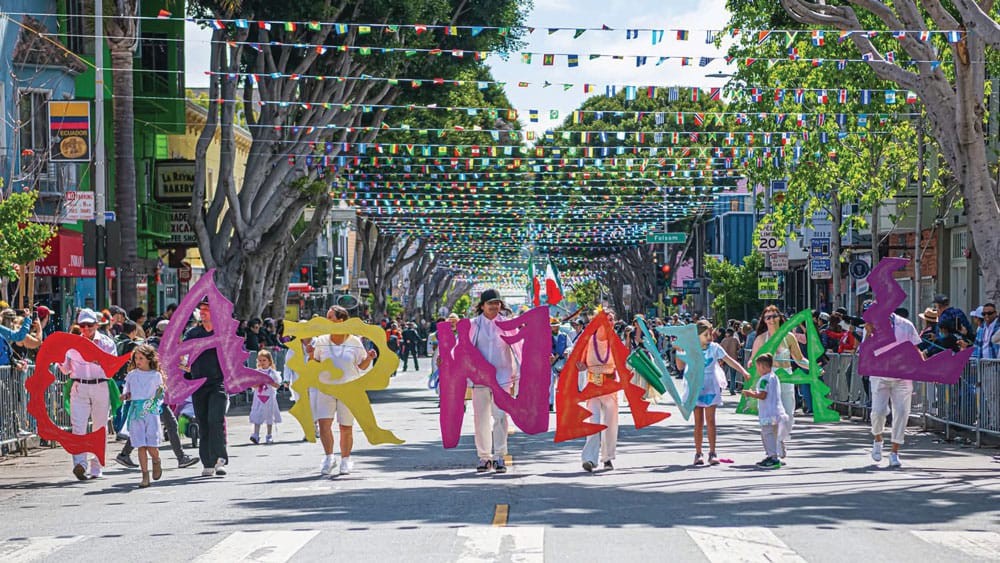

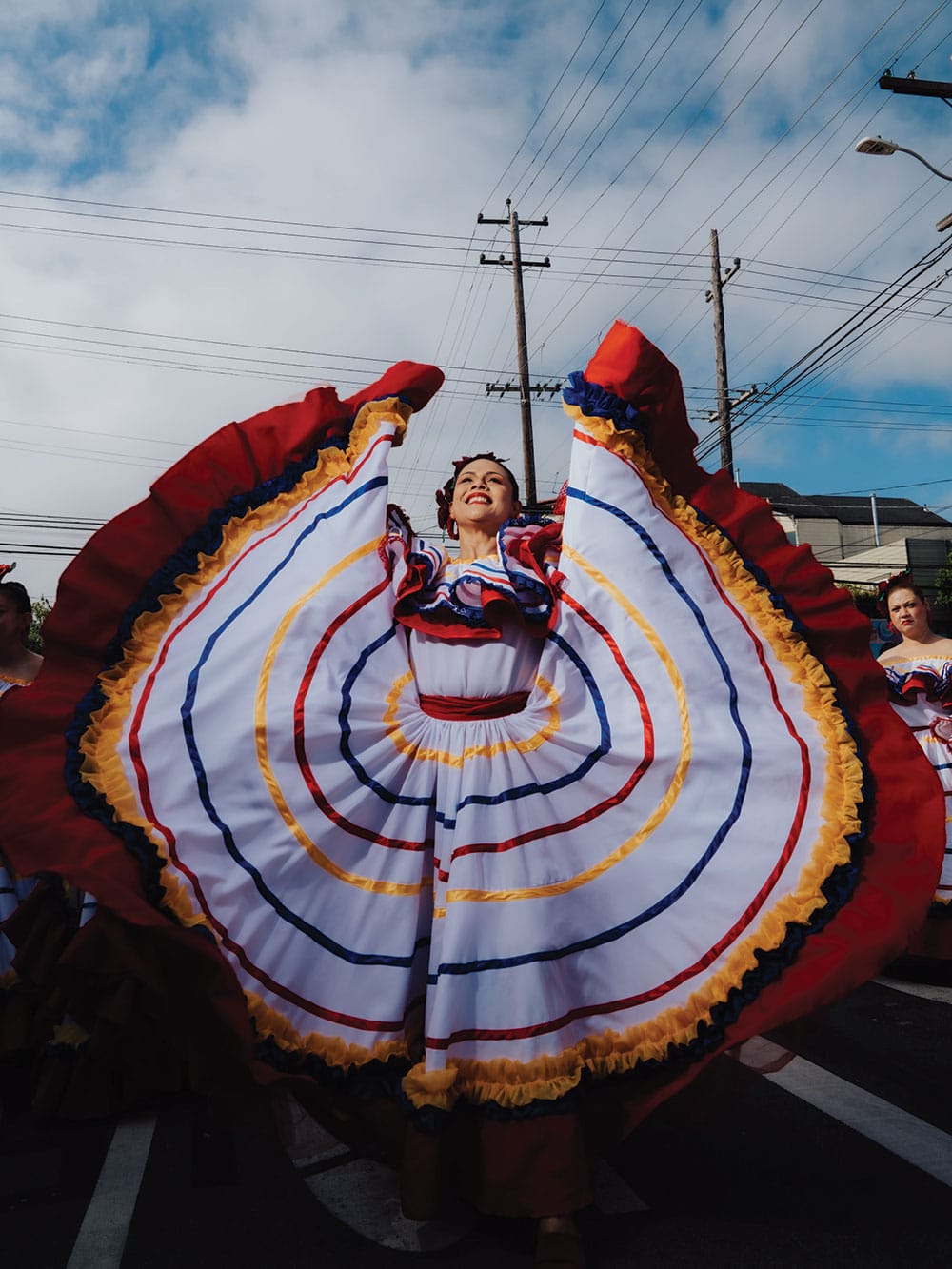
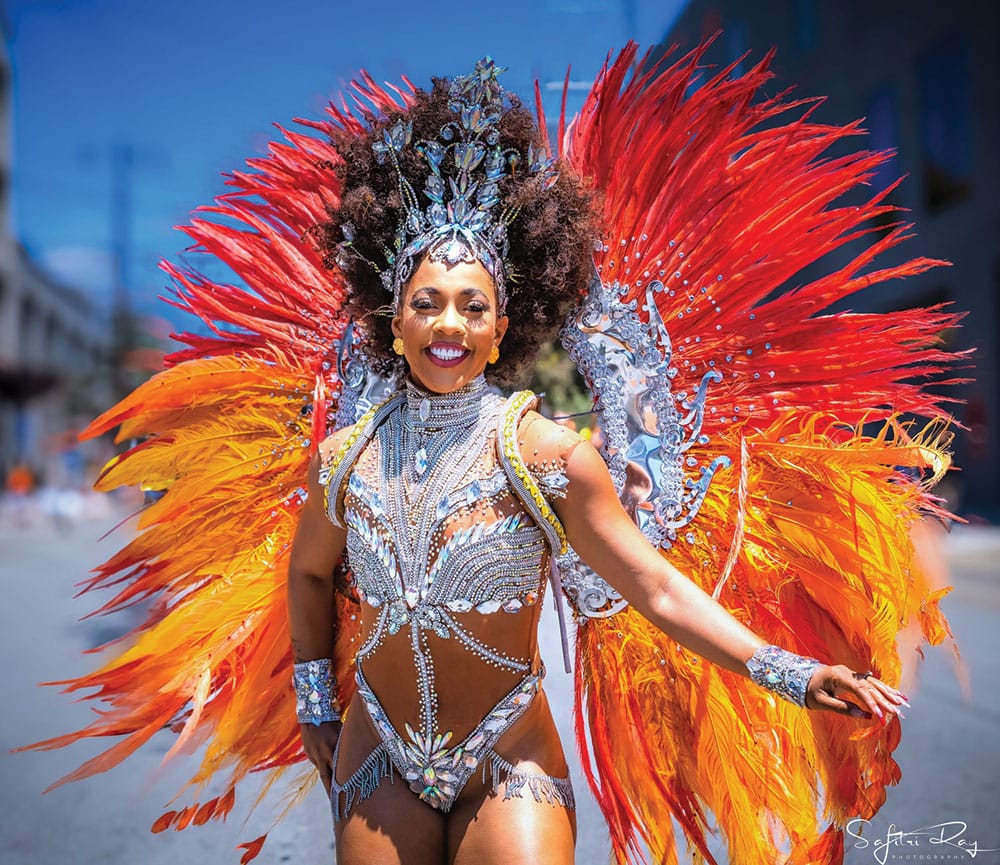
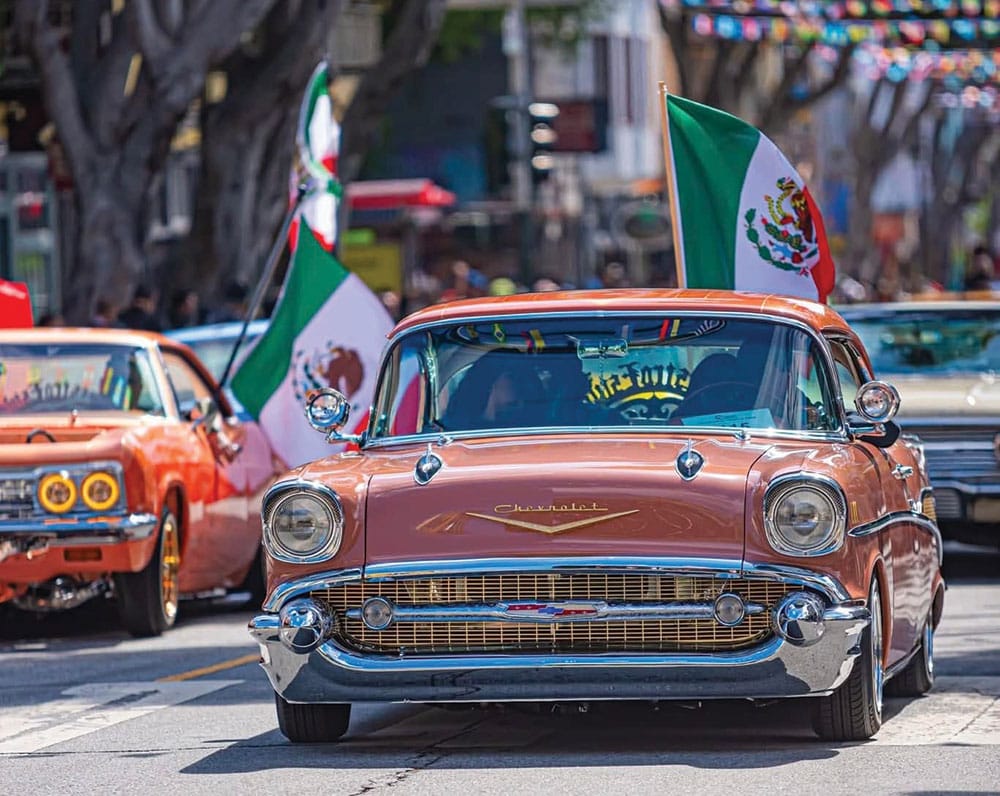
For more than four decades, Cultura y Arte Nativa de las Americas (CANA) has preserved and celebrated the many traditions of the Latino, Caribbean, and African diasporas in the San Francisco Bay Area through culturally and linguistically relevant dance, music, and art programming, and by creating spaces for community learning, advocacy, and human services. Since 1978, CANA has produced Carnaval San Francisco, the largest multicultural festival in California. In May 2026, Carnaval San Francisco was attended by more than 500,000 guests. The free, two-day event covered 17 city blocks with five main stages, 60 local performing artists, and 300 vendors representing the heritage of countries including Brazil, Mexico, Trinidad, Tobago, Puerto Rico, and beyond. CANA stands as a beacon of hope for the stewardship of cultural traditions and the creation of a new, more inclusive American culture.
Learn more at canasf.org.
Program Notes
The Chairman Dances
John Adams
Born: February 15, 1947, in Worcester, Massachusetts
Work Composed: 1985
SF Symphony Performances: First—November 1986 (also recorded and released by Nonesuch). Edo de Waart conducted. Most recent—April 1990. Edo de Waart conducted.
Instrumentation: 2 flutes (doubling piccolos), 2 oboes, 2 clarinets (2nd doubling bass clarinet), 2 bassoons, 4 horns, 2 trumpets, 2 trombones, tuba, timpani, percussion (triangle, crash cymbals, suspended cymbal, sizzle cymbal, high-hat, tambourine, snare drum, bell tree, bass drum, claves, castanets, wood blocks, sandpaper blocks, crotales, glockenspiel, vibraphone, and xylophone), harp, piano, and strings
Duration: About 12 minutes
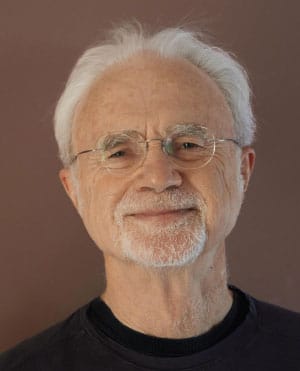
John Adams is perhaps the San Francisco Bay Area’s most famous living orchestral composer, and his collaboration with the San Francisco Symphony dates back decades. Adams moved to the Bay Area in 1971 and soon became a fixture of the music community here. He taught at the San Francisco Conservatory of Music from 1972 to 1982, was appointed as new music advisor to the San Francisco Symphony in 1978, then became the Symphony’s composer in residence from 1982 to 1985. His most recent SF Symphony commission was his second piano concerto, After the Fall, premiered in January 2025 with Víkingur Ólafsson as soloist. The Symphony celebrates his 80th birthday throughout the 2026–27 season.
Adams’s first opera, Nixon in China, was inspired by Richard Nixon’s 1972 trip to China to meet Mao Zedong, and was premiered by Houston Grand Opera in October 1987. Despite the clear connection, The Chairman Dances is not an excerpt from Nixon in China, but rather an outgrowth or, as the composer describes it, “out-take” from Act III and premiered almost two years earlier.
Adams had been commissioned to write a piece for the Milwaukee Symphony, and by 1985 was behind on the work but completely enthralled with his Nixon in China project. The composer was keenly interested in the relationship between Chairman Mao and Jiang Qing (known more commonly as Madame Mao) and decided to expand on this for the Milwaukee commission. Jiang and Mao had a tumultuous relationship over the decades they were together. News of their relationship and eventual marriage in 1938 caused an uproar, not least of all because Mao’s former marriage had not been formally dissolved. The new marriage was restricted largely to the private sphere, and Jiang was barred from publicly bearing the title of wife to Mao. By the time President Nixon visited China in 1972, he and First Lady Pat Nixon watched a ballet performance of The Red Detachment of Women with Jiang Qing, an event dramatized in Act II of Nixon in China.
There are several dance numbers that fade from one to the next over the course of the piece, as if turning the dial on an old radio. Jiang Qing had been a Shanghai movie actress before her involvement with Mao, which is reflected in the music. Adams describes the different dance vignettes as “sometimes slinky and sentimental, at other times bravura and bounding.” Pointillistic accents and other outbursts beckon the ear away from the orchestral ship slowly shifting in the water. One is liable to miss the way the piece has shifted until it has already ruptured into a new dance.
The scenario provided by Peter Sellars and Alice Goodman reads:
[Madame Mao] has gatecrashed the Presidential Banquet. She is first seen standing where she is most in the way of the waiters. After a few minutes, she brings out a box of paper lanterns and hangs them around the hall, then strips down to a cheongsam, skin-tight from neck to ankle and slit up to the hip. She signals the orchestra to play and begins dancing by herself. Mao is becoming excited. He steps down from his portrait on the wall and they begin to foxtrot together. They are back in Yenan, dancing to the gramophone . . .
Bassoon Concerto, Opus 75
Carl Maria von Weber
Born: November 19?, 1786, in Eutin, Germany
Died: June 5, 1826, in London
Work Composed: 1811
SF Symphony Performances: First and only—March 1995.
Herbert Blomstedt conducted with Steven Dibner as soloist.
Instrumentation: solo bassoon, 2 flutes, 2 oboes, 2 bassoons, 2 horns, 2 trumpets, timpani, and strings
Duration: About 18 minutes
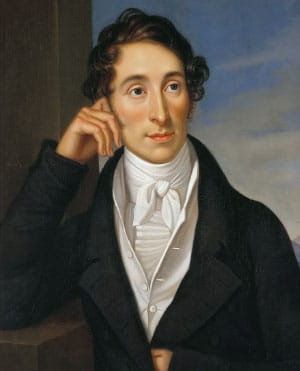
Carl Maria Friedrich Ernst von Weber is today best known for Der Freischütz, considered among the most important 19th-century German operas. Wind players, however, also regard Weber fondly for his many compositions for wind instruments.
After the 1811 premiere of Weber’s Clarinet Concertino in Munich thrilled King Maximilian I, several musicians of the court beseeched Weber to write pieces for them as well. The only one who succeeded was bassoonist Georg Friedrich Brandt, who went to the Bavarian king and requested that he formally commission Weber, to which the amenable monarch agreed.
The first movement opens with a grand orchestral introduction before the ensemble cuts out and the soloist is introduced by noble timpani. The movement notably encompasses the entire range of the instrument—the final flourish includes the lowest note and one of the highest.
The second movement is more inward-facing, a love aria ranging from an introspective trio with horn accompaniment, to more emotive lyrical passages. It is resplendent with operatic vocality, the bassoon being the baritone of the orchestral wind section. The third movement is an idiomatic display of the bassoon’s wittiness, with its cheekily large leaps and shifting characters, from jaunty conversational gestures to runs skipping up and down the range of the instrument. The entire concerto shows off how wide-ranging the bassoon is through its technical and lyrical capacities.
Weber was only 39 years old with a lot of promise ahead of him when he succumbed to that most artistic of 19th-century diseases, tuberculosis, while in London. In addition to his compositions, Weber also left an important legacy of writing, and was one of the progenitors of German music criticism. He once wrote: “In a word, what love is to mankind, music is to the arts and to mankind as well. For music is truly love itself, the purest, most ethereal language of the emotions, embracing a thousandfold every color variation in every nuance of emotion, and while it is understood at one and the same time by a thousand different people, it contains but one basic truth.”
Three Latin American Dances
Gabriela Lena Frank
Born: September 26, 1972, in Berkeley, California
Work Composed: 2004
First Complete SF Symphony Performances
Instrumentation: 3 flutes (3rd doubling piccolo), 2 oboes, English horn, 2 clarinets, bass clarinet, 3 bassoons, 4 horns, 3 trumpets, 3 trombones, timpani, percussion (triangles, crash cymbals, suspended cymbal, tam-tam, thunder sheet, tambourine, snare drum, bongo drums, conga drum, bass drum, castanets, claves, chekere, rain stick, slapstick, temple blocks, wood block, tubular bells, xylophone, and marimba), harp, piano, and strings
Duration: About 17 minutes
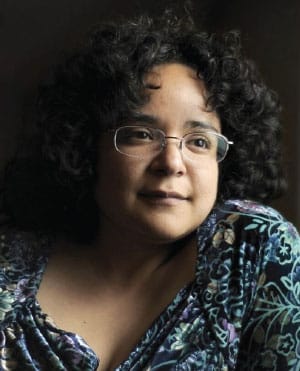
Berkeley-born composer Gabriela Lena Frank is a Northern California local who describes her multifaceted background as a crucial element of her compositional purpose. Her father is of Jewish heritage, her mother from Peruvian and Chinese descent, and she has written and spoken on how being born with high-moderate/near-profound hearing loss has affected her compositions and life. She was recently awarded a 2026 Pulitzer Prize for Music for her composition Picaflor: a Future Myth.
Three Latin American Dances was commissioned by the Utah Symphony and Keith Lockhart as part of their 2004 album Symphonic Dances. In her own program note, Frank describes:
I. Introduction: Jungle Jaunt This introductory scherzo opens in an unabashed tribute to the Symphonic Dances from West Side Story by Leonard Bernstein before turning to harmonies and rhythms derived from various pan-Amazonian dance forms. These jungle references are sped through while echoing the energy of the Argentinian composer Alberto Ginastera, who was long fascinated with indigenous [South American] cultures.
II. Highland Harawi This movement is the heart of Three Latin American Dances, and evokes the Andean harawi, a melancholy adagio traditionally sung by a single bamboo quena flute so as to accompany a single dancer. As mountain music, the ambiance of mystery, vastness, and echo is evoked. The fast middle section simulates what I imagine to be the “zumballyu” of Illapa, a great spinning top belonging to Illapa, the Peruvian-Inca weather deity of thunder, lightning, and rain. Illapa spins his great top in the highland valleys of the Andes before allowing a return to the more staid harawi. The music of the Hungarian composer, Béla Bartók, is alluded to.
III. The Mestizo Waltz As if in relief to the gravity of the previous movement, this final movement is a lighthearted tribute to the “mestizo” or mixed-race music of the South American Pacific coast. In particular, it evokes the romancero tradition of popular songs and dances that mix influences from indigenous Indian cultures, African slave cultures, and Western brass bands.
Capriccio espagnol, Opus 34
Nicolai Rimsky-Korsakov
Born: March 18, 1844, in Tikhvin, Russia
Died: June 21, 1908, in Liubensk, Russia
Work Composed: 1887
SF Symphony Performances: First—October 1912. Henry Hadley conducted. Most recent—July 2022 at Stern Grove. Daniel Bartholomew-Poyser conducted.
Instrumentation: 2 flutes, piccolo, 2 oboes, English horn, 2 clarinets, 2 bassoons, 4 horns, 2 trumpets, 3 trombones, tuba, timpani, percussion (triangle, cymbals, tambourine, snare drum, bass drum, and castanets), harp, and strings
Duration: About 15 minutes
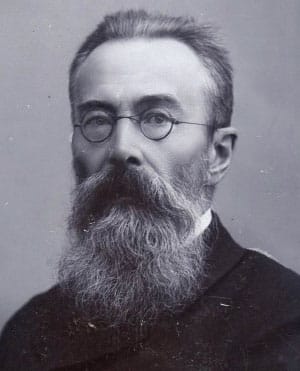
Nicolai Rimsky-Korsakov set out to develop a Russian national style along with his four compatriots, together known as the “Mighty Handful” or “The Five.” When he composed Capriccio espagnol, he did not imagine that it would gain him much renown. And yet today, along with his Russian Easter Overture and Scheherazade, the Spanish Capriccio serves as a shining example of his inspired orchestration, running the gamut of textures and timbres.
The piece is a series of vignettes depicting Spanish life through a 19th-century Russian musical lens. Even while indulging in imagined musical notions of a faraway land, the composer remains tethered to his Russian style, and most importantly, the ideals of the Mighty Handful, which disregarded Western European ideologies about theory, harmony, and form.
The Music
Each of the five movements elides into the next. The first and third are both titled Alborada, a Spanish folksong or serenade. Traditionally, the alborada or alvorada would have been performed at dawn on religious calendar days under the balconies of noble Spanish households. Rimsky-Korsakov’s version is a joyful celebration of daybreak with its spirited melody in the high strings. The clarinet then takes over, a warbling birdsong heralding the bright sun’s dawning.
The second movement begins placidly, with a dolce, lyrical horn quartet. The movement is a study in timbral inventiveness. When the strings take over from the horns, it is the cellos who play the melody above the violins, putting the lower instrument higher for an interesting inverted color. Then the English horn continues the melody, the horn responding with a reflective fanfare: first open, then stopped with the hand in the bell, creating a distant, nasal quality. At the end of the movement the flute meanders chromatically, like a hummingbird flitting around in search of blooming flowers. The flute finally finds its nectar in the opening of the third movement, a transformation of the Alborada, with the woodwinds bounding through the returning theme. The concertmaster plays a spiccato solo, the bouncing bow paying homage to technical finger-strumming passages on the Spanish guitar. The violinist trades off phrases with the clarinet, each iteration growing wider, and wilder in their arpeggiation until the final cadence of the movement.
The fourth movement, titled Scene e canto gitano, is almost narrative in form, a standoff between the Spanish and the gitano, or imagined Romani characters. The trope of “Romani-style” music was popular in the 19th century, loosely based on the music of nomadic groups, and used to exoticize and paint a musical “other.” It was one way in which composers such as Rimsky-Korsakov employed musical stereotypes to create a sense of both “home” and “faraway” in their music.
After the military recitative (depicted in the opening brass section cadenza) finishes, the snare drum remains, a quiet drum roll in the background. The percussion section maintains these persistent rolls during each of the cadenzas in the movement, as if a reminder that while the Romani characters may have their moments, the powerful Spaniards are always present in the background.
The final movement is the Fandango asturiano. The term is of ambiguous origins, but what is generally agreed upon is that it is a piece in triple meter, often performed as a couples dance, and accompanied by the guitar with castanets or hand clapping. Rimsky-Korsakov’s version opens with castanets and folksy open E strings on the violins. The coda reiterates the Alborada theme once again, but as a race to the finish line with a very long, very Russian, extended coda.
—Alicia Mastromonaco
About the Artists
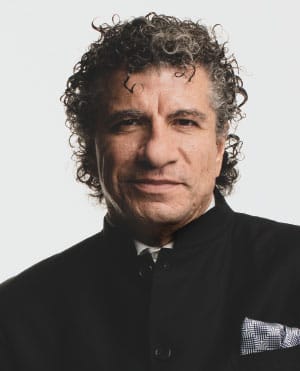
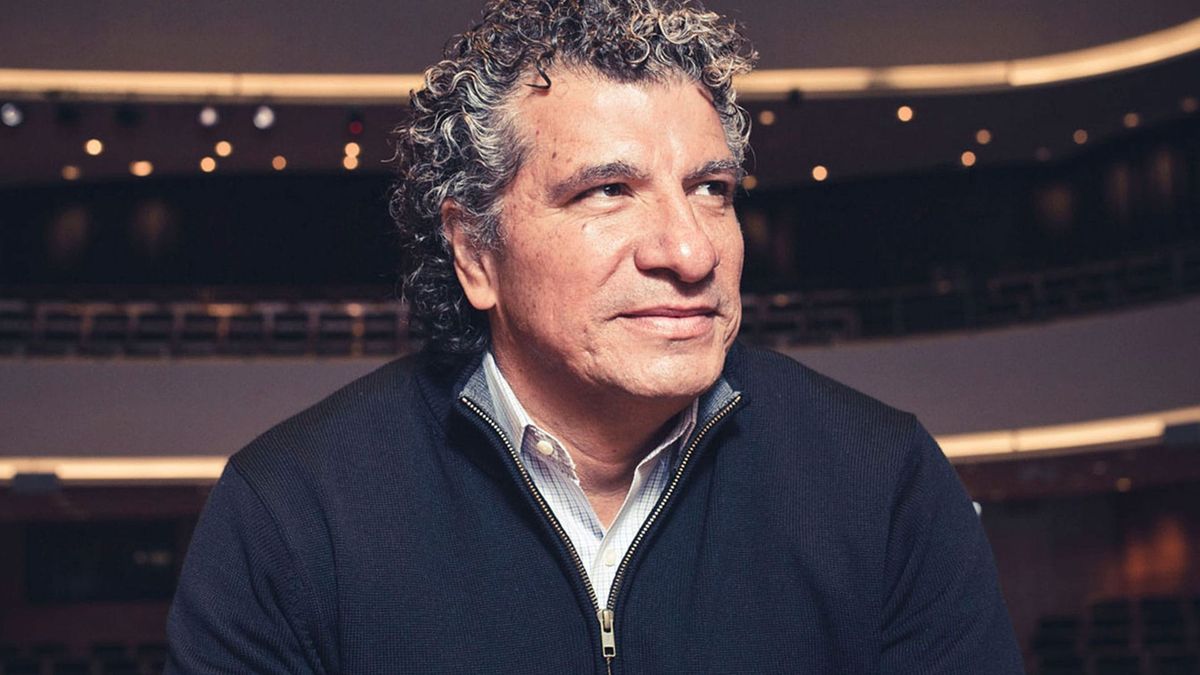
Giancarlo Guerrero
Giancarlo Guerrero is music director of the Sarasota Orchestra and artistic director and principal conductor of the Grant Park Music Festival in Chicago. He continues to serve as music director laureate of the Nashville Symphony after a 16-year tenure during which he released 24 commercial recordings that garnered six Grammy Awards and 13 Grammy nominations.
This season, Guerrero appears with the Chicago Symphony, Oregon Symphony, Baltimore Symphony, Indianapolis Symphony, Orquesta Sinfónica de Galicia, Brussels Philharmonic, Frankfurt Museumsorchester, Sinfónica de Tenerife, and Orquesta Sinfónica del Principado de Asturias. He also appears with NFM Wrocław Philharmonic, where he recently completed a six-season tenure as music director and recorded the Billboard chart-topping Bomsori: Violin on Stage on Deutsche Grammophon.
In recent seasons, Guerrero has led the New York Philharmonic, Boston Symphony, Cleveland Orchestra, Philadelphia Orchestra, Los Angeles Philharmonic, National Symphony, Atlanta Symphony, Dallas Symphony, Detroit Symphony, Seattle Symphony, Houston Symphony, Deutsches Symphonie-Orchester Berlin, London Philharmonic, Orchestre National de France, NDR Radiophilharmonie, Sydney Symphony, and New Zealand Symphony, among others. In 2026, he conducted in Bad Bunny’s Super Bowl LX Halftime Show. He made his San Francisco Symphony debut in February 2013.
Guerrero previously held posts as principal guest conductor of the Cleveland Orchestra’s Miami residency, music director of the Eugene Symphony, and associate conductor of the Minnesota Orchestra. Born in Nicaragua, Guerrero immigrated during his childhood to Costa Rica, where he joined the local youth symphony. He studied percussion and conducting at Baylor University and earned his master’s degree in conducting at Northwestern University.
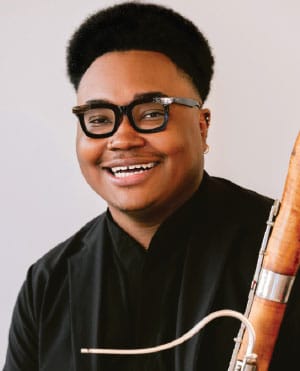
Joshua Elmore
Joshua Elmore joined the San Francisco Symphony as Principal Bassoon in March 2025 and makes his solo debut with this performance. He previously served as principal bassoon of the Fort Worth Symphony and has also performed with the Boston Symphony, New York Philharmonic, and Chineke! Orchestra.
A graduate of the Juilliard School as a Kovner Fellow, Elmore also holds a Professional Studies Certificate from the Colburn School. He has been a fellow at the Tanglewood Music Center and Music Academy of the West and contributed to a Grammy Award–nominated album with the National Orchestra Institute. Recently profiled by San Francisco Classical Voice, his playing was described as “evoking a river,” reflecting the expressive warmth and lyrical fluidity that characterize his artistry.
Originally from Cleveland, Ohio, Elmore was principal bassoon of the Cleveland Youth Wind Symphony and a member of the Cleveland Orchestra Youth Orchestra before touring internationally with the National Youth Orchestra of the United States.
Elmore is Professor of Bassoon at the San Francisco Conservatory of Music and serves on the faculty of the Aspen Music Festival and School. Passionate about mentoring the next generation of musicians, he collaborated with Alfred Music on an intermediate bassoon method book and served on the bassoon faculty of the 2023 Stellenbosch International Chamber Music Festival in South Africa, presenting masterclasses and coaching young musicians. Outside of music, he enjoys cultivating his plant collection and spending time in nature.
Learn more about Joshua Elmore in this month’s Meet the Musicians.