In This Program
- Welcome
- Community Connections
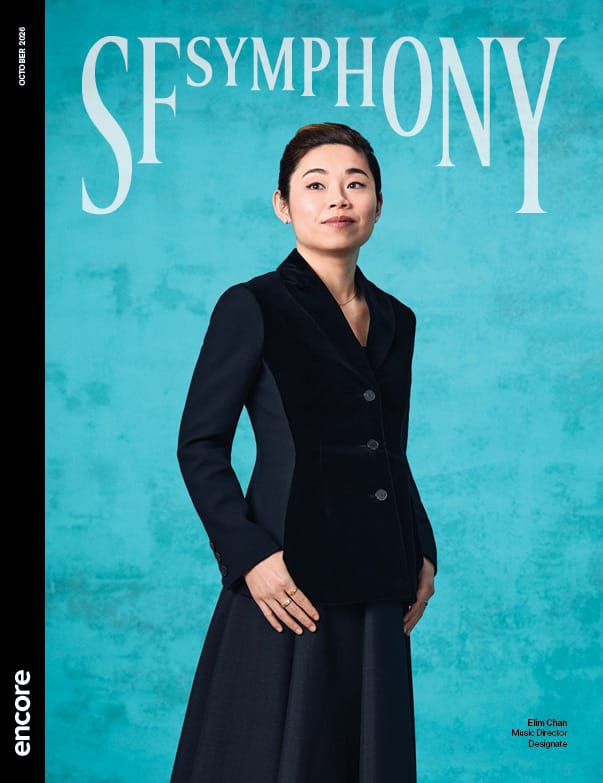
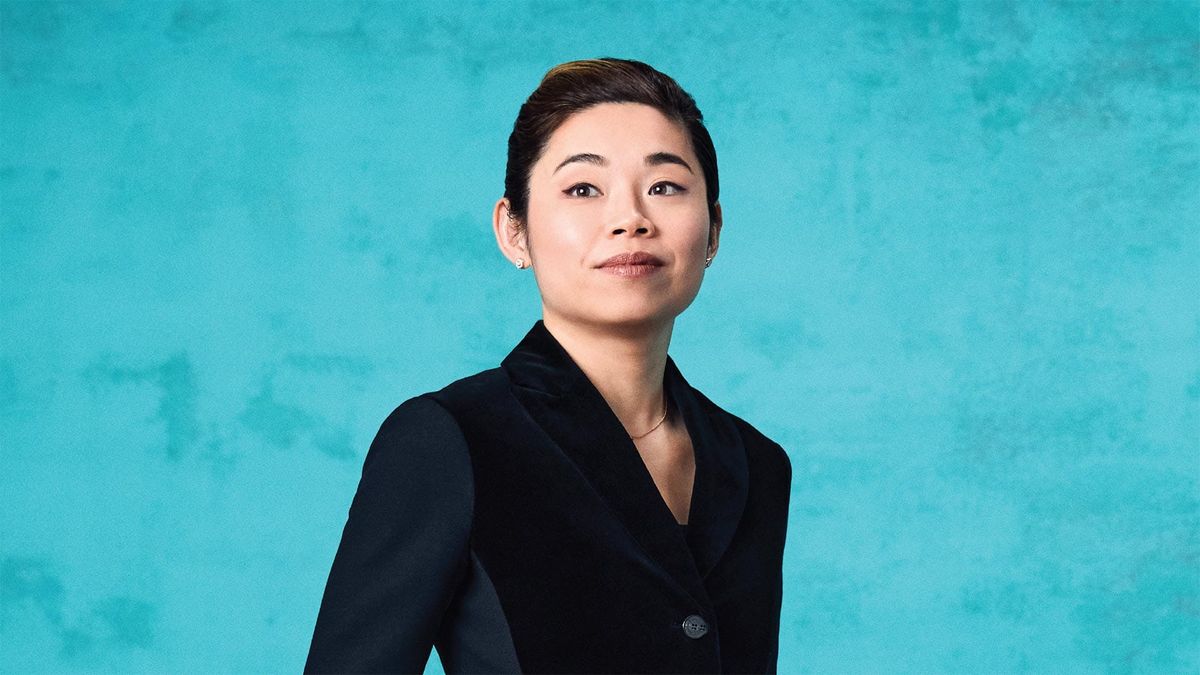
- The Connection’s the Key: Music Director Designate Elim Chan
- Print Edition
 San Francisco Symphony
 San Francisco Symphony
 San Francisco Symphony
 San Francisco Symphony
 San Francisco Symphony
 San Francisco Symphony
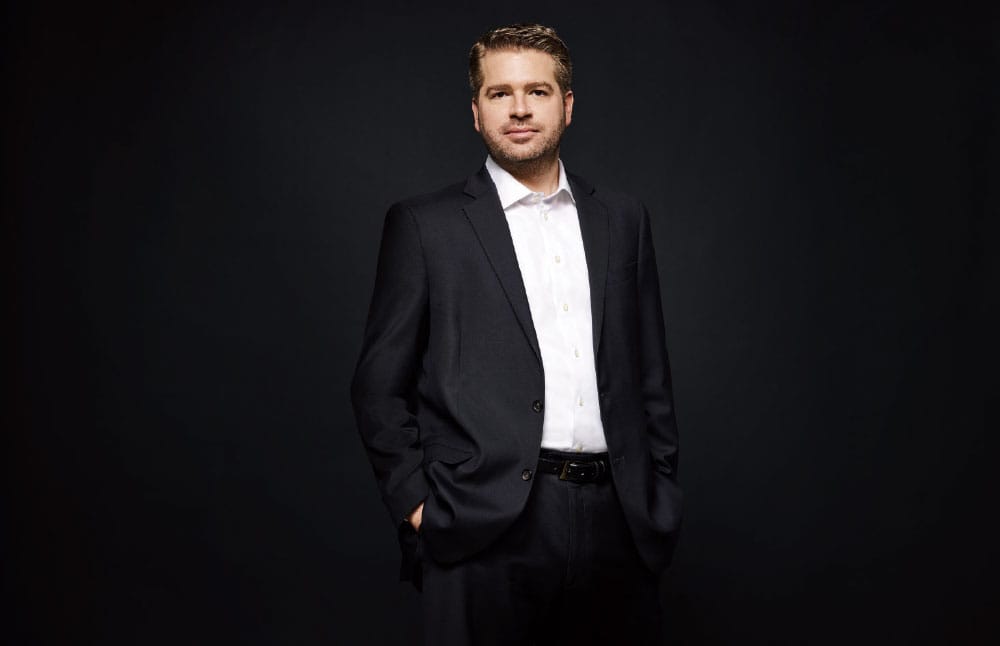
Welcome
Over 115 years, the San Francisco Symphony has been shaped by artists of fierce imagination and clear conviction. Elim Chan, our next Music Director, is among the most compelling conductors at work today.
This month, in the first of three appearances this season, Elim leads a program that offers an early taste of her artistic perspective. We welcome you to be part of the musical community she has already begun building in San Francisco.
That musical community expanded last month with the appointment of Manfred Honeck as Festival Director, a newly created position. Beginning in the 2028–29 season, he will conceive and lead an annual multi-week festival, exploring fundamental themes of human experience through large-scale works and inventive cross-disciplinary collaboration.
You will also see several of our artistic leaders onstage in the coming months. Daniel Bartholomew-Poyser, Resident Director of Engagement and Education, opens the Music for Families series. Chorus Director Jenny Wong prepares the San Francisco Symphony Chorus for two performances. And Radu Paponiu, Wattis Foundation Music Director of the San Francisco Symphony Youth Orchestra, leads the Youth Orchestra in its first concert of the season.
Each of them brings something distinct to this orchestra. Together they are creating something ambitious and new for San Francisco, and we are eager to share it with you.
Matthew Spivey
Chief Executive Officer, San Francisco Symphony
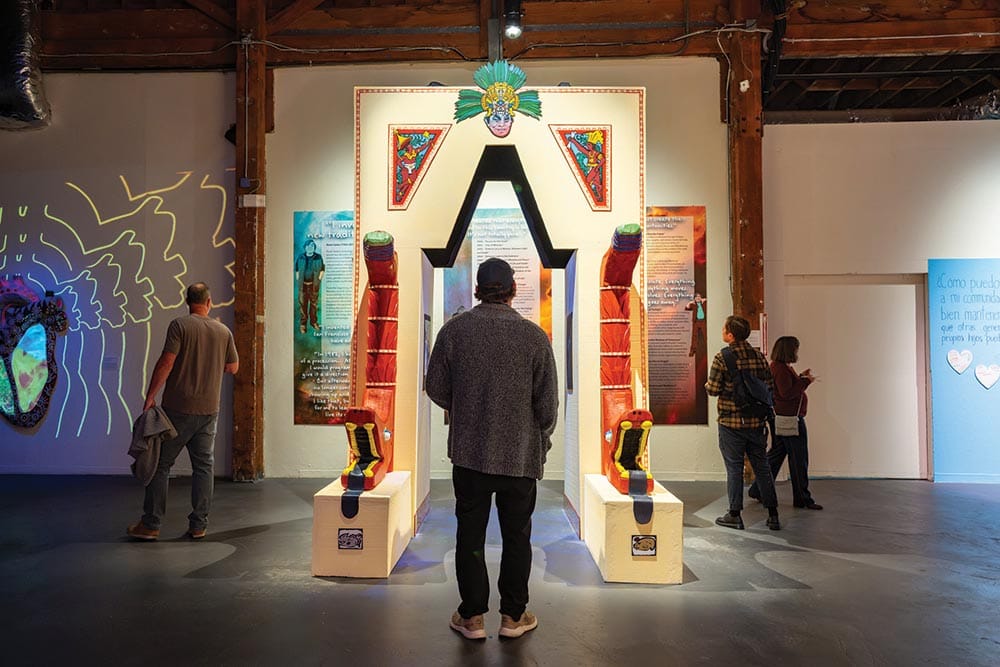
Community Connections
SOMArts
Since 1979, SOMArts has served as a vibrant cultural oasis, harnessing the transformative power of art to inspire social change, collective liberation, and self-determination. Through exhibitions, programs, and events that are free or low-cost to the public, SOMArts provides artists with the space, mentorship, and administrative support they need to create culturally relevant, community-responsive work that challenges perspectives, fosters connection, and advances creative expression.
Now in its 27th year, SOMArts’ annual Día de los Muertos exhibition is one of the most internationally diverse Day of the Dead celebrations in the United States. Founded by beloved San Francisco artist and curator René Yañez, and now led by co-curators Rio Yañez and Bridgètt Rex, Día de los Muertos at SOMArts continues to be an inclusive multigenerational gathering of remembrance while affirming the importance of arts and culture in shaping our world.
From communities and movements, house and drag mothers, birth and chosen families, mothering is a collective and reciprocal process of liberation. This year’s Day of the Dead exhibition, In Their Name: Día de los Muertos 2026, cherishes the ancestral memory, love, and devotion carried and embodied by mother figures across generations. Exhibition programming includes an opening reception on October 23, and Día de los Muertos drag show and closing reception on November 20.
To learn more and explore upcoming SOMArts exhibitions and programs, visit SOMArts.org.
The San Francisco Symphony thrives on collaboration, and we’re proud to work with the most creative, innovative groups and individuals shaping the Bay Area today.
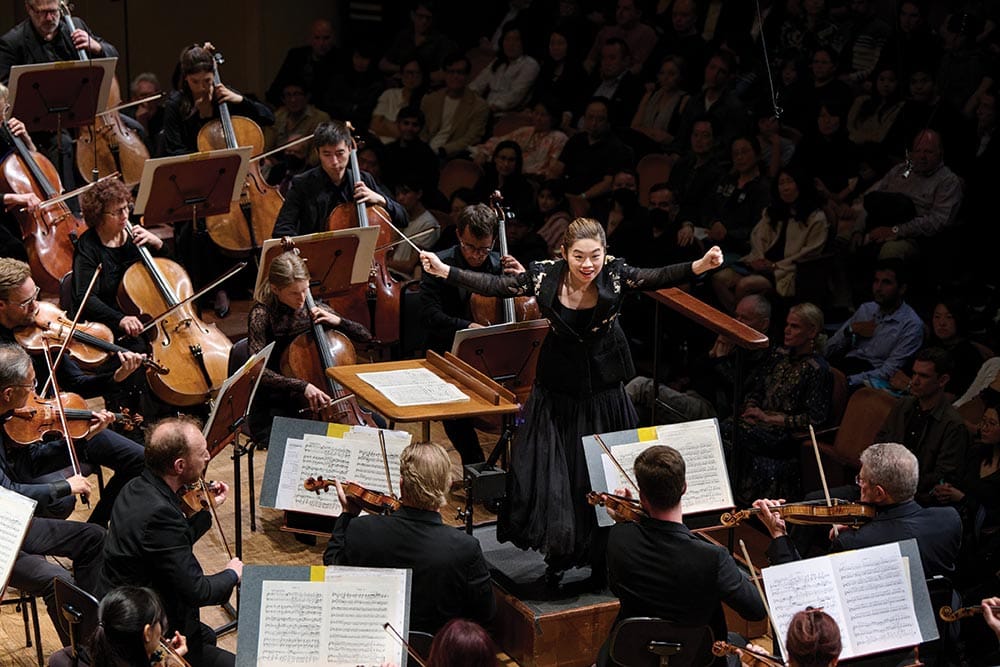
The Connection’s the Key
Music Director Designate Elim Chan traces her journey to the SF Symphony and her hopes for the future • by Steven Ziegler
“I love making music together with people,” says Elim Chan. In her first months as San Francisco Symphony Music Director Designate, which included a series of electric concerts last June, she has already shown that the magical connection between people is at the heart of her art.
Chan came to this realization early on when she joined a children’s choir in her native Hong Kong. “I loved it because the voice is the most immediate way for me to express myself in music. And I also loved the social aspects of it: Coming together with friends every weekend at the same time, to just have fun singing, learning about music, and learning how different parts come together to be one beautiful thing.”
She went on to study piano but quickly realized that she missed the camaraderie of making music with others. At 11 she picked up the cello, “one of the most beautiful instruments there is,” so she could join an orchestra.
By the time she was an undergraduate at Smith College in Massachusetts, music had taken a backseat to the liberal arts, but singing in a chorus continued to be an important musical and social outlet. “I was like, yeah, I love music, but I didn’t really think it would become my profession at the time.” Yet her professors saw something in her, and before long, she was made the chorus’s assistant conductor. The turning point came in her sophomore year when she was asked to conduct a portion of Verdi’s Requiem in rehearsal. “I forgot about my teacher and started fixing things and rehearsing. ‘Bass drum, you need to be louder. Chorus, I need to hear the words.’ I was like, possessed. It just felt like this thunderbolt moment, literally telling me, ‘Elim, this is what you need to do.’” She switched majors and never looked back, going on to postgraduate and doctoral studies in conducting at the University of Michigan.
A key moment came in 2014 when she became the first woman to win the London Symphony Orchestra’s Donatella Flick Conducting Competition. This led to on-the-job training as an apprentice under Valery Gergiev and Bernard Haitink, and as a Dudamel Fellow at the Los Angeles Philharmonic. Debuts at leading orchestras worldwide followed, along with posts as principal conductor of the Antwerp Symphony Orchestra and principal guest conductor of the Royal Scottish National Orchestra. Most recently, she was appointed artistic partner of the Vienna Symphony Orchestra for the 2026–27 and 2027–28 seasons.
Chan enjoyed the jet-setting life of an in-demand conductor but increasingly wanted the chance to build something over time. “Guesting around the world is really fun, and I love getting to know different places, people, and cultures. But when you guest conduct, you’re there for a few days, a week, and it’s all about speed and being efficient and checking all these boxes, like I’ve done this, I’ve done that, I’ve been here…And I started to ask myself, ‘Am I satisfied?’ When you want to effect change, you have to have a relationship, and a relationship takes time.”
That realization is part of what brought her to the San Francisco Symphony, where repeat visits since her 2023 debut revealed a special connection. “I will say fate really brings me here,” she says. “I’ve wanted to find that place and orchestra where I can just be there 100 percent, pour myself 100 percent in it, my mind, my knowledge, my heart, passion, everything. To build it and to nurture the sound, get to know the people, not just their names, not just the instruments they play, but their stories.”
In the San Francisco Symphony, she has found the ideal partner. “Of course it’s an excellent orchestra, but what really makes it click for me is its heart and blood, in the best sense. This orchestra has a big heart. It’s in the sound. It’s in the way they play.” She also points to a rich ensemble tradition and adventurousness cultivated by previous music directors including Herbert Blomstedt, Michael Tilson Thomas, and Esa-Pekka Salonen. “That has stayed and the orchestra has taken care of it. There’s such humanity and care and passion and meaning in the sound. And it’s an orchestra that also takes risks, which I love, because I don’t want to do things ever the same again. There always has to be that little, ‘What’s going to happen now?’ All I need to do is to let it grow, let it fly.”
Chan was also drawn to those same qualities in her new city. “San Francisco has this great forward-looking spirit. It kind of reminded me of where I’m from, Hong Kong, which is a place that also has many different people coming and going. But at the same time, you know, it creates such a special culture and space where there’s great traditions, great history, yet we want to make and see what is possible, what is new.”
In addition to the connections she is forging with the musicians of the San Francisco Symphony, Chan emphasizes the important role audiences play in bringing performances to life. “It’s like being a storyteller: To tell a good story, you need the audience to be there to receive it. When I express something, I want them to receive that love, that passion, that sadness, and then they take it. And the wonderful and beautiful thing about audiences is that when they feel something, they give it back to you tenfold.”
Chan is eager to meet audiences wherever they may be in their musical journey. “There will always be someone, where it’s their first time in the concert hall, and I want that person to feel welcome. And I also want people who have been to many, many concerts to still find new things. This should be a space and a place that people come and find whatever they need that day, that night, that moment. And then they will feel they want to be there again and again.”
In San Francisco, Chan has already begun building an artistic culture where she, the orchestra, and the audience are all equal partners. “When trust is there, everything is possible because there is comfort and confidence. Then you can take a leap of faith because you have each other’s back. And that is the quality that I’m looking for to build, to nurture, because that’s the most beautiful and important thing to have.”
Print Edition